Feeds:
Posts
Comments

Archive for the ‘Roberto Bolaño’ Category

SOUNDTRACK: KATE BUSH-Director’s Cut (2011).
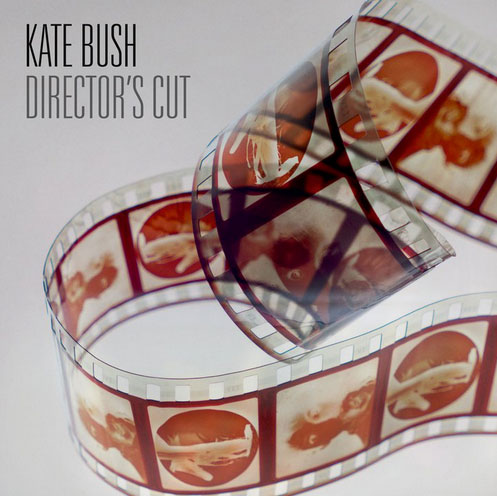
Kate Bush has re-recorded eleven songs from her two least-loved discs, The Sensual World and The Red Shoes.  According to the story at NPR, this seems to have been inspired by the Joyce estate’s granting Kate the right to use part of Ulysses as the lyrics for the song “The Sensual World” (in the original version she paraphrased the book).  So, she decided to re-record a bunch of other songs from those two albums as well.

I admit that neither one of those discs is high on my repeat play list, with The Red Shoes being a particular disappointment.  (Although there are some great songs on each).  When I read that these songs from those two albums I wasn’t terribly excited to hear them.  But I must say that these new versions have really reinvigorated these tracks.

I’m surprised by some of the choices (redoing “This Woman’s Work” is something of a shock, as is redoing her only real hit from The Red Shoes, “Rubberband Girl”), but whether it’s that she chose the best songs, or the new version have more life to them, this is a wonderful collection of songs.

Actually, rechecking the track listing, it does appear to be the best tracks from both discs, but I’m pleasantly surprised to seen how many good songs were actually on The Red Shoes to begin with,

from The Sensual World

  • Sensual World (retitled “Flower of the MOuntain”)
  • Deeper Understanding
  •  This Woman’s Work
  • Never Be Mine

from The Red Shoes

  • The Song of Solomon
  • Lily
  • The Red Shoes
  • Moments of Pleasure
  • Top of the City
  • And So is Love
  • Rubberband Girl

For the most part, the music seems to be the same (although there are some glaring exceptions).  I admit to not remembering the originals for all of them all that well).  But she has mostly rerecorded her voice (and possibly other lyrics, if NPR is accurate).  Her voice is unmistakably Kate, but in some places she sounds noticeably older (which she is, so duh).  She doesn’t seem to be able to hit quite the highs of before, but her voice has a throaty excellence to it now that brings something new to the songs.  It’s not noticeable on every song, although it is most notable on “This Woman’s Work,” which began with high sopranos, and now begins with lower alto notes.  But she can still hit some of the cool screechy notes on “Top of the City”

There are some tracks that are very different, “A Deeper Understanding” (a song about love via modems) replaces the earlier style of singing with a heavily autotuned computer voice.  It’s unsettling but very cool sounding.

The biggest changes come in “This Woman’s Work” and “Rubberband Girl.”

“This Woman’s Work” is a far more sedate track now. It doesn’t have any of the soaring moments of the original.  It seems to have more depth in this version, but I miss the “Oh darling make it go away” moment.  Nevertheless, it sounds really pretty in this more mature version.  It’s simply a very different song now.

As for “Rubberband Girl,” I’ve always had a real fondness for the original, so I don’t know how I feel about the rerecorded version (which is so very different).  The original is very elastic with cool music and weird vocals and is kind of trippy (and may not even be all that good), but I have grown quiet attached to it.  The new version is a simple guitar sound (it reminds me of a sort of unplugged Rolling Stones song now).

Overall, this is an exciting revitalization of Kate’s back catalog, and I hope it inspires her to make another new album in the next few years or so.

[READ: May 14, 2011] Austerlitz

I read about Sebald in Five Dials. And the glowing talk about him made me want to read one of his books (specifically, this one).

Austerlitz is a strange novel which I enjoyed but which I never really got into.  I feel like rather than absorbing me into its words, the book kind of held me aloft on the surface.  As such, I have a general sense of what happened, but I’d be very hard pressed to discuss it at length.

The basic plot summary is that an unnamed narrator runs into a man named Jacques Austerlitz.  Austerlitz talks to him at length about his life. They run into each other at various points over the years, and Austerlitz’ story is continued.  And literally, that is the book.  Now, of course, Austerlitz’ story is multifaceted and complex.  But we will never forget that this is a story within a story (it’s impossible to forget because the phrase “said Austerlitz” appears about 500 times in the book. (more…)

Read Full Post »

SOUNDTRACK: PJ HARVEY-Live at the Warfield Theater, San Francisco, April 14, 2011 (2011).

NPR was given permission to share this PJ Harvey concert.  However, they were only allowed to share about half of it.  The show is fairly short to begin with (about 75 minutes) but the downloadable portion is barely 40 minutes.  It turns out that NPR was given the rights to all of the songs from the new album, Let England Shake.

Now, I have no idea how things like this work, why they are only given access to these songs as opposed to the other ones, or why an artist (or management) would not let her fans hear the ten or so other songs she played that night.  Legal restrictions are weird and usually stupid. But as I’ve mentioned before, you shouldn’t complain about free stuff.

So, what we get here is a spliced together concert (it sounds seamless, although they have removed all of the banter (if there was any)).  The album is played in its entirety (although we were not given “Written on the Forehead” which happens to be the song they are playing the most on the radio here), but it’s not played in order.  It was also interspersed with older songs “The Devil” and “Silence” from White Chalk, “The Sky Lit Up” and Angeline” from Is This Desire, “Pocket Knife” from Uh Huh Her, “Down by the Water” and “C’mon Billy” from To Bring Her My Love, (I’d like to hear how she handles the older songs, now that’s she’s singing primarily in the higher register).  And, “Big Exit” from Stories from the City.

It’s pretty clear that Harvey is no longer the young woman who made those first couple albums.  And she sounds strong and confident here.  It’s a great set; the autoharp never sounded better.

[READ: April 20, 2011] Five Dials Number 5

I have been enjoying all of the Five Dials, but this issue is easily my favorite so far.  The “theme” of this issue is translation.  Translators are the unheralded workers in literature, and while I have been trying to give them credit in my posts, I don’t always pay them enough attention (except when a translation is awkward or clunky).

But in addition to the theme (and the really cool interviews with some translators, I thought the fiction was outstanding and I loved Alain de Botton’s Advice column.  The whole issue was great. (more…)

Read Full Post »

SOUNDTRACK: TAME IMPALA-“Lucidity” (2010).

I heard this song on the NPR’s 5 Artists You Should Have Known in 2010.  The album, Innerspace, is only available in Australia (imported on Amazon for big bucks) but I guess that’s why people download music.

This song is really cool. It feels very My Bloody Valentine to me.  However, inevitable comparisons to The Beatles abound, but that’s mostly in the vocals (which is kind of funny since they are Australian).  But it’s really a very sixties British vocal sound–not unlike early Who).

The big difference comes in the music which is psychedelic and wild in ways that The Beatles never quite managed.  There are great big washes of noise, and the sound quality sounds retro, even though it obviously isn’t.  Comparisons to the great Swedish band Dungen are not misplaced either.

I’ve listened to a few more tracks by them on YouTube, and I think this album could easily be one of the best of 2010 if only more people could hear it!

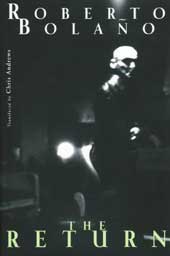
[READ: January 3, 2010] The Return

With the completion of this collection of short stories, I have now caught up with all of the published works of Roberto Bolaño (in English of course).  [The next book, Between Parentheses, a collection of nonfiction, is slated for June].

So The Return contains the 13 short stories that were not published in Last Evenings on Earth.  That collection inexplicably took shorts stories from his two Spanish collections Llamadas telefónicas (1997) and Putas asesinas (2001) and combined them into one collection in English.  It wasn’t quite as evident in Last Evenings, but it seems more obvious here that the stories in Putas asesinas are grouped together for a stylistic reason.  So, to have them split up is a bit of a bummer.  And yet, having them all translated is really the important thing.  And, again, Chris Andrews does an amazing job in the translation

This collection of stories was very strong.  I had read a few pieces in Harper’s and the New Yorker, but the majority were new to me.  Bolaño is an excellent short story writer.  Even if his stories don’t go anywhere (like his novels that never quite reach their destination), it’s his writing that is compelling and absorbing.

This collection also had some different subject matter for Bolaño (it wasn’t all poets on searches). (more…)

Read Full Post »

SOUNDTRACK: CAIFANES-El Silencio (1992).

Caifanes was another of the Rock en Español bands that I bought back in the 1990s.  I bought two of their records, El Silencio and El Nervio del Volcan.  In retrospect I’m not sure why I bought two from Caifanes and only one from Tijuana No! as I find Tijuana No! to be much more satisfying overall.  But El Silencio is a fun album as well.

As with a lot the rock en Español bands, the album starts with a really heavy track.  “Metamorfeame” is a raging, screaming punk blast.  But it’s followed by a Latin-infused mellow second song “Nubes” with a great weird guitar solo.  “Piedra” rocks, and Saul Hernández’ voice soars over the heavy bass work (he was meant for stadium rock).  It also ends with a little mariachi music as a coda.

“Nos Vamos Juntos” showcases some more great guitar work and “No Dejes Que…” practically sounds like the Alarm or some other stadium rock band.  “El Comunicador” is an interesting understated minor key song with interesting production.

The production is by Adrian Belew and you can tell as it seems very much like what I know of Adrian Belew: gleaming and bright and well polished.  And, like Belew himself, the album jumps from style to style.  Depending on your tastes, this is either great or tiring (and sometime both).

Wikipedia tells me that this album is considered one of the most influential albums from the most influential band to come out of Central Mexico.  Well how about that.

[READ: December 16, 2010] Amulet

This book is an extended version of an episode in The Savage Detectives.  InDetectives, Auxilio Lacouture has a ten-page story in which she was hiding out in the bathroom of UNAM (Universidad Nacional Autónoma de México) in 1968 during the military takeover (in real life, this is known as the Tlatelolco Masscare).  She hid in the bathroom for thirteen days, reading and writing poetry (Auxilio is the mother of Mexican poetry).

The episode in Detectives was  pretty exciting recollection.  She was in the bathroom when the soldiers broke in.  She could see the tanks outside and she could hear the gunshot.  So she hid with her feet in the air while the soldiers searched the premises.  She promised herself she would not to make a sound until she was discovered. So she read poetry and wrote poetry on the only paper available. (more…)

Read Full Post »

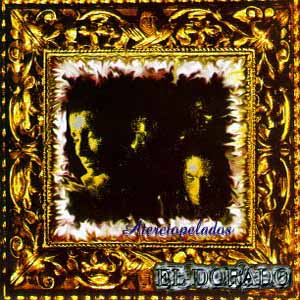
SOUNDTRACKATERCIOPELADOS-El Dorado (1995).

One of the other Rock en Español bands I bought in the 90s was Aterciopelados (the hardest to pronounce).  Aterciopelados come from Colombia and they play a variety of styles of music.  They also feature a female vocalist (Andrea Echeverri) who has a great voice in a variety of styles.

The opening song “Florecita Rockera” is a heavy blast of punk.  “Suenos del 95” is a kind of a lite pop song.  “Candela” is a latin-infused song that sounds not unlike a more psychedelic Santana track.  And “Bolero Falaz” is a winning acoustic ballad.  Meanwhile “Las Estaca” is a sort of county/cowboy song that breaks into a fun rocking chorus.

“No Futuro” starts as a slow balald and builds and builds to a heavy rocker.  I would have liked this song to go a bout a minute longer to get really crazy.  The rest of the disc works within this broad framework: ballads that turn into heavy rockers (“De Tripas Corazón”), hints of punk and latin accents.  And then there’s a song like “Colombia Conexión” which reminds me a bit of The Dead Milkmen: simple sparse verses with heavy punk choruses.  Meanwhile “Pilas!” is straight ahead punk.  The final song “Mujer Gala” has some ska-lite aspects as well (and I have to say that it seems like No Doubt may have been inspired by them).

Although for all of the different styles of music, the disc is really a venue for Echeverri’s voice.  She’s not a rocker or a screamer and she could easily sing pop ballads, but because she chooses to sing over so many styles, she really showcases the multifacted nature of her voice.  She can hold a note for quite a while and although she never really shows off, it’s clear that she’s got a powerful voice.  She even sings beautifully over the punkier tracks, never devolving into a scream, but never losing her edge either.

Aterciopelados is a hard band to pin down (especially with this one disc).  Of the rock en Español bands, Aterciopelados had one of the longer lifespans.  They released several albums with very different styles.

El Dorado suffers from weak production, some more highs and lows would really makes the listening experience better, but it’s a solid disc overall.

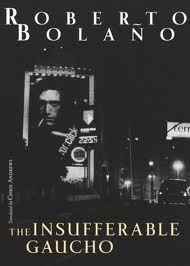
[READ: December 10, 2010] The Insufferable Gaucho

This is a collection of five short stories and two essays.  Two of the short stories appeared elsewhere (which I read previously).  This is the first time I’ve seen the essays translated into English.  The fabulous translation is once again by Chris Andrews, who really brings Bolaño’s shorter books to life.  They are vibrant and (in light of The Savage Detectives, this is funny) visceral.

“Jim” is a four page story which focuses very specifically on a man named Jim.  As the story ends, we see Jim locked in an existential struggle.  For such a short work, it’s very powerful.

“The Insufferable Gaucho” (which I had read in The New Yorker) was even better after a second read.  I find this to be true for much of Bolaño’s work.  He tends to write in a nontraditional, nonlinear fashion so you can’t always anticipate what is going to happen (quite often, nothing happens).  In this story, a man in Buenos Aires, feeling that the city is sinking, heads out to his long neglected ranch in the country.  He spends several years there, slowly morphing from a cosmopolitan man to a weather-beaten gaucho who doesn’t shave and carries a knife.  But there is much more to the story.  The countryside is virtually dead: barren, wasted and overrun by feral rabbits.  The rabbits offer an interesting metaphor for the wilderness as well.  His interactions with the few other people he encounters are wonderfully weird, and the ending is thought-provoking.  It’s a wonderfully realized world he has created.

“Police Rat,” is that strangest of Bolaño stories: a straight ahead narrative that works like a police procedural.  I assumed from the title that it would be something about a metaphorical rat in the police force.  Rather, this is a story about an actual rat who works on the rat police force.  Bolaño spends a lot of time setting up the story (details are abundant) making it seem like perhaps there would be no plot.  But soon enough, a plot unfurls itself.  And although the story is basically a police story, the underlying reality behind it is fantastic and quite profound.  The story is beyond metaphor.

“Álvaro Rousselot’s Journey” was published in The New Yorker.  This story was also better on a second reading.  In many ways this story is a microcosm of Bolaño’s stories: a man goes on a quest for an elusive man.  Unlike the other stories, he actually catches up to the elusive guy.  But, as if Bolaño were commenting on his other stories, actually catching the guy doesn’t really solve the crisis.

This basic premise is that a writer believes that a filmmaker is stealing his ideas for his films (even though he is from a different country).  But more than just the simple plot, when Álvaro Rousselot leaves the comfort of his homeland things change fundamentally within him.

“Two Catholic Tales” is, indeed, two tales.  I had to read this piece twice before I really “got” the whole thing.  There are two separate stories (each story is a solid block of text but there are 30 numbered sections (which don’t seem to correspond to anything so I’m not sure why they are there).  The first tale is of a young boy who desires to be like St. Vincent, with designs for the priesthood.  As the story ends, he is inspired by a monk who he sees walking barefoot in the snow.  The second tale (we don’t realize until later) is about the monk himself.  It rather undermines the piousness that the boy sees.  On the second reading I realized just how dark of a tale this turned out to be.  It’s very good.

“Literature + Illness = Illness”
This is the first non-fiction by Bolaño that I have read.  It is a meditation about his terminal illness.  The essay is broken down into 12 sections about Illness. They range in attitude from the realization that when you are gravely ill you simply want to fuck everything to the fear that grips you when you finally accept your illness.  Despite the concreteness of the subject, the essay retains Bolaño’s metaphorical style.  Each subdivision is “about” an aspect of illness.  “Illness and Freedom,” “Illness and Height,” “Illness and Apollo,” “Illness and French Poetry.”  But it’s when he nears the end and he’s in a tiny elevator with a tiny Japanese doctor (who he wants to fuck right there on the gurney but can’t bring himself to say anything), and she runs him through his tests showing how far advanced his liver failure is, that the reality of his illness really sinks in.

“The Myths of Cthulhu” is the other essay in the book and I have to say it’s the only thing in the book that I’m a little frustrated by.  About midway through, he reveals that this is a speech and I wish that an introductory note would have given context for this speech, or indeed, indicated whether it was really a speech or not.

One of things that struck me about it (and also about “Literature +Illness=Illness” is how frequently he is unspecific about his research (and just never bothered to go back and fix it).  For instance:

For books about theology, there’s no one to match Sánchez Dragó.  For books about popular science, there’s no one to match some guy whose name escapes me for the moment, a specialist in UFOs.

Because I don’t know his non-fiction and I don’t have context (and I’ve no idea who Sánchez Dragó is) I don’t know what to make of that unspecific recommendation.  As for Sánchez Dragó, in the speech he’s noted as a TV presenter (Wikipedia confirms this).  But why the uncertainty in a written piece?  Laziness or deliberate commentary?

This essay has many elements of local information that are completely lost on me.  However, by the end, he brings it back to folklore and literature.  He also makes some biting criticisms of George Bush, Fidel Castro, Penelope Cruz (!) and Mother Teresa. Actually, I’m not sure if he’s mocking Penelope Cruz, although he is definitely mocking Mother Teresa.

The ending is general moaning about the state of Latin American fiction.  Even though I didn’t follow all of what he was talking about, there’s something about his delivery which is so different from his fiction. It’s honest and fast and kind of funny and enjoyable to read.

——

This may be something of a minor work, and yet the stories are really wonderful and are certainly a treat to read.  The essays definitely need more context, but it is interesting to finally have a chance to read the “real” Bolaño.

Read Full Post »

SOUNDTRACK: TIJUANA NO!-Transgresores de la Ley (1994).

In the mid 90s, when I was living in Boston, I discovered MTV Latino, and the Rock en Español resurgence.  Since I’m always interested in new music, I bought a few CDs by these Spanish-singing bands.  For most of my life I’ve thought about the rabid Japanese audiences who loved bands that sand in English.  Did they understand the lyrics?  And did it matter?  Well, here was a test for me.

Tijuana No! was the first band I bought and I really liked it (and still do).

The disc opens with a rollicking ska rocker “Goples Bajos” which features a wonderful horn filled breakdown and ends with a blistering guitar solo.  The title track, “Transgresores de la Ley” opens with a military beat and a military sounding flute before taking off with a heavy verse and, more impressively, a punk/shouty chorus.

My favorite song is “Tu y Yo,” it’s funky all over the place and has a super heavy midsection.  And “Borregos Kamikazes” has a wonderful juxtaposition of speedy, almost loco lyrics in the verses with some great group vocals in the chorus.

The first surprise (for me) comes with “La Esquina del Mundo” because suddenly there’s a female vocalist on lead.  She sounds great (her voice has a cool echo on it) and although she doesn’t quite convey the heaviness of the rest of the track, it’s an interesting juxtaposition.

The second surprise is that the track “Conscience Call” is mostly in English (I got so used to not understanding the lyrics that I was quite surprised to hear words I understood).

The final surprise comes with the penultimate track: an excellent cover of The Clash’s “Spanish Bombs.” Again sung by the female vocalist, her voice works wonderfully with the track.  The chorus, sung in Spanish, is really perfect.

So, in answer to the question, do you need to understand the lyrics to enjoy the music?, I’d say no.  Although it is nice once in a while.

[READ: November 20, 2010] The Savage Detectives

This was the Bolaño novel that I had initially wanted to read because the reviews were so glowing (amusingly enough it turns out to be virtually the last book of his that I read).  And now that I have read almost all of his books, it’s obvious how this book fits into his larger scheme of writing (I wonder what I would have thought if I hadn’t read the other books, too.  In fact, I wonder if I would have liked 2666 more at the time if I had read this one first.  As it is, I think I enjoyed this more having read 2666 first).

[DIGRESSION: When I was reading 2666 I found a fantastic review of 2666/The Savage Detectives by Daniel Zalewski, which reviews 2666 and The Savage Detectives in context of Bolaño’s life].

In a previous post I noted how Bolaño doesn’t really write conventional novels.  And this one is no exception.  Part I is the diary of Juan Garcia Madero, a 17-year-old aspiring poet.  It covers from November to December 31, 1975 .

Garcia Madero talks about his introduction to the visceral realists, a group of Mexican poets whose legacy is more or less unknown to us now (in the book–in reality there was no such group).  The two main visceral realists are Arturo Belano and Ulises Lima, and we will follow or look for these two for the rest of the book.

As with other Bolaño books, there is a massive obsession with sex.  At first Garcia Madero is a virgin and thinks about sex a lot.  Then he finally has sex with first one woman and then many women.  And he writes about them in his diary and spares no details.  (Many entries reveal him having sex with one of his girlfriends 5 or 6 times a night).  And there are of course whores and other deviant sexual individuals (including a guy who carries a large knife by which he measures his penis–we never see this, it’s all hearsay, but it’s in there).

And during this time, he is writing poetry as well–a fully welcomed member of the visceral realists.   (more…)

Read Full Post »

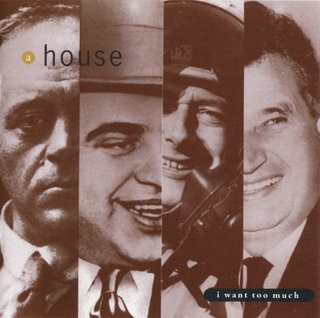
SOUNDTRACK: A HOUSE-I Want Too Much (1990).

I Want Too Much saw a bit of a stylistic shift from the sort of generic indie rock of the first album.  Dave Couse’s voice begins to really come into its own with a lot of yelping and higher notes.

The album overall is more experimental, a good stepping stone towards I Am the Greatest.  This is probably the last A House record I bought (from Amoeba Records!).  And again, had I bought it in 1990, I think I would have loved it.

As it is, it reminds me, once again, of the era (in fact, this album reminds me a lot of James circa 1990).  The lyrics are slightly more deep than on the first disc, but I honestly can’t say that the songs really stick out for me.

I may have come to the party too late for this one.

[READ: August 20, 2010] “Los Malos”

This was something of a banner issue of Harper’s for me.  I’d been kind of down on the magazine over the last several months as I felt the really good stuff just hadn’t been here.  But this issue was packed with great articles.

I was keenly interested in this article because I have recently read Roberto Bolaños’ 2666.  That novel is concerned with the senseless and random killings of so many women around Juarez, Mexico.  That news story seemed to be just catching on in the mainstream press when it was supplanted by this new horror story that border cities in Mexico are hotbeds of drug-related murders (of men and women).  Strangely, I don’t know if the Juarez situation has calmed down or if this is a concurrent mass murder scenario along the border. (more…)

Read Full Post »

SOUNDTRACK:  grouse

Since this article is a complaint, what better soundtrack than a grouse.

Although for cool grouse movies I prefer this one.

[READ: August 18, 2010] “The Complaint: Roberto Bolaño”

In a few short paragraphs, Benjamin Percy tries to undermine the literary value of Roberto Bolaño.  He complains about yet another posthumous release from him.  [Now, of course, anyone doing just a few minutes of research would know that these “posthumous” works are actually not posthumous, just posthumously translated, so it’s not like they’re pulling these works out of drawers of unpublished stories].

Percy is entitled to his opinion.  He doesn’t like Bolaño.  And that’s fine.  He finds him “affected and exhausting.”  (In a previous Esquire, Percy lauds Stephen King, so perhaps he just doesn’t like difficult books).  In fact, he cements his feelings with the argument that Bolaño’s stories are “weighed down with intellectual references.”  Oh no, not intellectual references!  Heaven fordbid his stories aren’t all about killing people, like Percy’s (oh wait, most of them are they are). (more…)

Read Full Post »

SOUNDTRACK: MOBY-Everything is Wrong (1995).
I suppose that everyone knows that Moby (the musician) is Herman Melville’s great- great- great- grandnephew.  And that’s why he has the middle name Melville and had the nickname Moby.

Moby started out as a techno guy. He even made the Guinness Book for the fastest bpm ever recorded (since then, many have surpassed that) with the song “Thousand.”  It’s an interesting song, although more for its novelty than anything else.  He also had a cool hit called “Go” that sampled music from Twin Peaks.  And in 1999 he took over the world with his album Play, which featured some 18 songs that were all licensed for commercial use (many of which were ubiquitous that summer).

But this disc, Everything is Wrong, came out before Play, and it was considered a high water mark for dance music (before the next high water marks of Fatboy Slim and LCD Soundsystem came out, of course).

So this disc was hailed as the big breakthrough for Moby.  And it has something for everyone.  It opens with a pretty piano piece ala Philip Glass which is, as its name implies, a “Hymn.”  From there we get a heavy techno beat and “Feeling So Real” kicks off.  Gospel-like vocals soar above the dancing (this foreshadows Play quite a bit).  It sounds very 1994 to me, although I don’t think it sounds dated, necessarily.  And then comes his stab at punk.  “All That I Need is to be Loved” is a fast blast of aggro music.   The problem is that Moby doesn’t do punk very well.  His guitars are too trebly, his vocals aren’t very strong and despite the beautiful melodies he creates, he doesn’t write very catchy hooks.

“Every Time You Touch Me” returns to the style of “Feeling So Real” and is another stellar dance track.  While “Bring Back My Happiness” runs even faster.

“What Love” is another screaming punk track.  This one is closer to Ministry.  It’s quite a slap in the face after the rest of the disc.

“First Cool Hive” slows things down with a groovy almost ambient track.  And “Into the Blue” is a moody song that sounds like it could also have been taken from Twin Peaks.

“Anthem” returns to the fast beats with ecstatic moans sprinkled over the faster and faster beat.

The album ends with two tracks, “God Moving Over the Face of the World” which is a beautiful instrumental (again ala Philip Glass or more likely Michael Nyman) that weaves in and around itself for 7 minutes.   (It, too, hints of Twin Peaks).  And, “When It’s Cold I’d Like to Die,” while not exactly uplifting is coldly beautiful (kind of like a long lost Eurhythmics track)..

The disc is such a mishmash of styles, that it’s hard to really know what to classify it as.  Some of it works wonders.  Other tracks (notably the punk experiments) are less successful (even though I did enjoy them then, I think they just didn’t age well…or maybe I didn’t age well).  Of course, over the course of his career, Moby has attempted all of these genres in more detail, so this was almost like a sampler of what he would be doing later.

Sixteen years later it holds up quite well (although I still think Play is better).

[READ: Week of June 7, 2010] Moby-Dick [Chapters 42-61]

The reading this week opens with a chapter about whiteness.  And how somehow Moby-Dick is even more fearsome for being white.  As the chapter opens whiteness (even in skin color) is lauded.  But by the end, he cites it as being particularly creepy: white whales, polar bears, albinos.  (I think that this was my very least favorite chapter so far–I was uncomfortable reading it and I didn’t get a lot of humor from it either).

Some more down time passes, with Ishmael describing how Ahab is able to plot a course to find Moby-Dick.  It’s not just looking for a needle in an ocean–there are pathways that whales follow, for instance.  This is followed by a chapter that allows Ishmael to swear, absolutely swear! that whalers can recognize the same whale even years later if you tried to kill it but failed (and that he himself remembers one whale that got away from a mole under its eye). (more…)

Read Full Post »

When I started reading 2666, I didn’t know anything about Bolaño.  I didn’t even know any of his other books (except I had heard The Savage Detectives was excellent).  But I didn’t know anything about him, personally.

You shouldn’t need to know an author’s biography to appreciate a novel.  And that’s the case with Bolaño, certainly.  However, knowing his biography adds a new dimension to his work that explains why he writes what he writes.

So, the brief outline: (more…)

Read Full Post »

« Newer Posts - Older Posts »