Feeds:
Posts
Comments

Archive for the ‘Roberto Bolaño’ Category

CV1_TNY_04_22_13Pearson.inddSOUNDTRACK: MIKAL CRONIN-MCII (2013).

mciiMikal Cronin has a very pleasant middle range voice—conventionally good.  Indeed, there’s nothing especially unique about this record.  But it is a great summer pop album.  Lots of great big choruses that are fun to sing along to.  And, Cronin is a talented multi-instumentalist.  I believe he plays everything on the record, although I’m not sure about that.

The album is 37 minutes.  The first song, “Weight” has a simple melody and is incredibly catchy. There’s a nice falsetto before the big loud guitar chorus kicks  in.  “Shout It Out” is another great pop song—big fuzzy guitars and a wonderfully catchy melody.   And I love how it gets mildly chaotic at the end.  “Am I Wrong” is a straightforward rocker, with more big crunchy guitars.  There’s a fun fiddly keyboard solo (with lots of flubs, which is kind of endearing).  This song (and several others) remind me of Sloan.

“See It My Way” has a shambolic feel to it, I can do without the oddball sax solo, but there’s something so oddball about it that I think it works in the end.  “Peace of Mind” has a nice harmony vocal on it that gives this simple song a fuller sound.    There’s an unexpected violin solo in here.  “Change” opens with a real grungy loud guitar which is quickly replaced by a  speedy drum over a simple, catchy verse.  And a speedy chorus.  There’s an interesting middle section with another violin solo (and some unusual squeaky violin noises as well).  “I’m Done Running From You” is a fun fast bit of pop with a rocking guitar solo.  And “Don’t Let Me Go” is a slow ballady type song (as much as one can be on a rocking record like this).  “Turn Away” brings the rock back, although “Piano Mantra” ends the disc with a solo piano intro.  But the song builds and builds into a rollicking violin-fueled conclusion.

I’d never heard of Mikal Cronin before, and when i first started listening to the disc I thought it was an okay pop punk album.  But the more I listened to it, the more I enjoyed it.  It’s still as simple pop punk album but it’s done so very well.  I’m going to have to check out his debut as well.

[READ: May 2, 2013] “Mexican Manifesto”

I love that stories from Roberto Bolaño keep popping up.  I realize that most of these have been published in Spanish somewhere, but it seems like even if we know that his next book is going to be all poetry (Unknown  University coming out in June), somehow there’s at least one short story in it (I assume it comes from here, where else would it have come from?).  So, since it seems like there’s a new Bolaño book out every six months, I assume that barrage will come to an end now.

Unknown University is, as far as I can tell, the last thing that will be translated by Bolaño.  Wikipedia suggests that there are four other titles that could be translated: A Lumpen Novella (which he completed but which has not been translated), Diorama, an unfinished novel, something being called Part 6 of 2666 (who knows what that means) and an early book that he cowrote Advice from a Morrison Disciple to a Joyce Fanatic which I would really like to read–the title is so intriguing–but who knows is it will ever find a translator.

But that’s got nothing to do with this short story.  This short story is about a couple who frequent steam baths. The narrator is the man, and the woman, Laura, I the more adventurous of the two.  She is the one who encourages them to go to the baths in the first place and, while he also thinks it is wonderful, it is she who wants them to explore as many different baths in the city as possible. (more…)

Read Full Post »

bartelbySOUNDTRACKOS MUTANTES-” Picadilly Willie” (2013).

Iosmut enjoyed this album so much (thanks NPR for the stream) that I had to talk about this song and how radically different it was from yesterday’s track.  “Picadilly Willie” is this wonderful old-sounding rock song.  It’s got a very classic rock riff, but there’s something slightly off-kilter which makes it sounds more like Frank Zappa classic than radio classic.  And when the vocals come in (with a sinister laugh) it sounds more like Mr Bungle than anything else (I wouldn’t be surprised if Mike Patton was a fan of Os Mutantes).

The song ends with what sounds to me like Middle Eastern sitar music and echoed chants of “Bra-zil!”

And these are just two of the styles of music on this wonderfully wild and diverse CD.  I can’t wait for its release.

[READ: April 22, 2013] Bartelby & Co.

I read about this book in the Bolaño interview book.  Vila-Matas was one of many authors that Bolaño highly recommended–this book in particular.  And, it was one of the few books on that extensive list that has been translated into English.

This book follows in the rich tradition of books that are more or less lists about people and not really novels at all. (This seems like a peculiarly Latin American pastime, at least in my experience, as there are nearly a half dozen books that seem to do this, including several by Bolaño).

The key to this book is in the title: Bartelby.  The narrator is a hunchbacked loner, and he decides to catalog all of the instances of writers who have in the grand tradition of Herman Melville’s Bartelby the Scrivener said “no, I would prefer not to” write anymore.  And so this book becomes a series of notes without a text.  The glorious list includes many famous and not so famous writers (the most famous being Salinger) who whether famous or not, decided to write no more.  And thus we have 86 “sections” in which the narrator writes about writers who stopped writing.  For most of the he gives their reason for no longer writing, for others he simply likes talking about how they stopped writing or what their circumstances were before they stopped. (more…)

Read Full Post »

bolano

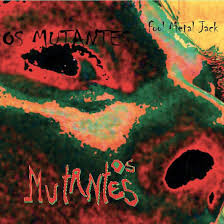
SOUNDTRACK: OS MUTANTES-“Fool Metal Jack” (2013).

Iosmut have known about Os Mutantes for years.  I never knew anything about them (and never really understood their name–although now that I have been working with Brazilian books at work I realize that their name is Portuguese for The Mutants (it was the Os that always threw me off).  I had no idea that a) they’d been around since the 60s and were part of the psychedelic scene or b) that they were still around (after some breakups and with a largely new lineup) or c) that they sang in English (which they do on several songs on this album) or d) that their new album kicked so much ass.

The album is called Fool Metal Jack and it is a fantastic mixture of fast heavy rock, Brazilian traditional sounds, what I assume are Native Brazilian chants and a heavy dose of weirdness.  All wrapped up in an anti-war stance, like on this track “Fool Metal Jack.”

A creepy, distorted  bassline introduces this song which sounds like the guy from Gogol Bordello singing a Tom Waits march.  It’s about a soldier in the middle of a war.  The bridge means more voices come in, bringing in an even more disorienting sound.  And the chorus chanted “Yes.  No More War” completes the song.  By the time the wailing guitar solo comes in the chants of “This is the war of hell” have even more impact.

This stomping song was a great introduction to this band who I now need to explore further.

[READ: April 18. 2013] The Last Interview

I enjoyed Kurt Vonnegut’s “Last Interview” and since I had always intended to read Bolaño’s I was delighted to see that our library had it.  Bolaño is a fascinating interview subject because you never really know what he is going to say.  There are even serious questions about the veracity of his life story which many people believe he fabricated for more dramatic effect.

But the one thing that is absolutely consistent about Bolaño is that he always praises writers whom he respects (and will trash those he doesn’t, although that seems to come more from the interviewer’s  instigation (not that he needs a lot).    So the last interview that he did is the one from Mexican Playboy which has been collected in Between Parentheses.  But the other three are earlier and, it seems, a little more “truthful” or at least less naughty-seeming.

What’s fascinating about this book is that the introduction by Marcela Valdes (“Alone Among the Ghosts”) is over 30 pages long!  The article originally appeared in The Nation on Dec 8, 2008 (read it here).  As such it’s not an introduction to this book, it’s introduction for English readers to Bolaño circa 2666.  And it’s a great read.  It is primarily about 2666, which Valdes has read many times.  She goes into interesting depth about the story but mostly she relates it to Bolaño’s own experiences while writing the book.  It focuses especially on his research about the real murders.  His interest was genuine and he sought help from a reporter who was doing genuinely decent work (ie. not accepting the word of the state about what was going on).

Bolaño has said he wished he was a detective rather than a writer, which explains The Savage Detectives and Woes of the True Policeman.  But Valdes also points out how almost all of his shorter novels have some kind of detective work involved–seeking someone who is lost or hiding.  The article was really great and is worth a read for anyone interested in Bolaño, whether you have read him or not. (more…)

Read Full Post »

vonlastintSOUNDTRACKSURFER BLOOD-“Demon Dance” (Live at SXSW, March 27, 2013).

surfer blood

I’ve liked Surfer Blood since I first heard them.  They write catchy, mostly short, poppy songs.  And usually after a few listens, the hooks really grab you.  The strange thing about the band is that the hooks aren’t always readily apparent, which makes their songs sound kind of samey sometimes.

Of course, samey isn’t a bad thing, necessarily.  Surfer Blood is quite distinctive and I tend to enjoy everything they do.  This new song sounds like their other stuff, which is fine.  But the most distinctive thing about the band of probably their singer who sounds like a less-affected Morrissey.

Having also listened to the song from the album I can say that the singer is far harder to understand live, so maybe live is not the best way to hear a new song from them, but for an old favorite, Surfer Blood has a great energy live.

Watch the show here and hear the studio version here.

[READ: March 27, 2013] The Last Interview and Other Conversations

Melville House has published a number of these “Last Interview” books, and as a completist I feel compelled to read them.  I have read criticisms of the series primarily because what the books are are collections of interviews including the last interview that the writer gave.  They don’t have anything new or proprietary.  The last interview just happens to be the last one he gave.   So it seems a little disingenuous, but is not technically wrong.

There’s so far five books in the series, and I figured I’d read at least three (Vonnegut, David Foster Wallace and Roberto Bolaño–the other two turned out to be Jorge Luis Borges–who I would be interested in reading about and Jacques Derrida (!) who I have always loved–I guess this series was tailor made for me).

At any rate, these interviews are from various times and locations in Vonnegut’s career.  There are six in total.  I don’t know if the titles they give here were the titles in the original publications but here’s what’s inside:

  • “Kurt Vonnegut: The Art of Fiction” from The Paris Review, Spring 1977 (by David Hayman, David Michaelis, George Plimpton, Richard Rhodes)
  • “There Must be More to Love Than Death” from The Nation, August 1980 (by Robert K. Musil)
  • “The Joe & Kurt Show” from Playboy, May 1982 (by Joseph Heller and Carole Mallory)
  • “The Melancholia of Everything Completed” from Stop Smiling, August 2006 (by J.C. Gabel)
  • “God Bless You, Mr. Vonnegut” from U.S. Airways Magazine (!!!), June 2007 (by J. Rentilly)
  • “The Last Interview” from In These Times May 9, 2007 (by Heather Augustyn) (more…)

Read Full Post »

woesSOUNDTRACK: ATERCIOPELADOS-Live at Bumbershoot, September 5, 2010 (2010).

atercioA rock en Español band who have returned after a brief hiatus, Aterciopelados have changed a bit since their early more punk days.  Their last album Rio came out in 2008, I knew them back in the mid nineties.  This brief set (7 songs) at Bumbershoot showcases their more mellow tracks (there’s pan pipes) on “El Estuche.”  The Colombian band has always been political, but it seems like they are much more explicit about it on this record.  As singer Andrea Echeverri introduces a number of song, she talks about how they are “important” and are meant to bring attention to the troubles of Colombia.

“Ataque de Risa” has a wonderfully catchy melody (and I believe she says her daughter is singing with them on it).  The song “Bandera” (which means “Flag”) is pointedly directed at Arizona’s anti-immigrant law.  She introduces it as saying that all peoples are together under a rainbow flag.   It’s a more angry sound for Echeverri’s voice, but she does a great job.  Her voice is really impressive.  “Rompe Cabezas” has a rollicking chorus that’s a lot of fun and “Bolero Falaz” ends the set with a very cool and catchy song.

Here’s a video of El Estcuhe

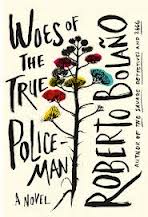
[READ: December 2, 2012] Woes of the True Policeman 

This is yet another unfinished novel from Roberto Bolaño.  Bolaño knew that he was dying and he created a lot of work in anticipation of his legacy.  The afterword of the novel says that they found all of the various parts of this novel in various locations among his work–hand written and computer drafted.  And they all mention this titles, so they are pretty certain about the order and that it is as finished as it could be.

Unlike some of his other posthumous releases, this one must be deemed pretty significant since it was published by Farrar, Straus and Giroux instead of New Directions (publisher of most of Roberto Bolaño’s other smaller works).

And really what it reads like is a kind of prelude to 2666.  For this is the same Amalfitano as in 2666.  But it is his story from before he moves to Sonora, Mexico–before all of the murders started.  Indeed, there are parts of 2666 which make Amalfitano’s past seem like it is unknown but this story fills in the gaps quite well.  One of the details in 2666 is that Amalfitano’s teaching contract had expired at the University of Barcelona, although this book gives the behind the scenes reason why it expired.

Bolaño has many many stories in which he explores the past of a character from a different story.  Typically, it is a novella in which a minor character from a bigger novel gets his or her own story told.  And that seems to be the case with this as well.

The story is set up in five sections (just like 2666).  Section I of this story (part of which was as excerpted in Harper’s recently) is called The Fall of the Berlin Wall and tells how Amalfitano, a professor, fell for a young poet named Padilla.  He wound up having an affair with him, which ended his career (I’m unclear whether it is because he is a student or because the affair was homosexual that the University wanted him out).  Amalfitano had never had homosexual desires before, and he was a proud husband and father, but he found that Padilla really affected him.

And so Amalfitano and Rosa, his daughter, moved to Sonora and the only school that would have him. (more…)

Read Full Post »

SOUNDTRACK:  JEFF THE BROTHERHOOD-Tiny Desk Concert #165 (October 8, 2011).

This was my first exposure to JEFF the Brotherhood, a rollicking duo who blast out the walls of the NPR studios.  The guitarist and drummer play simple, power punk (quite well) and they sound like a whole band, not just two guys.

“Diamond Way” reminds me of the Meat Puppets–echoey lazy-sounding punk.  ANd the oh oh oh oh oh is very catchy.  And then, after describing an NPR host as sounding like Ira Glass–if he were an old woman (and then apologizing if he offended anyone), they play “Bummer”–shirtless—presumably a first for the NPR offices.

“Bummer” is a mellower song and their sound doesn’t sound less full for the mellowess–especially when he kicks on the distortion pedal.  “Bone Jam” is one of my favorites–more ooh’s and the simple but wonderful lyrics “Gonna grind your bones to make my bread.”  It’ s amazing that two guys can sound this good.

[READ: August 17, 2010] “The Ruin of Amalfitano”

Natasha Wimmer has translated yet another posthumous work from Roberto Bolaño, this one called Woes of the True Policeman, due out this month.

This may already exist, but I hope someone is compiling a family tree of all of the Bolaño characters who have appeared in different locations.  For instance, the Amalfitano in this story appeared in 2666, indeed he has a whole chapter about himself.  And we know it’s the same Amalfitano because they both have a daughter named Rosa.  This story is set before 2666 and these fascinating events would shed some light on the state of Amalfitano when we do meet him in the novel.  Of course, Bolaño’s writings don’t seem to follow a conventional strategy so who knows if he intended any of this to be part of the “missing” Part 6 of 2666.

Anyhow, this story is about Amalfitano, but it opens with Padilla who decided to become an artist at the age of 13.  After dabbling in theater and film, he settled on poetry.  By 17, he was a sarcastic angry kid who could be easily provoked to violence (he claims that when fighting Nazis, anything is permitted).

At 18, he published his first book of poetry and when he was 21 he showed the poems to Amalfitano.  Amalfitano was a teacher of Latin America writers at the University.  He liked Padilla’s poetry, although he didn’t much like Padilla who didn’t come to class very much.  But once Amalfitano gave him praise for the poems, Padilla never missed another class. He even invited Amalfitanoto his house for parties.  After many such parties, the two became lovers.

Once the University learned of this, Amalfitano was fired.  (more…)

Read Full Post »

SOUNDTRACK: ST. VINCENT-Actor (2009).

I had seen St Vincent on Austin City Limits, and her juxtaposition of waif-singer with noise mongering guitar player blew me away.  So I was a little disappointed when this album opened up with this gentle, practically 1950s sounding vocal and string line in “The Strangers.”  It takes two and a half minutes, but the noise eventually comes and it totally changes the texture of the song.  Of course now, “make the black hole blacker” is a fun thing to sing along with (and the lyrics in general are pretty great).  “Save Me from What I Want” is another quiet song with a catchy chorus.  “The Neighbors” has a great melody with interesting strings over the top of it.  “Actor Out of Work” brings in some stranger sounds to the album.

There’s something interesting about the songs on this album, like the way “Black Rainbow” has these sweet string sections but for the end half builds a crescendo of tension. I also love that a seemingly delicate song can be called “Laughing with a Mouth of Blood.”  Perhaps the strangest song on the disc is “Marrow” which has a strange horn section and the chorus: “H.  E.  L.  P.  Help Me Help Me.”  “The Bed,” “The Party” and “Just the Same But Brand New” continue in this vein–like a Disney princess song with a horrible threat underneath: “Don’t Mooooove, Don’t Screeeam.”  But that sense of princess who are slightly askew really resonates on this record.  It’s not as willfully dissonant as her first record, but lyrically it’s a knife covered in cotton candy, it’s still a gem.

[READ: March 20, 2012] McSweeney’s #39

One of the bad things about having a job with actual work is not being able to write complex posts about compilation books.  It’s hard to have your book open while bosses walk by.  So, its been a while since I read this and I’ll do my best to remember it all.  Incidentally, if you’re keeping track I skipped 38, but I’ll get to it.

Issue #39 is a hardcover and a pretty one at that. It has a front cover photo (as well as many interior photos) taken by Tabitha Soren.  Yes, forty-somethings, THAT Tabitha Soren, from MTV who has a new career as a photographer.

This issue continues with the recent return of the Letters column (as the magazine and front matter become more serious the return of the Letters adds an air of silliness). (more…)

Read Full Post »

SOUNDTRACK: TRACY THORN & JENS LEKMAN-“Yeah! Oh Yeah! from Score! 20 Years of Merge Records: The Covers (2009).

This cover makes me think that I like The Magnetic Fields for their songs, but not really for their singing or arrangements.  This song is pretty hilarious (every yeah oh yeah is in response to something awful (Do you want to break my heart?  Yeah, yeah, Oh yeah!).  The cover by the wonderful Tracy Thorn & Jens Lekman is much more understated than the original, with simple instrumentation.

The original is a chiming, kind of noisy track.  While the cover has Thorns beautiful voice languorously singing the lines while Lekman chimes in.  The backing music is delicate and almost sweet (a nice contrast to the lyrics).  I think the song is fantastic, but once again, I like the cover more than the original.  This is especially surprising as the cover is actually slower than the original.  But, really, it’s hard  to pass on Jens Lekman.

[READ: April 30, 2012] “Borges on Pleasure Island”

When I browsed for Rivka Galchen articles the other day, I found a few published works that were not in Harper’s or The New Yorker.  So, yes, I’m going to write about them here.  And since I’m caught up with the end of Gravity’s Rainbow, these short non-fictions were a nice balm.

I have been encountering a lot about Borges lately.  Roberto Bolaño loves him, there was a recent article in Harper’s about him (a review of some new translations called “The purloined Borges: Translation and traduction” by Edgardo Krebs) and now I get this article.  This article is a strange one–and I’m not entirely sure where it would have appeared in the Times.  It’s strange because it’s kind of a review of a new collection of Borges’ work (this one called On Writing, the first of three Borges’ related works published that month).  Although really she only talks about one essay, “Literary Pleasure.” (more…)

Read Full Post »

SOUNDTRACK: DROPKICK MURPHYS-“Finnegan’s Wake” (2005).

This song has been around forever and there are dozens of different versions of it.  For your more traditional versions, you want The Dubliners of Christy Moore (if you really want to hear the words).

But The Dropkick Murphys do it the way I like my traditional Irish songs–fast and loud and full of punk.

Although to be honest, The Dubliners’ version has a bit more swagger and fun (it’s hard to beat Ronnie Drew for a hard living singing voice).

Whichever version you choose, be sure to have your favorite ale or lager (or whiskey punch) on hand.

[READ: April 1, 2012] Finnegans Wake

I decided it was time.  How many times have I read the opening line of this book:

riverrun, past Eve and Adam’s, from swerve of shore to bend of bay, brings us by a commodius vicus of recirculation back to Howth Castle and Environs.

And as many times I have read the end of the book:

A way a lone a last a loved a long the

But now it was time to read the other 620-some pages of it.  So I set aside some time this weekend, and, in the spirit of Joyce’s stream of consciousness, I stayed awake until I finished it. And having digested the book, I now get to write all my thoughts about it.

(more…)

Read Full Post »

SOUNDTRACK: UNDER BYEN-“Samme Stof Som Stof” from Viva Piñata! (2008).

Under Byen is a Danish band and has only one song on Viva Piñata.

I had originally written a review under the impression that it was different song (the CD and even iTunes confuses this song with “Kiss ME” by Uncut.  And you can see my initial impression below).  Now, knowing that this band is not singing in English changes a lot about my perception of what the sounds actually are.

This is one of the few remixes on the disc where I listened to the original first (to make sure I had the right song).  The original is an interesting mix of peculiar instruments and some cool soundscapes.  This remix chops it up into pieces and puts it back together.  It’s an interesting twist on the song but man, the original is so much better.

[Here’s my original thoughts, when I read a bit about the song when I thought it was by the band Uncut and I thought that it was not a remix.  And I saw that they were described as a poppy fuzzy band.

this song comes from one of their official releases.  “Kiss Me” is not a remix but it sure sounds like one.  It is kind of warped and the sounds feel manipulated in crazy ways. The vocals are mostly moans and noises. But it has a catchy beat and some interesting sounds. This is a weird song, and I’m not sure how it fits in with the rest of the album.  I do kind of like it, but I wouldn’t hunt them down for more.

Of course, now that I know it’s supposed to sound like that, I change my tune completely. And I will hunt down some other songs for comparison.

[READ: March 23, 2012] An Episode in the Life of a Landscape Painter

This is the third novel from Aira that New Directions has released (translated wonderfully by Chris Andrews). It’s the first one they published and the first one of his that I had heard of.  I actually heard of it long before I knew of Aira because the Preface is by Roberto Bolaño.  And if you do a search for Bolaño, this title always comes up.

And so now I finally got to read this mythical essay.  Sadly, it turns out to be an essay called, “The Incredible César Aira” which was recently published (2011) in Between Parentheses–bad timing for me.  It also has nothing to do with this novel specifically

But on to the novel itself.

This short book is about the German painter Johann Moritz Rugendas.  Little did I know that he was real.  He was a landscape painter (a profession which became obsolete with the invention of cameras) and he was very well-regarded.   Twice during his career he went to the Americas to paint the land.  On his second journey (from 1831-1847) he went to Mexico, Chile, Peru, Brazil and Argentina, which resulted in thousands of paintings.

The opening of the book is rather philosophical (and a little dry).  But after about ten pages, the book picks up with the titular episode.  Rugendas and a German painter named Robert Krause set off in 1837 from Chile.  They got on well.  Rugendas was far superior technically and Krause, although also quite talented, was always respectful.  Rugendas had sold prints and books and his Picturesque Voyage through Brazil was printed on wallpaper and China. (more…)

Read Full Post »

« Newer Posts - Older Posts »