Feeds:
Posts
Comments

Archive for the ‘Authors’ Category

SOUNDTRACKRUSH-Beyond the Lighted Stage (film) (2010).

Okay, so I haven’t seen this yet, but I’m delighted to be able to add the link to the trailer.

This film is an in depth look at Rush’s history.  There’s interviews with all three of them (Neil speaks!) as well as all kinds of fans.  According to the website, it will air one day only, June 10 in the US and Canada, June 7th in the rest of the world.  It’s only playing in 4 theaters in NJ, and there’s a slight chance I can get to it.

Otherwise, I’ll have to wait for the DVD. But those 2 minutes of trailer were very exciting!

[READ: May 24, 2010] “Do Not Touch”

This story works a lot like an onion.  It starts in one place, then it sort of burrows in through a series of layers.

We open with the narrator falling for Thomas because he seems nervous (she find this an attractive quality in everyone).  He is a music reporter, and she is able to assist him with information about Diana Krall.  Soon enough, she has moved in with him.

But things aren’t great.  And then, one day, when she brings a watch to a jeweler, she marvels at the man’s delicate touch and his charm.  And she rummages through the house to find more watches for him to fix.

One of these watches she found at the zoo.  No one claimed it, so she kept it.  It is engraved and is quite old.

The story more or less culminates on a return visit to the zoo, where it takes a decidely different turn.  The narrator watches a woman makes a connection with a primate; a connection that aleinates her son.  And as the narrator watches this scene, she makes a personal decision.

What I loved about this story was watching the onion unfurl in just a few paragraphs.  The only problem I had was that I felt the onion didn’t unfurl all the way.  Many decisions were reached, but I’m unclear what her final decision will be.

Nevertheless, this story was very enjoyable.

Read Full Post »

SOUNDTRACK: WALLER NOT WELLER blog.

WallerNotWeller found me when I reviewed Metallica’s Kill ‘Em All.  I went to his site and I adore it!  He writes some great reviews of concerts, CDs and singles.  His current project is the best singles and discs of 1983.  But while he’s working on that, he’ also reviewing a bunch of concerts that he’s been to recently.

What I love best about this site is his amazing breadth of appreciation for music.  There’s been a flurry of activity as he is completing the Top 50 list.  And, since I subscribed by email, I love that my Inbox has been inundated with reviews of this diverse collection: AGNETHA FALTSKOG (She of Abba fame), ECHO AND THE BUNNYMEN, MINUTEMEN, MISFITS, The B-52’S, DAVID BOWIE, DANIEL JOHNSTON, THE CARPENTERS, JOHNY CASH & AC/DC.  Now that’s breadth!

His reviews are a bit more comprehensive than mine (which I think means he points out a number of negatives that I don’t), but he and I see eye to eye on a lot of these discs.  It’s quite a treat.  And, he’s British, so his viewpoint is slightly different than mine…it’s a good eye-opener!

[READ: May 23, 2010] Wet Moon 4

With each new volume of this series, Campbell changes the appearance of his characters more and more.  Most of the characters now have softer features and big round eyes.  I find it more and more disconcerting, especially since the thing I loved about the book was the utter realism of his characters.

Fortunately the bodily features of the characters haven’t changed: they’re still believably shaped and realistically drawn, it’s just the faces are so weird (Trilby is so soft-looking now, oh and Cleo has a mohawk!).  But at least  the look is consistent throughout the volume.

So Wet Moon, the town, continues to thrive with this strangely intense goth subculture.  Yet this volume seems to introduce an “outsude” world too.  There’s a woman who recoils at two gay men sitting in her booth at a coffee shop. There’s even talk of homophobes attacking gays in the area.  And here I thought that Wet Moon was an idyllic place where all kinds of subculture thrives happily. (more…)

Read Full Post »

SOUNDTRACK: LED ZEPPELIN-The Song Remains the Same (1978).

I don’t normally try to have my soundtracks correspond to the book. But since Andrew suggested that Mastodon’s Leviathan was a good match, I decided I’d try to have all six Soundtracks relate to the book some how.

The obvious starting point was Led Zeppelin’s “Moby Dick” and where better to look than at the over-the-top live version contained here.

As a classic rock guy, I grew up worshiping Led Zeppelin.  And I have no way of objectively talking about their music, really.  However, when I was in college, some guys in my dorm played this particular release all the time and claimed it to be the best CD in the history of music.

And thus, I have a delightfully convoluted relationship to this live album.  I used to really dislike it: extended jams of silliness rather than rocking live tracks.  However, as I’ve gotten older, and I’ve begun enjoying jam bands more, I see the enjoyment of this kind of show.  And yet I read a review of this very disc the other day that described it as being a few shows past Led Zep’s prime, and I think that’s pretty valid.

I haven’t heard any of the other recently released live discs (which are supposed to be amazing).  But this one feels overblown and pretentious.  And there’s nothing wrong with that if that’s the kind of band you are, but Led Zep was not that (until later);  they were meaty and heavy.

This version of “Moby Dick” is 12-minutes long.  Over 10 minutes of it is a drum solo.  This always reminds me of the line from Dazed & Confused: “Man, I ain’t belivin’ that shit about Bonham’s 1-hour drum solo…I mean, 1 hour on drums…you couldn’t handle that shit on strong acid, man.”  The rest of the disc is the same way: long solos that don’t really showcase virtuosity, they just sort of go on and on.  I do like the kevboard solo in one of the songs, but the “ah ah” part in “Dazed and Confused” is pretty silly.

In some ways, the song “Moby-Dick” (and the album itself) is like the book: a product of its time.  In 2010 , if you played a ten-minute drum solo (even Rush have added electronic horns and a swing number  to Neil’s drum solo) you’d be mocked.  But back in the 70s, it was a badge or honor.  Similarly, Moby-Dick seems quaint and weird to most contemporary readers.  And yet, put in context, it’s funny and surprisingly forward thinking.  And I suppose the music does make a good background for reading it, too.

[READ: Week of May 24, 2010] Moby-Dick [Chapters 1-18]

So, the instigators at Infinite Zombies are hosting a read along for Moby-Dick (and yes, the hyphen is supposed to be there).  I’m going to be a contributing writer to this shindig, so I’m going to curtail what I say here somewhat [see my post about religion, here]. Also, unlike Infinite Jest and 2666 which had difficult, multi-charactered, multi-layered, confusing plots, Moby-Dick is fairly straightforward.  And so, there’s not a great need for in-depth story summary (not to mention each of the 100+ chapters is titled, so you know what’s going to happen in each one!).

But with that out of the way, let’s see what I can say about this book.  Oh, one more thing, I’ve been trying to include page numbers in my citations, but there are just too many versions of this book (and I am using one for my reading and another for my copy-and-paste-quotes–the whole book is available at that link), so I’m just going with Chapters.

I was joking with some friends recently that their sister thinks Moby-Dick is very funny.  And I have to say I was surprised about how funny it was, too.  Not gut-busting funny, mind you, but funny enough. (more…)

Read Full Post »

SOUNDTRACK: BBC Sessions (various).

Many many bands that I like have recorded tracks for the BBC.  And after several sessions, they tend to get released as BBC Live or BBC Sessions discs.  In the last few years, I’ve gotten discs from the Cocteau Twins, Tindersticks, The Beautiful South, Belle and Sebastian and Therapy?  One of the first ones I’d every gotten was The Smiths’ Hatful of Hollow.

I’ve always loved these releases.  The recordings are “live,” even though they’re not in front of an audience.  For the most part they don’t vary greatly from the originals (that’s not always the case, mind you, but most of the time it’s true.)

What makes these releases so great is that by the time the bands do these recordings for the BBC, the original album has been out a while and the band has toured a bit.  So, they know the song backwards at this point, and they usually record a version that’s faithful to the original but a little more playful.  I always thought that the Hatful of Hollow versions of songs were better than the originals.  It was many years before I understood why there were two “official” releases of the same songs.

There are so many BBC recordings out there (this is an incomplete list).  If you like a British band, chances are they recorded some sessions.  And I don’t know if the BBC is hard pressed for money or what, but they seem to be releasing them by the handful lately.  The biggest problem of course is that most of them are not available in the States (at least for a reasonable price).  And that’s a drag.  So find them used and enjoy!

[READ: May 19, 2010] Girl with Curious Hair

This is DFW’s first collection of short stories.  I clearly bought this copy soon after finishing Infinite Jest.  I was delighted to find as a bookmark an old stub from a sub shop that I used to go to all the time when I worked in Cambridge, Ma.  I wonder if that sub shop is still open.  It was in Brighton, was more or less on my way to work, had a predominance of Irish products and had delicious subs that were almost cheaper than buying the stuff yourself.  I had checked off a few stories in the table of contents (most of the shorter ones) but that stub brought back more memories than the stories did.  I didn’t even recognize the ones that I had apparently read.

And the stories are pretty memorable.  So I wonder if I didn’t read them at all.

The first story is “Little Expressionless Animals” (or, the Jeopardy! story).  In fact, if I may back up, the whole collection is really rife with pop culture, especially television references.  In David Lipsky’s book, Although of Course You End Up Becoming Yourself , DFW states matter-of-factly that he has an obsession with TV and pop culture, so this shouldn’t be surprising.  But for me it was disconcerting to have the pop culture not incidental or as a set dressing, but absolutely central to the stories. (more…)

Read Full Post »

SOUNDTRACK: FRIGHTENED RABBIT-The Winter of Mixed Drinks (2010).

I enjoyed Frightened Rabbit’s previous disc ever so much: a twisted blend of rocking folk music and very dark lyrics.  The fact that a number of these songs were used in Chuck was a treat for me.

I’ve never heard their first disc, so I don’t know how much their songwriting changed from disc 1 to disc 2.  But there’s a pretty huge leap from disc 2 to disc 3.

The most notable track has got to be “Swim Until You Can’t See Land.”   And it’s notable for having a really rocking and catchy and undeniable chorus.  They liked it so much, they reprise it later in the disc (with new instrumentation and such) on “Man/Bag of Sand.”

The rest of the disc sounds like Frightened Rabbit, but like the full band version.  There’s just so much music, that it actually distracts a bit from the lyrics (on the previous disc, the lyrics were certainly more of the focus).  There’s even a string arrangement on “Living in Colour.”

And yet despite all of these changes, they never lose what makes FR special: that voice and that outlook.  Although I’m sure I would have enjoyed if this disc was similar to the previous one, I’m always delighted to see a band take some chances and try something different.  And here they did, and it works wonderfully.

[READ: May 19, 2010] “Ash”

On April 14, Iceland’s volcano Eyjafjallajokull erupted.  And here, barely a month later, Roddy Doyle has written a story in which that eruption plays a role.  I’m impressed enough that he could get a coherent story written in that short amount of time, but I’m amazed that it was squeezed so quickly into The New Yorker‘s fiction schedule.  Admittedly, I don’t know how The New Yorker does anything, so I don’t know if they had a slot open (doubtful) or if they had to push back other stories (unlikely) or maybe he was slotted to give them something else, and whipped this out instead?  Beats me.  Whatever the reason, I was really surprised to see this here. (more…)

Read Full Post »

SOUNDTRACK: THE BEATLES-Beatles for Sale (1964).

After the riotous fun of A Hard Day’s Night, I expected that this disc would not only continue the fun, but also be full of songs that I’d heard all the time on the radio.

But wow, this disc is kind of a downer.  “I’m a Loser.”  Really? It’s catchy as all get out but what happened to these guys in this last year?  “Baby’s in Black.”  Wow, these guys are serious now.  The opener, “No Reply” is all about getting rejected.  And “I’ll Follow the Sun” is about leaving and losing a friend.

But there are some good times as well. The cover of “Rock n Roll Music” is a little too stiff for such a rollicking song (kind of like how “Roll Over Beethoven was a little too stiff previously).  But “Eight Days a Week” is a rocking good time.  Fun for all and the first sign that the fun Beatles haven’t grown up completely.

The second half of the disc I barely recognized at all.  One or two songs were kind of familiar, but I wasn’t singing along with abandon.

Yet despite my unfamiliarity, the disc shows remarkable progression in songwriting, in structure (and even recording techniques–again, the liner notes were really informative about the technology they used).  I doubt many people consider this their favorite Beatles disc, but I think it’s a fine transition into what’s to come.

It’s also quite surprising to see how much their hair has grown in a year.

[READ: May 16, 2010] “Lost in the Funhouse”

I read this short story because it is something of the foundation of David Foster Wallace’s story “Westward the Course of Empire Takes Its Way.”  This story is part of Barth’s larger collection also called Lost in the Funhouse.  And, based on this story, I’m looking forward to reading the rest of the collection.  But this story works in an of itself and, since it forms the backbone of the other story I’m going to mention it by itself.

This story is written in a thoroughly postmodern way.  As the story opens, with the enigmatic line, “For whom is the funhouse fun?,” we are introduced to Ambrose.  Ambrose has come with his family to the shore for “the holiday, the occasion of their visit is Independence Day, the most important secular holiday of the United States of America.”

Shortly after this italicized part, the story interrupts itself with this:

Italics are also employed, in fiction stories especially, for “outside,” intrusive, or artificial voices, such as radio announcements, the texts of telegrams and newspaper articles, et cetera. They should be used sparingly.

And so it goes with the rest of the story.  The author (one assumes) interrupts the flow of the narrative, letting the reader know that there is far more at foot here than just the story of Ambrose at the beach.

The story eventually gets back to the matter at hand: Ambrose, his brother Peter and Peter’s girlfriend Magda are driving with Ambrose’ parents to Ocean City.  This trip is made three times a year but this is the first time that Magda has come with them.  They play car games (spot the towers), and generally act like a family on a long car trip.

At this point the author interrupts again to note that:

So far there’s been no real dialogue, very little sensory detail, and nothing in the way of a theme. And a long time has gone by already without anything happening; it makes a person wonder.

Oh, and all along it is quite apparent that Ambrose is, as the title suggests, lost in the funhouse at the beach.

When they finally arrive at the beach, there has been an oil spill and no one wants to swim, so they stay on the boardwalk (not under the boardwalk).  Then the family decides to go for a swim in the pool.  At which point the author jumps in again and stops the meandering:

There’s no point in going farther; this isn’t getting anybody anywhere; they haven’t even come to the funhouse yet. Ambrose is off the track, in some new or old part of the place that’s not supposed to be used; he strayed into it by some one-in-a-million chance….

When the funhouse is finally mentioned as an activity, there is general hilarity and nudging and winking about what happens in funhouses (which Ambrose is too young to understand).  At this point, it’s worth noting that Ambrose has a pretty big crush on Magda.  He has spent many an afternoon with her while the three of them were playing (although she clearly thinks nothing of it).  When he suggests that he and Magda go in the funhouse together, everyone wonders what he’s thinking, but no one says anything (again, he’s too young).

Ultimately, the three kids make it to the funhouse, the entrance of which blows girls’ skirts up (and then Ambrose realizes the point of the funhouse!).  And he realizes that the funhouse is not meant for him.  And then he gets lost.

From there the story turns into fantasy, imagination and future possibilities.

It’s a fascinating piece of work.  I certainly wouldn’t want all of my stories to be constructed in this way, but I really appreciate this point of view and the, in my opinion, funny intrusions that break the fourth wall.

For reasons I’m not entirely clear about, the whole story is available here as a Word doc.

Read Full Post »

SOUNDTRACK: THE BEATLES-A Hard Day’s Night (1964).
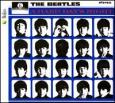
Despite my CD player trying to eat this disc, I still managed to listen to the whole thing.

This album came out just a few months after their second disc.  But it is quite a leap forward musically.  Rather than the simple rock and roll sound of the first two discs, there’s more depth of sound (attributable to George’s 12 string guitar?)  Perhaps also because of the use of the 4 track, rather than the 2 track mixer.  Also, Lennon and McCartney wrote all of the songs, so they weren’t bogged down by covers,

At first I thought that I had gotten to my first Beatles disc where I knew all the songs.  But that turned out not to be true.  I knew the first half of the disc (the songs that are in the movie).  But when we got to the second half (and I learned that the US version was different in that in included George Martin’s score for the movie (!)) there were a couple of tracks I didn’t know at all.

With the tracks sequenced as they are, you don’t get a big crunching finale at the end of the disc, like on the first two.  However, those first few songs are pretty classic (even if “Can’t Buy Me Love” completely contradicts the sentiment of “Money” from the previous album.  This is a really enjoyable fun disc from start to finish, even the songs I didn’t know.

I was pretty certain that after this disc, I’d recognize all of the songs.  But I had one more surprise waiting for me.

I also brought the movie home from the library one night but I couldn’t get through most of it.  Guess you had to be there.

[READ: May 13, 2010] “The Flight Album”

This is a memoir of the a Vancouver author’s stay in New York City.   I wasn’t really sure how interesting this story would be, I mean, there are a million stories in the City, so why should this transplant’s story be worth reading?

The piece starts with the author’s awkward assimilation to New York (and the almost offensive Dave Chapelle joke she relates to a cabbie).  His mild reaction lets her know that maybe she can make it there.

For me the best part was the author’s insert of Shit: A Guide to Canadian Usage.  The most notable difference between Canadians and Americans, she has found, is that Canadians use the word “shit” all over the place, and in many ways that Americans do not (in fact it is more all purpose than fuck.  The things that started it all was her use of the phrase “What the shit.”)  It is quite a funny section. (more…)

Read Full Post »

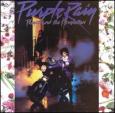
SOUNDTRACK: PRINCE-Purple Rain (1984).

I resisted Prince for most of my high school and early college years.  He was just so, so, so.  Well, actually I think he was just so popular.  Plus, my freshman year of college, someone on our floor used to blast this CD at full volume every time he did laundry.  It was pretty oppressive.

As I grew less strident, I learned to appreciate his talent (and his absurdity), and even to like Purple Rain.  And when I divorce Prince from the hype, the overplay, the excess, the quirks (yes, I’m talking 2 U) this is a damn fine record.

It’s also somewhat surprising that it was as big a hit as it was.  Musically, it’s all over the place (or is that something for everyone?).  I think in today’s specialized market, this may not have sold as well (or else it would be like Gnarls Barkley and be a hit regardless).

“Let’s Go Crazy” is poppy sure, but it rocks really hard (and showcases Prince’s guitar virtuosity).  But it’s the  second half of the disc that is just berserk with great music. “When Doves Cry” has that insane guitar solo opener.  The rest is simple keyboard pop (until the ecstatic screams at the end).  “I Would Die 4U” is the poppiest thing on the disc.  And the disc ender, “Purple Rain” is just a great rock track.  Delightfully pretentious in the beginning, full-bodied by the middle.  It’s quite genre defying.

I’m obviously not the biggest Prince fan in the world.  I have a few discs from this period (and the greatest hits).  It’s more than enough Prince for me.  And while I don’t listen to this disc while I do laundry, sometimes, when it’s warm, I’ll open the windows and crank this up.

[READ: May 14, 2010] “1999”

This story opens with the line “I wouldn’t fuck [the artist formerly known as Prince] if he was the last man on Earth.”  This turns out to be excellent foreshadowing.  The year is 1999, morphing into 2000.  And the unthinkable has happened.  There is no one left on the planet.  Except for the voice of TAFKAP on the radio, exhorting women to cum 2 him and b with him.

Although Sonya wouldn’t fuck him, several other women in the story most certainly would.   And so, the story follows four different women, each with her own agenda as they travel across the continent to Minnesota, to Paisley Park. (more…)

Read Full Post »

SOUNDTRACK: NEIL YOUNG AND CRAZY HORSE-Greendale (2003).
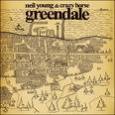
This is a lengthy song story (rock opera?) from Neil Young.  It’s a pretty meandering story, musically, although there’s a lot of electric guitars involved, and Crazy Horse keeps the pacing pretty brisk.

The songs are all pretty long (from about 5 to 12 minutes).  And they are all employed for telling the narrative of the town of Greendale and its first family: the Greens.  The town of Greendale was named after a patriarch of the Green family.  The story focuses on his great-granddaughter ( I believe) whose name is Sun.

Her parents own the Double E ranch, where her mom sings and her father paints.  The story is set during Bush’s war in Iraq.  And as more revelations come out, Sun has more and more reason to fight.  She ultimately winds up fighting PowerCo, chaining herself to their giant eagle statue, wielding only a megaphone and the truth.

Later, she plans to travel to Alaska to protect the environment.

But there’s also ancillary characters.  Sun’s cousin Jed is trying to do anything he can to avoid joining the army.  But when his drug running comes to the attention of the cops he acts impulsively against someone he actually knows and is punished for his crimes.  We also meet Sun’s grandfather, a tough old man who speaks his mind just a bit more often than he speaks with his guns.

And there’s also Earth Brown, the boy that convinces her to go to Alaska with him.

Musically, the songs fall into a similar vein: long, loping, kinda sloppy jams, acoustic guitar over the top of Crazy Horse, and of course Neil’s voice.  There’s nothing revolutionary about the music.  It’s just a solid collection of tunes.  If you don’t like songs that last 12 minutes, this may not be your cup of tea.  But I find that if I engage with the story I really enjoy the disc.  And yes, there’s a few catchy choruses too.

[READ: May 11, 2010] Neil Young’s Greendale

Adaptations from one media to another are quite common these days.  So, to see a comic book made from a record (and a film) isn’t that surprising.  What is surprising is how this story comes to life on the page.  I haven’t seen the film of this record, so I don’t know how it compares, but this graphic novel really fleshes out the story from the CD.

I was delighted to get this as a prepub, as I didn’t even know it was coming out.  This preview copy of the comic is one of the first advance copies I’ve received that is not anywhere near the final version.  The final product will be in color, while my version has about ten pages in (beautiful) color and the rest left uncolored.  I didn’t count the pages, but I suspect that a fairly large amount of the final product was left out as well.  And that’s fine. (more…)

Read Full Post »

SOUNDTRACK: Thee Silver Mt. Zion Memorial Orchestra-Kollpas Tradixionales (2010).

Silver Mt. Zion are back!  And they are noisy!

This disc continues their fine output of haunting, rambling epics.  The opener is a 15 minute slow builder called “There is a Light” and the finale is a 14 minute story called “‘Piphany Rambler.”  In between we have  a couple of multi-part tracks: “I Built Myself a Metal Bird” and “I Fed My Metal Bird the Wings of Other Metal Birds” which are some of the fastest tracks they’ve recorded.  The other “suite” is 3 versions (and spellings) of the title track.

The one consistent thing about Silver Mt . Zion (in whatever version of their name they employ) is that they write incredibly passionate music.  It’s often raw and it swells and ebbs with feeling.  I especially enjoy the (multiple) climaxes that fill all of the longer songs.  And when the band brings in the horns and the strings and the whole group sings along, it’s very affecting.

The one thing that I’m still not totally on board with is Efrim’s voice.  On previous releases, I bought it because he sounded very angsty, but I’m starting to think that the tenor of his voice just doesn’t work with the bombast of the music.  When the backing singers chime in, the sound is glorious, but I find his voice to be simply the wrong sound.  There’s a few parts on the disc where he sings in a lower, softer register, and I found them really moving.  I think if he sang all of the parts like that, they would impact the songs more strongly (and maybe even be more understandable).

I realize that the vocals are an essential part to the disc, and I definitely get used to them after a few listens, I just feel like the whole disc (and not just the music) would be amazing if Efrim used that deeper register more.

Nevertheless, the music is really fantastic, and if you buy the LP, you get some great artwork, too.

[READ: May 13, 2010] McSweeney’s 34

After the enormous work of Panorama, (McSweeney’s newspaper (Issue 33)), they’ve returned with a somewhat more modest affair.  Two slim books totaling about 400 pages  Each is a paperback. The first is a collection of short stories artwork, etc.  The second is  nonfiction work about Iraq.  Both books are bound together in a clear plastic slipcover (with a fun design on it).  [UPDATE: I cannot for the life of me out the books back in the cover.  They simply will not sit without ripping the plastic.  Boo!]

The first collection opens with a Letters column, something that we haven’t seen in years!  And, as with the old letters column, the letters are absurd/funny/thoughtful and sometimes just weird. (more…)

Read Full Post »

« Newer Posts - Older Posts »