Feeds:
Posts
Comments

Archive for the ‘Authors’ Category

SOUNDTRACK: SUFJAN STEVENS-“Too Much” (2010).

NPR hosts a free online version of this song from Sufjan’s new album The Age of ADZ. I’ve been a fan of Sufjan’s orchestral pop for quite some time now. Although I’m less thrilled by his overly electronic experiments.  This song is an electronic meisterbrew, over-filled with all kinds of swells and electronica.

It still has Sufjan’s wonderful voice underneath it, and it retains many elements of Sufjan’s style, but it doesn’t make me all that excited to hear the rest of the album.   Of course, in the past, Sufjan has made many esoteric long-form electronic noodles (this one is over 6 minutes) as sort of supplements to the real deal.

So maybe this is an experiment?  We shall see.

[READ: October 22, 2010] “The Hofzinser Club”

Michael Chabon is another of the 1999 New Yorker’s 20 Under 40 authors.  I enjoyed Kavalier & Klay, but I read it long enough ago that I didn’t recognize this as an excerpt from it (clearly I will have to read it again).

This excerpt is from Josef Kavalier’s early attempts at magic.  We see Josef’s patience and unabashed desire to become a great magician (he has even written a musical based on Houdini).  He begins studying under Bernard Kornblum, who is a respected magician and a member of the prestigious Hofzinser Club.  This Club is (mixed metaphor alert), the brass ring that Josef imagines and hopes will accept him some day.

Josef’s younger brother Thomas is even more excited at the prospect of Josef’s fame, and he tries to think of amazing stunts that will shorten Josef’s wait until he is honored by the Club.  He suggests jumping from a plane while tied to a chair.  Young Josef of course wonders how he would even get a plane.  But spurred on by his brother’s excitement, Josef hatches a plan that’s within his reach. (more…)

Read Full Post »

SOUNDTRACK: TRICKY-“Kingston Logic” (2010).

I really liked Tricky’s debut album Maxinquaye.  Although I felt he had somewhat diminishing returns after that.  Then he got into acting so I assumed his musical career was over.

Now he’s back with this album (although I see on allmusic that he has actually been releasing for quite some time, and had a “comeback” album in 2008).  This song, which you can hear on NPR, while still kind of angry, is less claustrophobic than his early stuff (which I liked, but it’s nice to see him coming out from under that).

The female vocalist that he employs on the song is fine–she raps more than sings, which is kind of a shame since Tricky usually picks women with great and interesting voices.  But since this “rap” seems more like another instrument than actual singing/lyrics, it works quite well as a sound collage.

The selling point of the song is the infectiously simple guitar line that repeats throughout.  There’s a lot of other things going on that keep the song very busy, including a spoken section by Tricky himself.  The whole song is not even 3 minutes long;  it comes in, does what it intends and then takes off.

The more I listen to the song that more I really like it and I’m going to have to check out the whole disc to see what else he does.  I miss the gorgeous vocals, but I’ll happily take more of this, too.

[READ: October, 20, 2010] “Issues I Dealt with in Therapy”

Matthew Klam is another of the 1999 New Yorker 20 Under 40 authors.  I enjoyed the excerpt of this story in the main issue, but I have to say I was rather surprised at how differently the  story turned out than I expected.

The protagonist of this story and his girlfriend are invited to a wedding on a fancy exclusive island (think Nantucket, although it is never stated).  He is a pretty average guy, but the guest list includes the Al Gore family as well as Madeline Albright and many other VIPs.  The island has been pretty much taken over for this wedding and it is clearly going to be a big deal.

The bulk of the story is a flashback which answers the question, “What was I doing here?”

The narrator and Bob (the soon-to-be husband) were in college together.  They were even roommates for a year.  Their friendship was kind of silly and superficial, but they formed a bond that lasted over the years.  Even though the narrator isn’t a VIP, he was still asked to be an usher (and to give a speech) at the wedding. (more…)

Read Full Post »

SOUNDTRACK: fIREHOSE-“fROMOHIO” (1989).

After the punk of The Minutemen, you wouldn’t expect the sound of fROMOHIO to come from Mike Watt and friends.  This is fIREHOSE’s second album and the opening song, “Riddle of the Eighties” is quite poppy, but with a countryish flair.  In fact, much of the beginning of the disc sounds like Meat Puppets-inspired-southwestern punk.  Track two, “In My Mind,” has a wonderful latin/Mexican feel to it (singer Ed Crawford has that whole southwestern vibe down quite well, even if they are from Pedro).

The disc also has what I’ve learned is that peculiar SST Records sound–almost nonexistent bass, despite what Watt is accomplishing.  Actually the bass is there, and it’s mixed fine but it’s lower than you might expect for what the kind of punk they’re playing.

Even track three “Whisperin’ While Hollerin'” which is all about the bass (with funk bass and cool blasts of guitar over the top) doesn’t have a lot of low end in it.  The bass sounds crisp and clear (which is good), just not very deep.  “Mas Cojones” is a weird one.  Funk bass with disco guitars over the top and some odd spoken word from Watt.

The highlight is “What Gets Heard,” a great funky fast bassline with angular guitars and vocals by Watt.  Near the end of the disc, “Some Things” is another solid song, really typical of this period: great bass, great guitar work and yet still a lot of punk.  There’s also some fun, unexpected bits.  There’s a pretty acoustic guitar solo called, “Vastopol” and two (!) drum solos: “Let the Drummer Have Some,” and the wonderfully titled, “‘Nuf That Shit, George.”  Finally, “Liberty for Our Friend” is a great folk singalong, and I dare you not to singalong by the end.

Its all packaged in really short songs (most around 2 minutes, with later songs running longer).  fIREHOSE was a successful SST band that burnt out rather quickly.

[READ: October 22, 2010] “My Father’s Brain”

This is a story about, yes Franzen’s father’s brain.  But it’s not in any way what I imagined it would be like.  As the piece opens, Franzen receives an autopsy report about his father’s brain from his mother.  It comes in a package with other items, and the occasion of the package is, hilariously enough, Valentine’s Day.  (And the darkly humorous anecdote of his mother sending this on Valentine’s Day is spoken quite often to friends and really anyone who will listen).

We pull back from the incident to look at Franzen’s family in toto and the story becomes a far more personal/familial story than I imagined it would.  We learn about his parents’ unhappy marriage and all of the complaints that his mother had about his father.  Franzen’s mother would regularly send Jonathan letters bemoaning her husband’s lack of concern/empathy/sense of humor.  And then soon enough, the letters started expressing fear that Franzen’s father simply couldn’t be left by himself–for his own safety and the safety of the house.  Frazen’s father was eventually diagnosed with Alzheimer’s.

The bulk of the middle of the article is given over to the science of brain study.  Although this article is 10 years old I was surprised that I thought they were just learning about the brain were evidently known back then (for instance, how faulty our memories are).  He also gives an argument that I have felt–not about Alzheimer’s specifically but about the “diagnosing” of people in general–that science or the medical community wants to quickly label people to make it easier for them.   He feels this way several years before his father is diagnosed and is a bit resistance to the initial diagnosis; however, when he finally sees him, he agrees with the assessment. (more…)

Read Full Post »

SOUNDTRACK: AZTEC CAMERA-“Jump” (1984).

This is a wonderfully twisted covered of Van Halen’s “Jump.”  VH’s version of “Jump” is bouncy, lively, fun, it makes you want to yes, Jump!  It was many years after the release of VH’s “Jump” that I heard the Aztec Camera version (even though it was released the same year).  The first time I heard it I assumed it was a joke.

I didn’t know much about Aztec Camera (and actually still don’t–looking at their Wikipedia page I don’t recognize the names of any of their singles).   But I have grown to love this cover of “Jump.”  In fact I prefer it to the original.

The opening chord structure makes me think it’s going to be the Rolling Stone’s “Waiting on a Friend” but instead of Jagger’s ooh oohs we get Roddy Frame’s deep voice practically whispering the lyrics that David Lee Roth made famous.  And it stays with this delightfully mellow acoustic style and pacing throughout.  The guitar work in the bridge is actually much more interesting than the bridge in the Van Halen version (ouch).

The chorus seems kind of odd with his very mellowly saying “jump” (although David Lee Roth doesn’t scream “jump” either, it’s the backing vocals that do the exciting part).  I feel like the original VH version hasn’t held up that well, but the Aztec Camera version shows that it’s quite a good song.

Check it out here.

[READ: Week of November 8] Consider David Foster Wallace [first three essays]

I lied.

I said that I wouldn’t feel up to writing posts about all of the articles in this book on a regular basis.  As it turns out, I don’t have a lot to say about these essays, but I had a few thoughts about each one.  Since there’s a group reading going on, I thought it might be fun to post these thoughts now while people were still speaking about the articles instead of waiting until the end.

Before I say anything about this articles, I want to preface that I’m not going to repeat things that were said in the group read (for a couple of reasons).  Everything here is going to be things that I felt about the article and maybe, if something another reader says really sticks with me, I’ll mention it as an influence on me.

Having said that, in one of the comments, author Clare Hayes-Brady says that her article is a part of a longer thesis.  I found this to be a very useful thing to know, and I assume that she is not the only one who had to compress her article because of size and time constraints.  With that in mind, I’m going to accept that if it seems like the author could/should say more about a certain thing within the article that there is probably a larger version of the piece.

And finally, because I don’t have a lot to say about the pieces, I’m only going to mention things that I found puzzling/confusing.  But be assured that if I don’t mention the vast majority of the article it’s because I found it interesting/compelling/believable.  I don’t feel comfortable paraphrasing the articles’ argument.  Besides, what would be the point of that?

(more…)

Read Full Post »

SOUNDTRACK: fIREHOSE-Live Totem Pole EP (1992).

Listening to Superchunk’s “Slack Motherfucker” reminded me that I knew a live version from somewhere else.  And, with a little help from the web, I remembered it was here.

fIREHOSE is Mike Watt’s post-Minutemen band, and they are a lot of fun (and even managed to get a major label deal before breaking up.  This (apparently really hard to find) EP is a great, weird collection of covers: Blue Oyster Cult’s “The Red and the Black”; Public Enemy’s “Sophisticated Bitch” (yes you read that right); The Butthole Surfer’s “Revolution (Part 2)” (with the repeated coda of “Garry Shandling, Garry Shandling”; Superchunk’s “Slack Motherfucker” and Wire’s “Mannequin”.  There’s two Watt-written songs, “What Gets Heard” (from fROMOHIO) and “Makin’ the Freeway” (from if’n).

The covers are universally solid.  The band sounds punky and kind of sloppy and fun (not so terribly virtuosic on the solos), and they bring an amazing vitality to these songs.  The Public Enemy song is probably the biggest surprise as it sounds fantastic in this rocking band set up (although the original rocks pretty hard too, frankly).  And “Slack” is possibly even faster and punkier than the original (it sounds awesome here).  Interestingly to me, “Mannequin” sounds completely like an SST track (which if you know the label will make sense and if you don’t, it won’t) even though it’s a Wire song (and not released on SST).

I’d always known that Watt was a mean bassist, but man, he is wild on this disc.  The runs and fills he puts in all over the disc are great.  “What Gets Heard” has some great slap bass and “Freeway” is one of Watt’s weird and delightful spoken rants with fantastic bass fills.

fIREHOSE may not have always been brilliant, but they had moments of awesomeness.

[READ: October 16, 2010] “The Failure”

This story is part of the 1999 New Yorkers‘ 20 Under 40 collection (it’s the first story that was not included in that issue).  Its also the first story by Franzen that I have read.

It’s tempting, since I’m in a David Foster Wallace mood, to think that DFW was some kind of inspiration for Franzen (they were friends, after all).  The opening of the story talks a bit about cruise ships.  And Wallace’s “Shipping Out” was published in Harper’s just a couple of years before this.  Having said that, aside from the fact that the protagonist’s parents are taking a cruise (and there’s some cruise-mocking), the story doesn’t have much else in common with the piece, so we’ll get past that.

The story was excerpted in the main 20 Under 40 issue (the first few paragraphs), and I was intrigued, although the excerpt didn’t really indicate where the story would go at all.

Chip is a midwestern guy who has moved to New York City. He has lost a teaching job (for a very bad reason) and is now trying to survive as a writer.  His parents are in town briefly because they are taking a cruise out of New York.  And as he updates his mother and father on what he’s been up to, the list of minor failures (the ones he admits to and doesn’t) grows and grows.  And it’s clear from his mother’s talk that she’s more than a little disappointed in his reality. (more…)

Read Full Post »

SOUNDTRACK: TRACY BONHAM-Live on Mountain Stage, September 29, 2010 (2010).

I loved Tracy Bonham when she first came out.  Her EP and first LP were amazing explorations of controlled anger with great bursts of violin.

As with many angry songwriters from the 90s, Bonham seems to have become, shall we say, happier.  She has a new album out this year called Masts of Manhatta.

I haven’t heard the album, so I don’t know if this Mountain Stage performance represents it well or not.  I’m guessing that the Mountain Stage setting has made it somewhat more mellow than the original (steel guitars and fiddle solos?), but that may not be the case.

Regardless of the tone of the album, the songwriting tricks that Bonham has always employed are still in evidence here.  In fact, even though I’d never heard these songs before, the chord progressions (and of course, her voice) make these songs sound distinctly hers.  And lyrically she’s still clever as anything–witness most of the lyrics to “We Moved Our City to the Country”  which also features a very conventional fiddle (no, not violin) solo.

It seems like Bonham has grown as an artist and is exploring lots of different styles. And although I really love her early rocking stuff, and I was a little concerned that she had gone soft, it’s clear she’s just channeled her hardness in a different direction.  She’s also got great stage presence.

Manhatta here I come.  The show is available here.

[READ: October 12, 2010] “The Third and Final Continent”

Jhumpa Lahiri was the final writer in the 1999 New Yorker 20 Under 4o issue.

I have heard such wonderful things about Jhumpa Lahiri, and I have been intending to read her novels and short story collections for quite some time.  I’m a bit saddened that this is the first fiction by her that I’ve read.  But it was an excellent place to start.

The story is a masterful telling of what, even the main character admits, is “quite ordinary.”  And yet it is touching and moving and a wholly realized experience.  [DIGRESSION: I have been listening to old interviews with David Foster Wallace and in most of his interviews he argues that good writing should be “real” as opposed to ironic and sarcastic.  He worries that hipster irony has eroded people’s ability to tell real stories.]  Well, this is a very real story.  It is simple and honest and wholly believable–just what the doctor ordered].

The story opens with an Indian man leaving India for London in 1964.  In 1969 he gets a job offer to work in the library at M.I.T.  Before leaving though, he confirms his arranged marriage, meets his bride and officially weds.  But days later he has left for America with the intention of her following in about six weeks.  He lands in Massachusetts on the day of the moon landing.

After staying at the YMCA, and adjusting to American life, he finds an apartment at an old woman’s house.  He tells the old woman that he is married bit she is insistent  that he has no female visitors.  The old lady is strict and a little crazy (she makes him marvel about the moon landing on a nightly basis).  And yet, despite herself, it is clear that she approves of this polite man. (I was a little surprised that she would be so approving of a foreigner, but maybe she was more progressive than I give her credit).

And the bulk of the story is made up of his life in this small apartment with this ever-present landlady who he feels somewhat indebted to, even though all he really owes her is $8 a week. (more…)

Read Full Post »

SOUNDTRACK: BRAD-Live from WXPN’s World Cafe (2010).

Brad are most known, if they are known at all, for being the side project of Pearl Jam’s Stone Gossard.

I remember getting their first album and thinking it was okay.  But since then I have re-listened, and bought their other discs and found them to be an interesting side project from one of hard rock’s most enduring bands.  It’s also funny that Stone Gossard, by no means the most visible member of the band (surely Eddie Vedder wins for that and even lead guitarist Mike McCready gets more notoriety) should create a side band in which he is, again, not the main figure.  Lead singer Shawn Smith steals the show with his impressive voice.

This live set is brief (six songs in half an hour) and features four tracks from their recently released Best Firends? CD (which I haven’t heard).  The other two tracks “Buttercup” and “Screen” come from that first album.

The tracks from the new album seem like good classic rock (with “Low” being much harder than the other three and “Believe in Yourself” being a delicate piano ballad).  “Buttercup” still sounds good here as a sort of mellow jazzy number.  I’m not sure if Smith’s voice is as strong as it was, but he still sounds good.

It’s not a great show, but it’s a good collection of mellow rock songs.  You can listen to the set here.

[READ: October 11, 2010] “The Book of the Dead”

Edwidge Danticat is the next writer in the 1999 New Yorker 20 Under 40 issue.

I love the name Edwidge Danticat, although I’ve never heard of her before and (therefore obviously) never read her stuff.  Actually I take that back, I had heard of her book Krik? Krak! but didn’t recognize her as the author.

This story is about a young sculptor.  Her subject is almost exclusively her father.  He was a prisoner in Haiti and had a chance meeting, on the day he was released, with the woman who would later become his wife (and the artists’ mother).  They escaped to America and have lived happily ever since.

The first sculpture that the young artist made is one that she has fondness for but one that she never thought was very “strong” as a piece.  But one day she is told that a celebrity, a Haitian beauty who now appears on an American television show, wants to buy this sculpture as a gift to her own father.  The sculptor is so excited, that she personally travels across the country to deliver the sculpture to the celebrity.  She invites her father along since he was the inspiration. (more…)

Read Full Post »

SOUNDTRACK: THE DECEMBERISTS-Live at the Newport Folk Festival [excerpts] (downloaded from NPR) (2010).

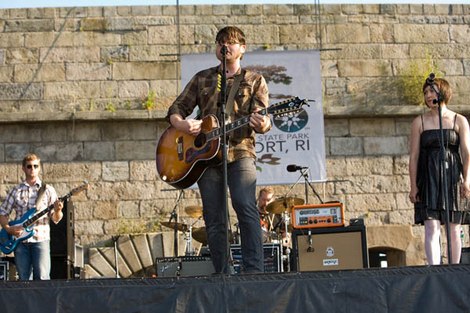
The Decemberists played at the Newport Folk Festival this year. NPR audio has an excerpt for free listen/download on their audio site.

They say that they were not going to play the entire Hazards of Love album at this show, as had been their wont on this tour.  I’m not sure what their entire set consisted of, but the three excerpts here include: “The Crane Wife Pt 3,” “Yankee Bayonet” and a very extended “Sons and Daughters.”

It surprises me how well The Decemberists work in a live setting.  I think of their music as  complex and convoluted with strange instrumentation, and yet, perhaps because of the theatricality of it all, it all sounds great in a live setting.

I can’t really imagine them releasing a proper live album, so for those of us who don’t get to concerts much, this is the next best thing (the recording quality is excellent–I only wish it was their whole set).

[READ: October 12, 2010] “Otravida, Otravez”

Junot Díaz is the next writer in the 1999 New Yorker 20 Under 4o issue.

I didn’t like this story in the beginning because I couldn’t tell for quite some time the gender of the narrator.  Normally this doesn’t make a difference, but when the narrator climbs into bed with the man in the room, I had a hard time deciding if this was a subversive act or just a straight act of romance.  [I admit that since the author was male, I assumed the narrator was male, too].

It turns out the narrator is a woman (there is a clue when he says “Yasmin,” but in the first read I was unclear if he was saying her name or just a name in general).

In fact, to me, the entire beginning was very strangely set up and it took a few paragraphs (when she describes her job) before I felt the flow really took off.  However, once it did I found this story fascinating and convoluted in a very good and clever way. (more…)

Read Full Post »

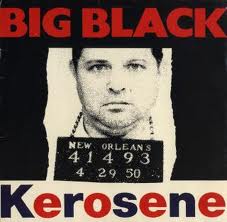
SOUNDTRACK: BIG BLACK-Kerosene [live] (1990).

It never occurs to me to go looking for live versions of songs online, even though there are clearly  thousands of songs I would like. So, I wait for them to come to me.  My friend Andrew posted a video of this song.  And it’s the first time I’ve seen Big Black live.

I’ve liked Big Black for a while (I got into them after they broke up). It’s not pleasant music by anyone’s standards, but there’s something visceral and unsettling about the lyrics and about Steve Albini’s guitar sound that I really enjoy.

I’ve seen pictures of Albini before, but I’ve never seen him in action, and I have to say, I can’t believe a guy as skinny and frankly, nerdy, as him is making sounds like this (although I can see someone like him being this angry).  Watching him in this video is pretty great.  He’s got huge glasses, his t-shirt is tucked into his pants–no that’s not right, it’s tucked into his guitar strap…how is he holding his guitar up??– and then he plays this guitar that sounds like, what…glass, needles, pins, shards of something, certainly.

And just when you think that the song is only noise, this fantastic bassline kicks in.  The riff is outstanding: it’s heavy and propulsive and balances the sharpness of the guitar perfectly.  In this version, about midway through the song he seems to be walking out into the crowd, and they sort of hold him up or push him back on stage, while he’s playing.  And at the end, of course, he destroys the guitar.

Lyrically, it’s as disturbing as anything Albini has written, but man is it cathartic.   And this live version is even more stark and brutal than the studio version.

[READ: June 2010 & October 12, 2010] “Extreme Solitude”

After reading “The Oracular Vulva,” I decided to re-read this, his recently published story.  When this story came out in June, I heard that to some readers the main character reminded them of David Foster Wallace, and they speculated about whether or not this story was inspired by or a tribute to him.  Unfortunately, I read that analysis before I read the story and it automatically influenced my reading (which if you haven’t read it I have now done to you, sorry).

I’m not in any way convinced that it is about him, although there are many similarities–size, athleticism, chewing tobacco, intelligence, semiotics.  But since I know nothing about DFW personally and I don’t know if Eugenides does either, I won’t pursue that line any further.  I will say that I didn’t find that train of thought terribly distracting while reading, though.

Anyhow, this story is about a senior in college named Madeline.  Madeline was a good student and a good girl.  She had dated some, but never had any crazy affairs (and was a bit uncomfortable when her roommate proudly wore (or displayed) her diaphragm–the joke about wearing it to an event is particularly funny).

By her senior year, after breaking of a long relationship with Barry, Madeleine was prepared to settle into her major: English.  She was excited to read and to read a lot (it was her passion as well as her major).  She also decided to sign up for a Semiotics class, which is where she met Leonard.

The description of the semiotics class is wonderful, from the pretentious students to the insanity of the class assignments–from Lyotard to Derrida and everyone in between, authors that I loved in college but since leaving academia I find so convoluted as to be kind of silly. I adored the sentence: “(Could “the access to pluridimensionality and to a delinearized temporality” really be a subject [of a sentence]?)” (more…)

Read Full Post »

SOUNDTRACK: WEEZER-Hurley (2010).

In my head, no band garners as much debate as Weezer.  According to this article, a man offered them $10 million to break up.  Even I go back and forth about whether they are great pop song writers or incredible sell outs.  I mean, look at one of the items on their thanks list for Hurley: “Dodge–makers of the timeless Challenger.”  Is this ironic or not and if not, does it matter?  I’m also torn by Rivers Cuomo’s Harvard degree, which I would think means he would write intellectually rigorous songs–and yet he never does.

But what of it?  Let’s talk about the music.  It has dawned on me that the closest band to compare them to is Cheap Trick.  They write poppy songs with often heavy guitars that are completely sing along-y but are in no way alternative to anything.  And yet everyone loves Cheap Trick, so why not love Weezer, too?

Hurley is no different.  Each song is 3 minutes of pure pop (for crying out loud Desmond Child is on one track–put one in the sell out column).  But they also have some odd fans on this disc: the crew from Jackass sings backing vocals on “Memories” and Michael Cera plays mandolin and sings backing vocals on “Hang On” (although you can’t hear any of them really).  “Hang On,” by the way is their most Cheap Trick-y song to date.

“Unspoken” features a flute and acoustic guitars until about two minutes into a three-minute song.  Then it bursts out of acousticland and into heavy rocking guitars.  The one song I don’t get is “Where My Sex?” which I suppose is the controversial song on the disc.  He’s clearly talking about socks but he keeps saying sex.  I really have no idea why.  It’s not funny, even remotely.  It’s just an odd decision.  And I would say I rather dislike the song, but the chorus is great, as is the totally unexpected third section (which is like  pop song unto itself) that comes in 2 and a half minutes out of nowhere.

“Smart Girls” has to be ironic, but who knows anymore.  To me the most interesting song is “Brave New World.”  It eschews the standard big-chords-for-choruses format they’ve been using with a much heavier guitar and single guitar notes in the verses.  (Although the chorus is, once again super catchy).

My version of Hurley has bonus tracks which are separated by an interesting 10 seconds of string music.  The bonus tracks include a cover of a song from Yo Gabba Gabba ( I really must watch that show some time).  There’s also a great cover of Coldplay’s “Viva La Vida” (in many ways Weezer is like a harder rocking version of Coldplay in terms of success and obvious sellout possibilities).  Although this live version shows that Rivers’ voice is no match for Chris Martin’s.

“I want to Be Someone” is an earnest acoustic solo track while “Represent” (Rocked Out Mix) is one of the heaviest things they’ve done.  I assumed the original was on Raditude, but it’s not.  Evidently it’s the unofficial song of the U.S. World Cup soccer team.  Huh, who knew?

So yes, it seems that they’re pretty much sell outs.  And yet for thirty minutes (all of their discs are so nicely short) it’s easy to stop worrying about “indie or not” and just sing along.

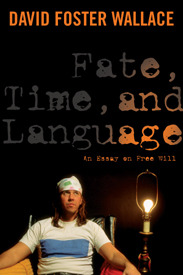
[READ: November 7, 2010] Fate, Time and Language: An Essay on Free Will

First I wanted to thank Columbia University Press for sending me an Uncorrected Proof of this book. I was pretty excited to read it, but to get it a few weeks early was even cooler (and, no, this won’t have any impact on my review).

Second, I wanted to state exactly what this book IS (because I wasn’t entirely sure myself).  The book is a reprinting of David Foster Wallace’s philosophy graduate undergrad thesis.  However, rather than just publishing the thesis (and giving us a short book or a long book with one sentence per page), Columbia University Press has packed the book with a great many essays that help to contextualize the thesis.  The Preface by Steven H. Cahn & Maureen Eckert explains this quite neatly.

So, my (briefer) version of the background: DFW’s thesis is about Richard Taylor’s article “Fatalism” (1962).  CUP has also included Taylor’s initial article (so we can see what DFW is talking about).  And even more than that, when Taylor’s article was initially published, it caused a bit of controversy and a lot of responses.  So, to get a sense of everything that DFW was working with (and against), this book also includes the intellectual dialogue: articles that range from four to ten pages (and also include a dense of Taylor by Steven H. Cahn himself (published in 1964).

Part II of the book includes an introduction by Maureen Eckhart and DFW’s essay.

Part III is a brief look at DFW as a student written by a former professor, Jay Garfield.

Before I get to the meat of the book itself, I wanted to say that I didn’t know anything about this essay.  And I’d thought about this thesis as possibly an interesting piece of philosophy from an author whose work I greatly admired.    Well the introduction to this book states in pretty certain terms that my thinking about this thesis is a massive understatement.  For, in fact, DFW’s thesis undermined Taylor’s argument in ways that no other argument had been able to do before.  His thesis more or less repudiated Taylor’s original essay.  The thesis also won the Amherst University Gail Kennedy Memorial Prize in Philosophy (and a wonderful piece of trivia: DFW’s father James won the same prize in 1959).  So, yes, this isn’t just a graduate undergrad thesis, this is real philosophy.

On to the book: (more…)

Read Full Post »

« Newer Posts - Older Posts »