Feeds:
Posts
Comments

Archive for the ‘Authors’ Category

SOUNDTRACK: MOGWAI-Mr. Beast (2006).

After several mellow, quiet albums, Mr Beast brings back a lot of the Mogwai noise.  I distinctly remember listening to Mr Beast when it first came out because it was the first time I was home with my son and I exposed him to something other than kids music (he was 8 months old at the time).

Mr Beast changes things up from previous disc in a few ways.  There’s no long songs on the disc (5:30 is the longest), but there’s a return of some of the noise from earlier discs.

“Auto Rock”, although featuring keyboard, is a pretty heavy track, with big drums and loud layers of music that try but fail to disguise a riff.  But the best song on the album comes next “Glasgow Mega-Snake” is that awesome Mogwai beast: rocking guitars, a memorable riff and powerful drumming.  It’s recognizable once it starts, it’s got cool screaming solo notes and just when you think it’s going to end quietly, pow–it is indeed mega.

Despite all evidence to the contrary I think of Mogwai as an instrumental band.  So it’s always surprising when they have vocals on a song.  But it’s even more surprising when the song has steel guitars, is exceedingly mellow and has gently sung, slightly synthesized vocals.  And that’s what “Acid Food” is.  It’s followed by “Travel is Dangerous” which features the least processed vocals of any Mogwai track that I can think of.  It’s a wall of sound from the guitars, but it’s also a pretty conventional verse/chorus structure–will wonders never cease?  Despite that, there’s some wonderful screaming feedback during the solo portion of the song.

Diversity is the name of the game on this album though, as “Team Handed” is a gentle piano ballad.  “Friend of the Night” is one of their catchiest melodies–the piano runs through a series of riffs and ending with a beautiful piano line.  “Emergency Trap” and “Folk Death 95” are two more mellow tracks, but these have some intricate guitar lines running through them as opposed to the ashes of sound from previous discs.

“I Chose Horses” has a spoken vocal part from Tetsuya Fukagawa from the Japanese band Envy.  He speaks slowly and placidly over a beautiful piano melody. The disc ends with “We’re No Here” a final blast of noise to show that they’ve not gotten all soft.  It starts like many of the other songs, but by the end, the guitars are ratcheted up, with a simple but powerful solo taking over the back half of the song until a final descending feedback closes out the disc.

It’s an amazing piece of music. The bonus DVD shows how they made the disc.  I think it was the first time I’d ever seen/heard the guys in the band.

[READ: July 6, 2011] Wonderstruck

Brian Selznick’s The Invention of Hugo Cabret was a fantastic pastiche of gorgeous pictures and exciting text–not quite graphic novel and not quite illustrated book.  While the story was wonderful, the pictures were truly amazing–beautiful pencil (charcoal?) pages, many of which spread across two pages.  They were textured and very detailed.  And they brought to life elements of the story in a way that the text couldn’t.

Wonderstruck follows the same format: several pages of wordless illustrations followed by several pages of text.  But unlike Hugo Cabret, the words and pictures tell two very different stories.  The pictures tell the story of a young deaf girl.  The girl adores the actress Lillian Mayhew and even sneaks out to the movies to watch her films (this is set before “talkies”, when the deaf could watch films the same as everyone else).  We follow her through her life as she runs to the New York City and runs into several important figures in her life.  There several surprises are in store for her (and the reader), which I will not spoil here.  Suffice it to say that several times I said, wow! (more…)

Read Full Post »

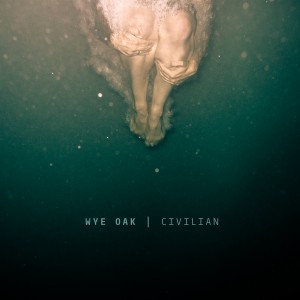
SOUNDTRACK: WYE OAK: “The Alter” (2009).

NPR has introduced me to Wye Oak (with two concert downloads).  This is the official single from the recent album Civilian.

It is a cool swirly track which avoids being ethereal because of the rocking drums.  It feels a bit like the Cocteau Twins without being otherworldly.  And then there’s Jenn Wasner’s voice which is deep in a kind of Alison Moyet way.  This song features an awesome guitar swirl in the center which is sort of a guitar solo but isn’t.

The song builds over the course of the three minutes with more instruments and more voices layered over and over–there’s no real chorus.  Not bad for a duo.  Soon they’ll be some full concerts reviews of the band.

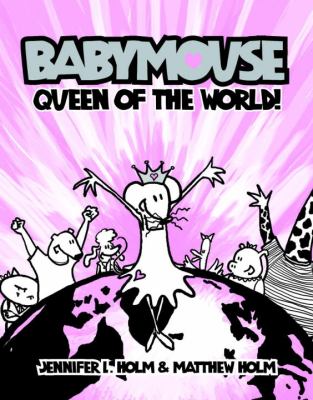
[READ: June 29, 2011] Babymouse: Queen of the World!

So this is the first Babymouse book: Queen of the World.  This one sets up the series and satisfies so many unanswered questions.  No, not really.

This first book has all of the trappings of the other two books that I read: fantasy sequences drawn in pink (good diversity here–a horror story, a space story, Cinderella), the same cast (including the arch-enemy Felicia Furrypaws), and more humorous interactions between Babymouse and the narrator (and a lot of Babymouse’s slogan: “typical.”) (more…)

Read Full Post »

SOUNDTRACK: KOPECKY FAMILY BAND-Embraces EP (2008).

I learned about Kopecky Family Band from NPR’s Tiny Desk Concert.  When I investigated further, I found that I could download this EP for free. I compared their Tiny Desk show favorably to The Head and the Heart.  This earlier EP has a bit more punky edge to it (as their other stuff may as well–Tiny Desk doesn’t really lend towards punk).

And so this EP leads me to compare them more towards Stars.  But perhaps we’ll call them a more acoustic version of Stars.  There is some wonderfully intense musical construction on this EP, and the dynamic of the duel vocalists really bring great tensions.

This is a wonderful EP.  The strings belie the rather heavy chords  (especially on “Trainwreck”) and the harmonies throughout are really infectious.

[READ: June 30, 2011] “A Mouthful of Cut Glass”

I’ve really enjoyed Tessa Hadley’s recent stories in The New Yorker.  So I decided to go back through their archives and read the other stories of hers that they have published.  It turns out that she has been published in the New Yorker since 2002.  But many of the earlier stories were collected in her previous collection which I’ll read one of these days.  But rather, I started with the first ones that have yet to be collected.

“A Mouthful of Cut Glass” is a conflation of two expressions, neither of which I was familiar with: “talking through a mouth full of plums” and “an accent like cut glass.”  The malaprop came from the protagonist’s boyfriends’ mother.  And yet, I say protagonist as if Shiela is the real protagonist.  The story quite clearly opens with Neil.

In 1952 Neil was born into a very poor household.  But over the years, he was able to rise above his sattion and become a successful University student.  It was at University that Neil met Sheila.  Sheila grew up in a vicar’s house with a gaggle of brothers and sisters.  The two of them hit it off very well and began a serious relationship. (more…)

Read Full Post »

SOUNDTRACK: ROCKWELL KNUCKLES-“Silly Human” (2011).

This song was NPR’s song of the day on July 7th.  I’d never heard of Rockwell Knuckles before.  He’s a rapper from St. Louis and has at least one other album out as far as I can tell.  I was rather fond of this song for, as the NPR page says, he often prefers to be absurd.

This song has fast, manic music–jittery and confusing and the rap over the top of that music, especially the chorus, is equally frenetic and hard to fathom on one listen.  But the chorus has a interesting twisty melody and the lyrics (the ones that I can follow) are bizarre and thoughtful and not typical “street life” lyrics.

I listened to this sevral times in a row, and will defitely check out his full length (which you can stream here, and the songs I listened to are equally weird and catchy).

[READ: July 6, 2011] Lucky Peach Issue 1

McSweeney’s has yet another new periodical to occupy my ever diminishing reading time.  This one is a food magazine which, as the cover states is “the new food quarterly from Momofuku’s David Chang.”  I don’t especially like food magazines (Sarah subscribes to several, but I just can’t get into them–reading recipes to me is the equivalent of looking at XHTML code for most people).  I mean, I like to cook sometimes, but I don’t look for new recipes or anything like that.  So, I am probably the least likely recipient of this magazine.  Not to mention I’ve never heard of David Chang and only know about Momofuku because of the Elvis Costello album.

And then geez, the first issue is about Ramen?  Who gives a fuck about Ramen?  It’s that crappy stuff you buy 10 for $1 at the supermarket.  And you’re really going to devote 174 ad-free (except, obviously lots of mentions of Momofuku) pages to ramen?

Well, yes they are.  And holy shit if it wasn’t amazing.  David Chang is a really funny guy and co-editor Peter Meehan is a great foul-mouthed humorist.  [I have never seen so many “fucking”s in a cooking magazine before–in fact I suspect I’ve never seen any in a cooking magazine before].  The articles were funny and a little low brow (I doubt most cooking magazines mention people throwing up either), but they were engaging and interesting too. (more…)

Read Full Post »

SOUNDTRACK: GUSTER-Easy Wonderful (2010).

This Guster album is confusing.  It’s rather short (compared to their other discs).  Combined with the (kind of flimsy) cardboard packaging, it feels almost like an EP.  It also seems to be kind of religious (although I don’t think it is)–like a themed EP.  And yet it isn’t off-putting or anything (a few mentions of Jesus is all, although that’s a lot more than usual).

But, like most of Guster’s releases, it’s super catchy kind of alternative jangly pop.  After one or two listens the songs are instantly recognizable.  There isn’t a bad song in the bunch.  However, they’re also mildly underwhelming compared to their previous releases.  The songs feel a bit more subtle, but really it seems like they might be just a little too smooth.  The dynamics aren’t quite as exciting as they have been.

Having said all that, the disc is still pretty great and I find myself humming a lot of these songs all day long.

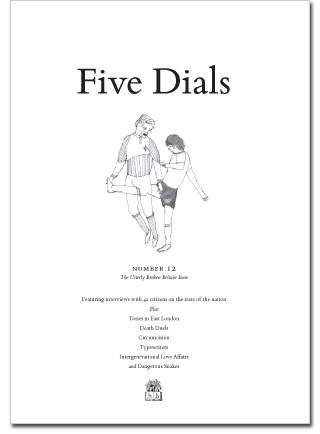
[READ: June 18, 2011] Five Dials Number 12

Five Dials Number 12 has a theme explicitly stated on the cover.  The premise of the theme is that the Conservative Party of Britain had been claiming (in their TV ads and billboards) that Britain was broken.  This idea was relentlessly pushed across Britain.  And Five Dials wondered if people thought that that was true in general.  So they asked 42 citizens (no idea what kind of random sample it may have been, realistically) and they recorded the results.

The rest of the issue has some of the standard Five Dials material we’ve come to expect: essays and fiction, advice and lists.  The theme gives an interesting tone to the proceedings.

CRAIG TAYLOR-A Letter from the Editor: On Broken Britain and Nick Dewar
Taylor addresses much of what is said above.  David Cameron (I still can’t get used to him being Prime Minister, it’s still Gordon Brown in my head–I guess Cameron hasn’t done much yet) is the man who keeps trying to “mend our broken society.”  Even though (and statistics are similar in the U.S.):

They found that violent crime had almost halved since 1995, while crime generally fell by an extraordinary 45%. The figures for teenage pregnancies – a favourite of those talking about social decay – remain constant since Labour came to power in 1997; so too do those for teenage abortions.

The rest of the letter is devoted to the passing of Nick Dewar.  Dewar drew the illustrations for Five Dials Number One.  I really liked Dewar’s style, and his absurdist sensibilities.  Taylor says that Dewar’s color work was even better.  And I think he’s right. (more…)

Read Full Post »

SOUNDTRACKTINDERSTICKS-Claire Denis Film Scores 1996-2009: White Material [CST077] (2009).

White Material is the most recent soundtrack that the Tindersticks created for Claire Denis.  It was recorded between their “reunion” album The Hungry Saw and their latest album Falling Down a Mountain.

This is a very moody soundtrack.  The guitars set a brisk but desperate-sounding pace.  There are feedback squalls that echo for even more tension.  The feedback could be any number of things as well: squeaky machines, industrial noise, or simply disconcerting sounds.

There is a repeated motif throughout the score that morphs and blends with the tone.  The overall feel of the soundtrack is unified but it never sounds like you’re listening to the same few notes repeated (which is actually what it is, the songs use a very limited palette).

For such a limited palette of music, they really manage to give a diverse picture of the movie.  The way “Andre’s Death” builds, using those same few notes and feedback is truly amazing.  The tension that has been building throughout the score really comes to a head in those 2 minutes.  Contrarily, the flute that plays over those same notes in “Children’s Theme 2” is a haunting exploration of the theme.

This soundtrack isn’t as industrial/weird as L’intrus, but it is probably more intense and spooky.  It’s amazing how evocative these guys are.

[READ: June 22, 2011] Merit Badges

Sarah brought this book home, but she didn’t read it.  It sounded pretty good (I mean it won the 2009 AWP Award for the Novel), so I decided to give it a go.

The book seemed strange to me in the way it was set up: it seemed to have a very specific structure but it didn’t always follow it exactly. So, there are four main protagonists who write chapters of the book.  But they don’t each get a turn, in fact one, Barbara doesn’t really have much to say until much later when her story becomes very compelling.  It also advanced over the years with no real explanation of pacing or even of when a new narrator has jumped ahead several years.

I assumed this was going to be a story of four people looking back on their high school years.  But indeed, it’s about four people looking back on their whole lives, as they grow together, drift apart, come back into each others lives and then disappear again.  In that way, it was also a bit hard to get my bearings.  It was also hard for me to keep all of the characters straight.  Because even though there are four narrators there are many many more kids introduced in the beginning of the story.

Each chapter opens by stating who the narrator is.  The first few narrators are Chimes Sanborn (Prologue), Quint (Woodwork), Slow Slocum (Cooking), Chimes (Drafting), Barb Carimona (Music), Quint (Mammals), Quint (Crime Prevention) etc.  So it’s not consistent.

But also, as you can see, all of the chapter titles are named after Merit badges (which I liked quite a bit).  The subtitle describes what you have to do to achieve the badge (and the chapter does indeed kind of work within that stricture).

So far so good, but we’re also introduced to ancillary characters who appear quite often: Dickie Burpee, Pooch Labrador, Smash Sarnia, and a psychopath named Tulep.  With all of the nicknames and rotating narrators, I admit to losing track of who was who, which I fear lessened the impact of some of the events.

Of course, that’s all structural.  And while I felt like I probably missed out on moments of impact, the overall storyline was not hard to follow.  And, indeed, complaints aside, the story was pretty intriguing.  It is set in the (fictional) small suburb of Minnisapa, Minnesota.  It feels very true to me (having lived in a small town, myself) as do the choices (bad and good) that the kids make. (more…)

Read Full Post »

SOUNDTRACK: TINDERSTICKS-35 Rhums (2008).

This is a charming and very French sounding soundtrack. A delightful melody runs throughout the disc (which totals just over 25 minutes).

When Sarah first heard it, she said, “What’s this French music you’re listening to?”  And indeed, it is very French-sounding. There are very simple instruments: melodica, acoustic guitars, piano.  And that melodica is a prominent sound–giving it a sense of intrigue as well as a sense of solitude (the melodica can sound so yearning).  But it’s not all melodica and intrigue; for instance, there’s some delicate xylophone on “Night Time Apartments.”

There are also several snippets from the movie online.  Here’s one clip (with Tindersticks score underneath):

Of the new soundtracks releases this one is my favorite.  And it’s one that I could see listening to for fun.

[READ: June 16, 2011] “The Rules of Engagement”

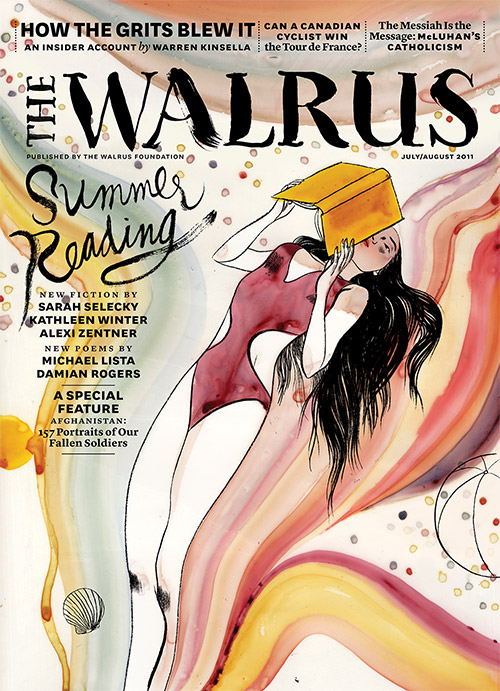
This is the final story in The Walrus‘ Summer Reading issue.  As I mentioned, the intro states: “We asked five celebrated writers to devise five guidelines for composing a short story or poem. They all traded lists–and played by the rules.”  Alexi Zenther was given rules by Sarah Selecky (which I posted below).

I really enjoyed this story, despite the immoral behavior.  Susan and her friends from high school (it’s ten years after high school now) are enjoying a foreign vacation for a week.  The first thing we see is a man seducing Susan.  They call him “Fork” because after a few hours of flirting, he asked, “And now we fork?”  Amusingly, for someone who made a living seducing women, he was bad in bed.

The other women also meet and bed these professional gigilos.  After sex, one of them simply walked over to the woman’s wallet and took money when he was ready to leave.  She notes that he took “probably less than I would have given him if he had asked.”

The women are in various stages of relationships, one woman is divorced, another is serially monogamous and a third is married (that’s the immoral part).

There’s a wonderful diversion in the story that flashes back to Susan’s grandfather Bert.  Bert had a U-pick apple stand and the girls worked there for many summers.  There’s an especially tender moment in which Susan and Bert are wandering the island and they see a wild horse.  And the scene fills Susan (and the reader) with a sense of wonder at her grandfather. (more…)

Read Full Post »

SOUNDTRACK: TINDERSTICKS-Claire Denis Film Scores 1996-2009: L’Intrus [CST077] (2004).

This score comes from Claire Denis’ 2004 film L’Intrus.  The soundtrack was done by Stuart Staples.  In the booklet he talks about how conventional scoring just didn’t seem appropriate for the film, so he chose this rather noise-filled style.

It is a noisy, menacing work (L’Intrus means The Intruder, so that makes sense).  The sounds are clanky and squeaking, creating an ominous atmosphere.

But what’s most interesting about the score is that despite this limited collection of sounds, he creates a musical work out of it that is interesting to listen to on its own.  The track “Horse Dreams” is full of discordant notes and screeches.  While “The Black Mountain” features a solo horn over the noises.  It’s not easy listening, but it is certainly evocative.

This score is also very short about 25 minutes or so).  The movie is 130 minutes.  I wonder what other sounds are in the film?

[READ: June 15 2011] “Madame Poirer’s Dog”

This is the second story in The Walrus’ Summer Reading issue.  As I mentioned, the intro states: “We asked five celebrated writers to devise five guidelines for composing a short story or poem. They all traded lists–and played by the rules.”  Kathleen Winter was given rules by Alexi Zenther (which I posted below).

I didn’t enjoy this story all that much.  More specifically, I enjoyed the story within the story, but the full, proper story was a little too indistinct to me: It felt kind of all over the place.  In some ways this is appropriate as the story is set in an old folks’ home.  The titular dog comes into play throughout the story and the hard and fast facts of the dog’s tale give some grounding to the story.

The dog’s story is told in a just-the-facts, not-the-details style.  And the dog’s story is a funny story.  It involves a chastity belt (for the dog), and another dog’s skill at the belt’s removal.  But  the funniest part came at the end when the narrator criticized her son’s wife because she would be the kind of person who would ask for details “that no one cares to remember: what exactly does it look like, a chastity belt for digs, and of what material is such a thing made?”

The bookend parts that surrounded the story just kind of fade from my memory.

The five rules from Alexi Zenther: (more…)

Read Full Post »

SOUNDTRACK: TINDERSTICKS-Claire Denis Film Scores 1996-2009: Vendredi Soir [CST077] (2002).

This score was created by Dickon Hinchliffe and the liner notes indicate that it was something of a jumping off point for his future film scores.  This was the third score that the band created for Denis (after Nenette & Trouble).  Stuart Staples was working on the latest Tindersticks album so Dickon took over all of the duties on this one.

This is a beautiful, melancholy soundtrack, full of gorgeous swelling strings and simple piano notes.  It doesn’t remind one all that much of  Tindersticks, but it’s not terribly far removed from their sound either.

The whole score (which is paired here with the score from L’Intrus) is 25 minutes, which made me wonder whether this is a full length film, or just a film with lots of silence (or, perhaps non-Hinchcliffe music that wasn’t included here).  [The film is 90 minutes long].

Pairing it with L’Intrus makes sense in terms of space, but the two scores could not be more different from each other.

[READ: June 15, 2011] “The Cat”

This is the first story in The Walrus’ Summer Reading issue.  As I mentioned, the intro states: “We asked five celebrated writers to devise five guidelines for composing a short story or poem. They all traded lists–and played by the rules.”  Sarah Selecky was given rules by Kathleen Winter (which I posted below).

The first line of the story really sets up the whole thing: “I am not at all surprised that my father has come back to earth in the form of a grey and white cat.”  And indeed, the rest of the story discusses her relationship with her father (those awful fishing trips when she could neither speak nor move) and how he never seemed to be pleased about her.

Now that he’s back as a cat, the dynamic has changed.  Although there’s still fish in their relationship.

I really enjoyed this story,  For although it was brief, it was wonderfully evocative.

Kathleen Winter imposed these rules on the story: (more…)

Read Full Post »

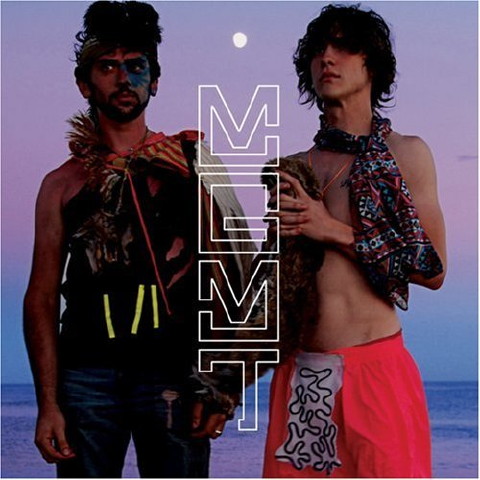
SOUNDTRACK: MGMT-Oracular Spectacular (2008).

I bought this album a few years after it was hailed as the best album by everyone.  I never quite realized that they did all the songs I knew from it, but I was pleased that I bought it.  Then I promptly lost the disc.  I found it about seven months later in another case (doh!).  And I have given it a number of listens since then.

I’m confused as to why this album was so popular.  I’m not saying it’s bad, I’m just not sure why it was so hailed.  It’s a strange kind of record. There are a number of dancey hits (which aren’t really that dancey or anything), but there’s also a bunch of trippy psychedelic stuff as well.

The opener, “Time to Pretend” has a wonderfully catchy keyboard line that expands into a wonderfully simple, but catchy verse/chorus.  “Weekend Wars” reminds me of some of the weirder alternative hits of the early 90s.  The sound is kind of trebly and slightly off, but the middle of the song is full of beautiful swells of keyboards, giving it a strangely hippie vibe.

“The Youth” is a slower track which has a gentle sound and a nice chorus.  It’s pretty far from the danciness of the opener.  “Electric Feel” brings in some disco and funk.   The keyboards are very 70s trebly with a big bottom bass.

The standout track is “Kids.”  It marries the weird keyboard sound of the opener with a wonderfully catchy riff.  It also has a simple chord structure and big drums.  It’s the kind of song that sticks in your head from the first time you hear it.

The second half of the disc is where things change and the more psychedelic aspect so the band come in.  The album was produced by Dave Fridmann (Mercury Rev, Flaming Lips) and while that style is evident in the front of the album, it’s hidden under the more brash punk sounds.  n the last few songs the punky elements are absent and the psychedelia shines through.  “4th Dimensional Transition” is a wash of interesting sounds.  “Pieces of What” is a simple acoustic guitar with vocals that sound like they come from outer space.  “Of Moons, Birds & Monsters” never really coalesces, although the parts are interesting.  “The Handshake” is another folkie kind of song with overtones of David Bowie (who is never really absent anywhere on the disc) especially at the end of the song.  “Future Reflections” ends the disc with a synthy ballad.

The disc is quite different from the first five to the last five songs.  And I find that when I’m enjoying the hits, I’m less excited by the trippy parts (which meander as opposed to the immediacy of the hits).  But I think I could find myself enjoying the vibe of the second half of the disc more if the first half didn’t prep me for that stark pop punk sound.  I guess it has something for everyone.

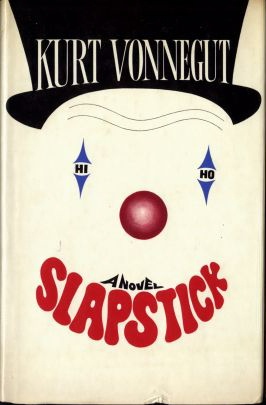
[READ: June 28, 2011] Slapstick

I tend to read books that are long, or at least that feel long.  So Vonnegut is like a guilty little pleasure.  I read this in three lunch hours. And it felt like something of an accomplishment.

I can honestly say I didn’t enjoy this one as much as his previous books.  It was a lot darker and felt a bit more mean-spirited than his others.  True, Vonnegut is nothing if not mean-spirited, but there was something different about this one.  Was it that the protagonists were two meters tall with six fingers and toes and for the first several years of their lives spoke in nothing but baby talk?  Was it that they were so reviled by their parents that they were sent away to the parents’ second home and allowed no visitors?  Or was it that Manhattan was now called “The Island of Death?”  Or maybe it was just the repeated use of “Hi Ho” at the end of virtually every paragraph.

Or maybe it’s that the story doesn’t really feel complete.  There isn’t a lot of story here, but as with lots of Vonnegut, there are a lot of little details that join the story together.  The novel is constructed as chapters, but within the chapters are very short almost paragraph long sections separated by dots.  These little paragraphs sort of work as small scenes, with most having a kind of punch line at the end (this is not too dissimilar from Breakfast of Champions, but the sections are even smaller here).

The two aforementioned protagonists are as described.  But although they speak in nothing but nonsense syllables, they are in fact quite intelligent.  Indeed, when they put their minds together (literally) they reach epochal levels of genius.  And when they put their heads together they write several massively intelligent treatises and the most popular child-rearing manual in history, So You Went and Had a Baby.  Well, actually, Wilbur wrote it for Eliza is illiterate (she just has most of the brainstorms).  Technically, the real protagonist of the story is Wilbur, for these are his memoirs. (more…)

Read Full Post »

« Newer Posts - Older Posts »