Feeds:
Posts
Comments

Archive for the ‘Authors’ Category

SOUNDTRACK: THE COLIN McENROE SHOW-The Life & Legacy Of David Foster Wallace (December 5, 2011) (2011).

This NPR show features an interesting discussion about David Foster Wallace:  his fan base, his cronies and his archive.   The guests were Donald Brown (New Haven Review), Evan Hughes, Ryan Walsh (who created the David Foster Wallace Audio Project) and Maria Bustillos.  Evan Hughes recently wrote a piece in New York that I’ll look at tomorrow and Maria Bustillos wrote the main piece for today’s post.  The other two guys I admit I don’t know.

This show looks at some interesting aspects of DFW’s life in the wake of his suicide and the release of The Pale King.  Although really the impetus seems to be Hughes’ article (which was published in Oct).  McEnroe asks him about the state of literature today and how both Jonathan Franzen and Jeffrey Eugenides have created characters that “resemble” DFW in some way.

They talk about the cult of DFW and play some audio clips.  Brown is an older reader and so does not embrace DFW as much as others.  He is of the same age as DFW and so loves the people DFW loved more than DFW himself.  I get the feeling that he is a curmudgeon.

But they can all agree that fans of DFW feel that he was their buddy.  Super-intelligent but very human, almost speaking like they would (if they were that smart).  They conclude that the Kenyon commencement speech is something of the pinnacle of his project of earnest warmth in humanity.

At the half way point, Maria Bustillos comes in to talk about going to the archive (which you can read about below).  She explains her own interest in self-help books and how DFW was a person who needed help.

The end of the episode has them talking about DFW’s voice.  They wonder why DFW has an “audio project” but other writers do not.  They talk about DFW’s voice and his presence during interviews and how he is very warm, even when he’s being cold (it’s an odd clip they choose). I’ve mentioned the Audio Project before.  It’s wonderful.

For anyone interested in reading books that are in a similar vein to Infinite Jest, Bustillos recommends Under the Volcano (Malcolm Lowry) and wholeheartedly recommends The Last Western (Thomas Klise).

A fascinating thing about this show was finding out that McEnroe was the author of a pretty funny piece in McSweeney’s many many years ago called “I Am Michiko Kakutani.”  He offers an anecdote about originally mentioning DFW in the story but that the McSweeney’s guys asked him to change it to someone else.

But I have to say that the show seems a bit too much about Colin McEnroe (the McSweeney’s anecdote was just one of many involving McEnroe).  He talks a lot about himself and about how he’s “afraid” that the Awl will make fun of him or that Franzen (who was with McEnroe in a green room backstage at some show) will put him in his next book (because he was discussing Neti Pots).  But I’m just not sure that Colin McEnroe rates enough to warrant the concern. 

It’s an enjoyable show, although unlike other interviews by people like Charlie Rose or Michael Silverblatt, McEnroe’s questions and comments aren’t very well informed.  If you know a lot about Wallace, this show is a bit frustrating because it takes a tone that Wallace is basically a “postmodern ironist” or that he sees everything as “a big dark joke.” And even when the guests are showing that that is not the case, he seems to try to keep reverting back to this trope.

Oh well, it led to some interesting articles at least.  Like the one below.

[READ: December 7, 2011] “Inside David Foster Wallace’s Private Self-Help Library”

For no reason in particular, I’m devoting this weekend to articles that are specifically or tangentially about David Foster Wallace (it’s been awhile, and I have yet to finish my Consider the Lobster project, so, why not). 

I actually read this because of the above radio show.  I know Maria Bustillos because we’re both in a newsgroup.  “Newsgroup” is so 90s, I wonder what they’re called these days).  Anyhow, Maria has always proven to be smart, funny and very articulate.  And the only reason I didn’t read this article when it came out was because I wasn’t sure I wanted to dive into this topic. 

After listening to the above radio show, however, I felt that this would be a very interesting article. And so it was.  It’s available at The Awl.

As it opens, Bustillos lets us know that she visited the DFW Archives Ransom Center at the University of Texas at Austin and pored over all of the materials they have there (undergrad papers, drafts of fiction and non-fiction, syllabi, tests and quizzes, and juvenilia among other things). 

Wallace was a major note-taker.  And he loved to take notes in a book as he was reading.  Just look at some of these books

But what surprised Maria (and me) is that among Wallace’s collection of wonderful fiction was a collection fo self-help books which were equally annotated and marked up. 

Much of the set up of the article concerns why DFW had self-help books at all.  The answer is, of course, because he was a depressed person (obviously) and because he had been in rehab for a pretty long time.  None of this background information is new, but Maria offers insights into DFW and his life that I had never heard before (Maria and DFW had corresponded, although I don’t know if they were “friends” or not).  (more…)

Read Full Post »

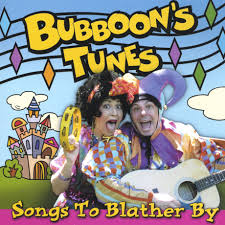
SOUNDTRACK: BUBBOON’S TUNES-“The Cheese Song” (2002).

chheseThis song was picked as the number one song on Kids’ Corner for 6 years in a row.

It’s a strange song to have won the hearts of so many listeners.  It’s simple and pleasant enough with a humorous content (gouda, gouda gouda, the cheese that’s never rude-a).

And yes, it is very easy to sing along to (cheese, cheese, cheese, wonderful cheese).  And heck, I love a song about SPAM, so who am I to question this delicious foodstuff.  I’m just kind of baffled as to why this song is so very popular.

Having said that, I don’t want to make it seem that I don’t like the song (the gorgonzola bit is rather amusing).  It’s silly and catchy and fun and I can imagine 7-year-old boys around the world singing it together.   There’s just no accounting for #1 songs.  But it’s better than “I Will Always Love You.”

Hear for yourself at the cool Bubboon’s Tunes website.

[READ: December 1, 2011] Babymouse: Cupcake Tycoon

This may have been my favorite Babymouse yet.  Mostly because it’s all about the library.  But also because it seemed to be simply packed with ideas and jokes.

 It opens with dreams of Babymouse’s fancy estate where she is just about to be served….tater tots from the lunch line?  But soon, Babymouse is off to the library, where we get to meet Mrs Bee the librarian.  Babymouse loves books and she’s excited that she gets to search for a lost book, Indiana Jones style.
Most daydreams just embarrass Babymouse, but this one proves to be a disaster when Babymouse falls off a high shelf and grabs onto a pipe for safety.  The pipe breaks and sends water spilling through the library and into the school (and there’s very little a library hates more than water).
So to raise money to replace the books and fix the damage, the school is going to have a fund-raiser.  And not a lame fund-raiser like everybody does (no popcorn or wrapping paper here), they are going to sell cupcakes!  And even better, the kid who sells the most gets a grand prize! (more…)

Read Full Post »

SOUNDTRACK: MIRANDA JULY-10 Million Hours a Mile (1997).

I only listened to this again after mentioning it below (I wrote about the book before the CD).  I vaguely recalled this CD, but I recall buying it mostly because it came from the unquestionable Kill Rock Starts and must have gotten a good write up in some alternative rag that I read.

Basically, this is a series of performance pieces, most of which are set to music (the music is spare and basic if it’s there at all).  She has multiple characters, most of whom are having a rough time. 

The one thing that is overwhelmingly noticeable to me is that just about all of her characters seems to have some kind of stutter or vocal tic, which I have to say may bring verisimilitude but is also rather irritating to listen to.

Indeed, I think this is where my opinion of July stems from (see below).  These are artsy pieces that were kind of the rage back in the late 90s– riot grrl takes of one-woman shows.  They were interesting and maybe good for one listen, but not much else. 

In hindsight, and seeing the kind of work that July has done since, it is easy to see that this is a collection of character studies like the ones that would inform her later work.

The rather strange thing is that the titles of the songs don’t match up to the performances (at least on Spotify or allmusic), I wonder what’s up with that. 

There are some interesting scenes laid out here, although I find July’s delivery to be off-putting–it’s in that sPOKEn WOrd styLE where THINGS are inFLECted in a TERRibly deLIBerate MANneR.  I KNOW that that KIND of emPHASis is meant to be…

….draMATic, but I’m rather glad that people have stopped doing it.

The eleven minute “How’s My Driving” is a decent example of the kind of things she does (although most of the pieces are more like 3-4 minutes).  In this piece, a man (July’s voice) goes to a peep show and talks to “Penny.”  Their plot line is a bizarre story in which the details of each reveal disturbing similarities until the ending is a Twilight Zone twist.  This is interspersed with a girl named Penny who talks about how she first started lying, although she says driving.  It’s an interesting although somewhat forced metaphor, but it’s enjoyable.  The stories intertwine, growing more and more intense.   Although it could probably be a bit shorter.

In “Hotel Voulez-Vous” a young girl (or boy) goes back in time to the titular hotel to convince her parents not to have her.  The execution is interesting but flawed.

“The F-A-T-E” is a cool story about letting fate be your guide, but the crazy voice-noises she makes are very off-putting and kind of take away from what could be a cool twisted tale.

I guess my opinion of this album work hasn’t changed all that much.  It’s got moments of interest but seems to be a little too coffee shop/navel gazing and being weird rather than good.  But hey, she was young then, right? 

[READ: December 6, 2011] It Chooses You

I have this weird kind of relationship with Miranda July’s works.  I am hesitant to read/view something, but I seem to enjoy it in the end.  I’m not sure why I am so hesitant, there just seems something off-putting about, if not her, then maybe the “fame” that surrounds her.  Like if she hadn’t earned her accolades.

I first found her back in 1997 when her 10 Million Hours a Mile CD was released on Kill Rock Stars.   So she was kind of indie cool.  And I guess she still is indie cool, but I guess it was the quality of the CD–it seems goofy at best, that makes me question the quality of her art.

But that may have finally changed with this book.

I began reading this book with that same sense of trepidation about her art–that I wouldn’t really like it.  Why?  Because, as with the CD, it’s seems to be all about her.  And I feel like a lot of her work is about her.  Nothing wrong with that, but sometimes you think, aw who cares. 

What she’s talking about is her upcoming film, The Future (which has since been released).  She is stuck in massive writer’s block .  She hates her script and doesn’t want to look at it anymore.  So, as many people do, she starts flipping through the PennySaver(more…)

Read Full Post »

SOUNDTRACK: ULVER-Perdition City: An Interior Soundtrack (2000).

Uver’s previous EP hinted at what would come next–electronic ambient tunes.  But it didn’t quite prepare anyone for this–a soundtrack to a film that doesn’t exist.  And yet with a title like Perdition City, you can pretty well anticipate the music that’s coming: think noir.

It is more electronica, and yet it is not just electronica.  The opening song “Lost in Moments” has a saxophone (!) solo.  And the song sounds like a perfect David Lynch/noir soundtrack to a dark and stormy night. 

What’s novel about the approach are the electronic noises and eccentric drum beats that punctuate the track.  The second track, “Porn Piece or The Scars of Cold Kisses” is broken into two parts: the first is a low, rumbling section with skittery noises and the second part has soulful singing (Garm, the only consistent member of Ulver (who goes by a different name on just about every record) has a surprising range of voices at his disposal).

“Hallways of Always,” “Tomorrow Never Knows” and “The Future Sound of Music” are sort of ambient tracks.  “Hallways” is quiet while “Future” grows in volume and chaos as the song proceeds.  “Tomorrow” is the most menacing of the three, projecting a state of noise and tension.  The interesting thing about these tracks is that although they seem like pretty conventional electronic instrumentals, they are actually fairly complicated in detail.  Some of the electronic pieces go on a bit too long, but as they are meant to be atmospheric rather than narrative, I guess that’s okay.

“We Are the Dead” bring in vocals again.  This time, it’s a spoken word narration over distorted radio voices.  And “Dead City Centers” also brings back some vocals.  Although only after about 4 minutes of noises and tension.  This time the vocals are more ominous (as the music grows more intense).

“Catalept” is the most interesting track on the disc–a remix of music from Psycho.  While the final song “Nowhere/Catastrophe” is an actual song–verses and vocals!  It’s a fairly soft song but it has moments of darkness that are quite cool. 

As a soundtrack this works wonders.  And if Ulver wanted to get into the soundtrack business, apparently their model of “making up your own soundtrack” worked.  Since this release they have recorded the soundtracks for two external films. 

As an overall release it’s a bit all over the place–jazzy sax, electronica, spoken word.  The mood is pretty consistent though, and although I don’t think I would do what the liner notes recommend: “This is music for the stations before and after sleep.  Headphones and darkness recommended,” I still enjoyed it.

[READ:  November 5, 2011] “Alma”

This is a very short story that falls pretty squarely into standard Junot Díaz territory (he says, having read like four pieces by him). 

I’m fascinated by these stories because Díaz is all about women being super hot and yet they are never objectified.  Well, in some ways they are of course–he lingers over their bodies as he describes them, but they are never just a body.  They are often smart or interesting, they are strong and powerful, and even when they are victimized (some by cheating boyfriends, others by far worse), they either fight back or get themselves to safety.  It’s nice to read about powerful women,even if the point of view is from her boyfriend.

This is the story of a young man falling hard for a hot woman (with a beautiful ass).  What fascinates me about Junot Díaz’s stories is that the women that his narrators fall for are Dominican, but they are also alternative to their culture.  So in this case, Alma is a “Sonic Youth, comic-book-reading alternatina” which makes me like her already. (more…)

Read Full Post »

SOUNDTRACK: TRENCHMOUTH-Inside the Future (1993).

This album came before the other Trenchmouth CD I reviewed.  And it’s safe to say that all of the ideas were still in place for this CD as well. 

What I love about Trenchmouth is that all 4 members seem to be playing different songs and yet they all work so well together.  True, it sounds chaotic and at times unpleasant (such is the nature of punk) and yet when you listen a few times you hear how it all works.

“Telescopic” opens with a crazy punk bass line, the guitars are just screams of noise and the drums are rhythmic yet chaotic (that’s Fred Armisen on drums and he is a wild man).  Then lay over the top the disaffected vocals (which are in a different ke)y and you get one hell of  a punk song.  The feedback squalls at the end let you know that they have no intention of being on the radio.

“Power to the Amplifier” condenses all of that noise into 2 minutes of fury. 

“The Dawning of a New Sound System” starts with some crazy guitar chords (showing you just how weird the guitars are) but this song has a pretty catchy chorus (with backing vocal shouts of “Hail Hail”).  “Yes, This is the Place” offers slightly less abrasive guitars and a very smooth middle section.

“Capsule” actually opens with a sound similar to Prodigy’s “Smack My Bitch Up” and it has a different vocalist (although I don’t know who).    The percussion on “Confectionery” is amazing, while “In the Event of a Struggle” is another 2 minute cycle of styles.  “The Future Vs. Centrifugal Force” sounds the most like that mid 80s SST style that I like so much–kind of a jam feel, but short and punky.

“Sea of Serenity” is listed as “Swing Version”, although I don’t know if there’s another version.  This one has intense guitars (don’t they all) and frantic drumming.   It also has a wonderful third part with a great off-kilter guitar riff.   The final proper song is “Hit Men Will Suffocate the City” and it is more of the same noisy wonderment.  It ends with a great bass line.

The final track is “Now I Have Tasted Life” and it is absolute filler.  A weird addition, it’s 7 minutes of slow melodica noodling and occasional reggae sounding guitars with random percussion  There’s also some feedback squalls.  It sounds like one of their real songs stretched out and slowed down.  It would be okay if it weren’t so long.  But it’s hard to blame anyone for experimentation when the rest of their experimentation is so good.

It’s obvious why Trenchmouth weren’t popular (although you can hear proto-Primus all over this record–I wonder if Les and Ler knew Trenchmouth at all?), but it’s a shame their music is so hard to find.

[READ: November 30, 2011] “The Musical Brain”

I have been meaning to read César Aira for a little while now.  He’s on my list of new authors to check out.  So I was pretty delighted to see this story (translated by Chris Andrews) in the New Yorker.

There are so many wonderful and unexpected aspects to this story that I was constantly kept on my toes.  This also made it somewhat challenging to write about.

The story appears to be autobiographical (we learn late in the story that the narrator is named César), about an incident that happened when he was 4 or 5.   It is set in the Argentinian city of Coronel Pringles and it talks a lot about his family and the town that he lived in.

I loved the strange little details he threw in about his family.  Like his mother’s “invincible suspicion of any food she hadn’t prepared herself” or the provenance and outrageousness of his father’s wallet.

 As the story opens, César remembers a night when the family went out to dinner.  And on that occasion, he recalls the high school headmistress Sarita Subercaseaux holding forth in the corner of the restaurant while people brought her boxes of books.  He concludes (in the present, but had no idea at the time) that they are donations for the new library that is to be built (and of which Subercaseaux will be the head librarian).

He remembers Subercaseaux very fondly both from the library and from school, and when he asks his mother about her, we get the first of many erasures of the past.  His mother informs him that Subercaseaux died long before he was born.  Which of course he knows is impossible.  But his mother’s memory is better than his! (more…)

Read Full Post »

SOUNDTRACK: MY MORNING JACKET-“Our World” (2011).

This song comes from the The Green Album, the grown- up-bands-cover-the-Muppets album.  I can’t remember if I knew this song to begin with or if I have just listened to this record enough that it sounds so familiar.

Although MMJ have been getting into some crazy electronic and heavy music as of late, this is a very mellow song.  It opens with a banjo!  And while more instruments come in, it stays pretty true to what you’d think the Muppets would sing.

(Aha, thanks internet.  It appeared in Emmet Otter’s Jugband Christmas).   It’s a really pretty song (Paul Williams knew his way around a ballad, huh?) and this is a very nice cover.

[READ: April 16, 2011] Babymouse: Beach Babe

This the third Babymouse book opens with Babymouse dreaming (of course).  But this time she’s dreaming of surfing!  And she can hang ten (and other surfing lingo) with the best of them.  Until a card says “Too Terrible to See.”  But when she wakes up she has wonderful news…it’s the last day of school!

We also see, to my understanding, the first real encounter with Squeak, Babymouse’s little brother.  When Babymouse runs for the bus, Squeak follows her calling out her name.  She tells him to go home and we see poor Squeak by the side of the road, looking dejected.

But we’re soon back at school, and during the film strip, Babymouse imagines she is the Little Mermaid.  But when she wakes up, the bell rings and school’s out for the summer!

When her parents tell them they’re going on vacation, she has an instant flashback to their terrible vacation last year (and the lack of “facilities” at the camp ground).  But this vacation is going to be different–they’re going to the beach!  And she is super excited…until the drive takes for-

ev-

er.

There’s even a surprising dream sequence about all the trees that she sees on the way down.

When they finally arrive, there’s all the usual beach fun and danger (sunburn!) and Babymouse gets to try her hand at surfing like in her dreams.

It was right around this time that I guessed that the beach that Matthew Holm was drawing was at the Jersey Shore.  And indeed, it is.  The end credits say that the Holms used to vacation at the Jersey Shore.

The book ends with that other classic childhood trauma–having a younger sibling and getting tired of playing with him or her on vacation.  When Babymouse complains about Squeak once too often, he takes it very personally.  And suddenly the story becomes a little frightening and quite touching.

For a snarky series, this one is surprisingly moving.  I wonder if having this book third helped establish that sensitive side of Babymouse (which seems to be missing in later books).  Good for you Babymouse!

Read Full Post »

SOUNDTRACKART OF TIME ENSEMBLE WITH STEVEN PAGE-A Singer Must Die (2009).

According to their website, “Art of Time Ensemble is one of Canada’s most innovative and artistically accomplished music ensembles. Their mandate is to give classical music the contemporary relevance and context it needs to maintain a broader audience to survive.”

So what you get is a modern orchestra playing contemporary music.  It’s not a unique idea, but in this case, it works very effectively.  And what you also get is Steven Page, former singer of the Barenaked Ladies as the vocalist.  Page has an awesome voice.  I’ve often said I could listen to him sing anything.  And here’s a good example of him singing anything.

The great thing is that the song choices are unusual and wonderful–not immediate pop hits or classic standards–it’s a cool menagerie of songs with great lyrics and equally great compositions.  This is no heavy metal with strings, this is majestic songs with orchestral scoring.  The orchestra includes: piano, sax/clarinet, cello, violin, guitar and bass.

And the song choices are fascinating.  And with Page’s amazing theatrical voice, the songs sound quite different, mostly because the original singers don’t have powerful voices.  They all have interesting and distinctive voices, but not operatic ones.  So this brings a new aspect to these songs (I knew about half of them before hand).

THE MOUNTAIN GOATS-Lion’s Teeth.
This is a very dramatic reading of this dramatic song.  It pushes the boundaries of the original song.

ELVIS COSTELLO-I Want You.
I had never heard this Costello song.  With Costello you never know what the original will sound like–punk pop, orchestral, honky tonk?  It’s a fascinating song, though and Page hits some really striking and I would say uncomfortable notes.

RUFUS WAINWRIGHT-Foolish Love
I don’t know Rufus’ work very well, although I immediately recognized this as one of his songs.  Page plays with Wainwright’s wonderful theatrics and makes this song his own.

BARENAKED LADIES-Running Out of Ink
Covering one of his own songs, this is fascinating change.  The original is a fast, almost punky song, and it seems very upbeat.  This string version brings out the angst that the lyrics really talk about (Page is definitely a drama queen).

LEONARD COHEN-A Singer Must Die
This is one of the great self-pitying songs and the lyrics are tremendous.  Page takes Cohen’s usual gruff delivery and fills it with theater. It’s a great version.

JANE SIBERRY-The Taxi Ride
Coming from her early album The Speckless Sky, this is a wonderfully angsty song with the premise that is summarized: “it’s a long, long, lonely ride to find the perfect lover for your lover.”  Page hits one of the highest notes I’ve heard from him here.  Very dramatic.

THE DIVINE COMEDY-Tonight We Fly
This is one of my favorite Divine Comedy songs.  Of course it is already string filled, so this version isn’t very different.  But its wonderful to hear it in another context.

THE WEAKERTHANS-Virtute the Cat Explains Her Departure
I love this song.  This is a guitar filled pop punk song, so the strings add a new edge to it.

THE MAGNETIC FIELDS-For We Are the King of the Boudoir
I know the Magnetic Fields but not this song.  It’s quite clever and funny (as the Fields tend to be) and Page makes some very dramatic moments.

RADIOHEAD-Paranoid Android
I recently reviewed a covers album of OK Computer, wondering how someone could cover the record.  The same applies to this song.  A string orchestra is a good choice for it, as there is so much swirling and crescendo.  And while nothing could compare to the original (and they don’t try to duplicate it), this is an interetsing choice.  As is Page’s voice.  He has a much better voice than Thom Yorke, but that actually hinders the song somewhat when he gets a little too operatic in parts.  Nevertheless, it is an interetsing and enjoyable cover.

The whole record is full of over the top drama.   It’s perfectly suited for Page and it’s a side of him that has peeked out on various releases but which he really gets to show off here.  As an album, the compositions all work very well–they are, after all, trying to make classical pieces out of them–not just covering them.  And the choices of songs are really inspired.  Dramatic and interesting and when the music slows down, the lyrics lend to a wonderfully over the top performance.

If you like Page or orchestral rock, this is worth tracking down.

[READ: November 28, 2011] “Leaving Maverly”

For some reason I was under the impression that Alice Munro was no longer writing.  I’m glad that’s not true, and really, what else would she do with herself–she has so many more stories to tell.

I think of Munro’s stories as being straightforward, but this one was slightly convoluted and actually had two things going on at once.  It opens by discussing the old town of Maverly.  Like many towns it once had a movie theatre.  The protectionist and owner was a grumpy man who didn’t deal well with the public, and that’s why he hired a young girl to take the tickets and be the face of the theatre.  When she got in the family way, he was annoyed, but immediately set out to hire someone else.  Which he did.  The new girl, Leah, came from a very religious family.  She was permitted to work there under the stipulation that she never see or hear a movie or even know anything about them.  And that she get a ride home.  The owner balked at this second idea–he surely wasn’t going to drive her home.  So instead, he asked the local policeman Ray, to walk her home.  Which he agreed to do.

The next section of the story looks at Ray.  And although the story is ostensibly about Leah, we get a lot more history of Ray.   He was a night policeman only because his wife, Isabel, needed help at home during the day.  We learn about the scandalous way he met his wife and how they managed through the years until she became ill.

Ray talks with Leah on their walks home, something he found terribly awkward because of how cloistered she was.  Then he would get home and talk with Isabel about Leah. This young girl who meant nothing to him was suddenly a significant part of his life.

And then one day the theater owner came to report that Leah was missing.  They went to see her father at the mill, but she wasn’t there.  And there was really no other place where Leah went, so they were at a loss.  It was winter and they feared the worst. (more…)

Read Full Post »

SOUNDTRACK: MATES OF STATE-“Palomino” (2011).

I don’t know Mates of State, although I have heard about them a lot.  This is their new song and it is immediately infectious.  It starts out with a falsettoed “Whoo oo oo ooo oo oo” that is immediate and catchy as heck. 

I just read about them on the NPR page and it makes me want to like them even more:

Kori Gardner and Jason Hammel speak a shared language in Mates of State, the effervescent pop band they share as a married couple with children. Alternately sung and chanted, often in unison, their words represent the sound of infectious joy — the irony-free expression of a love that’s as true as it is hard-won.

Sometimes a good pop song can really make you day.  Even if you’re more into noise rock or heavy metal a pop song that’s neither cloying nor stupid just warms your heart. And this one sure does that. 

Looks like it’s time to check out their past releases.

[READ: November 10, 2011] Artemis Fowl: The Atlantis Complex

For some reason, it took me a long time to start reading this book.  I just recently learned that there will be only one more book in the series.  For some reason even if I like a series, I’m happy to see it come to a conclusion even if, as in this case, I don’t feel that the series has run its course yet.  But the strangest thing about this book is that the cover is completely different from the rest of the series.  I find this bizarre for a couple of reasons.  If you have established a cover style for a series of books, why suddenly change it in the 7th book?  And even weirder, if there is only one more book in the series, why change it now?  When it came out, I didn’t even realize it was an Artemis Fowl book.  Very strange.

The only reason I can imagine is because in the book Artemis himself is a very different person (but really, that’s pushing it, designwise).  For in this book, Artemis has contracted the deadly Atlantis Complex.  Essentially, since he has been feeling guilty for his past transgressions and because he has ingested a lot of magic, his system is trying to cope.  And it manifests in the Atlantis Complex. 

The Atlantis Complex begins with a sense of paranoia and crazy compulsions (in Artemis’ case, he trusts no one, not even his family, and he suddenly gets obsessive about numbers–5 is good, 4 is death).  And for Artemis, who is usually a steady, logical thinker, not only is superstition very noticeable (all of his sentences have words in multiples of 5), it is quite dangerous. (more…)

Read Full Post »

SOUNDTRACK: ULVER-Themes from William Blake’s The Marriage of Heaven and Hell (1998).

Suffice it to say, if it were not for this album I wouldn’t have read this piece by Blake.  I have been aware of it through the “doors of perception” quote that created the band name The Doors, but I never had any compelling reason to read it before.

Of course when I first listened to this, I had no idea that it was literally the entire work of Blake’s piece set to music.  And I had no idea that there would be so many diverse styles of music on the album.  I’m going to focus more on the music, as I’ll address the “lyrics” later. 

The first song starts out in a kind of synthy way–maybe early Depeche Mode.  But it quickly become more sinister, with a heavy guitar section and then a spoken word over industrial keyboards like early Nine Inch Nails.   Track two, simply called “Plate 3” is a mournful guitar solo which plays behind a woman reciting plate three.  Strangely enough, this plate is split in two parts where Blake references the bible and so Ulver end the spoken part in the middle but keep the ominous music going for the final two minutes of the track.  The next track picks up with “Plate 3, Following,” a slower piece with creepy echoey male vocals that echo the female lead.

“The Voice of the Devil, Plate Four” is a very delicate guitar part.  The female voice introduces the piece and the male voice recites the statements .  It;s the most easily understood of all the tracks (the vocals are crystal clear).  When the parts are done, the song turns in to a heavy metal guitar solo over some heavy chords. It’s a really great mix.  “Plates 5-6” is also a very clearly spoken/sung track.  Over a classical guitar with occasional heavy beats, the voice narrates (with amusing mispronunciations (there are many thoroughout the piece, but hey English isn’t their first language)).

“A Memorable Fancy (Plates 6-7)” is the first of five fancies.  This one has a very electronic feel (later period Nine Inch Nails).  This one even creates its own chorus by repeating “fires of hell” where the words do not belong.  “The Proverbs of Hell” is probably the most complex and multifarious musically.  It goes through many different musical and vocals styles.  The opening is barely audible while later parts are spoken clearly.  Other lines are hidden under a fog of noise.  Musically it’s very engaging, but it’s a shame to miss out on the poetry without a lyric sheet.

“Plate 11” also opens virtually inaudibly, with a crazy echo placed on the female vocals.  Half way through the voice become clearer and the music, which was quiet and mellow, picks up, but retains the simple melody it had.  “Intro” is an instrumental, an odd thing to include if they are following the book so specifically, as there is no intro.  It is simple, repeated waves of chords which grow louder for 3:30.   It ends with some maniacal drumming .  However, it is a nice breather as we head into “A Memorable Fancy Plates 12-13,” which opens with a very slow piano.  It turns into a largely drum-based song with a clear spoken word.  Until about half way through when the voice is heavily distorted until the end.

“Plate 14” is a percussion heavy electronic track with heavily distorted vocals (this is where “the doors of perception” bit comes from).  It leads to “A Memorable Fancy (Plate 15)” which opens with more low rumblings (like “Intro” above).  When the vocals come in, after 3 minutes, they are distant and tinny, but very clear.

Disc 1 (did I mention there were two discs) ends with “Plates 16-17.”   It opens with quiet music that slowly grows louder and more electronic.  The vocals are echoed and distorted and hard to understand.  The end of the track picks up the electronic beat for about a minute.

Disc two opens with the eleven minute “A Memorable Fancy (Plates 17-20)”.  It opens with a cool beat and a dark tone with vocals that are mostly understandable.   After a couple of minutes, the song settles into a late period Depeche Mode style–distorted guitars and vocals that sounds not unlike Dave Gahan’s.  By the end, it’s a pretty standard heavy metal chugging guitar (with a simple but interesting solo).

This is followed by another “Intro,” this time a rather pleasant guitar solo over picked guitars.   “Plates 21-22” is quite enjoyable as the vocals are clear and emphatic over a standard heavy metal song.  It feels like comfort food after all of the different styles of the disc.

“A Memorable Fancy Plates 22-24” has a great weird keyboard style (kind of Marilyn Manson).  The penultimate track is another “Intro.”  This one has some swirly minor-key guitars that sound  a bit like the guitar outro to Rush’s “Cygnus X-1.”   It goes through several iterations before ending in distorted waves that lead to “A Song of Liberty Plates 25-27”.   There are three guest vocalists on this track: Ihsahn and Samoth from Emperor and Fenriz from Darkthrone.  The interesting thing about this is that Garm (the male vocalist on all the tracks) has so many different styles of singing/speaking throughout the album that it’s hard to even notice that there are guests.

It start as mainly electronic piece with heavily distorted vocals (Ihsahn sounds like he is being strangled).  In the second part, the vocals are clearer.  The drums gets louder (sounding like the Revolting Cocks, maybe).  By the third part (Fenriz) the song turns into a guitar solo and the style of recitation reminds me of Allen Ginsbregr’s Howl.  His section ends with a distorted voice chanting the final lines and then twenty minutes of silence (the track is listed as 25 minutes, but there’s only 5 minutes of song and then 30 seconds at the end).  The final “Chorus” of the book is pretty well inaudible.

Despite the complexity of the album and the hard to follow lyrics and all of that, the entre work is really something. It is powerful and complex and runs through so many wonderful pieces and movements.  I have no idea how to classify it as it has pieces of metal and electronica as well as classical.  Perhaps it’s safe to just call it a soundtrack.

I’ve spent a lot of time talking about this CD, but I barely scratch the surface of what could be said about it.  Check out this amazing review from Encyclopaedia Metallum who go into wonderful depth and a thorough comparison of the music to the text.

[READ: November 27, 2011] The Marriage of Heaven and Hell. 

The Blake piece is available online in several places, although I got my copy from the library.  Mine contained several critical essays which I looked at briefly but decides they simply weren’t all that compelling, especially since Blake’s work (aside from details that simple footnotes might hep to clear up) is pretty understandable. 

In total, Blake’s work is 27 plates long. Each plate is hand written (in a fancy script) and many have illustrations (also hand drawn and colored).  There are allusions to many different things and it helps to be familiar with the Bible and with Emanuel Swedenborg’s theological work Heaven and Hell which is directly referenced several times.  Indeed, this work is clearly a response to that one; the opening states “and it is now thirty-three years since its advent” when Swedenborg’s book was published 33 years before Blake’s.

The gist of Blake’s piece is that God did not intend for man to separate the sensual and physical from the spiritual and mental.  It is basically a plea to hedonism, although not even seemingly to excess.  More like an “if it feels good, do it” attitude.  And he lays out these ideals pretty clearly in many of the passages.  True, there are many passages that are inscrutable (like the crazy opening–don’t be put off bu Rintrah), but when he gets to his main points, he is quite clear.  Blake attacks established religion but does not condemn God or endorse atheism.  So we get quotes like this:

“Attraction and Repulsion, Reason and Energy, Love and Hate, are necessary to Human existence.
From these contraries spring what the religious call Good & Evil. Good is the passive that obeys Reason. Evil is the active springing from Energy.
Good is Heaven. Evil is Hell.”  And shortly after: “Energy is Eternal Delight.”  Blake cites Paradise Lost as a history of the separation of these two ideas and concludes “that the Messiah [Reason] fell, & formed a heaven of what he stole from the Abyss.” (more…)

Read Full Post »

SOUNDTRACK: ULVER-Metamorphosis EP (1999).

After Ulver’s first CD, they jumped around in genres (their second was a kind of folk CD and their third CD was more black metal–I have not heard either one).  Their 4th CD was the William Blake CD of crazed experimental music.  And then they released this EP.  And I can’t think of too many bands who keep their fans guessing as much as these guys do.  This EP is full on electronica.  Dark electronica, yes, but still, it’s all electronic.

There are four songs.  The first one, “Of Wolves and Vibrancy” is like  rocking dance song from the 90s (like The Prodigy).  The drums are quite intense.  While the second song, “Gnosis” is a slower, more ambient track. There are still loud drums, but the pace is slower and less manic. At around the 6 minutes mark vocals come in.  They sound like some of Metallica’s chanting voices on later albums.

Track three, “Limbo Central (Theme from Perdition City)” is less than 4 minutes long.  It’ s another dark electronic soundtrack with more great drums. 

The final song, “Of Wolves and Withdrawal” is almost 9 minutes of very quiet noises that grow louder in pulses. It seems to be three sections of different pulsing sounds.  The first time I listened to it, the opening was so quiet that I thought it was just all silence so I fast forwarded through the whole thing.  But because the pulses are so mechanically timed it didn’t even register as noises while as fast forwarded.  I finally had to turn it up pretty loud before I heard all of it. 

I was tempted to say that going from that first Ulver album to this one is a massive change.  But it seems that every Ulver record is a whiplash of stylistic changes.  Nevertheless, this is about as far from black metal as you can get and still be dark and scary.

[READ: November 4, 2011] “The Sun, The Moon, The Stars”

This is one of Díaz’s short stories that does not appear in Drown (it came out about two years after Drown).  It has been frequently anthologized, however, which makes it a pretty important story.

There’s a reason why I like to read author’s works in chronological order, and reading this story now confirms that for me.  The story, written in 1998, is the fictionalization of the essay, “Homecoming with Turtle” that I reviewed a few weeks ago (the one that I said pertained to Oscar Wao because of the turtle).  Well, there’s no turtle in this story, and there’s no dentists, but the rest of the story is pretty much the same as his nonfiction account.

After saying all of that though, what’s fun about reading this out of order is that since I know what the “truth” is about this situation, it’s fun to see what he has massaged into fiction.

So in this story, Yunior has been dating Magdalena for some time.  Magda is a good girl: wouldn’t sleep with him until they had been dating awhile, took him to church, introduced him to her parents, the whole bit.  And he really loves her.  The problem is that they only see each other once a week.

So, when a hot girl starts working at his office and she tells him that her man doesn’t treat her well and Yunior confides that the sex with Magda isn’t very good, well, things happen.  But they didn’t happen very often or for very long and Yunior tried to forget it.  Until the girl sent Magda a letter.  A very detailed letter. (more…)

Read Full Post »

« Newer Posts - Older Posts »