Feeds:
Posts
Comments

Archive for the ‘Authors’ Category

SOUNDTRACK: ROY AYERS-Tiny Desk Concert #712 (March 1, 2018).

I hadn’t heard of Roy Ayers, although I imagine I’ve heard his work somewhere before.  I love the vibes so I was looking forward to his set.

I was a little bummed to hear him singing–I assumed it would be all instrumental. Especially since his songs aren’t exactly lyrically masterful.  But the jazzy funky solos were pretty great.

Roy Ayers [is a] 77-year-old jazz-funk icon.  He sauntered through the office with a Cheshire grin on his face, sharing jokes with anyone within earshot. Accompanying him was a trio of brilliantly seasoned musicians — keyboardist Mark Adams, bassist Trevor Allen and drummer Christopher De Carmine. Later during the performance, pride washed across Ayers’ face as his bandmates took the spotlight. (Be sure to watch as Adams woos not just the room but brightens Ayers’ face during his solo.)

The set began with one of Ayers’ more recognizable hits: an extended version of “Searching,” a song that embodies the eternal quest for peace and love.  The vibes solo at 2 and a half minutes is worth the wait, though.

The lyrics are essentially.  I’m searching, searching, searching searching. It takes over a minute for him to even get to the vibes!  It’s followed by a groovy keyboard solo that starts mellow be really takes off by the end.

During “Black Family” (from his 1983 album Lots Of Love), you’ll hear him call out “Fela” throughout. That’s because Afrobeat legend Fela Kuti was a huge influence on Ayers in the late 1970s; the two eventually collaborated on an album, 1980’s Music Of Many Colors. “Black Family” is, in part, a tribute to Fela, even if the original version didn’t include his name.

Again the lyrics: “lo-lo-lo-lo-long time ago” and not much else repeated over and over and over. But it’s all lead up to a great vibes solo (as the band gets more and more intense).  I love that the keyboardist has a keytar as well and is playing both keys at the same time–soloing on the keytar with an awesome funky sound.  There’s even a cool bass solo.

Concluding this mini-concert, Ayers closed the set out with his signature tune, “Everybody Loves the Sunshine”, a feel-good ode if there ever was one. The essence of this song flowed right through him and out to the NPR audience.

Another terrific vibes solo is followed by a keytar solo which is full of samples of people singing notes (they sound like Steely Dan samples)–it’s weird and kind of cool.

[READ: August 2017] McSweeney’s No 46

As the subtitle reflects this issue is all about Latin American crime.  It features thirteen stories selected by Daniel Galera.  And in his introduction he explains what he was looking for:

DANIEL GALERA-Introduction
He says it used to be easy to talk about Latin American fiction–magical realism, slums and urban violence.  But now things have expanded.  So he asked 13 writers to put their own Latin American spin on the crime story.

And of course, each McSweeney’s starts with

Letters

DANIEL ALARCÓN writes passionately about Diego Maradona’s famous “Goal of the Century” and how as a child he watched it dozens of times and then saw it thousands of times in his head.  When he learned of Maradona’s questionable “Hand of God” goal, his father said that his previous goal was so good it counted twice.  But Daniel grows sad realizing that the goal of the century also marked the beginning of Maradona’s decline.

LAIA JUFRESA this was a fascinating tale about a game called Let’s Kill Carlo that her family played.   It involves a convoluted history including her mother “inventing” a child in order for her husband to come to Mexico from Italy and avoid conscription there.  But when this child “Carlo” “came of age” they had to think of reason why he wasn’t there anymore–so they invented the Let’s Kill Carlo game.

YURI HERRERA waiting for a bus in New Orleans as a man lay in the gutter also waiting.

VALERIA LUISELLI her friend recently moved to Minneapolis with her nervous wreck Chihuahua named President.   He was diagnoses with terminal cancer and the vet encouraged all manner of alternative therapies.  This friend was a very sweet person and had many virtues. And yet perhaps through her virtue the alternative therapy seems to have worked.

FRANCISCO GOLDMAN wants to know why immigration officers at Newark Airport are such dicks (and this was before Trump–#ITMFA).  He speaks of personal examples of Mexican citizens being treated badly.  He had asked a friend to brings books for him and she was harassed terribly asked why did she need so many bags for such a short stay.  Another time he was flying back to NYC with a Mexican girlfriend.   She went through customs and he didn’t hear anything for hours.  He didn’t know if she would even make it though customs at all–even though she’d done nothing wrong.   He imagines wondering how these officers live and what their lives must be like that they seem to take pleasure in messing with other people’s lives. (more…)

Read Full Post »

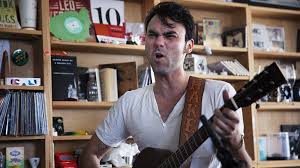
SOUNDTRACK: SHAKEY GRAVES-Tiny Desk Concert #495 (December 14, 2015).

I thought I had posted about every Tiny Desk Concert, but on double checking I found that I had missed this one.  I had heard of Shakey Graves and I assumed he was a country/folkie singer.  Which he is, although really his style is to mix country, blues and rock ‘n’ roll.  I also had no idea his real name is Alejandro Rose-Garcia.

This set sees Graves on acoustic guitar (with a strap with his name on it) accompanied by another acoustic guitar (which seems rather small) and a mandolin.

“To Cure What Ails” is a pretty, slow folk song. It’s simple enough with nice high mandolin notes and a good guitar line between verses.  Shakey has a nice voice and the song feels compelling like a story, although I don’t think it is.  He’s also charming and funny in little ways–he makes a lot of funny faces and chuckles.  But his music is really solid and the harmony at he end of the song is really great.

For “The Perfect Parts” the mandolin switches to bass and they have a little discussion n how to play it.  Shakey tells the drummer how to play the beat and then says they’re going to make it us as they go along.  This song is darker and has a cool sinister vibe.  He sings in kind of deep mumble for this song which works well for this song.  The song gets a little intense for a few lines.  And by the end it builds pretty loud with some good whoa ho ho backing vocals.  So much so that for the last chord, “he attempted a stage dive at the Tiny Desk.”

For the last song, “Only Son,” he:

breaks out his guitar and suitcase kick drum/hi-hat, [and] a palpable rush of swooning adrenaline hits the room. I felt that at the Americana Festival in Nashville, at the Newport Folk Festival and here at the Tiny Desk.

He says it is soon to be the last of the suitcase kick drums (this is his third).  He dreamed about having an object that he could cart around with him and still make a lot of noise.  The drum is actually behind him and he stomps the pedals with his heels (I can;t believe the camera never zoomed in on it).

He says the song is about “the moment in your life when you realize you’re not alone… there’s an aha! moment where you’re like ‘not just me?’  The drummer plays bass, the mandolin player has the mandolin back and Shakey has the kick drum suitcase.  There’s some terrific harmonies (and chuckling ) throughout the song, and I love the way it stops and starts.

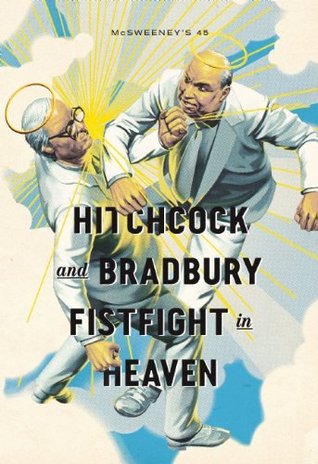
[READ: Late 2016 and early 2017] McSweeney’s #45

The premise of this collection was just too juicy to pass up.  Although it did take me a while to read it.  Eggers’ introduction talks about the contents of this issue.

DAVE EGGERS-Introduction
Eggers says he came across a collection of stories edited by Hitchcock. He really liked it and then learned that Hitchcock had edited 60 volumes over the course of 35 years.  He was excited to read literary genre fiction.  But he was more impressed that theses stories did what literary fiction often forgets: having something happen.  He then bought a cheap book edited by Bradbury (Timeless Stories for Today and Tomorrow) and he liked it too.  He was surprised that there were so many canonical writers (Steinbeck, Kafka, Cheever) in a Bradbury collection.

So, why not make a new collection in which we can compare the two genres.

Despite this looking like a pulpy paperback, there were still Letters.

LETTERS

CORY DOCTOROW
Doctorow says that Science fiction is not, indeed, predictive.  That any genre which deals with so many potential future events is bound to get some things right.

JAMIE QUATRO
Quatro says she was asked to write a letter for this genre issue, but Quatro doesn’t do genre, so she was about to pass.  Then her son, from the backseat, asks what bulwark means.  Then inimical.  Then miasma.  He is reading a book called Deathwatch about soldiers whose brains are removed so they no longer fear. Suddenly, when she compares this idea to her essay on Barthelme, she sees that maybe McSweeney’s was on to something after all.

BENAJMIN PERCY
In fifth grade Percy (who has a story below) gave his teacher a jar full of ectoplasm.  He has always been different.  He proposes the Exploding Helicopter clause: if a story does not contain an exploding helicopter (or giant sharks, or robots with lasers for eyes or demons, sexy vampires. et al), they won’t publish it.

ANTHONY MARRA
Marra discusses Michael Crichton and how something doesn’t have to be Good to be good.  He says Crichton was a starting point for him as an adult reader.  And what can be wrong with that? (more…)

Read Full Post »

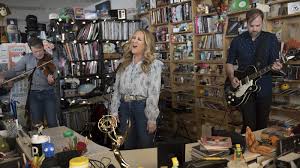
SOUNDTRACK: LEE ANN WOMACK-Tiny Desk Concert #711 (February 26, 2018).

Obviously I’ve heard of Lee Ann Womack.  I don’t know much about her, except that I’ve heard of her, like a lot, and that she’s a country music legend.

I wasn’t expcecting to like this Tiny Desk, but I really like the music of the first song, “All the Trouble.”  It’s rocking, the violin (Luke Bulla) is really moody and it sets a great tone.  But man, I just do not buy this lyric from her.

If you’re a country singer and I’ve heard of you, you certainly ain’t got all the trouble you’re ever gonna need, that’s for sure.  She may sound sincere singing those lines, but I’m not convinced at all.

My favorite part of the song was when the guitar (Jonathan Trebing) and violin played off of each other using the main riff from Phish’ “The Song I Heard The Ocean Sing.”

I also feel like she missed a great opportunity to flip some of the cliched lyrics of the song (and there are many) by making this one little twist:

If you got some good news give me a chance
if you’ve got some good love just put it in my (now, she says “hands,” but the better rhyme is clearly “pants”).

I also find her vowels to be very troubling.  The way she sings the word “more” is rather unsettling to me.

I was rather taken with the first verse of the song “Mama Lost Her Smile.”  I thought it was personal and thoughtful, but I feel like it was ruined somewhat by the overuse of the title phrase (I didn’t realize it was the title when I heard the line

I ain’t got much to go on / just a box of photographs / but every picture tells a story (ugh her vowel) and every story has two halves /
I keep on separating in before and after piles and somewhere in the middle is where mama lost her smile

I thought that was pretty great, but the overuse of it took away the specialness.

And then this chorus.  Why change from “you” to “we” it feels antagonistic.

you don’t take pictures of the bad times / we only want to remember the sunshine
but we don’t live in pictures this is real life / and they’re about as different as black and white

That last line was just painfully obvious.

Of the final song, “Hollywood” she says it is “one of my favorite things I’ve ever written or recorded.  I just like the vibe.  It kind of takes you to a different place.”  Wow, it is so dark, I can;t believe she’s so happy with it because it’s such a bummer song about a couple who have fallen out of love.

i ask you if you mean it you say yes.  I knew you would.
either i’m a fool for askin’ or you belong in Hollywood.

Damn.

The blurb says that although  she is massively popular and has had commercial success and widespread recognition, “these days, she’s working on the fringes of the genre.”

I find that hard to believe, but it’s not my genre.  The rest of the band is Dave Dunseath (drums) and Lex Price (bass).

[READ: February 27, 2018] “Seeing Ershadi”

This story starts with the narrator talking about her work as a dancer.  And while that sets the tone somewhat, it really doesn’t have much to do with the rest of the story.  Except that while she was injured she watched a film called “Taste of Cherry” by the Iranian director Abbas Kiarostami.

I didn’t realize that this was a real film while reading the story.  I have just looked it up and it is very real (and Roger Ebert hated it).  The narrator of this story is mesmerized by the story.

The film opens with the actor Homayoun Ershadi’s face.  Not much happens in the film (which is what Ebert hated) but the narrator is mesmerized by Ershadi.  He is driving an SUV looking for someone.  When he finally picks someone up, the man, a solider, eventually flees the car.  It turns out that Ershadi (as Mr Badii) is looking for someone to bury him.  Badii plans to kill himself and wants to ensure that someone will bury his body.  Suicide is forbidden in the Quran, so obviously no one will be an accomplice to this. (more…)

Read Full Post »

SOUNDTRACK: BIG DADDY KANE-Tiny Desk Concert #708 (February 19, 2018).

I remember Big Daddy Kane, of course, although I don’t think I knew any of his songs.  As far as I can tell, Kane hasn’t released an album since 1998.  But his voice sounds great and he seems pretty content to rap his old hits.

The smooth operator, Big Daddy Kane, still emits that same palpable swag he did as a lyrical heartthrob during his heyday. He strides into the room and fully commands it with his presence.

One of the greatest to ever bless the mic, Big Daddy Kane treated Tiny Desk to an office block party in the true essence of hip-hop.  Kane, aka Dark Gable, was a breakout member of the seminal Juice Crew in hip-hop’s golden era during the latter part of the 1980s. He popularized quick-cadence flows and multisyllabic rhyme schemes.

He performed a short set of classics, including “Smooth Operator,” “Ain’t No Half Steppin’,” “Raw” and a bonus freestyle. Through his warm, engaging and devilishly self-effacing style, the pioneer used an interlude between songs to address the intergenerational divisiveness defining rap today and the importance of fans of all ages supporting whatever they like, while “focusing on what’s positive and keeping that in the spotlight.”

The Concert opens with a great drum beat and a funky bass line for “Smooth Operator.”  The rather wimpy keyboard riff with the sax is kind of a wasted opportunity to give fuller sound to this song.

It’s interesting that Kane–whose voice still sounds deep and full–keeps the old songs with incredibly dates references like “Freddy Krueger walking on Kane Street.”

Mid song Kane says, “stay right here Ben… gonna make this into a family affair.  Are there any smooth operators out there?”  They sing the riff.  Then, “Let me see whats happening behind me.  Jay Dub (John Williams) on sax, is he a smooth operator?”  He is.  Kane tells him to “Make yourself at home” with a good solo.

While that solo is going on, he says “certain members of the band just can’t wait till their turn (looks at keyboardist who had been playing with the solo).  He says, “He’s been with me a long time, he’s the baby of the crew we call him J Minor (Judson Nelson)–most places we play he’s not supposed to be there, he’s not old enough. If I ask you to play like a grown man, how’s that sounds, baby?  He plays a smooth solo.

Kane: “I forgot there was another verse.  I was having so much fun looking at them.”

We should keep this party going.  I saw a couple of these people looking at their watch.  Some of you all might be on lunch break I don’t want to mess it up

“Ain’t No Half Steppin” starts off with simple sax and some more dated lines:  “Friday the 13th, I’m gonna play Jason.”  (Rappers loved horror movies back in the day).  He gets the crowd into it: “Say it like it’s 6’o clock Ain’t no half steppin’.”

“Let me hear you once more…  I lied, just one more time y’all.”

After the song he says, “I’m enjoying myself.  This is all right for real I might fill out an application for a job here next week.  this ai’iiht.”

“I’m gonna do one more song and then were gonna shut it down and this ain’t got nothing with y’all getting back to work, I’m starting to get hot in here.”

A great drum beat starts off “Raw” which is followed by that crazy squeaky sax.  And there’s this one last pop culture line: “The rhymes I use definitely amuse better than Dynasty or Hill Street Blues.

Mid-song, a cool faster drum beat is added–I love the snare sound Matt Lambert gets and then the whole band kicks of for a great riff on bass and sax to end the song–it’s a shame it ended there as it was really taking off.

People don’t want him to leave, so they do a freestyle.  A cool slide bass line from Benjamin Geis and staccato piano.  It’s my favorite music of the show.  And the speed of his freestyle rap is really impressive.  And he (virtually) drops the mic and is off.

It’s a great old school set.

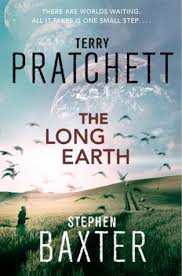
[READ: Summer 2017] The Long Earth

I have read nearly everything that Terry Pratchett has written (I kind of drifted a bit towards the end, but I’ll catch up eventually).  Anyway, I was in the bookstore in Bethlehem, PA and saw this book.  It’s a series I’ve known about but didn’t know very much about.  I decided to check it out to see what it was all about.  I don’t know very much at all about Stephen Baxter except that he’s a hard science fiction writer, meaning he focuses as much on the science as he does on the fiction.

So how does this pair–a hard science writer and a comic parodist of fantasy work together?  Well, honestly the story is much more Baxter than Pratchett. Although since I haven’t read any Baxter, I guess I can’t say that legitimately, but it’s definitely not very Pratchetty.

Well, maybe some of the character interactions are kind of Pratchetty, but certainly not like any of his Discworld characters.  As with any co-writing experience, I wondered how this story was constructed.  So I found an interview with Stephen Baxter from around the time they finished writing the fourth and final book

How did the idea for the Long Earth series come about?

The whole thing was basically Terry’s idea. He’d started work on this project and short stories set in this world back in the ’80s but he got stuck with it.  He wanted to have a very human, level way to access these words. You don’t need to get there on a rocket ship, you can just walk in.  At the same time, the vision for the end was going to be out on a galaxy somewhere.

We’d known each other for years and [about] five years or so ago at a dinner party, Terry [said he] was going through his archives looking for unpublished short stories and things like that and he came across an aborted project from about 30 years ago.  We were just talking about that and it just struck me as immediately a great idea because it’s so simple and yet it’s got endless possibilities.  By the end of that [party] we already had the storylines and Terry was going to send me the material.

Terry was having trouble seeing so Stephen did the typing and then “We fixed each line and each scene together.”

So that’s that sorted.

Baxter also says “it just struck me as immediately a great idea because it’s so simple and yet it’s got endless possibilities.”

And that is the truth.  The story can be summed up pretty easily. (more…)

Read Full Post »

SOUNDTRACK: JETHRO TULL-Aqualung (1971).

I loved Jethro Tull.  I have all of their records up until Crest of a Knave when I must guess I decided that they were uncool (as if they were ever cool).  But man are they ever cool and this book reminded me just how cool they are.

The whole record is solid from start to finish with string rockers, string riffs and then mellow folkie songs in between.  And the dynamic nature of Anderson;s voice–he could be five different characters.

How great is “Aqualung,” the song?  A terrific riff, a gentle middle section, a rocking section, some great bass lines all with some wild acoustic guitar and those lyrics–so graphic, so descriptive.  I am always taken with the drums–little thumps and a cymbal throughout the rocking verse.

It’s followed by the flute intro of “Cross-Eyed Mary.”  There’s rocking guitars and another complex riff with Anderson’s snarling vocals (echos on everything).  “Cheap Day Return” opens with a pretty classical-esque acoustic guitar intro and then Anderson’s more gentle vocals.  It’s a 90 second song that segues into the fairy tale melody of the flute for “Mother Goose.”  There’s some very nice harmonies on this song.

“Wond’ring Aloud” is all folk and the laughing that bounces around the headphones before the great riff of “Up to Me” on both guitar and piano.  And how neat that the lead guitar is circling around in one ear while the flute and vocals are down the middle of the song.

“My God” opens with a lengthy acoustic guitar display.  It’s quite pretty until the minor chords come in.  It’s followed by the piano and that distinctive voice.  Two minutes in, the guitar joins and the vocals get louder and more sneering.  There’s a terrific flute solo (complete with him giving a “yea” in the middle of it) and then a choral accompaniment that adds a whole new level of pious and impiety.

“Hymn 43” has a great heavy riff, chugging guitars and Anderson’s snarling lyrics (and so many whirling guitars solos and even a flute solo throughout).

It’s followed by the minute-long “Slipstream,” a pretty acoustic guitar song with gentle strings and more lyrics obliquely about god.  The song ends with some woozy up and down sliding on the strings which segue into the lengthy classical sounding piano intro of “Locomotive Breath.”

There’s a distant guitar solo under the piano before the guitars get louder and louder for the great chugging riff of the song.

The disc ends with “Wind Up,” a quiet intro on acoustic guitar and vocals that gets slowly louder;  and then the song rocks a swinging beat as he sings of excommunication and being packed off to school.  There’s a wild solo (different in each ear) in the middle of the song, which

and then the end where a jaunty piano accompanies these straightforward lyrics:

When I was young and they packed me off to school
And taught me how not to play the game
I didn’t mind if they groomed me for success
Or if they said that I was just a fool
So to my old headmaster and to anyone who cares
Before I’m through I’d like to say my prayers
Well, you can excommunicate me on my way to Sunday school
And have all the bishops harmonize these lines
I don’t believe you
You had the whole damn thing all wrong
He’s not the kind you have to wind up on Sundays

[READ: July 1, 2016] Aqualung

I have often thought I should read this series.  Of course, the last time I thought about it, there were 50-some books in the series and that seemed like way too many.  Well as of June 2017, there are 120 books in the series, which is an insane series to jump into.

But at work, four of the books came across my desk and if that’s not an invitation to read something, I don’t now what is.  So I’ve decided to read these four and we’ll see if that leads to more.

This was the third book in the series that I’d read.  The first (Colin Meloy’s) was a personal take on one of his favorite records, The Replacement’s Let It Be.  The second (Steve Matteo’s) was a detailed look at the recording sessions of The Beatles’ Let It Be.  This book is all about interpretation–Allan Moore’s take on an album that has fascinated him since his brother bought it over 30 years ago.  He is quick to point out that right and wrong interpretations of art are kinda impossible, but that won’t stop him.  Ian Anderson has written “What listeners get from the lyrics is theirs, what the lyrics are for me is mine.”

Moore breaks the book up into sections–the first situates the album at the time of its release, the rest looks at various songs (including bonus tracks on new releases). (more…)

Read Full Post »

815SOUNDTRACK: BORIS-DEAR (2017).

The plan was that after 25 years, Boris would retire.  They recorded songs for Dear, but then toured the anniversary of the album Pink.  This inspired them to write more songs, and somehow through all of that, Dear was created (with apparently enough music for two more albums).

Then they toured Dear (a tour I was lucky enough to see) and are still going.  Who knows if they are done.  Who knows if this is their final album.  Either way, this is a doozy.

10 songs and 70 minutes (on the U.S. release), Dear specialized in slow droney heavy songs.  The album opens with seven smacks of a drum before loud heavy chords signal the beginning of “D.O.W.N -Domination of Waiting Noise.”  The vocals are loud but just loud enough to add to the overall drone sound.  Things slow down further with “Deadsong” a deep bass drone with whispered, rather spooky/demonic vocals.

Despite the drones there are moments of catchiness (relative).  “Absoluego” is a faster, downtuned song with a big shouted chorus and “Beyond” is a quiet, moody song featuring Wata on vocals.  About 90 seconds into the song there is blast of metal guitars and drums that lasts for 30 seconds or so before fading out.  When it happens again, one of the guys starts singing too, a faster heavier, catchier melody.

“Kagero” opens with a low rumble.  Eventually a slow, heavy guitar comes in with near falsetto singing.  “Biotope” has a steady pulsing bass drum through the track.  The guitars are slower with an occasional plucked string that resonates. This song even has some ooohs in it.

“The Power” has my favorite Boris riff since “Tu la la.”  It’s got six notes all of which are strangely menacing and yet catchy at the same time. This was a great song to see live.  “Momentio Mori” is slow and menacing with cool echoed/chorused vocals–there’s an Alice in Chains vibe to the vocals.  With about a minute left, the song slows down and grows quiet almost as a lead in to the 12 minute “Dystopia -Vanishing Point.”  This song opens with two minutes of warbly accordion (I loved watching Wata play this part live) and some thundering drums.  It all fades away into some quiet ringing guitars and whispered vocals.  This continues for a few minutes as waves of guitars are added.  And then at 7 minutes the loud guitars and drums blast forth and Wata gets to do a screaming solo for the final 4 minutes.  She is still soloing as the song abruptly ends and switches to the final track.

“Dear” opens with those low downtuned guitars echoing.  I love that the guitars simply slide up to a very high note and hold it until sliding back down.  There’s a muffled chug on the low chords while the heavily echoed vocals ring out.  The song continues like this, a mountain of low rumble, for 9 minutes until it starts to consume itself–feedbacking and disintegrating until it sounds like all of the plugs are pulled.

There’s not a lot of diversity on this disc, which resembles some of their earlier music.  I’m very curious to see what they do next.

[READ: February 9, 2016] “The Republic of Bad Taste”

This story (it feels complete and not like an excerpt, although the title seems unlikely as a short story title) was 20 pages long in this issue of the New Yorker.  That’s one of the longest pieces I’ve seen in the magazine.

And it covers a lot of ground.

Like how does an at-risk-youth counselor agree to commit murder?

It begins by introducing us to Andreas Wolf in East Germany circa 1987.  He is a disaffected youth, an atheist with a super libido and he has found employment at the church on Siegfeldstrasse.  Andreas felt the whole regime was ridiculous.  In fact he felt that a lot of things were ridiculous.  The Republic was just so German that it couldn’t even go after misfits unless it was by the book.

His “job” at the church was as a youth counselor.  He was surprisingly good at it. In part because he really didn’t care and in part because he himself was almost at risk.  He wasn’t really at risk because his father had a good position with the government, but they had more or less disowned him (aside from agreeing to make sure he never got into real trouble).  Plus, he was pretty good-looking so many of the at risk girls found him attractive–with all that implies.

He took advantage of this.  He found that his monetary reward was so pitiful that a reward in beautiful girls made up for it.  At the same time, he did have some scruples.  He never had sex with anyone underage or anyone who had been sexually abused.  What a guy. (more…)

Read Full Post »

SOUNDTRACK: BORIS WITH MERZBOW-Rock Dream (2007).

Rock Dream was recorded live in November 2006 at Tokyo’s Earthdom festival.  It is a mix of the heaviness of Boris and the noise of Merzbow.  And it is lauded as a spectacular live document.

The Austin Chronicle discussed the album in their overview of Boris’ career, declaring it “definitive live document, an impossibly dense double album that touches down on nearly every point of their career, from Dronevil to Smile’s contorted stairway to heaven (“Flower Sun Rain”), with Merzbow’s electronic manipulations stitching it all together like connective scar tissue.”
In a retrospective review Tiny Mix Tapes, declared Rock Dream to be “not just the best album Boris ever made, but also one of the finest live albums I’ve ever heard.” and that “It’s incredible then that someone recorded Boris and Merzbow that night, because for two hours they got to be the best band on the planet.”

And what live show that opens with a 35 minute song wouldn’t be fantastic?  “Feedbacker” starts quietly with just guitar and Merzbow’s effects.  It has an almost spaghetti western feel to it with all the reverb.  Unsurprisingly, there’s moments throughout the 35 minutes where things dramatically change.  At 6 minutes there’s loud ringing guitars.  At 9 minutes things slow down and then slowly build back up with swells of music from the guitars, keys and effects. At 20 minutes, muted vocals come in and then grow louder.  It feels like it’s building to an end but it turns into faster guitars and a lot of noise.  By 31 minutes things have slowed down heading towards an ending which is primarily Merzbow’s pulsing sounds.  (And there’s so much more going on in that half an hour).

These sounds segue into “Blackout” full of thrashing guitars, crashing cymbals and Merzbow’s noise.  This segues into a song that I gather is only heard here: “Evil Stack” which features a lot of Merzbow’s knob twiddling and noise making and a lot of feedback as well.

This all segues into “Rainbow,”  a far more mellow song that opens with bass harmonics and simple drum beat with Wata’s quiet vocals.  It’s a slinky cool song with a mellow guitar solo.  Merzbow throws in some interesting sounds and and mild noises throughout.

If Disc one showcased their more expansive sound, Disc two opens with a bunch of really short fast loud songs all from Pink.

First off is the raging punk blast of “Pink.”  It is all-out thrash with a lot of yelling from Atsuo and wailing solos from Wata.  It’s followed by the 2 and a half minute rager “Woman on the Screen” with a great punk riff, lots of Atsuo’s screams and of course Merzbow putting a wall of distorrted noise over the top.  The trio concludes with the two minute  “Nothing Special.”  The punky blasts continue with “Ibitsu.”   It’s not from Pink but it’s just as fast.

Things slow down somewhat with “A Bao A Qu.”  It is 4 and a half minute with a lot of squealing feedback and thunderous drumming.  The final four songs return to that epic style–they are alternately 13 minutes or 8 minute long.

“The Evilone Which Sobs” slows things down with more of that reverbed spaghetti-western style guitar.  There’s squeals of feedback, slow plucked guitar and Merzow as this 13 minute song gets under way.  After three minutes the loudest guitar and bass imaginable come crashing through the melody.  The rest of the song is full on loud drone and feedback.  It all slows down for their surprisingly catchy of cover of Pyg’s “Flower Sun Rain,” which sounds just as good live as on record–including Wata’s wailing solo.

The final two songs return to Pink.  “Just Abandoned My-self” runs over 13 minutes and opens with a scream from Atsuo, wailing guitars from Wata and vocals from Takeshi.  The song barely lets up for seven minutes, and when it finally changes pace, it’s more for the guitars to do some e-bow working while Atsuo continues to pound away.  The last four minute are those droning chords with Merzbow making some really interesting sounds while the band plays on.  Merzbow ends the song with a kind of looping siren that leads into the show ending with a great version of “Farewell.”

Unlike the one from Crossing Waltz, Merzbow’s presence make a pretty big difference in the dynamic of “Farewell.”  The band sounds terrific and it’s a fantastic take on this by now iconic song.

For sure this live set isn’t for everyone–it’s loud, there’s some uncomfortable moments–but it really captures a band at full power.  And as with most Boris releases, it had a different cover in Japan.

Disc one   Total length:       49:58
“Feedbacker” (Originally from Boris at Last: -Feedbacker-) 35:05
“Blackout” (Originally from Pink) 5:19
“Evil Stack” 5:04
“Rainbow” (Originally from Rainbow) 4:30
Disc two  Total length:       60:32
“Pink” (Originally from Pink) 4:14
“Woman on the Screen” (Originally from Pink) 2:37
“Nothing Special” (Originally from Pink) 2:14
“Ibitsu” (Originally from Akuma no Uta) 3:35
“A Bao A Qu” (Originally from Sound Track from Film “Mabuta no Ura”) 4:35
“The Evilone Which Sobs” (Originally from Dronevil) 13:41
“Flower Sun Rain” (PYG cover, later released on Smile) 8:04
“Just Abandoned My-self” (Originally from Pink) 13:21
“Farewell” (Originally from Pink) 8:11

[READ: February 21, 2017] “Mrs Crasthorpe”

This story revealed itself slowly and in interesting ways.

We meet Mrs Crasthorpe in the first paragraph.  She is humiliated because her husband’s funeral has just been poorly attended.  It was also, by his own design, in a small, unassuming, frankly embarrassing cemetery.  Mrs Crasthorpe is 59.  Her husband was 72.  Yes, she had married him for money and yet it didn’t really make her a more fulfilled person.  She had cheated on her husband, but he didn’t seem to mind or care.

She had felt herself to be always a rosebud, claiming to be 45 when she was late nearly 60.  She also told no one she had a son.

Then we shift to following Etheridge, a man whose wife is near death.  He is tender to her, caring, but she doesn’t have long to live. (more…)

Read Full Post »

815

SOUNDTRACK: BORIS-Crossing Waltz (2016).

Boris have put out (by my understanding) eight live albums.  As with most of their releases, they’re not all easy to find.  I happened to get this one because they were selling it at the show I was at (many of their releases seem to be only for sale at the merch table).  This one is from their own Fangs Anal Satan label.  It was released in 2016 but was recorded sometime around 2011.

It happens that this era is one that I know best (they put out three albums on the same day and they are all still available) so this is a fun live album for me since it’s fun to hear the distinctions and their ability to translate them in a live setting.

The disc opens with a two-minute intro–sirens from the opening of “Heavy Rocks 2011” which leads into “Riot Sugar.”  The song is heavy–it rocks out and is full of Atsuo’s whoops and yells–the sign of a real rocking song.  “8” is a song I didn’t know.  It starts with a lot of gong and has some great falsetto vocals.

“Statement” is great to hear live because it’s cool that they can play the songs just like on record.  Not that it sounds like the record exactly, but that they can recreate the music live–and keep it all catchy too.

Then things slow down for a few songs from Wata.  “Attention Please” is quiet and silky with cool guitar and effects.  I love the way Wata delivers the quiet, whispered lyrics.  It’s followed by “Party Boy.”  “Party Boy” appears on two records.  It’s hard to know which “version” this is but this one is slinky, dancey and heavy at the same time (we’ll say Attention Please, since there’s not much synth)..

“Flare” is from a 7″ and it is very heavy.  Then it’s back to Wata singing the really catchy “Spoon” with heavy drums.  The first disc ends with the 16 minute “Missing Pieces” (longer than the album by a few minutes).  Like a good epic, it starts slowly.  After three minutes Atsuo introduces a lot of drums and then the bass and guitar roar for about a minute.  It fades to near quiet once again.  There’s a minute or so of just vocals before the guitars come back, this time with soloing while Takeshi is singing.  Around six minutes in it turns to noise, noise, noise–both guitars on feedback and scraping and the drummer going bananas.  The band stops on a dime for complete silence and then takes off again–noise and more noise.  There’s feedback and gongs and more feedback.  And then at 11 and a half minutes the drums return–continuing through to the end.

Disc two opens with “Window Shopping” which is all about fuzz and buzz, full of Atsuo’s yeahs and a crazy wild solo at the end from Wata. 

Then they move back to some older albums for 2 songs.  “1970” comes from 2002’s Heavy Rocks album (the orange one).  It is full of bass rumble.  It leads to the classic “Pink” with gongs as the transition.  Even all of these years later, these songs are full of power.

“Alierion” is the longer version.  It starts slow and quiet and builds and builds, getting heavier for 12 or so minutes. The last minute is a solo piano melody, a dramatic departure for them.  Then the sirens come in again for “Looprider.”  “Looprider” is eight catchy minutes of shoegazey fun.

The by now standard closing of “Farewell” ends the show.  Hearing those opening notes live was great and it is great here.  The song sounds terrific.

One of the things about Boris live is that their vocals are never clear.  Perhaps if you understand Japanese the vocals are more obvious, but it feels like they may be something of an afterthought, especially live. The band is all about the sonic experience and the vocals, the voice, is just another piece of that.

1.1 Intro  2:35
1.2 Riot Sugar — Heavy Rocks (2011)  4:53
1.3 8 — Japanese Heavy Rock Hits Vol 1 (2009) 4:03
1.4 Statement — Smile (2008)  3:49
1.5 Attention Please — Attention Please (2011)  6:34
1.6 Party Boy — New Album (2011)  3:55
1.7 Flare — Asobi Seksu x Boris 7″ (2012)  4:24
1.8 Spoon — Attention Please (2011)  4:57
1.9 Missing Pieces — Heavy Rocks (2011)  16:01
2.1 Window Shopping — Heavy Rocks (2011)  5:58
2.2 1970 — Heavy Rocks (2002)  5:03
2.3 Pink — Pink (2006)  4:52
2.4 Ailerion — Heavy Rocks (2011)  13:52
2.5 Looprider — New Album (2011)  8:18
2.6 Farewell — Pink (2006)  7:37

[READ: February 8, 2016] “Quaestio de Centauris”

I was sure that I had read or posted about stories from Primo Levi before 2016, but I see no evidence of it.

Perhaps I have never read him, just heard of him.  I don’t know if this story is anything like what he typically writes, but it was a pretty unexpected story topic (continuing with the theme of this issue, apparently).

The story was translated from the Italian by Jenny McPhee.  And, as one might decipher from the title, the story is about centaurs.

The narrator says that his father kept a centaur in the barn.  Although he admonished the boy not to bother it, the bot and the centaur, Trachi, became friends.  Trachi even allowed him to ride on his back from time to time. (more…)

Read Full Post »

815

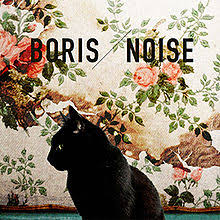
SOUNDTRACK: BORIS-Noise (2013).

You really never know what you’re going to get with Boris.  Most of the time, there are multiple editions of releases with different covers and different mixes.

In this case, despite the different covers of this record (see below), the track listing is exactly the same (except that the Japanese version came with a bonus disc).  Total length: 57:52

I like that this album cover parodies (sort of) Nirvana’s Bleach album cover.

“Melody” (黒猫メロディ) 6:40 The disc opens with some ringing alt-rock wit a distorted rocking chorus.   Despite the cover, it’s not like Nirvana, it’s more soaring  there’s catchy backing oohs and a cool hi-hat flourish.

“Vanilla” 4:15 is heavy in the same vein as “Melody” and “Ghost of Romance” (あの人たち) 5:49  has slow guitars and soaring leads with a heavy solo.  “Heavy Rain” (雨) 6:12 starts quite slowly with vocals by Wata and then there’s a big crash and the heavy section follows.  It alternates between quiet and loud at intervals.

“Taiyo no Baka” (太陽のバカ) 3:36 is almost a pop metal sound with dancey vocals and woah hos.  There’s even a simple guitar riff that follows along.  At three and a half minutes it’s a pure pop gem.

“Angel” 18:42 Angel, on the other hand pushes 19 minutes and it’s an epic workout.  It begins with a pretty, quiet guitar riff interlaced with a second guitar and interesting percussion.  There’s slow vocals as well.  But after 6 minutes, a loud distorted guitar interrupts the pretty melody, but it’s only playing an intermittent chord.  Even the powerful drums blasts don’t change the overall tempo of the song until a minute later when it takes on a loud droning quality with harmony vocals and a distorted bass moments.  There’s a soaring guitar solo as well.  By around 10 minutes the song turns into an uptempo rocker with falsetto vocals!  The song seems to climax at 13 minutes with a big gong.  But there’s more.  The song turns into a kind of soaring instrumental with echoing guitars and thumping drums.  With two minutes left the song returns to that opening guitar riff with a tidy solo over the top.  It’s like the song is nicely bookended with itself.  It’s quite the centerpiece.

“Quicksilver” 9:51 Who know what another band might follow a 20 minute song with, but Boris chose a nearly 10 minute song.  It seems at first that “Quicksilver” is going to be a short blast with the super fast pummeling hardcore sound.  There’s screamed vocals and wild drumming but it’snot that simple.  At 3 and a half minutes, the song slows down some although it stays heavy.  By around the 5th minute there;s lou dbacking voclals to accompant the lead vocal.  Once again, a false climax comes at 7 minutes but there’s more feedback to come along with a quiet, pretty guitar outro.  Until the final two minutes when there are loud droning chords that play through to the end.

“Siesta” (シエスタ) 2:50 Siesta is the shortest song on the disc, an instrumental that is kind of pretty and kind of woozy at the same time.  It’s definitely a slow down from the erst of the album and a nice conclusion.

This was the first Boris album I bought and it’s still a favorite.

The Japanese edition (cover to the right) came with this bonus disc, which I’ve not heard.

CD 2 (Another Noise) Total length: 23:26
1. “Bit” 9:35
2. “Kimi no Yukue” (君の行方) 4:51
3. “Yuushikai Revue” (有視界 Revue) 3:32
4. “Discharge” (ディスチャージ) 5:32

[READ: July 23, 2015] “Love is Blind and Deaf”

This was the 2015 New Yorker fiction issue.  It featured several stories and several one-page essays from writers I like.

In addition to those essays on Time-Travel it also included this short piece from Safran Foer.  I hadn’t seen much from Safran Foer recently, so I was interested to read this (very) short story.  It’s all of one page.

Much as Zadie Smith’s story about celebrities was unexpected, so was this one (on the following page in the magazine no less) about Adam & Eve.

We learn that Adam was blind and so never had to see Eve’s hideous birthmark.  And that Eve was deaf and never had to listen to Adam’s whiny narcissism.  And then they ate the apples and knew everything.  (more…)

Read Full Post »

815

SOUNDTRACK: BORIS-Attention Please (2011).

Attention Please marks a departure from the Heavy Rocks sound, returning to the dream pop sound explored on New Album, but this time, it has elements of noise pop and alternative rock. It features Wata’s vocals on every track.

Attention Please shares the songs “Hope,” “Party Boy” and “Spoon” with New Album
Attention Please shares the tracks “Aileron” with Heavy Rocks, although it is radially different.
New Album shares the tracks “Jackson Head” and “Tu, La La” with Heavy Rocks.

“Attention Please” 5:12 has a pulsing bass and gentle drums that lie under Wata’s whispered sensuous vocals.

“Hope” 3:26 Sounds a lot like the version on New Album, although the synths have been replaced by strings and the sound effects are removed.  This song feels more organic but still slick and catchy.

“Party Boy” 3:50 The thumping bass drum and a really buzzy bass give this version a very different sound.  There’s almost no synth although the vocals sound pretty much the same.  There’s a lot of strange effects that reward headphone listening–when Wata whispers in your ear it might even make you turn your head.  Although the song is basically the same, the New Album version is definitely catchier.

“See You Next Week” 3:56 has warping synth sounds that push the song forward as Wata’s whispered vocals come in.  The speed of the “percussion” is contrary to the gentle echoing vocals.  “Tokyo Wonder Land” 5:42 opens with repeated, high-pitched Huh huh huh and super distorted wild guitar riffs.

On “You” 6:13, it sounds like she’s singing “anatomy” quietly at a whisper (which she obviously isn’t).  It’s a slow, smooth song that meanders beautifully.

“Aileron” at 2:01, this is a much abbreviated version from the one on Heavy Rocks.  This one is all acoustic with some pretty guitar soloing going underneath the lovely melody.  The melody is the same but the whole song is very different.

“Les Paul Custom ‘86” 2:09 has whispered vocals from Wata and the men.  There’s guitar washes and a sense of menace but mostly it’s kind of tinny and effects-filled.  Its one of the few songs where understanding the words might actually help.

“Spoon” 4:16 For this version, there;s no keyboard notes, just heavy guitar.  But that whole shoegaze vibe from Wata’s vocals remains. The only real nod to the other version is the sound of breaking glass at the end of select verses.

“Hand in Hand” 4:30 is quiet and pretty with the tinny guitar and Wata’s gentle soaring vocals.

Between these three discs you get a pretty complete picture of the music of Boris–largely heavy,but always guitar based.  They really show off their diversity with this trio.

[READ: July 22, 2015] “Escape from New York”

This was the 2015 New Yorker fiction issue.  It featured several stories and several one-page essays from writers I like.

In addition to those essays on Time-Travel it also included this short piece from Zadie Smith.

This story is quite the peculiar one from Smith.  It eschews just about everything I think she writes about and focuses on a very unexpected subject.

There is a catastrophe in New York (presumably 9/11 although it could be a fictional disaster).  Lead character Michael is trying to coordinate an escape for his friends Elizabeth and Marlon.  Now, the accompanying photo was a clue, and anyone with any familiarity with celebrities should recognize those names.  I wasn’t sure if it was a coincidence; I assumed it must be. (more…)

Read Full Post »

« Newer Posts - Older Posts »