Feeds:
Posts
Comments

Archive for the ‘Authors’ Category

SOUNDTRACK: DARLINGSIDE-Live at Newport Folk Festival (July 27, 2018).

Darlingside never disappoints and this stream from Newport Folk Festival is an excellent opportunity to hear them live.

The sound quality is excellent and their voices are more clear than on the record!

I had no idea this was only their first time at Newport Folk est and Harris is suitably excited (even though it’s only 11AM).

It’s also an opportunity to hear their one of a kind banter.

The harmonies on “Go Back” are just heavenly.  And they are positively angelic on “Singularity.”

The introductory cello solo at the beginning of “Harrison Ford” was a delightful change.  And the guitar really rocks loud on “Eschaton” (almost like a real rock band!)

There’s also the hilarious band member introduction (different at every show).

Auyon says that they were able to play for a boys and girls camp, Camp Grovernor.  But something was lost in communication and the camp director thought the band name was “Don Mitchell,” (their banjo player).  And the director was asking, “Is it Don Mitchell and the…”  Auyon explained that the Don Mitchell is silent and it’s just Darlingide.  This got him to wonder what the band would be if each member was the main character.

Dave Senft plays kick drum, bass and guitar.  Dave had a child recently so it would be Dave Senft and The Weird Uncles.
Harris Paseltiner plays cello and guitar. Harris lights his beer light in body and light in color and as far as I can tell utterly devoid of flavor…  so Harris Paseltiner and The Lightest Beers.
Don Mitchell plays banjo and guitar.  Don is from CT and is steeped in New England traditions, like nativism and xenophobia which he demonstrates every time he uses Midwestern as an insult…. which is particularly irksome to those of us in the band who are from the Midwest.  In the spirit of brotherhood, Don Mitchell and The Midwesterners.
Auyon Mukharji plays mandolin and violin and with me we would be Auyon Mukharji and the Best of Friends.

Harris: it’s the first time he’s ever been earnest.  It must be something in the water.
Don: that was the height of Midwesternness.
Auyon: and it felt really good.

This the first time I’ve heard them play the Neil Young song “Red Sun” which sounds great of course.  It’s done a capella, too.

  • “The God of Loss”
  • “Go Back”
  • “White Horses”
  • “Extralife”
  • “Harrison Ford”
  • “Singularity”
  • “Eschaton”
  • “Red Sun (Neil Young)”
  • “Blow The House Down”

[READ: February 4, 2016] “Five Arrows”

This is strange little story about a man who moves to an island because his gangrenous foot smells so bad that he has ejected himself from polite society.

But it is told from the point of view of a young boy, Insu.  Insu is from the village of Bupyeong in Korea.  But he has lived in The United States and Germany for the last two years.

Insu is shocked at what has happened to their village–the river which five years ago was so clear you could see the bottom was now dammed up and cloudy.  The locals were trying to grow carp.

It turns out that Insu and his friend are rowing across the river to find Big Uncle and Little Uncle.  They are skipping school and know that the uncles can keep a secret. (more…)

Read Full Post »

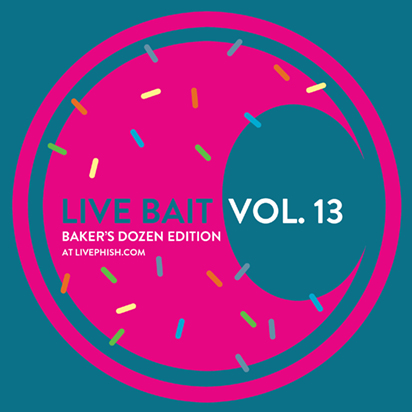
SOUNDTRACK: PHISH-Live Bait Vol. 13 [Baker’s Dozen Edition] (2017).

Live Bait 13 was a special release to tie in with the Baker’s Dozen shows at Madison Square Garden.  It’s a little strange that 11 of the 13 songs are from MSG and not all of them, but whatever.  The MSG recordings date from 1994-2016, and the additional two songs are a relativity recent song from Chicago and a 1993 track from Pittsburgh.

The set starts with a 14 minute “The Wedge” (7/20/14 FirstMerit Bank Pavilion at Northerly Island, Chicago, IL).  It seems to be a little stiff and almost “formal” to start with although by around 9 minutes it loosens up and gets funky with some cool drum breaks.  By 11 minutes it turns into a loos jam of chords that sounds familiar like an other song, but I can’t place it.

The “Run Like An Antelope” is from 1993 (7/18/93 I.C. Light Amphitheater, Pittsburgh, PA) and it opens fun with woodblocks and a dramatically dissonant chord.  Trey launches into Led Zep’s “Heartbreaker” riff while the band keeps going.  The middle slows down and gets noisy before ending.

The rest of the tracks are from Madison Square Garden.

“Tube” (12/29/97) starts off quite angular and harsh but grows funky with a cool keyboard sound and solo from Page.   Moving back to (12/30/95) they play a spirited “It’s Ice” which segues into a rather mellow “Kung.”  Most of the nonsense from “Kung” is spoken, including the runaway gold cart marathon. But then they start screaming “Stand up!  STAND UP!”

I love that “It’s Ice” has the kind of vocals that are done in something of a round or a fugue.  It’s followed by “Piper” (12/30/11) that also has that kind of vocals in the round.  Its a nice pairing.  This version is pretty grooving and eventually gets really rocking.  Although the last five minutes are trippy and chill.

There’s a surprise (to me) “Icculus” from 2013. (12/31/13).  Trey has a lot of fun with the story of the helping friendly book.  He talks about how when they first started playing they had a message to impart.

Some of you are not getting the message and it’s pissing us off.  We’re here tonight in the middle of Madison Square Garden to give to the fucking message!  I’m looking around and I’m thinking a lot of you haven’t read the fucking book.  Up next is the fun segue of “Mike’s Song > Swept Away > Steep > Weekapaug Groove” from 1996 (10/22/96) is a large 20 minute block. There’s a good jam that lasts almost ten minutes before “Swept Away” comes in quietly for a minute. It stays quiet through “Sleep” until they launch onto the “Groove.”

The next song is from 2016 (12/30/16) , I think the most recent Live Bait.  “Light” sounds “mature” until the jam plays on for a while and its drifts all over the place until Fish pulls it back around 16 minutes to a wholly unexpected “Party Time.”

I love this version of “Carini” (12/28/98).  It is dark and angular with a really dark and moody jam.  At 8 minutes its gets kind of trippy but by 12 Page takes it into a dark place with synth sounds> Wolfman’s Brother (12/28/98 Madison Square Garden, New York, NY) 37:23

Ghost (12/31/10( is groovy with a half time solo while “Tweezer” (12/30/94) is fast and peppy for nearly the whole 20 minutes. The “Ebenezer” part comes at around 4 minutes with a lot of prolonged nonsense after the word.  “You Enjoy Myself (12/4/09) is a full 20 minutes as well and they seem to stretch it out with the second part coming at 3 minutes and the lyrics starting around 6 minutes in  there’s some great solos by Page and Trey as well.  There’s a funky watery bass solo around 17 minutes before the final vocal jam which is mostly a series of rising and falling yells until they grow quiet by the end.

“No Men In No Man’s Land” is a newer song and they play it nice–stretching it out with a grooving sound and jam.  By 10 minutes it chills down, but it picks up again by 11:30.  At 15 minutes it gets angular and dark and around 20 minutes they start the countdown to Auld Lang Syne.  They come out of ALS with a wonderful “Blaze On,” a fun welcome to the new year.

Nothing could prepare anyone for Phish playing a no repeat 13 night series, but this was certainly a fun reminder of the great shows they’ve played at MSG.

[READ: February 7, 2018] “August”

This story is a slice of life at a lake in August.

The family went to the lake for five seasons over he years.

The narrator says he primary memory is of his father reading intently.  He could read for hours without moving.  Sometimes he would pick up a drink and there was the possibility that he would not drink it before getting to the bottom of the page and then simply put it down, forgotten.

His mother would not read until she picked up a book and then would read intently for a couple of days and then seem to just give up.

It was the second season that his father shot the dog.  Yup, its one of those stories, but not as bad as all that. (more…)

Read Full Post »

SOUNDTRACK: PHISH-Live Bait Vol. 8 (2012).

Live Bait Vol 8 included 6 songs in 90 minutes with a date range of 1993-2011.

It opens with a rollicking, shambling, fun version of “Run LIke an Antelope” from 1994.  The song opens with a Simpsons title riff and a big D’oh! from everyone.  The song sort of starts going but it is interrupted by a verse or two from “Big Black Furry Creature from Mars” (Just the “When I get home from work, what do I do? I try to kill you” part).  By ten minutes the music has gotten so far afield from the original.  There’s as creaming guitar solo from 14-17 minutes and at 18 minutes there’s a little bass solo until the try to rein it back in.  You almost forget what song they are playing and when it’s time for the words, Trey gets the line wrong, saying “Set the gear shift…” but quickly corrects himself and reverts to instead of “Rye Rye Rocco.”  In total this 21 minute song has about 2 minutes of actual “antelope.”  It’s pretty fun.

It jumps to a 2000 version of “Bathtub Gin.”  Page is in good form as this one opens with lots of wild piano in the introduction.  It’s a fun, groovy version that lasts about 15 minutes.

Back to 1996 for a bouncy funky version of Simple.  The middle shows of Page once again as he plays with all kinds of sounds from his keyboard rig.  The middle is some great funky organ.  The end of the song (after some 14 minutes, mellows out with some lovely piano from Page and what I suspect are bells played by Fish.

The fourth track is a 1998 version of the instrumental “Buried Alive.”  That riff is so good and they jam it for quite a while.  Trey really scorched throughout the song and he returns to the original riff after some 12 minutes of jamming.

The oldest track is a “Halley’s Comet” that segues into “Slave to the Traffic Light” from 1993.  The opening of “Comet” has everyone singing in harmony.  While the harmony is going on, Mike has got some good funky bass going too.  But six and a half minutes there’s more piano work from Page.  The segue into “Slave” comes at 9:45.  This version of the song is solid and sounds great.

Finally the freebie disc wraps us with a 15 minute “Tweezer” from 2011.  The opening lines all have little instrumental jams in them so it takes four-minute to get to the Ebenezer line.  The jam is very bright and cheerful with pretty solos from Trey and nice accents from Page.

While certainly shorter than some oft he other Bait, it’s a solid collection of 6 lengthy jams.

[READ: January 3, 2017] “The Abandonment”

This story was (I believe) deliberately confusing as it started.

It opens with a man searching around a neighborhood.  He is hoping to find a woman who isn’t there. Then it flashes back to he and his wife getting married in Cuba and, in the same paragraph, he acknowledges that they will now get divorced.

So far the only characters are the he and her (no names yet).  So in the next section when he winds up at a place and hopes to find her there, we have to assume it is his wife.

He buzzes the intercom and gives his name, (Nick) so that he is able to go in.  But when he gets to the elevator, a woman exits and says “Oh my God…I thought that was you…You are just…awesome….  I mean it, I love you…  Oh, I’m so embarrassed.” (more…)

Read Full Post »

nyoct20

SOUNDTRACK: MOBY-One Song, Two Days, Three Versions (Project Song: May 4, 2010).

Project Song was a nifty little show that NPR Music created.  The premise was that NPR would give a musician some prompts and a recording studio.  They then had two days to write and record a song.  I don’t know how much of the process was to be filmed, but presumably most of it. Then it would be edited down to a fifteen minute show.  The results are pretty cool and it’s a shame they only made five of them.

The fifth and (presumably) final one they did was about six months after the previous one.  This Project was offered to Moby.

Moby generally works alone in his New York apartment, but for Project Song, we asked him to bring along a collaborator. He picked Kelli Scarr, a Brooklyn-based singer and songwriter with a breathtaking voice. They arrived at NPR, a bit nervous and eager.

It takes weeks, even years, to write a song. NPR Music’s Project Song challenges musicians to do it in just two days. And every Project Song participant has worked right up to the last-minute — that is, until Moby.

He and collaborator Kelli Scarr finished their song in a little more than a single day. In fact, they had so much time left over, they recorded a second version of the song. And after that, they gave a small concert for the staff at NPR.

I kicked off the songwriting process by showing them a series of photographs and words. The surreal images came from New York artist Phil Toledano; you can see more of his work at NPR’s Picture Show blog. Moby and Scarr are both drawn to an image of a man in the woods wearing a trenchcoat. [Moby: “A disconcerting loneliness that I really like”].  There’s a brown briefcase on the earthen floor beside him, and his head looks like a glowing storm cloud.

Next, I gave them a series of words to choose from. Moby picked the word “flight.” Scarr chose “Sunday,” which Moby calls “the most depressing day of the week.”

Not too long after, Moby puts the card with the word “Sunday” printed on it, along with the photograph, on a nearby chair. He picks up a bass guitar and immediately starts playing a riff in the key of E. Turns out, this hastily played bass line would become the bedrock for their new song.

Just six hours later, the first of three versions of “Gone to Sleep” was recorded.

When he arrives he says he thought about cheating with chords ahead of time, but he likes the idea of jumping headlong into a project.  And as the blurb says, within minutes he’s got a bass line, some synths and drums.  Then a guitar line and more keyboard sounds.

Then they work on lyrics.  Moby says, “My favorite type of unsettling art is art that isn’t immediately unsettling.”  he cites the classic example of “Mack the Knife.”  You first hear it and it’s happy and then you listen to the lyrics and its terrifying.

The end of the video clip plays the whole song, guitar and piano and atmospheric.  Then over the closing credits they play a somewhat less atmospheric, gentler version of the song.  And then there’s the Tiny Desk which is altogether different.

It’s like Moby broke Project Song by making it seem too easy.

[READ: July 27, 2017] “Christina the Astonishing (1150-1224)”

I’ve read a few things by Vladez Quade, but this one is quite different from anything else.  It’s actually quite different form anything else I’ve read, period.  The closest author this reminded me of would be Brendan Connell, who likes to thoroughly investigate a historical character (real or imagined).

But this story is based on an actual; person:

St. Christina the Astonishing has been recognized as a saint since the 12th century. She was placed in the calendar of the saints by at least two bishops of the Catholic Church in two different centuries (17th & 19th) that also recognized her life in a religious order and preservation of her relics.

The story tells of her life from the point of view of her older sister and is written in a rather formal, almost canonical, style with section headings in an old style: “How She was Led Forth from the Body and How She Lived Again.”

The narrator, Mara, tells us that Christina lay dead in her coffin, a grave awaiting her.  Mara is sad, she loved Christina, “I see this now.  She was difficult, unknowable but I loved her.”

But at the same time she says that perhaps if they had hastened, outrun the melody.  If we’d only got those last words out, “He might have spared us our miracle.”

For indeed, the dead Christina not only rose bodily from her coffin, she levitated to the rafters. The narrator and her sister Gertrude clutched each other in fear. (more…)

Read Full Post »

SOUNDTRACK: CHRIS WALLA AND J. ROBBINS-Create ‘Mercury’ (Project Song: October 12, 2009).

Project Song was a nifty little show that NPR Music created.  The premise was that NPR would give a musician some prompts and a recording studio.  They then had two days to write and record a song.  I don’t know how much of the process was to be filmed, but presumably most of it. Then it would be edited down to a fifteen minute show.  The results are pretty cool and it’s a shame they only made five of them.

The fourth one they did was over a year and a half after the previous one.  This Project was offered to Chris Walla (of Death Cab for Cutie) and a performer he’d admired, J. Robbins (of Jawbox and Burning Airlines).

What made this project especially difficult was that the two had never even met before they stepped into NPR’s performance studio.

I supplied some inspiration for their song: photo collages created by artist Tom Chambers [The picture are really, really cool]. They chose a photograph of a house in a canyon filled with water, tilted and flooded. Not far from the house is a dog on a boat, floating either toward or away from the house. I also supplied a series of words. They selected the word “cerebral” and promised when they wrote the song not to be too cerebral about it.

Unlike the pairing from Georgie James, this pair is instantly excited at the possibilities–changes and ideas.

Robbins says he will not write any lyrics, it takes him a month and a half to hone them,

But it didn’t take long for Robbins to pick up his bass guitar, for Walla to pick up a guitar, and for the two to begin their musical friendship.

They were inspired by JG Ballard and his drowned world series. In these books there are people who know the world is dying but they embrace it as a forward movement into the unknown

J. get a great bass line right away (its sounds very Death Cab, interestingly).  Bob asks about the music and J. says the music sounds like a dog on a boat heading towards a half-submerged house.  And Walla is singing the word “mercury.”

Walla and Robbins were joined by Robbins’ friend, drummer Darren Zentek.

He adds a wonderful beat and the song sounds great.  They get excited filling out the possibilities–end on the bridge!

Walla goes off by himself to write lyrics.  And Robbins works on a piano part.  And then things really come together when Walla picks up the 12 string.

The song they created, “Mercury,” takes its subject matter from that photograph, which is a bit of a cataclysmic scenario turned into a song about the climate crisis.

The result has a definite Death Cab feel, but with Robbins and Walla alternating lead vocals it is a different, wonderful thing.

[READ: July 23, 2018] “I Walk Between the Raindrops”

This story centers around Valentine’s Day.  But it’s a T.C. Boyle story so there’s always something else to look forward to.

I love the way this story opens with Brandon the narrator telling us.

This past Valentine’s Day, I was in Kingman, Arizona, with my wife, Nola, staying in the Motel 6 there, just off the I-40. You might not think of Kingman as a prime location for a romantic getaway (who would?), but Nola and I have been married for fifteen years now, and romance is just part of the continuum….  Were we slumming?  Yes, sure.  We could have stayed anywhere we liked…and if it’s not ideal, at least it’s different.

They were there because Nola’s father lives nearby and they decided to pay a visit and to let Nola search for antiques.  They went to Denny’s (the only place her father will eat), and after eating, Nola went antiquing and Brandon went to a bar to wait for her.

It’s not unfriendly (despite some graffiti like “fuck you, liberal pussies” (which he chooses to take as ironic), but he doesn’t order a Pinot Noir or anything.  (more…)

Read Full Post »

SOUNDTRACK: NELLIE McKAY-Reveals ‘Cavendish’ (Project Song: April 2, 2008).

Project Song was a nifty little show that NPR Music created.  The premise was that NPR would give a musician some prompts and a recording studio.  They then had two days to write and record a song.  I don’t know how much of the process was to be filmed, but presumably most of it. Then it would be edited down to a fifteen minute show.  The results are pretty cool and it’s a shame they only made five of them.

The third one they did was five months after the previous one.  As with the Stephin Merritt project, McKay was solo, but she had a lot of problems and recriminations.

When I invited Nellie McKay to participate in Project Song, I figured she’d write some witty words and hammer something out on the piano. I don’t mean to make it sound so simple, but listen to the music of Nellie McKay, and she’s the one who makes it seem so easy.

McKay came into our studio looking as if she’d just walked off a movie set. In fact, at times in conversation, a young Judy Garland came to mind. She took great care with her curly blonde hair and her beautiful pinstriped suit.

I laid some photographs [all from the Library of Congress] and some words on our makeshift bar for her to consider as jumping-off points for the song she would write over the next few days.

It didn’t take long for McKay to settle on a black-and-white photograph of some men dancing the Charleston out in front of a movie theater. To go with the picture, she chose the word “Bravado.” Those two things would inspire and inform her song.

And then, despite a bit of hemming and hawing, McKay proceeded to sit behind the grand piano and begin drawing musical staff lines on some note paper. She began composing her song.

Although perhaps the consternation and questioning was more of her conscious mind, because it sounds like she was much more confident than she appeared.  “Why couldn’t I have written a song in secret and brought it in and pretended to be confused?”

Here’s what I now know that I didn’t know at the time: In just a few hours of playing at the piano, Nellie McKay wrote her song. I know that now, because I can look at the zoom lens of our video camera and see all the scribbles in her notebook. The words are mostly there, and so is the music.

She pokes out notes on the piano and scribbles in her book.  Then she plays the ukulele (with wah wah).  She hems and haws quite a bit, playing with Bob’s computer to make three distinct drum parts.  She talks with Bob.

“Its hard enough to do a bad pastiche which is what I’m aiming at now.  This is the worst thing, I wrote a complicated bad song.”

She finally asks Bob, the constant cheerleader, “where’s your cynicism, you work for NPR?”

From my perspective in the control room of our studio, what I heard for the better part of our first day was some tinkering, some scribbling, and more tinkering. She’d pick up the ukulele and play more piano, but I couldn’t hear a song emerging.

Then she plays some cello on top.  Then it’s on to some haunting backing vocals.

Bob’s mind is boggled: “to put down the uke part first after what I’ve heard, why not play the piano first?  Her answer: “I’m sick of the piano!”

She says she’s big on secrecy and doesn’t understand how other people did it.  Before revealing that she decides to put down “the thunderclap, perhaps the loon, a little bit of backing vocals, and then I’ll freak out a bit more and then I’ll try to do the main vocals.”

The lyrics, however — and even the title — were a closely kept secret until the final hours of the final day.

Then she reveals the dramatic, multi-faceted, three-part song.  It is stunning that she came up with this.  There’s sound effects, spoken word, Latin rhythms and then a torch song part with horns and falsetto.

And this is it, a song about a London hotel called the Cavendish. A song about some of its guests, like D.H. Lawrence and The Beatles, and of better, simpler times. A wonderful theatrical journey from Nellie McKay — someone who seems connected with the past and unsure of her present.

The Cavendish was a real hotel.  They went through a lot of change.  The hotel has been through two wold wars.  The Latin part is exotic–lovely and yet unsettling.

[READ: January 24, 2018] “The Gulch”

The centerpiece of this story is vile and horrible even to think about.  The story begins with it, it focuses on it but then it also kind of dismisses it at the end.

The story is basically about three juvenile delinquents who have crucified a boy in their class (he did not survive).  It begins with a description of the cross they created with pressure-treated wood and rope from a neighborhood laundry line.

It is written in a kind of casual style from Detective Collard’s point of view.  There’s lots of parenthetical asides “The one who dreamed up the scheme (for lack of a better word).”

One of the boys admitted to digging the hole but then said he wasn’t there in sport or heart. (more…)

Read Full Post »

SOUNDTRACKGEORGIE JAMES-Builds ‘Monument’ In Two Days (Project Song: December 17, 2007).

Project Song was a nifty little show that NPR Music created.  The premise was that NPR would give a musician some prompts and a recording studio.  They then had two days to write and record a song.  I don’t know how much of the process was to be filmed, but presumably most of it. Then it would be edited down to a fifteen minute show.  The results are pretty cool and it’s a shame they only made five of them.

The second one they did was with Georgie James

Georgie James is a band on the rise [Note: they broke up on August 4, 2008]. The duo makes smart, infectious pop with tight harmonies and jangling guitars — an upbeat and innocent sound that’s made its debut album (Places, 2007) a sleeper success.  Georgie James got its start when drummer John Davis’ former band, Q and Not U, disbanded in 2005.  Davis turned to his singer-songwriter friend, Burhenn, to forge something new.

At first, the two seemed like an unlikely pair. Davis had spent the past seven years releasing records with his bandmates on the legendary D.C. punk label Dischord and touring the world. Burhenn, on the other hand, had been releasing solo projects on her own label, Laboratory Records, and playing smaller venues on the east and west coast.

They eventually settled on a stark but serene image by New York photographer Phil Toledano, depicting a bare room with a large pile of books stacked in the middle. For the phrase, the band chose “Something Joyful.”

Their process seems tense to me.  But maybe that’s just how they bounce ideas off of each other.

He chose the words “something joyful.”  She chose David Bowie and 45.
She likes the pile of books in empty room–she sees it youthful and he sees it as disuse, disrepair, neglect.  They decide to use that picture and the phrase “something joyful.”

She plays piano melody banging out ideas for the tune on the first day. There’s lots of discussion and back and forth–very different from Merritt’s solitary style.

“It’s really difficult when you have two people who are trying to meet in the middle,” Burhenn says. “We each had a different vision of where this was going to go, and to try to very quickly throw that together is a difficult thing.”

They change styles.  She suggests maybe a Talking Heads’ vibe.  She sings it in a David Byrne-ish drawl but he doesn’t like it.  She says this is turning into a nightmare and fears the song sounds like John Cougar Mellencamp or Rod Stewart.

But in the final hour they pulled it out.

Davis added drums, bass and guitar. The two layered the sound with multiple harmonies and hand-claps.

Two days later, they had a song they called “Monument.” It’s a three-and-a-half-minute pop gem that marries the contrasting loneliness of the photograph with the spirit of “something joyful.”

As they walk out she says, “I think it’s awesome.”  And it’s very catchy.

[READ: February 2, 2018] “All That Glass”

This is a peculiar story that starts out seemingly reasonable and then just goes off the rails.

A man says his wife no longer wants to sleep in the bedroom anymore.  He took it as an attack against him and wondered what he did.  But she ignores that and says she wants to move into the conservatory.  He agrees but says that “All that glass, it gets cold in there at night.”

She moves some basics into the conservatory.  He thought it was odd, but it gave the conservatory a good spring cleaning.

It was cold in there at night  She wore extra clothes though, and that was that. (more…)

Read Full Post »

SOUNDTRACK: STEPHIN MERRITT: Two Days, ‘A Million Faces’ (Project Song: November 4, 2007).

Project Song was a nifty little show that NPR Music created.  The premise was that NPR would give a musician some prompts and a recording studio.  They then had two days to write and record a song.  I don’t know how much of the process was to be filmed, but presumably most of it. Then it would be edited down to a fifteen minute show.  The results are pretty cool and it’s a shame they only made five of them.

The first one they did was with Magnetic Field’s singer/songwriter/wizard Stephin Meritt.

Merritt is quite prolific so this seemed like it would be no big challenge.  They showed him six images and six words.  He had to choose one picture and one word.  He chose a picture and the word 1974.

Merritt does most of his writing sitting in a bar, with throbbing music in the background.

“Some recording artists write in the studio,” he tells All Songs Considered host Bob Boilen. “I think they’re crazy.”

So for the first installment of a new multimedia experiment called Project Song, All Songs Consideredset up a bar for Merritt in NPR’s Studio 4A, an expansive wood-floored room with plenty of space for a creative artist to spread out and experiment. We supplied him with a grand piano, an assortment of other keyboards (including a ’70s MOOG synthesizer), drums and guitars — even a sampler, from which Merritt extracted the sound of a vintage Mellotron.

The photograph he chose, by artist Phil Toledano, is an incredible image of a man covered head to toe in what looks like a bodysuit made of baby dolls.

In Merritt’s imagination the man shape shifts as a criminal.

For the music, he chose a “Shepherd tone” which is the illusion of ever ascending pitches.

And then we watch Merritt recording instruments and vocals and talking to the recording engineer.

It is very cool to see how this song evolves with bass, guitar, synth and more added in.

The final two minutes wrap up his take on.  He says he would normally work a lot longer.  There is only one section to the song. (It’s verse no chorus?) Yes.   The song is based on a loop because he finished the song sooner than he might have.  “But I write lots of fairly simple songs, and I like this one.”

[READ: Feb 3, 2016] “Silk Brocade”

Once again Tessa Hadley easily transports me to another time and place.

In this story, we meet Ann Gallagher, a talented seamstress who has started a small business with her gregarious friend Kit.  They are going to make couture dresses and more.

Unfortunately, old friends of theirs have come a-calling.  And today, Nola Higgins straight from Fishponds, has come asking a favor.

Turns out that Nola is getting married to nobility and she hopes that Ann can make a dress from some gorgeous old silk brocade that was in his house.  Ann is fully intending to turn her away–saying that Nola will never be able to afford their work–until she learns about the money. (more…)

Read Full Post »

SOUNDTRACK: DAVID BECKINGHAM-Live at Massey Hall (December 5, 2017).

I don’t know Beckingham or his main band Hey Ocean.

Beckingham says that he and Ashleigh Ball from the Hey Ocean started playing together in their early 20s.  They met Dave and formed Hey Ocean and it took off in a surprising way.

He’d always wanted to do something solo but felt he wasn’t ready and then they took time from Hey Ocean and worked on it.  But he never expected to play Massey Hall.

The show begins with “Explosion” which has a sweet vocal line and a very friendly sound with strings.  As he starts “Window Frame” they interrupt it with an interview in which he says that Hey Ocean is more around Ashleigh and her vocals while the solo stuff is more personal.  He feels a lot more exposed physically as well as with the material.

Adi’s Song is a quiet powerful ballad

Late in the evening
She starts to cry
She’d been down on her luck since summer now she’s stuck
In the longest ever winter of her life

She called the doctor
Asking for pills
To make it all seem far away like the stars in outer space
She says the feelings doesn’t hurt, she says it kills

And the salt in her tears carves a line down her cheeks
So when the drops reach her mouth, well you’ll almost believe she was smiling

Just when the light hits it right

During “Slowly” he gets the crowd to sing along “don’t it take the words from you sometimes.”

The final two songs are his biggest: “Soldier” and “Forest.”  His music is quite consistent–pretty and folkie without a lot of drama.  But these last two songs have something extra.  The bridge in “Soldier” bombs overhead / trying my best to find you / I was blind and deaf is really powerful with the strings.  “Forest” has a distinctive catchy melody up front, which a lot of these songs don’t.

He’s joined by Mike Rosen on the keyboards and a small string section Michelle Farhermann (cello) Rachael Cardiello (viola) and Kelly LeFaive (violin) and he thanks them for pulling this all together in a few days time.

[READ: January 7, 2017] “Stuff”

“Stuff” is a terrible name for a story.  But this story is pretty much full of stuff, so maybe it does work here.

I’m not really sure what happened to this story because it started out so linear and interesting (a little weird, yes, but interesting) and then it turned into something else–much more weird.

Henry was in the doctor’s office.  His own doctor was not there, so he was seeing a new doctor.  This new doctor told Henry that he had lung cancer and would die soon.

Henry talked about the cigarettes he smokes–called the work sticks because they help him write. (more…)

Read Full Post »

SOUNDTRACK: ANDY SHAUF-Live at Massey Hall (November 23, 2017).

I know Andy Shauf from a Tiny Desk Concert.  I was fascinated then and am now by his long hair, soft-spoken voice and astonishing lack of movement in his body and mouth when he sings.

The record he is touring here is 2016’s The Party which propelled him onto bigger stages, including Massey Hall.  He says in his characteristically quiet way

Every stage is a little different.  I’m a big fan of that Neil Young record.  That was here.  That was here (smiles).

“Twist My Ankle” starts the show with his gentle guitar strums.  Twin clarinets (Daniel Pencer and Karen Ng) propel this song slowly forward.  It a wonderful melody.  Then Shauf starts singing with his unique vocal patterns.  I can’t figure out what it is about the way he sings, but the way he enunciates words is so peculiar.

Later he says that there was one interview when I said The Party isn’t a concept album, and that has followed him around.  It totally is a concept album, but I was thinking more of Mr Roboto or something.  The whole album is about a party with the common theme of humiliation and shame.  People are just making mistakes while drinking at a party–trying to navigate social situations.

“Twist My Ankle” ends with the line, “everybody’s laughing at me I wish I’d just stayed home.”

“You’re Out Wasting” has a simple, repetitive but very alluring guitar melody.  It’s a wonderfully catchy song about wasting time with the right guy.

“Quite Like You” is a bit more upbeat and catchy–the crowd reacts very warmly to it.   but again the lyrics are pretty dark.  It’s about a guy trying to pick up his friend’s girlfriend.

“Early to the Party” is a mellow song with wonderful instrumental interludes–the horns really brighten the song.  This is one of many places where his enunciation is so strange.  Especially since he sings so quietly: “tying you in nawts.”

“The Word in You” has an upbeat piano melody which his vocals follow perfectly. He says it’s exciting playing with strings and clarinets.  A lot of parts are six voices and now we have six voices–it makes the songs more exciting to play.  A lot of time you get sick of playing the same songs every night but this time the shows have gotten a little bit bigger so you can feel a different energy when people are excited to hear a song rather than trying to introduce your songs to people.

People respond loudly to “My Dear Helen.”  This song is just him on the guitar, the starkness really helps you to focus on the words.  It’s a letter to an old friend in which an old man confesses something terrible.

For the final song, “The Magician everyone comes back.  The addition of bass clarinet (Michael Sachs) is wonderful.  There’s pizzicato strings that turn into big swells from Emily Hau and Leslie Ting (violins) and Moira Burke (viola).  The doo doo doo doo part is really catchy.  The song builds and builds and is the most rocking thing with Olivier Fairfield’s drums really coming forward.  Colin Nealis on keyboards and Josh Daignault on bass flesh out this excellent set ender.

[READ: July 24, 2017] “Everything is Far From Here”

This story serves as an unrelenting indictment against immigration polices.

It opens with a woman having arrived, at last.  She is bruised and sunburnt, covered in birds and bugs and worn out.  She is told to sleep, but she cannot for she is awaiting her son.  She had been separated from him a few days ago being told there were too many of them.

She is finally able to ask someone where her son is.  The guard speaks Spanish and tells her about the family unit.  But among the children, her son is not there.   But one woman tells her that her own son arrived a while week after she did.

She decides to wait.  They let her store her clothes, her broken leather sandals, a plastic comb, and elastic hair band.  They take her pocketknife (no weapons) a sleeve of cookies (no food) and a tin of Vaseline (no reason). (more…)

Read Full Post »

« Newer Posts - Older Posts »