Feeds:
Posts
Comments

Archive for the ‘Karl Ove Knausgaard’ Category

dec2014SOUNDTRACK: LULUC-“Star” NPR Lullaby SXSW (March 18, 2015).

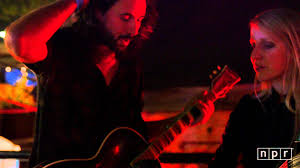
lulucRecorded outside of Stubbs while the groundscrew was cleaning up the huge mess, Luluc play a beautiful quiet ballad.

Steve Hassett plays lead acoustic guitar and sings harmonies while Zoë Randell plays rhythm guitar and sings lead. Interestingly, his voice often goes in higher registers than hers.

I really like the solo that he plays that adds a bit of uptempo feel to this otherwise quiet song.

Check it out here.

[READ: March 23, 2015] “At First Blush”

This issue of Harper’s featured five essays (well, four essays and one short story) about “Growing Up: five coming of age stories.”  Since I knew a few of these authors already, it seemed like a good time to devote an entire week to growing up.  There are two introductions, one by Christine Smallwood (who talks about Bob Seger) and one by Joshua Cohen who talks about the coming of age narrative.

Here’s yet another piece by Karl Ove (like the recent essay in the New York Times Magazine) translated by Ingvild Burkey

It’s hard for me to imagine that Karl Ove (who has written literally thousands of pages about his life) could have anything more to say–any incident that he hasn’t gone over with a microscope.  And yet, here he is with a new incident.

As with most things from Karl Ove, it explains a minute detail which proves to be a big event.  He was 12 and in school and told to spit out his gum.  As he walked up to the wastebasket the attention made him blush.  The first time he can recall the burning shame making him more self-conscious which then kept repeating itself.   And then some one said “Karl Ove’s face is all red!” (more…)

Read Full Post »

01cover-articleLarge-v3SOUNDTRACK: DIANA GAMEROS-“Ligerita(Tiny Desk Contest Runner-Up 2015).

ligeritaLast week, a Tiny Desk Contest winner was announced. This week, All Songs Considered posted ten runners up that they especially liked.  And I want to draw extra attention to a couple of them.

Diana Gameros doesn’t do anything flashy or fancy in this video.  She simply plays the acoustic guitar (amazingly) and sings.  And man, does she have a beautiful voice.  Even more impressive is the way her guitar begins as delicate finger-picked melody in the verses and then transforms into a rollicking Spanish guitar style beauty for the chorus—the way she uses her right hand for the chord playing is great.

This is an absolutely beautiful song, and I was happy to read that she was recently featured on Alt.Latino.

I’m not sure what relaxing location she is in, but it’s nice little room. And even her cat—Lulu—seems to have enjoyed the song.

[READ: February 26, 2015] “My Saga Part One”

I didn’t know that Karl Ove had written this piece for the New Yorke Times magazine until someone brought it to my attention.  I was pretty excited to read it because Book Four of My Struggle isn’t due out until April and I think I’m going through Karl Ove withdrawal.

This first part of the story (because of course it would have to be in two parts) was, I have to admit, a little disappointing.  It features everything that I’ve come to expect from Karl Ove–minutiae, history, shock at people who are unlike him, and a general misanthropy.  But it almost feels like Karl Ove lite–like the Times asked him to write a piece like My Struggle, but, you know, more suitable for a newspaper.  Which may even be how they phrased it.  Of course, it may also be the translation.  Unlike the books, this was translated by Ingvild Burkey.  It’s not that the translation is bad, it seems perfectly fine to me, but the story isn’t as compelling in some way, and perhaps Don Bartlett knows how to capture Karl Ove’s voice better? (more…)

Read Full Post »

karl2SOUNDTRACK: BRASS BED-Tiny Desk Concert #339 (February 24, 2014).

brass bedI expected Brass Bed to be a goofy band because of the snapshot image of them singing into toy microphones.  I was initially disappointed by how normal they were, but I was soon won over by their interesting floating sound. They have this overall trippy underwater vibe (which seems to be accomplished by a bowed slide guitar). This is especially notable on “Yellow Bursts of Age” their best song in the set.  Later the guitar solo is echoey and also underwatery. It’s a very wild sound for a fairly simple song.

They tell a funny story about being from Louisiana and encountering Washington DC snow and (of course) not having an ice scraper (although they did have bag of sand).

“Cold Chicory” is an upbeat sounding song musically although it is kind of a bummer lyrically, but again there’s the great sound of the bow on the slide guitar and the echoey lead guitar. “Please Don’t Go” is a slow song—with more interesting effects from singing into that slide guitar.

The plastic mikes do come out in the last song “Have to be Fine” in which they sing into the echoey mikes for the intro (with very nice harmonies).  They sing the intro for about a minute, and then the slide guitar player takes lead vocals on this simple but pretty song (I don’t know any of their names).

At the end, the NPR folks gave them an honorary NPR ice scraper.

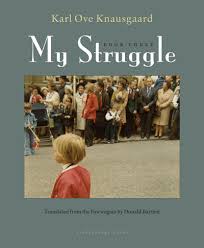
[READ: June 24, 2014] My Struggle Book Three

boyhoodI read an excerpt of Book Three just a few weeks ago.  And in the post about it I said I wouldn’t be reading this book for quite some time.  But then the book unexpectedly came across my desk and I couldn’t resist grabbing it while it was here.  So it appears that I will now have to wait well over a year before Book 4 (which is, I think about 1,000 pages–yipes).  I also see that Book Three is fully called “Boyhood Island” in Britain.

At the end of Book Two, Karl Ove was more or less caught up to the present–writing about what he was then up to (with a few years gap, of course).  So it makes sense that this book is about his childhood–showing us how he came to be the man he is.

The book, amusingly enough, starts off with memories that he cannot possibly remember, and he even says as much.  He is using memories of his parents and piecing together pictures from when he was an infant.  In 1970, (Karl Ove was born in 1968) his family moved to the island of Tromøy tromo(and check out the idyllic picture that Wikipedia had).  This is where Karl Ove spent his (rather traumatic) formative years.  Their island is small, so he knows everyone in his school, but there are some amenities around like the Fina station and the B-Max, and there’s lots of soccer to be played and bikes to be ridden.

Things seem normal at first–he runs and plays with his friends, there is ample green space to run around in, and they have boats to sail on.  And we meet two of Karl Ove’s earliest friends: Geir and Trond (so many people are named in the book, I’m very curious to know if any of them remember him).  In an early scene they chase the end of a rainbow looking for a pot of gold (and have a discussion about what happens to it when the rainbow vanishes (the boys even play a prank on Karl Ove that they actually found the pot,a dn while he doesn’t initially fall for it, he is compelled to go back and they tease him).

But the looming figure here and throughout the book is Karl Ove’s father, who, at least according to Karl Ove’s memory, is pretty much a monstrous dick.  He is demanding and exacting, unforgiving and seemingly uncaring.  He is either bipolar or a drunk, jumping from goofy to outright rage in a mater of seconds.  Karl Ove and his brother Yngve fear him unconditionally and, by the end of the book they both seem to hate him.  The scene where their dad tries and fails to teach Karl Ove to swim is heartbreaking, especially when the dad goes home and tells their mom right in front of him “He’s frightened of water.”  There are dozens of instances of fear and intimidation (often accompanied by a wrenching of Karl Ove’s ear).  Like when Karl Ove turns on the TV for his grandparents (he wasn’t allowed to touch the TV but he wanted to do something nice for them).  After a few minutes, the TV fizzed out and, naturally, he was blamed for it and sent to bed without supper (after some minor physical abuse). (more…)

Read Full Post »

torSOUNDTRACK: THE KIDS-“Forelska i lærer’n” & “Norske Jenter” (1980).

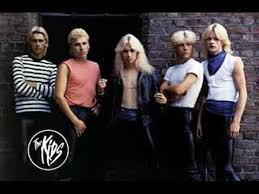
kids2 The Kids are a Norwegian band that was mentioned in Karl Ove Knausgaard’s story yesterday.  He is pretty disparaging of them as they were hugely popular when he was in school (and he liked other bands).  They sing in Norwegian and are quite poppy.

“Norske jenter” is the poppier of the two.  It’s pretty synthy, with a super catchy melody and chorus.  It seems just shy of being a sleek pop hit, but I can imagine that a band singing in your native tongue would fair well even without super slick packaging.

Of course, having said that, “Forelska i lærer’n” is nothing if not slick–check out these guys with their super blond hair.  Actually the video is pretty funny and with a name like “In love with the teacher,” it is quite a different subject than I expected).  I love the way they designed the teacher.  And that wink is fantastic.  If only the lead singer could act a little better.  kidsThe song is kind of a heavy classic rock sound–maybe a poppier version of Thin Lizzy (those guitar solos are very Thin Lizzy).  I’m of course very curious what the lyrics are.

I found two videos on YouTube (and apparently there are some more recent live songs)

Norske jenter: There’s no visuals in this video, just music:

But the video for “Forelska i lærer’n” is here in all of its glory–it looks much more modern than 1980.  The self pogoing at the end is fantastic.

[READ: June 15, 2014] Replacement

I found out about this book from Karl Ove Knausgaard, who claims that it is the best Norwegian novel ever written (he also has a quote on the back of the book).  I had never heard of Tor Ulven before.  It turns out that he has written mostly poetry.  And then he wrote a few prose-like poems and then this novel called Avløsning in Norwegian.  And then he killed himself.

This book was translated by Kerri A. Pierce and it has an afterword by Stig Sæterbakken.  And literally that is all I can tell you about the book for certain.

Why?  Because the back of the book and the afterword actually differ about what they say is happening in the story.  To a pretty intense degree.  The back of the book says that “the perspectives of unrelated characters are united into what seems a single narrative voice: each personality directing the book in turn.”  Whereas Stig makes the case that the book is all one narrator at different points in his life.

And why can’t you tell?  Because there seems to be different perspectives (all by men), and yet no one is named.  And then there’s the fact that some of the book is written in second person, while the rest is in the third person–this suggest at least two narrators, and yet it could also be a flashback.  There are at least four different time settings and seemingly different people.  There’s an old man in a wheelchair, there’s a security guard, there’s a taxi driver (I think).  There’s a guy who likes to list things, there’s another guy who thinks parenthetical thoughts.  And there’s an intense obsession with “her,” a woman who doesn’t seem fictional but is certainly mythical.

And what happens?  Well, nothing. (more…)

Read Full Post »

CV1_TNY_02_17_14Columbo_spine.inddSOUNDTRACK: THE ALLER VÆRSTE!-Materialtretthet (1980).

matThe Aller Værste! were a Norwegian new waves/punk band with elements of ska thrown in.  I only know of them because of this story, but I decided to check out some of their stuff since it is so relevant to the story.

This was their debut album, which has been ranked as the number 6 best Norwegian album of all time (by Morgenbladet, a Norwegian weekly newspaper).  The album opens with lounge piano and trombone before breaking into a ska-inflected “Du sklei meg så nær innpå livet.”  Lead singer Chris Erichsen sings in some unusually deep voices (some of which seem comical) in “Dødelige drifter.”  “Døgnflue” is a two-minute punk blast with a loud Farfisa organ running throughout.

“Bare du som passer på” has a distinctly Clash feel in the vocals.  “For dem betyr det lite” is powered by that organ sound, while “Bare en vanlig fyr” is very guitar heavy (and may have a different singer).  This is probably my favorite song on the album, there’s some great sections in it.

This sound of punk sensibility with a prominent organ (an vocals in Norwegian) really make The Aller Værste! stand out in 80s rock.  “Må ha deg” has some interesting backing vocals and sounds like a Clash inspired ska song (with more crazy vocals).  It has a slow instrumental section with a twangy guitar solo.

“Igjen” is 90 seconds of punk (but not very harsh punk).  The next few songs are all about 3 and a half minutes long.  “Bare ikke nok” has call and response vocals and an unexpected beat.  “Hong Kong” slows the sound down, with a prominent bass riff.  “De invalide” is an upbeat song with horns.  “Hekt” has some dissonant guitar over almost funky bass and a serious breakdown at the end.  “Discodrøv” has very fast drums as it opens, but it turns into a rollicking song with disco bass and big horns.

“Oppvekst” follows those horns with some fast (ska-like) guitars.  “Materialtretthet” opens with some great, wild bass and continues wit a very fast-paced song.  This is another favorite (it’s interesting that the title track is also one of the shorter songs on the record).  “Menneskelig svikt” sounds quite raw, with echoey distant guitars and vocals.  “Blank” is the final song on the album (reissues have added more tracks).  It has a distant echoey harmonica acting as a melancholy sound behind the vocals.

I hope that Karl Ove’s book somehow gets this disc in print, I’d like to listen to it on more than YouTube.

There’s a live version of the song mentioned at the end of the story here:

[READ: June 11, 2014] “Come Together”

I know that this is an excerpt form the third part of My Struggle which I plan to read in say six or eight months.  But I decided to read it anyway in part because I was intrigued by the cover picture, which is of a record sleeve with a man on a bicycle and the wheel is the inner label of an album.  That, coupled with the title “Come Together” made it pretty apparent that this would be about music.   And so it was.

As I said, this is excerpted from Karl Ove’s third book in the My Struggle series, which is called Boyhood.  I’m intrigued that this book is set in his teenage years since the first two were set much later–it actually felt like Book 2 caught us up to the present).  At any rate, this is one small section (chock full of details) about being young and being in love with music and with girls. (more…)

Read Full Post »

karlove1SOUNDTRACKWHITEHORSE-“Pins and Needles” and Kickstarter campaign (2014).

photo-mainI really enjoyed seeing Whitehorse live.  I would absolutely see them live again.  I was delighted then that their album was also fantastic (I didn’t think it could match their live show…and it doesn’t but it is great in a different way).  In a very short time I became a big fan of the band.

THey havea  new song, “Pins and Needles” and a Kickstarter campaign.  The song begins with Melissa McClelland’s voice singing in it beautiful way–there’s guitar in the right ear and bass in the left ear.  Then Luke Doucet comes in for verse two.  And when their voices fill the bridge it feels so complete.  Until they get to the chorus when they push it even further and it sounds amazing.

  They sing so well together.  Her voice has a slight country twang, and his is a low baritone.  Their harmonies are superb as they sing the compelling chorus: “Fake Your Death and I’ll Fake Mine”

Lyrics are certainly interesting for the band.  How many times do you hear a woman singing a line like: “I’m the villain in this piece  And back when I was a thief, I broke hearts like they were teeth.”

I love this song.  And it may or may not end up on the new album for which there is a Kickstarter campaign.

And I’m in.  I’m a little unclear about exactly what they aim to do with the money they raise.  They say quite plainly that there will be an album regardless of whether they raise the funds.  And their label, Six Shooter, is totally behind the band.

Rather seems to be a way to raise some money and some attention for the band.  And, apparently it will give fans a glimpse of the album as it is being made–a sort of behind the scenes featurette that comes before the disc itself.  The prizes are varied and moderate–from a download, to the CD, to a T shirt, to sheet music (all for reasonable donations), all the way to the grand prize–for $8,000 they will play a private show for you.

I’m in for a CD, and I’m happy to pay regular ticket price when they come around again.

Check out the Kickstarter campaign for more details where you can also hear “Pins and Needles.”

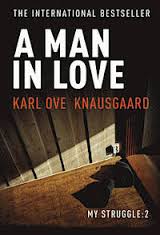
[READ: April 24, 2014] My Struggle Book Two

maninloveI read an excerpt of Book Two in Harper’s well over a year ago So when I got to that section again (it’s the end of the book) I was trying to remember why it sounded so familiar–an accident during a soccer match that leaves Karl Ove with a broken collarbone and an unhappy girlfriend (who will be looking after three kids without him), and then I remembered the excerpt that started it all.

The translation of Book Two by Don Bartlett is fantastic, just as in the first book–I can only assume the original Norwegian is just as compelling.  Book one was 430 pages and now book two was 573, so I’m in to Karl Ove’s life for 1003 pages, and there’s four more books due (Book Three comes out next month).

As I mentioned for Book One, this series has caused some controversy because it is given the same title as Hitler’s Mein Kampf (Min Kamp in Norwegian), and also because he says some pretty mean stuff about people who are still alive.  Book One was about the death of his father.  It was pretty dark.  Book Two is about his first daughter and about falling in love with Linda, his children’s mom (although not yet his wife).  And it is also pretty dark.

I was trying to figure out why I like this series so much.  Not a lot happens, Karl Ove is not a very nice person and he seems to be pissed off most of the time.  And I think what I realized is that I share a lot of opinions as him, but he takes everything to the extreme.  And he is kind of an asshole.  I mean, anyone who writes a six part autobiography called “My Struggle” (okay, really it’s called My Head) is kind of an asshole.  But so when I see things that I would only think in my deepest recesses of my mind printed on a page, it’s strangely visceral to me.  I realize this means that I’m kind of an asshole too, but the key difference is that I don’t act on the things that I think, nor do I write 4,000 pages about them.

I told Sarah that she might laugh at some of the opinions that he lists but that she would not enjoy reading the books.  Indeed, this book, this series, is not for many, I’m sure.  But to me there is something strangely engaging about him and his strange life and his writing style.  And I really flew through this book, finishing it in about a week.

So this book begins (started in July 2008) with Karl Ove being pissed off.  He talks about finishing the first part of the novel (which I have to assume is Book One, given when this was written and how this book ends) just last month (in other words he is really churning this stuff out!).  He and Linda have been fighting (as the book opens they have three children, Vanja, Heidi and John–it’s also hard to believe that his children are young enough to not really know much about this series). The tension is high between them–glares, comments, nasty sniping.  Karl Ove says that he is afraid to say things around her because he knows how she’ll react.  But at the same time, some of things he desires are simply not defensible in a relationship or when you are parent.  And the main conflict seems to be that Karl Ove is selfish and Linda is (at least according to him) mildly suicidal and possibly bipolar).  And mind you, at the time of his writing this, I think they are still together….  (I could look that up, but it seems kind of fun not exactly knowing). (more…)

Read Full Post »

mystrugglSOUNDTRACK: TRICKY-“Christiansands” (1996).

christiansandsThis book is set in Kristiansands, and so naturally this song was ringing through my head the whole while I was reading it.  I’ve known this song for ages, but had no idea that Chirstiansands was an actual place in Norway.

This song is dark and tense.  Over a slinky beat, a spare guitar riff introduces Tricky’s voice as he rasps (his voice is slightly modified to give him a weird echo).  And while he’s reciting his verses, the gorgeous voice of Martina Topley-Bird, repeats what he’s saying in a whispered voice until she sings out the chorus “I met a Christian in Christiansands.”

The verses repeat with Tricky emphasizing, “master your language and in the meantime I create my own.  It means we’ll manage.”

I honestly don’t know what the song is about, and it feels like it never properly ends–that riff, at once menacing and gripping never seems to conclude.  It’s a masterful track and hard to forget once you’ve heard it.

[READ: May 11, 2013] My Struggle Book One

I read an excerpt of Book Two from this series in Harper’s.  And despite the fact that nothing really happened in it, I was drawn in by the writing style.  This first novel is very similar in that not a lot happens but the voice is very captivating.  The translation is by Don Bartlett and it is fantastic–I can only assume the original Norwegian is just as compelling.  So, despite the fact that this autobiographical series contain six books (six!) and totals over 4,000 pages (how could this be if Book one is a mere 400?  Books 4-6 are over 1,000 pages each), I decided to give it a try.  (Incidentally, Book Two has just been translated into English this month).

This series has caused some controversy because it is given the same title as Hitler’s Mein Kampf (Min Kamp in Norwegian), and also because he says some pretty means stuff about people who are still alive (like his ex-wife).  Although there isn’t much of that in Book One.

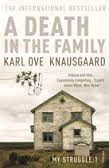
death in the familyIndeed, Book One basically talks about two things–a New Year’s Eve party when Karl Ove was youngish and, as the bracketed title indicates, the death of his father.  (The title A Death in the Family is the same book as My Struggle Book One–from a different publisher.  It has a totally different cover but is the same translation.  I don’t quite get that).  But indeed, these two events take 430 pages to write about.

How is this possible?  Because Karl Ove writes about every single detail.  (I assume this why the books are considered novels, because there is no way he could remember so much detail about every event).  I’m going to quote a lengthy section from a New Yorker review (by James Wood) because he really captures the feeling of reading the book:

There is a flatness and a prolixity to the prose; the long sentences have about them an almost careless avant-gardism, with their conversational additions and splayed run-ons. The writer seems not to be selecting or shaping anything, or even pausing to draw breath….  There is something ceaselessly compelling about Knausgaard’s book: even when I was bored, I was interested. This striking readability has something to do with the unconventionality of “My Struggle.” It looks, at first sight, familiar enough: one of those highly personal modern or postmodern works, narrated by a writer, usually having the form if not the veracity of memoir and thus plotted somewhat accidentally, concerned with the writing of a book that turns out to be the text we are reading.  But there is also a simplicity, an openness, and an innocence in his relation to life, and thus in his relation to the reader. Where many contemporary writers would reflexively turn to irony, Knausgaard is intense and utterly honest, unafraid to voice universal anxieties, unafraid to appear naïve or awkward. Although his sentences are long and loose, they are not cutely or aimlessly digressive: truth is repeatedly being struck at, not chatted up.

That idea of being bored but interested is really right on–and it may sound like a bad thing, but it’s not.  You can read along thinking that there’s no way he is going to give so much unimportant detail.  But you get this description of drinking a cup of tea: (more…)

Read Full Post »

HarpersaprilSOUNDTRACK: THE AFGHAN WHIGS-“I’m Her Slave” (Live at the Bowery Ballroom 2012).

whigs

 I really liked some of The Afghan Whigs’s songs back in the 90s.  There was other stuff I didn’t love by them–when they were on, they were amazing.  Of course, I feel like the Whigs were pretty much all the work of Greg Dulli–charismatic frontman with the intriguing voice.

When they disbanded or broke up or whatever, I didn’t mind so much.  But they have reunited recently and my friend Joe posted this video from last year’s tour.  I don’t really know this song that well (although I do have the Congregation album i was more of a Gentlemen fan), but it sounds great.  And apparently this is one of the songs they were trotting out (they played it on Fallon, but the video has been taken down).

Dulli’s voice still has that wonderful quality and the band sounds tight and loud here.  Seems like a good reunion.

[READ: March 19, 2013] “Limhansfältet”

This excerpt comes from Knausgaard’s (also spelled Knausgård’s) second volume of his six-volume autobiographical novel (wow!).  I have no idea who the guy is or why we’d want to read it.  Evidently Knausgård is quite famous in his native Norway.  Don Bartlett translated this from the Norwegian.

So this excerpt shows a very short time in the writer’s life (knowing it’ autobiographical makes it different somehow).  The writer is married, a father of four three (although evidently now, he is divorced and his first wife is mad to her portrayal in the books).  The first few paragraphs just kind of talk about what’s going on around him (but it is more compelling than that sounds somehow).  I liked the scene where he is sitting so still in the garden that a hedgehog crept past him (but then I like hedgehogs).  But the crux of the action occurs at Limhansfältet, a grassy area outside of town where men gather every Sunday to play football.  They have gathered since the 60s and the men range from 18 to 80.

On this one occasion his family came with him. They watched for a bit but then wandered off.  And they missed him get injured.  Injured so badly that he had to go to the hospital. (more…)

Read Full Post »

« Newer Posts