Feeds:
Posts
Comments

Archive for the ‘James Joyce’ Category

SOUNDTRACK: DING DONG DENNY O’REILLY & THE HAIRY BOWSIES-publocked (1996).
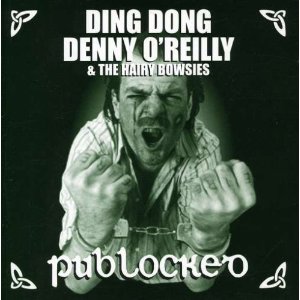
My friend Lar introduced me to this ol’fella (he may have even sent me this CD, as I can’t imagine where I’d have found it on my own).

Ding Dong Denny is the alter ego of Paul Woodfull (who created the Joshua Trio a U2 tribute/pisspull).  And, as I know precious little else about the man, I’ll let the more enlightened pass along the details.

Publocked is a lowbrow amalgam of all kinds of Oirish nonsense.  It’s vulgar and crass and often quite funny.  (Some of the bits stand up to repeated listening–the songs more than the chatty bits, although the chatty bits are especially funny).

Take “The Ballad of Jayus Christ” which sounds like a pretty standard simple ballad until you realize what he’s singing:  “Jaysus O Jaysus As cool as bleeding ice…It’s funny you never rode, coz its you I do my shouting for each time I shoot me load.”

But it’s not all blasphemy.  The “single” “Flow River Flow” is a very sensitive track about the benefits and majesty of the sacred waters (with tin whistles and everything): “When I was just a young man, I sit on the river bank  I loved your gentle water so much I’d have a wank”  With the glorious swelling chorus: “Flow river flow, fuck off to the sea, go where you are wanted, to the deserts of Gobi”

True, now, that’s all kind of crass.  But Ding Dong takes a political stance, too. Take “Spit at the Brits.”  “We Spit at the Brits an we showered’em in a lovely shade of green…we spit at the brits, and then they blew us all to smithereens.”

And what Irishman could ignore the Famine.   “The Potatoes Aren’t Looking the Best” is a view of the famine through the eyes of a farmer.  Shite.

Not everything is a winner, “I Get A Round” is a “cover” of “I Get Around.”   The lyrics are changed to reflect being in a pub (get it?).  And “My Heart Gets So Full (You’d Swear I Had Tits)” is pretty funny, especially since it’s played as an oh so serious ballad, but there’s not much in the world that’s funny for 7 minutes.

So, yes, it’s not quite Joyce, but then Joyce does talk about masturbating by the water, so it’s all equal, right?

[READ: Week of July 26, 2010] Ulysses: Episodes 7-9

Before I begin, I want to make sure that everyone has checked out Ulysses Seen.  It’s an illustrated rendition of the book.  The details are exquisite and you’ll no doubt pick up things that weren’t as apparent in the proper text.  The only bad thing I can say about it is that it’s not finished yet.  So far Robert Perry has only completed Episode One, and it sure looks like that took a long time (it’s really stunning); but between the details ion the drawing and the extensive reader’s guide that comes with it, one can perch there for quite a while.

I admit that this week’s slog through Ulysses was rather unpleasant for me.  The three episodes included here were massive doses of stream of consciousness.  I actually found them exhausting to read.  Not to mention, in terms of plot advancement, they’re rather paltry. (more…)

Read Full Post »

SOUNDTRACK: THE DUBLINERS-30 Years A-Greying (1992).

The Dubliners were an Irish folk grew founded in 1962.  Probably the most notable thing about the band was lead singer Ronnie Drew’s voice, which out-gravels Tom Waits in depth and impact.

I don’t know a heck of a lot about them as a band or their impact on traditional Irish music, but Wikipedia tells me that they were a major force in the export of trad music.  So there.

So if you like traditional Irish music (that’s not as “pretty” as some artists).  The Dubliners are a good resource.)

When I bought this album many many years ago, I was under the impression that it was a greatest hits with extras.  In fact it’s not (although there are a number of classic trad songs here).  The selling point is that there are a lot of guest vocalists (The Pogues, of course, among others).

But I think a cheaper, shorter compilation would be the way to go, (you’d definitely want “Finnegan’s Wake” for instance).  And I have to say I was a bit surprised by the inclusion of “The Rose” (even if The Hothouse Flowers are on it, too).

Nevertheless, if trad Irish music is what you’re after, The Dubliners are your man.  And they’re named after the Joyce book, too.

[READ: Week of July 19, 2010] Ulysses: Episodes 4-6

I would be remiss if I didn’t include a link to the Infinite Zombies discussion about Ulysses. There’s some great stuff there!

This week’s reading introduces us to Leopold (Poldy) Bloom.  We meet his wife Molly and learn about their daughter Milly (who is away) and their son Rudy who died in childbirth.  The most notable thing about these three Episodes is that, despite the continued use of interior monologue, they sound so different.  Whereas Stephen’s was very intellectual (ineluctable modality of the visible, and all), Leopold’s is much more visceral.  He focuses quite a lot on excrement and organs.  And of course, there’s Bloom’s very introduction:

Episode 4 “Calypso”
“Mr Leopold Bloom ate with relish the inner organs of beasts and fowls” (45). (more…)

Read Full Post »

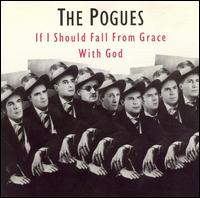
SOUNDTRACK: THE POGUES-If I Should Fall From Grace with God (1988).

So the cover of this album has James Joyce on it (and a hilarious pastiche of the rest of the band).  I guess we know what we’re in for, then.  This is the Pogues third album and the one that tamed the wildness of their first shambling discs into a (somewhat) presentable collection of songs.  And, jaysus, it’s fantastic.

The Pogues seamlessly blended punk and traditional Irish music (and on this disc they expanded into latin & middle eastern motifs too).  The first track opens with a fast paced Irish whistle playing what is pretty darn close to a jig.  And then Shane MacGowan (whose teeth are not to be believed–or if you are lucky, not to be seen) sings his slurred, fantastic lyrics.  MacGowan always presented such a contradictory figure for this band of well dressed resctable players.  And it’s often confusing wondering how he became the front man of this band.  But he adds that certain something to make the band unforgettable.

“Fairytale of New York” is one of the most gorgeous, sad Christmas anthems ever.  It’s a duet with the much missed Kirsty MacColl and it’s moving and charming, even with the lyrics: “you scumbag, you maggot, you cheap lousy faggot, happy Christmas me arse, I pray God it’s our last.”

Then you get a crazy instrumental, “Metropolis” fast paced, manic energy and a great riff (and of course, let’s not forget the quoted musical passage too).

What’s surprising is when you get a tender ballad like, “Thousands Are Sailing.”  Lyrically it is stunning, and you wonder why is Shane singing it with that slurry voice of his.  And then you realize it works perfectly as a drunken lament.  And then you get to the chorus, and you stop caring and just enjoy the song.

They even throw in a couple of traditional songs, like “South Australia” and “Medley” (which incorporates “Rocky Road to Dublin.”)  But after “Fairytale,” I think my favorite track is “Fiesta” which is a Spanish/Mexican sounding song with loud horns and absurd faux Spanish lyrics.  Ole!

And, just so we know, it’s not all drinking and rollicking, Shane also wrote “Birmingham Six.”  “There were six men in Birmingham / In Guildford there’s four / That were picked up and tortured / And framed by the law / And the filth got promotion / But they’re still doing time / For being Irish in the wrong place /And at the wrong time / In Ireland they’ll put you away in the Maze
In England they’ll keep you for seven long days”

The Pogues would release two more albums before Shane MacGowan took off. And they’re all pretty darn good, but I’ve always been partial to this one.

[READ: Week of July 12, 2010] Ulysses: Episodes 1-3

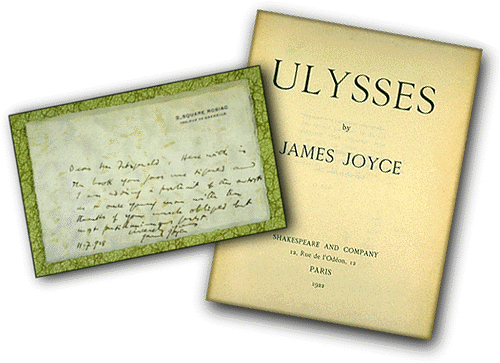
This is my third time reading Ulysses.  The first time I was a freshman or sophomore in college and I signed up for a James Joyce class because, get this, the Canadian band Triumph had released a CD called Thunder 7 which was supposedly based on the 100-letter words in Joyce’s Finnegans Wake (which I had bought and found impenetrable).  Our teacher was intense and tried to scare everyone off (which worked for some, but not me).  The class was hard (first assignment : read The Odyssey over the weekend for a quiz on Monday).  I enjoyed Dubliners and Portrait of an Artist as a Young Man, but I thought Ulysses was pretty daunting.

I read it again when I re-took the class with the same teacher (not for credit this time, but because I wanted to, imagine that).  And that time I learned to really appreciate what Ulysses had going on for it.  I was also inspired by it to try to write challenging fiction, paying careful attention to every single word, and even possibly using different writing styles in the same book.  (The world appreciates that that never panned out).

But so the careful attention thing: Joyce spent seven years working on Ulysses.  Every single word was charged with meaning.  He even made up his own words.  And it’s very apparent that he was the inspiration for countless modern authors (for better or worse).

I’m excited to pick the book up again.  In part, because it was ranked number 1 on the MLA list of books, but also because for twenty-some years I’ve felt the book was fantastic.  And I wanted to see if I would enjoy it without guided instruction.

I was curious about which edition to read.   Since my class, when there was only really one edition available, many many editions have been published.  There’s a great discussion about this at Infinite Zombies, and I considered getting the third one Judd mentions.  But when I consulted with my old professor, he said the Gabler edition is still the best, so I went with that one.  And that edition is littered with all the notes I took from class and from the supplemental resources.

I decided not to read the supplemental resources this time (although I can;t help but look at my notes), to see what I can get from the story AS A STORY.

I remember a bunch from the class, but one thing that I distinctly remember is that to get everything out of Ulysses, you need to understand Catholicism (the mass in particular), The Odyssey, European history–especially Irish history, and popular Irish culture circa 1920.  It also helps to know Latin.  And these are all things that Joyce would have known and his audience probably would have known.  Every year we move away from its publication, means we know less about what he was writing about.  But that’s all the little details and jokes and blasphemies.  I wanted to see (with some background, which certainly gives me an advantage) if I could enjoy the story without all the help.

So… (more…)

Read Full Post »

SOUNDTRACK: BLUE ÖYSTER CULT-Tyranny and Mvtation (1973).

The album cover is similar to the first disc (a simple black and white), but this one adds a touch of red. Similarly, the music adds a touch of something that makes this disc leap beyond the foundation of their first.
The songs are heavier, the lyrics are weirder and yet the whole proceeding is catchier and groovier at the same time.

The first half of the disc is called The Black (going with the first song “The Red & The Black”).  It contains 4 great tracks.  The highlight is the improbably named “7 Screaming Diz-Busters” a 7 minute song that starts off with great heavy guitars, segues into a spooky/wild moog organ fueled freakout and ends with a denouement that is mellow and creepy.

But the other three songs rock hard too.  “The Red & the Black” is a super fast boogie which repeats some of the lyrics from the first disc: “Canadian mounted baby.  Police force at work.  Red and black. Its their color scheme.”  The tempo slows somewhat with “OD’d on Life Itself,” but it quickly comes back with “Hot Rails to Hell.”

Side two, The Red, opens with “Baby Ice Dog” with lyrics by Patti Smith (!).   The side is less heavy, with Allan Lanier’s piano coming to the front on this track (although there’s a delightfully cheesy wolf howl at the end). “Wings Wetted Down” foreshadows more familiar BOC with great choruses and harmonies, coupled with cool riffs.  And the final song “Mistress of the Salmon Salt (Quicklime Girl)” is yet another wonderfully oddly titled (and lyrically peculiar) song.

Even though the first disc is quite good, BOC totally hit their stride on this disc, showcasing their weirdness and their virtuosity in equal strength.  The recently remastered edition contains 4 live tracks that show just how much the band rocked in a live setting too.

[READ: Week of February 22, 2010] 2666 [pg 291-349]

During last week’s reading, I had replied to a post on Infinite Zombies in which I stated that I am a very credulous reader.  If I believe that the author is doing something worthwhile, I’m totally willing to suspend my disbelief about whatever the writer tells me.  Sometimes, when I’m done, or if I’m asked to be critical, I’ll look for flaws, but generally I like to go with the flow.  So, I’d been reading along uncritically primarily because I don’t exactly know what Bolaño is up to, (even 300 pages in) so I’m just going to enjoy the ride.  More on this in a moment.

This week’s reading continues Fate’s saga down in Santa Teresa.  His story request about reporting on the murders in Santa Teresa has been turned down.  And he thinks back to all of his other stories that have been rejected by the newspaper.  Like the Mohammedan Brotherhood.  Fate met them at a Pro-Palestine demonstration. They were marching under a banner of Osama bin Laden (shortly after 9/11/01).  They were so over the top that Fate felt the need to interview them. (more…)

Read Full Post »

conj17aSOUNDTRACK: TINDERSTICKS-Bloomsbury Theatre 12.3.95 (1995).

bloomsburyThis is a rare and out of print live CD from an early Tindersticks show.  My friend Lar found it used for me in Ireland (thank you!).  But it turns out he found it for me about a week before it was reissued as a bonus disc with the Second Tindersticks CD.

It’s a great concert, with Tindersticks in fine form.  After the amazing creative success of the second disc, the band sounds energetic and Stuart Staples’ voice is fantastic. Live Tindersticks don’t sound drastically different from the record, but there is a very cool “close and intimate” vibe to  this show that makes the songs sing a little more.

Normally, I’d encourage anyone to try and find this disc, but since it has been reissued with the second disc, it’s worth getting that package instead.

[READ: October 25, 2009] “Order and Flux in Northampton”

This is the final uncollected DFW short story that I hadn’t read yet (not including the excerpts from The Pale King).   And it’s a very good one!  The story is chock full of DFW’s awesome character descriptions and hilarious word play.  He also has a bit of fun with James Joyce, which is always a treat.

This story concerns three characters who live in Northampton, MA.  Barry Dingle is a severely cross-eyed hippie who owns The Whole Thing, one of two local health food stores.   He harbors unparalleled love for Myrnaloy Trask. Myrnaloy works at Collective Copy, the copy shop next to The Whole Thing.  Barry has never talked to her, but he fell madly for her when he saw her reflected in a bus window.  But Myrnaloy is only interested in Don Megala, a professional student (he’s on his seventh unfinished PhD). (more…)

Read Full Post »

inf sum

Okay, now that I’ve had time to digest the book (and to cope with the ending) I wanted to give some final thoughts on the book.  I also wanted to tie up some loose ends by posting my original response to the Salon.com questions as well as my letter to the posted article (keeping all my IJ stuff in one place).  I also found a map of Enfield that places things nicely in context.  I’ve included that at the bottom of the page.

But on to the book:

My previous post ended with what feels like a somewhat bitter taste in my mouth.  And yet I the disappointment I felt at the end of the book was not so much at what was said, but was actually a sort of disappointment that the book is over.

The book, the world, these characters became a part of my life.  I know for a fact that I have never spent this much time and effort on a book before (I didn’t even spend as much time on Ulysses, which I’ve read twice for a class).  And I think having the book left so open keeps the characters floating around in my head without actually letting them rest.  (Wraith-like if you will).

When I finished the book, the first thing I did was to go back to the beginning and re-read the Year of Glad section (now, for the third time!) [And I now I’m not the only person to have done so….just how many posts will say that that’s what they did?]. And I know that’s sort of the set-up of the book, like Finnegans Wake or even Pink Floyd’s The Wall.  And, in re-reading, even more gaps were filled in.  And that is, of course, why people read it multiple times.  And yet, do any of the multiple-times readers come any close to filing in the gaps of that lost year, or do they just find more and more awesome details to obsess over (or both)?

But before I get wrapped up in trying to “figure out what happened” I have to mention just how much I enjoyed the book.  I’ve never read anything like it.  The details, the quotes, the laughs, the pain.  It all sounds so trite (“It was better than Cats!”)  And yet, whether it’s the work itself or the amount of time spent on it, these characters are now with me.

So, I had read IJ when it came out.  And sometime in 1997 or 1998 after DFW published A Supposedly Fun Thing… he did a promotional tour stop in Boston.  And I recall getting up there and getting his autograph and saying how much I loved IJ and how it has stayed with me two years later. And that was true then (of course, if you’ve read me fumbling around and not remembering anything, you’ll know the details didn’t stay with me for 13 years, but that’s okay…the writing and the imagery stayed there somewhere.)

I think also, given the amount of time I spent on the book, and the amount of effort I expended keeping track of things, having this vacancy (both in the fact that the book is over and in the gap of one year) is really weird.  I’ve since read a bunch of reviews of IJ and the one thing I cannot imagine is how anyone with an advanced readers copy of this book could hope to read it in a few days (typical reviewer turnover time) and actually have something useful to say about it in time for a slated book review date?  I would think that if you weren’t following quite so closely you wouldn’t feel the sense of loss at the end of the book.

But enough pontificating.

Let’s think about what happened from 11/20 YDAU to Whataburger in late November, Year of Glad. (more…)

Read Full Post »

nealSOUNDTRACK: SONIC YOUTH-Made in USA (1986 released in 1995).

usaThe liner notes explain a lot of what was behind this disc.  The then largely unknown Sonic Youth was asked to score a cool indie film, which later became a less cool more mainstream film and ultimately went straight to video.

The CD is mostly background music, but it is notable for how mainstream it sounds (for Sonic Youth in the mid-80s) and for how bad it sounds–like it was recorded in a can.

It’s mostly completely listenable soundtrack mood music.  It’s nothing to rush out and buy, especially if you like the noisier SY stuff, but, and this is something of a shock, its sounds quite nice, almost ambient at times.

If you’re interested in this sort of thing, it’s worth noting that “Secret Girl” from EVOL appears in a slightly different form (twice actually).

[READ: July 29, 2009] The Neal Pollack Anthology of American Literature

This is the first book published by McSweeney’s Books.  And it is indeed handsome, with a nice yellow ribbon for marking your page.

And so, who is Neal Pollack?  Well, as you all know, Neal Pollack is the greatest living writer today.  He has been writing for decades and has written some of the most important books, and the most important articles that anyone has ever read. His book on life as an African America has not only impressed Oprah, but it has inspired Toni Morrison and Henry Louis Gates.

And, as you can see from the back of the book, everyone from Hunter S. Thompson to Normal Mailer sings his praises. (more…)

Read Full Post »

jokeSOUNDTRACK: FRIGHTENED RABBIT-Midnight Organ Fight (2008).

rabbitMy friend Jarrett introduced me to this band.  He rather casually called it his favorite album of the year, so I figured it was worth checking out.
Frightened Rabbit are a group from Scotland, and they play a sort of disaffected folk.  Although that’s not a wholly accurate description because they do kick in the drums and louder guitars.  So, yeah, they don’t sound anything like Belle and Sebastian.  This is complemented by the lyrics which are somewhat bitter or aching.

And speaking of lyrics, the first song that I wanted to sing along with most was “Keep Yourself Warm” and then I realized that the chorus is “It takes more than fucking someone to keep yourself warm.”  There’s also a very pointed use of the mother of all C words, in another song, too.  And I’ve had that song in my head for about three days now.  But I absolutely cannot sing the song at work or at home, or, well, anywhere except in the car when I ‘m by myself.

This all leads me to wonder, Do bands save their best songs to fill with curses or am I just 8 years old and I listen to the song with curses the most?

The one thing that has troubled me about the record is that at times the singer can sound like the guy from the Counting Crows.  And the Counting Crows are probably the band I hate the most in the universe.  But I just focus on the Scottish burr which lessens the Durwitz effect, and then I can enjoy the disc again.

[READ: Summer 2008] The McSweeney’s Joke Book of Book Jokes

This is a collection of humorous vignettes that are, if not about books exactly, certainly literary in nature.  If you like your humor to be bookish, then this is a great, funny collection.  It starts with the cover itself, as it is printed backwards and upside down w(the cover above is actually on the back).

Many of these pieces are very short (some are a page, even some more are just a few sentences.)  Plus, there are so many pieces that I’m not willing to write all that much, just a one-line summary (that I will try to make funny without giving away the punchline).

I thought about indicating in some way which ones I liked best or some kind of rating system, but that just seems extensive and cruel.

Most of these pieces came from McSweeny’s online, and I’m sure many of the pieces are still available there, but I’m not going to do all the work for you.  And it’s funny how many jokes there are about: James Joyce, Kafka, Homer and children’s books!

Oh, and authors: I started to include all of your names in my Categories, and then it just got too overwhelming.  But if you want to be added, just drop me a note!

Click here for the egress: (more…)

Read Full Post »

jesySOUNDTRACK: MORRISSEY-Years of Refusal (2009).
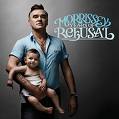
years ofI’ve been a fan of The Smiths for years.  And I think that Morrissey’s debut, Viva Hate, is on par with much of the Smiths’ catalogue.  Over the years his output has been mixed, but with Years of Refusal he comes fighting back with a really solid disc.  The disc is so good that if one had no idea of who he was, one could easily get into it with no preconceived notions of Morrissey, The Smiths or any of that glorious past.

From the start, the disc rocks out. That’s right, Morrissey totally rocks, with a real attitude.  “Something is Squeezing My Skull,” in addition to being quite funny, has one of Moz’s most loudly sung choruses in like, forever.  The martial beat of “Mama Lay Softly on the Riverbed” showcases Moz’s “political” songwriting without ever losing its catchiness.  “I’m Throwing My Arms Around Paris” is a pretty classic Morrissey song, complete with a simple picking guitar riff.

“All You Need Is Me” has some great squeaky guitars and recalls Morrissey’s own “I Don’t Mind If You Forget Me”), while “When Last I Spoke to Carol” has a Mexican feel, which is different for him.  And “That’s How People Grow Up,” the single, has one of those classic Morrissey lines in which he subverts expectations with a left-field word choice: “So yes there are things worse in life than never being someone’s sweetie.”

The end of the album is full of longer songs which tends to skew the rollicking feel of the disc. (In the first 8 songs only 3 are over 3 minutes while the last 4 songs are each over 4 minutes).  Nevertheless, “It’s Not Your Birthday Anymore” is a wonderfully caustic song and the album closer, “I’m OK By Myself” is just fantastic, and I find myself singing “I don’t need you, or your morality” because they way he sings it gets stuck in my head for days.

There’s also a bonus disc which includes an interview with Russel Brand which is very funny indeed.

Welcome back Morrissey.  Well done, sir.

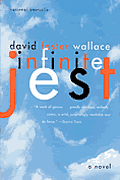
[READ: Week of July 6, 2009]  Infinite Jest (to page 227).

While looking for this cover of Infinite Jest (the one that I most associate with the book even though I never owned a copy with this cover), I noticed that Powell’s Books is selling a first edition hardcover copy of IJ for $450. The copy that I am currently reading is also a first edition hardcover.  If anyone wants to send me like $400 for it, just let me know!

On my Week Two post, I had a comment that criticized me for giving out spoilers.  While I disagree, I will preface this and future posts by saying that I will certainly be discussing what has happened in the week’s read (including footnotes endnotes and future footnotes endnotes if they are referred to in current footnotes endnotes), I will not intentionally reveal any spoilers.

On to Week 3 of Infinite Summer.  And at this point I not only feel good about the book, I feel somewhat refreshed. This whole week’s worth of reading has been fairly easy and often very funny.  We’re past the initial shock that you’re running a marathon, and are into that 3rd or 4th mile where you just start to feel good and enjoy the scenery.  I also hate to admit this, but I really want to peek ahead into the next week’s reading.  But no, I am going to pace myself!

I also have a question for faithful readers who are actually trying to map the location of the book.  I lived in Brighton, MA, very close to Boston College as well as in a location nearer to Allston, MA.  I have a vague sense of exactly where Enfield is supposed to be located, but if anyone has used the details in the book to map out where Enfield would be, do pass it along (someone has probably created a Google Map for it, but I haven’t actually checked).

This week’s reading had a lot of lengthy sections that focused on one person/issue for multiple pages which is either great or terrible depending on how you like this book broken up.  And TA DA!  The Chronology is spelled out very clearly! (more…)

Read Full Post »

SOUNDTRACK: KING’S X-Please Come Home Mr Bulbous (2000).

I’ve always loved the silly side of King’s X, especially when it comes to titles.  And here we have yet another bizarro album title.  And King’s X’s 8th disc actually lives up to the title.  Well, sort of.  But it is one of the band’s most unusual records musically.  They experiment with many different sounds and textures.  There’s a lot of really spare sections, where Doug’s bass is not the heavy, smooth sound we’ve become used to, but rather, single notes (or sometimes two notes at once) played staccato.  There’s also a lot of different styles within one song–King’s X have always experimented with sounds, but it was usually one style per song.  This one mixes things up tremendously.

“Fishbowl Man” has the rather unique distinction of being a chunky heavy guitar riff with vocals by Doug, a pretty, softish chorus sung by Ty and, even weirder, a spoken word center.  “Julia” follows with several different parts: a rather mellow opening, with a harmony-filled chorus, a suddenly heavy heavy post-chorus, and a little psychedelia thrown in for good measure.  “She’s Gone Away”‘s catchy chorus sounds an awful lot like one of King’s X catchy Ty ballads, but musically it’s quite different. There’s some two-notes-at-once bass playing, and–despite the soaring harmonies of the chorus–the guitar work is much heavier and darker for a Ty-sung song.  The solo also has an unusual part in which the bass and drums are very sparse while Ty noodles away.

“Marsh Mellow Field” sounds like a typical King’s X song, but there’s new stuff added: Doug singing a call and response chorus to himself, Ty and Doug splitting vocals in the verse, but it all comes back to a catchy chorus.  “When You’re Scared” has a really weird (for King’s X) recording sound that sounds like they’re in a huge, empty field.  But it works really well with the gentle harmonious chorus.

Consistently the highlight for most listeners is “Charlie Sheen.”  It is upbeat and pretty and what the hell it has to do with Charlie Sheen no one knows.  There’s great vocal interplay on this, and it ranks pretty high on the Ty ballad list.  And, somewhat unusually for this disc, there’s nothing unusual about it.

“Smudge” contains some of the darkest lyrics I can think of for King’s X.  Doug even sings of breaking a rosary.  Evidently the backlash from the Christian community was pretty strong.  “Bitter Sweet” has a loping bass that plays nicely over this tender, short ballad.  And the disc ends with 11 minutes of the sweet “Move Me (Parts 1 and 2)”.  Despite the oddities at the beginning of the album, the bulk of the disc is pretty conventional King’s X.  And they’ve still got it.

One other unusual thing: between some tracks on the CD there are tongue twisters in Dutch and Japanese. (I lifted this from Wikipedia, by the way)

* At the end of track 1: Acht-en-Tachtig-Prachtige-Grachten
This is Dutch for “88 (achtentachtig) beautiful (prachtige) canals (grachten).”
* At the end of track 3: Tonari no kyaku wa yoku kaki kuu kyaku da
This is a Japanese tongue twister (hayakuchi kotoba) meaning “The adjacent (tonari) customer (kyaku) eats (kuu) persimmons (kaki) often (yoku).”
* At the end of track 4: Zes-en-Zestig-Sinaas-Appel-Schillen
This is again Dutch and means “66 (zesenzestig) orange (sinaasappel) peels (schillen).”
* At the end of track 5: Hottentotten-Tenten-Tentoonstellingen
Dutch tongue twister meaning “(an) exhibition of tents made by the Hottentots.”
* At the end of track 6: Chikushō, nante hidee sandoicchi da
Japanese meaning “Damn (chikushō)! How awful (hidee) this sandwich (sandoicchi) is!”
* At the end of track 10: Acht-en-Tachtig-Prachtige-Grachten
See first tongue twister.

[READ: October 1, 2008] Vacation

I received this book in the mail as part of my McSweeney’s Book Club.  I tend to put new books at the bottom of my pile, but I decided to break it up and read this one right away.  It sounded really interesting, I liked Unferth’s flash fiction, and it was fairly short itself (216 pages).  I would say that aside from Harry Potter, this may be my fastest turnaround on a book coming out and me reading it.

But enough about me.  This book is about Myers and his wife, Gray and his daughter, Claire and the Untrainer, and Spoke and Sexy Woman in Bikini.

The set up of the book caught my attention right away.  It begins with Claire’s story.  She sees a man on her train.  He looks familiar, but his head is oddly misshapen.  She finds it very unsettling.  The man walks off the train and out of her life.  And then we follow the man.  It reminded me of Slacker, where people’s lives intersect briefly and we follow the next person. (more…)

Read Full Post »

« Newer Posts - Older Posts »