Feeds:
Posts
Comments

Archive for the ‘Herman Melville’ Category

SOUNDTRACK: PUBLIC ENEMY-Fear of a Black Planet (1990).

NPR recently broadcast a PE show from the All Tomorrow’s Parties Festival.  I didn’t know that PE was still touring, so that was a surprise to me.  The show was largely a celebration of Fear of a Black Planet, which meant that I had to go back and listen to the original.

Man, is this a solid album.  The lyrics pack a punch even twenty years later and what is perhaps more amazing is that the sound collages that Terminator X created, which were something of an oppressive sonic assault are now fairly mainstream-sounding (forward thinking or what?).

What I like about this (and most PE) albums, is that  they have little skits between songs, but unlike most rap skits they’re not one-not jokes that you listen to once and then skip every future time.  A wonderful skit (for lack of a better word) is “Incident at 66.6 FM” in which we hear an amazing amount of racist epithets thrown at PE apparently on the radio.  Or the rather disturbing “Meet the G That Killed Me.”  “Anti-Nigger Machine” is a great collage of samples like “Think” and James Brown and a dozen more songs.

“Can’t Do Nuttin for Ya, Man!” is a (sort of) comic song from Flav that is catchy as anything. While “Reggie Jax” is a confusingly titled song that has nothing to do with baseball, but everything to do with funk.

Of course, this disc has some of PE’s best songs as well.  From the awesome “911 is a Joke” to one of the best rap songs ever, “Welcome to the Terrordome” (my favorite story of this song is when I was wearing a  Welcome to the Terrordome shirt and my philosophy professor asked me quite pointedly, “What in the hell is a terrordome.”  That was a fun conversation).  “Terrordome” is still amazing–powerful, musically intense and for all of its lyrical acuity, it still has funny moments….boing.

And of course, “Burn Hollywood Burn” is an amazing critique of the movie industry (and it’s catchy too).  I got Black Caesar back at the crib, right Lar?

I’ve always been a little confused by “Pollywannacracker.”  Not lyrically, but vocally, as Chuck’s (is it really Chuck?) voice is treated in a surprisingly tinny way.  I liked the song more on this listen than any other, I guess in the past it just kind of snuck by me.

The album is a little front loaded with greatness.   “Power to the People” is another powerful song, but it’s not quite as memorable as the other tracks.  “Fear of a Black Planet” has some really cool sounds on it (where did they get that “black man, black woman, black baby” sample?).   “Revolutionary Generation” is a great track in which Chuck and Flav stand up for black women: “R-E-S-P-E-C-T, my sister’s not my enemy.”  Not your average rap subject.

And the last couple of proper songs, “B Side Wins Again” and “War at 33 1/3” are fast paced and furious, but they don’t really have much in the way of a hook.  Nevertheless, lyrically they are really great, and I love to hear Chuck D flow that quickly.

The biggest surprise for me is the censored version of “Fight the Power” (the song that got me into PE in the first place, thanks Spike).  It’s really surprising to me that PE allowed their music to be bleeped–unless it was just for a deliberate radio play (which I can accept).  Although they also list a title as “Leave This Off You Fu*Kin Charts” (did I buy a Columbia House version or something?)

This is an amazing album, one that still sounds fresh and sadly, is still relevant.

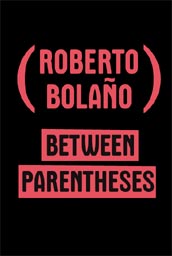
[READ: October 15, 2011] Between Parentheses

I never expected to get so addicted to Roberto Bolaño.  And despite his death, there is no shortage of works coming out in English (that is one of the advantages to reading a translated author–even death doesn’t cease the available materials).  Indeed, this year alone, New Directions is publishing Between Parentheses, and Tres and FSG is publishing The Third Reich (a collection of non fiction, a collection of poetry and a novel respectively).

When I really get into an author, I fall for his or her works, not necessarily him or her as a person (heck, some author are downright jerks).  But there are some authors that I want to know about, personally.  Bolaño is a pretty polarizing figure–he seems obnoxious, his works don’t shy away from very specific opinions, and sometimes it’s unclear what kind of views Bolaño himself has in his works (or if he’s even telling the truth about his so-called truths).  One thing in particular is the constant use of the word “faggot.”  It is used often in 2666 (and I know that is a translator’s choice, but still) and used derogatorily.  Now, clearly the context is everything for something like that.  But it seems to speak badly of Bolaño.  And yet, when reading these essays he is not homophobic in the least.  He is obviously well aware of institutionalized homophobia in Latin America, and he is obviously not supportive of it.

But that’s just one interesting thing about this book.  So let me back up. (more…)

Read Full Post »

SOUNDTRACK: COLIN STETSON-New History Warfare, Vol. 2: Judges [CST075] (2011).

When you learn that Stetson played saxophone for Tom Waits, it makes perfect sense.  The middle of the second song, “Judges” sounds like the instrumental break for any of Waits’ newer songs.  Of course, once Stetson starts really wailing you realize that Stetson doesn’t need Waits’ lyrics to tell a story. With just one big-assed bass saxophone, Steston can say quite a lot.  He plays with circular breathing, meaning that he doesn’t have to stop to take a breath, he breathes in through his nose and out through his mouth at the same time (this is of course impossible).  The bass saxophone weighs some 20 pounds and is massive and Stetson makes it sound like everything from an oil tanker to a field of runaway horses.  Oh, and he also has pretty melodies and songs that sound longing.

This disc is part two of a trilogy, but this is the first of his records that I bought (thanks to a release via the folks at Constellation–I wonder if they will redistribute Pt 1).  There is a story that runs through these discs, although honestly, I’m not entirely sure what it is.  But that doesn’t matter to me, what matters is Steston’s amazing skills.

There are evidently a couple of overdubs on this disc, but for the most part it is just him and his saxophone (and 24 microphones).  The microphones were placed all over the room, on the instrument itself (to pick up the clacking of the keys) and even on his throat (when he makes those “voices muffled by a pillow” sound, that’s the throat mike picking up voice–singing while he is playing (which is impossible)).

The album features a couple of spoken word sections by Laurie Anderson, whose clipped, non-inflected voice gives this otherworldy music an even more otherworldy feel.  And there’s two songs sung by Shara Worden.  Other than that, it’s just the man himself.

Prepare to be amazed by this man’s talent.  But also prepare to be a little frightened by what you hear.  This is not timid music by any stretch.  There’s some scary stuff on this record, especially if you listen in the dark.  More especially if you listen loud (which you absolutely must do to hear all the nuances).  On first listen, this may sound like a noisy jazz record, but the more you get into it, the more amazing it becomes.

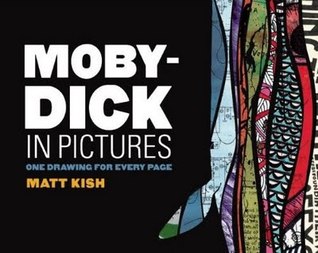
[READ: October 11, 2011] Moby Dick-in Pictures

Matt Kish has accomplished an amazing thing.  He has drawn a picture a day (more or less) to accompany every page of the 552 page paperback version of Moby-Dick.  He takes a small passage from each page and renders an image for it.  One thing this book is not is an illustrated version of Moby-Dick.  It doesn’t purport to be.  You won’t get the whole story from this book.  It’s not a cheat sheet for high school students.  If you haven’t readMoby-Dick, this will give you a taste for the story–almost like a preview for a movie.  And hopefully it will compel people to read the original.  If you have read Moby-Dick, this is a wonderful companion.  Not only will the pictures give you fascinating insights into the story (and into Kish, of course), but seeing sentences excised from the book to stand alone makes you aware of the book in ways you just aren’t when you’re reading it as a novel.

Kish admits he is not an artist, which while not false modesty, is certainly selling himself short.  He has an awesome style of illustration.  I am especially excited by his vast pictures with small details (lots of pages where there are small circles with lines in them or, for instance, the details on Queequeg’s face) and when he uses bold lines to create vast, weighty iconic pictures.  Here’s one example of his awesome use of multiple straight lines.  I mean, it’s gorgeous.

But I also love the whole conceit that an artistic shortcoming for him has turned out to be an absolute boon.  Kish says he cannot render the human form and so he made the conscious decision to make the seamen more like avatars than people.  It’s daring and a little odd, but it works wonders.  I admit that I was a little less than excited by the very first page of the book–I was disconcerted by Ishmael and his utter lack of features. (I actually like the way he is rendered later in the book better–call it an artistic growth).  But by the time her gets to Queequeg, or the  gorgeous Tashtego  it’s obvious that his decision was genius.  Just take a look at the marvel that is is Ahab (left).  First off, the colors are amazing.  As are the details of the whale in the corners.  But look at him–he’s a metal machine–shiny and tough–part ship, part whale.  Look at the awesome shading and detailing of the blue “coat” that he’s wearing.  He’s even got the badge of Moby-Dick on his belt!  And then there’s the pegleg–the most beautifully drawn pegleg ever.  It’s really stunning.

Now you’re also noticing that there’s all kinds of diagrams behind Ahab.  Kish used to work at a bookstore and he hated seeing old pages of books thrown away (he has since become a librarian, which makes sense–although as I librarian I learned that librarians are actually quite cavalier about throwing away old books once they are beyond use).  So he brought these pages home.  And, given the density of the layers of meaning in Moby-Dick, he decided to draw his pictures on these old pages.  So on virtually every page you can see something in the background.  Most of the time they are these circuital diagrams, which are wonderful. But there are several drawings where the found pages are pages of text from books.  And I have to say if these were serendipitous findings then he has amazing fortune.  Some of the pages tie in so perfectly it is wonderful.

Like the page that is headed “Cetology” and is from what, a textbook on whales?  Or several other pages that I wish I had taken notes on, because they were really wonderfully chosen.  He even has a drawing on a title page of Moby-Dick. I have to ask, did he really find that or did he buy it for the project? (more…)

Read Full Post »

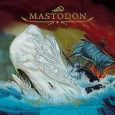
SOUNDTRACK: MASTODON-Leviathan (2004).

This is the CD that started it all.  Well, for me and Moby Dick- related music, anyhow. My friend Andrew asked if I would be reviewing it along with Moby Dick.  And, yes I am.

Leviathan is sort of a concept album about Moby Dick. I say sort of because it’s not entirely about Moby Dick.  The opener, “Blood and Thunder” features the chorus: “White Whale.  Holy Grail.  And it also features lyrics that seem to come straight from the book: “break your backs and crack your oars, men.”  There’s also the tracks “I am Ahab” and “Seabeast,” the latter features the lyrics: “Dear Mr Queequeg you have been informed your life’s been saved”

And yet, not everything is about Melville’s saga: “Island” bears no resemblance that I can see and the final track, a slow instrumental is called Joseph Merrick (who was the elephant man).

Musically the disc runs from bludgeoning metal (“Island”) to complex and intricate bludgeoning metal (“Iron Tusk,” which features a stereophonic drum solo opening).  “Blood and Thunder” has some great catchy riffs with some vocals that demand a lyric sheet for clarity.  “I am Ahab” features some extended vocal notes!  But there’s more to it than that.  “Seabeast” has a great slow intro guitar solo and features a two different vocalists to very good effect.

And the whole disc is chock full of time changes, crazy drum fills (how can he play so many different drums so quickly?).  “Megalodon” has a great odd guitar riff in the middle break section (and has nothing to do with Moby Dick at all).

As you near the middle of the album you get a couple of amazingly complex tracks.  “Naked Burn” features a great melodic middle section (coupled with really catchy vocals, too).  And the highlight is the thirteen plus minute “Hearts Alive.”  It begins as a very pretty acoustic guitar piece.  After about two minutes the heavy guitars kick in and there’s several different middle sections with varying degrees of melody.  By the midway point we’ve heard a few more very beautiful picked guitar sections, until it ends with some strong heavy guitar chords that slowly fade away.

So it’s a super heavy progressive rock/speed metal concept album for people who don’t like real concept albums (but who like their metal literate).  Who would have guessed it would have made so many best of the year lists?

[READ: Week of June 28, 2010] Moby-Dick [Chapters 111-End]

The end is here and BOY did I not see that coming.  I honestly had no idea how the book ended (how is it I knew the basics of the story but didn’t know the ending?  Talk about everyone agreeing to the spoiler alert!).  The other thing that surprised me was how damned exciting those last 70 pages were.  Now it could be a simple build up from the slowly paced early chapters–we were all lulled by the waves and the diversions–but man, when Melville wanted to, he produced the goods.  If you want young people to read this book, just assign them the last 70 pages.  I realize that all the art and such will be lost, but if they read just the end parts, they’ll come away with a much better perception of the book, and maybe they’ll want to read the rest later.  [I’m not a fan of abridged things of course, so I’d want them to read the original full text, just the end of it].

And I absolutely cannot believe [spoiler alert–okay the whole post is a spoiler, even if I didn’t know, the book is over 150 years old, so chances are you may have heard…] (more…)

Read Full Post »

SOUNDTRACK: THE DECEMBERISTS-“The Mariner’s Revenge Song” (2005).

This was the hardest week for music tied to Moby-Dick. (I’m saving Mastodon for the grand finale).  I don’t really have anything that relates directly to the book.   I have a number of nautical-themed songs, but very little in the way of albums.  And, it’s true that this song doesn’t have anything to do with Moby-Dick directly.

However, it’s a 9 minute song about a mariner getting swallowed by a whale just for revenge.  So, it’s sort of related.

The Decemberists are one of your more nautical bands (and I’ve reviewed all of the albums here somewhere).  Their first album, Castaways and Cutouts featured an album cover with a ship with ghosts drifting from it.

This song has an accordion fueled shanty feel as we follow the tale of a young lad who seeks revenge on the rake who used and abused his mother and left her a poor consumptive wretch.  After fifteen years, he finally hears tale of the rake–he’s now a captain at sea.

So the lad hires on with a privateer and hunts down the captain’s ship.  As he is about to fire muskets upon him, a giant whale crashes on their ships, swallowing the two men whole (tell me, Ishmael, what kind of whale might do that?).

And it’s from inside the whale the we hear this tale.  The lad’s mother’s dying words echoing among the ribs of the beast:

“Find him, bind him
Tie him to a pole and break
His fingers to splinters
Drag him to a hole until he
Wakes up naked
Clawing at the ceiling
Of his grave
*sigh*”

And it’s catchy as all heck, too!

[READ: Week of June 21, 2010] Moby-Dick [Chapters 87-110 ]

Pirates!  I didn’t expect pirates in the book.  Week 5 opens with Ishmael discussing pirates in the low shaded coves of Sumatra.  Ahab intends to sail right through those piratical waters to get to Java because sperm whales are known to frequent the area.  And indeed they do.  A whole fleet of sperm whales is seen but at about the same time, the pirates come out and give chase.  My notes in the margins are a little diagram of a fleet of whales with an arrow and then a tiny Pequod and another arrow and then a jolly roger.

The Pequod easily outruns the pirates and still manages to keep the whales in sight.  So, they jump into the fray and start harpooning away.  However, as the saying goes, “The more whales the less fish” (389). (more…)

Read Full Post »

SOUNDTRACK: RHEOSTATICS-Whale Music (1992).
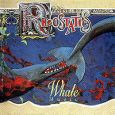
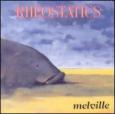
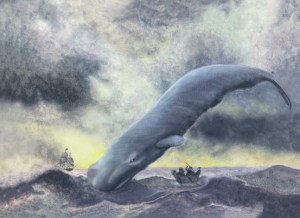
The Rheostatics are from Etobicoke Canada.  Their second album was called Melville (named after a town in Saskatchewan, but it has a whale on the cover so…).  Their third album (this one) is called Whale Music (inspired by the novel by Paul Quarrington).  When they made a film of Whale Music, the Rheostatics were asked to make the soundtrack for it, which they released as Whale Music.  So, the band have 2 albums called Whale Music and one called Melville.  Perfect soundtrack to Moby-Dick.

The album is chock full of all kinds of music: country tracks, folky tracks, metal tracks, and hooks galore.  And it’s all wrapped up in the oddity that is the Rheostatics.  This album features guest spots by the Barenaked Ladies and Neil Peart as well as horns, strings, spoken word parts, and “power tools”.

“Self Serve Gas Station” is a great opening.  It begins with swirling guitars and a beautiful solo (Rheostatics guitar lines sound so elemental as to seem like they’ve always been around).  But just as the vocals begin, the song becomes a sort of country track: a folkie song about adolescnece.  But it returns to a good rocking (and falsetto fueled) rock track.
“California Dreamline” is a wonderfully weird track, with more gorgeous guitar melodies.  It also has a disjointed section with squealing guitars.   While “Rain, Rain, Rain” opens with a lengthy percussion section (played by Neil Peart of Rush) with a weird time signature.  It’s a fun singalong.  “Queer” meanwhile has some great chugga guitars that turn into a rocking tale of an ostracized brother (and features the great line: “But I wish you were there to see it/When I scored a hat-trick on the team/That called you a fucking queer.”

“King of the Past” is another great track, with a wondrous string sound near the end.  It’s a gorgeous song with (again) different sections conveying shanties and jigs (and you can dance to it).  Like Moby from last week, Rheostatics, also bust out a fast metal track, but this one works well: “RDA (Rock Death America)” has a major hook and name checks everyone from The Beatles to The Replacements.
“Legal Age Life at Variety Store” is a great folky singalong (and features the piercing harmonies of Martin Tielli).  “What’s Going On Around Here?” is the most traditional song of the bunch, a poppy little ditty which avoids complacency with a rocking coda.

“Shaved Head” is a moody piece, wonderful for its roller coaster sensibilities, which is followed by the beautiful Tim Vesely sung ballad “Palomar.”  This track is followed by the humorous (but serious) shouted-word piece “Guns” which also features Neil Peart.

“Sickening Song” is an accordion based shanty song.  Followed by another pretty, poppy-sounding track, “Soul Glue.”  Drummer Dave Clark sings “Beerbash,” an upbeat song.  And tye final track is the epic, “Dope Fiends and Boozehounds.”  It opens with a beautiful acoustic intro and a wonderfully catchy wheedling guitar solo.  It ends delightfully: “Where the dope fiends laugh And say it’s too soon, They all go home and listen to
The Dark Side of the Moon.”

I had been listening to the band live a lot recently, and they play these songs a lot.  So it was quite a treat to go back and hear the original with all its full instrumentation.

[READ: Week of June 14, 2010] Moby-Dick [Chapters 62-86]

I never thought I’d ever say this, but I really enjoyed Moby-Dick this week.  So far, these twentysome chapters have been my favorite (even the gruesome whale sections), there weren’t any chapters that I thought really dragged.  So, good for me!

This week’s read begins with Ishmael stating that harpooners should not have to paddle and then be expected to harpoon as well.  They should save their strength for that last, all important act.  And that seems logical to me, although one also expects that the harpooners would feel kind of bad while everyone else is paddling. (more…)

Read Full Post »

SOUNDTRACK: MOBY-Everything is Wrong (1995).
I suppose that everyone knows that Moby (the musician) is Herman Melville’s great- great- great- grandnephew.  And that’s why he has the middle name Melville and had the nickname Moby.

Moby started out as a techno guy. He even made the Guinness Book for the fastest bpm ever recorded (since then, many have surpassed that) with the song “Thousand.”  It’s an interesting song, although more for its novelty than anything else.  He also had a cool hit called “Go” that sampled music from Twin Peaks.  And in 1999 he took over the world with his album Play, which featured some 18 songs that were all licensed for commercial use (many of which were ubiquitous that summer).

But this disc, Everything is Wrong, came out before Play, and it was considered a high water mark for dance music (before the next high water marks of Fatboy Slim and LCD Soundsystem came out, of course).

So this disc was hailed as the big breakthrough for Moby.  And it has something for everyone.  It opens with a pretty piano piece ala Philip Glass which is, as its name implies, a “Hymn.”  From there we get a heavy techno beat and “Feeling So Real” kicks off.  Gospel-like vocals soar above the dancing (this foreshadows Play quite a bit).  It sounds very 1994 to me, although I don’t think it sounds dated, necessarily.  And then comes his stab at punk.  “All That I Need is to be Loved” is a fast blast of aggro music.   The problem is that Moby doesn’t do punk very well.  His guitars are too trebly, his vocals aren’t very strong and despite the beautiful melodies he creates, he doesn’t write very catchy hooks.

“Every Time You Touch Me” returns to the style of “Feeling So Real” and is another stellar dance track.  While “Bring Back My Happiness” runs even faster.

“What Love” is another screaming punk track.  This one is closer to Ministry.  It’s quite a slap in the face after the rest of the disc.

“First Cool Hive” slows things down with a groovy almost ambient track.  And “Into the Blue” is a moody song that sounds like it could also have been taken from Twin Peaks.

“Anthem” returns to the fast beats with ecstatic moans sprinkled over the faster and faster beat.

The album ends with two tracks, “God Moving Over the Face of the World” which is a beautiful instrumental (again ala Philip Glass or more likely Michael Nyman) that weaves in and around itself for 7 minutes.   (It, too, hints of Twin Peaks).  And, “When It’s Cold I’d Like to Die,” while not exactly uplifting is coldly beautiful (kind of like a long lost Eurhythmics track)..

The disc is such a mishmash of styles, that it’s hard to really know what to classify it as.  Some of it works wonders.  Other tracks (notably the punk experiments) are less successful (even though I did enjoy them then, I think they just didn’t age well…or maybe I didn’t age well).  Of course, over the course of his career, Moby has attempted all of these genres in more detail, so this was almost like a sampler of what he would be doing later.

Sixteen years later it holds up quite well (although I still think Play is better).

[READ: Week of June 7, 2010] Moby-Dick [Chapters 42-61]

The reading this week opens with a chapter about whiteness.  And how somehow Moby-Dick is even more fearsome for being white.  As the chapter opens whiteness (even in skin color) is lauded.  But by the end, he cites it as being particularly creepy: white whales, polar bears, albinos.  (I think that this was my very least favorite chapter so far–I was uncomfortable reading it and I didn’t get a lot of humor from it either).

Some more down time passes, with Ishmael describing how Ahab is able to plot a course to find Moby-Dick.  It’s not just looking for a needle in an ocean–there are pathways that whales follow, for instance.  This is followed by a chapter that allows Ishmael to swear, absolutely swear! that whalers can recognize the same whale even years later if you tried to kill it but failed (and that he himself remembers one whale that got away from a mole under its eye). (more…)

Read Full Post »

SOUNDTRACK: MOBY GRAPE-Moby Grape (1967).

Moby Grape is one of those bands that I’ve always heard of but had never heard.  I know, their debut is 43 years old and yet I’d never heard it.  Well, thanks to the internet (lala.com, RIP as of today), I was able to listen to what I assumed was their Greatest Hits.  If only I had done a modicum of research.  The disc I chose was Legendary Grape, which it turns out is not a greatest hits at all, but is actually some weird pesudo-Moby Grape record released in 1989 under a different band name due to legal protractions, but then reissued as Moby Grape.  It was rather uninspired and nothing at all what I thought it would sound like.  Nothing dreadful, just nothing worth thinking that this band “legendary.”

So, with a little research, I learned that their first album is what I should have been checking out.  Moby Grape is the eponymous release and it sounds much more like what I assumed this psychedelic era-band would sound like.  This disc is pretty much in keeping with what a band that produced an album cover like this would sound like.
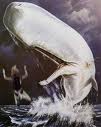
It’s sort of a folksy Grateful Deadish sound.  But they move beyond a simple genre with a host of writers and instrumentalists contributing their own thing, man.  So there’s a few rocking numbers, a few ballads, and a bunch of other fun things. To me the most notable thing is that in a time when trippy psychedelic songs were long events, Moby Grape played mostly short songs (the longest one is the final track at 4 minutes, but most are around 2 minutes long).

I think I may be too far removed from this scene to really appreciate the disc.  I like what I hear, and a second listen made it even more enjoyable, but I can’t imagine investing a lot of  time with the band.

[READ: Week of May 31, 2010] Moby-Dick [Chapters 19-41]

Plug #1:
In case you didn’t see it on Infinite Zombies, Daryl has created what he calls Moby-Diction, which allows you to search the text for any word and see where and how often it occurs.  Geek heaven!

Plug # 2:
A visual treat is found at Matt Kish’s monumental: One Drawing for Every Page of Moby-Dick, which is pretty well explained by its title.  It is an amazing site (sight) to behold.

Now, back to our story.

Week 2 of the Moby-Dick read is amusing because it continues a minor thread that has been going on for some 100 pages (of my edition): When are we going to meet Captain Ahab?  We hear a lot about him, including a portent of doom from Elijah, but he doesn’t appear until Chapter 28.

Elijah, meanwhile, appears on the Nantucket streets.  He reveals himself to Ishmael and Queequeg as a sort of homeless man who asks them if they’re sailing with Ahab.  When they say yes, of course, he warns them about some bad things that happened to Ahab and his leg and future portents of doom.  Ishmael is a bit freaked by the guy, especially when Elijah seems to be following them, but he tries to out the madman out of his mind. (more…)

Read Full Post »

SOUNDTRACK: LED ZEPPELIN-The Song Remains the Same (1978).

I don’t normally try to have my soundtracks correspond to the book. But since Andrew suggested that Mastodon’s Leviathan was a good match, I decided I’d try to have all six Soundtracks relate to the book some how.

The obvious starting point was Led Zeppelin’s “Moby Dick” and where better to look than at the over-the-top live version contained here.

As a classic rock guy, I grew up worshiping Led Zeppelin.  And I have no way of objectively talking about their music, really.  However, when I was in college, some guys in my dorm played this particular release all the time and claimed it to be the best CD in the history of music.

And thus, I have a delightfully convoluted relationship to this live album.  I used to really dislike it: extended jams of silliness rather than rocking live tracks.  However, as I’ve gotten older, and I’ve begun enjoying jam bands more, I see the enjoyment of this kind of show.  And yet I read a review of this very disc the other day that described it as being a few shows past Led Zep’s prime, and I think that’s pretty valid.

I haven’t heard any of the other recently released live discs (which are supposed to be amazing).  But this one feels overblown and pretentious.  And there’s nothing wrong with that if that’s the kind of band you are, but Led Zep was not that (until later);  they were meaty and heavy.

This version of “Moby Dick” is 12-minutes long.  Over 10 minutes of it is a drum solo.  This always reminds me of the line from Dazed & Confused: “Man, I ain’t belivin’ that shit about Bonham’s 1-hour drum solo…I mean, 1 hour on drums…you couldn’t handle that shit on strong acid, man.”  The rest of the disc is the same way: long solos that don’t really showcase virtuosity, they just sort of go on and on.  I do like the kevboard solo in one of the songs, but the “ah ah” part in “Dazed and Confused” is pretty silly.

In some ways, the song “Moby-Dick” (and the album itself) is like the book: a product of its time.  In 2010 , if you played a ten-minute drum solo (even Rush have added electronic horns and a swing number  to Neil’s drum solo) you’d be mocked.  But back in the 70s, it was a badge or honor.  Similarly, Moby-Dick seems quaint and weird to most contemporary readers.  And yet, put in context, it’s funny and surprisingly forward thinking.  And I suppose the music does make a good background for reading it, too.

[READ: Week of May 24, 2010] Moby-Dick [Chapters 1-18]

So, the instigators at Infinite Zombies are hosting a read along for Moby-Dick (and yes, the hyphen is supposed to be there).  I’m going to be a contributing writer to this shindig, so I’m going to curtail what I say here somewhat [see my post about religion, here]. Also, unlike Infinite Jest and 2666 which had difficult, multi-charactered, multi-layered, confusing plots, Moby-Dick is fairly straightforward.  And so, there’s not a great need for in-depth story summary (not to mention each of the 100+ chapters is titled, so you know what’s going to happen in each one!).

But with that out of the way, let’s see what I can say about this book.  Oh, one more thing, I’ve been trying to include page numbers in my citations, but there are just too many versions of this book (and I am using one for my reading and another for my copy-and-paste-quotes–the whole book is available at that link), so I’m just going with Chapters.

I was joking with some friends recently that their sister thinks Moby-Dick is very funny.  And I have to say I was surprised about how funny it was, too.  Not gut-busting funny, mind you, but funny enough. (more…)

Read Full Post »

SOUNDTRACK: THE FLAMING LIPS & STARDEATH AND WHITE DWARFS featuring HENRY ROLLINS and PEACHES doing The Dark Side of the Moon (2010).

You’ve got to have balls to cover the most popular album of all time.  Everyone knows Dark Side of the Moon, according to Billboard charts everyone probably owns a copy of Dark Side of the Moon.  So, you’re taking on a pretty big task here.  But the Flaming Lips aren’t called The Fearless Freaks for nothing.

What delights me about this album is that it is utterly unfaithful to the original.  There’s nothing worse than a cover song that just apes the original version.  With that in mind, the Lips have put their bizarro stamp on the classic album, oftentimes rendering the songs almost unrecognizable–but more on that in a moment.

The two guest stars on the disc are Henry Rollins and Peaches.  Rollins recites all the spoken word bits from the original.  He actually makes a lot of those weird ramblings clear for me for the firs time.  The originals were spoken by a (presumably) high Englishman.  Rollins’ delivery is much more abrasive (but then so is the music).  It works pretty well, especially since Rollins’ laugh is maniacal, although if he sounded a bit more drunken I think it would work even better.  Peaches sings a few of the female vocal bits.  I’ve never been much of a fan of hers but, man, she does an awesome job in covering “The Great Gig in the Sky,” the track from the disc that features a wondrous diva singing and screaming her heart out.  Peaches really lets loose and showcases the power of her voice.

The Lips play on 7 songs and StarDeath play on 6.  They work together on 2 tracks.

StarDeath is fronted by Wayne Coyne’s nephew, Dennis.  I’d only heard one track from them before, and I liked it.  Dennis’ voice is a higher register, like Wayne, but he’s also a bit more subtle. Musically they are less noisy as well, and it’s a good counterpoint to the static of the Lips’ tracks.

So the opener, “Breathe” (Lips) is distinct right away, because the main focus of this version is a loud throbbing bassline. “On the Run” (Stardeath) is completely indistinguishable from the original.  You would never suspect it was a cover.  It’s a bass-propelled, very cool song, but there’s almost no similarity.

“Money” (Lips) stays fairly faithful to the original, except that the vocals are totally auto-tuned.  It makes the song sound really alien, as if coming, yes, from the other side of the moon.

“Time” (Stardeath) on the other hand, is a very delicate, acoustic track, (sounding somewhat like Mercury Rev, actually).  It is something of a counter to the rocking version on the original.

“Us and Them” (Lips) is probably the closest sounding to the original.  It has simple washes of sound and Wayne’s delicate voice.  But, once again, the louder sections of this song are left out.  “Any Colour You Like” (Stardeath) is a much closer instrumental to the original than “On the Run” was.  And “Brain Damage” (Stardeath) is really quite spot on (and may be even creepier than the original).

The ender, “Eclipse” is like a distorted indie rock version of the original.  It works pretty well.

There’s surprisingly little in the way of sound effects (which are all over the original).  I’d have thought they’d populate the disc with all kinds of fun things, but no, they actually play it pretty straight.

My one real complaint about the disc (and actually about Embryonic as well).  The Lips have always pushed the envelope of music.  But lately, they seem to be redlining  a lot of their sounds, making them distort and crackle.  Now, I love distortion when it’s used well, but this “too loud” distortion actually hurts my ears, even if the volume is low.  I find the sound to be unpleasant, and not in a good way.  And I think it’s a shame because the Lips write such great music, that I hate to have it obscured by clouds of noise.

So, yeah, this will never replace the original for anyone.  But it’s a fun experiment and actually sounds a bit like a rough demo for the final release.  In fact, in many ways it sounds like it’s coming from outer space and may be conceptually more accurate for the title.

I saw The Lips and Star Death on Jimmy Fallon.  They played “Breathe” and all eight (or more) guys were on stage.  It was a big wonderful mess.  And they sounded really good together.

[READ: May 11, 2010] ; or The Whale

In 2007, a book was published called Moby Dick in Half the Time.  And, as the title implies, it took Herman Melville’s Moby Dick; or The Whale and truncated it.  The editors basically kept in all of the “plot” and excised most of the “wandering” parts of the story.

So, in 2009, Damion Searls decided to print all of the excised material as a book itself.  This exercise was published in The Review of Contemporary Fiction, Summer 2009 | Vol. XXIX.  So, this “book” is Moby Dick without the “plot” or as the introduction puts it, “all Moby, no Dick.”

This book includes “every chapter, sentence, word, and punctuation mark that Anonymous removed to produce [Moby Dick in Half the Time]” (10).

And so what we get is a very surreal story indeed.  It comes across as a fascinating look into the mind of the (in this version) not named until Chapter 11 or so narrator (since we’ve obviously lost “Call me Ishmael”).  It also comes across in many sections as bizarre poetry.

; or the Whale’s opening line is:

“methodically.” (31). (more…)

Read Full Post »

« Newer Posts