Feeds:
Posts
Comments

Archive for the ‘Fyodor Dostoevsky’ Category

SOUNDTRACK: RAGE AGAINST THE MACHINE-“Killing the Name” (1991).

I was living in Boston when this song came out.  It was an electrifying shot across the bow of institutional racism–thirty years before that terms was on everyone’s lips.

This song was amazingly catchy and very vulgar.

It had few lyrics, but they were repeated over and over–a chant, a call to action.

Some of those that work forces
Are the same that burn crosses…
Well now you do what they told ya…
Those who died are justified
For wearing the badge
They’re the chosen whites
You justify those that died
By wearing the badge
They’re the chosen whites…

The song begins with a staccato opening, then some thumping bass and drums.  A cow bell and off goes the riff.  It’s as jagged and aggressive as angry as the lyrics.

The bridge is a pounding three note blast as the sections repeat.

Then comes a guitar solo.  One thing I remember distinctly when this album came out was that most of the talk was of Tom Morello’s guitar playing.  The album stated in the liner notes “no samples, keyboards or synthesizers used in the making of this record.”  It was an odd disclaimer, but with the bizarre sounds that Morello made, it was fascinating to wonder how he did it all.

The solo came at the four minute mark and, if radio wanted to play the song, they could fade it right there (that’s still plenty long for the radio).  But if they didn’t, then the chaos began, with crashing drums, and a slow build as Zach de la Rocha started quietly and got louder the simple but effective refrain

Fuck you. I won’t do what you tell me.

A band anda  room full of people chanting that song might just frighten the authorities a bit.

And that’s why in 2020, that song is being played a lot.

[READ: October 15, 2020] “On Defense”

A quote attributed to Dostoyevsky (who evidently never said it) is”

The degree of civilization in a society can be judged by entering its prisons.

This quote is in the visitor center of the Manhattan Detention Complex (known as The Tombs). De La Pava says The Tombs is “one of the most hideous places on earth.”

I have really enjoyed Sergio De La Pava’s fiction.  I knew that he was involved in the New York City court system (his novels were too detailed about the system for him not to be).  This essay is a non-fiction account of his time as a public defender (he is still in the system, and is now the legal director of New York County Defender Services).

It seems like the public defender is not always appreciated–he or she stands in the way of putting criminals behind bars.  But De La Pava’s experience (along with many of the accused) shows that he has the really hard but important task of keeping innocent people from unfair punishment. (more…)


Read Full Post »

TNY 8.25.08 cvr.inddSOUNDTRACK: BIG THIEF-Tiny Desk Concert #562 (August 29, 2016).

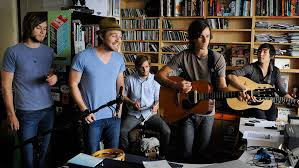
bigthiefBob Boilen absolutely loves Big Thief’s debut album (it made his top ten this year).  I think it’s really good, but I don’t quite love it the way he does.

But I think their first song, “Masterpiece” is really a great song.  And in this Tiny Desk Concert, they play it with a slightly different feel.  It seems to allow the sounds of the guitars to come through a little more.  Like the album, though, the harmonies are wonderful.

When the video started, the camera focused on just Adrianne Lenker and Buck Meek, and since the first song starts with just the two of them I wasn’t even sure of the whole band was there.  They are, although it’s odd how isolated the rhythms section looks in this video.

“Paul” is a mellow song with a strangely subdued and yet catchy chorus.  It’s kind of funny to watch Buck Meek really getting down to what is a fairly mellow track–although his guitar parts are pretty cool blasts of music.

“Lorraine” also get a mellow treatment here.  For this version it’s just her singing and playing the guitar.  It works very well in this Tiny setting and her voice really shines.

[READ: March 1, 2016] “Awake”

This story is about a college Economics major who just can’t get enough sex.

Well, that’s how it starts anyhow.  Richard is lying in bed next to Ana.  He moves in close behind her, hinting.  But she moves away quickly (she is actually asleep, so that’s a reflex).  He is annoyed although he shouldn’t be–I mean they did it twice already that night.

So instead of thinking about sex he decides to think about something else.  But what? (more…)

Read Full Post »

aug24SOUNDTRACK: IVAN & ALYOSHA-Tiny Desk concert #109 (February 7, 2011).

ivanIvan & Alyosha are a five piece (no one is named Ivan or Aloysha) consisting of Tim Wilson (lead vocals) Ryan Carbary (guitars) Pete Wilson, (Tim’s brother), Tim Kim (acoustic and electric guitars) and drummer Cole Mauro).  They play bouncy folk (I assume that their non-Tiny Desk sound is bigger than two acoustic guitars and a tambourine).

“Beautiful Lie” is the first song.  The lead singer has a gentle falsetto and the other guys add nice harmonies (especially during the oooooooohs).

As they introduce “Easy to Love” Wilson says they recorded it at 2AM in their last half hour at the studio.  And it wound up being the song people like most.  It’s easy to like, with a fun clap-along and a simple electric guitar solo.  Again, I assume the actual song is bigger than this.

“I Was Born To Love Her” is a good jam (their words).  It completes that folks sound with two guitars and lovely harmonies.  They’d be a great opener for Band of Horses.  I’d see that tour.

Incidentally, the band name comes from Fyodor Dostoevsky’s The Brothers Karamazov.

[READ: February 3, 2016] “These Short, Dark Days”

I was planning on saving this story to put it sequentially with the other New Yorker stories that I’ll be posting in the weeks to come.  But this story is set on February 3, so why not post it on that short, dark day, since it is that day, anyhow.

This story begins with a suicide.  A man sees his wife out the door, then covers the windows and door gaps, pulls the gas hose off the stove and brings it with him into the bedroom (who knew the hose would be that long).

The next section of the story jumps to much later as we see a nun, Sister St. Savior, walking down the street.  She is tired and aching from begging all day. But she smells the smell of an extinguished fire and she knows in her heart that she must go there and help.  I love that when she arrives, everyone defers to her.  One of the men even acts as if he has sent for her, when clearly she came of her own design. (more…)

Read Full Post »

SOUNDTRACK: BEN FOLDS/NICK HORNBY-Lonely Avenue (2010).

As the cover of this album notes: “Ben Folds adds music and melody to Nick Hornby’s words.”  And that is true. The only surprising thing about this combination is that Folds is quite a good lyricist himself, so it’s surprising that he would sacrifice his words.  But regardless, the fit is a good one.

Sometimes it seems like Hornby is challenging Folds to come up with melodies for some of his more difficult lyrics which Folds lives up to).  But they have such similar sensibilities that (aside from occasional references to British things) the words could have come from Folds himself (although, Hornby’s a better writer, so Folds wouldn’t have written exactly the same things).

The big surprise is the diversity of musical styles on the disc.  Folds of course does play lots of different types of music on his previous discs, but I guess since the cohesion is Hornby’s words so Folds can really let loose.

The opener, “A Working Day” is a keyboard pop confection, a surprisingly 80s sounding synth song with some wry lyrics about being a writer/performer (“some guy on the net thinks I suck and he should know, he’s got his own blog”).  “Picture Window” is a beautiful downer, a string-filled song that seems like a companion to Folds’ “Brick” (“You know what hope is, hope is a bastard”).  It’s just as sad but the melody is gorgeous.

“Levi Johnson’s Blues” is a strangely topical song (in fact, it took me a minute to remember who he was when I first listened to the song.  Anyhow, it’s a silly song about what happened to the father of Sarah Palin’s grandchild.  And yet, despite the novelty of it, it’s actually a somewhat sympathetic portrait of the guy (sure he’s a redneck, but he’s just a normal guy thrust into a ridiculous spotlight–the liner notes say the chorus came from Levis (redacted) Facebook page).

“Doc Pomus” feels like a classic piano song.  While “Young Dogs: is a fast romper (with great vocals) and more keyboards.  “Practical Amanda” is a slow ballad (and Hornby says it’s not autobiographical at all).  While “Claire’s Ninth” is a story about a young girl of divorced parents who hates having two birthdays.  (With sweeping choruses!) Hornby states that this was his first accepted short story (modified for the song, of course) but the magazine that accepted it stopped publishing before his appeared.  D’oh!

“Password” is a wonderful song which only makes sense when you know the name of it (which I didn’t at first, as I usually don’t look at titles right away).  Throughout the song Ben spells words which leads to a cool conclusion–it’s wonderfully clever writing and it’s done in a fascinating R&B-lite style.

“From Above” is a jaunty rocker about people who never meet, although their paths cross quite often.  “Saskia Hamilton” is the “single” from the record.  It’s another great 80’s keyboard fueled romp.  Since I have a friend named Saskia (hi, Saskia) I’m fond of this song–her name is fun to say.  They have a bunch of fun in the recording too.

The final track, “Belinda” is designed like a classic 70s piano ballad (there’s a lengthy email printed in the notes that explains the construction of the song–reading that makes the song even more impressive).

It’s a great Ben Folds album.  It’s not as tidy as some of his other ones–but all of that experimentation leads to some new avenues of melody. It’s a risk that paid off.

[READ: May 10, 2011] Five Dials Number 7

This issue of Five Dials was primarily about Memoir.  Typically, I don’t like memoirs, but I’m finding (and this coincides with what one of the memoirs below states), that I just don’t like celebrity memoirs.  Or perhaps I just like three page accounts of an incident in someone’s life (which these are).

Each of the writers below is given an introduction in which they summarize WHY they write memoirs.  It’s interesting to see that many of them do, in fact, take other people’s feeling into consideration (not as seriously as Mark Twain who waited 100 years for the publication of his), but they try to do something or other to spare people’s feelings.  I was intrigued also that several of the writers also talk about finding themselves through writing.  One or two of them make the exercise of writing memoir sound obnoxiously solipsistic (which of course it is), but it’s nice to read ones that are interesting and not too self-centered.

CRAIG TAYLOR-A Letter from the Editor: “On Audio Detective Work and Memoir”
This letter explains the extent of the audio detective work that went into the interview (presented later) between Raymond Chandler and Ian Fleming.  Since I love playing with audio software, this was of especial interest to me.  And it made me really look forward to the interview. (more…)

Read Full Post »