Feeds:
Posts
Comments

Archive for the ‘Artists’ Category

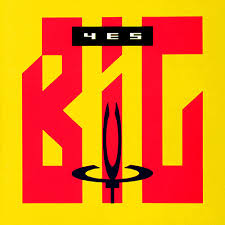
profxSOUNDTRACK: YES-Big Generator (1987).

big genAfter the huge success of 90125, Yes released that solos EP and then buckled down to make the follow up.  It took a few years and sounded an awful lot like 90125, although not as good. I remember enjoying the singles, but when I listened to it recently I felt that it didn’t hold up at all.

Wikipedia tells me that there was lots of trouble while making the album (really??).

Big Generator’s sessions dragged on for two years, largely because of creative differences. Guitarist Trevor Rabin was aiming to progress beyond 90125, while founding lead vocalist Jon Anderson was beginning to yearn for more traditional Yes music. Trevor Horn, who was a major factor in the success of Yes’ previous disc 90125, was part of the early recording sessions. However, he dropped out after a few months due in major part to his inability to get along with keyboardist Tony Kaye. Anderson stated that Horn had told Anderson to stay away from the rehearsal and recording sessions for three months, presumably so that Horn could develop material with the other band members.

Given all that, is it any surprise that the album isn’t all that good.  90125 inspired a lot of music, including this album.  So this album sounds more like a retread rather than a moving forward.

“Rhythm of Love” opens with lovely Beach Boys harmonies (although at this point I’m imagining more “Kokomo” than “California Dreaming” even if “Kokomo” came out 2 years later).  That opening guitar section sounds so much like a pop 80s song (in a not so good way).  The chorus is quite good although it takes that group harmony one level further into uncomfortably sterile pop land.

“Big Generator” sounds like the b-side follow up to 90125.  The guitars are meaner and there are more orchestral hits.  There’s some interesting sections that Yes of old might have played–but they are recorded very differently here.

“Shoot High, Aim Low” is fairly uninspired (even if it was popular on the radio) and at 7 minute it’s way too long.  “Almost Like Love” is another song that sounds so much like 80s pop, it’s kind of icky.  “Love Will Find a Way” is credited solely to Trevor Rabin who really did sort of take over the band in the 80s (what does Chris Squire do at band meetings anyway?).  It is also very poppy but it has some interesting guitars and textures.

“Final Eyes” would be good if it was 2 minutes, but once the second part of the song starts, it drifts into less interesting territory (especially at over 6 minutes).  “I’m Running” is quite polarizing for me.  I like the interesting bass line that opens the song (occasionally Squire does something cool on this disc), but the overall Caribbean Feel is just so wrong.  If the song ended at 3 minutes after that interesting guitar riff it would be much better.

“Holy Lamb (Song for Harmonic Convergence)” ends the disc.  It is written (surprise) entirely by Anderson.  It’s pretty good and a surprisingly decent ending to the album, although there’s an awful 80s synth sound on it.

This was the last Yes album I bought.  I think I heard about Union when it came out in 1991 and featured nearly every person who ever recorded a Yes song, but I wasn’t interested in it.  Since that album they have released 8 studio albums and countless live albums, but I’m content with what the past has given.

Incidentally, this whole travel through Yes started when Chris Squire died recently.  Squire is the only person to have played on every Yes album.  But as I said earlier, I often wonder what he was like to work with.  It seems like when new players come in they kind of take over the sound and Squire is often shunted to the background.  I don’t know a thing about him personally or professionally for that matter. I just know that he could play an amazing bass and wish he’d shown it off more.

[READ: May 20, 2015] Who Killed Professor X?

This graphic novel intrigued me, in part because it was originally written in Greek (can’t think of too many modern Greek books I’ve read–translated by Phil Holland) and in part because it is a comic about mathematics.

The Foreword explains that the book is intended for two kinds of readers: those who have some knowledge of mathematics and those who have no knowledge of mathematics…. The first category of readers can try to solve the problems and determine whether or not each suspect has a valid alibi, whereas the second can simply skip this step.

So the (fairly thin, I must admit) premise of this book is that Professor X was killed while at a conference for mathematicians.  The room was empty for 20 seconds, so the killer must have been more than x meters away from the Professor in order to be considered innocent.

The suspects (we learn later) are all of history’s greatest mathematicians.  They go only by first name in the story, but the end of the book gives biographies of all of the real people they were based on (from throughout history).

Each of their alibis is a mathematical explanation of why they could not be the killer.  And as the Foreword mentioned, if you know math (high school level or so) you could figure out where each suspect was based on the clues given. (more…)

Read Full Post »

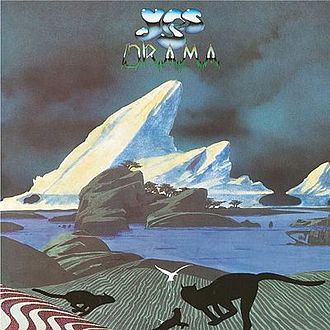
ny13SOUNDTRACK: YES-Drama (1980).

dramaAfter a few albums that seemed to lack the oomph of previous Yes outings, they stormed back with Drama.  And you know it’s proper yes because Roger Dean drew the cover!

It opens with a great dark riff and some big heavy bass—where has that been? And then the vocals come in—band harmonies like Yes has always done, but something is…different.  And around 3 minutes in, you realize what it is, so you check the liner notes (remember those?) and… woah Jon Anderson, the voice of Yes, has defected! And in his place is singer Trevor Horn from…The Buggles?  Trevor and Geoff Downes the creators of The Buggles were fans of Yes and when Anderson and Wakeman (yup, he’s gone too) left, the rest of the gang asked the Buggles to join in.  It seems that they had a few songs already written and the Buggles guys wrote a couple songs and there it is.

Horn’s voice is surprisingly close to Anderson’s (although he can’t reach the high notes.  But he has a lot more bass resonance so when he belts out notes he sounds really powerful.

And it turns out that Drama is very high on my list of Yes albums, even without Anderson  The band seems really interested in making big loud rock again, which I’d rather missed.

“Machine Messiah”  is over 10 minutes long.  There’s some great riffs and time changes and a big soaring guitar solo (Steve Howe is still on board).  There’s a slow middle section about 6 minutes in with acoustic guitar and simple vocals. The final solo repeats the same melody but it seems to swing more.  Near the end they revisit the slow section with new wave keyboard sounds that I imagine Wakeman would never have agreed to play (although he did play some weird sounds on Tormato).  Especially with the group vocals, it’s easy to imagine that this is indeed classic Yes.  A ten minute song with no wasted moments

“White Car” is a 90 second throwaway track.  It feels like they invited the new guys to fill some space. It’s not bad, it’s just a jingle with inscrutable words.  His voice soars similar to Anderson’s but not quite.

“Does it Really Happen?” has a big bass rumbling sound and bright keyboard chords. It goes through several sections before settling into a pretty typical Yes riff.  It really highlights the harmony vocals again. At the end of the song—a complete full stop, a new keyboard riff comes in with a repeat of the rumbling bass. It lasts only for a minute or so and then fades out. But it’s nice that Squire get a chance to wail

“Into the Lens” is a great song that opens side two.  The opening bass and counterpoint keys of is pure Yes, which is why it’s surprising to find out that the main section of the song is pure Buggles.  Indeed, the “I am a Camera” section of the song was written by Trevor and Geoff and they even recorded it with out all the complicated intro on the second Buggles album (it’s called “I am a Camera.”  There’s a cool bass section that may actually be piano? It’s got a cool end section with staccato riff repeated three times and an odd pause signature.  The opening and closing sections (the Yes parts) work really well with the catchy middle part (which really doesn’t sound like Yes at all, but still works and is super catchy).

“Run Through the Light” has fretless bass!  And that bass was played by…Trevor Horn.  What?  Chris Squire is either a total pushover or the most generous founding member of a band ever.  It says Squire played piano on this track, although for the life of me I can’t hear any piano at all.  It’s a decent song but probably the least interesting on the disc.

And them comes the best Yes riff since the early 70s–the wild bass line of “Tempus Fugit.” The song opens with some keyboard phrases that don’t at all suggest there’s going to be something spectacular coming next, but in true Yes fashion, the boppy opening mutates into a super fast bass line with appropriate synth blasts.  While not as great as say Roundabout, it soars over just about everything since then, and is an overlooked Yes gem.

I noticed on 9012live that Squire plays the “Tempus Fugit” riff riff in a bass solo—evidently, Anderson (who returned after this record) refused to sing any sings from Drama.  Which is shame because there’s some good stuff there.

Since almost every Yes album had different personnel, I’m going to keep a running tally here.  This is a biggie, look who has left!

Chris Squire-bass
Trevor Horn (#2, replaced Jon Anderson) vocals
Alan White (#2)-drums
Geoff Downes #4 (replaced Rick Wakeman #2)-keyboards
Steve Howe (#2)-guitar

[READ: April 12, 2015] “Apollo”

This story has two parts, a part set in the present and then a flashback which takes up most of the rest of the story.

As it opens, the narrator is visiting his parents in Enugu.  He says that his parents have changed since they retired.  They used to be critical thinkers (professors both of them).  They often challenged each other in intellectual ways–even seeing who could publish more papers.  But since they have retired, they have become almost comically gullible.  They would often call things “nonsense” but now they believed just about everything they read in the paper.

And on this occasion they are telling the narrator about a robbery that occurred in town.  This is nothing unusual.  But when they say that the leader of the gang was Raphael, it gives the narrator pause.

His parents don’t think he remembers Raphael, but he does.  Raphael was one of the house boys who worked for his parents.  There were a number of them, but this one made an impact. (more…)

Read Full Post »

harpers-sept-2014-LA-coverSOUNDTRACK: YES-Going for the One (1977).

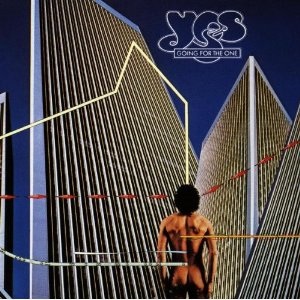
Yes_Going_for_the_OneThere’s many interesting things about this Yes album.  It was the first album since they hit it big to not have a Roger Dean cover (it did use the logo of course).  This cover is a photo done by Hipgnosis.  It also features the return of Rick Wakeman (the first player to come back).  Further, there aren’t really any epic songs.  Sure, there’s a 6 and 7 and even a 15 minute song, but none of them feel epic.  There’s even a song less than four minutes long!

It’s also interesting for having a naked man on the cover about a year before Rush would release Hemispheres with a naked man on the cover.  Must have been a thing.

This album opens with a big rock n roll bluesy guitar and steel guitar solo and sounds nothing like any Yes song ever did.  Then Anderson’s voice comes in and it sounds a lot more Yes.  But again, something feels different about this album.  The song is only 5 minutes, but it has many different parts all anchored by the wild careening steel guitar.  The chorus “going for the one” is pretty catchy and is probably the most memorable moment in the song, although I understand it did pretty well as a single.  The wavery solo at the end just shows how much the guitar permeates this song.

“Turn of the Century” is a 7 minute song. It is mellow and is mostly Howe’s classical guitar and waves of keyboards.  The song slowly builds.  It is quite pretty.  It was originally supposed to be short but it grew during the recordings and includes a very lovely Wakeman piano solo and a beautiful Howe classical solo at the end.

“Parallels” was written by Chris Squire and was supposed to be on his solo album, but it didn’t fit.  So instead Yes recorded it together.  It opens with Rick Wakeman playing a church organ (there’s a fascinating story about how they recorded that).  This of course makes the song feel bigger than it needs to.  But Squire has a great sense of interesting vocal lines, and this song sounds like pure Yes.

“Wonderous Stories” is a sweet song that sounds like it could be the closing credits of a kids’ fantasy movie.  “Awaken” is the fifteen minute song.  It opens with a classic sounding piano section.  The keyboard washes come in with Anderson’s vocals.  And the around 1:30 the song kicks in with a cool Howe guitar riff and some big Squire bass.  This middle section rings as classic Yes–lots of guitar and bass pyrotechnics and Anderson’s voice floating over the lot.   The solo culminates in what feels like a great conclusion to this song–except that the song has only hit the 5 minute mark (and there’s ten more to go), but that doesn’t stop the song from building and building (with some great Wakeman moments). And then it reaches a hard stop for a pause as the song rebuilds with a lot of percussion and keyboards.   This meandering instrumental section is cool and trippy and lasts for about four minutes.  When the song resumes, it picks up more or less where it stopped with Anderson’s voice soaring over what sounds like ea choir of voices.  Around 12 minutes in, Wakeman gets another pipe organ solo–it’s a brief flourish before the song kicks back in to build to the proper conclusion.  Except that once again, the song fades away and there is a quieter coda, of keys and bells and Anderson’s voice.  It feels like it should be bigger and grander somehow.  And it may just be a poor production quality that makes this album seem flat.

Since almost every Yes album had different personnel, I’m going to keep a running tally here.   Here we have the first time someone has returned to the band, with Wakeman deciding (for no doubt complicate reasons) to return.

Chris Squire-bass
Jon Anderson-vocals
Alan White (#2)-drums
Rick Wakeman (#2 replaced Patrick Moraz #3)-keyboards
Steve Howe (#2)-guitar

[READ: April 12, 2015] “French Town Rock”

This is another excerpt from a novel (A Brief History of Seven Killings).  This excerpt is done in a Jamaican dialect, which I found challenging to read.

I enjoyed that there was a guy named Shotta Sheriff.

The story comes down to gambling and money.  There’s a character known as the Singer.  His brother fixed a horse race and made a ton of money.  But then he absconded with the profits. (more…)

Read Full Post »

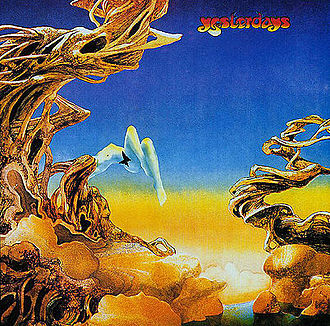
SOUNDTRACKnov2014YES-Yesterdays (1975).

yesterdaysAfter Relayer, Yes decided to explore solo projects.  And their label released this compilation.  Oddly enough, it consists entirely of songs from Yes and Time and a Word (and is a great collection of those two middling albums).  It also includes a B-side called “Dear Father” and, most unexpectedly, a 10 minute version of the Simon and Garfunkel song “America.”  All the songs have the original lineup except “America” which features Howe and Wakeman and was recorded in 1972.

“Looking Around” and “Survival” from Yes and “Time and a Word,” “Sweet Dreams” “Astral Traveler” and “Then” from Time and a Word.

“Dear Father” is a  sounds very much like a B-side from Time and a Word (meaning it has elements of Yes, but not enough to make the song especially interesting).  The bass is thumping, but there’s also strings which add a less dramatic element than intended.  The ending sounds very 1970s (almost like a TV special) especially in the way the strings swell, but it’s a cool sounding end to the disc.

The sound of “America” (which opens the disc) is pure early 70s’s Yes, with loud guitars and some good bass lines.  They play around with the original quite a lot (and most of the time it is unrecognizable).  I really enjoy that the guitar and bass throw in lines from the West Side Storys “America.”  There’s moments where you know the S&G original (like the “I don’t know why” line and they play it totally wrong (but in very Yes fashion), but other parts like “counting the cars on the New Jersey turnpike” sounds different but also really good.  This is the kind of cover I like, when a band completely make a song their own.  I still prefer the original, but this is an interesting interpretation.

The cover of the album is the last one that Roger Dean would do for the band for a while.  It’s pretty bizarre (even for a Dean cover) with a little boy peeing on the back.

[READ: March 27, 2015] “The Great Exception”

This story comes from The Strange Case of Rachel K.  I assume it is a short story, as I can’t even imagine what it might have to do with Rachel K in general.

This piece opens with Part 1 in which there is a brief history of people’s beliefs in the flatness and/or roundness of the Earth.  The Admiral goes to the queen to inform her that the Earth is actually shaped like a pear or violin and he requests gold for his expedition.  But when he is in her presence, and a little drunk and a little bold, he informed her that the earth was really shaped like a woman’s breast.  The orient was the protrusion.  And the nipple–he locked eyes with the queen–was warm and tumultuous.

The Cardinal had given him excessive jewels to wear on his hand and they flash as he makes the shape of breasts in the air in front of the queen.  She gave in to his request and he set sail with no instruments, using only his instincts. (more…)

Read Full Post »

lp14SOUNDTRACK: YES-Relayer (1974).

Relayer_REMUS_spine_Layout 1After Tales, Rick Wakeman left and the band decided to get back to business.  So they made an album kind of like Close to EdgeRelayer is a dark album which didn’t quite bring the band back from the brink (even if there were only 3 songs and one was 20 minutes long).  It did sell well, though, even if there wasn’t any real radio airplay.

I happened to really like this album in college (my friend Sean introduced me to it).  And there are moments here that I think are great, but I can also see that it is not quite as user friendly as CttE.

I love the way “The Gates of Delirium” opens with guitar harmonics and some loud bashes of noise (good to see Squire and White asserting themselves again).  The lyrics come in around 2 minutes in and it’s a very sweet and interesting opening.  The guitar lines grow more complex as the song progresses.  Anderson says that it is a war song, with a prelude, a charge, a victory tune, and peace at the end, with hope for the future.  The “listen” section is quite catchy and moves along very well.

Around 5 minutes, the song changes into more of an instrumental sound (the charge, perhaps?)  A great riff begins at 8 minutes with a very heavy section (the battle?) beginning as well.  Squire takes over around 10 minutes and then the chaos befalls the song.  Anderson and White stopped by a scrap yard and bought metal car parts which were used as percussion during the song’s battle section. During the battle section, White formed a tower of the parts and pushed it over to make a crashing sound.

Patrick Moraz (who later played with the Moody Blues) took over for Rick Wakeman on this album and the difference is notable.  Moraz adds good keyboard sounds, but it is so clearly not Wakeman–there’s no flourishes or frills  (one imagines he would have added some pretty impressive things to this battle scene).

At around 13 the battle ends and a new riff comes out–uplifting but not overtly so.  Then things mellow out at around 15 minutes, with some washes of sound.  The biggest surprise comes around 16 minutes when the song turns very pretty with a slow echoey section known as the “Soon” section.  This section, which is about 5 minutes, was released as a single.

Track 2 “Sound Chaser” opens with a weird keyboard sound and then some chaotic drumming and bass (it’s loud and cool).  This is their jazz fusion song with drumming that’s all over the place and some cool riffs.  There are vocals (it’s hard to imagine them fitting vocals on to the riffage).  And then around 3 minutes the song turns into a big time guitar section with a lengthy dramatic solo and then Moraz’ keys underneath.   At 5 and a half minutes the songs mellow out an Anderson begins singing a gentle passage.  Then a little after 6 minutes the songs repeats with the chaos of the opening and that cool riff.  But this time, a noisy guitar picks up afterwards and a new riff begins and slows down until the unusual “cha cha cha/cha cha” section begins.  It’s followed by a wild keyboard solo from Moraz.

“To Be Over” opens with some more gentle notes as it slowly builds. Sitar plays over the notes.  This is a mellow track with lovely harmony vocals.  There’s an interesting slide guitar section in the middle of the song.  It shifts to a very typical Steve Howe guitar solo after that (very staccato and interesting).  By 5 and half minutes there’s big harmony vocals and then around 7 and a half minutes the song breaks into a new, catchier section, with a cool keyboard outro.

It’s not as immediate and grabbing as previous Yes albums, but I still think it’s pretty great.

Since almost every Yes album had different personnel, I’m going to keep a running tally here.   Here we have a new keyboardist, although Wakeman would soon be back.

Chris Squire-bass
John Anderson-vocals
Alan White (#2)-drums
Patrick Moraz (#3 replaced Rick Wakeman)-keyboards
Steve Howe (#2)-guitar

[READ: March 24, 2015] “The Route”

I’m generally puzzled about the fiction in Lucky Peach.  It’s usually food related, which makes sense. But this one wasn’t especially.  And then at the end of the story to see that it was originally published in Escapes in 1990 just makes the whole thing seem odd.  But hey, they can publish what they want, right?

The story is about a married couple–she is a youngster and he is middle-aged.  Their marriage is poor and so they go on a road trip from New York.

Each entry in the story is about a spot and what they did that day–traveling through Connecticut and Spotsylvania, Virginia.  Until they get to North Carolina where he is bitten by a bat.

And this is evidently, fatal.

They continue on South, with this soon to be fatality proving to be an aphrodisiac.  They go through Georgia and into Florida. And they finally get to Mile 0 in Key West.

The whole story was strange and unsettling and I really didn’t get a lot out of it. It seems odd that they would bother to reprint it here.

~~~~~~~~

The rest of the issue was, as usual, excellent.

There were several articles about wheat and other grains and interviews with different chefs.

But my favorite article was the one about Colonial Chocolate (and how Mars got involved).  And my second was about the Monopoly game at McDonalds which I’ve never played and had no idea was over 25 years old.

The theme of the issue is obsession, and there are obsessions about endives (pronounced ondeev) and Pizza (including the guy with the record for most pizza boxes) and so much more.

The story about a Jewish man and his love of pork was interesting, especially the part about pork roll:

She takes a bite and her eyes roll back.  Then she hands it to me.
As I dig into my first Taylor Pork Roll I realize that everything I appreciated in the ham… is more concentrated in this superior sandwich.  It’s saltier porkier and smokier and the flavor lingers on the tongue….  It’s like a ham sandwich squared.

There’s also a fascinating look at Ranch dressing and its belovedness in West Virginia.

I may not always love the stories, but Lucky Peach continues to be a great magazine.

Read Full Post »

atwq3SOUNDTRACK: YES-Tales from Topographic Oceans (1974).

Tales_from_Topographic_Oceans_(Yes_album)After the huge success of Fragile and Close to the Edge (with its 18 minute suite), what could Yes do next?  Well first they would release a triple live album, which I’ll get to later.  And then?  Why they would release a double album with only 4 songs on it!  That’s right 4 songs each around 20 minutes long!  And it would be ponderous and pretentious and it would be reviled by everyone!

The album shipped gold (because their previous records were so popular) and then sales plummeted.  The album is much maligned and, frankly, deservedly so.  Now, I love me a good prog rock epic.  So, four 20 minutes songs is pretty heavenly for me.  But man, these songs just don’t really have any oomph.

My CD’s recording quality is a little poor, but I don’t know if the original is too.  The whole album feels warm and soft and a little muffled.  You can barely hear Anderson’s vocals (which I believe is a good thing as the lyrics are a bunch of mystical jiggery pokery).  But despite the hatred for the album, it’s not really bad.  It’s just kind of dull.

Overall, there is a Yes vibe…and Yes were good songwriters–it’s not like they suddenly weren’t anymore.  There are plenty of really interesting sections in the various songs.  It just sounds like they have soft gauze between them.  Or more accurately, it sounds like you get to hear some interesting song sections and then the song is overtaken by another song that is mostly just mellow ambient music.

Without suggesting in any way that this album influenced anyone, contemporary artists are no longer afraid to make songs that are super long (see jam bands) or songs that are just swells of keyboards (see ambient musicians).  Yes just happened to put them all in the same song–way before anyone else did.

The album is very warm and soft—rather unlike the last couple of Yes albums which were sharp and harsh.  There are washes of keyboards and guitars and Anderson’s echoing voice. But what you’ll notice is that I haven’t really mentioned Chris Squire.  He’s barely on the album at all, and when he is, it’s usually to provide very simple bass notes–bass notes that anyone could play–it’s such a waste!  And while Alan White is no Bill Bruford (who was off rocking with King Crimson then), he’s also barely there.  In fact, Rick Wakeman himself is barely there–the king of elaborate classical riffs is mostly playing single notes at a time.  According to Wikipedia,

Wakeman took a dislike to the album’s concept and structure from the beginning. He made only minimal musical contributions to the recording, and often spent time drinking at the studio bar and playing darts. [During the recording session] he played the piano and synthesiser on the Black Sabbath track “Sabbra Cadabra”.

Evidently Anderson wanted a pastoral feeling in the studio

According to Squire, Brian Lane, the band’s manager, proceeded to decorate the studio like a farmyard to make Anderson “happy”.  Wakeman described the studio, “There were white picket fences … All the keyboards and amplifiers were placed on stacks of hay.” At the time of recording, heavy metal group Black Sabbath were producing Sabbath Bloody Sabbath in the studio next door.  Ozzy Osbourne recalled that placed in the Yes studio was a model cow with electronic udders and a small barn to give the room an “earthy” feel. Anderson recalled that he expressed a wish to record the album in a forest at night, “When I suggested that, they all said, ‘Jon, get a life!'”

So we have an earthy pastoral album.  But what about the four sides?  Steve Howe describes it:

“Side one was the commercial or easy-listening side of Topographic Oceans, side two was a much lighter, folky side of Yes, side three was electronic mayhem turning into acoustic simplicity, and side four was us trying to drive the whole thing home on a biggie.”

Despite Wakeman’s complaints, he did have some nice thing to say about it.  he said that there are

“very nice musical moments in Topographic Oceans, but because of the […] format of how records used to be we had too much for a single album but not enough for a double […] so we padded it out and the padding is awful […] but there are some beautiful solos like “Nous sommes du soleil” […] one of the most beautiful melodies […] and deserved to be developed even more perhaps.”

And if Rick Wakeman says an album is padded, you can just imagine what the rest of the world thought!

The lyrics (and mood) are based on Jon Anderson’s vision of four classes of Hindu scripture, collectively named the shastras, based on a footnote in Autobiography of a Yogi by Paramahansa Yogananda.  So if I read this correctly–he wrote 80 minutes of music based ona  footnote!

The four songs are

“The Revealing Science of God (Dance of the Dawn)” [which Howe says is the commercial or easy-listening side] builds slowly and eventually adds vocals.  And then come the drums and a decent keyboard riff.  There’s some noodling on the keyboards.  The riff is catchy but not immediate (which might be the subtitle for the album).  At nearly 4 minutes a faster section kicks in and there’s a catchy vocal part, which seems like where Anderson might normally soar but he holds back.  The “must have waited all our lives for this moment moment moment” is catchy, but again I can’t help but feel it would have been much more dramatic sounding on an earlier record.  At 7 minutes there’s a nice jump to something more dramatic—good drums, but the bass is mixed very low (poor Squire).  There’s some good soloing and such but it is short lived and things mellow out again.  It resolves into a new riff at 9 minutes, but resumes that feeling of washes and noodling guitars.  At 11 minutes there’s an elaborate piano section and the song picks up some tempo and drama. Especially when the bass kicks in around 12 minutes.  The most exciting part happens around 17 minutes when the whole band comes to life and adds a full sound, including a good solo from Wakeman.  And while this doesn’t last, it recycles some previous sections which are nice to hear.

Track 2 “The Remembering (High the Memory)” [which Howe described as the much lighter, folky side of Yes] has a slow, pretty guitar opening with more harmony vocals.  The whole first opening section is like this—layers of voices and keys. Then come some keyboard swells and more vocals.  Some bass is added around 6 minutes. And then around 8 minutes the tone shifts and there is a lengthy slow keyboard solo that reminds me of the solo in Rush’ “Jacob’s Ladder” (released 6 years later).  At around 9 minutes there’s a more breezy upbeat section with a cool riff.  At 10:40 a new section comes in with some great bass lines and guitars and an interesting vocal part. It could easily have been the structure for a great Yes song (vocals are singing “relayer” which of course is their next album’s title). But this is all too brief (it thankfully returns again) and then it’s back to the gentle keyboards.  At 12 minutes there’s a new medieval type section with some great guitar work.  When the “relayer” part returns around 13 minutes there’s a whole section that is great fun.  And even though it doesn’t keep up, the song feels rejuvenated. By around 17 minutes there some interesting soloing going on and then the band resumes to bring it to the end (with a reprise of an early section). And the final section is quite lovely.

Track 3 “The Ancient (Giants Under the Sun)” [Howe: electronic mayhem turning into acoustic simplicity] is probably the most interesting.  It opens with some clashing cymbals and then a fairly complex percussion section and mildly dissonant guitar riff.  There’s even some staccato bass line. The vocals come in around 4:30 and the song shifts to a less aggressive sound, but the big bass continues throughout the beginning of the song until a fast riff emerges around 6 minutes. But more unusual Yes-type riffage resume briefly before segueing into the next part with lots of percussion.  While the staccato bass and drums continues, Howe solos away.  Then around 12 :30 the whole things shifts to a pretty, slow acoustic section with a classical guitar and vocals.  This entire end section sounds like it could easily have been its own song and it is quite lovely.  Howe’s acoustic work is great and there’s even a lengthy solo.

Track 4 “Ritual (Nous Sommes du Soleil)” [Howe: us trying to drive the whole thing home on a biggie] is also quite good.  It’s probably the most fully Yes track of the four, with many sections of “full band” material.  There’s a noodly guitar intro switching to an interesting dramatic minor key movement.  There’s a pretty, if simple, riff (done by guitar and voice) that is quite lovely.  Around 4:30 the guitar solo brings in a riff from a previous Yes song. By 7 minutes, the song settles into a fairly conventional sounding Yes song (with actual bass and drums and…sitar!).   Around 11 there’s a bit of Wakeman soloing (he did show up for some of the album after all) and then some wild guitar and bass work.   The crazy percussion resumes and there’s a wild keyboard solo on top of it. The end of the guitar solo even has a bit of “Born Free” in it.

I hadn’t listened to this record in probably 25 years.  And so I listened to it 4 times in the last few days.  And I have to say that I thought it was bloated and awful at first, but it slowly grew on me.  I found some really interesting sections and some very cool riffs.  If these pieces could have been truncated into individual songs they would be quite good.  The biggest problem for me is that so much of it is so slow and mellow–like it’s building up to a big climax which never arrives.  On previous albums, Yes had made quite a show of being insane musicians, and that just isn’t here.

So even though I have come around on these songs, they certainly aren’t my favorites.  But if you’re at all interested in Yes, there’s some gems hidden away in these monstrosities (just don’t think too much about what Anderson is talking about).

Since almost every Yes album had different personnel, I’m going to keep a running tally here.  The band stayed together after Close to the Edge, but this was too much for Wakeman who left after the recording:

Chris Squire-bass
John Anderson-vocals
Alan White (#2)-drums
Rick Wakeman (#2)-keyboards
Steve Howe (#2)-guitar

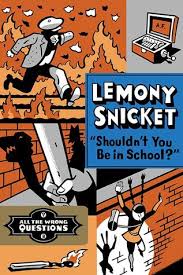
[READ: June 20, 2015] Shouldn’t You Be in School?

I am finding this series to be ever more and more confounding.  And I know that is its intent, but it is still a challenge.  Whenever anyone asks a question someone else replies that it is the wrong question.  But they never say what the right question should be (deliberately confusing!).  There are also so many threads and confusing characters, that if Snicket didn’t make the story funny and strangely compelling, it would be incredibly frustrating.

In this story, Hangfire, having been thwarted in his previous endeavor to capture children (for what end we do not know) is back with a new plan to capture children.  Also, the mysterious (and presumably wicked, but who can be sure) Ellington Feint has returned as well to help or hinder as she sees fit.

The other characters are back too, of course: Moxie is back taking notes, Jake Hix is cooking delicious foods at Hungry’s (in fact there are even some recipes that sound pretty yummy–Snicket himself makes a passable tandoori chicken).  S. Theodora is still his mentor (and the pictures by Seth of her are hilarious).  Late in the book Pip and Squeak show up.  And naturally the policemen and their bratty son Stewie are there too.  And we are still wondering what in the heck is going on with the bombinating beast.

There’s also some new characters, like Kellar Haines, a young boy who when we first meet him is typing up something in the offices of the Department of Education (with posters all over the walls that say Learn! Learning is Fun, etc).  And his mother is also becoming quite chummy with S. Theodora.

The danger in this book is fire.  Building after building is being burnt down.  The Stain’d Secondary School is engulfed.  Even the library is at risk!  And that’s when S. Theodora solves the crime!  She gets the library Dashiell Qwerty arrested for setting the fires.  And even though it is quickly determined that he did not do it (a building was burnt down while he was in custody), that doesn’t stop S. Theodora and her new friend Sharon Haines (in matching yellow nails) from partying.  It also doesn’t stop Qwerty from being taken to prison.

This story is a bit darker than the other ones (which were admittedly pretty dark).  Every kid is being drugged with laudanum which makes you sleepy.  We’re unclear exactly what they are being drugged for, but Snicket has a plan to stop it.  Snicket himself winds up getting beaten up–pretty badly–from Stew and others.

And for the first time, S. Theodora is kind to Snicket (more or less) and apologizes for her behavior (sort of).

By the end of the book a plan is hatched, a bunch of people join the V.F.D. (as seen in A Series of Unfortunate Events) and someone is taken to jail. There’s even a mysterious beast who is living in the fire pond.

As in previous books there is ample definition building–either from people saying they don’t know what a word means so that it can be defined or from Snicket himself simply defining a word.  As in “my brother and I played an inane game” “inane is a word which here means that my brother and I would pretend we couldn’t hear each other very well while we were talking.”  This game actually sounds fun:

What do you think of the weather this morning?
Feather? I’m not wearing a feather this morning.  This is just a hat.
Just a cat? Why would you wear a cat on your head?
A Bat in your bed etc etc.

The artwork by Seth is once again fantastic and noirish.

And the end of the book has a fragmentary plot “a great number of people working together, but they plotted together in such a way that nobody knew exactly what the other people were doing”  And finally we learn what the right question is, but it’s the unsatisfying: “Can we save this town?”  We’ll have to find out in the concluding book 4.

You can also check out the website for some fun.

Read Full Post »

critterSOUNDTRACK: YES-Close to the Edge (1972).

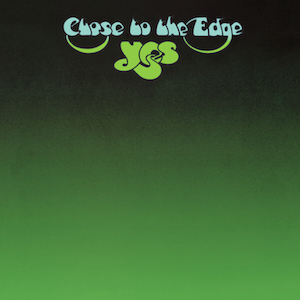
Yes-closeHaving such success with Fragile, the same line up toured that album and then planned a tour for the successful follow-up Close to the Edge.  This album is the first one to feature their now iconic logo and a clearly designed by Roger Dean album cover (even if it’s fairly plain).

This is also their first album to feature a side one suite, the title track “Close to the Edge.”  It also features only two other tracks (10 and 9 minutes each).  And despite (or because of that) it was a huge success.

“Close to the Edge” opens with part I “The Solid Time of Change.”  The opening is soft and then blam, some crazy guitar lines over a fast and complex bass line.  There’s so much going on it’s near cacophony for 3 minutes (I’m not even sure how they did it).  Until a beautiful soaring guitar riff breaks from the noise.  I love that Howe plays the riff a second time with slight variation to it—really keeping it interesting and complex.  And at nearly 5 minutes we get to the “close to the edge” chorus, or at the first part of it (I also love that the chorus gets bigger as the song progresses).  I don’t really know where the “parts” begin, (confusingly they sing the titles of the sections through the song).

Ok, so Wikipedia tells me that part II “Total Mass Retain” begins with the big thudding bass at around 6:04.  And part III “I Get Up, I Get Down” evidently starts right after the keyboard solo around 8:28 which begins with the slow washes of keyboards.  It is the mellow section with the multiple layers of vocals and the gorgeous church organ.  Part IV “Seasons of Man” starts with the reprise of the earlier music (in a weird key change).  There’s a lengthy keyboard solo here and then more vocals reprising all of the section with a slightly different feel. Until it all fades out much like it faded in.  It’s a dynamite track and never feels 18 minutes long.

Side two has two songs.  “And You And I” is only 10 minutes long but it too has 4 parts.

Par I “Cord of Life” opens with what is more or less guitar tuning (although it sounds lovely with his guitar).  And then there’s some very pretty acoustic guitar playing.  I really like when the bass notes come in around 1:15 and then there’s Wakeman’s keyboards.  It gets big and bassy just at the end of part 1.  Part II “Eclipse” starts around 3.48 right after the “call” when the big orchestral instrumental kicks in. This part lasts for 2 and a half minutes.

The opening guitar returns and then part III “The Preacher, the Teacher” begins with a new guitar section (and more keyboards) this is more or less a reprise of the other verses.   Part IV “The Apocalypse” is just 52 seconds long and is the reintroduction of the “and you and I theme” (and is not apocalyptic at all).

“Siberian Khatru” is 9 minutes but only one part. It opens with a fast cool guitar riff and then adds a fast cool keyboard riff.  The bass rumbles through and the guitar floats over the top.  There’s a great guitar riff that comes in around a minute in, which is the main riff of the song.  And then there’s some harmony vocals   After the harmonies, the song sort of resets and we get another verse with more great harmony voices.  The keyboard solo is on a harpsichord and sounds very classical.  Then there’s a trippy guitar solo.  A new section of song starts around 4 and a half minutes.  Around 6 minutes the song switches to the ending coda, a smooth cool riff with a guitar solo floating over the top.  The band jumps in with a sung staccato  “doh dah doh” bit which sounds like it would end the song, but they’re not done, there’ another refrain of that cool keyboards section with a neat noodly guitar solo.

This was a band of soloists that were at the top of their game and not only did great work by themselves but played very well together.

Since almost every Yes album had different personnel, I’m going to keep a running tally here.  Two albums in  row with the same lineup!:

Chris Squire-bass
John Anderson-vocals
Bill Bruford-drums
Rick Wakeman (#2)-keyboards
Steve Howe (#2)-guitar

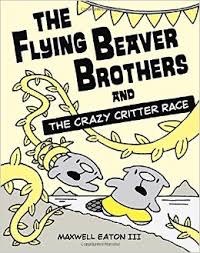
[READ: June 30, 2015] The Flying Beaver Brothers and The Crazy Critter Race

I love the Flying Beaver Brothers.  And even though the last couple haven’t been quite as awesome as the first ones, this one has definitely brought the series back on an upswing.

The book casually mentions the baboons from the previous book and what they did to Beaver Island (don’t ask) and then gets right into the action.  A local businessman is having a race.  Everyone is invited to replant the trees that the baboons destroyed and the winner will win a houseboat.

Turns out the entrepreneur is named Crazy Critter (they assumed that was the name of the race) and he is super gung ho about getting the race started.  In Crazy Eddie tradition, he calls himself crazy a LOT. (more…)

Read Full Post »

staticSOUNDTRACK: YES-Fragile (1971).

fragileComing out just nine months (!) after The Yes Album, Fragile (which included new keyboardist Rick Wakeman) was a brilliant classic rock album that (depending on how much you like Wakeman) eclipses The Yes Album in greatness.

This was the first Yes album with a cover by Roger Dean (not up to his usual style for the band and prior to his creating their iconic logo).

Some might argue that Fragile is a better album than The Yes Album, and I might be one of them, but it’s really close (and depends on the day).  Fragile has bigger hits in “Roundabaout” and “Long Distance Runaround” (at only 3 minutes an actual radio song!), but it also has a number of weird little “solo” items.

“Roundabout is a staple in classic rock—not bad for an 8 minute song.  The opening notes are iconic, and then the bass comes in, big and round and heavy.  And there’s so many little fiddly bits-the keys, the guitars, even the bass, that it’s not even that clear to me how they did it all.   But there’s also the “in and around the lake” part that has such simple guitars and is so catchy.  It’s also the first time you really get to hear new keyboardist Rick Wakeman who is insanely talented and full of all kinds of interesting notions (and evidently a rack of 12 keyboards). And sure, the end of the song is mostly a chance for everyone to show off their skills and that’s pretty cool.  The final section has some great harmonies ala Crosby, Stills and Nash.

According to Bruford: “I said—brightly—’Why don’t we do some individual things, whereby we all use the group for our own musical fantasy? I’ll be the director, conductor, and maestro for the day, then you do your track, and so on.’  And that’s why there are five tiny pieces of songs scattered between the longer songs.  The first one is by Wakeman and is called “Cans and Brahms” a piano and organ piece.  Wakeman later described the track as “dreadful” as contractual problems with A&M Records prevented him from writing a composition of his own.  The following solo piece is by John Anderson and has multiple vocal lines overlapping over a simple musical base.  I never knew the lines were “Tell the Moon dog, tell the March hare.”  I love that it ends with footsteps running away and a door slamming—to what?

“South Side of the Sky” returns to a proper 8 minute song. It opens with a cool drum fill and some great guitar lines (all with Squire’s rumbling bass underneath–or actually in front).  After about two minutes there’s some interesting piano sections, including an almost spooky solo section of high notes.  There’s a pretty section of “la las” after this until the song comes bouncing back to the noisy part nearly 6 minutes in.

“Five Per Cent for Nothing” is a Bruford composition.  It’s staccato and all over the place and was, evidently his first composition (all 38 seconds of it).  Then comes “Long Distance Runaround,” another classic with an iconic guitar intro.  There’s some more unusual guitar lines (and a lot of open space) in this song.   It segues (and when I grew up the radio station often played both parts) into the next track written by Squire: “The Fish (Schindleria Praematurus).”  Even though it is Squire’s it does not have a lot of crazy bass in it, well, until the end when he gets to really fly.  This isn’t really a solo song since the rest of the band plays along.   The final solo piece is Howe’s flamenco guitar piece “Mood for a Day” which is lovely.

And then comes “Heart of the Sunrise” one of my favorite Yes songs.  It has one of the most amazing  introductions to a song.  It’s incredibly fast and intense riffage followed by a very slow section that has complex drumming an interesting bassline and keyboards.  It’s great how Squire and Bruford keep the steady beat amidst all the flourish.  The chaos goes on for nearly 3 and a half minutes before it totally mellows out to a delicate section sung by Anderson.  Then as you settle into this more mellow (and very pretty) section, around 7 minutes in we get a wholly new section of some wild keyboard.  And then some interspersing of weird keyboard and that awesome opening riff.  And although it sounds like it’s going to fade out, there’s more to come—another delicate section with repeats of the great guitar riff (not the opening heavy riff, the other one).  The song slowly builds to a climactic section that then switches back to the wild riff for a quick end.  It’s exhilarating  But that’s not exactly the end.

The disc ends with the door opening again and “We Have Heaven” reprising for a few seconds before fading out.

It’s outstanding and is unquestionably a classic.

Since almost every Yes album had different personnel, I’m going to keep a running tally here.  Our second change occurs with this their fourth album:

Chris Squire-bass
John Anderson-vocals
Bill Bruford-drums
Rick Wakeman (#2 replaced Tony Kaye)-keyboards
Steve Howe (#2)-guitar

[READ: January 15, 2015] Static Shock: Trial by Fire

In the old DC vs Marvel war I have clearly become a Marvel guy.  In fact, when asked to name some DC guys, after Superman and Batman I fall flat.  And, unlike the Marvel Universe, Superman and Batman are never really seen together.  Let’s say that Marvel has done an awesome job at marketing.

So here’s a DC book, and I was pleased to give it a try. I was also pleased to see that the superhero is black–an all too rare experience in graphic novels.

The back of the book says that Static Shock is the “hot new animated series on the Kids WB!”  I wasn’t sure if Kids WB was still on, but that’s irrelevant because this book was published in 2000 (! why are we getting it now?).  The book was printed in 1993, so nothing in the introduction (which talks about the Kids WB ) is at all relevant.

Not to mention that the TV show was clearly adapted from the comic to make a much more kid friendly show.  I didn’t realize that when my son grabbed this and started reading it.  He put it down after a few pages.  I don’t know if he got to the point where the boys in high school call each other fag and queer or the black kids are called monkey, or what.  I had to apologize to him and he declared it “weird” so I don’t know what he actually thought.

Suffice it to say that this book is not for kids.  It is a harsh look at racism in high school and the opportunity for a black nerd (who is into comics) to actually fight back against he white playas (who are way too into the hip hop scene). (more…)

Read Full Post »

marvel SOUNDTRACK: YES-The Yes Album (1971).

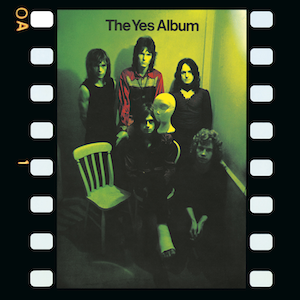
The_Yes_AlbumAnd then came The Yes Album and everything changed.  Whether it was the addition of Steve Howe on guitar or just more confidence in their songwriting, I don’t know, but The Yes Album is leaps and bounds above Time and a Word.

The opening staccato notes of “Yours is No Disgrace” are tight and loud—what is now considered classic Yes sound—Squire’s bass is low and rumbly but ever so precise.  There’s the true Yes keyboard sound and some amazing guitar work.  It’s got a great introduction followed by some excellent harmony vocals (that’s don’t sound psychedelic any longer).  Then comes the great slow jazzy section with the awesome bass meandering through.  The song has so many great parts and they all fit together perfectly.  This is how you make an awesome 10 minute song.  Even the ending which isn’t exactly different adds more drama.

The next song is a live version of “Clap” (apparently not called “The Clap” as our discs say).  It’s a fun romp from then new guitarist Steve Howe.  It’s a delightful masterpiece, although it’s kind of oddly placed (and the fact that it’s live also makes the flow seem odd).  This is all my way of leading up to saying that Fragile is a slightly more cohesive album than The Yes Album even if they are equally excellent.

“Starship Troopers” is another classic with some more great basslines and some really crisp drums. It also has a middle section (acoustic guitar with great vocal harmonies) that really holds the song together very well.  They do a great job at making instrumental sections interesting.

“I’ve Seen All Good People” has a great opening with harmony vocals and acoustic guitar and then a full chorus.  When Squire’s bass comes in at around 3 minutes, it’s like the heaviest thing on earth.  I happened to be listening in only one ear while writing this (never do that with Yes) and for the first time I hear the choral voices sing “Give Peace a Chance” before it switches over to the rocking second half of the song.  “A Venture” is like a truncated version of a Yes song.  It may be the least interesting song on the disc, but that’s just because of the company around it.

“Perpetual Change,” the third 9 minute song opens with some great loud guitars and then some quiet sections where Anderson’s voice really shines.  And just when you think that the song is going to be nine minutes of more or less the same sweet music, at 5 minutes it shifts gears entirely into a crazy staccato section of fast notes and drumming.  It’s such a strange riff (and when the bass starts following a slightly different riff and the guitar solos over the top, it’s beautifully controlled chaos.  And after a minute and a half of that, it switches back to the delicate harmonies of yore.

There’s not a bad song on this disc and depending on your proclivities it is either a little better or a little worse than the next masterpiece, Fragile.

Since almost every Yes album had different personnel, I’m going to keep a running tally here.  Our first change occurs with this their third album:

Chris Squire-bass
John Anderson-vocals
Bill Bruford-drums
Tony Kaye-keyboards
Steve Howe (#2 replaced Peter Banks)-guitar

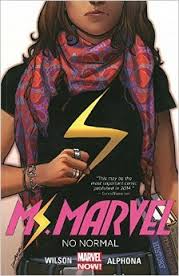
[READ: March 15, 2015] Ms Marvel: No Normal

This collection collects books 1-5 of the Ms. Marvel series (Adrian Alphona is the artist for all of the books).  When I saw it at work, I assumed it was related to the new Captain Marvel series that I had just read.  But it turned out to be a different story altogether.  And I loved the new character that the Marvel universe has added to its fold.

For this story is about Kamala Khan an ordinary girl from Jersey City.  She is a Turkish Muslim with very strict parents.  Her brother doesn’t work but spends all his time praying (much to her father’s dismay).  Her best friend Kiki (call her Nakia now, thank you) has recently found her religion and begun wearing head scarves.  And her other best friend, Bruno, is busy working all the time.

As the story opens, we see these three in the Circle Q where Bruno works (there’s funny joke about “Chatty” Bob, which I liked). In walks a spoiled white girl Zoe who seems nice but really probably isn’t.  Kamala seems to like her but Nakia does not (and Zoe’s insensitivity to Nakia is part of the reason).

Zoe invites them to a party (knowing they won’t go), but Kamala sneaks out and heads to the party anyway.  She immediately doesn’t fit in, and as she wanders away from the festivities a mist covers the ground and she is visited by Captain America, Iron Man and Captain Marvel (in her new female form), and, better yet, she can speak Urdu. (more…)

Read Full Post »

nurserySOUNDTRACK: FRANK FAIRFIELD-Tiny Desk Concert #445 (May 29, 2015).

frankFrank Fairfield and friends Tom Marion (who plays mandolin on the third song) and Zac Sokolow (on guitar) play old-timey music (marches, polkas and mountain tunes).  Fairfield plays banjo and plucked cello (and apparently fiddle, although not here).

The first song “Tres Piedras” is an upbeat instrumental.  The second song “I Ain’t A Goin’ To Weep No More” was written by Harry von Tilser whose brother wrote “Take Me Out to the Ballgame.”

The final song “Campanile De Venecia/Sharpshooters March” has an overwhelming Italian feel (that mandolin, I gather).  I like that Fairfield yells “take it, Tom” so that Marion will play a lengthy mandolin solo on the for the final song.  There’s also a “traditional” Italian melody in the song that I know more from cartoons than elsewhere.

The songs feel like they leaped out of a 78 record (even Fairfield’s voice seems suitably “old” on “Weep” (although it appears that they were up playing late last night so he may not quite be up to par).

This was a fun Tiny Desk by an artist I’d never encounter anywhere else.

[READ: January 21, 2015] Nursery Rhyme Comics

This is a collection of Nursery Rhymes as drawn primarily by First Second artists.

The 50 nursery rhymes includes here are the traditional rhymes which remain unchanged.  So this was an opportunity for these artists to draw interesting visuals to accompany the traditional stories.  Some artists stayed traditional, while others went in a totally new direction.

It was fun to see that while I knew most of the nursery rhymes, there were quite a few that I didn’t know.

I always wanted to get a  collection of nursery rhymes for my kids when they were younger, and I feel like I never got one that would have been as satisfying as this one. (more…)

Read Full Post »

« Newer Posts - Older Posts »