Feeds:
Posts
Comments

Archive for the ‘Artists’ Category

flypanam templarSOUNDTRACK: FLY PAN AM-Fly Pan Am [CST008] (1999).

In the Constellation canon, there were four originators: Godspeed You Black Emperor were orchestral, Do Make Say Think were jazzy, and A Silver Mt Zion had vocals.  But Fly Pan Am was the weirdest one—the played with noise, they broke up their songs, they deconstructed their own work and, especially novel to me, everything was in French on the discs.

Roger Tellier-Craig, the main force behind FPA was in GYBE as well.  So he knows post-rock.

Their debut album is a long affair–an hour’s worth of music (in all of 5 songs) taken from two different recording sessions.  (All translated titles are taken from Wikipedia).

“L’espace au sol est redessiné par d’immenses panneaux bleus…” (“The Floorspace Is Redesigned by Huge Blue Signs…”) is a 13 minute song.   There’s ringing noises as a simple melody is plucked out.  The full instrumentation kicks in adding a repetitive guitar line that seems to fall into the background behind the opening notes that are still playing out.  The guitar lines slowly gets longer and longer, almost like a game of Simon.  By around 6 minutes the song has built up a serious head of steam with the bass and drums moving quickly and the guitar getting really complex. By 7 minutes that pretty guitar has turned into a ringing feedback skronking solo which carries on for a minute or so before fading back. At around 9 minutes the song seems to retreat on itself again. The guitars fade away and the bass seems to get a bit louder with the guitars ringing out. The last minute or so resumes a kind of noisy static sound that tells you the song is over.  That’s a heck of an introduction.

“…Et aussi l’éclairage de plastique au centre de tout ces compartiments latéraux” (“…And Also the Lighting of Plastic in the Center of All Its Lateral Compartments”) is a 9 minute song that opens with more scorching guitars and rumbling bass.  The guitar switches back and forth between a two note melody and a chord (dissonant, of course). The other guitar then plays a different three note melody.  About 2:30 in some noisy feedback and samples start taking over the song.  All the music drops away except for the bass.  By 3:15, all the music had dropped out and its just noisy effects and feedback and then outer space sounds.  After about 4 minutes of that (yes, indeed) the bass comes back in playing a kind of discoey rhythm with the guitar supplying a dancey counterpoint which runs to the end of the song.  It’s their first song where something really catchy is utterly dismantled by noise.

“Dans ses cheveux soixante circuits” (“In Her Hair Are Sixty Circuits”) is 17 minutes long (!) and is one of the most abrasive songs I can recall. The song opens with both guitars each playing a two-note melody which rotates through a round. They sound lovely together as the bass and drums play a slow rhythm. The melody changes a few times and then by around 3 and a half minutes the main guitar line grows faster (6 notes instead of 2) and the background feels a bit more tense.   And then at 5:46, the whole song seems to get stuck on repeat. The bass plays a 2 note rhythm, the drums play the same pattern and the two guitars each play one note over and over.  And over.  Evidently it’s “a half-tone interval.”  And this goes on for 12 minutes.  TWELVE!  The only differences through this whole section come from the digitalia of guest electronic musician Alexandre St-Onge, but they are the most unobtrusive electronics I’ve ever heard and just seem to bubble and prickle gently onto the repetition.  It’s maddening and then trance-like and then maddening all over again.  How can they play the same thing for twelve minutes—and their rhythm remains perfect?

“Bibi à nice, 1921” (“Bibi Nice, 1921”) opens with noises and feedback (which is a nice break from the 12 minutes of repetitiveness. But you soon realize that that’s all you’re getting (aside from some distant rumbling noise in the background). It’s a very silent song. For four minutes (out of ten) and then the full band kicks in for a really rocking section—great guitar lines and propulsive bass and drums. But after two minutes, the sound drops out entirely—pure silence (enough to make you assume the disc froze). It slowly returns after 20 seconds–they are messing with us again.  At 7 minutes a new guitar line comes in—slow and pretty with a slow drum beat.  A solo plays over the top—it is primarily electronic, and sounds pretty cool.   The guitars start playing louder and the song feels like it’s going to build up into something huge, but it soon ends and turns into….

“Nice est en feu!” (“Nice Is on Fire!”) seems like it should be connected to the previous song, but it starts off very different with big bass notes playing a very slow riff.  The guitar starts playing a nice accompanying riff. At 3 minutes in, voices come in singing Ahhs in a nice melody. The liner notes say that Kara Lacy and Norsola Johnson do vocals on “Bibi à nice, 1921” and “Nice est en feu!” but I didn’t hear any vocals on “Bibi.”  At 4:30 the guitar line turns to something else and there’s suddenly a whole bunch of noise flooding the track—sounds of water rushing, maybe—but that goes away and a new melody (slightly dissonant) resumes.  With about a minute left the voices resume—angelic and soaring over the rumbling song.  It ends this weird disc on a very pretty note.

I love the crazy stuff that Fly Pan Am creates, even if some of it is hard to listen to.

[READ: February 23, 2016] Templar

I had actually started to read this graphic novel before Prince of Persia.  But when I saw in the introduction that Mechner talks about Prince of Persia, I decided to grab that one and read it first.  The two have nothing to do with each other, but sometimes it’s nice to get things on order.

Who doesn’t love stories about the Templar knights?  The whole premise of the National Treasure is predicated on them after all.  Not to mention, The Da Vinci Code and the book that he says far surpasses all Templar stories: Foucault’s Pendulum [RIP Umberto Eco].

So Jordan Mechner has done a lot of research (there’s a sizable bibliography at the end of the book) to create the story about a couple of Knights Templar.  He says that “much nonsense has been written about the Knights Templar over the years. I’m proud to say that this book has added to that sum.”  He explains that thousands of knights were indeed killed.  Some knights did escape, but the main plot he constructed probably never happened.   One of the histories he read said that “figures of no importance” did escape, and so that was the basis for Martin, Bernard, Isabelle and their gang–inconsequential Templars and their own story.

He also says (in the preface) that all of the movies about the Knights focus on the treasure, but the Knights’ actual story–their rise and shocking downfall– is even more interesting.  He gives a brief backstory.  Formed during the crusades, the Templars gained fame as the noblest and bravest knights in Christendom.  Their legend grew which increased their numbers.   “They were the Jedi of their time.”  They peaked in the 13th century under the protection of the Catholic Church and The Pope.  Then in October 1307 the king of France ordered the mass arrest of All Templars in his kingdom (15,000 of them).  They were brought before the Inquisition and accused of witchcraft, heresy and sodomy.  Guillaume de Nogaret the king’s chef minister staged a huge show trail.  Prisoners who denied the charges were tortured until they confessed, which made everyone who refused to confess seem like a liar. Despite knowing the truth, the Pope bowed to pressure and Templars were destroyed.  Wow. (more…)

Read Full Post »

persiaSOUNDTRACK: SALTLAND-I Thought It Was Us But It Was All Of Us [CST094] (2013).

Piles of salt mined by local residents sit on the surface of the world's largest salt flats, the Salar de Uyuni, near the village of Colchani November 20, 2007. Bolivian airlines Aerosur and the Canedos family inaugurated this week the first regular flights of its renovated Douglas DC-3S, or Super DC-3, to bring tourists to the Salar, one of the world's natural wonders, in a project that the airline considers a "trip back in time." Picture taken November 20, 2007. REUTERS/David Mercado (BOLIVIA)Becky Foon, who is one of the main creators of Esmerine has another band on Constellation called Saltland.  The big difference with this band is that she sings as well.  And that this album is much more mellow–full of droning sections and a slow, deep bass that keeps the songs moving along.

This disc is very mellow, with lots of slow beats and electronica sprinkled around it.  When Foon sings, she sings in a deliciously slow voice.  So this album is a good one for chilling out.

The disc opens with “Golden Alley” which has some big slow bass notes and strings urging the song along.   When she begins singing, he voice is deep and hushed–an almost whispered sound that feels practically percussive.  There are words, but her voice also works as part of the music.  A bit of a shift in the music occurs near the end that makes it seem like it’s going to be a long song–especially when Colin Stetson starts blowing some saxophone notes–but it actually just signals the end.

“I Thought It Was Us” is an instrumental which features harmonium and cello.  It also has some interesting noises from Stetson.  About a minute and a half in, it shifts to a really catchy melody that runs through much of the rest of the song while the saxophone solo takes off.  It’s a highlight.

“Treehouse Schemes” really stands out as something familiar.  I don’t know if it sounds like something else or if Foon’s voice is so much more distinctive.  But I really like this track a lot.  It has a slow bass line and some stretched out guitars and then Foon sings a simple and lovely melody line.

“Unholy” is a bit more droney with some well used kalimba and Foon’s voice providing mostly wordless notes.  I really like the way at about a minute and a half, fast drums come in and seem to push the song faster, although the tempo never actually changes.  Theres some great tension and then a nice denouement.

“But It Was All of Us” is another slow droning instrumental, with some wordless vocals and some occasional bass notes. It feels almost like Western movie but with a Middle Eastern feel, a Middle Eastern Western?

“Colour the Night Sky” has some quiet, heavily distorted vocals that swirl with the pulsing beat of the drums and bass.   And then about midway through there’s a clean section where the vocals shine through the din, with the words “I have a fairy tale that I read when I’m feeling down.”

“ICA” has some quiet cello swirls and low voices.  And the album ends on a highlight with “Hearts Mind.”  It’s another one with a prominent bass while swirls of sounds float around Foon’s vocals.   It’s the last-minute or so Foon’s multitracked voices create some lovely ascending ooohss.

This album feel s a lot longer than its 38 minutes, possibly because most of the songs are quite long.  It’s definitely a mood creating album, although not as despairing as the album cover hints at.

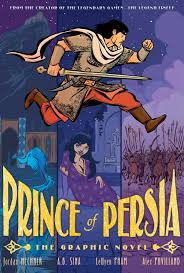
[READ:February 21, 2016] Prince of Persia

The evolution of this graphic novel is pretty fascinating.  And it is one I was completely unfamiliar with since I’m not a gamer.

Back in the 1980s Jordan Mechner created a video game called Prince of Persia.  It was popular and there was a sequel.  And then it kind of went away for a while, but people always loved it so then it came back again as a new series of games.  And a film (released in 2010).  Finally in, 2004 First Second (shoutout to #10yearsof01) contacted Mechner about making a story (not the same story as his games) into a graphic novel.  Mechner has always wanted to make a comic book (he had all the gear before he switches over to video games.  And here it is.

From what I gather, Mechner didn’t really write this story so much as inspire it (and I’m sure he had editorial control or whatever).  The book was written by A.B. Sina.  And it is a new story based on the nebulous ideas of the universe that Mechner had created.

I had actually not even heard of the video game (or the movie) so this was all lost on me. But that’s fine and is not necessary for enjoyment of the book.  Although I admit I found the story a little confusing (not because of not knowing the games), although by the end the way the stories linked up was pretty cool.

This story is set in two different eras (the 9th century and another prince in the 13th century) and has two stories paralleling each other.  The two men of the story are linked by a prophecy.  The story opens with Guiv, a (9th century) prince who had attempted to kill his brother Layth, fleeing the city of Marv after escaping death from Layth’s guards. The story then jumps to a young (13th century) woman, Shirin, who flees the city of Marv in an attempt to escape her father. She soon meets up with Ferdos,

Since Guiv was nearly killed by his brother he leaves the city.  He walks into the mountain where he is accompanied by a spirit animal (a peacock) and is able to fend off lions and boars until he encounters a door.  But inside is a pit made of human skeletons.

I was more interested in the story of Shirin.  She is a rebellious woman who would rather do gymnastic dances than hip shaking ones.  So she cuts her hair and leaves her palace behind.  Frankly her story of learning how rough things are outside of the palace was more interesting than the story of the men.   I guess it is also kind of that we follow her for many pages before she meets Ferdos and then his story takes over.  Not to mention, he seems like he’s just crazy for a while.

Ferdos is full of stories about Layth and Guiv and he imagines that he and Shirin will reprise the roles of these past rulers (Shirin will be Guian, the sister/lover–I’m a little unclear about that).

Eventually we learn that Ferdos has ties to the city of Marv, and that his story is linked to the past in unexpected ways.

The end o the story goes very fast with intense pacing and crossing of stories.  It definitely demands careful reading and maybe even a second reading, to see how the stories line up.

Th one great thing about the book is the way the two story lines are never visually confused–the color palates change depending on the century and the main characters all look different enough (especially Shrin, who looks incredibly sexy with her short hair and different colored eyes).

It’s a really clever and intricate story.   I wonder what fans of the game thought of it.

Read Full Post »

sculptorSOUNDTRACK: ESMERINE-Dalmak [CST096] (2013).

dalmakI really enjoyed Esmerine’s previous record–it was a delightful surprise from a band I didn’t know.  Since then, they have put out two albums.  Dalmak is a Turkish verb with many connotations: to contemplate, to be absorbed in, to dive into, to bathe in, to rush into, to plummet.

The album was recorded in Istanbul and after laying down the basic tracks, they added local musicians who contributed some great sounding Middle eastern and Turkish instruments–bendir (a drum), darbuka (another kind of drum), erbane, meh, barama and saz (a stringed instrument)–on tracks 2, 3, 4, 6, and 7.

“Learning to Crawl” opens the disc and consists of 3 minutes of beautiful swirling cellos and violins that create a wonderful atmosphere.  “Lost River Blues Pt 1” comes in next and it changes the whole tenor of the album with the first of the Turkish instruments.  The marimba keeps a musical rhythm as the other droning instruments play layers of music–creating an unexpected tension.  The repetitions of the rhythm is a wonderful undercurrent to the lovely cello and violin that play washes of music over the top.  Their melody adds a great deal of drama.  It is a 7 minute song and once it’s over it jumps right into “Lost River Blues Pt 2.”

Part 2 opens with some stringed instruments playing a great middle eastern melody alternating with some loud choruses of instruments.   The song grows quiet in the middle and the flute like instrument (the meh?) plays a melody before all of the drums kick in again (there are so many drums) the song grows more intense.

“Barn Board Fire” opens with some Middle Eastern strings again (the saz, I gather) and a simple two note bass to back in up. When the drums kick in the song really feels full.  There’s a cello solo that runs throughout the song and it’s quite lovely.  When the cello matches the rest of the music, there’s few measures that play with loud and soft and it’s quite cool.  It builds to a raucous ending before echoing out

“Hayale Dalmak” opens with some waves of keyboards, almost like a new age song.  it works as something of an intermission before the intense cello melody of “Translator’s Clos Pt 1.”  This time the first part is the shorter one, as the drums and cello play a great melody and rhythm together.  Again, it’s so scenic and evocative.  It builds to a great closure before switching to Pt 2 which opens with a great percussion intro (I need to know how they made those popping sounds).  This part is a little slower than the first, although the drums are still pretty intense.  In fact, even though there is a lot of cello in this song, the drums are really the highlight with all kinds of awesome percussion going on.  The middle of the song introduces the first vocals on the record–I assume they are in Turkish or Persian.

“White Pine” sounds like a western melody played on an Eastern instrument and a mournful violin played over the top.  It’s a neat twist. The final track “Yavri Yavri” opens with glockenspiel and strings.  The song swirls around before vocals come in again.  It stays like this for five or so minutes–always remaining somewhat mellow but never easy.

I really enjoyed this album.  And it gets better with each listen–the combination of Western and Eastern instruments works so well in these songs.  And of course, Becky Foon and Bruce Cawdron write some amazing melodies as well.

[READ: February 20, 2016] Sculptor

I know Scott McCloud from his excellent Understanding Comics, which does a great job in explaining how comics work to novices but also shows keen insight for fanboys as well.

I never really considered that he had created his own comics (even though the above book is also full of his drawings).  He had created a series called Zot!, but really not all that much more.

The premise of this book is fairly simple, but the details and twists and the psychological depth are really staggering.  As is the beauty of McCloud’s drawing. (more…)

Read Full Post »

cute girlSOUNDTRACK: DO MAKE SAY THINK-Other Truths [CST062] (2009).

DMST-OtherTruthsCST062Other Truths is (so far) Do Make Say Think’s final album (they have been on hiatus since).  I’ve mentioned this album before, but here it has context with the others.

There are only four songs on this disc and it really feels like a culmination of what they have been exploring with their more recent output.  There is still experimentation (the shortest song is 8 minutes after all), but there aren’t the really strange sections like on the previous album (no weird drop outs or deconstructions).  And, in fact, they have embraced more of the catchiness that the last album hinted at.  The first song, “Do” (each song is named after one of the words in the band’s name) is one of the catchiest things they’ve done.  It’s easily my favorite song from them

I love the guitar lick that runs through “Do” a series of two note patterns that are surprisingly catchy.  The drums are wild throughout as the rest of the song chugs along nicely.  It’s 10 minute long though, and the whole thing is not that pattern.  About 2 minutes in the bass takes over, playing a similarly interesting riff before some dissonant guitars ring out and the band resumes with a new section of the song.  Some voices (from Akron/Family and Lullabye Arkestra) enter the song singing gentle ah’s as the song progresses.  The introductory riff resumes with some great additions.  Then the horns blow over the top–making the song soar higher and higher while the rest of the band plays in the background.  Around 7:30 the music all drops away except for some washes of keyboards.  The song continues like that with some quieter washes until the end.

“Make” is a 12 minute song which has tribal drums and simple guitar lines to start with.  The singing comes in around 2:30.  There’s some great moments in this song where the guitars play simple riffs that grow and build and then the horns come in again.  It’s a wonderful song with moments where the whole sounds of the song sounds so big and jubilant yet slightly menacing at the same time.  By about 9 minutes tape manipulation glitches it to a halt with the drums getting slower and slower and deeper and the guitars expanding out as slow as can be.  The last two minutes resurrect some ringing guitars and horns which grow and grow seem to be playing an elegiac coda for this song, It’s really beautiful, and it’s recorded so well it’s like you can hear the air being blown into them).

“Say” is also 12 minutes long.  It opens with what sounds like foghorns, or tubas getting distorted almost by a Doppler effect.  Then comes the rim shot drums and interesting effects sprinkled over the top.  At about 2 minutes another great, simple guitar riff comes in–DMST  has a way with making the simplest riffs sound great.  The whole band kicks in and plays along with the riff.   The song builds and ebbs, with the horns making the song feel huge.  For a brief middle section the song get quiet with a fast-picked guitar section and strings.  The end of this song (the last 2 minutes) also has a coda with horns but this one is mournful and quiet.  The chorus joins in again.  First with ohs and then with words.

“Think” ends the disc at a scant 8 minutes. It’s the quietest and most mellow song on the disc opening with jazzy drums and simple chords.  The slow guitar riff is lovely and there are dark voices humming along behind them.  Then you hear people talking in the distance, (I can’t make anything out) while a series of bass notes move the song forward.  By 4 and a half minutes a new guitar line comes in and the song gets a little bigger but it’s still slow.  The song never builds like the others; it stays quiet and slow, regretful and thoughtful, until it rings to a close.

This is a wonderful album full of all the great sounds of post-rock.

[READ: January 20, 2016] The Cute Girl Network

Imagine if you were a girl who moved to a new town and learned that there was a network of girls, cute girls, who kept tabs on all of the boys in town.  And the network was in place to keep you informed of what a doofus jackass your new boyfriend was.

It’s not a bad idea.  In fact a lot of good could come from it.  But sometimes informed choices have to have some personal experience as well.

And that’s where Jane and Jack come in.

Jane is new to Brookdale  Jane is pretty bad ass–she rides a skateboard and does amazing tricks.  She also works in a skate shop  She meets Jack when she wipes out in front of his soup kiosk.  He helps her out with a bottle of iced tea for her ailing coccyx and then just hopes that he’ll see her again.

Jack lives with Gil and Ruth.  Gil is a lunkhead who has been on a lot of first dates but few second ones.  Ruth hasn’t been on too many dates herself.  They both know that Jack is lazy (his previous wrote a song about him called “Layabout”) and a little dopey but he’s nice and kind-hearted and that’s what matters. (more…)

Read Full Post »

boothSOUNDTRACK: SOFA-New Era Building 7″ [CST001] (1997).

sofaSofa was a band that is notabkle for being the first band released on Constellation Records.  They had some releases before that but then guitarist Ian Ilavsky started Constealltion where they released their final 7″ and CD before disbanding.

This 7″ has two songs, “Canyon (Fade)” and “With It” which do not appear on their CD Grey.  if you know the band, these songs fit in perfectly with thie sound–low throbbing bass, noisy buzzy guitars and spoken/sung deep vocals.

“Canyon (Fade)” opens with tribal drum beats and a low rumbling bass (which reminds me a bit of early Cure and other goth bands), but with a bit of a heaver edge.  The singer has a deep speaking style of singing. I’m not really sure what he’s singing, but it adds a great tone to the song.  About midway through the song the guitar (which has been mostly scratchy and noisy) breaks out with some harsh feedback squalls that kind of overpower the song. But then the bass fights back.

Of the two songs, I prefer “With It.” The bass rumble is super cool, low and wicked sounding. And the drums a are bit more spare. The guitar is playing some occasional notes while the singer mumbles his way through whatever he’s talking about. It’s a totally atmospheric piece—you can just picture where this noir thing is happening.

Just before the chorus comes in, his voice gets louder, the guitars start squalling and feedbacking and a rather high pitched “withit” punctuates the noise, after which the deep voice seems to moan.  It’s pretty cool.

I really enjoyed how the bass doesn’t really change for the whole song except in a couple of places where it places a similar yet distinct bass line. It’s neat and changes the tone of the song briefly.  At 2 and a half minutes the song stops abruptly and then the guitar notes resume to get the song started again.  Groovy noise.

Shame the band disbanded.

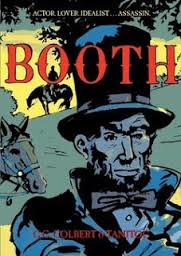
[READ: February 6, 2015] Booth

Here’s another First Second book for February #10yearsof01.  And what better day to post a book about John Wilkes Booth?

I really didn’t know much about John Wilkes Booth except for the obvious–he shot Abraham Lincoln and shouted sic semper tyrannus.

Well, this book take a relatively sympathetic look at the life of the world’s most famous assassin.  This is not to say that the book endorses what Booth did or anything like that–no hate letters please.  It just looks at Booth as a human who had opinions and acted on them.

Thankfully, Colbert does not show Booth’s life in a vacuum so we get proper context for what he did and we also hear the opinions of the people who were also opposed to him.   But it is fascinating to see the things he believed and what forced him to act on his beliefs. (more…)

Read Full Post »

aboveSOUNDTRACK: DO MAKE SAY THINK-& Yet & Yet [CST020] (2002).

DmstandyetandyetAfter the previous album, keyboardist Jason McKenzie departed the band.  I’m not entirely sure how this impacted the band, but this album is warmer and a little more delicate feeling.  It’s also their first album that was recorded all in the same place (in band member Justin Small’s house).

The disc opens with static and effects before a jazzy drumbeat comes in.   “Clasic Noodlanding” is mellow with a complex (for them) riff on the guitar and nice washes of keyboards.  It is primarily atmospheric until about two minutes in when it suddenly changes with the introduction of a great bass line.  And then this atmospheric song turns really catchy. The five and a half-minutes feel too short in this song.

“End of Music” opens with jazzy drums and keyboards.  It’s a slow piece that stretches to nearly 7 minutes.  About half way through the song, the drums come crashing in and a brighter, noisier melody takes over.  This end section is really catchy with some great chords and excellent drumming.

“White Light Of” opens with a cool slow bass line and drum pattern.  As the song grows in complexity I like the new bass rumble that is added and the way the guitar lines seem to intertwine. About half way through horns get added to the mix, quietly at first and then they slowly take over the song. About five minutes in the song comes to abrupt halt with some interesting echoed effects on the drums. It resumes again with a stranger version of the song—it feels unsettled and really interesting, with a nice riff interspersed with one that feels off somewhat.

“Chinatown” opens unlike any DMST song.  The bass sounds electronic and skittery with some interesting keyboard sounds over the top (it actually sounds a bit like later period Radiohead).  The song is slow and moody for all of its 5 and half minutes with keyboard washes and skittery guitars.  There are quotes thrown in throughout the song but I can’t tell what they are saying.  This song was features in the film Syriana.

“Reitschule” is one of two songs that are 9 minutes long. It opens with a slow meandering guitar line interspersed with another guitar playing an interesting counterpoint.  A cool bassline comes in around 2:30 which takes the song in a new direction.  Horns propel the song along until about 4 minutes when a jangly guitar takes over the song. It builds with some abrasive guitar chords until everything washes away except the bass.  And then it rebuilds as something else.  Distant horns play in the back as the guitars play overlapping lines.  It’s an epic song that demonstrates how much this band can do.

“Soul and Onward” has a pretty conventional melody line. It’s warm and friendly It also features wordless vocals by Tamara Williamson. I love the little tiny guitar lick that works as a bridge between the two sections.  This is my favorite song on this record.

“Anything for Now” is the other 9 minute song. It is slow and pastoral to start with a beautiful multi-guitar piece with gentle drums. At around 4:30 all the instrument vanish except for a single organ note. It plays for a bout a minute and it seems like the disc will end that way but then the chords build up again from the drone.  An acoustic guitar lick begins around 7 minutes in and runs through the end of the song.

Overall this album is more mellow than their previous discs, and there are some amazingly beautiful sections of music on this album.

[READ: February 8, 2016] Above the Dreamless Dead

I’m continuing with books that I wouldn’t normally read, to celebrate First Second’s #10yearsof01 challenge and to read something out of my comfort range.

This is a collection of poetry about World War I, written before during and just after the war.  Each of the poems is illustrated by a different contemporary artist.

As you can imagine, the book is pretty gloomy.  But the poetry is pretty spectacular and the illustrations were really interesting.  Obviously this book is not going to be a happy one.  But some of the artists do add a more positive spin on the poems (while some are just brutally violent as well). (more…)

Read Full Post »

aareentry SOUNDTRACK: THE BLACK ANGELS-Tiny Desk Concert #132 (June 8, 2011).

I hblakangelsave The Black Angels’ 2013 album Indigo Meadow and I like it a lot.  It has a cool retro psychedelic vibe while still retaining a heaviness that sounds great.

For this Tiny Desk Concert, which is more or less in support of their 2010 album Phosphene Dream, the band strips down to almost a folk band.

There is an acoustic guitar, and hollow-bodied electric which I think is not plugged in (one guitar plays the bass lines and other one plays the solo notes), there’s a harmonium (the second one in a few weeks on the Tiny Desk), there’s a drummer (with basically a floor tom) and the lead singer with a tambourine.

No one is amplified except the singer–whose voice is processed to sound extra trippy (note especially the first lines of the second song, where he sounds like he’s singing from outer space).  His singing is very gentle (especially since they are basically unplugged, which makes the effects seem even more powerful).

The band plays four songs, “Bad Vibrations” which is a great way to start off.  “Haunting At 1300 McKinley” showcases that echoing voice very well.  One of the guitarist sings nice harmony vocals as well.  The harmonium has that vibrato sound that also makes the song seem trippy.

“Entrance Song” has the other guitarist singing harmony (deeper voice compared to the singer’s rather high voice).

For the final song, “Too Much Hate,” the singer plays the guitar (leaving the former guitar player with nothing to do).  The sentiment of the song is excellent, really showing off a hippy vibe.

I really like The Black Angels a lot, and this makes me think I need to check out their earlier stuff too.

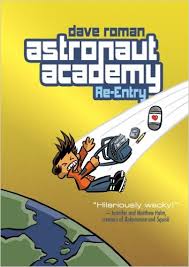
[READ: February 3, 2016] Astronaut Academy: Re-Entry

I enjoyed Book 1 a lot but I enjoyed this sequel so much more.  I’m glad that I put off reading this one until after the first because even though there were no mysterious things that I wouldn’t have gotten, the whole experience is definitely greater if you read these in order.

This book opens with a similar style–brief episodes about each person–and what they have been up to over the summer.  I enjoyed that Hakata Soy has been spending his time on earth (such a novel idea).  But that’s when he gets the devastating news that Princess Boots, the girl he gave his second heart to in the backstory, actually gave it away and is now dating his arch-nemesis Rick Raven.

Scab Wellington was released from prison (which makes Maribelle Mellonbelly happy).  And Thalia Thistle still hasn’t told her dad that she plays Fireball. (more…)

Read Full Post »

primatesSOUNDTRACK: OTIS TAYLOR-Tiny Desk Concert #120 (April 13, 2011).

otisOtis Taylor is a big, burly, bearded man who plays the banjo. His band consists of fiddle, drums and electric guitar and bass.

The songs are bluesy without being like the blues, and they are folky without really being like folk music.  And the way he plays the banjo is unlike any typical banjo song I’d heard before.

The blurb explains what makes his songs sound so different:  He plays a style of music he calls trance blues.

Taylor’s music is trance-inducing, and he achieves that effect by playing songs that are modal: Sometimes, they sit on one chord for the entire song. Taylor says that by doing that, by eliminating chord changes, you also eliminate reference points, so songs can run as long as 10 or even 15 minutes in length.

And it’s true.  The basic melody of he first song, “Ten Million Slaves” (which is only 4 minutes) stays the same throughout the song.  It’s the fiddle (played by Anne Harris) that throws the new notes and riffs into the song that keep it so interesting,

He does throw in a simple but affecting solo at the end of “Ten Million Slaves” but it’s more fun to watch him rock out the end of the song.  That song also appeared in Public Enemies, the Michael Mann movie.

He calls his music trance blues music, came from Mali and Mississippi Hill Country.

The main riff of “Ran So Hard The Sun Went Down” is instantly familiar and a little dark.  I love the middle jam section where it just seems to gets bigger and bigger (I guess that’s the trance).

For the third song, “Talking About It Blues,” Taylor switches to acoustic guitar.  This is a fairly simple blues song, but I love the guitar riff that punctuates the verses.  The verse is simple enough “my daddy cut down a tree, make a guitar for me.”  This song features a lengthy solo by J.P. Johnson.

The drums (by Larry Thompson “Bryant Gumball of the drummers,”) and bass (by new bassist Todd Edmunds) are really simple but they sound great and really punctuate the song.

It’s a short song that segues into the final song, “Think I Won’t” which has a heavy five note riff to open with.  I love that it takes him forver to end this song.  Saying one more time even though they do more than one more time.

I don’t really like blues songs that much.  But this band is really tight and the addition of the fiddle really makes these songs stand out. Plus after those cool droning blues songs I was hooked.

[READ: December 15, 2015] Primates

I had been planning to post magazine stories this week.  Then I learned that it is First Second’s ten-year anniversary and they are trying to promote it with the cool hashtag #10yearsof01.   Since I’ve read a bunch of First Second books in the last couple of months, I’m going to give them a deserved shout out by posting a few in a row and including that hashtag.

This is a non-fiction graphic novel from First Second and it is outstanding.  In a wonderfully kid-friendly style, it talks about the incredible work done by Jane Goodall, Dian Fossey, and Biruté Galdikas.  And the man behind their success, Leonard Leakey.

The story opens on Jane Goodall.  After visiting a friend in Kenya, she spoke to Dr Leakey (who tells of his childhood growing up in Kenya).  Through their meeting, Leakey gained funding and sent Goodall to Gombe to study chimpanzees in 1957.  She soon discovered them using tools and eating meat.   Her work caused them to, as the book puts it, “redefine tools, redefine Man or accept chimpanzees as human.”

Then she went further and learned so much more about chimpanzees, using techniques that were not exactly scientifically approved (sifting through dung, setting up places for them to eat) but wound up being amazingly effective.

Jane married Hugo, her photographer and then they were visited by Dian Fossey. (more…)

Read Full Post »

SOUNDTRACK: GYPTIAN-Tiny Desk Concert #102 (January 2, 2011).

dec2014gyptian I had not heard of Gyptian.  He is a Jamaican singer.  His singing style is kind of like rap, but with all of the Jamaican inflections and emphases that make it sound more flowing and smooth.

I enjoyed his sound quite a lot.  It helps that he has an acoustic guitar player (Anthony “Tony Bone” DiFeo) keeping the melody and rhythm.

Evidently his first song “Hold You” was a huge hit, although I didn’t know it.  “Beautiful Lady” has a bit more of a reggae feel, a bit slower with lyrics about, yes a beautiful lady.

The final song, “Nah Let Go” feels like a lullaby with his gentle delivery.  I don’t listen to this style of music very much but when it’s done well, I can totally groove on it.

[READ: January 7, 2015] “Travel Day”

“Travel Day” is a photo essay about airports.  Dyer was assigned to write a short essay for it.  I like Dyer’s work and I found his essay a lot more compelling than the photographs.

Dyer begins by talking about how when he was 8 years old, his family was on vacation in London and took a special trip to Heathrow Airport because, back then, it was a destination.  In the sixties and seventies the glamour of air travel was at its peak.

The earliest airports were designed to look conservative to reassure nervous flyers.  But by the Sixties, airports gleamed with sleek confidence and modernity.  But now airports are just hubs–non places.  The allure of the future that guided the design of airports in the sixties and seventies also makes airports look really dated now.  Especially since the “future” was based on designs from the Sixties anyway.

You can also see it in flight attendants outfits who had sort of futuristic look back in the Sixties (at least what the future was supposed to look like).

He talks about Garry Winorand who took photos of the social landscape in the Sixties and Seventies and has a book devoted to airports.   He says the photos really documented the social life of Americans as much as it did airports.

In addition to the main photos of this essay, there are two small older photos included.  The first is by Sklava Veder and it is a photo of Lieutenant Colonel Robert L Stirm being greeted by his family at Travis Air Force Base in 1973 after spending five years as a POW in Vietnam.  It’s an amazingly powerful photo.  The other is by Winorand which shows a subtle version of the same image– a fellow with a beaming face holding a sign that says “Welcome to California Jane.”  It’s about a person coming to a new place and Winorand captured the eternal promise of flight and of the American West in a single moment.

These photos in the essay were taken all over the world and do show the human condition.  But it is less glamorous and therefore to my eyes less interesting.

The one interesting idea however, is that people have stopped reaching for their cigarettes when the get off the plane and have started reaching for their phones.

But that doesn’t make for very interesting photography.  And with a few exceptions these photos aren’t that compelling.  Perhaps because airport themselves are no longer compelling places.

Read Full Post »

karlove SOUNDTRACK: ESPERANZA SPALDING-Tiny Desk Concert #110 (February 12, 2011).

esperanzaI didn’t know who Esperanza Spalding was before this show.  But she defied my expectations by being a fairly tiny woman who sings while playing an upright bass (not a very common combination for anyone).

For the first song, “Little Fly,” she plays a kind of jazzy bass, but has a string accompaniment–violins, guitars etc.  But it’s clear that the bass is the star.   And while her playing is very good (she has some great vibrato), it’s her voice that is mesmerizing–she’s hunched over playing the bass and still manages to sound strong and powerful.  “Little Fly”‘s lyrics come from a poem by William Blake.

“Midnight Sun” is a solo performance–just her voice and bass.  I loved the beginning where she sang notes along with what she played.  Then when the lyrics come in she sings in a very jazz voice (with eyes closed the whole time).  Turns out this is a Lionel Hampton song that only appears on the Japanese release of her album which make explain her singing style.

Because on the final song she sounds very different.  “Apple Blossom” is her own composition.  It’s her singing with the string section playing along (there’s no bass).  The song is lovely, but I prefer it when she plays bass in the song, too.

I enjoyed this performance and how delightful Spalding was.

[READ: January 9, 2016] “My Saga: Part Two”

Speaking of not finishing multi part essays, I ended my post about Part One of this essay by saying I couldn’t wait for part two.  And then apparently I forgot all about it because here it is almost a year later before I read part two (which was published two weeks later).

In this second half of Karl Ove’s journey he spends most of his time realizing that he hasn’t really learned very much for his assignment.  I can’t imagine anyone else being able to write endlessly about how he has nothing to write about (and still make it strangely compelling–his stress produces good sentences).

He does make some interesting connections though. (more…)

Read Full Post »

« Newer Posts - Older Posts »