Feeds:
Posts
Comments

Archive for the ‘Artists’ Category

SOUNDTRACK: BARENAKED LADIES-Barenaked for the Holidays (2004).

Barenaked for the Holidays is one of my favorite Christmas albums of all time.  It is by turns silly, serious, religious (Jewish and Christian) and secular.  It is pro Christmas and anti Christmas and many things in between.  There are cheesy instrumentals, impressive a capella rounds and even a Batman joke.  It’s everything people love (hate) about BNL.

The disc opens with Jingle Bells.  It opens quietly with a somber piano as Steven Page sings the lyrics.  It’s quite lovely.  After a minute and a half, insanity sets in with a wild continuation, as Steven goes bananas.  There’s a drum-only verse and even a verse of Jungle Bells Batman Smells.  It encapsulates all of Christmas in just a few minutes.

“Green Christmas” is a poppy, funny anti-Christmas song that’s super catchy.  It’s sung by Ed Robertson and is one of his latter style concoctions.  I have several versions of this song om various releases.  This is my favorite because when the carolers sing and he shuts the door on them you can hear their voices change.

“I Saw Three Ships” is done on a mandolin and sung first by Kevin Hearn.  Then a rotating cast of the band joins in.

“Hanukkah Blessing” is a wonderful original song by Steven.  It’s incredibly catchy with a nice telling of the Hanukkah story.  It even has a verse in Hebrew.

“O Holy Night” and “Rudolph the Red-Nosed Reindeer” are done in a kind of ice rink keyboard–cheesey but a lot of fun cheesey.

I sort of like “Elf’s Lament” because it’s pretty funny, but it’s really rather dark–maybe too dark?   I don’t think I ever realized that the voice I don’t recognize i Michael Bublé, which is pretty insane.

“Snowman” is an original song about how much of a bummer it is being a snowman.

“Do They Know Its Christmas?” I hate the original of this song but I do like this version which takes some of the schmaltz and cheese out of it.  I also like that they mock “thank god it’s them instead do of you!”

“Hanukkah o Hanukkah”  Accordion and guitar play this wonderfully traditional song.

“God rest Ye Merry Gentlemen/We Three Kings” was recorded in 1996 with Sarah McLachlan.  It’s quite nice but feels out of place–like they should have re-recorded it.

“Carol of the Bells” is a trippy synth version with lots of voice-sounds from Steven.

“Footprints” is a slower Ed song–pretty and kind of somber.

“Deck the Stills” is just a genius version of “Deck the Halls.”   How did they every figure out that you could perfectly fit the words “Crosby Stills Nash and Young” into that musical pattern?  I’d love to hear the process for making this one.

“Christmas Time (Oh Yeah)” This is a Kevin song which means its sweet and kind of quiet, but there’s also some wonderful backing vocals (oooohhh yeah).

“Sleigh Ride” is zany scatting version that lasts less than a minute.

“Christmas Pics” is a Jim song with lots of upright bass.  It’s a typically funny and sweet song by Jim.

“I Have a Little Dreidel” is a little goofy sounding on banjo–it seems more hoe-down than Jewish.  But it’s a hoot.

“Wonderful Christmastime” is an instrumental with drum machine and keys but a very funny wah-wah type of keyboard sound that sort of mocks the original.  It ends with them singing happy birthday to Jesus.

“Auld Lang Syne: ends the disc.  It’s a beautiful version with great harmonies, really showcasing that this is a great band who likes to have fun too.

[READ: December 13, 2018] “Every One of My Answers was a Disappointment”

Once again, I have ordered The Short Story Advent Calendar.  This is my third time reading the Calendar (thanks S.).  I never knew about the first one until it was long out of print (sigh).  Here’s what they say this year

Fourth time’s the charm.

After a restful spring, rowdy summer, and pretty reasonable fall, we are officially back at it again with another deluxe box set of 24 individually bound short stories to get you into the yuletide spirit.

The fourth annual Short Story Advent Calendar might be our most ambitious yet, with a range of stories hailing from eight different countries and three different originating languages (don’t worry, we got the English versions). This year’s edition features a special diecut lid and textured case. We also set a new personal best for material that has never before appeared in print.

Want a copy?  Order one here.

Like last year I’m pairing each story with a holiday disc from our personal collection.

This is the story of an artist, Amelia, who has flown from Vancouver to Toronto to live for a few months.  She was almost forty, recently separated and had just had a major art showing (she sold everything and was basically set for a long time).  She sublets a place from her younger brother’s best friend Sab–neither her brother nor Sab knew about the separation. (more…)

Read Full Post »

SOUNDTRACKALFREDO-RODRÍGUEZ-Tiny Desk Concert #796 (October 18, 2018).

As this Tiny Desk Concert started,  I was sure the main musician was the bassist.  Given his fascinating outfit and his amazing bass playing, I was sure it was all about him.  I was still more impressed with the bass even after learning that:

Cuban pianist Alfredo Rodríguez gave our office audience a very quick lesson on why pianists from that island nation are so impressive: they treat the piano as the percussion instrument it is. Rodríguez immediately let fly with an intense flurry of notes that were as melodic as they were rhythmic.

But really, once Rodríguez starts playing you can tell that he is the composer and creator, even if guitarist/ bassist Munir Hossn is the exciting splash on the music.  I didn’t mention that Hossn also plays guitar.  It’s on a stand which he walks over to play in between amazing bass runs.

“Dawn” opens with some singing and a very simple rocking kind of feel.  Then Hossn plays some wonderful guitar soloing notes while Rodríguez plays his complicated main lines.  Meanwhile, Hossn has switched back to bass and is playing some amazing jazzy lines–fast, furious and at times really high notes.  It’s pretty cool.

There’s a lengthy guitar solo (with Rodríguez clapping) before the main song resumes with two very distinctive styles of music.

The mash up of European lyricism and Afro-Cuban percussion is at the heart of the Cuban piano tradition and it is very present in the first song. It wasn’t long before Rodríguez dug deep into rapid-fire syncopation along with drummer Michael Olivera.

Listen to the expansive and lyrical exploration of the second song in this Tiny Desk set, “Bloom.”

It opens with a lovely piano melody twinkling along the keys.  But it’s that great low-end and the simple drums (check out Olivera’s jacket) that takes it beyond “European lyricism.”  There’s some wonderful interplay between the musicians and some great effects from Hossn on bass (how does he get those super high notes?).

The final song is called “Yemaya.”  It opens quietly with Rodríguez singing before turning into a frenetic piano melody with Hossn’s intricate guitar pyrotechnics.  The song is eight minutes long and features many components including a lengthy, beautiful (and impressive), piano-only section.  But I still love watching Hossn (as he hat falls off) the most.

West Africa-based Yoruba spiritual tradition, commonly known as Santeria, infuses so much of Cuban daily life in music and Rodríguez closes with his take on the music dedicated to the Orisha Yemaya, the goddess of the ocean and all waters. The song’s melody is a derivation of the song associated to Yemaya and the Tiny Desk trio explores the rhythms of the melody, up to and including the sing-along at the end.

Every exposure to Cuban music presents an opportunity to walk alongside historical music figures and Santeria spirits alike.

Especially when it ends with an engaging sing along like this one does.

Actually they seem to be having so much fun that they refuse to end the set by playing one more wild coda to top everything off.

[READ: November 28, 2018] “Children are Bored on Sunday”

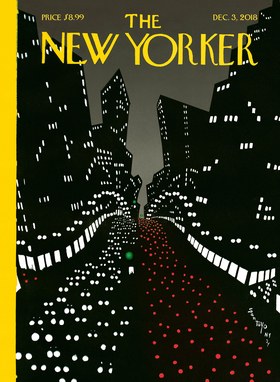
The December 3, 2018 issue of the New Yorker was an archival issue, meaning that every story was taken from an earlier issue.  The range is something like 1975-2006, which is odd since the New Yorker dates back so much longer.  Although the fiction pieces are at least from the 1940s and 1950s.

This story was written in 1948 and it is certainly of a certain time and place–specifically The Metropolitan Museum of Art in 1948.

Emma is a young, single woman browsing the art gallery.  She is excited to see a Botticelli, but as she nears the room, Alfred Eisenburg is standing there right in front of “The Three Miracles of Zenobius.”  She liked Alfred and even flirted with him at a party “in some other year.”

At most other times she would have been pleased to see him, but she turned quickly back the way she had come. (more…)

Read Full Post »

SOUNDTRACK: REIGNWOLF-“In the Dark” (Field Recordings, June 29, 2012).

This is another Field Recording set at Sasquatch! Music Festival [Reignwolf: A One-Man Rock Show].

I’d never heard of Reignwolf and I’m still not sure if Reignwold is typically a solo project–like here or a band.  “In the Dark” is a simple blues rock song–like Led Zep via the White Stripes.

Jordan Cook plays a noisy, distorted guitar with a metal slide so that there’s pretty much always something coming out of the amp.  After some pretty simple verses he plays a wild, sloppy (broken stringed) solo.

The way he was tearing it up during an impromptu set at the Sasquatch Music Festival, you’d barely notice that Jordan Cook, a.k.a. Reignwolf, broke a string midway through his fiery rendition of “In the Dark” — that is, until you saw the mangled remnants of his guitar, smoldering on the ground after he’d wrenched every wailing chord from its guts.

The song works best when he plays the kick drum.  It adds just enough oomph to make it not seem like a guy playing a guitar.

The Saskatoon native and recent Seattle transplant never misses a beat — literally. When he’s not with a band, he accompanies himself on kick drum and makes enough noise to match a dozen metalheads. In this video, recorded at the artist campground between sets at the festival, Reignwolf causes a ruckus beside his RV and rousts a crowd of sleepy campers into dancing and cheering.

The soloing goes on for a while and the people around him seem to like it.  Although the soloing behind his head is a bit much, but hey, if you can do it, then go ahead!

[READ: February 1, 2017] “The Sightseers”

I really liked a main aspect of this story, and so many of the details.

The story begins with an overprivileged New York family.  They have a maid/cook/gofer named Kiki from Tibet and the husband marvels at Kiki and “their calm, those people.”

The father, Robert, is happy that they no longer go to North East Pennsylvania for Thanksgiving–the round nephews and the piles and piles of food.  For their Thanksgiving they would be having salmon as Robert was training five times a week with a Navy Seal.

When the salmon turns out to be halibut, the son says that wasn’t on the menu (the menus were designed ahead of time to limit daily stress by preparing the children for their dinners ahead of time–there would be no surprises.  The son asks if the next time they have halibut it will be salmon.  The father thinks that’s an excellent suggestion. (more…)

Read Full Post »

SOUNDTRACK: FILASTINE-“Btalla” and “Dance of the Garbagemen.” (Field Recordings, April 4, 2012).

When I first saw the title of this Field Recording, [Filastine And The Cathedral Of Junk], I assumed it was going to be all found sounds.  So I was surpirsed that there was so much electronic music.

“Btalla” starts with some electronic drums and noises and Grey Filastine playing the hand drum–a very nice organic component. Its also surprising that the other musician is a cellist. She is almost lost in the din, but you can hear her slow notes throughout the piece–until he starts manipulating her sounds in very cool ways.

He’d say he was a radical before he’d say he was a musician — a laptop artist with a love of grit and noise. Grey Filastine, once based in Seattle but now a nomad loosely based in Barcelona, is a creative soul. He seems to also love a good party, a beat and a shopping cart wired for sound.

For the second piece, “Dance of the Garbagemen.”, it’s just him manipulating sounds and then using a shopping cart for added percussion.

With that in mind, we asked Filastine to perform at a junkyard in Austin — not just any junkyard, either, but a place called “The Cathedral of Junk.” It’s a home for more than 60 tons of unwanted consumer has-been items, transformed into art installations by Vince Hannemann.

With a song title like that and the location he’s in, it feels like something of a lost opportunity that he doesn’t use a lot more junk.  But it is fun to see him make music from and amid refuse (and art).

[READ: November 15, 2017] “Riddle”

This was yet another story that I felt was just kind of a big, What?  There’s a lot of action, but the story seems to stay in the mind of the protagonist who has other things to think about.

The whole story is told in this haze of confusion: “I must have been renting a place on H Street.”  “I was an architect.”  He talks about the area being slowly abandoned and his upstairs neighbor walking up a rickety outdoor staircase.  But all of these details seem irrelevant to the story.

He says he went drinking and came out of the bar only to see a “crippled old cowboy” walking the street.  He had seen the man before and he thought there weren’t many people like him left in town.  But then he heard a young boy, an urchin call out Hey Jack!  They seemed to experience pure joy talking to each other.  The narrator was quite taken with it. (more…)

Read Full Post »

SOUNDTRACK: GREGORY PORTER-“Be Good (Lion’s Song)” (Field Recordings, May 14, 2013).

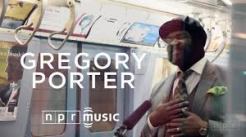
The still from this Field Recording [Gregory Porter: A Lion In The Subway] certainly led me to think that Porter would be singing on an actual moving train car (the ambient noise would be IMPOSSIBLE to filter out).

Of course, it wasn’t the most practical (or legal–bands and other musical acts need to audition to even set up underground. And those are just the “official” performers) thing to actually get Gregory Porter to perform on an operational MTA train. So we asked him if he’d perform for us at the New York Transit Museum in downtown Brooklyn, a collection of vintage memorabilia and reconditioned cars housed in a former subway station. All the better: Porter has a way with vintage suits, and there was a fortunate coincidence about the way it all felt right among the period-specific ads which flanked him. Accompanied by pianist Chip Crawford — who perfectly punches and beds the gaps here — Porter sang his original “Be Good (Lion’s Song),” a parable of unrequited affection.

The only thing I know about Gregory Porter comes from his Tiny Desk Concert.  I marveled that he wore a hat with ear flaps the whole time.  Well, he does the same thing during this song.

Gregory Porter has the frame of a football linebacker — maybe because he once was one, for a Division I college — and the rich, booming voice you might expect from a guy with such lungs. It cuts through a crowd with its strength, in the manner of an old-school soul singer; it demands attention with its sensitivity. If Porter weren’t winning over the international jazz club and festival circuit, he’d rise above the din wherever he went.

This is a sweet, quiet song, befitting him and the location.  The lyrics are a clever metaphor about lions and love.

[READ: October 22, 2017] “Scared of the City”

This is an essay about being white in New York City.

Franzen says that in 1981 he and his girlfriend were finishing college and decided to spend a summer in New York City– a three-month lease on the apartment of a Columbia student on the comer of 110th and Amsterdam.  It had two small bedrooms and was irremediable filthy.

The city seemed starkly black and white “when a young Harlem humorist on the uptown 3 train performed the ‘magic’ act of making every white passenger disappear at Ninety-Sixth street, I felt tried and found guilty of my whiteness.”

A friend of theirs was mugged at Grant’s Tomb (where he shouldn’t have been) and now Franzen was morbidly afraid of being shot.  The impression of menace was compounded by the heavy light-blocking security gates on the windows and the police lock on the door.

Franzen made some money when his brother Tom came into the city to do some work for hot shot photographer Gregory Heisler at Broadway and Houston.  Franzen was a gopher and made trips around the Bowery and Canal Street but he knew not to go to Alphabet City. (more…)

Read Full Post »

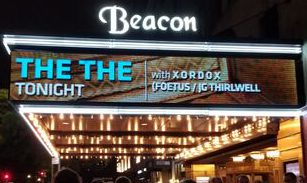
[ATTENDED: September 17, 2018] The The

I feel like I have always loved The The.  I’d never say they were my favorite band, but they’ve always been a part of my playlists and lyrics from the songs are constantly running through my head.

From the dancey early stuff off of Infected (the first album I’d heard), to the cool “band” stuff with Johnny Marr on guitar (The The was always and forever shall be the project of Matt Johnson with a rotating cast of others) and finally to the beautiful Dusk, which I couldn’t stop playing all through college.   There were other albums, but these three (and, strangely enough the Hank Williams cover album) were staples for me.

Matt Johnson has this voice, the deep resonating voice, that gets right into my head.  Especially with headphones, especially on the beginning of Dusk.  That album is so pristinely recorded it feels like the guitars are in whatever room you are currently in.

I had the fortune of seeing them in May of 2000, the last time The The played the States (and almost anywhere else).  The setlist below I found online.  They apparently played almost all of the then new album and nearly nothing else.  That seems incomplete (and short).

When he (they) announced that The The had released a new song and were doing some shows in England and Europe, I held out hope that they would come across the pond.  I wondered if they’d play Philly, but they didn’t (and that was probably wise as even the Beacon didn’t sell out).  So I got tickets as soon as I could and scored 11th row.  For yes, I was willing to brave the Lincoln Tunnel and an expensive parking garage to see this show.  And having it only in a few locations made it that much more special. (more…)

Read Full Post »

SOUNDTRACK: JAZMINE SULLIVAN-“Stupid Girls” (Field Recordings, August 12, 2014).

NPR and Jazmine Sullivan were in New Orleans’for the Essence Music Festival.

I’m intrigued that this Field Recording [Jazmine Sullivan Fades A New Orleans Barber Shop] is the second one set in a barbershop (technically, this is the first one as I have been watching them in backwards order).

This barbershop, Claer-Vue, is just a few blocks from the Superdome, just off Canal Street. It has been in business since 1948.  It is a men’s barbership and I know that a barbershop is part of the culture but nearly every man waiting to get their hair cut has really short hair already–like closely buzzed.  Are they hanging out or do they get it cut daily?

I had never heard of Jazmine, but she was apparently known to at least some of the patrons

When she walked in, patrons and barbers alike were wary. But they knew who she was, from hit songs like “Bust Your Windows” and “Holding You Down (Goin’ in Circles).” And when she began to sing, wearing her powerhouse instrument lightly, everyone ceded her a floor that had been previously occupied by a heated debate about college football.

With just an acoustic guitar accompanying her, she sings her beautiful song.  Her voice is clear and pretty and devoid of all the trills and filigree of pop singers.

To a roomful of captivated men, she sang a brand new song, “Stupid Girls,” that warns women to be careful with their hearts.

You can see most of the men nodding along. Most are deferential, with side-eyed glances.   There’s polite applause at the end, but Jazmine is pretty pleased with herself–as she should be.

[READ: September 14, 2018] “Cecilia Awakened”

Tessa Hadley continues to make wonderful stories where nothing seems to happen, but there is a lot going on internally.

Like the way this one starts:

Cecilia awakened from her childhood while she was on holiday in Italy, the summer she turned fifteen.  It was not a sexual awakening, or not exactly–rather, an intellectual or imaginative one.

Cecilia is described as an odd child, but one who fit in perfectly with the oddity of her parents.  Her father worked at a university library and her mother, Angela, wrote historical novels.  Most of all they both loved the past.  When they had Cecilia–late in their lives–they did not feel any need to conform to society any more than they already did.  (more…)

Read Full Post »

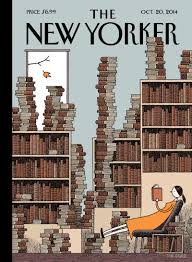
nyoct20

SOUNDTRACK: MOBY-One Song, Two Days, Three Versions (Project Song: May 4, 2010).

Project Song was a nifty little show that NPR Music created.  The premise was that NPR would give a musician some prompts and a recording studio.  They then had two days to write and record a song.  I don’t know how much of the process was to be filmed, but presumably most of it. Then it would be edited down to a fifteen minute show.  The results are pretty cool and it’s a shame they only made five of them.

The fifth and (presumably) final one they did was about six months after the previous one.  This Project was offered to Moby.

Moby generally works alone in his New York apartment, but for Project Song, we asked him to bring along a collaborator. He picked Kelli Scarr, a Brooklyn-based singer and songwriter with a breathtaking voice. They arrived at NPR, a bit nervous and eager.

It takes weeks, even years, to write a song. NPR Music’s Project Song challenges musicians to do it in just two days. And every Project Song participant has worked right up to the last-minute — that is, until Moby.

He and collaborator Kelli Scarr finished their song in a little more than a single day. In fact, they had so much time left over, they recorded a second version of the song. And after that, they gave a small concert for the staff at NPR.

I kicked off the songwriting process by showing them a series of photographs and words. The surreal images came from New York artist Phil Toledano; you can see more of his work at NPR’s Picture Show blog. Moby and Scarr are both drawn to an image of a man in the woods wearing a trenchcoat. [Moby: “A disconcerting loneliness that I really like”].  There’s a brown briefcase on the earthen floor beside him, and his head looks like a glowing storm cloud.

Next, I gave them a series of words to choose from. Moby picked the word “flight.” Scarr chose “Sunday,” which Moby calls “the most depressing day of the week.”

Not too long after, Moby puts the card with the word “Sunday” printed on it, along with the photograph, on a nearby chair. He picks up a bass guitar and immediately starts playing a riff in the key of E. Turns out, this hastily played bass line would become the bedrock for their new song.

Just six hours later, the first of three versions of “Gone to Sleep” was recorded.

When he arrives he says he thought about cheating with chords ahead of time, but he likes the idea of jumping headlong into a project.  And as the blurb says, within minutes he’s got a bass line, some synths and drums.  Then a guitar line and more keyboard sounds.

Then they work on lyrics.  Moby says, “My favorite type of unsettling art is art that isn’t immediately unsettling.”  he cites the classic example of “Mack the Knife.”  You first hear it and it’s happy and then you listen to the lyrics and its terrifying.

The end of the video clip plays the whole song, guitar and piano and atmospheric.  Then over the closing credits they play a somewhat less atmospheric, gentler version of the song.  And then there’s the Tiny Desk which is altogether different.

It’s like Moby broke Project Song by making it seem too easy.

[READ: July 27, 2017] “Christina the Astonishing (1150-1224)”

I’ve read a few things by Vladez Quade, but this one is quite different from anything else.  It’s actually quite different form anything else I’ve read, period.  The closest author this reminded me of would be Brendan Connell, who likes to thoroughly investigate a historical character (real or imagined).

But this story is based on an actual; person:

St. Christina the Astonishing has been recognized as a saint since the 12th century. She was placed in the calendar of the saints by at least two bishops of the Catholic Church in two different centuries (17th & 19th) that also recognized her life in a religious order and preservation of her relics.

The story tells of her life from the point of view of her older sister and is written in a rather formal, almost canonical, style with section headings in an old style: “How She was Led Forth from the Body and How She Lived Again.”

The narrator, Mara, tells us that Christina lay dead in her coffin, a grave awaiting her.  Mara is sad, she loved Christina, “I see this now.  She was difficult, unknowable but I loved her.”

But at the same time she says that perhaps if they had hastened, outrun the melody.  If we’d only got those last words out, “He might have spared us our miracle.”

For indeed, the dead Christina not only rose bodily from her coffin, she levitated to the rafters. The narrator and her sister Gertrude clutched each other in fear. (more…)

Read Full Post »

SOUNDTRACKGEORGIE JAMES-Builds ‘Monument’ In Two Days (Project Song: December 17, 2007).

Project Song was a nifty little show that NPR Music created.  The premise was that NPR would give a musician some prompts and a recording studio.  They then had two days to write and record a song.  I don’t know how much of the process was to be filmed, but presumably most of it. Then it would be edited down to a fifteen minute show.  The results are pretty cool and it’s a shame they only made five of them.

The second one they did was with Georgie James

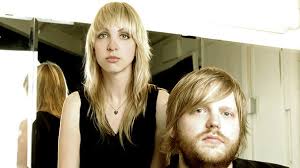
Georgie James is a band on the rise [Note: they broke up on August 4, 2008]. The duo makes smart, infectious pop with tight harmonies and jangling guitars — an upbeat and innocent sound that’s made its debut album (Places, 2007) a sleeper success.  Georgie James got its start when drummer John Davis’ former band, Q and Not U, disbanded in 2005.  Davis turned to his singer-songwriter friend, Burhenn, to forge something new.

At first, the two seemed like an unlikely pair. Davis had spent the past seven years releasing records with his bandmates on the legendary D.C. punk label Dischord and touring the world. Burhenn, on the other hand, had been releasing solo projects on her own label, Laboratory Records, and playing smaller venues on the east and west coast.

They eventually settled on a stark but serene image by New York photographer Phil Toledano, depicting a bare room with a large pile of books stacked in the middle. For the phrase, the band chose “Something Joyful.”

Their process seems tense to me.  But maybe that’s just how they bounce ideas off of each other.

He chose the words “something joyful.”  She chose David Bowie and 45.
She likes the pile of books in empty room–she sees it youthful and he sees it as disuse, disrepair, neglect.  They decide to use that picture and the phrase “something joyful.”

She plays piano melody banging out ideas for the tune on the first day. There’s lots of discussion and back and forth–very different from Merritt’s solitary style.

“It’s really difficult when you have two people who are trying to meet in the middle,” Burhenn says. “We each had a different vision of where this was going to go, and to try to very quickly throw that together is a difficult thing.”

They change styles.  She suggests maybe a Talking Heads’ vibe.  She sings it in a David Byrne-ish drawl but he doesn’t like it.  She says this is turning into a nightmare and fears the song sounds like John Cougar Mellencamp or Rod Stewart.

But in the final hour they pulled it out.

Davis added drums, bass and guitar. The two layered the sound with multiple harmonies and hand-claps.

Two days later, they had a song they called “Monument.” It’s a three-and-a-half-minute pop gem that marries the contrasting loneliness of the photograph with the spirit of “something joyful.”

As they walk out she says, “I think it’s awesome.”  And it’s very catchy.

[READ: February 2, 2018] “All That Glass”

This is a peculiar story that starts out seemingly reasonable and then just goes off the rails.

A man says his wife no longer wants to sleep in the bedroom anymore.  He took it as an attack against him and wondered what he did.  But she ignores that and says she wants to move into the conservatory.  He agrees but says that “All that glass, it gets cold in there at night.”

She moves some basics into the conservatory.  He thought it was odd, but it gave the conservatory a good spring cleaning.

It was cold in there at night  She wore extra clothes though, and that was that. (more…)

Read Full Post »

SOUNDTRACK: STEPHIN MERRITT: Two Days, ‘A Million Faces’ (Project Song: November 4, 2007).

Project Song was a nifty little show that NPR Music created.  The premise was that NPR would give a musician some prompts and a recording studio.  They then had two days to write and record a song.  I don’t know how much of the process was to be filmed, but presumably most of it. Then it would be edited down to a fifteen minute show.  The results are pretty cool and it’s a shame they only made five of them.

The first one they did was with Magnetic Field’s singer/songwriter/wizard Stephin Meritt.

Merritt is quite prolific so this seemed like it would be no big challenge.  They showed him six images and six words.  He had to choose one picture and one word.  He chose a picture and the word 1974.

Merritt does most of his writing sitting in a bar, with throbbing music in the background.

“Some recording artists write in the studio,” he tells All Songs Considered host Bob Boilen. “I think they’re crazy.”

So for the first installment of a new multimedia experiment called Project Song, All Songs Consideredset up a bar for Merritt in NPR’s Studio 4A, an expansive wood-floored room with plenty of space for a creative artist to spread out and experiment. We supplied him with a grand piano, an assortment of other keyboards (including a ’70s MOOG synthesizer), drums and guitars — even a sampler, from which Merritt extracted the sound of a vintage Mellotron.

The photograph he chose, by artist Phil Toledano, is an incredible image of a man covered head to toe in what looks like a bodysuit made of baby dolls.

In Merritt’s imagination the man shape shifts as a criminal.

For the music, he chose a “Shepherd tone” which is the illusion of ever ascending pitches.

And then we watch Merritt recording instruments and vocals and talking to the recording engineer.

It is very cool to see how this song evolves with bass, guitar, synth and more added in.

The final two minutes wrap up his take on.  He says he would normally work a lot longer.  There is only one section to the song. (It’s verse no chorus?) Yes.   The song is based on a loop because he finished the song sooner than he might have.  “But I write lots of fairly simple songs, and I like this one.”

[READ: Feb 3, 2016] “Silk Brocade”

Once again Tessa Hadley easily transports me to another time and place.

In this story, we meet Ann Gallagher, a talented seamstress who has started a small business with her gregarious friend Kit.  They are going to make couture dresses and more.

Unfortunately, old friends of theirs have come a-calling.  And today, Nola Higgins straight from Fishponds, has come asking a favor.

Turns out that Nola is getting married to nobility and she hopes that Ann can make a dress from some gorgeous old silk brocade that was in his house.  Ann is fully intending to turn her away–saying that Nola will never be able to afford their work–until she learns about the money. (more…)

Read Full Post »

« Newer Posts - Older Posts »