Feeds:
Posts
Comments

Archive for the ‘Ed Ruscha’ Category

shoppingSOUNDTRACK: MATT MAYS-Live at Massey Hall (May 4, 2018).

I had never heard of Matt Mays.  He was once a part of the Canadian country band The Guthries (who I also don’t know).  Perhaps the most surprising (and disappointing) thing to me about this show is when I saw an ad for this concert and saw that Kathleen Edwards was opening for him (!).  And that so far they haven’t released the Kathleen Edwards show.

Before the show he says he wants all feelings present–happy, sad–he praises the expression “all the feels” because that’s what he wants to happen tonight.  He wants the night to be “like a Nova Scotia kitchen party.”  You laugh you cry you dance and you fight all in one kitchen.

He starts with “Indio.”  Like most of these songs, it is a rocking guitar song with a definite country-rock feel.  It’s also interesting that a Nova Scotia guy is singing about “old fashioned California sin.”  There’s a ton of lead guitar work from Adam Baldwin.  Mays also plays guitar and there’s an acoustic guitar as well from Aaron Goldstein  The song breaks midway through to a piano melody from Leith Fleming-Smith.  Mays asks “You feel like singing Toronto? It’s real easy.”  And it is: “Run run run you are free now.  run run run you are free.”

For “Station Out of Range,” he invites his dear friend Kate Dyke from St Johns, Newfoundland.  She sings backing vocals.  It opens with some big crushing drums from Loel Campbell.  It has a slower tempo, but it grows really big with some really massive drum fills.

“Building a Boat” opens with a repeating keyboard pattern before a real rocking riff kicks in.  Ryan Stanley also plays guitars.  The song rocks on with a lot of little guitar solos.  Mays takes one and then Baldwin follows.  They jam this pretty long.

“Take It on Faith” starts with a simple piano before the guitars come roaring in with two searing solos.  The melody is really catchy, too.

“Terminal Romance” is a slower number.  Mays puts his guitar down and its mostly piano and bass
(Serge Samson).  Eventually a guitar with a slide is added.  It builds as more guitars come in.  They jam this song for about 8 minutes.

He ends the show with “Cocaine Cowgirl,” an oldie that still means a lot to him.   He says he’s been playing Toronto since he was 19 years-old in font of tow people.  He’s thrilled to be at Massey Hall.  His band is his best buds from Nova Scotia.   It’s an absolutely wailing set ender with Mays throwing in some wicked solos.  The song seems like its over but Mays plays some really fast guitar chords and aftee a few bars everyone joins in and rips the place part with intensity.  It runs to nearly ten minutes and it’s a  really satisfying ending.

[READ: August 3, 2019] “Shopping in Jail”

When an author releases a lot of books and essays in various formats, it’s pretty inevitable that you’ll wind up re-reading one or two.  Especially if some of those essays are reprinted in other books.

So it turns out that I read this small book five years ago (it’s understandable that I didn’t remember that after five years).  Here’s what I said about it five years ago:

Just when I thought I had caught up with everything that Douglas Coupland had published, I came across this book, a collection of his recent essays.  I enjoy the very unartistic cover that Sternberg Press has put on this.  It looks extremely slapdash–look at the size of the print and that the contents are on the inside front cover.  But the essays contained within are pure Coupland and are really enjoyable.

I have read a number of his older essays in recent years.  And here’s the thing: reading old Coupland essays just makes you think, ho hum, he knew some things.  But you don’t really think that he was on the forefront of whatever he was thinking.  So to read these essays almost concurrently is really fascinating.

His thoughts are science fiction, but just on the cusp of being very possible, even probable.  He also looks at things in ways that the average person does not–he notices that on 9/11 people didn’t have picture phones–imagine how more highly documented it would have been.  These essays are largely about technology, but they’re also about the maturation and development of people and how they relate to things.  Coupland can often seem very ponderous, and yet with these essays he seems prescient without actually trying to predict anything.  I enjoyed this collection very much.

I’m going to include what I said last time (in italics), but I felt the need to add some five-years later thoughts on each essay. (more…)

Read Full Post »

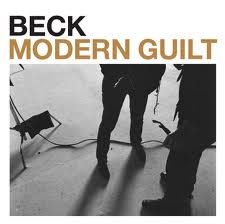
shoppingSOUNDTRACK: BECK-Modern Guilt (2008).

modern guil;As I mentioned, I missed Modern Guilt when it came out.  I guess I had burnt out on Beck after The Information.  But man, I have recently gotten into it big time.  It may be my favorite Beck album of all.  It is brief and simple but with enough going on to keep iot more than just interesting.  The feel is consistently retro by Beck but Danger Mouse throws in enough modern elements to keep it totally fresh (at least six years after the fact).

“Orphans” opens with a hyper drum beat and keyboards, but once the chords and Beck’s vocals come in it has a very sixties folk/psychedelic vibe.  But those drums keep coming it, making it sound very modern.  This has one of the catchiest verses that Beck has sung in addition to a great unexpectedly poppy bridge.  The song is unmistakably Beck, but the flourishes are very Danger Mouse.  “Gamma Ray” opens with a surf rock sound and backwards backing vocals.  It sounds very “future”, but future from the 60s.  This song ends abruptly just under 3 minutes, it’s especially abrupt after the length of some of his more recent albums.  “Chemtrails” opens like mid 70s Pink Floyd–synths and falsetto vocals.  But when the drums come crashing in it totally changes the song to a more modern sound–and yet that bass is still very Pink Floyd.  “Modern Guilt” has a very simple beat and seems like a simple catchy song.  Then the keyboards come along top and it feels kind of spacey.  Then the second guitar riff comes in underneath the song and it’s grounded again.  There’s so much going on in this little poppy gem.

“Youthless” is another straight ahead simple rocker, this one has disco synth lines over the top.  It reminds me of “Cellphone’s Dead” from The Information (I keep waiting to hear “One by One, gonna knock you out”).  It’s the only song on here that reminds me of another of his songs. “Walls” has a cool vocal melody that plays off of the music very well.  It also ends abruptly–a very cool two and a half-minute song.  “Replica” has very contemporary chaotic drumming that pins this floating song.  “Soul of a Man” makes me think of Deep Purple’s “Hush” for some reason.  But I love the way the guitars and noises just seems to come and go leaving the classic rock rhythm pulsing underneath it all.  “Profanity Prayers” has a very punk feel–buzzy guitars and a fast beat, and yet it’s also smoothed over somewhat with an interesting backing vocal line.  “Volcano” is a slow song that anchors the album nicely.  It runs a little long, but this brief album earns a longer coda like that.

I just can’t stop playing this.

[READ: April 2, 2014] “Shopping in Jail”

Just when I thought I had caught up with everything that Douglas Coupland had published, I came across this book, a collection of his recent essays.  I enjoy the very unartistic cover that Sternberg Press has put on this.  It looks extremely slapdash–look at the size of the print and that the contents are on the inside front cover.  But the essays contained within are pure Coupland and are really enjoyable.

I have read a number of his older essays in recent years.  And here’s the thing: reading old Coupland essays just makes you think, ho hum, he knew some things.  But you don’t really think that he was on the forefront of whatever he was thinking.  So to read these essays almost concurrently is really fascinating.

His thoughts are science fiction, but just on the cusp of being very possible, even probable.  He also looks at things in ways that the average person does not–he notices that on 9/11 people didn’t have picture phones–imagine how more highly documented it would have been.  These essays are largely about technology, but they’re also about the maturation and development of people and how they relate to things.  Coupland can often seem very ponderous, and yet with these essays he seems prescient without actually trying to predict anything.  I enjoyed this collection very much. (more…)

Read Full Post »

CV1_TNY_10_14_13McCall.inddSOUNDTRACK: JASON VIEAUX-Tiny Desk Concert #17 (June 15, 2009).

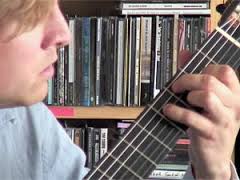
viaeuxJason Vieaux is the first to break the mold of folk singers playing the Tiny Desk.  Vieaux is a classical guitarist.  I don’t know a lot about classical guitar, but when it’s good I know it’s gorgeous.  And man, is this gorgeous.

I don’t know anything about Vieaux, but in the little blurb, they say that in 2002 they invited him to spend a week as a young-artist-in-residence on their classical-music program Performance Today.

I would have been grossed out by his long fingernail if they hadn’t pointed out that he glues a slice of a ping-pong ball to the underside of his right thumbnail as a kind of extended, “press-on nail” guitar pick.

He plays 3 songs and they are all simply stunning.

Bach: Prelude (from Prelude, Fugue and Allegro, BWV 998)

Maximo Diego Pujol: Candombe en Mi

Francisco Tarrega: Capricho Arabe

You can visit the NPR site to hear about the ping pong ball thing, and you can watch the video below.

[READ: January 7, 2014] “Pure Bleach”

This New Yorker has several small essays about work.  They are primarily from people who I wasn’t familiar with–only Amy Poehler saved the five from being unread.  When after reading all of them I enjoyed them enough to include them all here.

The pieces are labelled under “Work for Hire” and each talks about a humiliating job.

This final installment was the shortest.  Ruscha is an artist, whose name sounds familiar to me–he worked in pop art. His lame job was working in a laundromat “mixing bleach and water together in brown glass bottles for the customers to use”  If you didn’t know better you would say, that sounds like an old job, and you’d be right–that job existed in 1951.  Geez.  He made 50 cents an hour. (more…)

Read Full Post »