Feeds:
Posts
Comments

Archive for the ‘Art’ Category

 emikoSOUNDTRACK: DIANE CLUCK-Tiny Desk Concert #343 (March 17, 2014).

cluckI know of Diane Cluck only from one song that was played on an NPR show.  I really liked it (it’s called “Sara” and she plays it third here). Cluck has an unusual yet very compelling voice and a guitar style that is simple yet also unusual.

“Trophies” has a kind of Joni Mitchell feel to it–the whole thing feels kind of sixties, although not in the way she sings or plays, there’s just something about it that skews sixties–perhaps its the unusual vocal melodies in the verses?

For “Grandma Say,” Cluck switches to the piano and plays a bouncey but dark song with a fantastic vocal delivery and rather funny (but meaningful) lines.  For “Sara,” Diane puts some bells on her boots.  And when asked where she got them she sheepishly admits the truth.  “Sara” sounds as good live as it did on record–Cluck’s voice is just as compelling in this setting.

I really enjoyed this brief set.  And I was really struck by Cluck’s appearance.  She is quiet tall and extremely thin, and she seems even more stretched out by her tall hair and long neck.  And yet she seems to be putting no effort into anything that she’s doing.  She makes for as mysterious a figure as you might expect from these songs.   I was as captivated by watching her as I was listening to her.

[READ: June 26, 2014] Emiko Superstar

As part of this recent influx of graphic novels, I also scored Emiko Superstar.  This title looked familiar from the Minx sampler that I have, so I was excited to read it.

The story is by Mariko Tamaki and is about a young Japanese-American girl named Emily.  We meet her family right away–her father is a big burly American guy and her mom is a demure Japanese woman.  She is named for her grandmother Emiko, who was a vivacious and fun dancer (although Emily’s mother now frowns on dancing and public fun).  As might be expected, Emily is a quiet, nerdy girl, hanging around with the nerdiest kids in school.

She doesn’t really mind being a nerd until before one summer break, when all the other nerds plan to go to a convention that will help them land great jobs.  Emily doesn’t know when nerd meant being a corporate sellout, and she refuses to go.  Rather, she decides to stay around town and get a crummy job at a coffee shop.  But after one regrettable (or not) incident, she realizes she may be unemployed for the rest of the summer.

Her mother will have none of that, and finds her a job babysitting most days during the summer.   The family she babysits for seem pretty perfect.  The husband is an athletic happy, loud guy who is proud of his life, his wife, his kid and his house.  The wife is much quieter and seems a bit embarrassed by her husband, but otherwise seems reasonably content with her son and her life.  And there’s the baby, who is drooly but pretty easy to deal with.

One day at the mall, Emily sees a wild-looking girl dancing around, making a racket and advertizing a place called The Factory, where the freaks all go.  Before being dragged away by security, she throws flyers out into the crowd and Emily grabs one.  And Emily feels an electric shock in her body at the thought of going to this place. (more…)

Read Full Post »

arcSOUNDTRACK: HARI KONDABOLU-Waiting for 2042 (2014).

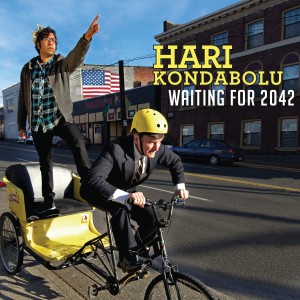
hariI knew Hari Kondabolu from the much missed Totally Biased with W. Kamau Bell (in fact the liner notes even have Hari thanking Kamau for employment—although at the time of this release, that employment was terminated).

As Hari jokes at one point during this show (recorded in Oakland, CA in 2013), he is “obsessed with race.” And how could he not be. To be alive in 2014, you should be obsessed with it, especially if you are paying attention. And his jokes about race are not only salient, they are different. Like the first one on the disc, “My White Chocolate Joke.” The set up is simple, chocolate is dark and creamy and delicious, why would anyone need to make a white version of it? This leads to a punchline that if you like white chocolate you are racist. But as with most of Kondabolu’s jokes, the punchline is just a set up for a much deeper joke—this one having to do with White Jesus. It’s very funny and really well done. “A Feminist Dick Joke” is self referential and funny, especially when he criticizes his own joke for not going far enough. “Moving to Canada,” pokes fun at Americans who say they are leaving for political reasons and then pokes fun at Canada for not being the panacea these people say it is anyway.

I loved “Environmentally Friendly Pollution Machines” which is about how eco-tourism is encouraging us to see things before the tourism industry destroys them.  “Toby” is such a wonderfully extended joke in which people like me who don’t get the initial joke are gently upbraided until the joke is fully revealed to us and even though we just had a joke explained to us, it was still funny. And the call back at the end of the disc is genius.

“Weezer Broke My Heart” is a very unpolitical joke about the band Weezer and that their fan base demographic has not changed in a decade–and how that’s really creepy.

There’s a lot of race jokes in the next few pieces. The title track about how in 2042, whites will be the “minority” is simply hilarious (whites are only the minority if you consider that the races are “whites” and “everyone else”).  And then the hilarious joke about how “Asians are Well-Behaved” (the Chinese restaurant bits are awesome) and the wonderful dichotomy of Mexican stereotypes (stealing our jobs but also being lazy). There’s also the very funny joke about how minorities never get to time travel for real (referencing the Martin Lawrence movie Black Knight and Back to the Future just to show how current and hip he is) because there would be some real changes.

There are also a number of jokes about homosexuality, and how heterosexuals are totally flamboyant even though they don’t realize it (showing off your spawn is pretty flamboyant, frankly). And the extended riff in “Matthew McConaughey on Tolerance” is just terrific.

Jokes dealing with all of these topics are bound to be inflammatory, but Hari is also not afraid of the deadly curse words, (he actually makes me uncomfortable in one joke with how many times he says the word fuck, although is very funny).

All in all this is a very funny standup show from a comedian who is very funny and will, with any luck, find a wider audience. (Of all races).

[READ: June 20, 2014] Arcimboldo

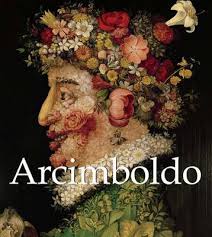
Giuseppe Arcimboldo was a phenomenal painter who is best known for his paintings of people’s portraits which are made out of fruit.  But he was also a master of detail in realistic sketches, drawings and painting as well.  This tiny book (270 pages) with a paragraph of text on every other page, is a wonderful introduction to the man beyond the fruit.

Perhaps the most amazing thing about his work is that it was done in the 16th century.  I think many of us tend to lump him in with the surrealists or the modern period.  But he worked in this style long before.  For context, his father was friends with a student of Leonardo da Vinci.

Arcimboldo was born in 1527 to nobility.   Interestingly, there are variations on the spelling of his name: Acimboldi, Arisnbolde, Arcsimbaldo, Arzimbaldo and Arczimboldo.  Giuseppe even signed his first name in different ways as well: Giuseppe, Josephus, Joseph or Josepho.  The book doesn’t indicate if this was some kind of intentional obfuscation.

The first dozen or so pages contain amazing illustrations by Arcimboldo–primarily studies of nature, both flora and fauna. They have a distinctively 15th/16th century style, and they are amazingly detailed.  A little later, Arcimboldo began doing studies in deformed creatures–birds with three legs , goats with weird hooves.  Whether this was just because he wanted to explore nature in great detail or because he liked weird things, the book doesn’t say. (more…)

Read Full Post »

CV1_TNY_05_12_14Chast.inddSOUNDTRACK: TIMBER TIMBRE-Tiny Desk Concert #355 (May 10, 2014).

timberI wanted to like this band because I think their name is very clever. But I just don’t enjoy this kind of slow song.  Ten years ago I wouldn’t have even given this a chance, but since I have embraced the Tindertsicks, I have a lot more patience from this kind of music, but I just can’t get into this—it’s way too slow and meandering for me.  They play three songs, “Hot Dreams,” “Run From Me,” and “Grand Canyon.”  The second song “Run For Your Life” has a mellow Elvis vibe (I don’t like Elvis either), and when they break into the staccato guitar chords it sounds like Roy Orbison’s “Running Scared” (Nope, don’t like Orbison either).  I do like the way it builds but it’s not enough to sell the song for me.  And when you get to the lyrics, I’ll just say that the world did not need another song in which the singer calmly says “Run from me, darlin’, you better run for your life.”

[READ: June 4, 2014] “The Fugitive”

I really loved this story by Ulitskaya (which was translated from the Russian by Bela Shayevich).  What I liked about it was that there wasn’t a lot of plot exactly, because it centered on the mind of the “fugitive” who is an artist in Communist Russia and is persecuted for his drawings.

As the story opens, the police have come to his house and question his wife.  They are there for Boris Ivanovich (yes, there is a problem for me with compound Russian names, but I found this was pretty easy to get through after a few pages) because he has made some drawings that put Communism in a bad light (letters made of bologna that spelled out “Glory to the Communist Party” with a price tag of 2 rub. 20 kop.

Once the police leave (he presents a document that gives him temporary safety), he flees Moscow to the distant village of Danilovy Gorki–a tiny settlement of five houses.  He stays with his friend and fellow artist Nikolai.  The country life is a novelty as he does all of the things that country folk do.  And he feels largely safe because he is far enough away from prying eyes.  He doesn’t even write to his wife for fear of giving himself away.  This also means that he can have wild sex with a woman who is visiting for the holidays–Anastasia (“She’s so educated.  But such a slut!”).  Eventually he tells his friend that he loves this life because it is so anti-Soviet, but the friend replies that it is not anti-Soviet, simply a-Soviet.  (more…)

Read Full Post »

shoppingSOUNDTRACK: BECK-Modern Guilt (2008).

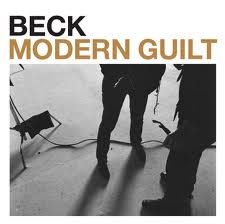
modern guil;As I mentioned, I missed Modern Guilt when it came out.  I guess I had burnt out on Beck after The Information.  But man, I have recently gotten into it big time.  It may be my favorite Beck album of all.  It is brief and simple but with enough going on to keep iot more than just interesting.  The feel is consistently retro by Beck but Danger Mouse throws in enough modern elements to keep it totally fresh (at least six years after the fact).

“Orphans” opens with a hyper drum beat and keyboards, but once the chords and Beck’s vocals come in it has a very sixties folk/psychedelic vibe.  But those drums keep coming it, making it sound very modern.  This has one of the catchiest verses that Beck has sung in addition to a great unexpectedly poppy bridge.  The song is unmistakably Beck, but the flourishes are very Danger Mouse.  “Gamma Ray” opens with a surf rock sound and backwards backing vocals.  It sounds very “future”, but future from the 60s.  This song ends abruptly just under 3 minutes, it’s especially abrupt after the length of some of his more recent albums.  “Chemtrails” opens like mid 70s Pink Floyd–synths and falsetto vocals.  But when the drums come crashing in it totally changes the song to a more modern sound–and yet that bass is still very Pink Floyd.  “Modern Guilt” has a very simple beat and seems like a simple catchy song.  Then the keyboards come along top and it feels kind of spacey.  Then the second guitar riff comes in underneath the song and it’s grounded again.  There’s so much going on in this little poppy gem.

“Youthless” is another straight ahead simple rocker, this one has disco synth lines over the top.  It reminds me of “Cellphone’s Dead” from The Information (I keep waiting to hear “One by One, gonna knock you out”).  It’s the only song on here that reminds me of another of his songs. “Walls” has a cool vocal melody that plays off of the music very well.  It also ends abruptly–a very cool two and a half-minute song.  “Replica” has very contemporary chaotic drumming that pins this floating song.  “Soul of a Man” makes me think of Deep Purple’s “Hush” for some reason.  But I love the way the guitars and noises just seems to come and go leaving the classic rock rhythm pulsing underneath it all.  “Profanity Prayers” has a very punk feel–buzzy guitars and a fast beat, and yet it’s also smoothed over somewhat with an interesting backing vocal line.  “Volcano” is a slow song that anchors the album nicely.  It runs a little long, but this brief album earns a longer coda like that.

I just can’t stop playing this.

[READ: April 2, 2014] “Shopping in Jail”

Just when I thought I had caught up with everything that Douglas Coupland had published, I came across this book, a collection of his recent essays.  I enjoy the very unartistic cover that Sternberg Press has put on this.  It looks extremely slapdash–look at the size of the print and that the contents are on the inside front cover.  But the essays contained within are pure Coupland and are really enjoyable.

I have read a number of his older essays in recent years.  And here’s the thing: reading old Coupland essays just makes you think, ho hum, he knew some things.  But you don’t really think that he was on the forefront of whatever he was thinking.  So to read these essays almost concurrently is really fascinating.

His thoughts are science fiction, but just on the cusp of being very possible, even probable.  He also looks at things in ways that the average person does not–he notices that on 9/11 people didn’t have picture phones–imagine how more highly documented it would have been.  These essays are largely about technology, but they’re also about the maturation and development of people and how they relate to things.  Coupland can often seem very ponderous, and yet with these essays he seems prescient without actually trying to predict anything.  I enjoyed this collection very much. (more…)

Read Full Post »

lynchSOUNDTRACK: Deconstructing Beck (1998).

decon  Back in 1998, Illegal Art made (small) headlines by releasing this collection of songs that were comprised exclusively of Beck samples, none of which were cleared by Beck.  The whole thing was, well, illegal.  Naturally, there was a lawsuit, but Illegal Art is still around, and so is Beck, so who knows where this went.

I’ve always appreciated Illegal Art and the whole pastiche style best represented by Negativland and Plunderphonics.  And I believe the point of this CD was quite valid–you shouldn’t be allowed to sample artists simply because you have lots of money.  Since Beck’s label could afford to pay people, he was allowed to sample them.  Whereas small time and unknown artists could never afford to sample someone.  So, how is that fair or even a good way to create art?

So Deconstructing Beck seems like an awesome idea.  Beck in 1998 (just after the huge success of Odelay!) was known for his sampling.  So why not sample him?

But here’s where the theory is better than the practice.  Most of the artists on the disc aren’t making music, they’re making art or a point.  So they cut and paste Beck’s sounds into what is mostly 3-4 minutes of unrecognizable chunks.  Unrecognizable as Beck, unrecognizable as music.  Some of them reduce the sounds to essentially a drum beat.  Others have taking snips and sounds and have pasted them together in a very jarring way–which is kind of the point of a lot of this style of music.

Occasionally Beck songs are actually recognizable in the noise.  You can hear “Where It’s At,” a bit of Devil’s Haircut,” the obligatory “Loser” cut, “Jack-Ass” which in track two is played basically in its entirety but has the sound randomly dropped out, and for some reason, “Readymade” is in two songs. Some of the samplers go all the way back to Soulmanure and One Foot, but mostly they grab the spoken tracks–Beck as a young boy and the old man Ken–and they just sample them in chunks, not really manipulating them at all.

Aside from the general unlistenableness of the disc (and clearly it’s not really meant to be easy listening), it’s really disappointing that they were given the task of deconstructing Beck and in at least 5 of the songs you would never even know that it was Beck that was sampled in the first place.  What’s the point?  I realize that in 1998, technology wasn’t as easy to use as it is now, but I understand that these were made on a Mac, not with tape.  Not to mention at least two or three make songs that are actually interesting to listen to.  So, worthy cause or not, Deconstructing Beck is disappointing and isn’t likely to convince anyone.

[READ: March 15, 2014] Naming

Like Deconstructing Beck, I really wanted to like this book.  It is a collection of art by director David Lynch.  Lynch has been making static art for years.  I have another book of his called Images which is mostly photographs.

The premise behind this collection is Lynch’s use of words in his art.  So for instance the cover drawing is of a very simple house with the words “modern house” at the bottom.

Every picture in this collection has words in it, either written by Lynch or included in the photograph.  And they date back as old as 1979 . (more…)

Read Full Post »

beelievrSOUNDTRACK: BECK-“Beercan” (1994).

I beercanhad forgotten how much I liked “Beercan” as a song until I played Mellow Gold again.  It’s incredibly catchy, has some wonderfully weird elements (like the sample of the girl saying “I’m Sad” over flamenco music), and deserved to be heard more.

The B-sides for this single really run the gamut of everything Beck does.  The first track “Got No Mind” is a reworking of “Pay No Mind.” It’s done as a very simple folk song.  The words are largely different and the music is played differently, but the chords are the same.  It’s an interesting conceit to redo a song almost entirely like that.  The second song “Asskiss Powergrudge (Payback ’94)” is just a dirty slow abusive song. The guitar strings are totally muted, just making noise.  The vocals are slowed and sludgy.  And it’s just heaps of abuse.

“Totally Confused” is also on the “Loser” single and is such a pretty, mellow folk song (with Anna and Petra from That Dog singing backing vocals).  And the final song, “Spanking Room” is just a pile of sheer noise and feedback.  It is loud and crazy and goes on for some 5 minutes.  There’s a “bonus” track of which I have learned is called “Loser (Pseudo-Muzak Version).” It’s Loser sampled and played behind some weird keyboard “muzak.”  It sounds like it was done live in a small club.  Really weird.

[READ: February 28, 2014] Some Instructions

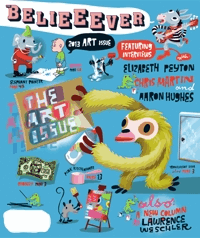
This little booklet came with the Believer 2014 Art Issue.  It is called “Some Instructions.”   It is inspired by George Brecht, a Fluxus artist who is credited with creating the written form of performance art (called the “event score”).  Brecht was bored by didactic instructions in art so his creations were utterly open to interpretation.  The example they give is his “Three Chair Events” which is in its entirety:

  • Sitting on a black chair. Occurrence.
  • Yellow chair.  (Occurrence.)
  • On (or near) a white chair.  Occurrence,

–Spring 1961

This is the kind of thing that I think i would have enjoyed in college, being pretentious an d obnoxious, now I realize it is just navel gazing and (in many of the examples below) barely even thought out.  You can kind of see what Brecht was getting at (although why he needed to do more than one or two is beyond me), as a kind of thought-provoking questioning of what we know of as art.  But some of these below are just, well, stupid. (more…)

Read Full Post »

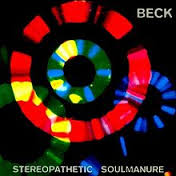
tintinSOUNDTRACK: BECK-Stereopathic Soulmanure (1994).

soulmanureDepending on who you believe, this was Beck’s first or second or even third album.  Certainly it was recorded earlier than the other records but who knows what the actual release date was, or if it even matters (it doesn’t).  This album plays like a demo tape of home recordings of a talented folksinger who doesn’t want to be labelled as a folk singer ans is experimenting with all kinds of other sounds, including tape manipulation, home recording and utter noise (there’s a Sonic Youth sound connection here, before they ever did anything together).

But anyway, that’s got nothing to do with this album.  My version has 23 listed tracks and two bonus tracks.  And since I’ve no intention of doing a track by track analysis of the album, I’m going to group some tracks together.

There are a few styles of music on the record.  There are about a half-dozen noise/nonsense tracks–distorted guitar, distorted voices, sometimes sheer noise–like the “bonus” track which is some ten minutes of just nonsense.  There are about a half a dozen tracks that are basically just talk–old home recordings from when he was a kid, and other spoken tracks.  There are even a few tracks from a guy named Ken who is apparently an older guy singing what sounds like hobo songs (which I suspect Beck does not play on at all).

There are also a number of different instruments which (I assume) Beck is playing. He plays banjo very well, there’s an accordion track, and of course guitar.

What sets this apart from being a simple nonsense album is that there are nearly a dozen “real” songs.  There are a couple of well sung country tracks, with a slide guitar. There’s also some anti-folk, rap and live numbers.  These are fleshed out, proper songs–musically complete.  It’s in the lyrics that you can hear Beck fighting the folk/country pigeonhole.  He has three songs that are more or less rapping (like “Loser”).  There’s a couple of songs that were recorded live (in a club with half a dozen people), and are mostly silly.  And then there’s a series of anti-folk songs.  These are pretty traditional sounding songs, but with layers of noise or weirdness that keeps them from being traditional folk.  Like “Satan Gave me a Taco” which is complete song but is obviously quite silly.  And yet, Johnny Cash covered the song “Rowboat” on one of his Americana albums.

None of the recordings sound more than lo-fi, but the good songs all sound good.   It honestly sounds like a guy trying desperately to show off what he can do–and hoping desperately to get accepted by just about any genre.  Except that he clearly has his own identity (as varied as it may be).  This record is certainly not for everybody (as suggested by the incredibly low sales), but if you like Beck’s early experimental stuff, there’s enough really good stuff here that’s worth checking out.

[READ: March 9, 2014] Tintin: The Art of Hergé

Sarah bought me this book for our tenth anniversary (which is “tin”, get it?).  We’ve both enjoyed Tintin over the years, more as an icon than as a collection of stories (which I believe she has not read and which I’ve read about 1/3 of).  The Spielberg film and subsequent video game are both really cool too.  This book is an amazing look at Hergé as an artist and at the Hergé museum, which looks amazing.

When Sarah and I were in Belgium, we went to an animation museum which featured Hergé heavily.  Since it was a decade ago, I actually thought that this book was about that museum, but no, the Musée Hergé opened in 2009 and was designed by French architect Christian de Portzamparc.  The first chapter of the book is dedicated to the Museum, and do de Portzamparc’s designs and execution in the spirit of Tintin.  And I have to say the building looks amazing.  The facade alone is beautiful, and his explorations light and dark and shape look really awesome. (more…)

Read Full Post »

goSOUNDTRACK: SIGUR RÓS-untitled #1 (Vaka) (single) (2003).

19Sigur Rós lay dormant for a while after their successful tour and then they came out with the album ().  The album tracks were also untitled (although the band did have names for them).  This single was released as a 3″ disc and then as the version I have which has the same four songs and a DVD.

It was called variously “Untitled 1/9” or “Vaka” and it contains 2 or 4 songs.   The first song is “Vaka.”  Song 2 or 2 through 4 are called “Smáskífa” (or (untitled #9)).  It was originally listed as a 12 minute song but has been broken up on both releases as 3 shorter songs:

The first one is a slow mournful section, with Jonsi’s voice manipulated somewhat to make it sound a little creepier than it normally does.   The second part opens with the voice presumably sped up making it even higher pitched than normal.  Then comes the beautiful slow piano. The third part consists of slow, repeated synth notes and ends with what sounds like more of Jonsi’s singing, but slowed down.  It’s not the most inspired song by the band, but it shows them playing around with sounds a bit more.

The official track listing is

  • Untitled (Vaka) 6:43
  • Untitled (Smáskífa 1) 4:38
  • Untitled (Smáskífa 2) 2:47
  • Untitled (Smáskífa 3) 4:22

[READ: December 2, 2013] Go

This is an excellent book for learning about graphic design, whether you are a kid or an adult.  Even though I feel like I know a lot about graphic design, I learned some fundamentals.  Kidd explains not only how but why things work as they do.  And he begins but upending conventions (just look at the cover which should give you pause).

If you don’t know who Chip Kidd is, he is an amazing book jacket designer.  Some of the most beautiful jackets were created by him.  And, even though I’ve been a fan for a while, I didn’t know that he designed the cover for Jurassic Park (and made all of the iconography for the subsequent movies).

He talks about the history of design (from nature to man-made), showing how we learn things from nature and then proceed to produce beautiful things (I enjoyed his quick trip through the highlights of man-made design from the Book of Kells to the Obama logo).

He talks about simple tricks for making designs stand out like using very small or very large pictures, inverting images, using vertical or horizontal lines, and emphasizing light and dark.  [On a purely fun bit of coincidence, he designed the cover for Zbigniew Herbert’s Mr. Cogito.  I just read a review about the book by David Foster Wallace last week].  I also really enjoyed the way he plays with images and dpi. (more…)

Read Full Post »

slippageSOUNDTRACK: PHISH-Farmhouse (2000).

farmhouseThis album has a very acoustic feel to it and I really enjoy this disc.  It is one of their most “mature” records and I feel a lot of fans don’t enjoy it as much, but I think the songs are really pretty.

“Farmhouse” is another one of my favorite Phish songs.  I love the harmonies and the melody is beautiful.  The end of the song with the two singers doing different lines of vocals is just beautiful.  “Twist” is a live favorite although here it opens with percussion only before Trey starts singing.  But then the song proper starts and it is just a riot of fun. Woo!

“Bug” is a mellow contemplative song about God.  It a little long and I must admit, a little dull.  “Back on the Train” is usually much faster live—it sounds like a slow train here.  “Heavy Things” returns the album to excellence, it’s a wonderful uptempo song that is fun to sing along to.  “Gotta Jibboo” is a silly dancey song with horns.  It’s a long jam about 5 minutes most of which is instrumental.  “Dirt” is a piano ballad.

“Piper” is a wonderful round with a melody that circles around the song, I really enjoy this song live and it’s fun to hear how fast they do it here.  I love the way the “words and words I say” gets cycled through.  “Sleep” is a 2 minute gentle ballad.  And “The Inlaw Josie Wales” is a pretty acoustic guitar/piano instrumental.  “Sand” is a funkier number that brings up the tempo.  Of all the songs on the album, I don’t know this one all that well, but it is very Phish like.  “First Tube” ends the disc with a staccato guitar riff that sounds very much like Santana to me.  It’s got a great beat and is very cool.

Perhaps I’m showing my age but I so is Phish, and I think this is a really solid album.

[READ: November 4, 2013] The Slippage

I knew Ben Gereenman from Superbad, a McSweeney’s book.  I liked it a little—but it was more trickery than story telling.  I had gotten it in my head that The Slippage was a good novel (I’m not sure why), and when I saw it at work on Friday, I grabbed it in hopes of reading it before I got back to work on Monday.  And I am pleased to say that I polished off this 288 book in a weekend (and suffered for my lack of sleep).  But I didn’t only finish it because of a self-imposed challenge, I really got into the story.

For this book Greenman’s style is simple and straightforward (a far cry from his earlier, more deliberately challenging work) and the story itself is also rather simple.  But it is engaging, funny and emotionally exhausting.  So the simple story is one of suburban discontent.  The blurb that stayed with me was “If Emma Bovary had lived in the ‘burbs, she would have left a novel like this in her wake.”

The main characters in the story are William Day, his wife Louisa and her brother Tom.  Indeed, the book is really about William and how he handles suburban discontent.  We meet all of the Day’s friends.  In addition to these people there is Emma, the woman who William has an affair with. (more…)

Read Full Post »

aug2013SOUNDTRACK: KISS-MTV Unplugged (1996).

unpluggedEver ones to jump on a bandwagon, Kiss did an Unplugged special in 1996.  They had been laying low for a while.  Conventional wisdom says they were working on the follow-up to Revenge (and the successful Alive III tour) when they got called in to do this Unplugged.  (The follow-up Carnival of Souls would eventually be released to little fanfare).

And so here we have Kiss in an unplugged setting.  The big surprise for this show was that Peter Criss and Ace Frehley were invited back on stage to play some songs.  And things went so well (and there was clearly money to be made in a reunion) that the original guys got together, made an album and even toured it (which I saw).

But to me the real surprise is what a great set list this is.  I would love to go to a Kiss show and hear these selections because the diversity is fantastic and there’s very few of the obnoxious hits that I’m tired of.  It’s true that the bulk of these songs are their more mellow offerings (which is smart since the heavier ones wouldn’t work so well with the big acoustic guitar sound), but the choices are so unexpected.  I mean look what they start with.

“Comin’ Home” a deep cut off of Hotter Than Hell that, well I won’t say Kiss fans wouldn’t know, but that contemporary Kiss fans may not know.  And it sounds fantastic in this recording.  The heavier songs don’t sound quite as good with the big acoustic guitar treatment—so “Plaster Caster” seems a little odd.  However, “Goin Blind” (however absurd the lyrics) works great in this setting (you can really hear the complex bass that Gene plays).  Surprisingly, “Do You Love Me” falls a little flat here because in the studio version the choruses are so big, but here they are gentle and it kind of undermines the intensity.  I keep reiterating how much I really dislike “Domino” lyrically.  But musically it’s pretty interesting and it works fine in this setting.

The biggest musical surprise comes with “Sure Know Something” from Dynasty.  Even though the original is very discoey, the acoustic treatment sounds great.  “World Without Heroes” is another huge surprise and it also works very well in this setting (I’m trying to imagine how all of them needed to relearn all of these songs).  With the intro to “Rock Bottom” being a sweet melody the acoustic version works well.  Surprisingly the louder part works pretty well here too.  And then woah, “See You Tonite” from the Gene solo album!  They pulled some crazy things out for this show. I suppose this set wouldn’t be very exciting in the full makeup stage show, but it would be very cool to hear these tracks live.

“I Still Love You” is an aching ballad that works well in this context because really the main feature of the song is Paul’s voice which sounds great here.  “Every Time I Look at You “ is a cheesy ballad which of course is tailor-made for Unplugged.

And then comes the surprise—Peter and Ace.  It’s the first time they’ve all played without makeup and the first reunion in years.  And as a nice treat they play “2,000 Man” the track that Ace sang on Unmasked (surprising that they didn’t do “Shock Me,” but that is not really right for an Unplugged).  “Beth” is not really a surprise as it is Peter’s song, although it is surprising to hear it on guitar which changes the song quite a bit and makes it sound quite good.  The real treat is “Nothin’ to Lose” in which everyone comes out on stage and takes a verse.  It’s always fun to hear how into it Peter is.  The set ends with “Rock n Roll All Nite” and even in this more stripped down setting the song sounds good (although they must be so tired of singing this song).

Unplugged albums tend to get forgotten in artist’s catalogs, but this is a really enjoyable set and a must for any Kiss fan.  Incidentally there are some “uncut” versions of the show online that are worth checking out for the extra tracks.

[READ: September 17, 2013] “The Exiled Queen”

This is the kind of story that makes me wonder why someone would write about the things they do.  Not because it’s bad or not worth writing about, I just can’t imagine where the idea came from.  This is a story about a boy named Filippino who is an art prodigy.  He could draw a Madonna before he knew what a Madonna was.  He learned to paint and gild frames before he could talk and his work was impeccable.

This was a challenging story for me to read because there are no paragraph breaks (and I love my paragraph breaks).  It is just an endless stream of prose about this painting prodigy.  But some details do come through the verbiage.

It is 1469 (!), the boy’s father has died, and he was soon taken under the wing of the great painter Battigello.  And Battigello began to teach him more and more, but young Filippino would learn so quickly.  he could just watch the master’s arms and imitate his brush strokes.  We later learn that Battigello would come to be called Botticelli. (more…)

Read Full Post »

« Newer Posts - Older Posts »