Feeds:
Posts
Comments

Archive for the ‘Animals’ Category

SOUNDTRACK: COLIN STETSON-New History Warfare, Vol. 2: Judges [CST075] (2011).

When you learn that Stetson played saxophone for Tom Waits, it makes perfect sense.  The middle of the second song, “Judges” sounds like the instrumental break for any of Waits’ newer songs.  Of course, once Stetson starts really wailing you realize that Stetson doesn’t need Waits’ lyrics to tell a story. With just one big-assed bass saxophone, Steston can say quite a lot.  He plays with circular breathing, meaning that he doesn’t have to stop to take a breath, he breathes in through his nose and out through his mouth at the same time (this is of course impossible).  The bass saxophone weighs some 20 pounds and is massive and Stetson makes it sound like everything from an oil tanker to a field of runaway horses.  Oh, and he also has pretty melodies and songs that sound longing.

This disc is part two of a trilogy, but this is the first of his records that I bought (thanks to a release via the folks at Constellation–I wonder if they will redistribute Pt 1).  There is a story that runs through these discs, although honestly, I’m not entirely sure what it is.  But that doesn’t matter to me, what matters is Steston’s amazing skills.

There are evidently a couple of overdubs on this disc, but for the most part it is just him and his saxophone (and 24 microphones).  The microphones were placed all over the room, on the instrument itself (to pick up the clacking of the keys) and even on his throat (when he makes those “voices muffled by a pillow” sound, that’s the throat mike picking up voice–singing while he is playing (which is impossible)).

The album features a couple of spoken word sections by Laurie Anderson, whose clipped, non-inflected voice gives this otherworldy music an even more otherworldy feel.  And there’s two songs sung by Shara Worden.  Other than that, it’s just the man himself.

Prepare to be amazed by this man’s talent.  But also prepare to be a little frightened by what you hear.  This is not timid music by any stretch.  There’s some scary stuff on this record, especially if you listen in the dark.  More especially if you listen loud (which you absolutely must do to hear all the nuances).  On first listen, this may sound like a noisy jazz record, but the more you get into it, the more amazing it becomes.

[READ: October 11, 2011] Moby Dick-in Pictures

Matt Kish has accomplished an amazing thing.  He has drawn a picture a day (more or less) to accompany every page of the 552 page paperback version of Moby-Dick.  He takes a small passage from each page and renders an image for it.  One thing this book is not is an illustrated version of Moby-Dick.  It doesn’t purport to be.  You won’t get the whole story from this book.  It’s not a cheat sheet for high school students.  If you haven’t readMoby-Dick, this will give you a taste for the story–almost like a preview for a movie.  And hopefully it will compel people to read the original.  If you have read Moby-Dick, this is a wonderful companion.  Not only will the pictures give you fascinating insights into the story (and into Kish, of course), but seeing sentences excised from the book to stand alone makes you aware of the book in ways you just aren’t when you’re reading it as a novel.

Kish admits he is not an artist, which while not false modesty, is certainly selling himself short.  He has an awesome style of illustration.  I am especially excited by his vast pictures with small details (lots of pages where there are small circles with lines in them or, for instance, the details on Queequeg’s face) and when he uses bold lines to create vast, weighty iconic pictures.  Here’s one example of his awesome use of multiple straight lines.  I mean, it’s gorgeous.

But I also love the whole conceit that an artistic shortcoming for him has turned out to be an absolute boon.  Kish says he cannot render the human form and so he made the conscious decision to make the seamen more like avatars than people.  It’s daring and a little odd, but it works wonders.  I admit that I was a little less than excited by the very first page of the book–I was disconcerted by Ishmael and his utter lack of features. (I actually like the way he is rendered later in the book better–call it an artistic growth).  But by the time her gets to Queequeg, or the  gorgeous Tashtego  it’s obvious that his decision was genius.  Just take a look at the marvel that is is Ahab (left).  First off, the colors are amazing.  As are the details of the whale in the corners.  But look at him–he’s a metal machine–shiny and tough–part ship, part whale.  Look at the awesome shading and detailing of the blue “coat” that he’s wearing.  He’s even got the badge of Moby-Dick on his belt!  And then there’s the pegleg–the most beautifully drawn pegleg ever.  It’s really stunning.

Now you’re also noticing that there’s all kinds of diagrams behind Ahab.  Kish used to work at a bookstore and he hated seeing old pages of books thrown away (he has since become a librarian, which makes sense–although as I librarian I learned that librarians are actually quite cavalier about throwing away old books once they are beyond use).  So he brought these pages home.  And, given the density of the layers of meaning in Moby-Dick, he decided to draw his pictures on these old pages.  So on virtually every page you can see something in the background.  Most of the time they are these circuital diagrams, which are wonderful. But there are several drawings where the found pages are pages of text from books.  And I have to say if these were serendipitous findings then he has amazing fortune.  Some of the pages tie in so perfectly it is wonderful.

Like the page that is headed “Cetology” and is from what, a textbook on whales?  Or several other pages that I wish I had taken notes on, because they were really wonderfully chosen.  He even has a drawing on a title page of Moby-Dick. I have to ask, did he really find that or did he buy it for the project? (more…)

Read Full Post »

SOUNDTRACK: KISS-Rock and Roll Over (1976).

After Alive!, Kiss released what I think of as the cartoon albums.  These next three discs all had cartoon covers, which also coincides with their huge ascent into fame.  I tend to think of Destroyer and Love Gun more than this one (maybe full-bodied pictures are more memorable than just their faces), even though this one has a huge share of important Kiss songs like “I Want You” (which has an amazingly long version on Alive II). 

I never really liked “Take Me,” there’s something about the chanting backing vocals that irks me (although “Put your hand in my pocket, grab onto my rocket” is one of my favorite Kiss couplets).  But “Calling Dr. Love” is a wonderful twisted song (the falsetto backing vocals are so doo wop, it’s funny to contemplate the band’s musical direction at this point).  I loved this song so much it even features in one of my first short stories

As an eight year old, I could never figure out what Gene would be doing in the “Ladies Room”–since he was a boy and all.  Naiveté is a wonderful thing to have as a young person listening to Kiss–I had no idea what was going on in most of the songs–I wonder if my parents bothered to listen to the lyrics at all.

I also never really liked “Baby Driver” all that much–I don’t know if it’s Peter’s voice, or that I can’t figure out what the hell this song is about but it’s still just okay to me–although I like the guitars at the end.   I love the solo in “Love ‘Em Leave ‘Em”–although the sentiment is not the best.  Of course, the sentiment in “Mr. Speed” cracks me up: “I’m so fast, that’s why the ladies call me Mr. Speed.”  Did that mean something different in 1976?

“See You in Your Dreams” was covered by Gene on his solo album, and I think I like that version better (it’s more theatrical).  Although this one has very interesting use of Beatlesesque harmonies.  “Hard Luck Woman” is wonderful song, and I do like Peter’s voice here, yes.  But who the hell is Rhett?  “Making Love” ends the disc.  I like the break in the middle and the awesome guitar solo.  Also, Paul’s vocals have some cool effects on them. 

This is a fun album.  Even the songs I don’t love are still songs that I like quite a bit.  It’s a nice contrast from the bombast of Destroyer.  The amazing thing is that both this album and Destroyer are barely over 30 minutes long.  Were they making albums so frequently that they didn’t have any more songs, or were they just following the Beatles model: make an album every 7 months to stay in the public’s eye?

[READ: October 2, 2011] Dogwalker

I can’t believe how quickly I read this book.  I wasn’t even planning on reading the whole thing just yet, but I started the first story and it was so quick to read and so enjoyable that I couldn’t stop.  I finished the whole book in a couple of hours (it helps that a number of stories are barely 4 pages and that it’s barely 150 pages).  The title of the book is something of a mystery as there are a lot of dogs in the stories, but walking is about the furthest thing from what happens to them.  I was also somewhat surprised to see how many of these pieces I had already read (Bradford was in five of the first six McSweeney’s issues). 

This collection is certainly not for everyone.  In fact when I recounted the story “Dogs,” Sarah was disgusted and said she would never read the story.  Bradford definitely pushes some boundaries, but they’re mostly in an attempt to find humor, so I think that’s cool. Sarah even admitted that the end of “Dogs” sounded funny (although she was still disgusted).  The two things I found odd about the stories were that two of them featured a three-legged dog, which seems a little lazy to me–although I don’t know what the dog might signify.  And two of them featured someone or something singing unexpectedly and the narrator getting a tape recorder to surreptitiously save this special recording.  Again, it’s a really unusual thing to happen at all, but to have that happen in two stories?

Aside from those little complaints, the stories were fun, funny and certainly weird. (more…)

Read Full Post »

SOUNDTRACK: KISS-Destroyer (1976).

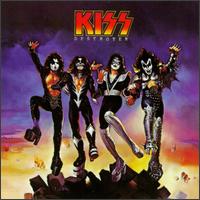
Although this is not the first Kiss album I heard (that would be Love Gun) it was probably the one I listened to most (it had “Beth” on it after all).  It is also full of some of the most over the top theatrical music of any heavy metal band at the time (is it any wonder that I also enjoy Meat Loaf and other over the top bands if I was raised on this?)  Kiss has always been about theater, and how much more theatrical do you need? (How about a cartoon of the band standing on a pile of ruins?).  But this album is such a classic, it’s hard to even think critically of it

“Detroit Rock City” is, well, it’s “Detroit Rock City.”  An amazing, iconic (albeit simple) guitar solo, great effects in the beginning (with Paul (I always assumed) singing along to other Kiss hits on the radio) and an awesome crash at the end.  Fill it out with an amazing riff and great work from the whole band.  What more need be said?  How about the way it leads perfectly into “King of the Night Time World.”  This song is overlooked despite its greatness.  It opens so loud and full then the verses get awesomely tinny until the galloping chorus kicks back in (Petter Criss plays drum rolls mid-song like no one else).  It also has great riffs and a memorable solo.  Oh and then a little song called “God of Thunder.”  Awesome bombast, creepy kids’ voices (I remember some kind of rumors about who the kids were and how they were held captive by the band or something).  It’s a wonderfully memorable song.

“Great Expectations” slows things down but adds the bombast.  I’ve always enjoyed this egocentric song, even as a kid singing along in a mirror.  Although the extra musical notes (keyboards and such) are kind of wimpy.  But it’s followed by the electrifying “Flaming Youth,” a hard-edged guitar song that is pretty simple, but pretty potent.  Again, the keyboard bits undermine the heaviness, but the repeated “higher and higher and higher” is pretty bad ass.

“Sweet Pain” is a great dark Gene-sung song (evidently about S&M, although I never knew that quite so specifically–I never understood the first two lines until I looked them up just now: “My leathers fit tight around me/My whip is always beside me”).  “Shout It Out Loud” is one of the great Kiss anthems.  I actually prefer it to “Rock and Roll All Nite” although that could be just because of the over exposure of “RaRAN.”  Of course, “Beth” is next and it is impossible for any Kiss fan to say anything about “Beth”.  This was the first song I ever memorized the lyrics to, and I sang it to my no doubt confused grandmother when I was 9 years old–my first and only live performance until college.

I always liked “Do You Love Me” (I think these Kiss fantasy songs were pretty big for me).  I was always confused by the tinny voice in the final verse of the song.  It was very strange to my young mind, but it really stands out in the song–as does Paul’s ending rant.  The overall sentiment of the song  is kind of funny coming from the guys who would soon be singing “Love Em Leave Em” but it is nice that they feel insecure once in a while too.

My LP of this album (or maybe it was an 8 track?) did not have the “bonus” track, which is just 90 seconds of a crazily processed version of “Great Expectations” with some lifted vocals of Paul in concert.  Apparently even though it is untitled, it is called “Rock and Roll Party” by most fans.  It appears to be a joke about all of the backwards masking that was supposedly on Kiss records.  Huh.

This is still one of my favorite albums of all time.

[READ: September 30, 2011] “The Russian professor

Nabokov did not secure the teaching position at Wellesley where he had been creative writing professor the year before (Lolita would not come out for a nother 13 years, so he was working via his Russian book reputation).  So instead, he went on a several-month speaking tour of Unites States colleges, many of them in the South.  These (excerpts from) letters to his wife detail some of the indignities that he suffered and reiterate his love for her and his son.

On his way to Coker University in South Carolina, his train car was double booked, his taxi didn’t show up and he wound up going to the wrong hotel.  When he finally was picked up: “Feeling that I wouldn’t have time to shave before the lecture…I went in search of a barber” [what kind of time management is that??].  Nabokov writes of the shave:

He shaved me horribly, leaving my Adam’s apple all bristly, and since in the next chair a wildly screaming five-year-old child was grappling with the barber who was trying to touch up the back of his head with the clippers, the old man shaving me was nervous, hushed the child, and finally cut me slightly under the nose.

(more…)

Read Full Post »

SOUNDTRACK: TOM WAITS-Small Change (1976).

Half-naked woman on the cover and all (Wikipedia say that this might be Elvira, before she was “Elvira”), this is what people thing of when they think Tom Waits: That gravelly voice is in full form here, with poetic rants and bluesy, drunken musings.

The opening track, “Tom Traubert’s Blues (Four sheets to the wind in Copenhagen)” (I love that many of these titles have parenthetical additions) features the repeated chorus from “waltzing Matilda” which is kind of cheating, but which certainly makes this song potent and memorable.  “Step Right Up” is a skit and scat sales pitch for a miracle product.  It’s a wonderful piece of snark aimed at hucksters (this actually makes sense given that nearly 40 years later he still hates advertising (according to this interview on NPR)).

“Jitterbug Boy” is a mournful piano ballad.  It makes me think of William Kennedy’s Ironweed (of course, Waits was in the film of Ironweed, so maybe that’s got something to do with it).  “I Wish I was in New Orleans (In the Ninth Ward)” has a very Louis Armstrong feel to it (I never noticed how close this early style is to Armstrong until I started playing “What a Wonderful World” for my kids (no Tom for them yet). And of course, the Ninth Ward was really devastated by Hurricane Katrina, so maybe they should have used this as their anthem.

“The Piano’s Been Drinking” is forever etched in my mind from Mystery Science Theater 3000–Tom Servo does a wonderful Tom Waits impersonation.  Incidentally, Waits himself had been drinking, quite heavily at the time.  The track “Pasties and G String” is a scat-fueled description of the lady on the cover, more or less.  It’s accompanied by simply drums and a cymbal and is not too dissimilar from “Step Right Up.”  “Bad Liver and a Broken Heart” begins and ends with the melody of “As Time Goes By” and ends with a confession to drinking too much.

A song like “The One That Got Away” is Waits rambling around with his poetry in his gravelly, slurry followed by a sultry saxophone.  It sets a mood faster than anything I know.  Of course, if you don’t want that mood, you won’t want this album.

Of his first four albums, this one is my favorite (just ahead of Closing Time).  I’m not a huge fan of his early work, and I don’t listen to it all that often, but it’s a perfect treat when the mood strikes.  Waits also was beginning to get into something of a rut.  Despite his varied styles per album, all of the albums were beginning to blend a little.   There are still some great songs coming, but it would take until Swordfishtrombones before he went really far afield from this comfort zone.

[READ: September 21 2011] “Dog Run Moon”

This is one of those stories that seems so pointless that you can’t stop reading.  The good thing is that it was so well-written and engaging that its pointlessness is part of its charm.

As the story opens, Sid is running stark naked through a desert landscape–his feet are bleeding, he is covered in the red dust from the ground and there is a white Spaniel running alongside him.

Essentially, the entire story is that Sid has stolen this dog from Montana Bob and his friend Charlie Chaplin.  They caught him and he ran away with the dog through the desert.  As I say, it’s kind of pointless because he’s running naked and barefoot and they are chasing him on ATVs–he’s obviously not going to escape.  But what makes the story worth reading is the way the plot is irrelevant (except that it tells you a lot about Sid), because it’s really the impetus for his actions that comprises the story. (more…)

Read Full Post »

SOUNDTRACK: FANFARLO-“Replicate” (2011).

This is the final Fall Music song I’m going to mention.  “Replicate” was Robin Hilton’s song of choice for the fall, and I can see what he liked about it–there’s a lot of unusual sounds going on (in many ways it reminds me of Sparks or maybe sort of early Depeche Mode, although no one in the discussion mentioned them).  It opens with a series of staccato string notes over a repeated lyrics (“it’s gonna, it’s gonna, it’s gonna…happen soon”).  The strings build and build, but they stop before any major climax; they are replaced by a fast, kind of spazzing keyboard melody with more repeated vocals, (“it’s gonna, it’s gonna, it’s gonna…happen soon”).  The staccato notes come back and both sounds build to another near-climax.

Until the chorus comes in with its supremely catchy but very cold “oohs”.   Even the end builds but does not quite achieve the climax one would expect, although it is still satisfying.

It’s a very clinical song, cold and detached (the instrumental break has wood blocks that sound like a woodpecker banging a tree on a winter’s day).  But the vocals are so warm, that they disarm the song of its coldness even if the chorus is “Will it replicate inside our bodies now?”   At first I really didn’t like the song, but after a couple of listens, I really heard what Robin Hilton enjoyed.  And I would like to hear more from them.

The video is pretty neat too:

[READ: September 19, 2011] “Animal Art”

This article was probably the most “academic” and “scientific” of them all five of the JSTOR articles I read.  And by that, I mean, that it was researched and tested and full of abbreviations and as a result it reads very dry.  Which is a shame (well, actually it’s not a shame, the scientific requirements are essential for there to be an academic article published)–what it needs is a cool popular version to lighten it up a bit (and it needs better pictures as well).

The article looks at the bowers of the bowerbird.  The bowerbird is a family of 20 species of bird found in New Guinea and Australia.  Bowerbirds are noted and named for the bowers that the males construct to win a mate (see photo at right).  What’s interesting is that the different species of bowerbird construct similar nests but do things quite differently (some “glue” the sticks of their nest together with either spittle or insect secretions while others weave their sticks together).  But they are all very particular about the nests they build:

When I shifted the position of a decoration, the bower owner either restored it to the original position or else discarded it in the forest.  Decorations changed from day to day as birds replaced wilting flowers and rotting fruit with fresh ones.

The articles sets out to discover whether the traits that the male bowerbird develop in their nests are inherited or are learned.  Diamond believes that they are learned because birds that are not very far apart use different techniques, but immature birds are often seen observing the adult birds to presumably learn from them.  The nests are built by the males, but, similarly, the immature females go with the adult females to inspect the nests, thereby learning what traits to most look for in a nest.

But what seems to have inspired this paper was the bowerbirds’ proclivity for choosing colors to decorate their nests: most use flowers and mosses from the surrounding area, arranging them in beautiful colors.  What Diamond did was to take colored poker chips (a series of uniform shape, size and texture) with varying colors to see if the bowerbird would choose based on color (his scientific conclusion is that it’s really impossible to tell because who knows what other variables are at play, but his more satisfying conclusion.  is that the birds decorate by color.

So, Diamond put the poker chips in front of their bower (on the moss “mat” that looks like a welcome mat).  And with one group of birds:

Within 10-30 minutes [three birds] picked up all chips regardless of color and discarded the in the forest.

While for a different group of birds, they quickly discarded any white chips (and one bird discarded the yellow chips as well).  There was a marked preference for colors in this order: Blue>purple>orange>red>lavender>yellow>white.  While these birds not only embraced the chips and used them for their decorations, other birds stole chips from their rival makes’ nests:

When I placed three chips of each color at bower W6, bird W5 stole within 3hr all blue, orange and purple chips, two red chips and no yellow, lavender or white.

(Poor W6 bird–he really has nothing).  But the study shows that the birds hate the white chips!  He even created a chart that showed that most of the birds kept 100% 0f the blue chips, and most of the purple chips while dismissing almost entirely the yellow chips; none of them kept any white ones.  (One bird in the study seemed to be quite a pig–this is the one who stole from W6–he kept far more than the other birds, including 100 % of orange an 66% of yellow–i wonder if the females thought he was a gaudy show off?)

Incidentally, this study was done in 1986, so it does not account for the more recent discovery that bowerbirds will basically use any old crap to build their nests, provided it is colorful.  Many people find this sad, but the birds don’t seem to mind.   In the article, the author says that one of the birds came up to his colleague, stood on his shoe, and tried to steal the blue docks that he was wearing.  Here’s a picture of a bowerbird with a whole bunch of blue clothespins.

Read Full Post »

SOUNDTRACK: JONATHAN FRANZEN-Commencement Speech (audio) (2011).

You can hear the entire speech from the Kenyon College site.

[READ: May 28, 2011] Commencement Speech

On May 21, Jonathan Franzen gave a commencement speech to the students of Kenyon College.  When I think about my commencement speech (from Judy Woodruff of CNN), all I can remember is that I had never heard of her (and when I typed her name just now I got it almost entirely incorrect–the only thing right was the “wood” part).  I don’t recall a single thing that she said.  [It’s also fascinating that I can’t find any record of this speech anywhere online–what a different world it was twenty years ago].  I rather expect that most people feel this way about commencement speakers.  I have to wonder, if Jonathan Franzen had spoken at my college, would I have cared?  Is there even a chance that I would have read any of his novels (had they been published of course) when I was in college?  Would I be treating this any differently than my whatever speech in 1991?

But I like Jonathan Franzen and I wanted to read what he had to say. 

His speech is about love.  Love is kind of an odd topic for a commencement speech, isn’t it?   I mean, aren’t they supposed to talk about the Future and Jobs or something?  Or maybe even sunscreen?  But really, what is more useful for a 21-year-old to think about than Love.  Franzen hits the nail right on the head about Love, how it is a dangerous, risky proposition to put yourself out there, to take off your veneer and reveal all of your flaws–and hope someone will love you.  Not new or novel, but still true.

The way that Franzen gets into this subject is through technology.  It seems weird and artificial at first, but it’s a wonderful way to get into a young audience’s state of mind.  They were probably all looking at their iPhones while he was extolling the virtues of his new Blackberry (the old person’s phone, right?).  And when he segues into Facebook (who even knows if he has an account–but he seems to be well-versed with it, so maybe he does) you can imagine students raising their head in familiarity (maybe even updating their status) and wondering (as he puts it) if this 51-year-old guy is going to dis Facebook. (more…)

Read Full Post »

SOUNDTRACK: RUSH-“Not Fade Away” (1973).

I never understood this song.  Grammatically it drives me nuts.  “Love is real, not fade away.”  Why would someone write that?  Anyone with even a rudimentary grasp of English would know that that is just a horrible way to speak.  Okay, I got that off my chest.

So this is the first single that Rush ever released.  You can find out information about it on the web (of course, I didn’t know it existed until a couple of days ago).

What we get here is a pretty rocking version of this rock n roll standard.  The band has some nice group vocals on the chorus.  I like the echoed chanting of the chorus before the solo kicks in.  And I love the rough sound that Alex’s guitar has as the song opens.

As I noted the other day with the concert from circa 1974, the band was really all about Alex’s guitar work back then.  Geddy doesn’t do anything impressive on the bass (a couple of fills, but nothing special).  But Alex’s guitar solo is amazing (and you can hear snippets of future guitar solos buried in this solo).

It’s funny to me that when they recorded their covers EP Flashback, that they didn’t include this song, too.

Check it out:

The B-side comes tomorrow!

[READ: March 12, 2011] Babymouse: Skater Girl

Well, fair enough, I said that I liked Babymouse: Dragonslayer because it had a plot.  This story has a plot, too.  Interestingly, it ties in kind of nicely to the Dragonslayer story, too.  (It’s all about winning something).

As the story opens, Babymouse feels bad because she never wins anything.  She’s looking at all of the trophies which she has not won; then there’s an amusing fantasy of all the things she has won (honorable mention for spelling the word “the” correctly; honorable mention at the swim competition for “getting wet”; and amusingly, archenemy Felicia Furrypaws’ trophy for worst whiskers).

But despite her complaints about not being good at anything, we quickly see that she is actually very good at ice skating.  She rules the pond in town–until the big hockey players crash into her, that is).  She even daydreams of winning a skating trophy. (more…)

Read Full Post »

SOUNDTRACK: BARENAKED LADIES-Live at the NJ Festival of Ballooning, July 30, 2011 (2011).

I ‘ve loved BNL since their first album.  I’ve even seen them live a few times.  And “One Week” was a huge hit, not to mention they did the theme for The Big Bang Theory.  So, imagine my surprise to see that they were playing at the Festival of Ballooning in an airport near my house!

I thought perhaps their star had fallen on hard times.  Ever since Steven Page left, I haven’t been too sure what the band has been up to (their post-Page release is kind of bland).  And maybe they didn’t get very much for their performance (no way of knowing of course).  Nevertheless, the audience was packed with fans and, in what must have been a cool site for the band, hot air balloons filled the field, many of them lighting up their balloons in sync with the music.  It was very cool.

It was great to see that the Ladies were still fun live–one of the best things about their shows is their spontaneity.  They play tight songs and they sound great, bu they also goof around.  Like with this Ballooning Rap

I was also impressed that without Page–their primary lead singer (and one of the best voices in music)–the band was still able to play their old songs that Page sung.  Now lead vocalist Ed Robertson (who does the fast part in “One Week”) manages a remarkable approximation of Page’s voice.  Indeed, a few times, I forgot that he was gone.  Check out “The Old Apartment”, which Page used to sing:

There are some notable differences of course, “If I Had $1,000,000” misses the repartee between Page and Robertson.  But in fairness, drummer Tyler Stewart more than makes up for it (he even does lead vocals on one of the songs).

There were a number of newer songs which I’d never heard (I don’t have the newest album), and they were pretty uniformly mellow.  But they sounded great. And when the band played some of their older tracks (“Falling for the First Time”?!) it was magical. And I’ve had “Brian Wilson” in my head for three days now.

Sarah took a brief video of the balloons lighting up, to “Light Up My Room”.

And here’s mine at the end of “Brain Wilson”, the bass solo! (sorry it’s sideways, I’ll try and fix it).

[READ: March 12, 2011] Babymouse: Dragonslayer

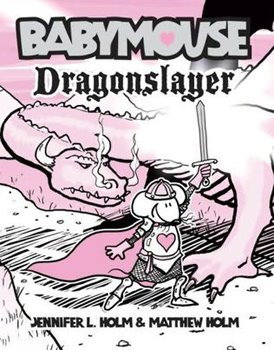
This has been my favorite Babymouse so far.  Perhaps it was because there was more of a “story/plot” than in the other stories–and the other stories were fine without a real plot, but this one was more focused.  Also the fantasies sequences were wonderful referenced to great stories like The Lion the Witch and the Wardrobe and The Lord of the Rings.

I honestly couldn’t imagine what the title of dragonslayer would refer to.  I mean, aside from the animals, the story is pretty accurate to a middle school life. I assumed there’d be fantasies, but what could ground a dragon story in middle school? W ell, the big surprise for me is that the “drgaon” in the story is actually math.  Babymouse hates math and has just failed a math test with an F-!  The teacher says that she will overlook the test if she joins the mathletes (okay so maybe it’s not ENTIRELY based in reality). (more…)

Read Full Post »

SOUNDTRACK: GIRL TALK-All Day (2010).

Girl Talk is the product of Gregg Gillis.  Gillis doesn’t play any instruments.  All he does is mash-up different songs into a killer DJ mix.  There is absolutely nothing legal about what he does (in terms of copyright), and for that reason alone, I love it.  But beyond that,  he does a great job of mashing two (and more) songs together.

Mostly this is a fun way to play “spot the song” [Hey: “In Your Arms,” Hey “War Pigs”].  And when you give up you can check out the samples list (which has 37 entries under the name D alone). [Hey, Spacehog’s “In the Meantime”]

I knew a lot of the songs that he sampled, but he also put in a lot of rap which I didn’t know.  The rap works well over the original music (what sampling would be like for real if it was legal).  [Hey, Portishead!]

Mostly you get a minute or maybe a little more of each song, [Radiohead’s “Creep”] sometimes the clips are sped up or slowed down to merge perfectly with the other.  And it’s a whole lot of fun.  [The Toadies!] As someone described it, it’s like listening to a whole bunch of radio stations at once [“Cecelia”].  And, if you don’t like the song that’s on [two seconds of the Grateful Dead?], just wait a couple seconds. [INXS].

Gillis doesn’t (really) sell his music.  Indeed, you can download all of All Day for free fromIllegal Art.  [Hey, the middle of Edgar Winter’s “Frankenstein”].

I’m not sure if it’s art, per se, but it’s clearly a lot of work, and it takes a lot of skill to make it so seamless [White Zombie!].  It probably works very well at a party too.

[READ: June 20, 2011] Five Dials Number 13

Five Dials 13 is more or less the music issue.  It is specifically dedicated to festivals and their overindulgence of everything.  And so it is long (63 pages), it is full of rather diverse points of view, it even has clouds!  Thankfully it’s not full of overflowing portapotties.  It also has lots of artwork from Raymond Pettibon, which is pretty fantastic in and of itself.

CRAIG TAYLOR-Letter from the Editor: On Festivals and George Thoroughgood
The letter opens with some comments on Festivals–two paragraphs of complainants about festivals with a final admission that the interlocuter is going to Glastonbury.  The end of the letter is devoted to a story from George Thoroughgood.  Usually I agree with the Five Dials‘ tastes without question, but I have a serious complaint about their love of Thoroughgood, about whom it would be charitable to say that he has written one song seventy-five times.  And I have absolute incredulity at this quote from George:

The promoters had gone to another festival where we played on Thursday before Roskilde, and they were so knocked out by the power of the performance they called me the next day and asked if we would mind if they changed our show time to close the festival.

Are you seriously telling me that they would change the headlining act a weekend before the festival?  How pissed would you be if your headliner was bumped for 90 minutes of ‘Bad to the Bone’?  Good grief. (more…)

Read Full Post »

SOUNDTRACK: THE DECEMBERISTS-Tiny Desk Concert #135 (June 20, 2011).

NPR has loved the Decemberists for years, so it’s no surprise that they made it to Bob Boilen’s office for a Tiny Desk concert.  And yet they are probably one of the biggest bands to appear at the Tiny Desk, so I was quite excited to hear this show.  They play 3 songs, all from The King is Dead: “Down by the Water” (naturally), “Rox in the Box” and “The June Hymn.”

Colin is in good chatty form (after almost getting hit in the face by a violin bow) and makes a very funny comment about thinking that everyone would be working while they played.  He also—I think a first in Tiny Desk history—screws up a song (“The June Hymn”) and has to restart the whole thing—it’s a very minor flub, only noticeable if you listen a few times, but he noticed and clearly felt bad (and didn’t curse either).

The songs sound great even if they’re not radically different from the recorded version (the harmonica solos are the big “improv” moments).  And this set confirms what a solid bunch of songs The King is Dead is.

[READ: July 7, 2011] Wildwood

I had this book signed by Colin and Carson at BEA.  I was so psyched to see that they were signing there, that I got up super early, took the bus into Manhattan and got to the convention center before it opened (I thought they were signing at 7:30, but it was actually 8:30). Of course, I didn’t see the fine print that said I needed a ticket to meet the author and illustrator.  In fact, I didn’t even realize that people were holding tickets until I was next on line. I asked the nice BEA worker if I could still go.   She said they wouldn’t sign a book, but that I could say hello.

I told Colin and Carson that I loved their stuff and I gushed over them like a little fanboy (even mentioned having a Tarkus album) and they gave me a copy of the book anyway (signed by them both).  How cool!

So this book is an older children’s book (I would say on a level of The Mysterious Benedict Society–which the book reminded me of because Carson did the illustrations for that series as well, although the books are nothing alike in content).

I have always loved Colin’s lyrics (yeah, he signed my book, we’re on a first name basis now). They are fantastical and fantastic, and he has a great vocabulary, pulling out obscure words for rhymes.  There’s a generally accepted tenet in writing that poetry is more powerful than prose because poems are typically honed with perfect word choices, whereas prose tends to be a bit lazier because there’s so many more words to play with (ideally, prose should also be finely honed, but it’s much more noticable in poetry).  And so given this, I guess it’s no surprise that Wildwood is not as impactful as Colin’s songs.  There are couplets from Decemberists songs that run through my head all the time, but there weren’t any great phrases in the book that really stuck with me.  Of course, at 540 pages you wouldn’t expect too many phrases to jump out at you (images and scenes and chracters yes, but phrases, no).

All of this is a long way of saying that I really enjoyed the story, but I wasn’t blown away by the language of the book.

The story follows Prue McKeel, a young girl who is pretty ordinary.  She lives in Portland (the Wildwood of the title is in Oregon, not New Jersey, which isn’t surprising since they’re from Oregon, but a Jersey kid can hope), goes to school and has a pretty happy home life.  Her mom and dad are nice (I love that her parents are suffused with all the trappings of hippie Oregon–it’s like Portlandia in print!) and her baby brother, Mac, is pretty okay too.  The image that will stick with me is of Prue taking her brother for a bike ride: she transports him through the most peculiar (and reckless and dangerous) way I can imagine–she attaches a Radio Flyer wagon to her bike and plops him in the wagon.  I just have to ask–how did he not fall out??

The story immediately announces itself as fantastical when a murder of crows swoops down out of the sky and grabs Mac from the ground and flies away with him.  Now, Prue was supposed to be watching Mac, so although it’s not her fault a bunch of birds grabbed Mac and flew away with him, it is her fault, you know?  So Prue hops on her bike and follows the birds through the city (a very exciting scene of reckless bike riding).  She skids to a halt when she sees them fly into The Impassable Wilderness. (more…)

Read Full Post »

« Newer Posts - Older Posts »