Feeds:
Posts
Comments

Archive for the ‘Animals’ Category

SOUNDTRACK: hiatus

[READ: October 2021] The Unadulterated Cat

During this incredibly prolific period (Pratchett was releasing a Discworld book or two every year), he found time to write this slim, silly volume about cats.

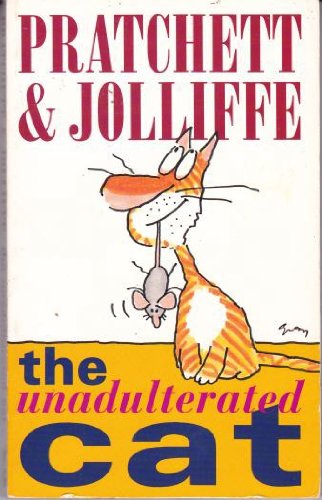
It contains many many illustrations (like the one on the cover) by Gray Jolliffe whom I do not know.  I have had this book for decades and never bothered to read it.  Since I was knee deep in Pratchett land, I decided to give it a whirl.

Pratchett has had some fun about cats in Discworld already.  There’s Greebo, the insane and then there’s Death who genuinely loved cats.  So it’s no surprise that he would write a book about cats.  (This was about ten years after the odd “dead cat” comic book craze).

This book is not like any of that.  This is a “serious” look at “real” cats.  So I guess it has more in common with Real Men Don’t Eat Quiche (published 1982).

In eighteen short chapters, Pratchett compares a real cat to cats that you might find on television or greeting cards. (more…)

Read Full Post »

SOUNDTRACK: hiatus

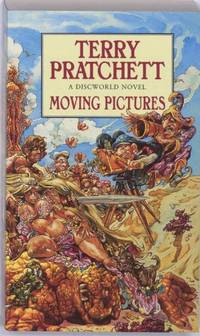
[READ: September 2021] Moving Pictures

For his tenth Discworld novel, Terry Pratchett decided to have fun with Hollywood.  Indeed, it is set on a hill called Holy Wood–an abandoned location that seems to suddenly have a magnetic attraction for Disc inhabitants.

This book also introduces Mustrum Ridcully as the new Archchancellor of Unseen University.  Ridcully will remain Archchancellor for the rest of the novels.  He proves to be unkillable (at least in practice) because he is unlike any Wizard around.  He had left the University nearly four decades earlier having become a Seventh Level Wizard at the young age of twenty-seven.  He left to look after his family’s land.  Over the last forty years he has become quite a fan of the outdoors, of exercise, of rising early and basically everything else that Wizards find revolting.  He loves hunting, owns several crossbows and is very hard to surprise–hence, no one has been able to usurp him as Archchancellor. (more…)

Read Full Post »

SOUNDTRACK: hiatus

[READ: September 2021] Pyramids

After six books tackling roughly the same geographical area, Pratchett sets out to “Egypt” for Pyramids.  “Egypt” in this case is the wonderfully named Djelibeybi.

Djelibeybi is going broke.  They make pyramids for each of their Pharoahs.  And each pyramid gets bigger and more impressive.  But where does the money come from when the Pharoah is dead?

Teppic (short for Pteppicymon XXVIII), left Djelibeybi and is studying at the Assassin’s Guild in Ankh-Morpork.  He’s not the best assassin but he has learned a lot (and has survived).  Indeed, he manages to pass his final exam (meaning he survived).  But after he does so he has a psychic realization that his father the Pharoah has died and he must go home and take over the throne.

Dios is the high priest of Djelibeybi.  He is the actual ruler of the country.  He makes all of the rules and decisions saying that everything he wants is “tradition” etc.  The Pjaroahs tend to nod and go along with it (Dios is like 200 years old).  Dios is intent upon making Pteppicymon XXVII’s Pyramid the biggest the country has ever seen. (more…)

Read Full Post »

SOUNDTRACK: hiatus

[READ: July 2021] Katie and the Catsitter

I have enjoyed everything I’ve read by Colleen AF Venable.  This is her first middle grade graphic novel.  And it is fantastic.

So much fun and so much going on!

The artwork is by Stephanie Yue who also drew her Guinea P.I. books and it is a perfect match.

In this story Katie is a little bummed because her friends are going off to summer camp and she can’t afford to go.  She puts up a sign in her apartment offering her services, but she finds that she’s really not very good at anything (she can’t lift heavy groceries, she kills plants).  Finally, she asks if she can work for the bodega owner downstairs.  He loves Katie, but she is too young.  He offers her a consolation lunch of “baby kale, blue cheese, craisins… those are basically candy.”  But all she wants is a PBnJ.

It’s all pretty normal.

Except that in this world there are superheroes and super villains.  The most famous superhero right now is The Eastern Screech, a guy whop dresses like an owl. (more…)

Read Full Post »

SOUNDTRACK: hiatus

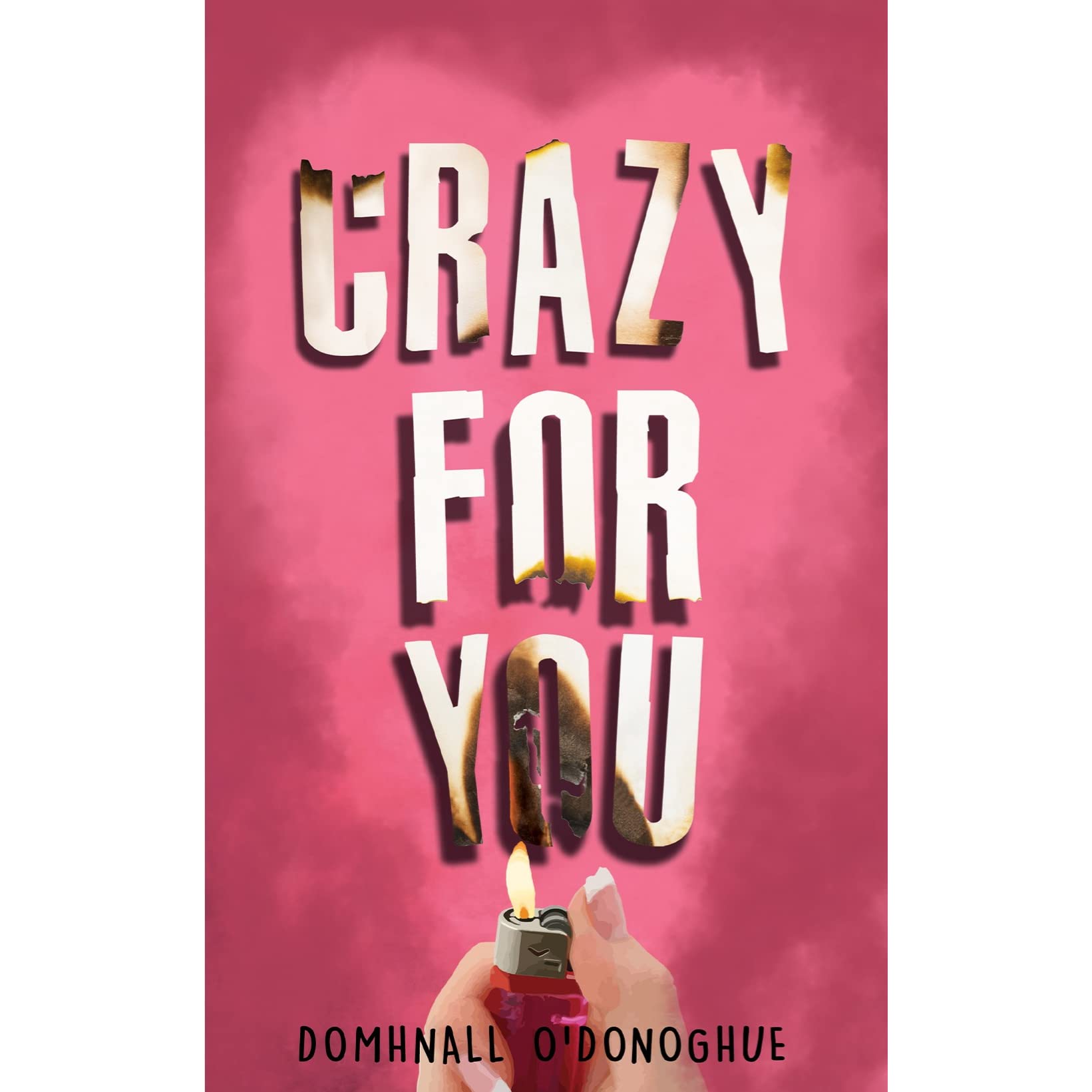
[READ: July 2021] Crazy for You

Clooney Coyle is an Irish actor on the Irish language soap opera Brú na hAbhainn.

He is vain but amusing.  He is invited to his best friend Isla’s house for a party.  Isla is a school teacher and she is inviting the staff over for a Halloween party. Unfortunately an insufferable volunteer named Vonnie insisted that she be invited.  Isla has complained to Clooney about Vonnie many times and he is tickled to meet someone so obnoxiously self-assured and assertive,

Vonnie arrives and she is a horror show.  It’s a shame, though, that O’Donoghue had to make her fat and ugly in addition to loud and obnoxious.  But she walks into the party, insults the host, insults the guests, takes wine that isn’t hers (she didn’t bring anything to the party) and is a general nightmare.  But Clooney is intrigued by her and decides to treat her nicely.

When he was younger, he was picked on for being gay in rural Ireland so he understands the need to shine when others put out your spark.  And soon enough he pledges that they are friends for life.

Vonnie has the best line ever: “As an adult, I am an artist.”  She says this all the time and everyone looks at her the same way…. wtf does that mean.  She means that all children are artists, but she is an adult who is an artist.  She also has a gallery which Clooney promises to go to.  Her art is terrible and she charges him admission.  When she insists that he sit for a portrait, and them charges him a sitting fee he still manages to say that they are friends for life.

And that’s what sets her off.

Vonnie becomes insanely jealous.  And that’s when the book goes from the outrageous to the ridiculous and all believability is lost. (more…)

Read Full Post »

SOUNDTRACK: JAMBINAI-Tiny Desk (Home) Concert #234 (July 09, 2021).

Why oh why oh why do all the best Tiny Desk Concerts have to be so short?

This show is AMAZING and it’s only 12 minutes long.  Meanwhile, some other bands have dragged theirs out for almost twice as long.  Alas.

I was introduced to JAMBINAI (like many others I’m sure) at the 2018 winter Olympics in Pyeongchang, Korea.  Their set was spectacular and it blew me away.  In reality, the band is much smaller than that spectacle produced, but their sound is still huge and intense.

I don’t think I’ve ever used the word “fierce” to describe a Tiny Desk, but that’s precisely what JAMBINAI has created in this (home) concert. The show begins in front of a massive recreation of my desk and what happens next … well, no spoilers here. Filmed in an immersive media art museum created by an organization known as d’strict on Jeju Island, this Korean band contains multitudes.

JAMBINAI plays traditional Korean instruments, but adds rock guitars and bass.

At its heart, JAMBINAI’s music mixes elements of metal, noise and Korean tradition. There’s full-on distorted guitar, bass and drums, but also a haegeum (a fiddle-like instrument), a piri (a type of flute), a taepyeongso (a reed instrument) and a most appropriately named instrument, a geomungo (a giant Korean zither). We also hear some delicate vocals in the mix.

The two pieces performed here include 2015’s “Time of Extinction” and the more recent and epic “ONDA.”

“Time Of Extinction” is the song they played at the Olympic and while it’s only three minutes long it feels epic and really encompasses their sound.  It opens with a plucked geomungo creating the simple riff.  After 20 second Ilwoo Lee plays a feedbacking guitar note and then Jaehyuk Choi comes crashing in on the drums.  At the same time, the visuals blow your mind.

The basis of the song is Eunyong Sim’ geomungo rhythm and Bomi Kim’s keening haegeum solo.  The guitars add a terrific tension to the basic melody.  In the middle of the song when it’s just drum and Byeongkoo Yu’s bass playing, the thumping is broken by the fully distorted guitar You don’t expect Ilwoo Lee to bust out a taepyeongso and play a traditional and rather discordant horn solo on top.  Just when it seems the song is about to launch to a new direction it’s over.  Just like that.

There is something so unearthly about the geomungo–it’s percussive and stringed and you can feel it rumble and thump ta the same time

“ONDA” is 8 minutes long and opens with Ilwoo Lee playing a saenghwang an amazing looking wind instrument that I cant quite fathom.  He plays a terrific sounding melody with it –almost patronal. Except for the low electronic chords underneath it

Then comes the rumble–the thundering drums and bass and a fast repetition from the geomungo.

Then Bomi Kim sings a gentle, calming echoing vocal line that sound magical under the rumble. After a verse of so Ilwoo Lee joins in on harmony vocals and they sound terrific together.

The song builds in intensity, as lwoo Lee adds the guitar, then it pulls back as Lee plays a piri solo that becomes a call and response with the haegeum.

There’s a wild jamming solo section that grows super intense.  The way it builds to a climax and is followed by huge crashing chords (and great visuals) is monumental.  Everyone joins in singing for the last minute as the melody soars and soars.

Maybe 12 minutes is all we can handle.

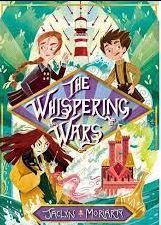
[READ: July 1, 2021] The Whispering Wars

This book is related to The Extremely Inconvenient Adventures of Bronte Mettlestone in that it is set in the same land (The Land of Kingdoms and Empires).  But it is set some thirty years before the adventures of that book.  Through some magic (this is a magical land), we do see Bronte briefly. but if she ever starts to give way anything about the future, she is instantly sent back to where she came from.

In the first book we are aware of the Whispering Wars as being a big event in the past.  This book explains how they started.

This book is told by two (sometimes three) alternating narrators.  There is Finlay, who lives at the orphanage and Honey Bee who lives at the fancy Brathelthwaite school.

How they wind up alternating chapters isn’t explained until much later, which I rather enjoyed (both the delay and the explanation).

As the book opens, Finlay explains that it is time for the annual Spindrift (the town where they live) tournament.  The kids at the orphanage looks forward to this event because they can show up the rich kids.  Finlay is a super fast runner, as is his friend Glim.  The twins Eli and Taya aren’t super fast but they are very strong and good with their hands (and can multitask like nobody’s business).  There’s also Jaskafar, a tiny boy who sleeps on top of the wardrobe–his storyline is very funny until he is the first Orphan to be taken. (more…)

Read Full Post »
SOUNDTRACK: mafmadmaf“Rapture” (SXSW Online 2021).

I never intend to go to SXSW–I find the whole thing a bit much.  But I also appreciate it for the way it gives unknown bands a place to showcase themselves. NPR featured a half dozen artists online this year with this note:

This year, the South by Southwest music festival that takes over Austin, Texas every spring happened online. Couch By Couchwest, as I like to call it, was an on-screen festival, with 289 acts performing roughly 15-minute pre-recorded sets across five days in March.

This list was curated by Bob Boilen.  He also notes:

 I didn’t enjoy hearing loud, brash music while sitting on a couch the way I would in a club filled with people and volume, so I found myself engaging in more reflective music instead.

I’m going in reverse order, so mafmadmaf is next.

mafmadmaf is a Chinese modular synthesizer artist. I’m not sure I ever saw his face onscreen, but it didn’t matter: This seductive and spellbinding set was perfect in my living room. Seeing his modular synthesizer and its many patch cables set up in a beautiful garden was more entertaining than simply watching some knob-turning on its own. Artfully done.

Anyone who knows Bob knows he loves modular synths.  I really have no sense of how they work, so this is all a mystery to me.  But I agree that the setting is wonderful.  And the music is very cool.

This piece is 13 minutes long and while it is mostly washes of synth sounds, there’s some melodies (synthesized sounds of water drops and chimes).

The song morphs in interesting ways, especially after 4 and a half minutes when the musicians enters the screen and you start to see him do something to his setup.  This adds new sounds and even a pulsing almost-beat.

At around ten minutes things slow way down.

[READ: July 15, 2021] Naturalist

I saw this book in the library and grabbed it because I love Jim Ottaviani’s work.  He has written and illustrated a number of non-fiction graphic novels and they have all been terrific.  I love his drawing style–very clean lines and excellent detail.  I also love his ability to compact big ideas into small digestible chunks.

But I had never heard of Edward O. Wilson, which, after reading this, surprises me. He is not only a Pulitzer prize winning author, an innovator in the field of biology and a writer of a massive book about ants, he is also controversial (as we see later on) and a devoted environmentalist.

The book opens with a young Wilson growing up in Alabama.  From when he was little he was obsessed with ants.  There were lots of fire ants where he grew up and there are few things more fascinating than fire ants (the book is chock full of all of the scientific names for all of these ants).

When he was still young, playing around in nature, he went fishing and when he pulled a fish out of the water its spines poked him in the eye giving him a traumatic cataract–he wound up with full sight in one eye only.   But this seemed to get him to focus more minutely on smaller things–ants.

Staring in fourth grade  his father was shuffled around the country a lot so Edward made his home in many places around the south, eventually settling in Florida.

There he met a friend who was obsessed with butterflies–they were two budding entomologists. (more…)

Read Full Post »

SOUNDTRACK: LEY LINE-“Oxum” (SXSW Online 2021).

I never intend to go to SXSW–I find the whole thing a bit much.  But I also appreciate it for the way it gives unknown bands a place to showcase themselves. NPR featured a half dozen artists online this year with this note:

This year, the South by Southwest music festival that takes over Austin, Texas every spring happened online. Couch By Couchwest, as I like to call it, was an on-screen festival, with 289 acts performing roughly 15-minute pre-recorded sets across five days in March.

This list was curated by Bob Boilen.  He also notes:

 I didn’t enjoy hearing loud, brash music while sitting on a couch the way I would in a club filled with people and volume, so I found myself engaging in more reflective music instead.

I’m going in reverse order, which means Ley Line is next.

Ley Line is four women, based in Austin TX, playing an upright bass, a guitar and soft percussion.

The first ninety seconds of this song slowly evolve from a pretty guitar melody and lead vocals, to harmony vocals supporting a lead vocal and a soft echoing drum

And then the bouncing drum is joined by cymbals and a satisfyingly deep bass melody.

Ley Line is four singers, including a pair of twin sisters, who find inspiration in music from Latin America, West Africa, and Europe as well as North America. The simplicity is what I loved most about this Austin-based group, both in its spare percussion and lovely harmony.

It’s fascinating to hear to song shift from Spanish to a wordless language (I think) to English, all while retaining a similar sound.

That is until three and a half minutes when the song suddenly shifts to a a dancey song.  Bouncy bass, a fast rhythm and more of that cheerfully singing (in Spanish once again).  It’s quite arresting.

[READ: July 10, 2021] “Understanding Owls”

David asks the universal question, “when does one reach a point in your life when you say ‘I’ve got to weed out some of these owls?'”  We’ve all been there.

Of course, you don’t want to hurt anyone’s feelings, so you can’t get rid of the crocheted owl from your sister.  You keep the owl napkins and candles–those are useful. But trivets and trinkets can go in the trash or to goodwill.

This overwhelming feeling happens when you tell people you like something.  His sister Amy said she liked rabbits and soon enough, she had cushions, slippers, bowls, magnets etc.

Amy’s started with a live rabbit.  But Hugh and David’s owls started with art.  Hugh painted birds on a client’s ceiling.  He painted song birds and then she asked for owls.

It made no sense nature-wise–owls and songbirds work different shifts, and even if they didn’t they would still never be friends.

But it was her ceiling so he did it.

He bought the book Understanding Owls to learn what they looked like.  The book became an inside joke for them–i wish I could see what a barn owl looked like, if only there was some guide nearby to show me.

Then, pushing the joke further, David decided to buy Hugh a stuffed owl.  But he learned that it is illegal to own one in the United States–even if it dies on your property you cant keep it.

he had gone to a taxidermist.  One taxidermist even went so far as to stretch a chicken over an owl form.  It was disturbing. (more…)

Read Full Post »

SOUNDTRACK: JOSEPH KECKLER-Tiny Desk (Home) Concert #223 (June 14, 2021).

I saw Joseph Keckler open for Sleater-Kinney.  I’d never heard of him and had no idea what to expect.

He had videos and sang funny lyrics.  And then, POW, he had the most amazing operatic bass voice I’d ever heard.

You can hear that about two minutes into the first song here.

“My love called me many names,” Joseph Keckler sings in “GPS Song,” which opens his Tiny Desk (home) concert. He proceeds to list them: “Baby animal. Little baby animal. Big baby animal. Black chicken.” (It goes on like this for some time.)

“GPS Song” — which is sung partly in a made-up language and evolves to feature the titular navigation system droning in the background of a breakup — is one of Keckler’s hallmark absurdist arias, which he performs with a commanding presence and a winking, deadpan delivery. While their content is quirky (another features the narrator’s relapse into a teenage goth identity), it’s not quite right to call them strictly funny; they’re infused with a kind of intimate, observational detail that makes them simultaneously comedic and affecting. (“It was the most heartbreaking moment of my life,” Keckler once said of the situation that inspired “GPS Song,” “yet it was also so ridiculous to have this disrupting automaton, breaking our silence to misdirect us at every moment.” This performance captures that ridiculousness and heartbreak equally.)

The music is wonderful.  Gorgeous piano from Matthew Dean Marsh.  Michael Hanf bows his guitar for rumbling low chords.  Two minutes in Lavinia Pavlish joins on violin and Keckler shows just how amazing his voice is.  Even if the lyrics are comic.

Is it funny?  Yes.  Baby potato?  Yes.  And also when he finds his love’s text messages (in operatic Italian) to “Baby Zebra” and when he sings “Google translate: ‘god is a bicycle, ride slow’ nothing made sense.”  Or when in the middle of the operatic intensity the GPS says (in English) recalculating, recalculating, recalculating.

But not everything is funny.

“City” has a bouncy piano with lovely violin from.  because of the slow operatic way he sings this song (in English) it’s a little hard to follow the words.  But again musically, it’s so interesting.  In the middle, there’s a cool soaring moment when both violin and Michael Hanf play a high scratchy descending note.

So who is this guy?

A classically trained singer, performance artist and writer whose work spans styles and genres, Keckler turns his Tiny Desk (home) concert, shot in Brooklyn, into a showcase of his dynamism as a performer.

For “Goth Song” he sits at the piano and says, “I used to work in a music library but one day…” That is not idle banter, it is the introduction to the song–the story of his descent into a teenage goth.  It’s very funny hearing him singing these things in his amazingly deep operatic German.

He ends with “Appearances” another song sung in English.  Michael Hanf swipes a bow across his guitar to generate an echoing chord.  Hanf also plays the low bass on the synth (and even a cymbal midway through).  Again, this song is not comic, but it really shows off his voice nicely.

[READ: July 1, 2021] “Giganto”

This month’s issue of The Walrus is the Summer Reading issue and features three pieces of fiction and three poems.

The third piece is a short story.

It’s an interesting look at infighting in an under-funded and under-appreciated university department.

There are four people in the truck, a truck that’s off-roading until they have to start using the ATVs.  Dr. Krentz is head of the department.  The narrator, Melinda, is Dr. Krentz’ (poorly) paid assistant.  She intends to hang on to this job until Krentz retires and then take it over herself.  Camryn is Dr Krentz’ intern.  Camryn is Dr Krentz’ intern.  Melinda fears that Camryn, who is young (pretty) and full of energy, is looking to steal her own job.  And then there’s Nigel.  Nigel was some rando who “appreciated the doctor’s work.”  He was hoping to interview Dr. Krentz for his upcoming book on megafauna in North America.   Krentz was flattered and Nigel was a pain in the ass. (more…)

Read Full Post »

SOUNDTRACK: CARRTOONS, KAELIN ELLIS, KIEFER AND THE KOUNT-Tiny Desk (Home) Concert #229 (June 28, 2021).

This is one of the more unusual Tiny Desk Concerts that I’ve seen.  Essentially the NPR team asked these musicians to make remixes of NPR theme music.  I haven’t heard of any of the musicians before, but I gather they are well known and regarded.

Over the past year and some change, beatmakers Carrtoons, Kaelin Ellis, Kiefer, and The Kount took to social media individually and often collaboratively to cook up productions, often resulting in viral moments and never-seen-before glimpses into their creative process.  As we continue to celebrate 50 years of NPR, Tiny Desk was determined to take part. To honor the iconic themes from our news programs, we asked these four producers to come up with their own spin on the All Things Considered theme (written by Don Voegeli) the Morning Edition theme and the theme for Weekend Edition (both written by B.J. Leiderman).

The blurb describes them as beatmakers. I don’t know what that means exactly (in my mind it has nothing to do with instruments), but for this set, each guy plays an instrument or two.  Clockwise from the bottom left Kaelin Ellis: drums, The Kount: percussion, Kiefer: piano, keyboards and Carrtoons: bass.

Most of the themes are under 30 seconds, so it’s interesting to hear them stretched out.  It’s also interesting that they didn’t simply play the theme and them jam it.  each one uses a part of the theme, but the songs go in very different directions.  The addition of bass and drums certainly changes the sound, as does their new jazzier feel.

“All Things Considered (Remix by Carrtoons)” Kiefer plays a variant of the original (quite similar) and then plays a kind of staccato piano like the news urgency music.  I like the way those original eight notes keep returning.   This new song is all of 1 minute long.

“Morning Edition (Remix by Kaelin Ellis)”  This one sounds really different with an intro (lots of bass and drums).  It’s not until the middle that the jazzy chords reveal themselves as the Morning Edition melody.  I feel like you can’t hear all that much percussion on these tracks although the bongos are audible here.  and I like the little cymbals near the end.  This song is about two minutes,

“Weekend Edition (Remix by Kiefer)” I like that this one opens with that iconic ascending melody, but dissipates smoothly.  It’s also interesting that the middle melody is still there, only stretched out. Kaelin’s drums are pretty great on this track and Carrtoons’ bass is pivotal throughout.

[READ: June 1, 2021] The Extremely Inconvenient Adventures of Bronte Mettlestone

S. read book three in this series, not realizing it was book 3.  She then read the books in reverse order, ending with this one.

Well, I decided to read them in the correct order.  And while I haven’t read 2 or 3 yet, book 1 was fantastic.   I loved everything about this book–the plot, the illustrations and especially the writing style

Jaclyn Moriarty has created a hilarious and thoughtful young narrator and the ways in which she has to deal with adults makes for some very funny scenes indeed.

The premise is that Bronte Mettlestone is ten years old and has just found out that her parents were killed by pirates. She’s not really that upset though because she never knew them.  They abandoned her at the doorstep of an aunt when she was just a baby.  They were adventurers and couldn’t be tied down by a child.

The humor comes right away, with the announcement that Bronte’s parents were killed.  They receive a telegram which says that they were “taken out by cannon fire.” Aunt Isabelle is furious about that phrase.  Could they not have chosen a less flippant turn of phrase?

So Bronte was raised by her aunt Isabelle with help from The Butler.  They see that her parents will says that Bronte must take a series of trips, by herself to visit all of her other aunts and give them each a present (the present is included with the will).  The details of the trip are spelled out in very specific detail–how long she is to stay with each Aunt and how to get from one to the next.  To make things worse, the will has been sealed wit faery stitching, which means if she doesn’t do what the will says, there will be terrible consequences.  Essentially Bronte must follow these rules exactly or OR PEOPLE COULD DIE!

So obviously this is world where magic exists, although Bronte herself has had little exposure to magic.  She says the only thing she knows about magic comes from the book The History of the Kingdoms and Empires.

There are two types of magic that are worked by thread.  There was bright thread which was used by True Mages like Faeries and elves and water sprites.  Then there was shadow thread used by dark Mages like witches and Sterling Silver Foxes.  The third kind was binding thread which Spellbinders used to stop Shadow Magic from doing its work. Initially the thread was real, but now they can do their magic with imaginary thread.  (more…)

Read Full Post »

« Newer Posts - Older Posts »