Feeds:
Posts
Comments

Archive for the ‘Animals’ Category

20SOUNDTRACK: ARTURO O’FARRILL-Tiny Desk Concert #303 (September 14, 2013).

arturo Arturo O’Farrill is not, as I expected, an Irish traditional musician.  He is, in fact, a Latin jazz pianist.  And the blurb states:

Latin jazz works best when the musicians involved are as fluent in Afro-Cuban rhythms as they are in the deep grooves and advanced harmonics of bebop. Arturo O’Farrill has that pedigree in his DNA: His father, Chico O’Farrill, was part of a groundbreaking group of musicians who created the mash-up of Afro-Cuban music and jazz back in late-’40s New York.

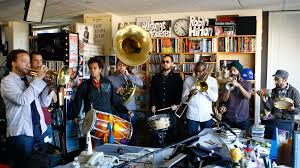
The octet you see in this video is a stripped-down version of the Afro Latin Jazz Orchestra, which is at least twice as large — don’t think I didn’t try to get the whole band behind Bob Boilen’s desk — and dedicated to both preserving the legacy of the elder O’Farrill and documenting the younger musician’s efforts to move the music forward.

The octet includes trombone, trumpet, sax, bongo, conga, drums, bass and of course, piano.  And they play three pieces (for quite a long set).

“In Whom…” has a good swinging feel with O’Farrill’s piano running wild.  At one point they cut to the conga player and the lady behind him is checking her phone (rudeness even in 2013!).  But it’s not all about the piano, there s sax solo and then a fairly lengthy bass solo.  Indeed there are many bass solo moments in this concert–Arturo certainly shares the spotlight.

The second song is “Compay Doug.”  He explains that “compay” means some who is not family but who is as close as family or maybe even closer.  The main melody has a cool fast/slow riff and then there’s another long bass solo.  There’s some great conga work in the middle of the song ( you can hear the percussionist use a rain stick, too).  Late in the song there a trumpet solo.  So even though this is ostensibly a pianist’s performance, there is much more–but don’t be fooled, his piano playing is intense!

The final song is called “Mass Incarceration Blues.” He says many years ago it was called “Blue State Blues,” then it became “Stop and Frisk Blues” and now it’s called “Mass Incarceration Blues.”  NPR’s Felix Contreras joins them (he ha so many cameos!).  There’s a super fast series of opening piano runs.  Then there’s a surprisingly fun (given the name) staccato melody and lots percussion.  And, as if to get everybody a moment to shine, this song includes a trombone solo, a sax solo and Felix even gets a conga solo.

[READ: July 5, 2016] Goes for the Gold

This book came out in time for the 2016 Summer Olympics, and Babymouse joins the swim team!

The book begins with her doing a fantastic dive (called the Reverse Messy Whisker Dive) only to wake up in her backyard kiddie pool.

Despite her fantasy of doing dramatic dives, she actually spends all of her time after school reading and eating cupcakes.  Her parents insist that she do something–join a team or whatever.  She chooses to join the school swim team, “The shrimps.”  She figures how hard can it be, “I mean, swimming’s not even a real sport.”

Well not when you wear the suit that Babymouse has on.  She is encouraged to wear a proper swimming suit and goggles and a cap (to much amusement of everyone).

But swimming proves to be hard–between trying to go straight, the way the chlorine dries out your fur and the whale living in her locker (Moby-Dick, anyone?), it’s more than just splashing in a pool.

Especially when we see the other team–actual sharks!  And is that a giant squid at  the bottom of the pool?

But The Shrimps are very good and when Felicia Furrypaws dismisses swimming as not even a real sport, Babymouse has second thoughts–or at least would rather stay up late eating cupcakes.  Will she feel guilty about letting her team down?  Of course, she will.

But what will she do about it?

Read Full Post »

19SOUNDTRACK: MARTIN HAYES & DENNIS CAHILL-Tiny Desk Concert #269 (March 11, 2013).

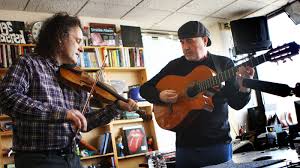
hayescahillEven though I have enjoyed much Irish music over the years, I was unfamiliar with Martin Hayes and Dennis Cahill.

The blurb says:

You’re about to watch one of the best fiddlers on the planet and a subtle guitar master work their magic. For too many of us, Irish music is something that merely gets trotted out around … St. Patrick’s Day and the coming of spring — and made a cliche by commercialism.

But for a moment, stop, put aside your notion of jigs and reels, and just listen. Martin Hayes plays his fiddle with an exquisite touch and tone, as well as a magnificent sense of melody and rhythm that never ceases to astonish.

Hayes has worked with many accompanying musicians, and some are equal partners, but with Dennis Cahill you get delicate support. It’s a rhythm that keeps the tune in; that accents and colors it but never overtakes it. It’s brilliant restraint that serves the music and perfectly suits his partner. So with fresh ears, come join us in a rare treat with a familiar sound.

And indeed, this is just beautiful fiddle playing and understated guitar work.  It’s a fantastic pair.

They play three pieces (some of which are actually made up of smaller independent pieces).

“The Mountain Lark/Tom Doherty’s Reel” I’m not sure when the first part ends, but I love as they get near the end of the piece—the fast bowing is just great.   Hayes gets some really amazing sounds.

As with many great Irish players, modesty is the key.  He talks about how he learned while watching his father and how he enjoys other players.  He talks about how traditional Irish music is not slavishly about the past, but it incorporates new elements into an old tradition.  As you can tell by the name of the second half of this next pair: “P. Joe’s Reel/The Barack Obama Reel.”

He also says that it’s good to see you get music breaks.  Music breaks should be part of all work—lunch break and music break.  The final piece is in fact a traditional piece called “O’Carolan’s Farewell To Music.”  It was originally written for harp by Turlough O’Carolan and is rumored to be the final piece that O’Carolan played before he died.  The transposition to fiddle and guitar is perfect.

[READ: February 8, 2016] Bad Babysitter

Babymouse continues to delight with the funny stories and amusing spoofs.

This story opens with Babymouse dreaming about “The Old Woman Who Live in a Shoe” (which is instantly transformed into a bunny slipper).  She wakes from her daydream about comics to see an ad for a Super Scooter, only $79.  There’s no way Babymouse’s mom will pay for this, so Babymouse better save up!

The next day at school one of her friends say that there’s a babysitting job available if Babymouse would like it.  Babymouse imagines herself as Mary Poppins until the dream kitten (who looks suspiciously like Felicia Furrypaws) complains about her whiskers.

Babymouse is set to babysit for Mrs Ladybug whose child (she swears) is a sweteahrt and only cries when he is hungry.  And, he should sleep the night. Ha!  He is up all night and, just like with her goldfish, Babymouse overfeeds the baby until it throws up all over her.  This job ends with her watching a zombie movie (called Babysitting Movie) and causing serious damage to the hosts’ house. (more…)

Read Full Post »

two-worse  SOUNDTRACK: CHEICK HAMALA DIABATEN-Tiny Desk Concert #285 (July 6, 2013).

hamalaNPR Music has been the sole source of my exposure to music from Mali.  I have really grown to like its slightly unusual patterns which are all based on a fairly standard rock structure.  But unlike some of the other Mali musicians I’ve been exposed to, Diabaten does not play guitar.  He plays banjo and the ngoni (but there is plenty of guitar in the song too).

The blurb tells us

Malian tradition lies at the heart and foot-stomping soul of Cheick Hamala Diabate and his band, but their melodies and undeniable rhythms cut across age and ethnicity. Diabate primarily plays the ngoni and the banjo; think of the ngoni as a great-grandfather to the banjo and it all makes sense, because both instruments share the ability to convey melody and plucked percussive rhythm.

Diabate is from Kita in Mali and born into a family of griots, or storytellers; his first cousin is the legendary kora player Toumani Diabate. Cheick Hamala Diabate makes his home these days in a Maryland suburb a few miles over the D.C. line, and his musicians are American-born and inspired by this lively lyrical music, which often tells a tale about Mali and its people as part of the sway and shake.

“Mali De Nou” sounds fairly traditional–with all of the percussion.  And then about a minute and half in a noisy scratchy guitar solo plays over all of the music–a very Mali sound.  But it’s interesting that, for the beginning anyhow, Diabate isn’t doing all that much.  In fact, the song feels almost overwhelmed by percussion (but in a good way). There’s a shaker or two, big floor drums (congas?) and a drum held between the knees and there’s even that big round gourd drum.

There’s also a sax and a bass, the lead guitar and of course, Cheick’s banjo.  By the middle of the song,  Chieck does some lead banjo playing.  And then it sounds like he’s put some effects on the banjo making it sound almost like a kettle drum—he even plays the strings below the bridge.  He really gets a lot of cool sounds out of the instrument

After this song he chats briefly and wants to “Invite you guys to visit Mali, it’s a beautiful country, you’ll be more happy.”

For “Talcamba” he switches to the ngoni.  He explains that the original ngoni had 4 strings, but his has 7 so he can play…more.  This instrument can play reggae, salsa, everything.  This is when he says the American banjo is like the grandson of ngoni.

Tacamba is a dance from north Mali—you can move your body (he waves his arms).  There are vocals but they are mostly a chanted refrain   The solo on the ngoni isn’t a conventional solo, it’s him flicking the strings making a very interesting sound.  I could have used more close-ups of this instrument as you could barely see the strings, and I’d love to see how he fit 7 on that small neck.  Half way through the song it shifts gears and the tempo really picks up—there’s a fast guitar solo with all that percussion keeping up.  And then the percussionist puts down her shaker and starts dancing in the center of the room.  It feels inspired and impromptu and it’s a lot of fun to watch.  While she’s doing that, Cheick picks up a hand drum and starts creating a new rhythm.  It is joyful and celebratory.

For the final song, “Djire Madje,” he switches to acoustic guitar which he plays lefty upside down (so the high notes are at the top).  He plays the lead riff.  At one point the electric guitar is also playing a lead but in a very different styles and they work very well together.

[READ: October 10, 2016] The Terrible Two Get Worse

I really enjoyed The Terrible Two, and this sequel is just as enjoyable.  The pranks are bigger, but the victim has changed.  Why?

Because Niles Sparks’ and Miles Murphy’s pranks got their principal fired!

Principal Barkin was the perfect guy to play a prank on–he had no sense of humor, he was pretty jerky and his face got really purple when he was upset.  But Principal Barkin is nothing compared to his father.  We met his father in the previous book–he yelled a lot, especially at Principal Barkin.  You see, the principal’s father was the previous principal, and he was a tough guy–he took no guff from anyone.

So after a delicious opening prank, Niles and Miles set about to making a great prank on Photo Day.  One of the great things about these books is the illustrations (by Kevin Cornell).  Sometimes the text incorporates the illustrations into the story. Like with Picture Day–the hilariously bad “pictures” absolutely make the sequence.  But it’s what they do to Principal Barkin’s son (who has paid the extra $10 for a gray background) is frankly genius.

But even better is what they have done to the whole school photo– a prank many months in the making.

(more…)

Read Full Post »

two SOUNDTRACK: MOHAMMAD REZA SHAJARIAN-Tiny Desk Concert #276 (May 20, 2013).

rejaI had never heard of Mohammad Reza Shajarian, but I see that he was voted one of NPR’s 50 Great Voices.

With the visit of the incredible, honey-voiced Mohammad Reza Shajarian from Iran, we lucked out by having him sing on not just any day, but on the biggest holiday of the Persian calendar: Nowruz, the New Year.

Shajarian is accompanied by brothers Sohrab and Tahmoures Pournazeri (celebrated musicians in their own right) and French percussionist Robin Vassy.

They play one song, an improvised piece called “Az Eshgh (Love Song).”  There is an upright, bowed instrument, the Kamancheh which plays the lead melody for much of the song.  The rest of the music comes from the Tar, one of the most important musical instruments in Iran and the Caucasus.  It has a rather tinny sound.

Meanwhile, the drummer has several different gourd drums.  He hits one with his fist and scratches the notches on the side.  Around three and a half minutes in, he starts blowing into this whistle-like object that makes a wind sound.  He also has two gourds that are floating in water.  He takes one out and we can hear the dripping.  He gets almost two minutes of a solo to play all of these sounds.  Its very cool.

Interestingly, even though this Tiny Desk is all about Shajarian, he doesn’t sing all that much.  But when he does, it’s quite powerful.  As the blurb says:

In the course of this love song, titled “Az Eshgh,” Shajarian unleashed torrents of swooping, soaring, goosebump-inducing sound — still perfectly controlled at age 73.

[READ: September 20, 2016] The Terrible Two

I love Mac Barnett.  He’s one of my favorite children’s authors.  I only know Jory John a little but I’ve enjoyed what I’ve read by him.  There are also fantastic illustrations by Kevin Cornell to make this book a delightful story about pranksters.

The book opens in Yawnee Valley, a quiet place where cows are the main thing.  Literally.  They are everywhere–and you hear them mooing all day and night (and throughout the book).  Miles Murphy (the dark haired boy on the cover) is moving to Yawnee Valley.  And he is not happy.  He has already sighed 100 times that day.  He hates the thought of leaving his friends and starting a new school.

Page twelve lays out an excellent summary of what it’s like to be a new kid in a school.  What kid are you going to be?  chess kid? basketball kid?  front-row kid? kid who’s allowed to see R-rated movies?  Kid whose family doesn’t own a TV and just wants to watch your TV?  And so many more options.  But Miles knows who he is.  He’s the prankster.

But when he gets to school (this is the first day of school), someone has moved the principal’s car to the front of the stairs–blocking the front door. Looks like Yawnee Valley Science and Letters Academy already has a prankster.

The principle is Principal Barkin.  He loves being principal of the school, as his father and his father and his father and his father had been.  There was one embarrassment in the family chain of command–the principal who actually closed the school during a blizzard, but otherwise, their record was sound–no closures.  And Barkin’s own son was poised to become the principal as well. After all, he had been elected president the past two years–just as had all of his ancestors–president and then principal–that’s the plan.

But this first day of school was not a good day for Principal Barkin.  And Chapter 6 lists the 40 things that happened as soon as he found out that his car was blocking the main entrance (none of them were good for him).

Principal Barkin suspects and questions everyone for being responsible for doing this prank.  And when he sees Miles–the only child he doesn’t recognize–he automatically assumes he is guilty.  Miles assures him that he didn’t do it.  Principal Barkin says okay but he will have his eyes on him.

Barkin then gives him a book called 1,346 Interesting Things You May or May Not Know About Cows.  He also gives Miles a buddy.  The buddy is named Niles.  He is dressed in a blazer with a sash that reads “school helper.”  The introduction goes like this: “Niles is the student who first told me abut my car.  Miles is the student who I suspect moved it.”

Niles is the most cheerful, obnoxious child Miles has every seen.  And he will not let up.  Niles introduces Miles to people (like Holly the girl who sits next to him).  He states the obvious.  And he tells Miles about Josh Barkin, the Principal’ son.  And boy is Josh a jerk.  Josh intentionally hits Miles in the face with his backpack as he walks by.

Niles says “while i don’t want to call anyone the worst, Josh is pretty mean sometimes…also he really likes the word nimbus for some reason.” (Josh calls everyone a nimbus as an insult).

Another kid who makes a lot of noise and is used mostly for comic effect is Stuart, Stuart talks in all caps and really really states the obvious.  Everyone hates him.

Miles is still pretty bummed about someone else being the school prankster.  But when Josh comes over in the cafeteria to give him a hard time, Miles deliberately dumps his food all over himself and then manages to blame Josh.  Josh says he didn’t do it, but Niles supports Miles.  When Miles asks why he would lie for him, Niles says that Josh made him swallow a rock over the summer–twice.

Miles gets home an has a kind of rough night.  So doe Principal Barkin whose father calls to yell at him for the embarrassment of his school day.  But while Bakin is beaten down, Miles is inspired.  And he comes out with his greatest prank ever.

The awesome birthday party of a boy he just made up, Cody Burr-Tyler.  The plan?  Make the party secret, tell only a few people and then watch everyone show up with presents.

It’s a great plan and it works.  And just as he is about to reap his rewards, Cody Burr-Tyler shows up and steals the show.  What just happened?

I don’t want to spoil who the prankster is.  He is impressed by Miles but sees some serious flaws.

Like the birthday party–did Miles really think he could fool the entire class and walk away with a bunch of presents and have people still like him?  He had to learn to be subtle.

And so the prankster offers to let him join forces to become a great pranking team.  But there is no way Miles is going to join forces with HIM.  So instead, Miles challenges him to a prank battle.

And the rest of the book is a series of escalating pranks.  The whipped cream one is outdistancing as is the diorama double cross (everything about the plan is genius–on both sides).

Can these two join forces to torment the person who most needs some comeuppance?  (Yes).  But what can they do that will really be a spectacular prank that people will talk about for years?

I was surprised and delighted by the final prank and I love the way they pulled it off.

I’m really looking forward to book two.


Read Full Post »

wildrobot efterklangSOUNDTRACK: EFTERKLANG-Tiny Desk Concert #270 (April 8, 2013).

Efterklang is a Danish group whose recent album Piramida took its members to an abandoned mining town between the North Pole and Norway. There, they recorded sounds of empty oil tanks, old pianos and pretty much anything they could strike or record.

That blurb made me think this would be a noisy chaotic Concert.  And yet despite the found sounds, their music is really peaceful and lovely.

“Dreams Today” builds on a series of echoing keys and guitar notes.  After nearly two minutes the singer sings a series of high “ahhs and oohs” until the vocals officially kick in.  And then the whole band starts playing a series of fast looping notes while the percussionist plays some water bottles and mugs.  The songs builds and builds, with a steady bass keeping the melody strong and then just as it seems it should turn the corner into a new section, it abruptly ends, leaving you wanting much more.

Before the second song, “Danish Design” they explain that they “never went public” with this song. They played it once before in a huge power plant in Copenhagen.  It was a big room–very reverby (if you can say that).  The office is a very different place and they want to compare how it sounds.   They also sampled the worlds northernmost grand piano for this song.  They were in Piramida, a ghost town in the arctic.  The song begins with slow notes from the sampled piano while the keys play pinked notes. The singer sings in a baritone that is quite lovely.  When the loud drums kick in it’s quite a shock to the mellow music.  The song is only a bout 2 and a half minutes and, once again, it ends just as it seems like it might soar into something new.

“Alike” is from their previous album.  It opens with keys and percussion (all kinds of things like a fork on a mug).  They sing in harmony for much of the song.  It doesn’t use much in the way of guitar or bass (the bassist is keeping time with a pair of scissors and then a beer bottle on a step stool) until the end of the song when the guitar chords kick in fast (but not too loud).  It’s the longest song but the way it builds slowly it feels like it could go on for much longer.

This Tiny Desk really made me want to learn more about this interesting group and to hear more from them.

[READ: April 20, 2016] The Wild Robot

I love Peter Brown’s picture books.  I think Chowder is absolutely genius and The Secret Garden brings me to tears each time I read it.  So I was pretty excited to read this novel–his first.

It’s quite a fast read (with about 70 chapters all about 3 pages long) and lots of pictures.  The blurb on the book said that a robot woke up on a remote island. She has to learn to survive from the animals. And once she starts to feel comfortable, her past comes back to haunt her.

And that is a fair summary of the book.  The plot is very simple, but Brown adds a lot of details and a lot of characters to make the plot interesting. (more…)

Read Full Post »

deweySOUNDTRACK: OMAR SOSA & PAOLO FRESU-Tiny Desk Concert #272 (April 22, 2013).

omarOmar Sosa plays piano and Paolo Fresu plays trumpet and flugelhorn.  Many types of music could come from this combination, but this duo creates beautiful, mellow music that is calming and lovely.  Fresu often places a digital delay on his horns which offer occasional notes and echoes.  He also clacks on the horn itself to give some percussive sounds.

Here’s the blurb about this show:

You don’t really listen to an Omar Sosa concert so much as experience it. The Cuban-born pianist’s overall demeanor exudes a sense of calm and deep reflection, while a spiritual connection to music and his ancestors comes through in his piano playing.

You can hear Sosa draw on more than 100 years of Cuban piano in the recognizable rhythms of his country’s music. But in Sosa’s hands, it’s not all fiery and bombastic; he’s most effective when he uses Afro-Cuban tradition as a guide to his distinct, subtle and nuanced approach.

In Paolo Fresu, Sosa has found a sympathetic musical partner. Fresu’s work on trumpet and flugelhorn provides a perfect foil for Sosa’s introspective intersection of jazz, Afro-Cuban sounds and a chamber-music mentality.

Sosa and Fresu’s quietly energetic performance behind Bob Boilen’s desk enveloped everyone in attendance like a soft mist. Fresu’s use of digital delay never clashed with Sosa’ acoustic piano, instead adding another color to the palette; at times, Fresu uses it to add a layer of rhythm with either the ring on his finger or a blowing technique into his horn.

I didn’t hear any of the Afro-Cuban traditions in this music.  It was all just very pleasant.  They play two long songs,”Alma” and “S’Inguldu.”

I loved the strange sounds that Fresu got out of his horns.  At the end of the second piece, he seems to be blowing into the mouthpiece not like he wants to “play” it but as if he just wants the air to go through it.  And the pitches and wind sounds het gets are echoed through the delay.  He also seems to be clicking his mouth to get even more interesting percussive sounds.  I’ve never seen anyone do what he does with the horns before.

And of course, when he is actually playing the horns, they sound wonderful.  I haven’t really mentioned Sosa at all, but his playing is tremendous too.  There’s nothing flashy or fancy about it, it’s just solid, beautiful piano playing with a gorgeous melody and tone throughout.

[READ: May 10, 2016] Dog Gone Dog

This is a book that I funded on Kickstarter.  I thought my kids would enjoy it–especially the gadgets in the back.  Turns out I’m the first one to read it, but Tabby expressed interest in it too.

The story in this book is pretty good, although I feel like the real “selling point” is the back half of the book which teaches you how to make all the cool gadgets that Dewey Mac uses.

As far as kid detective/spy stories goes, this one is pretty simple–although the mystery is satisfyingly complicated.  The story begins with Dewey Mac (short for McClain) sitting in school listening to an announcement from his mayor.  The mayor calls some volunteers on stage. Dewey wasn’t paying attention, so he doesn’t know why, but he is picked but as he gets on stage he knocks over the microphone and breaks it.

Using some items that are around, he makes a new microphone (called Canned Music in the back of the book). (more…)

Read Full Post »

tacocaoSOUNDTRACK: CANADIAN BRASS-Tiny Desk Concert #220 (May 26, 2012).

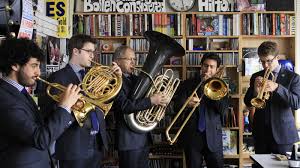
brass I hadn’t realized that Canadian Brass part of the institution of Canadian Brass.  They’re not only part of it, they are it.  Indeed Canadian Brass

led by its avuncular tuba master (and sole original member) Chuck Daellenbach, essentially put the idea of the brass quintet on the map.  Then there are the recordings — more than 100 of them, selling more than two million albums total.  Daellenbach and his fresh-faced players, each with red-striped sneakers and matching outfits, strolled into the NPR Music offices, took their places behind Bob Boilen’s desk and started blowing as if they’d played this peculiar gig a hundred times.

They began with a version of J.S. Bach’s intricately woven “Little Fugue in G minor,” an impressive staple that stretches back to the band’s first recording. In those days, precious little was available for brass quintet (two trumpets, horn, trombone and tuba), so the band relied on making arrangements of existing music. Since then, Canadian Brass has transcribed and commissioned more than 200 works, including “Tuba Tiger Rag,” Luther Henderson’s lighthearted tribute to Dixieland jazz. It’s a showpiece for Daellenbach, who twirls his tuba (while playing) and lands on a final note of such subterranean depth that you feel it more than hear it.

The players closed with another favorite, Rimsky-Korsakov’s dizzying “Flight of the Bumblebee,” in an arrangement by Canadian Brass trumpeter Brandon Ridenour. Although the music buzzes past in less than two minutes, players get plenty of opportunities to shine — as in the lightning-fast runs negotiated by trombonist Achilles Liarmakopoulos, the newest member of the group.

The band consists of   Christopher Coletti, trumpet; Brandon Ridenour, trumpet; Eric Reed, French horn; Achilles Liarmakopoulos, trombone and Chuck Daellenbach, tuba.

The band sounds amazing playing these familiar songs in a way that is–unexpected–but still right on.

J.S. Bach: “Little Fugue In G minor” is probably one of my favorite classical pieces.  I really enjoy Bach’s fugues a lot and this one is just perfect–and the arrangement here is great–everyone gets a chance to explore the phrasing.  It starts with the tuba and then the trombone and then the horn and finally the tuba.

Luther Henderson: “Tuba Tiger Rag”  Introducing this piece he says that in Bach everyone is equal, but he felt they needed a tuba song.  He says that while this song might be low art for other instruments it is high art for a tuba.  And yes he does spin it around while playing it. He uses that instrument to make roaring sounds and incredibly deep notes.  This is a medley, I think, because while the trombone and tuba play, the other three sing “hold that tiger / tuba tiger.”  How on earth does he reach that super low note?

Before the final song Bob says that his tuba doesn’t look brass.  And Chuck replies that there’s an old joke: “How old do you have to be to play the tuba and the answer is old enough to be able to carry it but young enough to still want to.”  He still wants to so he’s been  so he;s lightening the horn with carbon fiber.

For the final song Nikolai Rimsky-Korsakov: “Flight Of The Bumblebee” he tells us that the two trumpets play very fast–it must be easy for them. But the trombonist Achilles didn’t know what was coming when they had him play along.  Chuck says you’ll never see anyone play this song this fast on this instrument.

And it is amazing.  The song flies past–a blurry of fingers.  And I love that at the end, one of the trumpets sings the triumphant final high note.

You wouldn’t expect a band as old and legendary as Canadian Brass to be so funny and good-natured, but they sure are.  And that makes these familiar songs even more fun.

[READ: February 7, 2016] Ava and Tacocat

Sarah brought this book home, in part because Clark’s reading group called themselves tacocat which is a palindrome.  Turns out that Clark wasn’t interested in the book, so Tabby and I got to read it together, which was really fun.

The whole book is a language lovers’ dream, chock full of big spelling words and all kinds of palindromes littered throughout.

It was a few chapters into the book before we realized that this is actually the second book of a series (the first one is called Ava and Pip) and that this book references things that happened in book one without exactly explaining what happened.  That’s a little annoying for us, but it certainly made us want to read the first book.

The book is set up in diary form with Ava writing in it on most days.  I like that she loves palinromes so much (S-E-N-I-L-E-F-E-L-I-N-E-S) and every time she mentions one in the book, they spell it out like that. (more…)

Read Full Post »

dragonpunchis SOUNDTRACK: JOYCE EL KHOURY AND BRIAN JAGDE-Tiny Desk Concert #196 (February 20, 2012).

joyceI don’t listen to opera, although I don’t dislike it.  I’m amazed at the power of these singers’ voices.  It was interesting to watch this duo up close like this because you could really see them emote the story (especially in the duet).  So even if I had no idea what was going on lyrically (which I didn’t), I could get a sense of how they reacted to each other.

Here’s some background:

Soprano Joyce El-Khoury and tenor Brian Jagde are young, fresh-faced opera singers at the dawn of promising careers. El-Khoury has already appeared at New York’s Metropolitan Opera, while Jagde has sung roles in smaller houses here and in Europe.  Miloš Repickný joined the two singers at our trusty electric piano.

For this Tiny Desk performance, she reprises her role of Lauretta in Gianni Schicchi by singing the hit aria “O mio babbino caro,” in which she pleads with her father to let her marry her boyfriend. Listen for El-Khoury’s immaculate control of dynamics. Her soft, pianissimo notes are silvery and well-supported by the breath.

Jagde steps up next for a number from Puccini’s Tosca — the opening tenor aria, “Recondita armonia” — in which he muses about Tosca, his “dark-eyed mistress.” It takes a lot of work to sing it right, and Jagde produces the requisite drama and decibels.

The two hard-working singers end with the deliciously romantic duet which closes act one of Puccini’s La Bohème. “We’ve just fallen in love,” Jagde notes. “It happens really quickly in the opera.” As their two powerful, love-struck voices intertwine, the sounds of Puccini reverberate off the walls of the entire fifth floor — a good day in the office.

The first piece [Puccini: “O mio babbino caro” (from Gianni Schicchi)] is sung by Joyce and her voice is wonderful.  Its starts a little quiet but really soars by the end.  It is only 2 minutes (which is something of a surprise).  It’s amusing to hear her speak in such a plain American voice after wailing in Italian like that.  Brian then speaks.  He begins with a wonderful Italian pronunciation of the song they will sing and then reveals himself to have a standard American accent as well.  He tells us a bit of the plot of the song [Puccini:” Recondita armonia” (from Tosca)].  He is painting in a church–a beautiful blonde goddess.  And he compares her to Tosca, who is completely the opposite.  And then that quiet voiced guy opens his mouth to sing.  The power in his voice is incredible.  And just before the end, he wails an amazing note.  This piece also lasts only 2 minutes

The final piece [Puccini: “O soave fanciulla” (from La Bohème)] is a duet. He says that they are in love and about to go out together but they have to look at each other one more time. They sing beautifully together.  I can’t imagine his big powerful voice singing right next to her ear (and being romantic at the same time).  They act it out very well.  There’s even a moment where they look about to kiss but she pulls away to keep singing—it’s good convincing acting.

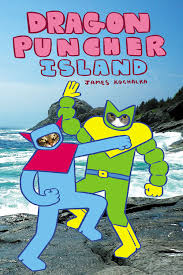
[READ: February 12, 2016] Dragon Puncher Island

This sequel to Dragon Puncher is just as funny as the first.  The Kochalkas got a new cat who takes a starring role.

The story opens up with Dragon Puncher and Spoony-E by the seaside (filmed in Maine).  Spoony-E is bragging about his spoon-wielding abilities (even though his spoon is broken).  Finally Dragon Puncher tells him to be quiet.  And also to stop calling him mister as she is a girl cat.

But when Spoony E stats saying “who’s my pretty little kitty,” Dragon Puncher gets mad and punches Spoony-E!  Spoony is caught by the new kitty, a green bubbly creature called Monster Slapper.  And Monster Slapper doesn’t take kindly to this small, furry and, frankly, smelly creature. (more…)

Read Full Post »

dragonpunch SOUNDTRACK: JOAN SORIANO-Tiny Desk Concert #195 (February 16, 2012).

joanJoan Soriano and his unnamed partners play bachata music (which I’d never heard of before).

Bachata is that sweet, syncopated, lovesick music full of guitar plucks, bongos and güiras that you hear blasting from cars and Latin clubs today. But as recently as the late 1980s, it was frowned upon in its native Dominican Republic for being rustic and vulgar. But it grew anyway, and was championed by Dominican artists like Anthony Santos (one of the first bachateros to go mainstream) and Juan Luis Guerra.

Joan Soriano is a reminder of that. “El Duque De La Bachata” (“The Duke Of Bachata”) is an example of the earthy, unpretentious, undiluted bachata that was forced into a corner so long ago in favor of more “sophisticated” sounds. Whether he’s talking about having his heart broken or about falling out of love, Soriano sounds honest and to the point, and so do his guitar licks. The seventh of 15 kids and an exceptionally talented musician whose music moved him from the countryside to Santo Domingo at 13, Soriano is an essential piece of bachata’s story.

Today, we consume pretty-boy bachata: It’s polished, calculated and, by mainstream standards, photogenic. But when you hear Soriano’s raw interpretation of bachata, you can’t help but wonder how such a beautiful sound was kept quiet for so long, and marvel at its resilience.

They play three songs:

“Me Decidí A Dejarte” Joan sings.  he has a beautiful voice and really interesting and enticing guitar picking style.  I get a kick out of the backing vocals with go “Pero no” “No!” in a rather high, almost girl-group sound.

“Aunque Sea A Escondidas” The woman with his sings lead on this.  She also has a pretty voice and this song is much more mellow than the other two.  Joan stands in the back and sings harmony vocals.

“Cuanto Lloré”  One more shift of locations as the second guitarist moves to the mic.  His voice is a little deeper but just as lovely.  Joan sits next to him.  This song is heavier than the other two.  It has a really catchy happy guitar riff.  The other guitar plays a kind of rapid chugging style.   When he and Joan duet on vocals near the end of the song it sounds really amazing–their voices are in perfect sync.

[READ: February 11, 2016] Dragon Puncher

I love James Kochalka.  I love his deceptively simple artwork. I love that he does his very cartoony style for both his kids books and his highly-inappropriate-for-kids adult books–DO NOT GRAB THE WRONG BOOKS BY MISTAKE!

But I think of all of the things he’s done, the Dragon Puncher series is my favorite.

For this series, he takes photos and integrates them into his story.  But in addition to drawing crazy cartoons on top of wonderful photorealistic backgrounds, he also integrates his family members as characters.

For instance the Dragon Puncher’s face is the face of Spandy, the family cat.  Meanwhile, the other main character, Spoony-E’s face belongs to Kochalka’s son Eli (he was 3 at the time).  And the dragon’s face is that of Kochalka himself.  They are hilarious.

tfaw_dragonpuncherp1Most of Kochalka’s stories veer to the absurd side, and this one is no exception.

Dragon Puncher struts through the landscape seeking the sneaky dragon.  Then he trips over a brown hairy thing whose name is Spoony-E. He carries a wooden spoon everyone (evidently Eli loved spoons at the time).  Dragon Puncher is angry and shouts everything “I WILL DESTROY YOU!” (evidently Spandy was a nasty cat and would hiss at kids, so this makes it even funnier).

Spoony-E is a sweet little creature and he wants to help.  He shows off what a good fighter he is with his spoon (and almost loses to a butterfly).

Dragon Puncher finds some dragon drool and then the ferocious dragon comes along (Kochalka is suitably hilarious as the dragon).  They fight (watch out for the tail).  And the fight only brings our two heroes closer (maybe).

I’ve read this book many times and it never fails to make me laugh.

Read Full Post »

crocs SOUNDTRACKRED BARAAT-Tiny Desk Concert #194 (February 14, 2012).

redbaraatBob Boilen opens his blurb about this band with high praise indeed:

Red Baraat is the best party band I’ve seen in years. The group plays rollicking funk music steeped in Northern India’s wedding celebrations, with a dash of D.C. go-go beats and hip-hop. It’s all driven by Sunny Jain’s dhol, a double-sided barrel drum that hangs down low around his body.

But the music is not all about drumming

If the drum is the messenger, the brass is the message. Uplifting melodies emanate from baritone and soprano saxophones, bass trumpet, trombone and sousaphone. This is a band that jazz lovers can appreciate and rock fans can dance to.

They play three songs.  And the musicians are quite diverse.  Its fun to see a trumpeter (who totally wails) wearing a Sikh turban.

“Chaal Baby”  is really dancey with a simple, bouncy horn melody and all that percussion. In addition to the snare and the dhol, there’ s a percussionist making some great sounds, too.  And all through the song–which really swings–people are shouting “hey ho.” It’s a lot of fun.

“Shruggy Ji” opens slowly but after a few second the whole band kicks in with a kind of minor key feel (and a very Indian sound on the saxophone.  There’s some chanting–although I can’t tell what they’re saying.  The two note melody is great for shaking your hips to.  In the middle of the song there’s a call and response of “oh my may” and then he raps—he’s a little hard to hear (because he’s unmic’d and the rest of the band is so loud) but the gist is there and it’s fun (I believe he name checks Biz Markee).  As this song ends you hear Stephen Thomson shout “can you guys hear in the back?”

On “Dhol ‘n’ Brass” the guy with the dhol opens this song with a fast chanted opening that sounds a lot like the rhythm of the drums.  When the rest of the band jumps in, the song is really fast and a lot of fun

This is indeed a great party band and there’s plenty of diversity in the music to keep it really interesting and unexpected.

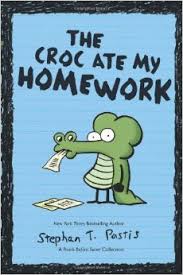
[READ: February 1, 2016] The Croc Ate My Homework

I knew of the comic strip Pearls Before Swine but had never read it before.

This book was published by the same folks who introduced me to Liō and I thought it might be funny.

From what I gather, this collection is actually a collection of the most kid-friendly strips from this series.  This I find very strange indeed, but I see that the actual strip is fairly adult and has been controversial on my occasions (although it is published in newspapers, so it’s never too dark).

I got a kick out of this collection, although I didn’t think it was all that great.  Of course, knowing that these strips are the somewhat watered down strips does make me want to read the real thing to see if these strips ware funnier in context.

The strip centers around a bunch of animals Rat (who is mean–unnecessarily mean, I felt, in this book, but again, without context), Pig who is a good-natured but naive. The Crocs (who are incredibly dumb–and very funny) and the Zebra who outsmarts the crocs–although that’s not very hard. (more…)

Read Full Post »

« Newer Posts - Older Posts »