Feeds:
Posts
Comments

Archive for the ‘Dogs’ Category

SOUNDTRACK: MESHELL NDEGEOCELLO–Tiny Desk (Home) Concert #167 (February 10, 2021).

I bought Meshell Ndegeocello’s Plantation Lullabies back in 1993 on the strength of “If That’s Your Boyfriend,” a funky track that is still pretty great.  I didn’t realize she had been steadily putting out music ever since.

This Tiny Desk (home) concert … includes songs from throughout her career framed by her thoughts on the importance and influence of James Baldwin: “He deserves flowers every day. Most of all because he was willing to discuss things that were painful, hard to look at, hard to see, hard to accept.”

Ndegeocello is a bad-ass bass player with a serious funk edge.  And yet in this Tiny Desk Concert, she strips almost all of that away.

The first song comes from Lullabies, but in this version of “Step Into the Projects” she strips away all the music and turns the song into a spoken word piece (although she does keep the rhythm of the original).

For the next three songs she is accompanied by her longtime guitarist Chris Bruce.

“Price of the Ticket,” is from Ndegeocello’s recent project, Chapter & Verse: The Gospel of James Baldwin, “a 21st century ritual toolkit for justice” inspired by Baldwin’s The Fire Next Time.  In the track, it’s just Bruce’s gentle guitar and Meshell’s quiet voice.

“Forget My Name” from Comet Come To Me (2014) is stripped down from its original reggae arrangement and lays bare the haunting imagery in the lyrics.

She plays some spare bass, but musically it’s all about Bruce–the cool low riff and the pretty high melody.

“Fool of Me,” from her acclaimed album Bitter (1999), ends the set with just vocals and guitar.

Like the other songs, it is spare and beautiful, allowing you to really hear the words.  I love Meshell’s funk, but this is a beautiful set.

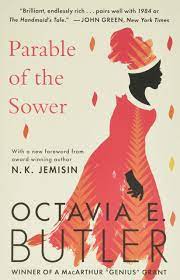
[READ: March 29, 2021] Parable of the Sower [2026-2027 (chapter 19)]

I have not read Cormac McCarthy’s The Road, and I don’t intend to.  But I feel like this book acts as a precursor to that one.  And that is something I did not in any way expect.

2026 opens in June, almost seven months after the previous entry.  I’m curious about the distance between entries.  It’s possible that Lauren has dozens and dozens of pages that just said, “today sucked” and we don’t need to see that.  But I am curious about the time jumps.

Is it a way for Butler to move us ahead quickly so that something that needed to take a few years to happen is given the time to do so?  I’m thinking about Mars a bit.  In two years a lot can happen with the space program.  Of course, the President was supposed to cancel the program.  So who knows what’s going on there.  Aside from basic passage of time, did we need to wait six months to see what came next?  I’m not sure.

In June Keith is back–bigger and more confident.  He’s not yet 14, but he’s very successful, bringing home money and gifts (but none for his father).  He has ingratiated himself into a gang by being the only literate one in the group:

They’re all older than me, but not one of them can read or write anything.  They stole all this great stuff and they couldn’t even use it.  Before I got there they even broke some of it because they couldn’t read the instructions. (105)

Lauren and Keith have a heart-to-heart–really their first ever.  He learns a bit about her and while he gains a little more respect he also tells her that she’d never survive out there–she doesn’t know enough.  He also tells her about these new crazies called Paints who paint their skin green or blue or yellow and eat fire and kill rich people.

Keith comes back on her birthday and gives her a present.  A month later he is dead–killed in a horrific and gruesome way.  He was clearly tortured and left to be found.  His death was a message for someone–a rival gang, probably.

But they don’t call the police:

cops liked to solve cases by “discovering” evidence against whomever they decided must be guilty.  Best to give them nothing.  They never helped when people called for help.  They came later and more often than not, made a bad situation worse. (114)

In October, a new component to the story crops up.

Kagimoto, Stamm, Frampton and Company (KSF) has taken over a nearby town called Olivar.  It is small and well to do.  The citizens voted to let their town be taken over–privatized.  They intend to set up energy resources in the community–solar, wind, desalinization.  They mean to own great industries in an area that people have given up on.

Kagimoto, Stamm Frampton: Japanese, German, Canadian.  When I was young, people said it would come to this. Well why shouldn’t other countries buy what’s left of us if we put it up for sale. (121)

This is another aspect of the story that confuses me.  Is it basically that Los Angeles has exploded and the rest of the country is okay?  There’s talk about work up north, but why?  What happened to the country that they/we would let L.A. collapse but nothing else.  Or maybe it’s the entire South West?  Nobody knows anything about the East Coast, apparently.   I’m hoping that they will get explained a bit later on.

Olivar was accepting applications to live there.  They were looking for educated people.  And here we learn that both of Lauren’s parents have PhDs [a commentary on the invisibility of Black scholars?].  Her stepmother thinks it’s a great idea to go to Olivar.  They would be guaranteed safety and security.  But her father is against it, calling it “half antebellum revival and half science fiction” (122).

Anyone KSF hired would have a hard time living on the salary offered. In not very much time, I think the new hires would be in debt to the company.  That’s an old company-town trick–get people into debt, hang on to them and work them harder.  Debt slavery. That might work in Christopher Bonner’s America. Labor laws, state and federal are not what they once were. (121)

Come November, the Garfields have been accepted at Olivar.  The Garfieds include Joanne, Lauren’s one time best friend (who misplaced Lauren’s trust by tattling to her father).  Joanne has been serious with Harry Balter.  But Harry is staying in Rebledo.  Lauren suggests they get married and then Harry can move in with them, but she says that Harry wants to get married and travel north.  He thinks they way Lauren’s father does about Olivar.

But the Garfields are still going: “conservative and sensible and mature and wrong” (128).

In November, Lauren’s father did not come home one night.  They spend days looking for him with no luck.  The search parties uncover all kinds of remains, some of which they think might be her father’s but which turn out not to be.

The search also reveals an aspect of Lauren’s hyperempathy that we didn’t know–sound doesn’t trigger it (she hears a man screaming), only sight does.

Five days alter they have a Sunday survive that turns more or less into a memorial.  Lauren speaks at he service and proves to be powerful preacher.  She speaks of God but presumably she means her own god–the earthseed god.  By mid-December they have a formal funeral–they accept that he would have found his way home by now.

Later, when KSF came for the Garfields, it was in an armored truck

The two movers were a black and a white, and I could see that Cory considered that hopeful.  Maybe Olivar wouldn’t be the white enclave that Dad had expected. (139)

All along Lauren has been romantically involved with Curtis.  People anticipated that she would get married an have a baby with him–something she strongly resisted.  Indeed, her plan all along was to leave Rebledo without him.  But now with Lauren’s father gone (he was the reason she hadn’t left yet–she didn’t want to hurt him), Curtis suggests that they both go.  He’s upset that she wanted to go without him, but she explains that she didn’t want to force him to make that choice.

Two days later, someone burned down the Payne/Parrish house; while that was going on. they robbed three of the other houses including Lauren’s.

I’ve been frightened at the phrases that Butler says that prove eerily prophetic to the last few years:

People are setting fires because they’re frustrated, angry, hopeless. They have no power to improve their lives, but they have the power to make others even more miserable.  And the only way to prove to yourself that you have power is to use it.  (143)

Interestingly, the drug that gave Lauren her hyperempathy–Paracetco–was initially a legitimate drug intended to help victims of Alzheimer’s disease.  Pyro was an accident–a homebrew on the East coast it made it was away across the country.

People on the fire drug get off on watching things burn.  Blaze, fuego, flash, sunfire.  The most popular name is pyro short for pyromania [I’m fascinated that she needed to spell that out as I feel that in 2021 (and much earlier) it was a common abbreviation].

As the year ends, the families try to make due with what they have left.

Then we enter 2027.  Once again it’s six months into the year.  And this is when things change dramatically.   Thieves drove a truck through their wall and set everything on fire.  Nearly everyone in the community was killed.  [I did wonder if it was worthwhile learning anyone’s names, and it was two people I didn’t think twice about who survived].  The description is a violent orgy of death, rape, fire and who knows what else.  It is brutally described.  Lauren escaped.  She had the forethought to run back in and put on clothe and shoes and grab her bug out bag.  No one else in her family had done so. She saw them n bare feet and pajamas and then she didn’t see them any more.  She managed to get outside and to hide until the next day,

She crept back into her community and went to her house which was being looted and stripped. She knew where there were some hiding places and she managed to get clothes for her family as well as money that was hidden in the ground.  She grabbed a gun and got out, looking like all the other miserable looters.

Lauren was sure she was alone.  Then out of the rubble came Harry Balter and Zahra Moss–the youngest wife of Richard Moss the polygamist.  Zahra’s baby was killed (brutally) and an attacker was about to (or had begun to) rape her when Harry saved her (and got beaten for his help).  Neither one had planned for anything like this and they are pretty hopeless.  Lauren decides that three is safer than one and invites them to go North with her.

Zahra’s backstory is interesting.  Richard bought her from her mother who was a drug addict and a prostitute.  Zahra has lived on the streets and she knows what’s what.  She takes them to Hanning Joss, the biggest secure store complex.  I’m fascinated to learn that there are are still megastores and that they have security allowing people to shop safely there–commerce always wins.

Then they do what everybody else does–they head North.  Lauren has decided to pass as a man.  She’s tall and muscular and can do so, so she cuts her hair short.  They encounter much danger and violence but manage to get relatively far north.  Harry is a trusting guy, trying to avoid violence in any way possible.  But Lauren (and Zahra) knows the reality of the situation–kill or be killed; steal or be stolen from.  And with Lauren’s hyperempathy, she can’t afford to let people around her suffer.  She winds up cutting a man’s throat to stop the hurting that he (and she) are feeling.  Harry is appalled at her.  So she finally admits to her hyperempathy assuming they’ll abandon her.  But they do not–three is better than two.

Zahra and Harry become a couple and have unprotected sex (what harm could come from that?)

Then the trio meet another family who seems to be tagging along after them.  Everyone is out for themselves, but Lauren takes pity on this mixed race couple with a baby.  She helps them out at the second Hanning Joss and a few days later, when Lauren saves their baby from a feral dog, they agree that five (or six) is better than three and two (or three).

The new people are Travis Charles Douglas, Gloria Natividad Douglas and six month old Dominic. They are going to Seattle where Travis’ aunt lives.  Travis is quite taken aback when he learns that Lauren is a woman–especially since she saved them, but he’s going to have to get over it.

All of this time, Earthseed has been running around in Lauren’s head, but it hasn’t really shown up.

Then in chapter 18, Lauren starts talking to them about Earthseed.  Travis is a (surprisingly) intelligent man–he knows about entropy.

Travis’s mother was a live in cook for a rich man.  But before that she had written for newspapers and magazines.  She taught Travis to read. The man she worked for had a library and she would sneak out one book at a  time–he didn’t want Travis touching his stuff.

Of course. Slaves did that two hundred years ago.  They sneaked around and educated themselves as best they could sometimes suffering whipping, sale or mutilation for their efforts. (218)

Natividad was a maid and the rich man let them marry:  The son of the cook marrying one of the maids. That was like something out of another era too.

They discuss her poems–Earthseed.  Travis pushes back against her ideas, although never in an aggressive way.

She argues that here is no pore pervasive power than change.  Travis says that nobody is going to worship change.  Lauren says she hopes not

This excerpt from God is Change summarizes this discussion nicely:

“I was looking for God. I didn’t know whether there was a god to find, but I wanted to know. God would have to be a power that could not be defied by anyone or anything.”
“Change.”
“Change, yes.”
“But it’s not a god. It’s not a person or an intelligence or even a thing. It’s just … I don’t know. An idea.”
“It’s a truth. Change is ongoing. Everything changes in some way— size, position, composition, frequency, velocity, thinking, whatever. Every living thing, every bit of matter, all the energy in the universe changes in some way.”
“Sort of like saying God is the second law of thermodynamics?”
“That’s an aspect of God. There are all kinds of changes in the universe.”
“But why personify change by calling it God? Since change is just an idea, why not call it that? Just say change is important.”
“Because after a while, it won’t be important. People forget ideas. They’re more likely to remember God— especially when they’re scared or desperate.”
“Your stuff isn’t very comforting.”
“It is after a while. I’m still growing into it myself. God isn’t good or evil, doesn’t favor you or hate you, and yet God is better partnered than fought.”
“Your God doesn’t care about you at all.”
“All the more reason to care about myself and others. All the more reason to create Earthseed communities and shape God together. ‘God is Trickster, Teacher, Chaos, Clay.’ We decide which aspect we embrace— and how to deal with the others.”
“But nobody’s going to worship change.”
“I hope not.  Earthseed deals with ongoing reality, not with supernatural authority figures. Worship is no good without action. With action, it’s only useful if it steadies you, focuses your efforts, eases your mind.”
“Praying makes people feel better even when there’s no action they can take. I used to think that was all God was good for.”
“That isn’t what God is for, but there are times when that’s what prayer is for. And there are times when that’s what these verses are for. God is Change, and in the end, God prevails. But there’s hope in understanding the nature of God— not punishing or jealous, but infinitely malleable. There’s comfort in realizing that everyone and everything yields to God. There’s power in knowing that God can be focused, diverted, shaped by anyone at all. But there’s no power in having strength and brains, and yet waiting for God to fix things for you. Best to understand that and return the effort: Shape God.”

Lauren thinks he might join her movement.  Zahra is already on board.

She imagines finding and isolated place on the coast and making a deal with the owners–if there were more of them and they were better armed, they could provide security as well as education.

This fantasy, this plan gives the first sign of hope in this bleak world of Lauren’s.  It seems impossible.

Read Full Post »

SOUNDTRACK: THE MOTHERS OF INVENTION-“Trouble Every Day” (1966).

Frank Zappa and the Mothers of Invention would play all kinds of music over the course of their existence (even more genres added when Frank went solo).  It’s not even entirely clear how you’d describe their first album Freak Out!

This song opens up side three of the double album and is a bluesy song based around a four note (and one bent note) melody and includes harmonica solo.  The song runs almost 6 minutes long and doesn’t change much until after about five and a half the tempo increases dramatically until the song fades.

It was written after the Watts Riots.  It was an accurate description and also sadly prescient.

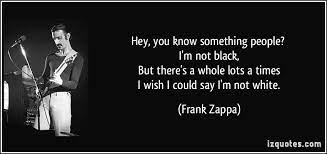
Right in the middle of the song Frank states:

Hey you know something people I’m not black But there’s a whole lots a times I wish I could say I’m not white

That seems like it was a pretty powerful thing to say (and something you’d be unlikely to hear on the radio) back in 1965.

The chorus sticks with us

So I’m watchin’ and I’m waitin’
Hopin’ for the best
Even think I’ll go to prayin’
Every time I hear ’em sayin’
That there’s no way to delay
That trouble comin’ every day
No way to delay
That trouble comin’ every day

He certainly predicted the state of 24 hour news

Well you can cool it, You can heat it…
Cause, baby, I don’t need it…

Take your TV tube and eat it
‘N all that phony stuff on sports
‘N all THOSE unconfirmed reports
You know I watched that rotten box
Until my head began to hurt
From checkin’ out the way
The newsmen say they get the dirt
Before the guys on channel so-and-so
And further they assert
That any show they’ll interrupt
To bring you news if it comes up
They say that if the place blows up
They’ll be the first to tell
Because the boys they got downtown
Are workin’ hard and doin’ swell,
And if anybody gets the news
Before it hits the street,
They say that no one blabs it faster
Their coverage can’t be beat

Things haven’t changed since this song was written

And it’s the same across the nation
Black & white discrimination
They’re yellin’ “You can’t understand me!”
And all the other crap they hand me
In the papers and TV
‘N all that mass stupidity
That seems to grow more every day
Each time you hear some nitwit say
He wants to go and do you in
Because the color of your skin
Just don’t appeal to him
(No matter if it’s black or white)
Because he’s out for blood tonight

Perhaps the theme verse for recent events

Don’t you know that this could start
On any street in any town
In any state if any clown
Decides that now’s the time to fight
For some ideal he thinks is right
And if a million more agree
There ain’t no great society
As it applies to you and me
Our country isn’t free
And the law refuses to see
If all that you can ever be
Is just a lousy janitor
Unless your uncle owns a store

It’s a shame this song still resonates.

[READ: March 22, 2021] Parable of the Sower [2024-2025]

I found Kindred to be an enjoyable (not exactly the right word, I know) novel.  I thought the premise was really cool and I thought the content was impactful and was conveyed really well.  It was a powerful story that did not shy away from brutality.

But it in no way prepared me for Parable of the Sower.

I didn’t know anything about this book at all before starting.  At first I thought it was neat that it was set in 2024 (hey that’s so close!)  And that, coincidentally, myself and my daughters are almost the same ages as the main character and her father (will this be our future?).

But then, holy crap, Butler doesn’t hold back.

The brutality of Kindred was based on reality.  It was horrible and, in retrospect, hard to believe that people could do such things.  The brutality of Sower, however, is all based on the future projection.  The book was written in 1993. Basically, she posits that in 30 years, America has become a rotting hellscape.  And while we haven’t reached quite the levels that she imagines, there are some pretty eerie accuracies.  I have to assume, given the natural of the elected politicians, that some things are going to get very very spookily prescient.

The book opens in 2024 with a quote from Earthseed.  We don’t know what that is yet, but by the end of this week’s read we’ll learn that Earthseed is a sort of manifesto written by the main character, Lauren Oya Olamina–I didn’t realize her name was given after the first quote from Earthseed until looking back on it.  Each chapter has another quote from Earthseed and then the story unfolds as a series of diary entries. (more…)

Read Full Post »

SOUNDTRACKMAX RICHTER-Tiny Desk (Home) Concert #150 (January 22, 2021).

I really enjoyed Max Richter’s Tiny Desk Concert back in January of last year.  The pieces were pretty and sad and had a modern classical feel.

For his Home Concert, he seems to be one of the few people who actually plays in his home.

Shot in artful black and white, their simplicity and beauty invite us into a world as we once knew it, where fresh air wafts through open doors and dogs peacefully snooze (canine cameos by Evie and Haku) in the late summer sunshine in southern England.

These half-dozen short pieces can offer two very different modes of experience.  There’s a mysterious potency in instrumental music, where the mind is open to wander and free-associate. Max Richter taps into that power with singular grace and humanity.

His entire set is 16 minutes, so indeed all of these pieces are quite short.

He played “Vladimir’s Blues” when he was at the Tiny Desk.  There’s no blurb about it here, but the first time, the blurb told us

Its delicately toggling chords are an homage to novelist Vladimir Nabokov who, in his spare time, was a respected lepidopterist, obsessed with a subfamily of gossamer-winged butterflies called the blues. Richter plays the piano with the practice pedal engaged for a warm, muted sound.

It’s a 2004 piece that’s only a minute and a half and it is quite lovely.

Up next are the

gently swaying chords of “Origins,” where the music lumbers in the lower half of the keyboard.

It reminds me a lot of a famous piano piece which I can’t quite remember the name of.  After about three minutes of the piece, one of the dogs who had been lying outside gets up and walks almost up to the camera.

Infra is a ballet he made with Wayne MacGregor for the Royal ballet in London in 2008.

He plays the “soothing, oscillating figures” of “Infra 3” and follows it with the mellow but more upbeat “Horizon Variations.”  This piece also lasts less than two minutes as well.  It’s lovely.

“Prelude 6” from Voices which has a much faster melody than the other pieces.  About half way through, the other dog (who looks like a puppy) comes in all tail-wagging and heads over to dog number 1 (both off camera now).

“Fragment” is a pretty, sad piece to end the set (also about a minute in a half).  As he signs off he says

“Looking forward to the time when gigs can come back and we can do this for real,”

As the video ends, both dogs get up and walk into the lovely sunshine.

[READ: March 1, 2021] Klawde: Evil Alien Cat

I saw this book at the library (actually I saw book 5, I think) and thought it sounded funny. They had book one so I decided to start from the beginning.

The title says it (almost) all.  Klawde is an evil alien warlord cat.  The book opens on the planet Lyttyrboks where Klawde (whose Lyttyrboks name is Wyss-Kuzz) is on trial.  He is found guilty of clawing his way to power and committing crimes against felinity.

The elder says that thousands of years ago the punishment’s on Lyttyrboks was banishment to a vast wasteland of a planet inhabited by a race of carnivorous ogres.  For generations they sent their convicts there, but eventually that punishment was deemed to cruel.  However, given the severity of Wyss-Kuzz’s crimes, they have resurrected this punishment.  He is transported across the galaxy to the horrible planet known as Earth.

Alternating chapters are written from the point of view of Klawde’s and an earth boy named Raj.  Raj’s family recently moved from Brooklyn to Elba, Oregon and he is bored and alone.  So when a spaceship lands in front of his house and the doorbell rings… well how exciting to find a cat without a tag.  Even if this cat meows like nothing he’s ever heard before and seems kind of mean.

The book is full of illustrations by Chenoweth.  I love the wickedness of Klawde and Raj’s parents are a hoot as well.

Klawde sees the humans as furless ogres and fears what they will do to him.  They put him in a cage (kitty carrier) and force him to eat horrible food–what is this torture?  Raj’s dad names him: “like clawed, but spelled in a more exciting way.  Why use a C when you could use a K?  K is the alphabet’s party letter.” (more…)

Read Full Post »

SOUNDTRACK: CECIL TAYLOR-Jazz Advance (1956).

As the biography below states, Cecil Taylor was ahead of his time and harshly criticized for being so.  This was his first album and it made waves–as did his subsequent performance at Newport Jazz Festival (it’s like when Dylan went electric, but for jazz).

Since I’m not a big jazz follower, I’ll start with those who are.  Here’s some notes on the album from The Guardian.

A Taylor group comprised of Buell Neidlinger on bass and Dennis Charles on drums is augmented here and there by soprano saxophonist Steve Lacy; the repertoire mixes tunes by Ellington, Monk and Cole Porter with the leader’s fearlessly personal reinventions of the blues. Thelonious Monk’s “Bemsha Swing” is played even more cryptically and succinctly, the lines breaking up into jagged fragments and jutting chords. Taylor’s “Charge Em Blues” is a 4/4 walk with a surprisingly straight Lacy sax solo, and “Azure”‘s lazily struck chords and delicate treble sounds might even remind you of Abdullah Ibrahim, until the cross-rhythmic improvised piano patterns clattering chords typical of later Taylor emerge. …  It’s a historic document that still sounds more contemporary than most jazz piano music being made today.

As I listened I first thought it didn’t sound all that shocking and I wondered if that was because I was listening in 2021 and not 1956, but around two minutes into “Bemsha Swing” he starts throwing in some atonal and dissonant notes.  You can tell that he knows how to play, but that he’s deliberately hitting either “wrong” notes or just letting his fingers fly where they will.   And it still sounds surprising today.

“Charge ‘Em Blues” sounds far more “normal” at least in the beginning.  Lacy’s sax solo is fun and bouncy.  Then around 5 minutes a back and forth starts with Taylor’s wild free-jazz atonal improv and a drum solo.

“Azure” is a more chill track although about halfway through the improv starts going off the rails.

About half way through “Song” the solo is all over the place–sprinkling around the piano and pounding out a few chords here and there.  It’s dissonant and off-putting, but seem more like it’s trying to wake up the listener. When Lacy’s pretty sax comes in and plays a delightful improv and Taylor is bopping around behind him, the contrast is stark.

“You’d Be So Nice To Come Home To” is the only song on the record that I knew before and I never would have recognized it here.  As AllMusic puts it

At his most astonishing, Taylor slightly teases, barely referring to the melody of “You’d Be So Nice to Come Home To,” wrapping his playful, wild fingers and chordal head around a completely reworked, fractured, and indistinguishable yet introspective version of this well-worn song form.

This is a solo piece and he is all over the place.  At no point did I recognize the original melody.

“Rick Kick Shaw” features some lively drums and walking bass while Taylor goes to town.  He plays some really fast runs which slowly turn experimental. I’m very curious if future renditions of this song were in any way the same or if all of this soloing was improvised each time.

“Sweet and Lovely” is very slow and more traditional sounding.  Without the speed of his solos, this song comes across as almost like a standard jazz song.  Although at the very end he throws in a few sprinkles of chaos just because he can.

[READ: February 2, 2021] The Musical Brain

I’d only read a couple of short stories from César Aira (all included here).  His novels are so short it almost seems weird that he’d write short stories, but some of these stories are very short indeed.  They do also tend to meander in the way his novels do which makes it seem like some of them don’t end so much as stop.

“The Musical Brain” was the first story I’d read by Aira, and what I wrote about the story has held true for pretty much everything I’ve read by him:

There are so many wonderful and unexpected aspects to this story that I was constantly kept on my toes.  This also made it somewhat challenging to write about.

“A Brick Wall”
I thought I had read this story before but I guess I hadn’t.  It begins with the narrator saying that he went to the movies a lot as a kid–four or six films a week (double features). He says he has an impressive memory for details.  He remembers seeing Village of the Damned decades ago.  A small village’s children are all born as zombies. The zombies can read everyone’s minds so the hero thinks–erect a brick wall.  He also remembers North By Northwest which was titled in Argentina: International Intrigue.  He and his friend Miguel loved the elegance of the movie. And they decided to become spies.  So they created a game in which they would “forget” that they were spies. They would leave notes for each other and then “discover” them so that when they came upon them they were new and exciting.  It was surprisingly easy to forget the game, apparently. (more…)

Read Full Post »

SOUNDTRACK: BORIS with MERZBOW-Gensho (Disc One: Boris) (2016).

In 2016, Boris teamed with Merzbow to create Gensho, a 2 CD package that was designed to have both CDs played at the same time.  Not the easiest thing for many people, but with the advent of digital recordings it’s now pretty easy to play both discs at the same time (this release is on Spotify).

Disc 1 was all Boris.  Disc 2 was all Merzbow.

Boris’ album is unusual in that it is re-recordings of some of the bands music as well as a couple of new tracks and a cover.  The unusual part is that there are no drums.  There are percussive elements, especially on one track, but there’s no regular drum beat to any of these tracks.

“Farewell” (from Pink) is a simple two note guitar melody with washes of sound behind it.  New notes expand that repeating motif. After two minutes a roaring chord comes in and holds while the vocals sing an uplifting melody.  The chord progression is very very slow with chords that drone. When the melody shifts to a higher note it feels like the whole song is elevated.  There’s a pretty little guitar solo in the middle and even a gong hit.  It’s one of Boris’ prettier songs and it fades softly into the noise that is “Huge.”

“Huge” (from Amplifier Worship) is two feedbacking guitars introducing distorted chords and lots of gong hits.  They’re followed by a ponderous drone-fueled six chord progression.  At around five minutes the vocals–a growl really–starts up.  At 8 minutes a new pattern emerges.  Two chugging chords and then a roaring low note–practically trademark Boris.

“Resonance” was a new song for Boris.  It is only echoed percussion–randomly and slowly hit.  The title makes sense as these sounds echo and resonate for a long time after they are sounded.  It’s not particularly interesting by itself but it works well with the Merzbow track tacked on.

“Rainbow” comes from the album Rainbow, a collaboration with Michio Kurihara.  I don’t know this record, but if this is any indication of that release, it sounds like a string record.  This is a quiet, pretty song–a sliding bass and a quietly echoing guitar riff as the song whispers along.  Then Wata starts singing quietly as the bass slinks around.  After three minutes a fuzzy guitar solo comes in drawing all attention to itself.  It rips through and ends in a wall of noise before the vocals start again.  This sounds very much like a Sonic Youth song.

Pulsing electronic noses open up “Sometimes” (a My Bloody Valentine cover).  After a minute, feedback and chords come in.  The vocals are nicely buried an you can clearly hear this is Boris’ take on MBV.  It’s a slow drone wall rather than a wall of different sounds.

It segues into “Heavy Rain” (from Noise) which opens as just a series of electronic rumbles and feedback jamming until a pretty echoing chord comes in and Wata sings very quietly.   After a minute and a half big droning chords ring out.  Then its back to the quiet–whispered vocals and gentle echoing notes over a slow meandering bass.   It soars quietly like this until the last 44 seconds which returns to the noise of the opening.

“Akuma No Uta” (from Akuma No Uta) is full of washes of notes, drones and gongs.  Over the course of the 11 and a half minutes of this song, it morphs into loud distorted chords drones ending with a slow heavy two note riff that fades with gongs.

“Akirame Flower” (originally from Golden Dance Classics a split EP with 9dw that I don’t know) opens with watery noises and electronic beat before raw guitar and vocals come in.  This is a softer drone with a pretty guitar solo on top of the fuzz.  The last note rings out and segues into the distorted bent chords of “Vomitself.”

“Vomitself” is the heaviest thing here–heavily distorted chords pummel along while growled vocals creak though.  It’s remarkable how heavy it is with no drums.

[READ: February 5, 2021] “Jamaica”

In this story, a man who is not allowed to go to his wife’s book club, finds a way to be a part of it

Everett is the narrator and he tells us about his family.  His daughter Theresa is dating a man much older than her (of whom Everett disapproves highly); Thomas his son who was born blind.  TJ their dachshund is as much a part of the story as anyone else.  His wife, Jillian, hosts the The Gorgon Book Club.

The attendees are Theresa, Dorry Smith a semi-professional archer–right down to carrying a bow and arrow with her wherever she goes, Luce Winningham who has “a Peter Pan haircut and a perky disdain for wearing a brassiere.”  There’s also Gwen Kirkle who loves animals more than anything (and often brings conversations to a halt when she talks about them).  The final attendee is Abigail Van Roost.

Everett and Abigail dated in high school. Then she had a terrible accident.  Everett (out of cowardice) broke up with her and started dating Jillian.  Amazingly, Abby (who is in a wheelchair) is fine with the arrangement,  She is happily married herself now and treats young Thomas like a prince. (more…)

Read Full Post »

SOUNDTRACK: THE WEATHER PROPHETS-“Almost Prayed” (1987).

In Stuart David’s book, In The All-Night Café, he lists the songs on a mixtape that Stuart Murdoch gave to him when they first met.

Although I’ve been a fan of Belle & Sebastian for a long time, I knew almost none of the songs on this mixtape.  So, much like Stuart David, I’m listening to them for the first time trying to see how they inspire Stuart Murdoch.

In the book, David writes how much he does not like “rock,” especially music based around bluesy rock.  Most of these songs, accordingly, do not do that.  In fact, most of these songs are (unsurprisingly) soft and delicate

I’ve been listening to all of these songs on Spotify.  So far, most of the songs have been deep cuts, but this one was The Weather Prophets’ number one song.

I’d never heard of them.  They put out two albums on the Creation label (in fact, Creation head honcho Alan McGee played bass in the band for a short time), and so it’s probably no surprise that they sound a but like The Stone Roses.  This is, so far, the bounciest and most immediately catchy song on the mixtape.

The guitars jangle, although not as much as in some of the other songs.  Like in most of the other songs, the singer kind of sing-speaks, although less than the others.  The biggest difference with this is that it really moves along a clip–much faster than the other songs.  A good pick me up in a mix tape.

[READ: January 20, 2021] “Bulldog”

I know that fiction is not true.  I know that.  But realistic fiction tends to be based on something.  So if this is based on something, then either Arthur Miller lived a very different life than I could imagine or things were very different in the 1920s.  I also had no idea that Arthur Miller was still alive in 2001 (he died in 2005).

This is a fairly simple story: a thirteen year-old boy sees an ad for puppies for sale.  They are brindle bulldogs for sale for $3 each.  The boy has some money (although $3 is a large chunk of it).  He bought an apple tree and a pear tree last year (30 cents each), so he is accustomed to spending money.  But his family has never had a dog–his brother even makes fun of him for wanting one.  What are you going to feed it, soup?

He travels across the city to the apartment in Brooklyn.  The woman opens the door in a robe and seems annoyed.  When he says he’s there for the dog, she loosens up and invites him in.  She asks his age and when he says 13 she seems tickled by that.

The look at the puppies.  He had looked up what the puppies should look like in the World Book, but there were no pictures of brindle bulldogs.  He thought these puppies were just brown and didn’t look like a bulldog at all.

While he was holding the puppy, she sat next to him and her robe opened.  She was naked.  She kissed him and soon they were on the carpet together. (more…)

Read Full Post »

SOUNDTRACK: EVERYTHING BUT THE GIRL-“Ballad of the Times” (1985).

In Stuart David’s book, In The All-Night Café, he lists the songs on a mixtape that Stuart Murdoch gave to him when they first met.

Although I’ve been a fan of Belle & Sebastian for a long time, I knew almost none of the songs on this mixtape.  So, much like Stuart David, I’m listening to them for the first time trying to see how they inspire Stuart Murdoch.

In the book, David writes how much he does not like “rock,” especially music based around bluesy rock.  Most of these songs, accordingly, do not do that.  In fact, most of these songs are (unsurprisingly) soft and delicate.

Of course I know of Everything But the Girl, they really took off a few years after this album came out.  Indeed, their sound changed quite a lot since this first album.

But I never really listened to them.  Of course, I knew their song “Missing” (“like the deserts miss the rain”) which was pretty ubiquitous in mid 1990s.  But in the mid 1980s, the band’s sound was very different–characterized by jangly guitars and a more upbeat feel.

Love Not Money was the band’ second album.  The first song on the album “When All’s Well” has a very distinctive feel like The Smiths–with the picked echoing guitars and louder grooving bass.  But “Ballad of the Time” is a bit more downbeat (as a ballad should be).  There’s some big overdubbed guitars on top of the pretty picked melody.  It’s catchy in a very “of its time” way.

Interestingly, this album apparently sounds unlike anything else in their collection, which makes me think Stuart wouldn’t have pit a later song on the mix.

[READ: December 29, 2020] Solutions and Other Problems

Seven years ago I read and loved Hyperbole and a Half, Allie Brosh’s first book.  So I was pretty excited that Allie Brosh had a new book out. Apparently she has gone through some stuff in the last seven years which I won’t go into.

Instead, I want to talk about how freaking funny this book is.

I hadn’t considered or realized that her art style had changed much since the last book.  Although comparing the covers, I see that her drawings do seem more sophisticated–which somehow makes her characters look even crazier.  I love that that yellow oval on her head is her hair.  And the massive eyes.  And that crazy smile.  It’s bonkers and hilarious.

This book starts out with a bang–a very funny story about a young Allie getting stuck in a bucket. But the best part is that she was in the bucket because she felt the need to get her whole body into the bucket.  She looked at the bucket and looked at her body and decided that one needed to be in the other.  The look on her face (and then later on her parents’ faces when they find her in the bucket) makes me laugh just thinking about it.

“Richard” is all about a person who lives next door.  Young Allie couldn’t quite grasp the idea that someone lived not in their house.  She never even thought about the next door house until Richard walked out of it one day.  So she snuck in through the cat door and started investigating the neighbor,  She would also steal trinkets on each trip.  And occasionally leave a “gift” (like a creepy drawing).  When her parents found some things, they asked her about it and she said she was “hanging out” with Richard.  This obviously made her parents…uneasy.  Poor Richard.  She went too far when she stole Richard’s cat. (more…)

Read Full Post »

SOUNDTRACK: RACHELE ANDRIOLI-GlobalFEST Tiny Desk (Home) Concert #135/153 (January 13, 2021).

Rachele AndrioliGlobalFEST is an annual event, held in New York City, in which bands from all over the world have an opportunity to showcase their music to an American audience.  I’ve never been, and it sounds a little exhausting, but it also sounds really fun.

The Tiny Desk is teaming up with globalFEST this year for a thrilling virtual music festival: Tiny Desk Meets globalFEST. The online fest includes four nights of concerts featuring 16 bands from all over the world. 

Given the pandemic’s challenges and the hardening of international borders, NPR Music and globalFEST is moving from the nightclub to your screen of choice and sharing this festival with the world. Each night, we’ll present four artists in intimate settings (often behind desks donning globes), and it’s all hosted by African superstar Angélique Kidjo, who performed at the inaugural edition of globalFEST in 2004.

The third artist of the third night is Rachele Andrioli from Italy.  She is (almost) a one-woman band and makes amazing music with her voice and a loop pedal.

Recording from southern Italy, Rachele Andrioli’s performance highlights her mix of old and new, of traditional music and modern technology. Her trance vocals and loop pedals create a sound all her own, mixing music from Italian, Indian, Lebanese, Albanian and Romani cultures and traditions.

She plays three songs.  For the first, “Te Spettu” (“I Respect You”) she loops a jaw harp (who would have thought that that could be the basis for a song).  Then she loops her voice crooning.  She picks up a hand drum that looks like a tambourine (and gets an amazingly robust sound from it).  Her vocal style feels Middle Eastern.  It’s a really impressive piece of music.

“Pranvera Filloi Me Ardh” (“Spring Started with the Coming”) is in Albanian.  As the song starts, her accompanists come out.  Redi Hasa picks up a cello and plays a harmonic note (looped) followed by a gentle plucked melody.  Then Rocco Negro plays the accordion.  The mournful accordion solo sounds very Italian.  Hasa plays a mournful melody and she sings gently with them both.

The men leave and it’s just her for  “Ederlezi.”   She loops her voice singing a single note and then accompaniments herself including a distortion on her voice making it a very deep harmony.  She plays another small hand drum which gets an amazing sound.

This is a wonderfully unique set that I really enjoyed.

[READ: January 22, 2021] Snapdragon

For a while, I was reading every single First Second book that was published.  Once the pandemic hit, I fell behind and have not really been able to catch up just yet.  But S. brought this book home and I thought it looked interesting even before I saw that it was from First Second.

The cover is a little disconcerting.  Snapdragon, the girl in the picture, has hair up in pig tails.  But with a ghostly deer behind her, the way her har is drawn, it almost looks like some kind of antler (probably not intended).  But there’s a lot of things that are confusing in this story at first (and even second and third) glance.  I assume that these other decisions are deliberate.

Many of the characters in this story are African-American, including Snapdragon.  But her skin coloring is very different from all of the other characters.  I don’t think it matters for the story, whether she is or not (until the very end anyhow).  But it was very nice to see so many characters of color in the book.  In a strangely similar way, a main character, Jacks, I was sure was a man, but indeed, she is not.  Snap recognizes her as a woman right away, but I wasn’t sure if that made a difference either.  In fact, Jacks’ masculine appearance is important in the story, but I’m not sure if the reader is supposed to think that Jacks is a man as well?

None of that matters, of course, because once you learn the reality, you can just move on.

So just what the heck is this story about?

Snapdragon is a girl (all the women in her family are named after flowers).  She’s a little odd and the other kids are happy to let her know that.  The only kid who is nice to her is her neighbor Louis.  Louis thinks Snap is weird, but Louis is also pretty unconventional. (more…)

Read Full Post »

SOUNDTRACK: DUA LIPA-Tiny Desk (Home) Concert #121 (December 4, 2020).

I first encountered Dua Lipa a few years ago when I was watching the NPR series Field Recordings.  It showed Dupa Lipa in 2016 singing a song from a balcony.  An accompanying essay said that she was hoping to “break America.”  I said I thought her song was fine.

I guess she has now broken America as she was on lots of best of lists this year (and the blurb lists her as a “global megastar.”

I haven’t actually heard anything from this album (or any of her albums–oh, she only has two), so this is really my introduction to her.

Of Kosovar Albanian descent, Dua Lipa was raised in the UK and rose to super stardom in the three years since her eponymous debut album dropped in 2017.

The band gets a remarkably full sound for having just a bass (Matthew Carroll) and a guitar (Alex Lanyon).  Even when Lanyon solos, the recording is robust.

I do find it strange that she has FOUR backing singers, though (Naomi Scarlett, Ciara O’Connor, Izzy Chase, and Matthew Allen).  I can’t hear that any of them are doing anything different than the others, making me thing two or even one would suffice, but whatever, it’s good to give musicians a job, right.

And, this is the first time she has been able

to reconnect with her band for their only performance since their tour in support of her sophomore album, Future Nostalgia, was cancelled in March. This vibrant four song set of dance hits, all from Future Nostalgia, will surely have you cutting up the floor in your kitchen while quarantining in the cold weather.

All four of these songs are enjoyable but pretty forgettable.  Even though You can sing along by the end of the song, it’s not likely you’ll be humming them an hour later.

“Levitating” has a fun descending vocal melody and a funky bass line.  I do rather like th emiddle “rapped” section because I like hearing Lipa’s accent as she says her London o’s in

My love is like a rocket, watch it blast-off
And I’m feeling so electric, dance my ass off

“Pretty Please” is a fun dancer. “Love Again” has a lovely full guitar introduction.  And the refrain of “God damn, you got me in love again,” is quite arresting.

“Don’t Start Now” has a cool funky bass line and a catchy chorus–definitely fun to dance along to.

[READ: January 2, 2021] “Our Lady of the Quarry”

This story is written in second person plural (and translated by Megan McDowell).

A group of younger (16 year old) girls are jealous of an older girl, Silvia.  Silvia has a place of her own, a job with a salary, and a know-it-all attitude:

If one of us discovered Frida Kahlo, oh, Silvia had already visited Frida’s house with her cousin in Mexico.

Silvia’s hair was perfectly dyed, she always had money and, worst of all, Diego liked her. (more…)

Read Full Post »

SOUNDTRACK: BORIS-“asia” (2015).

Back in 2015, Boris released three albums on the same day all under the “new noise literacy” banner: “urban dance” “warpath” and “asia” [according to their label numbers, this is the order they go in, but I’m posting them out of sequence].

All three records are experiments in abrasive noise.  Despite the adorable child on the covers, these records will scare children.

This album has three songs.

“Terracotta Warrior” Runs for 20:38.  It opens with quiet, slow rumbling–almost inaudible for the first 30 seconds or so.  Then the pulsing sounds start bubbling up under a hissing, mechanical sound.  Around seven minutes the rumble stays pretty steady, but the higher noises–hissing, clanging, horror movie sounds, start to grow more intense.  At 8 minutes, some discernible guitar chords ring out (heavily distorted, but clearly guitars).  It turns into a lengthy drone with squeaky feedback noises throughout.  At 17 and a half minutes the feedback gets louder and louder until it abruptly cuts off and after moment of silence distance guitars start ringing out again.  There’s even the first sign of drums (a gentle hi-hat).

“Ant Hill” is half as long, but similar is tone.  It is primarily pulsing electronics and high pitched squealing electronic manipulation.  There’s also some digital glitching sounds. After 8 minutes the song fades to a pause only to resume a few seconds later with some more digital glitching and manipulation.  With 30 seconds to go, a drum beat comes in and the distortion takes on a more melodic sound including what sounds like someone sawing in the distance.

“Talkative Lord vs Silent Master” is also ten minutes long and it is the most unpleasant of the three songs.  It is full on static and noise with what sounds like a monstrous voice growling in the distance.  By the end of the song it sounds like being in the middle of a howling winter storm.  And as it closes up there is some serious digital glitching.  Not for the sensitive of hearing.

The album is credited to: takeshi: guitar & bass / wata: guitar & echo / atsuo: drums & electronics.

[READ: January 19, 2017] “The Very Rigid Search”

Jonathan Safran Foer has become something of a more serious writer over the last few years, so I’m alway happy to read one of his earlier funnier works (himm, that sounds familiar).

This story is written from the point of view of a Ukrainian tour guide named Alexander Perchov.  He is writing this tale in English, although his English is slightly off (as the title hints at).  He speaks very good English, but his word choices often eschew idioms for literal translation (and much hilarity ensues).

Alex’s family own a Ukrainian branch of an international travel agency and it is his job to pick up and translator for an American traveller.

Alex refers to the traveler as the “hero” of the story.  And the hero’s name is Jonathan Safran Foer.

Jonathan Safran Foer is not having shit between his brains  He is an ingenious Jew.

JSF was travelling from New York to Lutsk. (more…)

Read Full Post »

« Newer Posts - Older Posts »