Feeds:
Posts
Comments

Archive for the ‘Dogs’ Category

SOUNDTRACK: PHISH-Live Bait 04 (2011).

bait04This Live Bait free sampler is compiled of songs from some of their summer tours (all songs are from June-August).  And it’s a fun collection of mostly long jams.

“Scent of a Mule” dates from 1996 and has a very “old” quality, like the band doesn’t sound as full as normal (the vocals also have an unexpected country feel). There’s a bit of “Sunshine of Your Love” from the guitars while Page is doing an elaborate solo.  Indeed there’s a lot of piano on this track—much more than usual (and some of it is crazy).  There’s a Jewish music section done on both guitar and voice which abruptly ends when the song returns to “Scent”.

“You Enjoy Myself” is one of my favorite Phish songs.  This version clocks in at almost 25 minutes.  At around 21 minutes the song devolves into them making a bunch of silly rhythmic noises, which must be very fun to see.  The next track is “The Landlady” (from 1993), a wonderful instrumental that morphs into “Tweezer” which has a pretty wild and raucous jam component.  There’s also a repeated guitar motif (which I don’t recognize) that seems to be a cue for the band to do things (play loud and fast or really slow—including their impossibly slow rendition of The Simpsons theme song.  It’s a neat trip.

The next track is “Mike’s Song.”  It opens a 36 minute jam that devolves at around 18 minutes into real silliness with spacey effects and controlled laughter.  At about 20 minutes, it morphs into the simple song “Contact” and eventually into “Weekapaug Groove.” Which starts in an unusual way—instead of Mike only playing the bass, the band joins the song in progress.

“Split Open and Melt” has some loud bass—I hadn’t really noticed the bass so much before, and in this version in particular Mike seems like maybe he’s mixed a little louder and he’s playing some really funky stuff (and making quite a few errors, it must be said).  Next comes the silly “NO2” (from 1999), which duplicates the effects of the record pretty well, and the guitar solo at the end of very pretty.  “My Friend My Friend” is a pretty dark song but it starts with the very pretty guitar work until the minor keys take over.  It slowly morphs into “McGrupp and the Watchful Hosemasters,” a lyrically insane but musically great song.  Page gets a lot of solo time in this song, too.

The next song is “Twist” always a fun and energetic live track.  There’s a very slow jam in the middle of the song (which in total is 29 minutes) before it turns into a very echoey “Slave to the Traffic Light.”

The next song is a nearly 20 minute, joyous “Free”.  It morphs into a beautiful “What’s the Use” yet another or f Trey’s gorgeous rising melodies.  “Axilla” is a fast almost punky version as is the near barbershop quartet riot of ”My Sweet One” which is the fastest I’ve heard it done.  And “Run Like an Antelope” is as frenetic as I’ve heard it—the pace of this segment (from 1993!) is insane.

“David Bowie” begins but then pauses as Trey sings “Catapult” a short piece that I don’t think I’ve ever heard played before.  Then “David Bowie” resumes for the remaining 10 or so minutes and it is a fast and furious cut as well.  This great free set ends with a 15 minute “Divided Sky,” which sounds as good as ever.

Phish releases a lot of concerts, so it’s nice that they throw these free compilations to us once in a while.

[READ: October 15, 2012] “Puppy”

This story is included in George Saunders’ new collection Tenth of December.  But since I was able to find it at the New Yorker, I figured I’d read it now (this means that of all of the stories in the collection I have only not read two).

This story is dark.  Although it doesn’t seem so at first.

The story begins by looking at a married woman who has their two kids in the car with her.  She is trying to get them interested in the beautiful autumnal day but they have heard it all before.  And besides, her son is deeply engrossed in his video game Noble Baker “Not now, Mom, I’m Leavening my Loaves” (ha).  Which is better than the game he wanted, Bra Stuffer.  We go into the woman’s head and (at least in my case) pity her a little bit for trying so hard with kids who clearly aren’t interested.  Like when she read the instructions to her son’s video game so she could offer him tips while he played (and he swats her away, but at least it is “affectionately”).

She keeps her spirits up.  But every example seems more sad than nice.  When she thinks about her husband who says “Ho HO!” to anything that comes up.  Like all of the animals that they own, and how few of them are actually played with by the children.

The other day she spoke of their dog as a puppy and her daughter cried because she didn’t remember it.  So of course she had to get them a new puppy.  She saw an ad for a puppy and decided to go check it out. (more…)

Read Full Post »

corin SOUNDTRACK: THE DISMEMBERMENT PLAN-“No One’s Saying Nothing” (2013).

IDismembermentPlan_CVR-a71cdf7d3b8dde6270c3a01bb56278949eddb5fa-s1 thought I knew The Dismemberment Plan, but I must have them confused with someone else, because this song doesn’t sound anything like what a band called The Dismemberment Plan ought to sound like (which is noisy and chaotic and probably death metal).  This song has big vocals, organ and piano.  Nevertheless, it is rather raucous and is quite fun (and has what sounds like a drill sound effect in the beginning and middle).

Lyrically, the song is odd–“If you press the space bar enough, cocaine comes out.  I really like this computer.”

But it has a very fun devil-may-care, throw in everything attitude that I really like it.  The entire album was streaming on NPR, and I’m looking forward to hearing more from them–including their back catalog work, to see if they ever sounded like what I thought they sounded like.

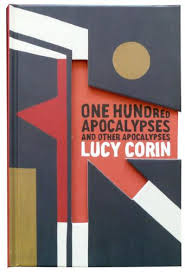
[READ: October 1, 2013] One Hundred Apocalypses and Other Apocalypses

I was excited to get this book because I thought the title was quite intriguing (and the crazy way the cover is cut out was also interesting).

There are four “stories” in the book.  The first three are about twenty pages each while the fourth is over 100 and is comprised of the titular 100 apocalypses (I didn’t count them).

“Eyes of Dogs”
This story contained marginalia (which is sort of like footnotes but not attached to anything specific). In this story a solider meets a witch and she tells him how to get money—climb down a hole and encounter three dogs.  He must wink at the first, blink at the second and hold his eyes closed for the third.  The story seems to be going along sensibly like a fairy tale but then it grows introspective and stops.  I was disappointed in this one.

“Madmen”
This story was utterly bizarre and yet by the middle of the story the bizarreness was explained and by the end I enjoyed it very much.  The premise of this story is that when children grow old they are given a madman to take care of (it is told matter of factly which makes you have to wonder if madman is code for something else.  When boys reach a certain age and when girl;s have their first period (which is an unfair division of genders) they get to go to the asylum and pick which madman (or woman) they want to bring home and care for.  The bulk of the story is at the asylum with the girl “interviewing” the candidates and her mother being mad at her choices.  Ultimately the story turns onto a nice moment between the girl and her dad, who may or may not have married his own madman.  As I said very weird, but satisfying.

“Godzilla versus the Smog Monster”
This was the most “real” of the four stories and it was my favorite.  A fourteen year old boy is watching “Godzilla vs the Smog Monster.”  He found the unlabelled video of it in his father’s sweatshirt drawer and assumed it was porn.  He’s bummed that it turns out to be this Godzilla movie.  In a parallel story, when the boy goes to school his class is watching live footage of California burning—and this burning is uncontainable.  The whole state is slowly engulfed in flames.  This fire, which seems to be some kind of attack obviously changes the minds of everyone in the story, including Sara, a girl who Peter thinks is pretty but who never talks to him.  But when she crashes her car in front of his house, he helps her and they go for a ride to a cave.  Images of the smog monster crop up in interesting ways.  Things get weird and less tangible, but because the beginning was so real it made the ending okay.

“A Hundred Apocalypses”
So this selection disappointed me because it proved to be 100 (I assume) flash fiction pieces.  And I have more or less come down against flash fiction these days.  Especially the kinds of stories that make an interesting “sketch” but aren’t really stories The other problem is that all 100 seemed to be about “apocalypses” which is a useless words when tossed around so much and which loses all meaning when there are 100 that seem to be about actual apocalypses.  Or something.  I also just learned that apocalypse means un-covering or revelation, not really the end of the world, but whatever.

There were probably 6 out of the hundred that I really enjoyed.  Sadly, I didn’t mark them and I don’t remember which ones they were.  The rest were okay or worse.

I am ready for flash fiction to go away.  And I fear that my beloved McSweeney’s is one of the prime generators of the genre, so perhaps they could knock it off for a bit.

Read Full Post »

wilderSOUNDTRACK: WHITEHORSE-Live from Mountain Stage (May 16, 2012).

whitehorseWhitehorse is opening for Barenaked Ladies on the current leg of their tour (we’re going to see them in October).  I hadn’t heard of them.  Turns out Whitehorse is the duo of Luke Doucet and Melissa McClelland.  They are from Canada, which may be why they are touring with BNL–because they’re not very funny or very upbeat.

They play four songs in this Mountain Stage show.  I really like “Killing Time” which has a very alt-country feel—McClelland’s harmony vocals are great on the chorus, which has a very low down dirty feel.  I particularly like the lines:

Pimms in the cooler and daughter in the yard Playing California strip croquet

And

Tongue is a sharpened razor Little miss know it some But get her alone she cries I wanna go home Oh, this little piggy plays dumb.

They have some good stories too, like the one about “Emerald Isle” which is about Luke running a marathon in Ireland.  His Irish mother, who had never been to Ireland, flew out to meet him at the finish line and his wife, Melissa, flew in from Australia as well.  There are more great harmonies in this song which, while mournful has a wonderfully uplifting feel.  “Night Owls” is a very slow ballad which, while lyrically interesting, is a little too slow for my tastes.

For the final song, Melissa explains that the two of them had been playing solo and then they got married and still played solo.  And then they decided to join forces. “Broken One” was a song that Luke wrote for his ex-girlfriend (and it is mean); Melissa says that she fixed it for Whitehorse.  It’s a pretty standard country song with a honky tonk feel.  It has a great blow off line: “You gotta have a heart to have a broken one.”

There’s something about Canadian Country music that I like so much more than American country music.  I wonder what that is.

[READ: August 24, 2013] Wilderness

I recently stumbled upon this book at the library.  I was only vaguely aware that Doyle had written a children’s novel, but there it was on the shelf.  This is not a young child’s book, which is kind of a shame.  I know my son would love half of the book, but I didn’t think he was ready for the other half.

The two parts of the story are about different members of the same family.  The father, Frank, is the same.  He married a woman quite young and they had a daughter.  When the daughter was about 4 years old, the father and mother realized they could no longer live together.  After some fights, the mother left for America.  Where she stayed.  Gráinne, the daughter, is now 18 and she is a sullen, angry teenager.  Her dad is still okay, but most of the time she wants to treat him like he’s not.  But he seems okay with that and gives her space.  The crux of her story is that her mother has decided to come back after all these years.  And Gráinne now has to deal with that.

Her story is a little mature, (especially for my 8 year old son), and she has some pretty harsh things to say about her parents, (which I hope he doesn’t have yet).

The other half of the story concerns her half brothers, and I know my son would love this part.  Conveniently, the two stories are easy to demarcate–the ones with the boys are named Chapter 1 etc, the one with Gráinne are named things like The Bedroom, The Bus etc.  So I did consider telling him to read just those parts.  But maybe I’ll just wait.  Anyway, her half brothers, Johnny and Tom, belong to her dad and her stepmom, Sandra.  Sandra loves her boys and her husband and even Gráinne–most of the time.  But lately Gráinne has been a little much.  And Frank has encouraged Sandra to take the boys and go on a trip, just with them.  That will let her focus on the boys and give him some time with Gráinne. (more…)

Read Full Post »

CV1_TNY_07_01_13Brunetti.inddSOUNDTRACK: AMANDA PALMER–Live at Newport Folk Festival (2013).

palmernewAmanda Palmer has been in the news a lot lately, although more for her actions than for her music.  First she crowdsourced for her album (earning praise and vilification), she gave a TED talk about the experience and recently made the British tabloids because her nipple popped out at the Glastonbury Festival.  (Of course, unlike another famous incident like that. Palmer handled it wonderfully, criticizing not only the Daily Mail but also the entire media industry for caring so much about (female) nudity).  I’ve gained a lot of respect for Palmer in the last year or so and yet I (still) didn’t know all that much about her music.

So there she is at the Newport Folk Festival.  I don’t really know what her “normal” music sounds like, but nearly this whole set was performed on a ukulele (as befits a folk festival).  She plays a few songs on piano and also has some surprise guests–her dad (duetting on Leonard Cohen’s “One of Us Cannot be Wrong” and Neil Gaiman (her husband) coming out to sing the very disturbing song “Psycho”).  She also did a Billy Bragg cover (which was actually a cover of a cover, but Bragg’s version is more well known) of “The World Turned Upside Down.”

The rest of the set included, as I said, mostly ukulele songs (with an occasional foray into piano).  Some highlights include “Map of Tasmania” (a very funny song based on Australian slang) and “Coin-Operated Boy” a Weill-ian song (which is very vulgar).  The rest of the songs are long(ish) meanderings about Palmer and her reactions to life.  Her songs are interesting in their story-telling sensibilities.   Like, “The Bed Song” and “In My Mind” and “Bigger on the Inside” (which is her response to things around her and a fan’s questions to her–it’s very long and rather samey, but lyrically it’s quite effective).   Her delivery is a bit over the top (in perfect theatricality that some will hate).  Her melodies are quite nice (although it must be admitted the piano based song “The Bed Song” has some of the prettiest music)–you can’t really do a lot with melody on the ukulele.

My favorite song is “Ukulele Anthem” a funny song about rocking the ukulele.  I think it speaks to Palmer’s strengths–stream of consciousness, funny and sardonic lyrics set to a simple melody.  It’s a fun song to listen to and see how it evolves.

So overall I enjoyed this set quite a lot.  Although interestingly I still don’t really know what her music normally sounds like.  I assume she doesn’t often play the ukulele, but who knows.  This was an interesting set and Palmer is proving to be a fascinating person.

NPR had this show online although I don’t see it anymore.

[READ: July 30, 2013] “Mastiff”

I read this story the day after I read “Stars,” and while I know there’s no connection between the two, this story also features a woman walking in the woods.  She is also something of a misanthropist (“Sometimes, in the midst of buoyant social occasions, something seemed to switch off.   She could feel a deadness seeping into her, a chilly indifference…and the coldness in her would respond, I don’t give a damn if I ever see any of you again).  And there is a big dog (never described like a wolf but it is about as a big).  That’s a bit too much coincidence for me.   In fact, JCO is so prolific I wouldn’t be surprised if she read McGuane’s story on Monday and wrote her response to it for the following issue.

This story begins with a man and a woman on a trail.  They see a huge mastiff pulling a youngish guy up the trail.  The woman is terrified of the beast (and is embarrassed to have shown that to her boyfriend), but she has a huge sense of relief when the dog and the young man take a different trail.

Her companion makes a joke about the woman’s unease.  They have been dating for a short period and she hated her role in their relationship (she also hated that she was petite which tended to keep her submissive, anyhow).  She resents his comments but says nothing.  They continue hiking.

The man loved to hike and he asked her on this hike as a special treat.  He had told her to pack accordingly but she didn’t listen—no backpack, no extra layer, not even a water bottle.  This seemed to upset him (and made him patronize her).   [We have a third person narrator who is mostly with the woman but occasionally seems to peek into the man’s head—I found this a little disconcerting].  After a few minutes when they reached a plateau (and she was ready to leave), he took out his camera and started taking pictures—more or less ignoring her.

While the man is taking pictures she muses about him and her bad relationships in the past.   She as popular among her fiends, but she was insecure especially around men.  After the dog incident, she had made a point of being friendly to other dog owners (there were a lot on the trail)—just to show him, you know, that she wasn’t afraid.  She also spoke to the strangers, although he wondered, “What’s the point of talking to people you’ll never see again.”

As happens in a story named “Mastiff.” they run into the dog again.  There’s a part earlier in the story where we learn that she was attacked unprovoked by a German Shepard.  Once again, we have an unprovoked dog attack–the mastiff charges at her growling and snarling [although the breed is not known for this].  But then the man jumps in to save her—absorbing much of the abuse himself.

And suddenly the story goes in another direction, with the woman accompanying the man to the hospital, going through his things to find his cards and suddenly feeling much closer to him than she felt that far—being rescued will do that.

There were some wonderful turns of phrase that I liked: “Naked and horizontal, the man seemed much larger than he did clothed and vertical.”  Although I had to take issue with this character owning an art gallery—that easiest of cliche professions—although it wasn’t really relevant to the story.  But aside from that, this was an enjoyable fast paced story.  It explored people’s darker moments and used the dog as a catalyst for human interactions.

Read Full Post »

CV1_TNY_06_24_13McGuire.inddSOUNDTRACK: NICK CAVE AND THE BAD SEEDS-Live at SXSW [excerpt] (2013).

caveNick cave performed at SXSW and NPR was there to record the show.

But for reasons only some people know, we only get to hear three of the songs. (Well, technically you can hear the whole thing here, but they only had three songs available for download–the video for which is also at the above link)

“Jubilee Street” builds from a slow piece to a wild and raucous explosion.  It is perfect Nick Cave.  I liked the record’s version okay, but man, live the Seeds just do no wrong—this version is better than the record by a long shot.  “From Her to Eternity” is a blast of excitement belying the age of the song (and of the performers).  It sounds as fresh and raging as it ever did.  “Push the Sky Away” ended the set, and it is a perfect ending to a show.  It’s an atmospheric masterpiece—moody and evocative, stark and enveloping—perfect in this live setting.

I was supposed to see Nick Cave live right after 9/11, but he cancelled his show.  I feel like I missed out on a good one. Maybe I’ll be able to catch him next time.

[READ: July 29, 2013] “Stars”

This story has got to be an excerpt.  There’s just way too much going on and a completely unsatisfying ending for it to be a short story.

As it opens, Jessica is walking through the mountains of Cascade Creek.  She is pleased to be alone—she is something of a misanthropist [“She didn’t play well with others.”].  But as she reaches a meadow, she sees a wolf trapped by its back leg to a stake.  And a man with a  gun.  She immediately runs over and tells the man he can’t kill the wolf [the way this section was set up, i knew she would say this and found her reaction unconvincing at best]. To her surprise, the man is soft-spoken and tells her calmly that even if she were to let it go, it would not show her the same mercy.  She says she’d happily shoot him so that he doesn’t shoot the wolf.  So he gives her the gun and says she’ll never do it.  Which she doesn’t.  And then the man kills the wolf.

The scene shifts to a coffee shop early in the morning.  She looks at the people walking around, and those walking their dogs and thinks maybe she would have been better off is she were a dog.  She is simply different from others. She walks fast everywhere—often people think she is rude when she barges past (and I guess she is– someone called her a “douche cannon” which is bizarre and rather amusing).  And yet for all her difficulties, she was currently seeing someone—Andy.  Andy was boyish and light, the opposite of Jessica’s darkness.  She wasn’t sure if Andy had a job (they hadn’t been dating long), but he did have an office—where she discovered he frequently bedded women.  (more…)

Read Full Post »

CV1_TNY_06_10_13Schossow.inddSOUNDTRACKBOSNIAN RAINBOWS-“Turtle Neck” (2013).

bosnian rainbows_cvr-a5c79faedffc0dc27b9e81b5eb566b7c02c426e9-s1I had listened to most of the preview of this album, and I was mixed about it.  But I have to say that of all the songs “Turtle Neck” is my favorite.  It begins as most of these songs do with a very simple melody.  There’s an easy vocal melody, accompanying guitars and interesting keyboard notes dropped in.  As with most of these songs it has a very 80s feel to it.  The big difference with this song is that it is 6 minutes longs and allows Omar Rodriguez-Lopez some wiggle room to goof off.  Like the weird little noises (effects, guitars what have you) that sprinkle the ends of the verses.

 But it’s at the 3 minute mark that Omar really takes over—the song turns kind of sinister with a  great dark bassline.  And then comes the guitar solo—screaming, noisy, more or less out of control, while wailing notes and off-kilter scales litter the one-minute instrumental section.  Then Teri joins the tone with a wholly new vocal section that compliments what Omar is doing.  The wildness kind of wears itself out until the end of the song recreates the beginning sweetness.

It’s probably the best encapsulation of the combination of pretty and wild that Bosnian Rainbows put together.

[READ: June 18, 2013] “Pedigree”

This is a Personal History, so I assume it is true.  I don’t know Walter Kirn at all, and really I only read this because the main person he talks about is named Clark.  Of course, the Clark in this story, Clark Rockefeller, is an unmitigated fraud.

It turns out that the story of Clark Rockefeller, and his real name Christian Gerhartsreiter, is fairly well-known  in popular culture (there was even a Lifetime movie made about him.  Of course, I don’t watch movies on that network, so this whole story passed me by.  I wonder if this narrative is more or less interesting if you already know the truth.

This narrative begins with Walter explaining how he got to know Clark.  Clark had signed up to take a dog who had been injured and rehabilitated (it was a Gordon setter who had been hit by a car and now used a wheelchair for its back legs).  Clark had been vetted and talked to Walter, who was supposed to transport the animal.  Things were complicated and the trip from Montana to Manhattan was more difficult and costly than Walter imagined.  But Clark was there with an envelope and an offer of a place to stay and fabulous people to meet and a tour of all of Rockefeller Center.  When asked about his source of income, Clark explained his job as “a freelance central banker for Thailand.”  And Walter accepted it all.

Later, the envelope proved to hold a check for $500 (not even half of what Walter spent).  None of the famous people showed and the tour didn’t materialize.  Nevertheless, the ruse was surprisingly complex–like the man who claimed to be from MOMA authenticating the Mondrians and Rothkos that Rockefeller had on his wall.  (more…)

Read Full Post »

hpl;oveSOUNDTRACK: PINKISH BLACK-“Razed to the Ground” (2013).

pinkishblackAfter playing No Age, Lars Gottrich came in to show what real heaviness is with a new song from Pinkish Black.  Unlike most of Lars’ songs, this was neither death- nor speed- metal.  Rather it has a very 80s goth sound.  But it’s more Birthday Party than Sisters of Mercy.

There’s no guitars, just loud drums (with a lot of cymbals), a pulsing bass keyboard riff and some spacey high keyboard notes thrown along the top of the song.  There are elements that I liked about the story.  However, the synths in the solo give it a very cheesy horror movie feel and I have to admit that although I like a lot of bands from the era, this feels like a pale imitation.

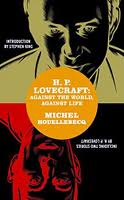
[READ: June 20, 2013] “The Call of Cthulhu” and “The Whisperer in Darkness”

Both of these stories appeared in Michel Houellebecq’s H.P. Lovecraft book, but I wanted to treat them separately for ease of searching and discovery.

After my long history with Lovecraft and after reading Houellebecq’s book, I anticipated being blown away by these stories.  And so, with my expectations so high, I was naturally disappointed.  I was especially disappointed with how normal these stories seemed.  Houellebecq made me think the stories were practically non-narrative in form—that they eschewed all manner of conventional storytelling.  That his writing was so weird that no one would publish it.  But in these two stories everything seems completely normal.  Psychologically these stories are different, but aside from content, they are fairly conventional stories.

Maybe they aren’t mind blowing because they were written nearly 100 years ago and the entire world has changed drastically since then.  It may also be because I have read all of the derivatives of Lovecraft enough that there’s nothing new in his work.  And it may also be that in the past 80 years, we have thought of things that are much scarier than these, in part because of Lovecraft himself.  Or maybe I would have been into them a lot more had I read them when I was a teenager.

“The Call of Cthulhu.” (more…)

Read Full Post »

CV1_TNY_04_15_13Sorel.inddSOUNDTRACK: AKRON/FAMILY-“Sand Talk” (2013).

akronfamThe folks on NPR played this song as part of a “new songs” segment and I couldn’t get over how noisy and chaotic it was.  I had always thought of Akron/Family as being kind of an indie folk outfit (I know they were on Swans’ label, but I still thought of them as more folkie than noisy).  So I was surprised by just how chaotic and wild this song was.

It opens with a distorted, echoey guitar that settles into a ringing sound which reminds me of Fucked Up.  Then the drums come in (tribal and various) until it all settles down into a thumping song with a kind of spastic guitar riff.  Then the vocals come in–full bodied and sounding like more than one person.  And after the first verse, it seems like everything that happened before happens again–this time all at once.  But now, the music occasionally pauses to let the vocals come to the fore.  And at one point everything stops and a chorus of voices sings a nice melody as the band slowly resumes playing.   And this echoing fugue-like music continues apace until it all kind of slows down and then ends.

It’s quite a challenging song and one that I found rewarding after just a few listens.  I have to reevaluate what I think this band sounds like, and I definitely have to listen to the rest of this album.

[READ: May 1, 2013] “The Night of the Satellite”

What I really liked about this story was the way that Boyle plays with two ideas of randomness.  The first is the possibility of a piece of a satellite falling out of the sky and landing on you.  The second is of running into a couple in several different and unrelated locations.

As the story starts, a couple (graduate-school aged) are excited that the summer is upon them.  They plan to take a trip to visit some friends (with their dog) to get away from it all.  En route they see a car pulled over at the side of the road facing the wrong way.  The young man is sitting on the hood, the young woman is crying near the road.  Mallory tells him to stop the car.  He is reluctant but does so (childlocking the doors).  The girl says that her boyfriend is a jerk.  She is crying but says she is not hurt.  The boyfriend is yelling across the road that she should just get in the car and leave with them.  But after a few minutes, she decides not too.  So he drives on despite Mallory’s protests. (more…)

Read Full Post »

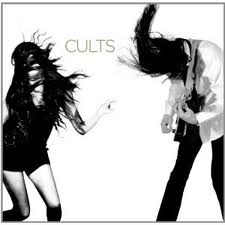
buddySOUNDTRACK: CULTS-Cults (2011).

cultsThis album was on many year end lists in 2011.  But it’s really tough for me.  I really really want to like it.  The cover alone is very cool.  And in fact, I do like it quite a bit.  The songs are simple and catchy and after just one or two listens they are very easy to sing along to.  So what’s the problem?  The album sounds an awful lot like the girl group/Phil Spector sound of the 6os which I really do not like.  I have never enjoyed that era of music–and I think it is mostly something to do with those singer’s voices.

Cults singer Madeline Follin has a delivery that reminds me a lot of that sort of Ronettes vibe.  Even though the music is not like that–Cults is much more 90s indie sounding (although the drum beats are often the same) I’m conflicted about how much I enjoy the record.

When I can just lighten up and bop along it’s wonderful. Indeed, some of the album embraces other styles.  I hear the mood of  Twin Peaks on “You Know What I Mean”  And songs like “Never Hear Myself” sound more contemporary which takes that girl group edge off.  “Never Saw the Point” has a strange Japanese quality to it that makes it stand out from the rest of the tracks.

I found that after listening a few times I could get past the parts I don’t like and enjoy that punky fun.  Although I don’t imagine that I would get another Cults album after this.  But you never know.

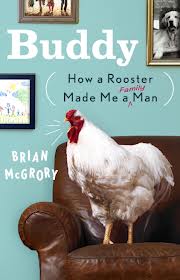
[READ: January 20, 2013] Buddy

I rarely get a book that I don’t like.  So I rarely get a book that I don’t finish.  This book seriously had me considering not finishing it.  In fact, I even said I wasn’t going to finish it.  But I plugged on, got the minor amount of redemption I expected and am now done with it.

So what was so bad about this book?  Well, first, the title suggests that this will be a book about a rooster.  Perhaps I should have wondered how McGrory was going to write 300 pages (yes) about a rooster.  And then answer is, he isn’t.  He’s going to write 300 pages about McGrory.  I had no idea who he was when I checked out the book.  He is a columnist for the Boston Globe and, God help us, a novelist.  And I should have known that, since it was in the biography section that it would be all about him, but again, I was charmed by the cover and the title.

So the book opens with a brief bit about Buddy, a rooster who lives, sometimes, in their house.  And whom McGrory clearly does not like.  McGrory lives in the Boston suburbs, although with a house with nearly an acre of property I’m not sure exactly how suburban that is.  My family lives in NJ we have almost two acres and we aren’t really in the suburbs of any big cities.  We also have chickens–a lot of chickens and a few roosters.  And this is why I wanted to read the book–see how this guy adapts to a rooster in his life.

After that first chapter, the next 120 some pages have nothing to do with Buddy.  They are all about McGrory and his dog, Harry.  As any dog owner, McGrory thinks that his dog is the best, smartest, coolest etc dog in the world.  And that’s fine, although I didn’t need over 100 pages to be told that.  What I also learned in those 120 pages is that McGrory is a smug, entitled jackass.  He somehow believes that he is a regular guy although he is going to a vet on Newbury Street (I lived in Boston, that’s a swanky street…  I can’t even imagine what a vet charges there) and because of his reporting job, he has access to all kinds of fancy places to eat, people to meet, sports teams to see etc.  He also, and let’s make this very clear, things that the suburbs are a vast wasteland, that kids are overindulged and, well, every other cliche that rich, cranky, white men complain about (some of which I agree with mind you, but he seems so bitter about it all). (more…)

Read Full Post »

SOUNDTRACK: FOSTER THE PEOPLE-Tiny Desk Concert #155 (September 9, 2011).

This is a very brief Tiny Desk Concert.  The guys play three songs with just a little chatting which makes this a tidy morsel of a concert.

The set is very stripped down compared to their recorded version.  “Helena Beats” sounds great in this setting–there are effects and processing on the album but you can tell that the kernel is in the guitar and voice, which is pretty cool.  The first song feature solo tracks and gentle picking (he comments that you’ll be able to hear the other songs better).

The discussion features the bassist’s quote from Plato that he has inscribed on his bass.  And of course, they play “Pumped Up Kicks.”  There’s a funny comment from Bob Boilen asking is that the first time you said “This is pumped up kicks” and no one said anything.  He replies, “I think people are over that song.”  But it sounds very good in this stripped down version.

You can hear the whole set here

[READ: November 14, 2012] “Breatharians”

This story poses the question: after the protagonist has killed three cats with a wrench, will you continue reading?  For many the answer is no.  For those who persist, they have the mass poisoning of many other cats to look forward to.

I recall in the 70s or 80s that “dead cat” jokes were de rigueur, but I don’t think any were as brutal as this story.  And the strange thing is that the title has nothing to do with the cats.

Indeed, if I were to tell you that the Breatharians in the story are people who believe that they can subsist without eating–they simply inhale and gain all of the sustenance that they need, you might think that this was an interesting story about spirituality.  And if I mention that the main character’s mother has recently become a Breatharian, even though she continues to make him delicious sounding food (that pork chop…yum!), you might be very curious about this whole Breatharian thing. (more…)

Read Full Post »

« Newer Posts - Older Posts »