I had never seen A Christmas Carol performed. I was, of course, familiar with the story–from the original (the Patrick Stewart audiobook is amazing) and from the many, many versions of it that have been performed in cartoon and live action formats.
We took the kids as this is a holiday classic and we thought it would be fun for all of us. And we were right. Except–this version is at times quite scary and (as my son pointed out) quite loud. I didn’t find it terribly loud, although the scary bits were considerably louder than other bits. And yes, the ghosts were certainly scary. (I had actually warned him that the ghost of Christmas Future would be very scary, but it proved to not be the case, although it was really frikkin cool).
And I must say I was charmed immediately–as soon as the kids ran out on stage in period costume, singing songs and being very Christmassy, I was hooked. (more…)
SOUNDTRACK: HILMAR ÖRN HILMARSSON & SIGUR RÒS-Angels in the Universe (2000).
This disc often gets placed in the Sigur Rós discography even though it really isn’t one of their records. It is a soundtrack to the film Angels in the Universe, and it is primarily music composed and conducted by Hilmarsson. There are 17 tracks on the disc and he is responsible for 15 of them. The remaining 2 are indeed by Sigur Rós, but if you have the “Ny batteri” single, you’ve already got the two songs.
The Hilmarsson tracks are large airy string pieces (I don’t know the film or anything about it, but it makes it seem rather sad). There are some tracks in the middle that deviate somewhat–some drums and occasional bass, but for the most part the music sounds like a string score to a film. Pretty, but not exceptional. At no time does Sigur Rós play with the other performers.
It’s the last two track s that are by Sigur Rós. “Bíum bíum bambaló” is a slow piece that begins with mostly percussion. Apparently it is an Icelandic lullaby and their version is quite different from a lullaby. By the end of the song, when the whole band kicks in it rocks really hard and proves to be a great song. The final track, “Dánarfregnir og jarðarfarir” was a theme used for death announcements on Icelandic radio (whatever that means). I love the way it builds from a simple melody into a full rock band version and then back again. It’s very dramatic. These songs are both really enjoyable. I like them a lot. But I’d just stick with the single.
[READ: November 9, 2013] “The Secret Mainstream”
This article was in Bissell’s book Magic Hours, which I read a while ago. I recognized some of the material in the article, but not all of it, which I find disconcerting that I forgot so much.
This article is (as the subtitle states) all about Werner Herzog, a filmmaker whose films I have never seen. Herzog is notorious both for his films (he has made over 50) and for his behavior (some rumors of which are true, others are not).
Bissell wonders what historians would make of our civilization if they based their understanding on Herzog’s work.
He also goes through many of Herzog’s film, starting with Fata Morgana, Herzog’s first overt confounding of the feature film/documentary boundary. It is neither narrative not strictly factual. In truth, what Herzog does is make a hyperrealized truth. For instance, in a film about a blind woman he created images and had her say they were images she remembered). David Lynch is a fan of Herzog and you can see elements of Herzog in Lynch’s filams (so maybe the adjective Lynchian could be Herzogian.
What Bissell is saying (and Herzog confirms) is that Herzog is an artist, not a journalist. He is also quite funny. The story about the 32 pound rooster and the two foot horse is very very funny.
And while Herzog takes his films seriously he doesn’t really plan them. He says he doesn’t anticipate what his next project will be and he also doesn’t spend a lot of time working on his films. Woyzeck (1979) was shot in 18 days and edited in four. He also took less than a month to make Grizzly Man (probably his best known recent film).
And yet for a film like Aguirre: The Wrath of God (1972), a film about Spaniards searching for El Dorado and slowly going mad, Herzog’s crew and cast nearly went mad themselves. Klaus Kinski, the lead actor has this to say in his autobiography: “I absolutely despise this murderous Herzog… Huge red ants should piss into his lying eyes, gobble up his balls, penetrate his asshole and eat his guts.” Herzog himself says that he helped Kinski write that and many other anti-Herzog sections of that autobiography.
Bissell cites The White Diamond (2004) as one of Herzog’s best films (it is a documentary about Dr Graham Dorrington a researcher who wants to film Guyana from an experimental blimp. Or The Great Ecstasy of the Woodcarver Steiner (1974) which is about competitive ski jumpers and shows jump after jump after jump landing badly. Little Dieter Needs to Fly (1997) is about the escape of a pilot from a prison camp in 1966. He has Dieter open and close his door three times before entering because “most people don’t realize how important it is to have the privilege that we have to be able to open and close the door. That is the habit I got into and so be it.” Which is moving and impressive and totally false. Dieter doesn’t do that in real life. But Dieter understood what Herzog was going for and believed in the truth of it even is it’s not strictly true. Herzog calls it the ecstatic truth.
I don’t recall how I felt about Herzog after reading this the first time, but I am certainly thinking about watching a bunch of his films.
Some recommendations from the article:
Fata Morgana (1970)
Land of Silence and Darkness (1971)
Aguirre: The Wrath of God (1972)
The Great Ecstasy of the Woodcarver Steiner (1974)
The Enigma of Kasper Hauser (1974)
Strozek (1976)
Woyzeck (1979)
Fitzcarraldo (1982)
Lessons of Darkness (1992)
Little Dieter Needs to Fly (1997)
Grizzly Man (2004)
The White Diamond (2004)
Wild Blue Yonder (2005)
Rescue Dawn (2006)—which Herzog was working at the time of the article and which had a fairly large budget (for Herzog) of $10 million. He even has name stars in it (Christian Bale, for one). Bissell makes it sound very interesting, and certainly fascinating to watch being filmed.
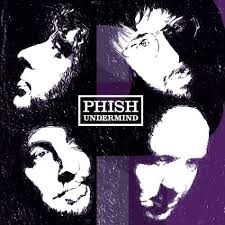
As I understand it, Phish fans didn’t like Undermind that much and yet I really liked it and still do. Indeed, “Undermind” is one of my favorite new Phish songs, it’s clever and boppy and just really catchy. The album has very Beatles vibe to it—a kind of echoey feel on all the songs. And I have recently read that people interpret the cover design to be a nod to Let It Be (there are other connections made but I’m not going to go too deeply into that).
“Scents and Subtle Sounds” opens the album. This is a brief intro–the full songs, which sounds different appears later on the disc (it’s 97 second here)). It leads into “Undermind” which has a loose, slightly funky sound—one of their more fun songs on recent albums. The album version has some big fat organ sounds on it which make it even cooler.
“The Connection” is another great poppy song—gorgeous harmonies and wonderful melody, and indeed it was their first real hit. “A Song I Heard the Ocean Sing” is another great song, great backing vocals, an excellent melody and great alternating verse vocals from Mike. It also has a great middle guitar section—it’s long and wild and reminiscent of Jimi Hendrix’ solos. “Army of One” is sung by Page. It is a big soaring song and it’s got a very upbeat sound. “Crowd Control” is a very Beatleseque song.
“Maggie’s Revenge” is a noisy instrumental, with Trey’s guitars making all kind of squealing noise. It’s weird and quite refreshing from Phish’s more recent fair. “Nothing” picks up with the open and poppy sounds of earlier records and has more great harmonies. It seems to fade out in the middle though—a song that could have been longer! “Two Versions of Me” is another mid tempo song with great harmonies and great chorus. “Access Me” is a brief poppy song that feels a bit like filler, although it has a cool and interesting coda. “Scents and Subtle Sounds” resumes
“Tomorrow’s Song” has a very African feel to it. It is a simple repetitive rhythm that lasts for about 3 minutes before it fades out just like it faded in. “Secret Smile” is a very pretty piano ballad. It’s a little heavy handed with the strings, and at nearly 7 minutes it’s too long (especially the long coda), but the melody is certainly nice. The album ends with “Grind,” a barbershop quartet track which shows just what kind of great harmonies they cool do.
Although it’s a mature sound, there’s enough weird stuff to let them show their funky side too. The CD comes with a DVD called “Specimens of Beauty.”
[READ: October 8, 2013] C
I received a prepub version of this book back in 2010. The cover and title were weird and I thought I’d like to read it. And it sat on my shelf for two years.
And then Borders closed (bummer, their chai tea was the best!) and I saw a hardcover copy of the book for $1 so I bought it (I’m enough of a geek to want to see how prepubs and final copies are different. In this case, the books appear identical except that in the last two dozen or so pages, there’s a section with ellipses. In the prepub, they are single spaced but in the final book they are double spaced which throws off the line spacing. So by the end of the book, the lines are about three lines different. Fascinating huh?).
Anyhow, what on earth is a book called C about?
Well, it is a Bildungsroman or coming-of-age story. By definition these stories focus on the psychological and moral growth of the protagonist from youth to adulthood. Our protagonist is Serge Carrefax, even though he is not the first person we meet. That would be a doctor delivering materials to Serge’s father, Mr. Simeon Carrefax. Mr Carrefax runs a school for the deaf in which he tells children to stop using sign language and to start speaking properly. And he has had considerable success with the children, each of whom acting in a play every year. (The book, by the way, is set in the late 1800s). His mother is a silkworm farmer, and much of their money comes from this job.
But the main person in Serge’s life is his sister Sophie. Sophie is a deviously clever girl who is alternately mean to Serge (as only older sisters can be) and then encouraging him to play with her. She is mad for science and is constantly experimenting with her chemistry set (leading to more than one explosion in the house). The early sections of the book show Sophie and Serge’s education. And when Sophie goes off to school, Serge is lost, especially when she returns from school but keeps telling him to leave her alone. And then one day, Serge discovers her dead in her “lab” and experiment in progress. (more…)
Rift has a kind of story to it (albeit it’s not a real concept album) and you can tell by the full cover (see the bottom) that the story is complex–thank you gatefold sleeves). The album starts with “Rift” a fast guitar spiral that opens with a harmony vocals on the opening lyric and then a call and response between I believe, Page and Trey as they each take a line of the verse—it’s a cool and surprising opening.
“Fast Enough for You” is a slow country-tinged song (with slide guitar). This is the first song of their early records that I really don’t know that well. So it must not get played very much. It’s a pretty song. “Lengthwise” is a cute little a capella song (with snoring and clock ticking) which I think about whenever I am alone in a bed: “When you’re there I sleep lengthwise and when you’re gone I sleep diagonal in my bed.”
“Maze” is one of my favorite Phish songs and it sounds great here. I love the bomp bomp at the end of the verses and the fugue vocals at the end of the song. This version is fantastic. “Sparkle” also features fugue and barbershop type vocals (with Mike’s deep voice added in) in a funny silly roping song. It’s another highlight. “Horn” has a great opening guitar line (that reminds me of Pearl Jam for some reason). I’ve always enjoyed this one. It sounds great here (because you can actually hear what the harmony voices are saying (something you usually can’t in the live setting). “The Wedge” is a mid tempo song that sounds different from their live versions.
“My Friend My Friend” is a pretty dark song (“My friend, my friend he;s got a knife”) but the opening is a beautiful instrumental with lovely guitar sequences until at 2:30 when the piano takes over and the song becomes slightly menacing. “Weigh” is a weird song that I rather like. It’s very piano heavy and very boppy despite the crazy lyrics: “I’d like to cut your head off to weight it, whaddya say? 5 pounds, 6 pounds, 7 pounds.” “All Things Reconsidered” a nice NPR joke. This is a 2 and a half minute instrumental of guitar and keyboards that sort of plays with the NPR “All Things Considered” music.
“Mound” starts with some wonderful out of time signature riffing—4/4 drums and bass and then super fast guitars that don’t quite match until the drums and bass then catch up. It’s hard to believe that that unusual opening leads to the big catchy bouncy chorus: “And it’s time, time, time for the last rewind.” “It’s Ice” is a little slower here than live but I kind of like it in this slightly slower version (you can really hear the riffs). This is another song with fugue-like vocals (they do all of their vocal tricks very well). “The Horse’ begins as a beautiful Spanish style guitar piece and morphs into a simple acoustic song (it’s al of 90 seconds) which bleeds into “Silent in the Morning,” another highlight from their live shows and a standout here.
Rift might just be my favorite Phish album.
[READ: October 23, 2013] “Escanaba’s Magic Hour”
Once I found out that Tom Bissell had written a number of articles in Harper’s I decided to read them all, especially since some of them already appeared in his book Magic Hours. This was his first piece for Harper’s and it is the one I remembered most from the book. So I enjoyed reading it again.
I’m also glad I read the Harper’s version because although I don’t think it varies from the book version at all (and I’m not willing to check), it had pictures from the movie and from Escanaba, which brought a bit more reality to the article.
So, what’s this about a movie?
Well, this article is about Jeff Daniels making a movie in Escanaba, Michigan called Escanaba in da Moonlight (which I haven’t seen, but as I said after reading this the first time, I now feel invested enough in it to want to watch it–reviews are mixed). And it sounds kind of interesting. I also really enjoyed the comment that Daniels’ appeal “has something to do with the fact that many men, if asked to cast their lives without undue conceit, might settle on Jeff Daniels to play themselves.” (more…)
SOUNDTRACK: THE TALLEST MAN ON EARTH-Live at KEXP (September 8, 2012).
The Tallest Man on Earth is Kristian Matsson a Swedish singer songwriter. His albums have a very full sound, but when he plays live, it’s just him and his guitar. And man, is he a compelling performer. His guitar playing (primarily classical-sounding but often heavy and mostly rocking) is gorgeous–fast and pretty. And his voice is gravelly and powerful. I’ve enjoyed the studio songs I’ve heard, but he is transcendent live.
This set opens with a buzzy guitar that sounds like the show is not recorded well. But that quickly goes away and the songs shine. Matsson is a charming and self depreciating performer and when he has a malfunction as in “Love is All”and at the end he says “that was kind of embarrassing.” But he not bothered by it and plays on with a great, short set.
The set includes some (then) new songs and a few older ones as well: “A Field of Birds,” “King of Spain”, “Tangle in This Trampled Wheat,” “Thrown Right at Me,” “The Gardener” and “Like a Wheel.” It’s a great introduction to the guy and his amazing voice. which you can enjoy at KEXP.
[READ: August 20, 2013] Miss Wyoming
I first read the book during my trip to Vancouver on the eve of Y2K (the best flight I’ve ever had—mostly empty and we were given champagne). I started reading it on the plane and then in the second chapter the heroine is in a plane crash. So I stopped reading. I’m sure I finished it later, although I didn’t remember much of anything about it.
I read it again now and I was a little disappointed when I started reading it. The first few chapters are so full of similes it is insane. The word “like” is tossed around at an incredulous pace. Like:
John’s teeth were big and white, like pearls of baby corn
…his skin like brown leather.
His eyes looked like those of somebody who’s lost big.
They crossed San Vicente Blvd, passing buildings and roads that once held stories for each of them, but which now seemed transient and disconnected from their lives, like window displays.
Susan was wrapped in a pale light fabric, cool and comfortable, like a pageant winner’s sash.
John was sweating like a lemonade pitcher,
…his jeans, gingham shirt and black hair soaking up heat like desert stones.
John felt as close to Susan as paint is to a wall.
Staring at the pavement, like Prince William behind his mother’s coffin.
This man with sad pale yes, like snowy TV sets
That’s all in the first chapter!
Now, I have come to see that the story is cyclical and it’s about people looking for their real selves. So it’s possible that the simile heavy beginning is meant to reflect the fact that the protagonists are looking for themselves—they have no substance so they can only be compared to other things. But man, it is hard going with that many comparisons.
The other major problem I had with the story was the really aggressive use of coincidence. Susan and John both end up eating out of fast food dumpsters; just as Susan’s mother wants to sell their house, a pile of garbage from an airplane falls on it. Right after we learn of a guy hoarding gasoline, the house explodes. Again there are arguments for why these things might happen in this story (numerology is an important aspect of the book), but it seems too…easy.
But once the story starts moving the actual plot is really interesting and compelling. (more…)
This song started off a recent All Songs Considered podcast and it starts with a bang–a big wall of fuzzy guitars and the vocals mixed way back in the song. It has a very early 90s vibe–a slow song despite the loud buzzy guitars.
It reminds me of a lot of bands from that 90s era–Swervedriver, Screaming Trees–although it has a few moments (bridges maybe) in which the guitars plays faster, almost a heavy metal riff. And yet the chorus is expansive (if still distorted)–bringing together a lot of interesting elements. And I love the way the song ends with nearly 30 seconds of feedback.
I definitely want to hear more from these guys.
[READ: August 9, 2013] “The Idiot President”
This story seems to be referenced in Alarcón’s recent short story “Collectors.” In “Collectors” we meet Henry, the author of the play “The Idiot President” and we hear how he was jailed for performing the political piece.
In this story, apparently written five years before “Collectors,” we meet an actor who has worked with Henry and who has acted in “The Idiot President” (which was well received by audiences, especially the big reveal at the end). They were in an acting troupe called Diciembre and for this “tour” three of them–Henry, the narrator and Paralarga–went to small villages to perform the play.
While Henry and Patalarga were in Diciembre for real, the narrator knew he was going to be leaving the country soon. His brother lived in California and promised him a visa…soon. So the narrator just assumed that nothing he did had any real consequence. And while traveling around and acting seemed like a good idea, doing it in the winter with very little in the way of provisions was not the best idea. He lost weight and was always chilled and sickly.
There are a number of brief episodes in this story (which I assume is actually an excerpt). The first involves Tania. Tania is Patalarga’s second cousin and Henry’s ex-wife (from many years ago). After their performance in Tania’s city, she sings for them during the after party (with a beautiful voice that the narrator falls in love with). It is clear that the narrator is bewitched by her–while the other two just seem bemused by everything. She takes pity on him and walks him back to his bed. And just when he thinks she is “interested,” she makes it clear that she was just walking him to his bed. (more…)
SOUNDTRACK: FORGET ALL THAT AND JUST WAIL: New Music That Orbits Around Jazz (compilation The Believer July/August 2013).
This compilation came as a digital download with The Believer’s 2013 Music Issue (you need to get a physical copy of the issue to get the download code). Ross Simonini, the compiler, explains that he used to like jazz, but that he really doesn’t anymore. And he finds himself attracted to these pieces that hover around jazz but which really aren’t jazz. You can read Simonini’s thoughtful comments about all of these tracks here). I enjoyed this compilation quite a lot and am considering getting a few of these discs, or at least investigating them further. And that’s want you want from a compilation.
COLIN STETSON-“The Righteous Wrath if an Honorable Man”
Any compilation that opens with Colin Stetson is okay with me. This track was my introduction to the man last year and I still love it, in all of its insanity.
KARRIEM RIGGINS-“Double Trouble” is only 2 minutes long. It’s got flutes and vibraphones and is super cool and retro sounding. I really like it, although this track ends abruptly and I can’t decide if the actual song does or if it was cut short for the disc.
THUNDERCAT-“For Love I Came” has some echoey keyboards and some great bass lines and cool/cheesy keyboard lines (it all sounds so gloriously 70s). When the vocals come in, the whole track feels like Yes if Yes were inspired by jazz instead of classical (and had no drums—until about 2 minutes when the drums kick in and the song takes off and bass solo makes it very Yes-like).
THE BEN MONDER TRIO-“Red Shifts” is a classic style jazz guitar workout—the echoed effect is very jazzy. And yet there is something very angular about the playing that keeps it from sounding smooth. It’s a great track (which once again seems to get cut off very abruptly).
DAWN OF MIDI-“Ymir” is another trio—piano bass and drums. The piano is muted (the pianist puts his hand on the strings) which makes it sound like another percussive instrument while it is also creating the melody. It’s very cool. And I like the way over the 8 or so minutes the melody changes slightly, giving it a new sound almost accidentally.
GLOWS IN THE DARK-“Up and Down” starts as a fast but quiet guitar piece with some cool subtle horns over the top. It features a rap by Count Bass D which i do not care for (The “I’m pissed/L.L. Cool J” verse is really awkward). This is the first track on the disc that i really don’t like, which is a shame because the music is really cool.
STEVE RAEGELE-“Traingle (Daedalus)” is a weird, cool experimental sounding track. Sounds are overlaid on each other with a lot of echoing that gives it a very dense structure. Whether or not this is jazz is hard to say but it’s very intriguing.
MARY HALVORSON QUINTET-“Sea Cut Like Snow (No. 26)” Halvorson is a guitarist and this live track features some of the most traditional jazz on the compilation. The song has cool melodies and some nice improvsiing (on various instruments). It runs a little long though (I wish this had been truncated rather than the earlier ones) but it’s enjoyable.
FLYING LOTUS-“German Haircut” this is an electronically manipulated pastiche of songs with a sax solos placed over the top. It’s an interesting concoction.
CHRIS CORSANO-“Famously Short Arms” This is one of the most amazing drum videos I’ve ever seen–it is so creative and original. As an audio track it is basically a drum solo, but watching him and what he does on the drums is really mind expanding.
MATANA ROBERTS-“lulla/bye” I have this track as well (two tracks from Constellation here). It’s full of saxophones and longing in the singing. It’s hard to define but it’s very evocative.
MICROKINGDOM-“Peppermint Crab” This is a weird and wild piece. It opens with some manipulated and spacey vibes and electronics and then gets assaulted by a wild and screaming sax solo that would make John Zorn proud.
DIAMOND TERRIFIER-“Kill the Self That Wants to Kill Yourself” This song opens with some simple keyboard chords and some odd unsettling sounds thrown over them (waves of static and squeaking saxophone). Then comes some wild soloing.
This is a solid compilation of jazz-like music. It veers into more extreme forms of jazz and will certainly alienate some listeners, but it’s an introduction to what else is out there on the fringes.
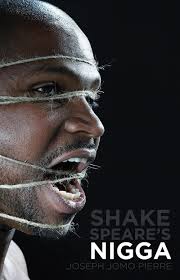
[READ: August 8, 2013] Shakespeare’s Nigga
The artistic director of the Obsidian Theatre Company (which put on this play) explains in the intro that with a title like that, you’re going to get attention. In fact he initially said that they couldn’t use that title, because it was too much. But they changed their mind because it really was…right.
This story looks at the two most prominent black men in Shakespeare: Othello (the Moorish general who is ruled by violent emotion) and Aaron (a Moorish slave who is basically pure evil—in Titus Andronicus). As the artistic development coordinator of the Obsidian Theater says, Shakespeare is the authority on writing characters, thus these two men have become entwined in Black masculinity. Which is a shame because “Moor” could basically be anyone who did not live in Europe and because Shakespeare likely didn’t know any black people (except as slaves). It’s not really a good sample.
Playwright Joseph Jomo Pierre doesn’t seek to rectify this or upend this or decry Shakespeare. What he does is much more subtle and much more powerful.
There are five characters in the play: Othello, Aaron, Tyrus (an older black male), Shakespeare and Judith (Shakespeare’s daughter). Shakespeare and Othello are comrades (I won’t say friends, but it seems like Shakespeare relies on Othello for protection and advice). Meanwhile, Aaron has tried to escape from his slavery and is currently chained up and beaten (usually by Othello). (more…)
I picked this song because I thought he had the same name as the character in this story, but he doesn’t. Rats.
So this collaboration between electronic music pioneer (whom I’ve never heard of) Hans-Joachim Roedelius (who is 78!) and Stefan Schneider (who is much younger). This piece is a largely a simple piano motif played over a pretty bassline. (I assume this part if Roedelius). Then after a few minutes come the effects and drums. They are quiet and they add more texture than anything else. But they also modernize this ambient track in a really interesting way–keeping it from getting too soporific (although the melody itself isn’t really soporific at all). It keeps it lively and a little unexpected.
Although I’m not a huge fan of ambient music, I could see listening to more of this album.
[READ: August 5, 2013] “Collectors”
This story is constructed in a fascinating way. Set in Peru, it opens with the story of Rogelio, a skinny boy who fails at school (later he is unofficially diagnosed with dyslexia). He is unhappy at home, especially when his older brother Jaime moves to San Jacinto. At age 13 Rogelio quit school and moved to San Jacinto to be with his brother. They worked together making delivers and fixing up vehicles (and making a profit). It slowly dawns on Rogelio that not everything they do is entirely legitimate, (especially since Jaime seems to have so much cash). But he;s okay with that and asks no questions.
Then the story informs us in the middle of the second paragraph that Rogelio will wind up in Collectors prison (which I assume is infamous although I’m not actually sure if it’s real). And sure enough about midway through the story we find out how it happened–Rogelio was carrying something (he didn’t know what) and he was searched by the police (who were looking for weapons). We’re also told about Rogelio’s cellmate, Henry, who is nice to him.
Then we learn about Henry and how he wound up in prison. He was a playwright. And he wrote a (not very good) play called “The Idiot President” which the President (or someone) found offensive. And soon Henry was regarded as a terrorist. He considered it an absurd joke at first until the weeks turned into months and he was eventually shunted of to Collectors.
We learn about Collector’s prison, how Rogelio initially didn’t even have a cell–he slept under the stairs–until he was able to buy a cell (with money from Jaime). Henry, because he had some money, was able to afford a cell and was very lucky to get a kindred soul like Rogelio. The two actually become friends–talking and reading–and eventually become, dare they say it, lovers.
And they manage to survive in the prison by never upsetting the status quo and being able to read the feeling of the place (Rogelio grew especially good at that when he had nowhere to hide). (more…)
I won free tickets to this show in Murray Dodge Hall, and olde theater in the heart of the Princeton University campus. Sarah and I were delighted to discover that the theater held only 190 people and that our seats were in the fifth row!
This is student theater, but, as I said to Sarah, these are seriously good acting students (better than most of the students that I went to school with, anyhow).
She Loves Me is a musical based on the drama Parfumerie by Hungarian playwright Miklos Laszlo. Before being adapted in 1963 as She Loves Me, (Music by Jerry Bock, Lyrics by Sheldon Harnick, Book by Joe Masteroff) it was previously adapted as the 1940 film The Shop Around the Corner and the 1949 musical In the Good Old Summertime. It was also revisited in 1998 as You’ve Got Mail.
If you’ve seen any of these adaptations, yo know the story. And if you haven’t, it is this: two shop workers who dislike each other are secretly each others’ pen pals. In this version, they each write to a lonely hearts column, and plan to meet for the first time very soon. It’s a simple enough story. But what sold me in this version was the music—which was simple and catchy and very very funny. (more…)
The first Pixies song in nine years…doesn’t feature Kim Deal on it. Which is kind of a shame. She was with them for a lot of the recent tours, but she went back to the Breeders recently. I assume that everyone else from the lineup is still in the band.
But the real question is what does the song sound like? Well, to me it doesn’t sound like the Pixies. It sounds very much like a 90s song, but by… some other bands of the time. Even Frank Black’s (or is it Black Francis’) voice sounds different—less brittle (despite the brittleness of what he is saying).
The song begins with keyboards and a kind of dance (electronic) drum sound. I actually thought I clicked the wrong link when it started. There’s chanted backing vocals while Black is singing/talking. It all sounds very familiar but not like the Pixies. Even the guitars sound different–less bright with a bit more flash in the solos.
The part that does sound like the Pixies is the chorus which has soaring guitars and a female singer (unknown to me at this point but she sounds a lot like Deal) singing “bagboy” while Black shouts the same. The chorus is a comforting reminder of the Pixies’ sound.
I understand that in nine years (and countless Frank Black albums) the Pixies are going to sound different. And while the tone is definitely Pixies, something is missing from the track, which I hope the rest of the album (should there be one) replaces.
[READ: June 28, 2013] Someday, Someday Maybe
I’ve been a fan of Lauren Graham the actress since I had a major (age appropriate) crush on her during The Gilmore Girls. I haven’t seen everything she’s been in, but I also enjoy Parenthood quite a bit and initially tuned in because of her. And now she’s written a book.
This book is pretty far from my usual thing (and in an interview on Huffington Post she says she doesn’t think many men will read the book). I gather they won’t but I’m glad I did.
Set in 19995, Graham creates a wonderfully flawed character in Franny, a struggling actress who has moved to New York City and has given herself three years to become successful. At the end of the three years, if she hasn’t made it, she’ll move back to Chicago to be with her long-term boyfriend, Clark.
She lives in Brooklyn with her best friend who is also in the business but as a production assistant (it’s nice to have them not be fighting for the same jobs). They recently added a new roommate Dan, a writer who seems oblivious to the women (he is so focused on his screenplay that he doesn’t even seem to notice them watching TV). It seemed apparent from the get go that there was going to be a romantic interest there. And there was.
But first we get to see Franny’s trials and tribulations starting two and a half months until her deadline. She’s still taking acting classes, and while she hasn’t gotten offered anything yet, she seems to be well-regarded in class. And, she has the big showcase coming up—the performance when agents come to watch them do their thing.
 I had never seen A Christmas Carol performed. I was, of course, familiar with the story–from the original (the Patrick Stewart audiobook is amazing) and from the many, many versions of it that have been performed in cartoon and live action formats.














 I Just Read About That...