Feeds:
Posts
Comments

Archive for April, 2020

SOUNDTRACK: ADAM SCHLESINGER (October 31, 1967 – April 1, 2020).

Adam Schlesinger was best known as the co-founder of Fountains of Wayne.  I always appreciated the band because I was familiar withe the store Fountains of Wayne (in Wayne, NJ).  But I was never a big fan of the band.

They wrote indie pop songs, which were not really my thing in the late 90s (although I did really enjoy “Radiation Vibe”).

Ironically, Schlesinger was pretty much simultaneously involved with a band that I really did like called Ivy.  I liked Ivy a lot primarily for the vocals of Dominique Durand and had no idea that Schlesinger was involved.

Since then I have really come to appreciate Schlesinger’s songwriting (he’s written amazingly catchy songs for just about everyone).

The Coronavirus is devastating the world and Schlesinger’s death from it just amplifies the unfairness of this deadly virus.  That a man who made people happy with his melodies should be killed by it while people who are causing direct harm are not even infected by it just seems to show where we are in the world.

[READ: April 1, 2020] “Inside Tove Jansson’s Private Universe”

I’m a fan of the Moomin Universe and I know a bit about Tove Jansson.  I also know that her brother Lars (she called him Lasse) took over doing the Moomins at some point because she had burnt out.  She died in 2011 at age 86.

This essay is more or less a book review of a new collection of Jansson’s correspondence called Letters from Tove, which I might consider reading.

I did not know that Jansson wrote short stories. Her short story “Messages” is composed of snippets of letters she received: “Last time you didn’t make a happy ending.  Why do you do this?  We look forward to your valued reply soonest concerning Moomin motifs on toilet paper in pastel shades.”

It’s easy to see how forty years of these letters would be wearying. (more…)

Read Full Post »

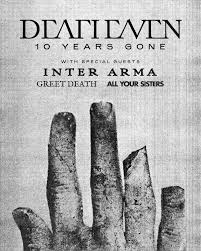
[POSTPONED: April 4, 2020] Deafheaven / Inter Arma / Greet Death

indexI liked Deafheaven’s Sunbather album for its fascianting mix of death metal and shoegaze. I haven’t heard anything from their two new albums, although I have heard very good things about them.

I wasn’t sure if I’d want to go to this show as it might be too intense.  But I had it on my radar.

However, I already had tickets to see Parquet Courts this evening, so it was unlikely I was going to this show.

I had read some really positive reviews about Inter Arma which had me interested in seeing them live.  I mean, if you write “proggy organic doom fields while expanding further the on the psych-folk strain” that sounds pretty awesome, but when I listened to whatever their latest record was, I didn’t really like it.  It just seemed extreme with no subtlety.

Greet Death I assume is named after the Mogwai song, which is promising.  This glowing review of their new album New Hell certainly makes me want to check them out

Greet Death’s shoegazey slowcore resembles a number of pleasing touchstones — Red House Painters, Nothing, Hum, Pedro The Lion, Dinosaur Jr., Thunder Dreamer; a few of Sam Boyhtari’s vocal runs even remind me of Dan Bejar — yet in practice they are entirely their own thing, and that thing is extremely good. These nine songs are mostly mammoth waves of sonic sludge, thick with musical texture and brimming with an energy that belies the measured pace. At its best, as one the nine-minute epic “You’re Gonna Hate What You’ve Done,” their music feels like being crushed by an avalanche while simultaneously soaring across the skyline.

Maybe this would have been the better show that night?

deafh

Read Full Post »

[POSTPONED: April 4, 2020] Parquet Courts / Public Practice [moved to July 13, with a show at another venue on July 8]

indexI’ve seen Parquet Courts twice and enjoyed both shows more than I thought I would.  I wasn’t sure if I’d need to see them again, but when I saw that they were playing White Eagle Hall in Jersey City–a great venue that is pretty close to me, I immediately grabbed tickets.  It then sold out.  And then I found out that our Scout Troop had an even planned that night so I couldn’t go anyway.

So this postponement worked out pretty well.  Except that the rescheduled show is right during out Troop’s Summer Camp.  The Scouts don’t want me to see this band!

Public Practice has been described as post-punk with an overtly danceable element.  Sounds like a perfect pairing for Parquet Courts.

Read Full Post »

SOUNDTRACK: CHIKA-Tiny Desk Concert #959 (March 13, 2020).

I’ve never heard of Chika, but she proves to be really fun and funny (while rapping some serious topics).

Her band is jazzy and stripped back:

Chika was also the first hip-hop act to anchor her set with just a Peruvian cajón instead of a full, hard-hitting kit. The surprisingly stripped-down performance allowed her lyrics, with all their nuance, to take center stage — and the result was remarkable.

In addition to the band, were her terrific backing vocalists

The impressive harmonies from Chika’s four backup singers brought all the feels right out of the gate.

She starts with “Industry Games.”  Lovely ooohs from the backing vocalists then David Levitan plays an echoing guitar (“both catchy and eerily haunting” that I found reminiscent of the Close Encounters melody).  Up comes that cajon with gentle thumps from Dominic Missana.  Then she starts rapping.

Moving seamlessly between rap verse and melodic hooks, Chika showcased her unusual tonality, multi-cadence delivery and vocal range, with an effortless, double-time lyrical bounce.

She has a fantastic fast flow (smiling as she goes).  It’s interesting hearing the gentle backing vocals that repeat her (sometime harsh) final lines.

She even starts giggling in the middle.  She explains later “I say ‘tightest around’ and they sing ‘hottest around’ and it is hysterical to me.”

Before the next song she says, “Everyone brings nice things to the Tiny Desk, like lights…  I didn’t bring anything, or so you thought.  I brought this Chapstick and I’m gonna place that right here.  Fuck anyone who underestimated me.”

She says that “Songs About You.”  No shade to anyone.  It’s not about y’all. its about you.  The song features more nice backing vocals and then a grooving bass line from Chris McClenny.

Before the third song she sends a shout out to her sister who is there.  “Shout out to our parents… genetics!”  She asks, “What kind of shows are you wearing?”  “Puma…”  “You should have been wearing ‘Balencies,’ which is the name of the next song. She pauses and waits for the laughter.  Then says, “I’m funny.  We’re not gonna argue about that.  You all didn’t want to laugh… something about that felt racist.”

The backing vocals are wild and weird as it starts, Danielle Withers sounds like a perfect loop of an eccentric vocal line.  It’s pretty magnificent–I really hope she goes somewhere with a distinctive voice like that (I see that she has sung with some pretty big names already).

The other singers are (l-r) Jabri Rayford; Darius Dixson and Rachel Robinson (she’s standing on a box).

“Crown” has some great lyrics

I got a habit of rapping ’bout tragic sh-
I think I’m just passionate
Tryna steer the way while in the dark
Hope I ain’t crashin’ it (Woah)
Now my little hobby turned to cashin’ out
Thinking ’bout who I’d be if I listened to doubt
Said I’d never do it, well look at me now

Okay
This is for the kids with depression
The one’s whose parental expectations got them stressin’ (Woah)
The one’s who would rather persevere, bust they ass, tryna make it ’cause-
They ain’t really livin’ in the present

The set ends, oddly enough with “Intro” which is a very quiet song.  Gentle guitars and  a quiet rap.

This was a really satisfying set.  her songs were short and to the point.  The lyrics were powerful and affecting and the music was a nice accompaniment.

[READ: April 2, 2020] Astronauts: Women on the Final Frontier

Jim Ottaviani & Maris Wicks worked together on the awesome book Primates.  Now they are back sending some primates into space.

I just love Wicks’ artwork.  She manages to do such amazing things with such simple-seeming drawings.  Her eyes are (mostly) dots, the faces are almost all simple shapes and yet everything she draws is so expressive and conveys exactly what she wants.  It is a pleasure to look at anything she draws.

Ottaviani did a lot of research for this book (obviously) and the end is chock full of resources that you can look at to learn more.

As for the book itself, it is “told” by astronaut Mary Cleave.  It starts with young Mary being told (by the President) that she was too young for the Astronaut Corp.  The letter (from President Eisenhower) did not go on to say that no women were accepted into the Corp, she had to find that out herself.

She was already a practicing pilot at age 14, but that wasn’t good enough.  She then jumps over to another girl her own age over in the Soviet Union.  Valentina Tereshkova was jumping out of planes and training to be a pilot, because the Soviet Union did not have a sexist component in their system.

But in 1959, even though women like Jerrie Cobb were certainly (physically) capable of becoming astronauts, women simply weren’t chosen.  Jerrie Cobb and Janey Hart testified before Congress where sexism (and simple, painful examples are provided) ruled the day.  They were even shut down by Jacqueline Cochran, a director at an airline, who said women should not even be pilots because they get married and leave after two years. (more…)

Read Full Post »

[POSTPONED: April 3, 2020] Dance Gavin Dance / Animals as Leaders / Issues / Veil of Maya / Royal Coda [moved to August 26 & 27]

indexI saw Animals as Leaders at TLA last May and I was amazed at the show (including the opening bands), but the crowd was really rowdy and I wound up far back behind a lot of tall guys.  I wanted to see them again, so when I saw that they were playing at Franklin Music Hall, I was surprised that they had moved up to such a big venue.

I had no idea that Dance Gavin Dance was the headliner, not Animals as Leaders.  In fact, when I later saw a poster for the rescheduled show(s) I thought Dance Gavin Dance was the (admittedly strange) name of the Animals as Leaders tour.

I don’t think I would have gone knowing that Animals as Leaders were one of (the four!) opening acts, but who knows.

So Dance Gavin Dance has been around since 2005 and I’ve never heard of them?  Apparently there are eight guys who have already left the band over the years.  People are quite divided about them.  Maybe I’ll give a record a listen.

Issues is another band I’ve never heard of although they have been around for eight years. They are described as combining metalcore, nu metal, pop and contemporary R&B.  Woah.  I don’t love the whole clean/unclean vocal thing–small doses are fine, so this might not be the band for me.

Veil of Maya have been around for six years (clearly I don’t follow this genre at all).  They are another metalcore band and I think this show might have been exhausting if I stayed for the whole thing.

Royal Coda shares (past and current) members with Dance Gavin Dance and is described as post-hardcore, progressive and math.

dgd


Read Full Post »

SOUNDTRACK: COLDPLAY-Tiny Desk Concert #957 (March 9, 2020).

Once, long ago, a Tiny Desk Concert was for a quiet, presumably up and coming band to play a short show for an internet audience.

Then there was Lizzo and Taylor Swift and now Coldplay (I’m actually not sure if Coldplay or Taylor Swift is actually bigger).  But what makes it fun when a huge band does this is that they have an opportunity to do something very different.

For this Tiny Concert, Coldplay was reduced to just singer (and keyboardist) Chris Martin and guitarist Jonny Buckland (bassist Guy Berryman and drummer Will Champion were “hiding under the desk” because it was so tiny.  But Coldplay was also expanded with the addition of the For Love Choir: Denise Green; Shaneka Hamilton; Dorian Holley; Stephen Mackey; Lamarcus Eldridge; Lawrence Young; Surrenity Xyz; Tiffany Smith and Mabvuto Carpenter.

Watching Martin at the keys, with the For Love Choir behind him and Coldplay guitarist Jonny Buckland at his side, you’d be forgiven for thinking it was the happiest day of his life. Laughing, bouncing to the music and playing off the crowd, Martin and company gave one of the most jubilant, uplifting and memorable performances we’ve ever had at the Tiny Desk.

I’m not sure it’s the most memorable, but it is certainly fun watching Chris Martin (who the rest of the time seems very serious) laugh and smile and joke his way through the set (while being musically spot on).

It’s a bit unfortunate, to me, that Coldplay did this show after their newest album, Everyday Life, from which I haven’t heard a thing (which is crazy since most of their other stuff is so overplayed).

The first song, “Cry Cry Cry” features the choir, but to me the “Cry Cry” of the chorus sounds so much like Janis Joplin “Cry Baby” I can’t get past it.

I also had to laugh that the crowd was responsive to this song (and the other two songs from the new album), but they went berserk for “Viva La Vida.”  And as as he plays those notes and starts singing it becomes really clear that this is Coldplay.  I didn’t really notice Buckland on the first song, but he adds some nice guitar moments to this one.  Everyone lives the choir for these songs, but I feel like their backing lines are not right for the verses.  Their oohs and ahhs are nice though and the end “woah oh ohs” are really splendid with all of those voices.

Martin jokes that he was happy to step inside the internet to be on the Tiny Desk and to see that Bob is a real person.  Then he shouts out everyone in the choir without looking (I didn’t realize they’d been playing together for a while, otherwise I was really impressed that he could remember that many names so easily).

The choir is prominent on “Broken” and Martin joked that, “In a very real way, they’ve Photoshopped our songs to be much better than they actually are.”

As the song fades out he starts playing the opening to Prince’s “1999.”  How unexpected.  Each of the singers in the choir takes a line or two and everyone is really into it.  It sounds great.

They end with “Champion Of The World.”  Martin says that after releasing the new album, they stayed in semi-hibernation.  But this Tiny Desk is pure and wonderful and makes us remember that this is why we do what we do,

Even if they only played one song I would have wanted them to play, it’s still a very positive and joy-filled show.

[READ: March 29, 2020] “Here and There”

McCann has written a novel called Apeirogon which is a fictionalized account of the lives of Bassam Aramin, a Palestinian and Rami Elhanan, an Israeli.  Aramin’s ten-year-old daughter, Abir, was killed by an Israeli soldier.  Elhana’s 13-year old daughter, Smadar, was killed by a Palestinian suicide bomber.

This excerpt only looks at Rami’s story.

Smadar had her grandfather’s watch on her wrist when she was killed.  It was still running.  She made sure to wind that watch every night lest it signal that her other grandfather Yitzak had died during the night too.

Smadar and her grandfather were buried side by side under a grove of knotted carob trees. (more…)

Read Full Post »

[POSTPONED: CANCELLED: April 2, 2020] Pussy Riot / Deli Girls

indexPussy Riot are legendary for getting arrested for singing feminist punk in Russia.

Pussy Riot’s membership is a revolving door of anonymous women, so who knows who was going to appear on stage.  And, yes, I don’t really know all that much about their music.  I just figured it was going to be a fun show.  I hope they can come back around.

I’ve never heard of Deli Girls but a review from Fader makes them sound pretty exciting

At shows, the crowd gathers around Danny Orlowski as they strut and thrash around the room, displaying their rage and vulnerability with an ugly, commanding sincerity. Tommi Kelly, meanwhile, crouches in the background over drum machines and sequencers, turning vocal samples, barking dogs, and a grab-bag of other percussive noises into a feedback-scorched blend of industrial, hardcore, and pop. It feels both brand new and ecstatically familiar, as if the ’98 Family Values Tour just crash-landed in the basement of your local punk house.

Yeah, I’d see that.  Hope they get paired up when the tour comes back.

UPDATE: On May 19, the band announced the cancellation of their tour

So sad to announce that the 2020 Pussy Riot North American tour will be canceled.  With so much uncertainty right now, it would be impossible to perform while also ensuring the health and safety of you beautiful people.  That is my number one priority.  I wanted more than anythingggg to bring everyone together to rage and rally.  But I am hopeful we will do so again.

WE WILL BE BACK IN 2021!!

riot

Read Full Post »

SOUNDTRACK: TAIMANE-Tiny Desk Concert #956 (March 6, 2020).

This Concert opens with super fast percussive guitar. No!  Not a guitar, a six-string ukulele!

Taimane wears a crown of flowers.  There are flowers in front of the desk and in other places.  Taimane is from Oahu Hawaii so this love of colorful flowers makes a lot of sense.

So much magic unfolded in such short order. Within the first moments of Taimane’s stunning set, we hear her play fiery flamenco, a famous phrase from the opera Carmen, a touch of Bach and more than a nod to her Hawaiian homeland, all on her ukulele.

As she plays, this medley of “Carmen,” “E Ala Ē,” and “Jupiter” Ramiro Marziani adds some guitar and then Jonathan Heraux adds in percussion on the cajon.

After a brief introduction the Marziani stars playing the bass line to Carmen and she starts playing the lead on her uke.  She also plays an amazingly fast flamenco “solo” on the uke.

The playing and percussive style are not unlike Rodrigo y Gabriela.

As Taimane starts singing, violinist Melissa Baethoven adds harmony vocals and then Li’o comes out to do a Polynesian dance.

In what is a first at the Tiny Desk, a dancer named Li’o performed in a hau skirt made from dried lauhala leaves, with a lei of white conch wrapped around his neck. His Polynesian dance, along with the stick percussion, added to the beauty and the intensity.

After a brief cajon solo, Li’o returns without the skirt to show off his impressive legwork as he dances to a super fast ukulele melody.

Taimane is a an amazing ukulele player.  She began playing ukulele at age five; these days, it’s seemingly become an extension of her body.

Taimane has five albums out.  She

chose to represent the elements of the earth on her latest album, Elemental, and she brought the most feisty of those elements to the Tiny Desk: “Fire.” This music draws inspiration from Cuban traditions, with moments that are sensual as well as ecstatic.

This song is fast and fiery, including some impressively fast strumming from Taimane.  Then Ramiro takes a solo as everyone claps along.  Then after another impressive solo from Taimane, things slow down: “this is the sexy part,” she says.

The final song came as surprise because she does not play anything, she sings.  This is a lovely slow song called “Maluhia” which means peace.  It’s like a delicate cool down after the fire of the previous song.

I never knew a ukulele could sound like that.  I realize that this is a six-string and is considerably larger than a tiny four-string, but it’s still amazing to hear (and see).

[READ: March 29, 2020] “The Interpretation of Dreams”

This is a fascinating story set in 1924.  A thirty-three year old man, Gūnter Zeitz tracks down Sigmund Freud to talk to him.

Freud has a lisp and seems cranky to be interrupted by Zeitz.  But Zeitz starts flattering Freud’s ego and starts talking about dreams.  And by the end of the conversation, Gūnter says what he has wanted to: “I want to be a psychoanalyst, and I am hoping you will train me.”

Freud agrees and says the training will consist of Gūnter’s own analysis and Freud will be his analyst. (more…)

Read Full Post »

SOUNDTRACK: KIRILL GERSTEIN-Tiny Desk Concert #958 (March 11, 2020).

I can’t really keep track of classical pianists. There are so many who are truly amazing.  But I love hearing them.  I also like it when they have a good sense of humor, which most of them seem to have.

The last time pianist Kirill Gerstein was at NPR we gave him a full-size, grand piano to play in a big recording studio. But for this Tiny Desk performance, we scaled him down to our trusty upright. “What will you ask me to play the next time,” he quipped, “a toy piano?”

Even if we had handed him a pint-sized instrument, I’m sure Gerstein could make it sing. Just listen to how Chopin’s lyrical melodies, built from rippling notes and flamboyant runs, flow like a song without words in Gerstein’s agile hands.

What sets Gerstein apart?  Perhaps its his connection to jazz.

The 40-year-old pianist, born in Voronezh, Russia, taught himself to play jazz by listening to his parents’ record collection. A chance meeting with vibraphonist Gary Burton landed him a scholarship to study jazz at Boston’s Berklee College of Music. At age 14, Gerstein was the youngest to enroll at the institution.

He opens the set with Chopin: “Waltz in A-flat, Op. 42.”  It is fast and amazing with some slow, jaunty parts.  Near the end, wow, doe he pound out those bass chords.

Before the second piece he says that it hasn’t been heard on a recording yet–it’s a newly written piece by Thomas Adès.  Two lovers want to hide in the closet and … sleep with each other.  They emerge dead in the morning, so its lascivious and morbid and a very beautiful piece.

The Berceuse for solo piano was written for Gerstein by Thomas Adès, adapted from his 2016 opera The Exterminating Angel. The work, both brooding and beautiful, receives its premiere recording at the Tiny Desk.

It is slow and beautiful, full of sadness and longing.  Until the end when the bass comes pounding and rumbling, full of ominous threat and dread.  And listen to how long he lets those last bass notes ring out!

Up next is a piece by Liszt who I am particularity fond of (even if I only know a few of his pieces).  Gerstein says that Liszt is perhaps the greatest composer that ever touched the instrument.  There are several hundred not famous pieces.  This is a late piece called “A quick Hungarian march.”  Technically it’s called “Ungarischer Geschwindsmarsch”

Gerstein follows by dusting off a truly neglected – and quirky – Hungarian March by Franz Liszt. To my knowledge it’s been recorded only once.

It is jaunty and spirited until the middle where it goes back and forth between fast runs and bouncy melodies.

Since I hadn’t read about his jazz background the first time I listened to this concert I was really surprised when he said he’d be playing the Gershwin-Earl Wild standard “Embraceable You” which he says is for dessert at this lunchtime concert.

Gerstein’s jazz background is still close to his heart. Which brings us to his lovely-rendered closer: Gershwin’s “Embraceable You,” arranged by the American pianist Earl Wild.

Like all master performers, Gerstein gives you the illusion that he’s making it all up as he goes along, even though the virtuosic transcription is intricately mapped out. And somehow, he makes that upright piano sound nine feet long.

It really does sound like he is working on the fly–playing beautiful runs. It’s hard to imagine transcribing and learning all of those notes instead of just improvising them, but that’s what make a great pianist, I guess.

[READ: November 2019] The Abyss

I saw this book at work and thought, a turn of the 20th century Russian author writing about the Abyss?  What’s not to like?

I had not heard of Leonid Andreyev, perhaps because much of his work has not been translated into English.  He died in 1919 and is considered “the leading exponent of the Silver Age of Russian literature.”

This book was translated by Hugh Aplin and it is remarkable how contemporary these stories sound (aside from obviously nineteenth and twentieth century details).

Bargamot and Garaska (1898)
Bargamot was a policeman–a big, thick-headed policeman.  His superiors called him numskull.  But the people on the streets he looked after were quite fond of him because he knew the area and what he knew he knew very well.  This story is set on Easter Saturday night.  People would soon be going to church.  But he was on duty until three o’ clock and he wouldn’t be able to eat until then. The day was going smoothly and he would soon be home until he saw Garaksa, clearly drunk, heading his way: “Where he had managed to get sozzled before daylight constituted his secret, but that he had got sozzled was beyond all doubt.”  Bargamot threatened to send Garaska to the station, but Garaska talked to him about the festivities of the day and was about to present to him an egg (a Russian custom).  But Bargamot’s rough handling smashed the egg.  This story turns surprisingly tender and sad, with a rather touching final line.

A Grand Slam (1899)
This has nothing to do with baseball.  It is about a card game called Vint, which is similar to bridge.  For six years these four people have been playing it: fat hot-tempered Maslennikov (whose name is Nikolai Dmitriyevich, we find out about five pages in) paired with old man Yakov Ivanovich and Yevpraksia Vasilyevna paired with her gloomy brother Prokopy Vailyevich.  Dmitriyevich desperately wanted a grand slam but he had been paired with Yakov Ivanovich who never took risks. Ivanovich was very conservative and never bet more than four–even when he ran an entire trick, he never bet more than four–you never know what might happen. They speak of news and local happenings (like the Dreyfus Affair), but Dmitriyevich stays focused on the game because his cards are lining up for a Grand Slam.  As he goes for that last card, he falls out of his chair, presumably dead.

Silence (1900)
This story is divided into sections.  Fr. Ignaty and his wife need to speak with their daughter Vera. They have a fight and Fr. Ignaty refuses to speak to her any more.  Soon enough she goes out and throws herself under a train [I would hate to be a train conductor in Russia].  In Part II silence has fallen over the house.  In Part III he tries to talk to his wife about his feelings and his sadness over their daughter, but she remains silent.  In the final part, Fr Ignaty finally breaks down.  But is it the silence that has gotten to him?

Once Upon a Time There Lived (1901)
Laventy Petrovich was a large man. He went to Moscow for someone in the city to look at his unusual illness.  He was a silent and morose man and he specifically asked for no visitors.  The hospital assigned Fr. Deacon to him.  Fr. Deacon was another patient, unfailingly positive.  He and Petrovich were at opposite sides of the spectrum.  But even as it became clear that Fr. Deacon was deathly ill, he remained positive.  Until Petrovich told him that the doctors said that Fr. Deacon has a week to live.  There was also a young student who was daily visited by the girl he loved.  They liked Fr deacon and did not like Petrovich. I’m not sure if the ending is a surprise, but it is certainly sudden with happiness doled out in very specific ways.

A Robbery in the Offing (1902)
That night there was to be a robbery and maybe a murder.  A man, alone with his thought is scared by nearly everything–he is very jumpy because he is the one about to do the robbery.  The man was frightened by a noise until he saw it was a little puppy.  The puppy was shivering and the man tried to frighten him to get him to go home. But the puppy seemed too ignore him.  So began the battle of wits between a big strong man and a tiny freezing puppy.  Imagine a man with a robbery in the offing worrying about a little puppy.

The Abyss (1902)
Two young lovers went for a walk.  Zinochka was 17 and very much in love.  Nemovetsky was 21 and similarly in love.  They wandered into an area they didn’t recognize and happened upon three men.  The men punched Nemovetsky and knocked him out then they chased Zinochka . When he came to, he found her body, naked but still alive.  This was a hard story to read.

Ben Tobit (1903)
This was one of the first stories in the book that I really really liked.  It is set on the day of Jesus Christ’s crucifixion.  On that day, Jerusalem merchant Ben Tobit had a terrible toothache.  Ben was a kind man and did not like injustice, but it was hard to be kind with this much pain.  His wife tried to help by giving him various medicines (like purified rat droppings). She then tried to distract him when the thieves came trudging past on their way to the crucifixion site.  It distracted him somewhat but mostly didn’t interest him.  She said, “They say he healed the blind.”  He replied, “If only he’d cure this toothache of mine!.”  The next day he felt better and they walked to the site to see what they missed.

Phantoms (1904)
Yegor Timofeyevich had gone mad so his relatives collected money to send him to a clinic.  He knew he was in a madhouse but also knew that he could make himself incorporeal and walk wherever he wanted.  He was exceedingly happy. There was a patient who would continually knock on any locked door.  He would walk through all the unlocked doors but when he got to a locked one he would knock and knock and knock.

There was a doctor’s assistant the hospital named Maria Astafeevna, whom Yegor was certain liked him.  He thought very highly of her.  But another man Petrov could say nothing nice about her.  He felt that she was like all women: debauched deceitful and mocking. This attitude upset Yegor tremendously.  Maria was actually in love with Dr Shevyrov. But she hated that he went to Babylon–where he drank three bottles of champagne each night until 5 AM.  She imagined that one day she would ask to be his wife bit only if he stopped going there.

The man Petrov was also terrified of his mother, believing that she had bribed officials to lock him up. He would become hysterical when she would visit.  It was only Yegor’s assurances to her that her son was a decent man that made her feel okay.

Most days things went on exactly the same, the same faces, the same conversation and the same knocking.

The Thief (1904)
Fyodor Yurasov was a thrice-convicted thief.  While on the train, even though he had plenty of money, he stole a gentleman;s purse.  As he tried to blend in, he imagined everyone thought he was an honest, young German (he came up with the name Heinrich Walter).  But when he tried to be civil, everyone ignored him.  Some were downright rude to him.  Later when he hears that the gendarme are looking for someone, he assumed it is he.

Lazarus (1906)
This story looks at what Lazarus’ life was like after he came back–appearing a few days dead and with a shorter temper.  People understood and forgave him, but still.  Soon, however, people began to avoid him and claimed that all of the madmen in the village were people whom Lazarus had looked upon.   It’s such an interesting (if exceeding dark) tale that no one bothered to investigate before.

A Son of Man (1909)
As Fr. Ivan Bogoyavlensky grew older he grew more disatisfied with his role in life.  He wanted to remove his surname and replace it with a five-digit number (The church elders assumed he’d gone mad).  He then bought a gramophone and listened only to stories of Jewish and Armenian life.  His wife hated it and it drove their puppy mad (?!).  Indeed he kept trying to get the puppies to listen to the gramophone and they consistently went crazy and eventually died.  The church sent a deacon to help Fr Ivan through this but he the deacon and Fr Ivan butted heads immediately.  Fr Ivan began mocked everything about their religion.

Incaution (1910)
A priest arrived at a railway station and saw a steam engine for the first time. There was no one around, so he climbed aboard.  It wouldn’t be dangerous to flick some switches and pull some levers.  Would it?

Peace (1911)
A dignitary was dying and an devil–an ordinary devil–came to his bedside offering him eternal life in hell.  The man didn’t want to suffer but the devil said that suffering was terrible until you got used to it and then it was nothing.  The devil makes a stronger and stronger case if only the man would take this pen and sign.

Ipatov (1911)
Nikolai Ipatov was a rich merchant who went bankrupt. Soon he became silent and despondent.  The local priest chastised him saying that the house of god was a house of joy.  He refused to let the merchant back in until he grew happy again.  Which he didn’t.  Eventually his children took over the situation and and put his house up for sale.  But when someone came to look at the house, they heard Ipatov’s moaning and grew existential realizing that a man without guilt could still be afflicted this way.

The Return (1913)
The narrator had been in a cell n St Peterburg for three years because of a political incident.  His wife, who was supposed to be waiting for him in a hotel room had stepped out with another man.  He hired a cab to follow them.  They kept driving around and around, some streets seeming to stretch on endlessly.  Then the cab driver told him that they had been at the same intersection many times.  He finally arrived at the gate and when he banged on it, who should open the gate but his prison guard.

The Flight (1914)
Yury Mikhailovich was an experienced pilot.  Twenty eight flights and no troubles.   He always felt, “If I crash, I crash, nothing to be done about it.”  Despite everything he had on earth, he longed to be up ion the sky…possibly forever.  It’s incredible that Andreyev wrote a story like this in 1914!


Read Full Post »

« Newer Posts