 SOUNDTRACK: IMAGENE PEISE-Atlas Eets Christmas (2014).
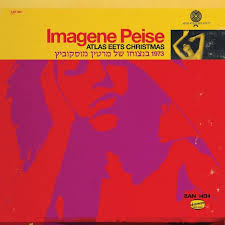 This is a terrific lost album created by Iraqi jazz piano prodigy Image Peise. The record states that “most of what is known [about Peise] is shrouded in clouds of legend and smoke of myth.” She is “rumored to have committed suicide in 1978.”
She is playing mostly traditional Christmas songs, with a couple of originals added on to the mix. She is accompanied by:
Imagene Peise – Piano
Ominog Bangh – Laughing/Crying Glider Synthesizer
Shineyu Bhupal – Drones, Sitar, and Baritone Tambura
The album has a consistent feel throughout. Lots of jazzy piano and then some interesting Middle Eastern and/or psychedelic sounds that are sprinkled on top (primarily from the sitar and the glider synth). Whether she is messing with the beauty or just manipulating it is up to the listener.
“Winter Wonderland” opens with a crackling record sound and some interesting Middle Eastern instruments and drones. And then the lovely traditional jazzy piano version of the classic. The trippy synth thing comes back up from time to time.
“Silver Bells” opens with a middle eastern synth that sounds nothing like the song. But once again when the piano comes in it’s really lovely and traditional with hints of psychedelia.
“Christmas Laughing Waltz (Jingle Bells)” has some laughing-like sounds from the voice/synth thing. Midway through the song, which has been mostly trippy, it resolves itself into “Jingle Bells” on piano with some cool sounds added.
“Silent Night” opens in a not at all peaceful way with some crazy sounds. It’s a little disconcerting if you know what song it is supposed to be. But the piano eventually finds the melody and plays it straight and nice.
The first original peace is the delightful if mournful, “Atlas Eets Christmas.” It’s a series of washes and piano chords until finally a solitary piano melody plays its mournful melody. There’ s vocal line where you hear the pronunciation “At last it’s Christmas.” The voice is pretty far in the background making it kind of hard to hear. It fits in with the record but stands out because of the voice. But the sentiment is quite nice.
“Do You Hear What I Hear” is the first really dissonant sounds on the disc. They come in the form of echoed piano chords. It feels sinister and kind of kills the mood of the song. The vocal melody is played on that glider thing with dissonant piano behind it. It feels kind of wobbly and unsettled.
“Have Yourself a Merry Little Christmas” returns to the more traditional style and once again, it’s very pretty.
“White Christmas” has a real feel of longing to it. After a bout 2 minute it kind of builds with drums and upright bass but it never really gets into a more traditional feel. It sort of hints at the song until the very end where the melody is more pronounced.
“Frosteeeee”is of course, “Frosty the Snowman.” It opens with melody played on the piano. But then it switches off melody lines with that voice/synth thing. It’s sort of a duet between the two instruments.
“Christmas Kindness Song” is the other original. It sounds like the other in spirit but this one has highly processed vocals. Presumably they are by Steven Drodz, but I’m not sure if he sis supposed to sound like an Iraqi woman (how far is the ‘joke’ gong?), but he clearly doesn’t.
“The Christmas Song” returns to the jazzy traditional song with some sprinkling so psychedelia on top.
Depending on your tolerance for oddity, this is either a great, fun addition to a Christmas collection (it will make people prick up their ears to hear whats going on), or it’s just too disruptive to the holiday spirit.
And yes, in the “Christmas Kindness Song” I mentioned Stephen Drodz because this is an album by The Flaming Lips. I gather that the music was created by Steven Drodz and the mythology of Imagene was created by Wayne Coyne.
Oh and the disc ends with some 30 minutes of what sounds like an album clicking at the end of locked groove.
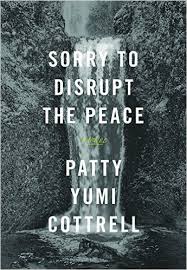
[READ: June 21, 2017] Sorry to Disrupt the Peace
This is one of a new(ish) batch of McSweeney’s books. I was intrigued by the title and the cover and some snippets of reviews sounded promising.
There were things I liked about he story but overall I was mixed on it.
The story is about Helen Moran. She is a 32-year-old Korean woman. She was adopted by white parents when she was a baby. As was her adoptive brother (who is also Korean but is not related to her). Throughout the story she refers to her parents as “my adoptive parents” and her brother as “my adoptive brother” easily 100 times each. I realize that that is a true statement and description, and it is important to her to keep this distinction, but it makes for irritating reading. It makes your main character seem really ungrateful.
And maybe that’s it. Helen is a pretty unlikable character. She works with at risk youth but does some pretty risky things with them. She’s even currently under investigation at her work for doing suspicious things. She says she is called Sister Reliability but its unclear to me if they are doing it to mock her, if they are not doing it at all or if they are actually doing it because she is reliable (which I doubt). She has also written a pamphlet called How to Survive in New York City on Little to Nothing which she handed out to people. She wears garbage and discarded clothes and eats whatever–and that’s her advice to the poor.
But that’s not what the story is about. The story is about what happens after she hears from her uncle that her adoptive brother is dead. For reasons we never find out her adoptive parents do not make the call, it is done by her uncle. Weird.
She’d always thought she was close to her brother so she is shocked to discover that he is dead.
She tells us that the internet provided six reasons why someone would kill himself But she doesn’t believe any of them. She says it has something to do with the abyss. And so, as her brother’s supposedly closest friend, she is going to be a detective and find out what happened.
The way the story is written, with the formality of “adoptive parents,” continues with the stiff and distant writing in the rest of the story. Helen is not a warm person by any means, and she even keeps the reader at bay.
She flies home to Milwaukee from Manhattan. She hadn’t been there in years (and apparently hasn’t spoken to her parents in the same time). They are shocked to see her, but they put her up in her childhood bedroom.
Then the story is broken up into the days that she is searching for the answer to How he killed himself. An answer which everybody knows yet which she will not ask anyone.
On the first real day she meets Chad the grief counselor. They went to school together and he remembers her but she does not remember him at all. Then she meets Thomas, a boy who was friends with her adoptive brother. There’s a strange moment where the story flashes back to her brother visiting her in Manhattan and it goes into great detail about her being under investigation. The next chapter starts with Thomas saying he doesn’t know why she told him all of that. But ultimately he gives her a clue that her brother’s teeth which were normally perfect were all messed up.
Also a cake is delivered which Helen eats because she assumes it is for the grieving family. But it was for a later reception and her family is mad at her.
By the third day she has discovered a file of emails from her brother. They show a side of his life that she knew noting about. It’s not weird or disturbing, it’s just surprising (to her) that he had depth that she didn’t know about
The whole book is like this. Kinda funny, but mostly dark. And unafraid to be explicit:
I was fine with genitalia in my face and blow jobs and spitting out their sperm, I was fine with rimming, I made my peace with it, and I was so angry. Underneath my peace there was an anger, an ugly anger, the force of it was formidable, and I was the one who had to live with it. Everything was bitter.
So amid the humor (and darkness) of Helen’s character, this is a story is a woman cut off from herself and her family. The fact that so many people relate to it so well makes me a little sad for a lot of people.

 I Just Read About That...
Leave a comment