 SOUNDTRACK: BILLY BRAGG-Tiny Desk Concert #281 (June 17, 2013).
 I really like Billy Bragg. Not necessarily all of his music, but I like a lot of it and I certainly love what he stands for. If you like his instantly recognizable voice (which I do), then just about anything he does sounds good. But no doubt some songs are catchier than others.
Bragg played a Tiny Desk Concert in 2016 with someone else as part of a duo. I’d listened to that one first, but I liked this one more.
For this one he is accompanied on the first two songs by dobro player C.J. Hillman.
Bragg talks a lot–he has many lengthy stories between songs–and he’s pretty much always funny or thoughtful. He introduces the first song by saying that moving into a new building always has troubles–you’ll always need someone to fix things up. With that, his first song is called “Handyman Blues.”
It’s a great story song. I especially like this line:
Don’t be expecting me to put up shelves or build a garden shed / but I can write a song about how much I love you instead.
It’s amusing that in the next song workers actually interrupt his song. They were “met with lot of hammering on our rooftop by some real handymen as they put the finishing touches on NPR’s new home.”
For the second song they
channeled the spirit of legendary American folksinger Woody Guthrie, with whom Bragg collaborated — albeit posthumously, in Guthrie’s case — when he took Guthrie’s unsung words and set them to song with the help of Wilco. Here, he takes a song Guthrie himself co-opted and altered: a gospel tune (“This World Is Not My Home”) he’d turned into an anthem against inaction.
Bragg introduces this song as saying he took it over when the U.S. was having the debate about universal health care. He says that people still face all the same problems that this classic song talks about–people losing homes to banks or families struggling to make ends meet. But the middle verse is about a wife who dies on the floor for want of proper health care. Bragg says that that doesn’t happen in his country anymore and it’s hard for people in his country to imagine that a generous country like the US still hasn’t resolved that issue (and five years later things are even worse with Trumpcare–#ITMFA #RESIST).
Guthrie called the song “I Ain’t Got No Home (In This World Anymore”). After he sings a verse, the hammering starts and they pause the song to wait for the work to finish before he re-starts the song. In the meantime they talk about what his band should do in Washington. Someone says the National Archives and he jokes the Nashville Archive? He says that they really enjoyed Nashville. Then he mentions the National Archive to CJ and says
We can find out how the Americans started the war of 1812. (chuckles). I just played Annapolis, they’re still sore about it over there. Never mind who won the war but who started it.
It’s another nice story song. The dobro works perfectly with it.
“Sexuality” is the only song on this set that I knew. It’s an old favorite that is serious and funny as well (and very progressive for when it was written). It sounds terrific and is super catchy. Although he comments that the acoustics aren’t that great in this new building–there’s not much bounce back off the walls “for those of us who technically aren’t great singers. But for those of us who are buskers like myself, it’s not bad.”
Introducing the final song, “No One Knows Nothing Anymore” he says he read an article on the BBC about a kid who proved that economics professors were wrong and the article commented that “the trouble with economics is that no one knows nothing anymore.” He says that had just written a song with that same name, so he’s with the zeitgeist.
He also interjects that there will be pedants–“and there are one or two who listen to NPR, I’m sure” who will write in to say it should be ‘no one knows anything any more.’ But the first thing they teach you at songwriting school is that alliteration trumps grammar.
And then he starts strumming “Sexuality “and says “Oh, I’ve just played that.”
“No One Knows Nothing Anymore” is a nice folkie, very-Billy Bragg song–good melody and really good lyrics.
At the end, as the camera fades to black he says “Chris, pass the hat around.”
I’m so happy that Billy Bragg is still making music.
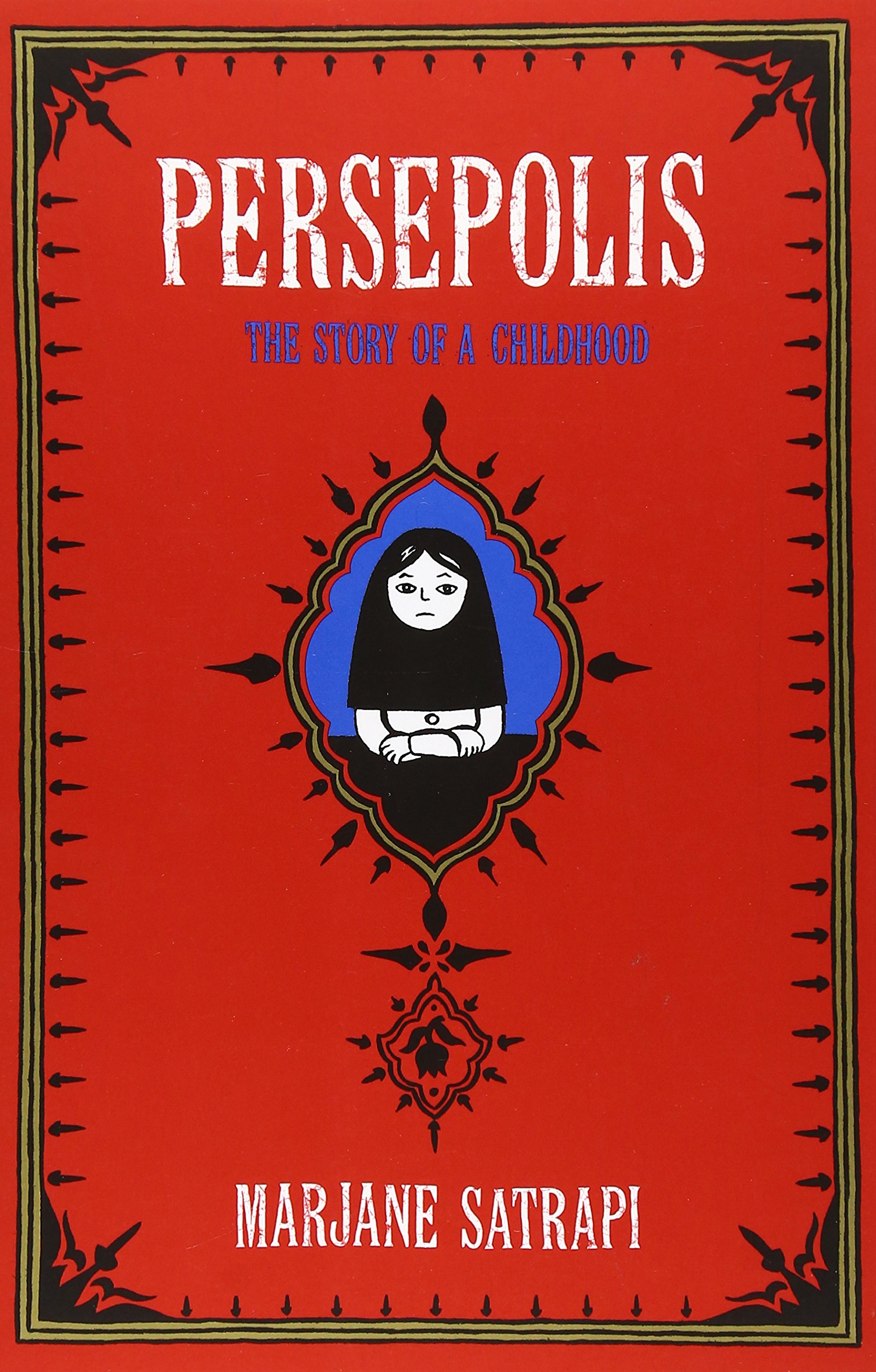
[READ: March 26, 2016] Persepolis
This graphic novel is legendary, and I’m embarrassed it has taken me 13 years to read it.
Persepolis is a memoir of a young girl growing up in Iran during the 70s and 80s. I appreciated the contextualizing introduction in which she explains the history of the country.
The introduction lays out a basic outline of the history of Iran and the Middle East (that goes all the way back to B.C years). She explains that Iran has always been a rich nation and has constantly been under attack. When oil was discovered, the West came calling. Great Britain wielded a powerful influence over Iranian economy. During WWII, Iran remained neutral but then was invaded by the west.
The Prime Minister of Iran (not the Shah) nationalized the oil industry in 1951 which led to an embargo and a coup organized by the CIA. The leader, Reza Shah was succeeded by his son, Mohammad Reza Shah–known simply as the Shah of Iran. The Shah stayed in power until 1979 when he fled to escape the Islamic Revolution.
She says that since the Islamic revolution Iran has been associated with fundamentalism, fanaticism and terrorism, but she knows that this is far from the truth. And that’s what inspired her to writ this book.
She says that a country should not be judged by a few extremists. (One can only hope that advice is used for our current extremist assholes in charge. #ITMFA #RESIST).
The story is broken into small chapters. In the first we see her in 1980, 10 years old and suddenly being made to wear a veil. The Islamic Revolution had just taken place and everything changed. All girls were forced to wear a veil–which they all hated. Bilingual schools were closed and the sexes were segregated.
The story shows how a non-fundamentalist family tried to survive and hang on as thing get more and more oppressive.
Her parents were well-educated and so Marjane read a lot. She was smitten with Marx and was also able to be religiously faithful (she imagined that God an Marx looked the same). She was spiritual and from talking to God so much she was sure she would become a prophet.
Before the revolution, there was a revolt against the king. The people were involved (including Marjane’s father). He explained that the way the Shah became emperor was by making a deal with the British.
And all of this is background to young Marjane a she tries to navigate the world of childhood amidst this turmoil.
Marjane was acutely aware of their status (her father was a good businessman and they were wealthy). They had a maid but that maid could even consider dating outside of her class. Marjanes was inadvertently involved with this.
Before the Shah’s overthrow he tried to work toward democracy, but it was only window dressing. And when he fled the country, everyone celebrated. During the Shah’s regime, there were 30,000 political prisoners. Marjane’s family knew some of the prisoners.
The upcoming election proved to be pivotal to Iran. The majority of people voted for the Islamic Republic. The non-Islamic minorities revolted and were crushed. People began to flee the country. And soon repressive attitudes took over and the country became fundamentalist.
During the 1980s, Saddam Hussein and the Iraqi army invaded Iran. This war lasted for nearly a decade and hundreds of thousands of people were killed. The Iranian regime boasted about the martyrs. They even had young people sent to the front promising them rewards in heaven. Even daily life was constantly disrupted with no signs of western decadence allowed. She has a funny/scary story about the military raiding their house and them dumping out all of their alcohol before the guards could get up the stairs.
For a time the borders were opened and her parents vacationed in Turkey. They brought back some western items. The fact that her father returned with an Iron Maiden poster for her is hilarious. She also has a fondness for Kim Wilde (“Kids in America”).
But peace didn’t last and soon there were bombs in their neighborhood–And friends of theirs were killed. Marjane could never keep quiet about this and was soon expelled from school for striking the principal (!).
Her parents, hoping for the best for her, sent her to Europe to continue school–not a happy ending for anybody. It was a chance at freedom but a loss of family and culture.
The book is great. It really gives a personal perspective to events that I grew up with (Marjane and I are roughly the same age) but which I obviously never understood completely. Perhaps more importantly, the book is not preachy or didactic. It is often funny and rally humanizes a terrifying situation. And her illustrations are awesome, too.

 I Just Read About That...
Leave a comment