 SOUNDTRACK: RAGA ROCKERS-“Slakt” [“Slaughter”] (1988), “Hun er Fri” [“She is Free”] (1988) and “Noen å hate” [“Someone to hate”] (1990).
 Karl Ove mentions many bands in his books. Raga Rockers appeared twice in this one. I can’t find a ton about them online, because they never really made it beyond Norway, but the Google translated version of their website says:
Raga Rockers is an ingenious rock ‘n roll band that has existed since 1982.
Today the band consists of: Michael Krohn (vocals, lyrics), Hugo Alvar Stein (keyboards / guitar), Eivind Staxrud (guitar), Arne Sæther (keys), Livio Aiello (bass) and Jan Kristiansen (drums).
The band came out of the punk community in the early eighties, but became such a “poppy” large parts of the Norwegian people have founded acquaintance with them. Songs like “She is free” and “Someone to hate” is almost singalong classics! Their greatest triumph came perhaps in 1999 when they played for thousands of ecstatic Norwegians at the yellow stage at Roskilde Festival. (Reviews of the show by Dagbladet (which Karl Ove wrote for) and Dagsavisen–both are in English.
Despite their punk roots and the rather violent song titles, the songs are almost poppy–heavy guitars but simple chords and a singer who doesn’t sound angry at all. In fact, if I didn’t read about their punk roots, I’d swear these songs are kinda goofy.
“Slakt” is a simple song, opening with a 4/4 drum and splashes of guitar. The middle is a bluesy riff with a chorus of “ah ha ha” The lead singer’s voice is mostly kind of deep–not quite what I expected from the heavy guitars.
“Hun Er Fri” is quite different from the others songs. It’s only 90 seconds long and features a piano. The chords are still simple the piano may be playing single notes in fact). The lyrics are pretty much nonstop and kind of fast. It seems like a silly pop trifle and I can see why it’s popular among their fans. The first time I listened to it, I was surprised it ended when it did. This bootleg live version is certainly fun.
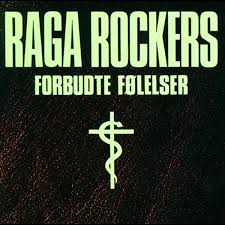
 These two songs came from their 1988 album Forbudte følelser [Prohibited feelings]
“Noen å hate” has a bit more of a metal sound, but is essentially the same kind of heavy rock with simple chord progressions. There’s a good solo at the end. A black metal band called Vreid has done a cover of this song (which really only sounds different because the Vreid singer is more growly).
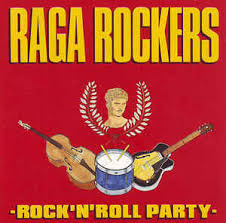
This song comes from their 1990 album Rock n’ Roll Party.
And yes, they are still around. They took a hiatus in the 2000s but came back with three albums 2007’s Übermensch, 2010’s Shit Happens and 2013’s Faktor X.
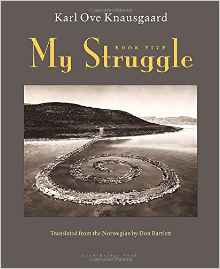
[READ: May 1, 2016] My Struggle Book Five
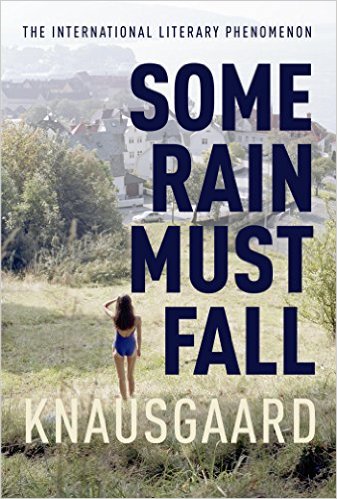 I realized as I read this fifth book that I should have been keeping a vague sense of the timeline of these books. Specifically, because he opens this book with this: “The fourteen years I lived in Bergen from 1988 to 2002 are long gone.” So if he was born in 1968, this book covers roughly ages 19-33.
So my general outline for the other volumes:
Book Five: 1988-2002 (19-33)
Book Four: 1987 (18)
Book Three: 1968-1981 (1-13)
Book Two: 2008 (40) (with flashbacks to meeting his second wife in 2003 or so)
Book One: 2008 (40) (with flashbacks to his father’s death in 1998 or so)
What era could Book Six possibly be about?
We’ll find out next year in what is said to be the 1,200 page final volume.
So as I mentioned above, Karl Ove talks about the fourteen years he lived in Bergen. And it made me laugh that he says:
The fourteen years I lived in Bergen, from 1988 to 2002, are long gone, no traces of them are left, other than as incidents a few people might remember, a flash of recollection here, a flash of recollection there, and of course whatever exists in my own memory of that time. But there is surprisingly little.
And then he proceeds to write 600+ pages about that time.
This era dates from when he was first accepted into Writing Academy (at 19) through his early 20s (with a few long term relationships), some cruddy jobs, his first book published, the death of several family members, his marriage and eventually his split from his wife.
It may be the time in his life (his twenties) but Karl Ove is just full of self-loathing throughout this book. (That’s true in other books too, but especially here). If he wasn’t so successful at this point you’d feel really really bad for him. Except that his mode of dealing with this low self-esteem is self-destructive and at times outwardly destructive.
The book opens with him hitchhiking around Europe. By the time he gets close to home, he has no money left and no way to get home on the ferry. Some kind souls take pity on him and allow him to cross with them.
One of the things I didn’t like about this book was that he tends to reference some people and events without any context. It’s very likely that there has been context at some time, but that may have been 700 pages and two books earlier. Like when he says “I dialed Hilde’s number. She said I could stay there and she would come and pick me up now.” But there’s no reminder of just who Hilde is. It’s odd given how many details he does include that he doesn’t throw in little reminders for us.
As he arrives in Bergen, ready to commence his Writing Academy year, he is excited because Ingvild will be in Bergen as well. Ingvild is a girl that he met on one occasion before the end of the summer. They wrote a lot to each other during the summer and he feels that he had completely fallen in love with her. Bergen is about 300 miles from his home town of Kristiansand.
When he gets to Bergen, he settles in with his brother Yngve, who has been living there for a few years and has been working at a hotel. He plans to stay with Yngve until he gets his bearings and gets his own place. Given how full of self-loathing Karl Ove is, you can imagine how badly he feels about sponging off of his brother. But he knows no one else and is just happy to have someone to hang out with. [Incidentally, Karl Ove has borrowed thousands of kroner over the course of his books and I hope that he has since paid everyone back]. Before school starts, Karl Ove and his brother and brother’s friends go out drinking a lot at Café Opera. They talk about the Writing Academy and his teacher, Ragnar Hovland who is super cool (and likes The Cramps) and his other teacher Jon Fosse who they don’t know much about. Some guest lectures would be Jan Kjærstad, Kjartan Fløgstad and Øystein Lønn.
Once Karl Ove settles in, he does make a few friends. Morten is his neighbor, he’s a funny and wild guy.
And then the bulk of the first few hundred pages is involved with his time at the Academy. There are a half-dozen or so students in class, some of whom wind up publishing books. But he never gives their last names! There’s Else Karin (38, already published), Bjørg (dull woman, already published), Knut, Petra (24, prose, a hard ass), Kjetil (accepted on waiting list) and Nina. They were all older than he was. One of them was in her 40s, the rest in mid 20s, but Karl Ove was only 19. Rather than being faltered that he is so young, he assumes that there has been some kind of mistake and that he can never live up to the others. The other students seem to sense that and seem to zero in like sharks on him.
They began with poetry, which Karl Ove didn’t know much about (and it showed in his creations). When they finally get to his prose, people say they like his prose but that there are a lot of clichés. The teachers like his stuff but the students are pretty harsh. He takes this as an utter failure. Petra proves to be his foil for much of the class.
She has observations of other students: Knut: nothing to say; Trude: posturing; Else Karin: housewife’s prose; Kjetil, childish; Bjørg: boring; Nina: good, repressed but writes well. And Karl Ove? “You understand nothing about yourself and you have no idea what you’re doing.”
One of things that utterly permeates this book is rain. It seems to rain in Bergen every single day, and if it is not raining it is snowing. The gloom is intense and affects his mood as well. By the end of his year at the Writing Academy, he has basically given up on writing. He doesn’t think anything he does will be any good. And he barely finishes the class (which is even more humiliating).
Finally by page 77 he connects with Ingvild. They awkwardly talk to each other and manage to set up a meeting. And by page 100 they have their first “date.” Then he invites her to a party at Yngve’s. He gets drunk, makes an aggressive pass at her (this is yet another of those situations where men seem to constantly have their hands up women’s shirts–he was kissing her breasts before she had time to say no). And he spends the next fifty or so pages filled with regret at the way he behaved. He knows that she was lovely and delicate and he ruined it. A few days later he has a dream that Yngve is going out with Ingvild. And when he doesn’t hear from Yngve for a few days, he believes it’s true. And then, after several dozen pages, it proves to actually be true! He has lost Ingvild to Yngve. And he decides never to speak to him again (that lasts a couple of days, max).
Speaking of sex, it’s in this book that Karl Ove finally learns to masturbate (he bought a book with naked women in it!). And he does that…a lot.
Between losing Ingvild and his failures at the Academy, Karl Ove starts becoming a horrible drunk. He would drink to excess and then become belligerent and even violent–throwing glasses at people. He was even arrested at least once.
Part One ends with him hurling a glass at Yngve and hitting him in the eye with it
And then comes Part 2., three and half years later.
He is working at a camp in Hustad as part of his conscientious-objection to military service. I wish there was more about this as well. He kind of throws this national service and conscientious-objector option without giving any context, which I could certainly use.
He then makes a few new friends (and goes through several pretty horrible sounding apartments). One is named Espen, who is very serious about his writing. And there’s another good friend named Geir. They share an apartment for a time.
During this time, he begins to lose some of his older relatives. His grandmother died (his mother’s mother) to whom he was close. A few years later, his grandfather (his mother’s father) was put in a hospital and then passed away.
But then soon after, on page 280, he meets Gunvor, (I kept saying “Guvnor” because of all the British TV I watch), the woman he will date seriously for about a third of the book. He is a complete horndog for her, but she keeps putting him of saying, soon soon. Again, there are dozens of instances where he is feeling up her breasts. But he was okay with her wanting to wait, because he really cares for her a lot. They do eventually have sex. And they become very serious. He meets her parents (her parents are conservative, so the kids sleep in separate rooms), then she meets his mom (she loves Gunvor and remains friendly with her even after they break up). Things go well with them for a long time–four years, in fact. Although she has periods of jealousy and questioning of him. Like when his mother visits and she insinuates that her hair is from a woman he has slept with. And that seems to spur him on, because even though he can have sex with Gunvor, he begins looking for other women to have meaningless sex with when he is drunk. He even climbs the side of building to try to knock on an old girlfriend’s window (he falls off the wall).
And then comes the most depressing part of the book. He simply can’t write anything (this has been going on for hundreds of pages). So finally he takes a job to get money. He works at an institution for the physically and mentally disabled. And it is hell for him. He has the worst personality for such a job, and the scenes he describes are full of excruciating detail. Plus he is already so judgmental that you can imagine his reaction to this place.
In the meantime, he and Yngve start a band. Yngve plays guitar and has written songs. Karl Ove writes lyrics and plays drums. They get a guy named Pål to play bass. Nearly every practice Karl Ove says that he isn’t good enough and they should get someone else. For some reason they don’t get sick of this (Yngve must be a saint) and they keep him on until he gets better. After several practices they settle on a name: Kafkatrakterne
Their band winds up playing some gigs and after the show one night he has sex with a groupie. And when he wakes up sober in the morning he is devastated at what he has done to Gunvor. But he hides it from her and eventually his guilt subsides.
Later, based on his work at the Institution he gets a job at Sandviken Hospital. A woman named Mary is a few years older than him and after several months working there she says point blank that she wants to sleep with him, but he remains faithful to Gunvor (this time).
And then he and Gunvor head off together to Iceland for six months. He loves Reykjavik (it sounds amazing to hear him describe it). While he is there, he arranges to get an interview with Bragi, the bass player for The Sugarcubes for the newspaper Klassekampen. He met Bragi after the show and then went to a party with him at Björk’s apartment! She sat on the floor playing CDs, and then Karl Ove got really drunk and threw up in her toilet.
After six months in Iceland, the place has gone from beautiful to desolate and he is happy to get back to Bergen.
When he gets back, his friend Espen Stueland had his debut book accepted (Slow Dance from a Burning House). Karl Ove was very happy for him, but also a little jealous, of course. But Espen told him about a contest in Vinduet, which was looking for new writers. Karl Ove submitted and was accepted. Although very little came from it.
He decided to go back to University and had been writing a lot about Dante and James Joyce (he started a paper called “Intertexuality in James Joyce’s Ulysses“). Eventually through some connections he got a job reviewing books for Studvest. He was happy about this but then feared that perhaps he would only be a non-fiction writer rather than a novelist.
He was able to get a job at Student Radio (I wish I understood a bit more about this. I guess he is a student, but he seems way older than most students). He did well there and even began hiring people. This included a man named Tore who was also a writer. He and Tore would become very good friends over the years. One of the women he hired at the Student Radio was named Tonje. He never really thought much about her. Until one day Yngve asked him about her. And then suddenly he paid attention to her. And when they all went out for drinks, he realized that she liked him too. And for the next 30 pages he tries to woo her. And eventually it succeeds.
And then things get weird. When he introduces her to Yngve formally, he was consumed with jealousy at how well they seemed to get along. And so he went to the bathroom, saw a broken bottle on the floor and began to cut his face. Small cuts that brought drops of blood which he wiped off. He went back several times to do more until the lat time, he cut himself pretty badly. No one suspected anything until she saw him again in the light and totally freaked out (no kidding, he was a bloody mess). Now this whole sequence sounded very familiar to me and that’s when I realized that in book two, he talks about how he cut his face in a bathroom. So that was the SECOND time he had slashed his face. Yipes.
Obviously Tonje freaks out about this. He apologies says he was drunk and didn’t understand why he did it. She finally agrees that they can date if he never does anything like that again.
The story jumps one year. They have moved in together. And they are in love. But he has been taking jobs that take him away from her for long stretches of time (weird jobs, like working on oil rigs in the ocean or something). She hates that he is away. He says he misses her, but in reality he doesn’t. He doesn’t really think about her. But he realizes that he’s being ab fool because she is awesome. And then after months of foolishness, he settles down and asks her to marry him and she says yes.
Around this time, his father was going downhill. He was fat and drunk. He claimed he had cancer (but didn’t–this was the second time he’d claimed such a thing). He’d left his second wife, his new girlfriend abandoned him and he was living with his mother (Karl Ove’s remaining living grandparent). Karl Ove really didn’t want his father at his wedding but he had to invite him. Imagine his surprise (and bitter relief) when a few weeks after his father said yes, he changed his mind and said he couldn’t make it.
Soon, Tore tells him that his debut novel is to be published! This puts Karl Ove into another spiral of self-loathing. It was one thing for Espen who was a serious, dedicated person, but Tore was so much younger than him! But then things change a bit. He was contacted by Tore’s editor Geir Gulliksen to see if he had anything to submit. So Karl sent him some of A Time for Everything (1997) which would be his first published novel (and which is excerpted a bit here). Gulliksen loved it! So Karl Ove spent the next few months ignoring Tonje and just writing all the time. Inspiration after inspiration was hitting him, but she was getting really tired of being ignored.
Then his smother calls to say that Borghild was dead (I can’t recall who that was, perhaps her sister?) and then in the same paragraph he learns that his father has died. His father’s death takes up most of Book One, so there is not too much about it here, although since it is now with context, it fills in details.
And then finally Karl Ove’s debut book comes out. It is heralded as wonderful and he wins the Critics Prize. Many people congratulate him and sing his praises, but there are others who dismiss his work. Writer Ole Robert Sunde, whom Karl Ove had earlier stated was quite an influential figure, shouted at a party: “There’s our Knausgaard. He’s good-looking, but he can’t fucking write.”
Two years went by and he was unable to follow-up his debut. And even though he had everything–he made money from writing and had a woman who loved him, he was still depressed.
And that’s when he talks about not sleeping with some women who threw themselves at him and then succumbing and sleeping with a random woman from a party. He is devastated at what he has done, yet again. He can’t possibly tell Tonje, can he? So he doesn’t tell her and things seem okay. But for a full year he is nervous whenever the phone rings. And then one day a man calls up and says
“You raped my girlfriend a year ago.” Karl Ove calmly says it wasn’t rape. Tonje is listening to the whole conversation. The woman gets on the phone and said she doesn’t remember anything but woke up with her clothes torn. Her new boyfriend says she was raped. Karl Ove wants to clear things up, even offers to meet them somewhere but they don’t show up. Nevertheless, the damage is done with Tonje. He moved out for three months. And after some time apart they reunited and agreed to stay together.
By Feb 2002, he had started a new book (what would be his second novel). He was full of energy and excitement. And in another moment of leaving out details, suddenly Tonje has a band (she plays drums too). She went to an event in Kristiansand, where her band was going to play. He went to see her, and she admits that she was unfaithful to him while she was there. And she gives her reason
Because you were suddenly so happy…. You’ve been depressed for four years…. I’ve tried everything and then you start writing and you’re happy again…. It feels as if I have nothing to do with your life.
And, the book ends:
That was how I left Bergen.
I can’t get over how quickly I read this book. I finished it in about a week. I just couldn’t put it down. And when Sarah asked me if I liked it when it was done, I honestly said “parts of it.” Karl Ove is really such an unlikable person–he’s impetuous, easily offended, quick to anger and drink and clearly a cheat and a liar. And this is all coming from himself! I will continue to say that I’ve never read anything like these books. They feel like some kind of twisted self hating memoir, but really well written. I genuinely can’t wait for the final book to come out (no matter how big it is).
And I am going to have to read one of his earlier novels just to see what his style is like in the other books.
One of the hardest things in this book is learning the genders of Norwegian names. Ola is a male, Kjersti is a female, Asbjørn is a male, Bjørn is a woman. (I won’t even try to pronounce most of them).
All of these books have been chock full of writers who Karl Ove admires. But perhaps because this book is set when he has his first real writing attempts, it feels like this one is just overflowing with authors that he really likes and recommends.
So here’s a list:
Kjartan Fløgstad (Fire and Flame); Ragnar Hovland (Sveve over Vatna, Suicide in Turtle Cafe); Jon Fosse (Blood. The Stone Is, The Boat House); Tor Ulven (Gravgaver); Merete Morken Andersen (Fra); Jan Kjærstad (The Big Adventure, Mirrors, Homo Flasus, The Earth Turns Quietly); Stig Larsson (Introduction, The Autists, The Comedy I); Paal-Helge Haugen (Anne–a Norwegian pointillist novel); Eldrid Lunden, Georg Johannesen, Liv Lundberg, Anne Bøe, Ellen Einan, Steinar Løding, Terje Dragseth, Hans Herbjørnsrud, Svein Jarvoll, Finn Øglœnd, Søren Ulrik Thomsen, Michael Strunge, Katarina Frostenson, Arid Nyquist, Erling Gjerlsvik (Dead Heat); Agnar Mykle (Lasso Round the Moon); M. Ageyev (Novel with Cocaine); Knut Hamsum (Pan), Ole Robert Sunde (Contrapuntal, Of Course She Had to Ring–it was a statement that anyone reading this book had to be a writer). Then his two friends: Espen Stueland (Slow Dance from a Burning House) Tore Renberg (Sleeping Tangle) and a woman from his class Else Karin Bukkøy wrote a book called Out (which has a character named Karl Ove). He also likes some American writers: Bret Easton Ellis, Jayne Anne Phillips, Jay McInerney, Barry Gifford, Thomas Mann (The Magic Mountain), Paul Auster (The New York Trilogy), and was very influenced by Julio Cortázar (All Fires the Fire). And the one book that he utterly trashed in a review was by Stig Sæterbakken (The New Testament) which he wanted to say was like the promise of a big erection but which was just flaccid.
And of course, no Karl Ove book would be complete without dozens of albums mentions. Some musical observations: “good albums like The Waterboys and less goods ones like The Alarm” (57), Prefab Sprout, Guadalcanal Diary, Echo and the Bunnymen. On page 300, we can date the time of the book by the albums released: 808 State 808:90, Pixies Doolittle, Neneh Cherry Raw Like Sushi, The Golden Palominos A Dead Horse, Raga Rockers Blaff, Sonic Youth Goo, David Sylvian Secrets of the Beehive, The Smashing Pumpkins Siamese Dream (the album he wooed his future wife with), Tortoise.
And then there’s a section where a guy he knows is playing with Alle Vaerste! member Lasse Myrvold in a band called Kong Klang. And there’s a funny part where a former member of Alle Vaerste! (Sverre Knudsen, author of Butterfly Petrol) is totally paranoid, believing that people are after him because he knows who killed Nygaard [William Nygaard (born 16 March 1943) is the retired head of the Norwegian publishing … On the morning of 11 October 1993, Nygaard was shot three times outside his home in Dagaliveien in Oslo. Although the crime has never been solved].
The final musical moment comes when Yngve’s best friend Asbjørn is dismissive of Yngve’s taste. When Yngve puts on Queen he says “Why not Genesis? Pink Floyd? or Rush?” Yngve replies “Rush is pretty good,” Yngve said from behind us, “In fact I’ve got a record of theirs…. Rush is good in lots of ways. The guitar playing, for example, but you can’t hear that.”
For ease of searching, I include: Kjartan Flogstad, Jan Kjaerstad, Anne Boe, Steinar Loding, Hans Herbjornstrud, Finn Ogloend, Soren Ulrik Thomsen, Else Karin Bukkoy, Julio Cortazar, Stig Saeterbakken

 I Just Read About That...
Wow, great writing mate. I am currently reading the 5th book (3/4 allready) but I have to accept that I’m having a hard time with this one, maybe because of no time enough to read or maybe because of all the names of authors and bands he uses. Sometimes I have to re-read a few pages to remember who is who. Anyway I’m loving all his books and can’t wait for the last one.
I also want to read his previous novels to see how good they are. About all the authors he talks which one would you recommend?
Thanks! I haven’t read any of his other novels yet, although I do plan to. Maybe in 2017, since book isn’t due out until 2018, as I understand it. I only looked into one of the authors that he loves, Tor Ulven, and I found him pretty hard to follow–the Norwegian world is pretty dark. I read Replacement, and finished it feeling more than a little confused.
Wish I could tell you more, but I have so many American authors I want to read, that it’s hard to even think of going to Scandinavia for one!