 SOUNDTRACK: BUILT TO SPILL-Live (2000).
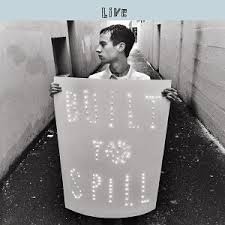 Soon after releasing “Carry the Zero,” Built to Spill released this, their first (and so far only) live disc.
This disc shows a jamming side of the band that their records up to now hadn’t really displayed (sure there was some evidence of the jam band within, but who would have guessed 2 songs on this disc would stretch to 20 minutes?).
The live set also shows a rather contrarian spirit in that there are only 9 songs in 70 some minutes and only 5 of the songs are actual Built to Spill songs.
The disc opens with “The Plan,” a great version of their most recent disc’s opener. Then they jump right into Perfect from Now On’s opening track “Randy Described Eternity.” That song has a lot of parts and sections, and they do them perfectly. They follow it with another song from Perfect, “Stop the Show” which also has multiple parts and again, they nail it. These three songs were recorded in New York. Brett Netson joined them for “Randy,” and “Stop” which really helps to flesh out those songs.
The next song is a cover of The Halo Benders’ “Virginia Reel Around the Fountain.” And if it sounds very fitting for Doug, he was in The Halo Benders with Calvin Johnson before he started Built to Spill. Then comes the centerpiece of the record–a 20 minute version of Neil Young’s “Cortez the Killer.” And it is amazing. He sounds enough like Neil to be totally respectful, without just being a rip off. It’s probably the best version of this song I’ve heard (until I saw Neil do it this summer).
They switch gears to their first single, “Car,” a delightful 3 minute song. And then, to fill out this almost all covers section, they play “Singing Sores Make Perfect Swords” a song originally done by Love as Laughter. I don’t know the original, but it fits in with Doug’s style. These four songs were record in Seattle.
There’s one song that was recorded in Denver, “I Would Hurt a Fly,” which is yet another song from Perfect, and is one of my favorite songs of theirs. It does not disappoint.
The final song on the disc is a nineteen minute version of the song “Broken Chairs” (which is 8 minutes long on Secret). They do the whistling section and a ton of solos. Indeed, the way they stretch out the song out with guitar solos and noise (and the way the song ends with feedback) is really cool. Netson joined them for “Fly” and “Broken Chairs” (which is why that ending solo is so intense.
It’ s a great live collection of songs and the sound is outstanding. You’d never know it was recorded in different venues, either.
[READ: October 4, 2015] Pablo
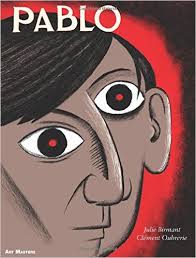
Judging this book by its cover you would be correct in assuming that it is about Pablo Picasso. But rather than being a simple history of the Art Master (the title of the series), this is a thorough recounting of Picasso’s life. And what’s even more interesting is that the story is told from the point of view of Picasso’s lover and model Fernande Olivier.
And Fernande’s diary entries make up the bulk of the story and allow for a very personal look into the man and the stylistic choices that Picasso made over the years. As the book says on the back, the authors show “how Picasso’s style developed in response to his friendships and rivalries.” And of his rivals none was greater than Henri Matisse. (The book also covers Picasso’s life before she met him too, of course).
The original work was published (in French) in four volumes. This edition was translated by Edward Gauvin.
I especially like the way the book begins from the point of view of Fernande as an old woman, still alive and reminiscing about her life. (And yes, it’s amazing to realize that Picasso died in 1973…in my lifetime!).
Starting on Picasso’s 19th birthday we see him going to Paris for the first time with his fried Carlos Casagemas. They soon settle in to a world of art, drinking and sex.
Then we shift to see Fernande’s life. She had a very poor childhood, raised by her uncaring aunt and married at a young age to man who sexually abused her. But she was able to flee this life and eventually made a living as an artist’s model. This inevitably led to sex, but the artists regarded her as a muse and treated her with respect (and she even enjoyed the sex).
At one of Picasso’s first major showings, he was introduced to Max Jacob, the man who would take him in, become his dear friend and really shape his career. This biography also includes a lost of information about Max Jacob who was a fascinating character in his own right.
It was soon after this that Picasso entered his blue period (1901-1904) (which apparently was not well received by critics and buyers at the time). It was around this time that he met Fernande, and he immediately fell for her. Perhaps not coincidentally his pairings changed from blue to a more cheery pink (this is known as his Rose period 1904-1906).
This period takes up perhaps the bulk of the book. We see a lot of Picasso’s attempts to win her heart (and the large amount of charms and witchcrafts he indulged in to try to win he). We also learn how jealous Picasso was when he felt he had lost her (and later how jealous Fernande could be too).
The book then shows their journey to Spain where Fernanda enjoyed being away from the hustle of Paris, but they had to flee when Picasso believed that the plague was coming top where they were staying.
It was also during this time that he met Gertrude Stein and her brother and of course Alice Toklas. Stein was also a patron of Henri Matisse’s as well and she seemed to egg on this rivalry.
Around this time, Fernande adopted an orphan named Raymonde, believing it would bring them closer. But when she saw that Picasso had painted nude pictures of the girl (who was 13) she sent her back to the orphanage. Their relationship suffered some, and ebbed and flowed in terms of passion. Yet even though he painted Fernande constantly, she didn’t always love the results, especially as he experimented with different styles.
Soon enough Picasso would get into an African period (1907-1909) which led to cubism (created with Georges Braque) (1909-1912) and crystal cubism (which was the even more minimal cubism). Fernande didn’t love the way she was represented here (the paintings aren’t really flattering to her, but this style was revolutionary.
The book ends around this time (when Picasso left Fernande), and the last event we see is the party that Picasso threw for Henri Rousseau, a toll bridge collector and a rather amateur painter. As the party ends Rousseau says to Picasso, “You and I are the two most important artists of the age – you in the Egyptian style, and I in the modern one.”
The final two pages of the book flash forward through Picasso’s history–all as a dream of Max Jacob.
It’s amazing how complete and comprehensive this book felt considering that Picasso still had over fifty years of life left including his hugely influential post war period.
This was an excellent biography, detailed and passionate and personal. It really makes me want to read the other book in the series about Vincent van Gogh.

 I Just Read About That...
Leave a comment