SOUNDTRACK: RHEOSTATICS-Ted’s Wrecking Yard Toronto, ON (May 29 2001).
They marked the final two nights that Don Kerr would play drums with the band (after six years) with two nights at Ted’s Wrecking Yard. [Technically, they reveal at the end of the next show that there is a final show in a few days, but that somehow it doesn’t count].
The two shows together are a simply fantastic collection of Rheostatics music. Don created the setlists for both shows. The one downside on this recording is that one of the guitars was recorded very low (although Darrin, the site’s commander, has remixed the show so you can barely tell). On the plus side, it means that you can hear Dave’s amazing rhythm guitars very well. Another major plus is that Kevin Hearn plays on this night, and the set list reflects Kevin’s keyboards and songwriting contributions to the band. This means a bunch of stuff from Harmelodia (including “Home Again” and “Monkeybird” and “The Harmelodian Anthem.”
Don is leaving to tour with Ron Sexmith. In the middle of the set Don says that he is leaving because Ron has better coke (Kevin chimes in and asks if he needs a keyboard player).
The band is also in great spirits and, to send off Don in a great way, they are really at the to of their game–having fun yes, but committing a fantastic set to tape (these shows were originally going to be released on disc but fifteen years later, that seems unlikely).
The whole show is great. But some observations: “Four Little Songs” is actually “Five Little Songs” tonight with Kevin getting a verse. They also ask him about Lou Reed, and Kevin tells a story about meeting Lou for pizza. And they joke about hot knives. Kevin eventually did tour with Lou in 2009.
The setlist is a wonderful selection of old and rare songs. I barely even recognized “The Woods Are Full of Cuckoos” and can’t imagine when they played it last. They also play “The Reward” which is an underplayed gem–they even remark that they forgot how to play it.
There’s a funny bit where Kevin starts a new song called “guitar changes” while one of the guitarists is yes, changing guitars. It’s great to have an improv artist like Hearn in your show. For a real surprise (and for reasons unspoken), Dave sings “Stolen Car,” something I’ve never heard before. Since Martin’s voice is unique, it’s a very different performance–more melodic with fewer high notes.
They end the set with “The Pooby Song,” a piece of nonsense which is introduced with a long discussion of “pooby” for Kevin’s benefit.
It’s an amazing show. At some point Dave says they are going to play for a long time–and someone tells him it’s already 1 AM. Wow..
[READ: March 17, 2015] “Changeling Girl”
The girl in the title is not actually a person in the story (which I was rather was looking forward to). Rather, she is the title of a song by the punk band that this story is about (they are called The Changelings).
The first person story recounts the rise of the band. And the opening pages are full of the excitement that loving a kind of music and really embracing it can bring. It is described as a kind of montage as kids play The Clash and kids try to out punk each other with clothes or hair or names like Beamish Mingo, Helen Hopday and even Gash Ragged.
The impressive thing–especially given that I assume the time frame is the early 80s–is that the band is multigendered.
Once the story settles down into their first gig, though, it seems to lose some steam. After the initial rush wears off, we have to slow down–that middle slow section, right? (more…)
This is one of the darkest Tiny Desk Concerts I’ve seen. Meaning it is rather poorly lit. I’m not sure why it is so dark in the office–oh, I see that it’s 4;30 PM. But this string quarter isn’t hindered by it (although they do remark on it before the final song).
The notes state that the quartet (two violin, a viola and cello) loves Debussy and Brahms but they also write their own music and have teamed up with a Kurdish kamancheh player (or as the one player states, a Japanese shakuhachi player and an electronics musician).
The first song, “Vagharshabadi Dance” is an Armenian dance written by an Orthodox priest named Komitas. And they are quite animated as they play it.
In the introduction to the second piece called “Second Bounce” (which is a companion to a Debussy piece, which they play next). Colin Jacobsen (violin) says that he based it on the way a super ball’s first bounce is expected but the second can go anywhere. And the notes they play are often unexpected (and bouncy). They’re also quite hard (the viola player (Nicholas Cords) says the piece hurts his hand). That piece is only a trio–they wanted to mix it up a bit.
The Debussy piece “String Quartet in G Minor: 2nd Movement” is very nice. It’s got a lot of pizzicato (from all the instruments) while the others play a cool riff. Johnny Gandelsman (violin) sat out of “Second Bounce” but he gets some great “solos” in this one. I don’t know all that much by Debussy, but I like this.
“Ascending Bird” is sort of their theme song–an arrangement of a Persian folk song. It has some incredibly fast riffs (even from the cello (Eric Jacobsen)) and some interesting scratching on the strings.
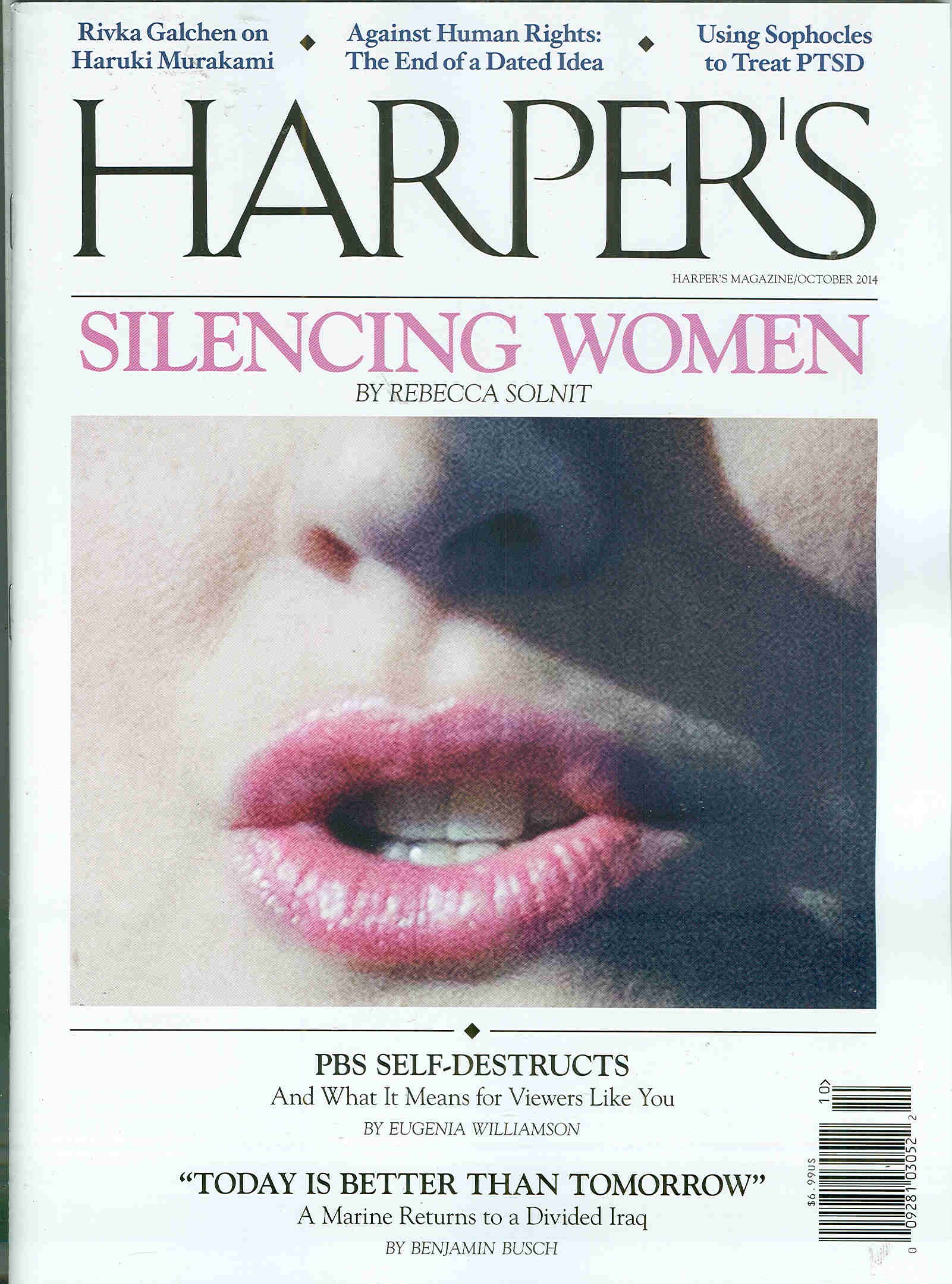
I had just read a short story by Murakami, so I was interested to read this piece by Galchen, whose insights are, I think, spot on.
She talks about Murakami’s latest book, Colorless Tsukuru Tazaki and His Years of Pilgrimage and she uses the simile that Murakami’s works are like Torricelli’s Trumpet or Gabriel’s Horn–finite space with infinite surface area. And while I wouldn’t say that I thought of that myself, I would say that I have often thought that his stories seem so simple (at least in plot) but there is so much more in them.
I like the way that she talks about his books as having a plot that sums up pretty easily, but within the plot several other new threads are opened. And they are more metaphysical at the same time.
In the novel friends vanish, but that is not the main plot. Rather, Tazaki is haunted by the fact that his friends abandoned him some time ago. His girlfriend Sara tells him he needs to figure this out. So he sets off on a kind of quest. Galchen notes that the girlfriends in his stories are always encouraging the main characters to do these quests. (more…)
SOUNDTRACK: THE LOW ANTHEM-Tiny Desk Concert #43 (January 20, 2010).
The Low Anthem grow more charming as the Tiny Desk goes on. The first cool thing is the story that accompanies them. They played at the Newport Folk Festival and when Bob talked to the organizer about them, the organizer said that “Last year, they were volunteers at the festival, picking up trash.”
Then things get more interesting as each of the three songs introduces new instrumentation and ways of making music. They brought a lot of gear to this Tiny Desk.
The first song, “Ghost Woman Blues” opens with strummed acoustic guitar and upright bass. The first surprise comes with the clarinet solo (by harmony vocalist Jocie Adams). Lead singer Ben Knox Miller has a voice not unlike Vic Chesnutt’s and these songs follow along his rather simple and spare style.
The biggest surprises come in the second song, “This God Damn House.” Miller starts the song by playing a small bras horn (not sure what it is). Adams plays more clarinet (in a very cool echoing style) and upright bassist Mat Davidson switches to an old-sounding organ. But the coolest thing is when Miller takes out his cell phone (what!). He has dialed another phone in the room which he then answers. With both phones flipped open (it is 2010 after all), he begins whistling into them, playing with the feedback and echoes and creating a very cool sound to end the song.
It’s a shame there’s a cut to the next song, because I’m sure Bob asked him about that. For the final song, “To the Ghosts Who Write History Books,” Miller switches to the organ (and harmonica, man that guy is talented). Davidson is back on bass and Adams plays a bunch of cymbals with a violin bow (I wish that was a little louder).
I generally don’t like super mellow music like this, but there’s something really captivating about The Low Anthem–the instrumentation, the voices–something, really elevates them.
There is a drum kit set up although no one uses it. I can’t imagine it would have made a lot of difference. Check them out here.
[READ: April 11, 2015] “Kino”
This longer story was a typically enigmatic one from Murakami. In it, he does a great job of melding the real with the psychological, so that things that seem very surface level are actually much deeper.
Kino is a pretty simple man. He was a runner until he pulled his Achilles tendon and could no longer run. So he started working for a shoe company. He sold the premium shoes to good runners. The brand was not super popular, but it had a devoted following. And Kino made decent money for him and his wife.
He was a salesman and often went on business trips. As happens, he came home early one day to find his wife in bed with a fellow coworker. He walked out and never went back. (more…)
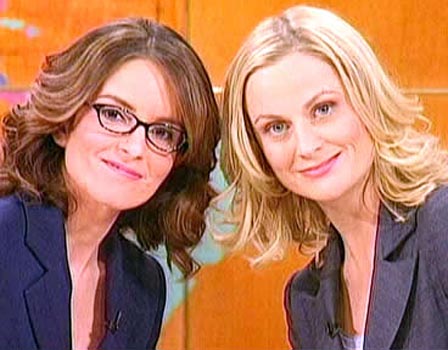
Having just recently finished both Amy Poehler and Tina Fey’s memoirs, I came away with the same thought. These women are hilarious and they have awesome advice for young girls. But there is no way my daughter will be allowed to listen to either of these books! (What with the f-bombs, the drug and sex references and, well, just about everything else).
And that is a real shame.
For I have to assume that the audience for these books (adults) is too set in their ways to actually take the excellent if unsolicited advice. And their advice is so good, so sensible and so wise that I want my daughter (and my son) to have it instilled in them from an early age. Obviously I could instill it in them myself, but we all know (and they too will soon learn) that kids don’t listen to their parents–they need celebrity advice.
And rather than getting it from magazines (the place where all self-respect goes to die) or TV, they should be getting it from successful women who actually like other women and want them to succeed. (more…)
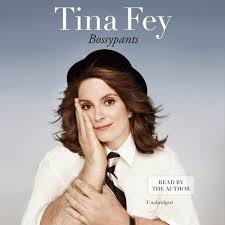
After listening to Amy Poehler’s audio book, it made me want to listen to Tina Fey’s book. Sarah had read the book and said it was very funny, but I imagined that the audio would be even funnier. And boy was it ever funny.
And here’s where I apologize to Tina Fey. I had always heard her spoken about in such lofty terms as the funniest writer, the golden child (insert various rave here), and I wound up holding her to an unfair standard. I never found her funny enough for me. She made me laugh, but, for instance, I thought Mean Girls could have been…more somehow. After listening to this, I realized what the problem was for me. I always felt like her stuff could have been more pointed or something, but I realize that given the media she works with she was unlikely to “get away” with anything more pointed–certainly not on Saturday Night Live or 30 Rock. Rather, she did lots of subtly feminist (or sometime over the top feminist) jokes that I didn’t really appreciate for what she was doing. But when she lets loose in this book it is really amazing to hear what she herself–not a team of writers–has to say. Of course, having said that, and having listened to the book, I absolutely need to rewatch 30 Rock (although I never cared for the Tracey Morgan or Jane Krakowski characters) and maybe even some old Weekend updates.
But, I already know Tina’s response to me, because she says it in the book. And, it talks about something Amy Poehler once said. (more…)
Karl Ove mentions many bands in this book, but the deLillos are the only Norwegian band that he plays. They sing in Norwegian and play sprightly, jangly guitar pop–they would fit in very well with some of the lighter alt bands from the late 80s and early 90s.
I have no idea what they’re singing about (well, the title translates to “love” so I guess I know what they are singing about.
The singer has a high, delicate voice and there’s some interesting harmonies. I really like the way the song transitions from verse to chorus with the picked guitar notes–very catchy.
It comes from their second album, Før var det morsomt med sne (Beforeit was funin the snow), which along with their first was quite popular and was reissued with a bonus disc in the 90s. Having said that I see that Amazon has one copy of the disc and no album cover listed. Worse yet, I can’t find many other songs online (Spotify lists the album, but I can’t get it to play).
Sorry, deLillos (even searching for you gives us more Don DeLillo than you guys).
[READ: June 24, 2014] My Struggle Book Four
I started including the British edition page numbers because at my work we received both editions of the book, and I received the British one first so I grabbed it and started reading. I noticed the page numbers were quite different (the British book is taller and the print is quite bigger, although this doesn’t explain why the previous books have fewer pages).
I had been interested in the differences between editions from the get go. I had enjoyed the American editions, but I enjoyed reading this British edition more (bigger print?). But when I noticed on one of the pages that the word “realise” was spelled as I typed it, it made me wonder if the American edition changed that to the American spelling. [Actually, I see that Don Bartlett lives in Virginia, so perhaps he translates it into American first]. While I wasn’t about to go into a deep inspection of the topic, when I saw the American edition on a shelf at work, I had to do a little comparison.
And what I found out was that even though Don Bartlett is the (amazing) translator for both editions, someone (perhaps Bartlett himself?) is translating the American into British (or vice versa). I looked at a couple of pages and noticed these changes from British to American:
BRITISH EDITION = AMERICAN EDITION
Pack it in, now = Give it up, now
roll-up = rollie [about hand rolled cigarettes]
looked daggers at = gave her a dirty look
a complete prat = completely useless
is that possible? = really?
to cook and wash up = cooking and doing the dishes
I had got = I’d gotten
had penned = had written
and yes, realised = realized.
Other than select phrases, every word is exactly the same. So somebody goes through the books and changes them to British english idioms and spellings. That’s fascinating.
I also see that this is the first book I had not read an excerpt from first. Not that it would have made any difference as to whether I read the fourth one. I couldn’t wait to get my hands on it.
So book four is set in Håfjord, a town in Northern Norway near Finnsnes (a five hour flight away–okay I had no idea Norway was so big!). Karl Ove is 18 and has decided to become a grade school teacher there for one year. The tax breaks are great if you teach, and he plans to teach and write his masterpieces and then get out. He has no interest in teaching, but the town is small (most grades are 3-7 students), so he figures it can’t be too hard.
As in most of Karl Ove’s books, the stories jump around and flash back and do not stay all in this one time, but it is largely set in this locale.
My first thought was that I have never read a story with as much semen (both nocturnal emission and premature ejaculation) in my life. It is a strange take away from the book, but there it is. Karl Ove is 18 and really wants to have sex for the first time. About 3/4 of the way through the book he reveals that he never masturbated (it just never occurred to him, apparently, and at 18 he’s too old to start–what!?). As such, he seems to have wet dreams every night. And every time he gets near a woman, he has an orgasm too soon. He is horny all the time–it’s a bit disconcerting.
And since I mentioned that, I don’t know if Karl Ove’s life is typical of Norway, but I am shocked by the number of women who take their clothes off around him (he may have never had sex, but he was about to on at least a half-dozen occasions). And he says that all through school (from around age 13 and up) it was common place for the boys to lift up the girls’ shirts and kiss and or fondle their breasts. It is mind-boggling to me. And the 16 year olds all seem to be having sex all the time–this may be skewed from Karl Ove’s perspective, but that’s what I now believe happens in Norway.
But while sex is the main theme of the book–sex, sex sex, there is more to it.
Karl Ove’s parents have split up and his father has started drinking in earnest. The dad has remarried and has just had a baby. Incidentally, I was also shocked to read that Karl Ove’s father, who is an abusive stodgy old man who is cranky and mean and abusive and all the stuff that we read about in the other volumes was only 43 at the time that Karl Ove was 18. So the old man who I pictured as a gray-haired curmudgeon in this book is actually younger than me. Great.
In Håfjord, Karl Ove is teaching kids who range from age 13 to 16. It’s disconcerting to read about him thinking lustful thoughts about his students, until he reminds us that for most of the students, he is only 2 years older than them. I am pleased to say that he behaves himself (except in his mind) with all of the students. There’s even a really interesting flash forward to eleven years later when he runs into two of them again.
He proves to be a pretty decent teacher it seems. The kids mostly like him (the girls all think he is hot) and he is young and tries to make it fun (he himself hated school and everything about it). He even seems to help out an awkward boy (although that is never resolved). We see him teaching, trying to interact with the kids and generally being a pretty good guy.
Until the booze comes out.
For in addition to semen, this book is chock full of alcohol. Before graduating from gymnas (high school), Karl Ove basically stopped caring about anything. He spent most of his time drunk. It is astonishing the amount of drinking he does–it’s practically like an Amish Rumspringa how crazy he goes. But even in this retrospective look, he talks about how much he likes it, how it loosens him up and makes him less nervous.
But really he just spends most of his time drunk, hungover or sick. He even got into the hash scene for a while. He was living with his mom at the time and she was appalled at the way he acted–especially when he threw a party which trashed their house. She even kicked him out for a time.
He seemed to be over the drink in Håfjord, but it turns out that there’s precious little else to do except drink up there, especially when it grows dark for most of the day. So there is much drinking–he only misses class once or twice because of it but he comes very close a lot.
The irony that he is appalled at his father’s drinking, while drinking so much himself, is apparently lost on him.
The other main preoccupation with Karl Ove is music. He talks a lot about his great taste in music (he reminds me of me–a little insufferable). Back when he was in gymnas, he spent a lot of time discussing his favorite bands and favorite songs. He got a job (at 16) writing reviews for a local paper (holy crap, jealous!) and then later gets a job writing a column for another paper. For the previous book I listed a lot of the bands he mentioned, and I wish I had written them down for this one. U2 features prominently (this is 1987, so I’m guessing Joshua Tree), but also Talking Heads, a Scottish post-punk/new wave band The Associates and their album Sulk which he describes as “an utterly insane LP.” he and his brother really like The Church and Simple Minds (before they got so commercial). He also has a whole thread in which he makes connections with albums:
Briano Eno, for example, started in Roxy Music, released solo records, produced U2 and worked with Jon Hassell, David Byrne, David Bowie, and Robert Fripp; Robert Fripp played on Bowie’s Scary Monsters; Bowie produced Lou Reed, who came from Velvet Underground, and Iggy Pop, who came from the Stooges, while David Byrne was in Talking Heads, who on their best record, Remain in Light, used the guitarist Adrian Belew, who in turn played on several of Bowie’s records and was his favorite live guitarist for years. (64).
He also specifically raves about “The Great Curve” from the Talking Heads album, and of course, he raves about the first Led Zeppelin album as well.
Music is a huge part of his life (and he dresses accordingly too). It’s unclear whether the kids think this is awesome or not, but he may be a bit too much for some of the locals. The locals are mostly fishermen (which makes sense), and Karl Ove is a bit intimidated that he is so wimpy compared to them–one of the women even teases him about his tiny arms.
But his main focus is writing. He writes a few shorts stories (to my knowledge he has never published any of them). We see some excerpts and they seem fine–he fancies himself Hemingway. But he also mentions a bunch of Norwegian authors (I love when he does that). Sadly again, not too many of them have been translated into English. [I really hope that some mega fan creates a database of all of the bands and authors he mentions]. He also talks briefly about his first novel which alludes to his time teaching here. I happened to read a small summary of said novel (Out of the World) and feared that it spoiled what was going to happen. But, in fact there does appear to be a difference between his fiction and non-fiction.
The book moves very quickly–from party to party, from failed sexual attempt to the next, even from his staying up all night long trying to write. And most of the time he comes off as kind of a dick–he is also very self-critical, which somehow tempers that dickishness.
As with the other books I cannot figure out exactly why I am so addicted to his writing. I brought the book home on Thursday night and finished it (all 548 pages of it) Monday night. This really completes the picture of himself as he moved from childhood to adulthood and really lays the foundation for whatever is to come next. Early in the book he talks about the books that he loved at that age, books that talk about the move from childhood to adulthood. And thus, this book becomes something of a bildungsroman as well. Although whether or not Karl Ove actually grew up at the end of this book will have to wait until volume 5 (which I have to assume is still another year away as there is no information about it online at all!).
For ease of searching, I include: Hafjord, For var det morsomt med sne.
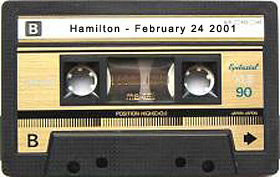
SOUNDTRACK: RHEOSTATICS-Hamilton ON (February 24 2001).
This is a show that there is no real information about. In fact, I have to wonder if it is actually from the date that it says because during the set someone (very casually, I think) mentions that their album came out today (it was released on October 23, 2001). It is also really short (just over an hour) and is clearly not the entire show. I assume the first half was lost, but it’s hard to know.
Despite the brevity, there is a great sound on the disc. The first two songs sound amazing. And “Stolen Car” is scorchingly good.
There’s a funny discussion about the washroom, which turns into a joke that the “washroom rocks.” And there’s some wonderfully funny “ads” for Snapple, Marlboro “the smoke that hurts,” and even a Gibson “the guitar for depressed musicians.” “Feed Yourself” is particularly long with lots of chatter in the middle and they joke about Martin playing with “millennium technology,” some gadget that makes his guitar sound different.
“Four Little Songs” has a very funny refrain about Martin’s “device” which they now call the robot dog–there’s even a silly riff at the end.
It’s a great show, even if it is brief and it’s a good collection of older songs (which is weird if their new album came out that day).
[READ: April 21, 2015] “Major Maybe”
This was the second short and breezy story I read this week, which was kind of fun.
This story is so simple, it’s even told quickly, as if the narrator just had to get it out.
“Major Maybe” is the name of a dog in her neighborhood. She and her roommate Eagle Soars (his real name) are living in Chelsea in New York. He is a wanna be actor and she helps him with his lines.
One day they were rehearsing in their usual spot in front of their building. Their building was quite nice, the first floor resident was a therapist and he decked out the front stoop very nicely with flowers and chairs. As they were rehearsing the red-haried homeless lady came by. She was known to have good days and bad days Today was a bad day. (more…)
SOUNDTRACK: RHEOSTATICS-The Horseshoe Tavern Toronto (February 16, 2001).
There are seven live shows from 2001 on the Rheostatics Live website. In this block, I’m going to talk about the first four shows because the final two of the four are drummer Don Kerr’s final shows with the band.
There is a lovely introduction by the club owner, who thanks the Rheostatics for playing there so much. The sound quality is great and the crowd is really into it. At one point someone shouts out “Californication” (which is a line from “California Dreamline”) and Martin says that the Red Hot Chili Peppers are playing down the street. Another funny line is when someone shouts out “Jessie’s Girl” and Dave says that there’s a trend in shouting out bad songs. Nobody wants to hear the “Rheos do Rick Springfield.” That’s just bad energy.
“Fat” sounds great and it’s quite a long version. The vocals for the next few songs are fun. Martin is crazy on “CCYPA.” “When Winter Comes” has a great and fun intro.
The notes say that song 12 is “We Went West” but it is actually a cover of a Celtic Blue song “Heading Out West” with Alun Piggins (from Celtic Blue) on harmonica. It works well with them.
“California Dreamline” has some funny banter. Dave says he loves the way Martin says “Sowthern” California. Martin says English is not his first language. But that he is wearing an amazing shirt.
They have a lot of fun with “Legal Age Life” which they open with a “pa pa ooh mow mow” refrain and in the middle they throw in some “I Wanna Be Sedated.” This show also has one of the best versions of “Claire” that I’ve heard.
This is the first version of “Mumbletypeg” that I’ve heard where it includes the spoken word part (like on the record). And I love that they throw in “PROD” into the end of “Four Little Songs.”
This show was simulcast online (which is pretty high tech for 2001, no?). You can also watch the simulcast on the Rheostatics live site.
[READ: April 20, 2015] “If You Cannot Go to Sleep”
I enjoyed that this story was pretty much a fictionalized version of many people’s insomnia. It opens, “First she tries counting.” As it progresses through a series of nights, we encounter her fears, both reasonable and excessive.
But interestingly, before it even gets into her dream fears, she has a long unsleeping thought about the difference between working at a discount store and an upscale store–the discount store must be depressing, but the upscale store must be full of insufferable people–what would be worse?.
Then we learn a bit about her life. She studied French and even lived in Paris for a time. Now she works translating technical manuals and she hates it. Her husband finally quit the job that he hates–something she hoped he would do for years. But now that he did that he has moved to France–without her. (more…)
I have been raving about every show that I’ve seen lately, so it’s really about time that I wasn’t head over heels by something, right?
Sarah and her mom love Camelot, the musical–Sarah grew up listening to it. When I saw that it was being staged at The State Theater, it seemed like a great Mother’s Day present for both of them. Well, a last minute change of plans meant that Sarah’s mom couldn’t go. So we took Tabitha, who enjoyed Joseph and the Amazing Technicolor Dreamcoat.
I don’t know the Camelot story at all, in fact, despite my (what I assumed was good) knowledge of King Arthur, I was not aware of the love triangle with him Guinevere and Lancelot (I guess I just liked the fighting). I also had no idea that Arthur was trying to set up a law by court rather than a law by might. Which is pretty interesting. Sarah said I should read The Once and Future King which the musical is mostly based on.
The set was fascinating. Gigantic metal “waves” on the right side that represented a forest and/or a tree and/or other things dominated the scene. The left side of the stage had various set that dropped from the rafters–a kingly backdrop, a bed, and other items. (more…)
SOUNDTRACK: ADAM ARCURAGI-Tiny Desk Concert #42 (January 10, 2010).
I had never heard of Arcuragi before this show and in the five years since I haven’t heard of him elsewhere. Bob introduces the show by raving about Adam’s voice.
But I don’t really think there’s anything special about his voice. It’s a good decent string voice, but nothing notably unique about it or anything. So it was a bit of a set up for a let down. Which is shame because Arcuragi and his mates sing three delightful songs.
“She Comes to Me” features acoustic and electric guitars and mandolin. “Steal People’s Medicine” uses the electric guitar a a slide guitar, which sounds remarkably different from the first song (no mandolin either). “Bottom of the River” which switches the mandolin for a tambourine is the most fun of the three songs. It’s a bit more upbeat, there’s some good harmonies and the crowd even starts clapping along. And Adam does wail a few notes showing that his voice is better than I suggested.
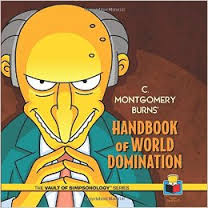
[READ: April 7, 2015] Handbook of World Domination
I was unaware of The Vault of Simpsonology Series. This is the third book in the series, the other two being from Homer and Bart with future books from Lisa, Grandpa and Bartman. I’m also not exactly sure why our library received this book, But it’s a fun little addition to all things Simpson.
The book is 64 pages about 6 inches square and it is chock full of insights into Mr Burns.
On the first page is an envelope with a poster. Given the incompleteness of the back, I assume that all the books have similar posters with which you would make one giant poster.
The introduction (by Mr Burns) explains that he just wants to entertain with this volume–not to give away secrets. So we get Burns’ bucket list (#29–keep a meal down completely; 17- Buy the EPA and rename it the Environment Profit Administration) and Secrets to Burns’ long life (a bizarre medical contraption involving syringes, a small devil and a drooling baby). (more…)
 SOUNDTRACK: RHEOSTATICS-Ted’s Wrecking Yard Toronto, ON (May 29 2001).
 They marked the final two nights that Don Kerr would play drums with the band (after six years) with two nights at Ted’s Wrecking Yard. [Technically, they reveal at the end of the next show that there is a final show in a few days, but that somehow it doesn’t count].











 I Just Read About That...