Feeds:
Posts
Comments

Archive for November, 2013

dec2000SOUNDTRACK: FLY ASHTRAY-“Also Muffins” (2013).

flyRecently I was thinking to myself that I don’t hear much music that is just weird anymore.  It could be that I am exposed to it a lot less than I used to be (when I was music director at my college station I received all kinds of crazy stuff) or maybe people just don’t do unconventional music as much.  This latter option seems very unlikely give the preponderance of cheap home recording equipment.  But bands that are not exactly novelty acts, but who are just totally out there (and amazingly used to get album releases).

And then my friend Paula forwarded me this absolutely weird song from Fly Ashtray.  Not only was I delighted to hear a weird song, I loved how good it was.

“Also Muffins” starts with big sloppy guitars and a piercing guitar riff which is simple but slightly off.  This goes for about 20 seconds before a staccato decrescendo brings the riff to a halt.  This fun chaos is repeated three times. It’s a crazy wonderful punk intro.

Then at a minute an a half the song turns almost folkie, with strummed acoustic guitars.  The band starts singing together (in no-part harmony) about how good their delicatessen is (they also sell muffins).  They all seem somewhat flat in their delivery, as a deliberate let down from the frenetic earlier section.  Then for part 3, an electric guitar comes back in with a kind of great alt 90s solo and a series of fast chords.  I love this section a lot.

The final section comes in and opens with another simple riff that is at once catchy even if the last note is flat.  It is fast and vaguely sinister (with a kind of siren sound in the background) and with some skittery guitars and an occasional bass element thrown in.  This last part lasts for over a minute and then the whole song fades out.

The video is low budget and fun and gives a kind of explanation to the music, although I have found that i enjoy it without the video as well.

And visit the band’s website.

[READ: November 1, 2013] “All is Vanity”

This is not an actual article by Bissell, it is one of those “annotation” items in Harper’s in which an advertisement or press release is critiqued.  in this one they analyze an Xlibris ad.

Bissell was an editor at Henry Holt (and may still be) when he wrote this.  And he is snarky from the start (as the Annotation always is), emphasizing the “Publishing Services Provider” and noting with numbers why Xlibris is a foolish vanity project.

“70 percent of the books the company has sold have been bought by their own authors.”

And how in general

“90 percent of the half-million [books] written each year remain unpublished.” (more…)

Read Full Post »

lou_reed-620x412 SOUNDTRACK: LOU REED-Metal Machine Music (1975).

mmmfrom Wikipedia:

Metal Machine Music is generally considered to be either a joke, a grudging fulfillment of a contractual obligation, or an early example of noise music. The album features no songs or even recognizably structured compositions, eschewing melody and rhythm for an hour of over-modulated feedback and guitar effects, intricately mixed at varying speeds by Reed himself. In the album’s liner notes he claimed to have invented heavy metal and asserted that Metal Machine Music was the ultimate conclusion of that genre.

I don’t know how many people have actually listened to this album all the way through.  There are four 16-minute tracks.  Each one is, on the surface, exactly the same: feedback and more feedback.  In truth, the album is a bit more complicated than that.

There is a guitar in the left speaker and a guitar in the right speaker and each one is feedbacking in very different ways.  Indeed, if you listen to only one speaker at a time, you get a very different experience (I haven’t done that with the whole album, although that’s only because I really only found out about that recently, I did for a few minutes and it was pretty fascinating).

And fascinating is what this release is.  It was unlistenable in 1975, there is no question.  Just as something like Slayer would have been unlistenable in 1975.  But twenty years later, when Sonic Youth was riding high, Metal Machine Music seemed a lot less outrageous (indeed, their 1998 release Silver Sessions was essentially the same structure of feedback).

And now MMM seems very forward thinking.  Whether or not it was a joke or some kind of payback to the label or whatever (liner notes suggest he just really enjoyed enveloping himself in feedback), it’s a remarkable record.  If you can actually sit through it, there are some really interesting moments in it.  There are times when the squall and noise turns eerily beautiful, when the ringing notes take on chime-like status.

And unlike the aforementioned SY album in which they just turned up their amps and left, it sounds like Reed was actually hanging around and manipulating the sound.  You can hear times when new notes/strumming comes in and changes the mood.  And of course, Reed had to edit it for the album.

One of the more interesting moments comes right at the end of the disc.  On the vinyl release, he made a locked groove so the final rotation would keep repeating over and over until you had to get up and manually lift the needle (as if the album wasn’t difficult enough).  On the CD, they repeat that section for about a minute.  And that little repeated section is noteworthy for the rough distorted guitar and chiming feedback that all sounds very cool.

All of this is not to say that this album is enjoyable.  It’s really not.  It’s brutal and harsh and best handled in small doses (even Reed admits that in the notes).  But it is noteworthy and fascinating.  And it may have inspired as many feedback based bands as the Velvet Underground inspired droning bands.

[READ: November 2, 2013] “I loved Lou Reed more than you”

I was sad at the passing of Lou Reed, although I’ve never been a huge fan.  But of all of the eulogies, I knew that Neal Pollack would write the best one.

Neal Pollock is a wonderfully pompous “character” (who is the main character in most of the writing of his that I have read).  This article—while much briefer than most of Pollack’s short pieces—is an honest eulogy of Reed, but is also a hilariously over the top profession of fandom.

When Pollock heard the news of Reed’s death, he was polishing the acetate of his producer’s cut of Metal Machine Music.  He wept, mostly for himself but also “on behalf of all cultured people everywhere.” (more…)

Read Full Post »

april 2002SOUNDTRACK: PHISH-The Siket Disc (1999).

siketThis is an (almost) entirely instrumental disc.  It’s exactly the kind of thing that people think of when they imagine Phish—long jams with no structure.  But unlike some of their more frenetic jams, this is a kind of enjoyable chilling out disc.  The compositions are actually select excerpts from the long-form improvisations of the “Ghost Sessions.”

There are 9 songs and most of them are short.  Except for “Whats the Use” which is an 11 minute track with a very cool guitar riff (that reminds me again of Frank Zappa) and some cool accompanying keyboard sounds.

“Me Left Toe” is about 5 minutes and has a nice build up within  it.  And “The Name is Slick” is a bit more staccato and less smooth than the other songs and it holds up for 4 minutes.

Most of the other songs are short jams (with 4 tracks being about 2 minutes or less).  Although there are a couple of weird, nonsensey tracks like “Fish Bass” which is just a weird series of noises.  Or “Quadrophonic Toppling” which has some spoken words (just the title repeated) as does “Title Track” which has the repeated word “Siket”and laughing.  “Insects” is a little unsettling as well.

“The Happy Whip and Dung Song” is 5 minutes long and, despite some weird effect on the keyboards, feels like a full song.  “Albert” is a short, pretty, gentle ballad.  It’s a nice ending to this disc.  While this is by no means an essential Phish disc, it is an interesting insight into their recording process and is as I said, a good chill out album.

[READ: October 28, 2013] “Eternal Winter”

I had never heard of the Aral Sea before reading this article and I am surprised that I haven’t and I’m shocked by what has happened there.  Near the city of Karalpakistan (no connection to Pakistan), near Uzbekistan and Kazakhstan, lies the Aral Sea. It was once the fourth largest body of water on Earth, larger than lake Michigan.  It is now shrunk by approximately 74%.

It was through the Soviet Union’s thirst for development and “progress” that canals were built which diverted water away from the Sea.  This effectively slowly dried out the lake (which the Soviet Union knew would happen).  The Soviet Union also dumped insecticides and toxic waste into it, rendering what is left of the sea bed largely poisonous. Anything that is not poisonous is heavily salinated making it worse than useless.  And to make it worse (if that is possible), the windstorms that frequently occur simply pick up the toxic dirt and dust and blow it all around the land.  Without the water, the temperature soars in the region–often reaching 120 degrees.

One of the reasons for the diversion of the water was cotton.  Cotton is a thirsty crop and it was discovered that Uzbekistan was well suited to the climate for the crop.  They just needed more water.  And so in the 1950s, the Amu Darya river was diverted away from the Aral Sea and into the Uzbekistan deserts.  And cotton flourished there.  Then in 1960, the Aral Sea began to shrink. (more…)

Read Full Post »

witmis4SOUNDTRACK: PANIC-Requiem for Martin Heidegger (1978).

13+LP+Hoes++VoorkantPanic was a Dutch punk band.  Their album 13 came out in 1978 and “Requiem for Martin Heidegger” was the final track.  I love the album cover (and no I had never heard of this band either).

The lyrics are wonderfully simple (and no you won’t learn a thing about the man) with the completely singable chorus of “Hi-Degger, Hi-Degger, Hi-Degger, Hi-Degger, Hi!”

There are some other lyrics (including ein, zwei, drei, vier) and “Is he in heaven, is he in hell, where has he gone?  no one can tell.”

There’s some introductory chatter which I think is in German, but may be in Dutch.  But that’s all irrelevant, because this is three minutes of classic 70s punk.  And the video is a hoot too.

[READ: October 30, 2013] Wittgenstein’s Mistress p. 120-180

Although I read the first half of this book rather quickly, I took some time off before reading this section.  The good news is that this book does not require constant attention.  The bad news is that because there are so many details in the book (whether “relevant” or not) it’s easy to forget if she has talked about the different pieces before.  And that is kind of the point from her a well, since she constantly questions whether she has talked about something or not.

I’m breaking from my normal summary for a minute because I wanted to bring up something that struck me as I was reading this.  Several times throughout the book I found myself searching the web for ideas and facts that she mentions.  And it struck me that, while yes, in her world, the internet wouldn’t be working anyhow—there’s no electricity even—but she would not even have the concept of being able answer her questions with a few clicks.  This book wasn’t written that long ago, but when it was, the internet as we know it didn’t exist.  So our narrator does not know that she could have answered all of her questions in just seconds.  If this book was written now, it might even be seen as a “point” that the world no longer has such easy access to information.  But that is not an issue in this book.  Rather, our narrator simply knows that unless she is willing to dig through boxes or really wrack her brain to be able to remember where she found the information (and we know that’s not going to be successful), she simply won’t “know” what she knows.  And it’s interesting to imagine what it was like to read this book back in the 1980s without being able to quickly confirm  that indeed Wittgenstein said this or Heidegger said that or even that any of the artists she mentions really did what she says.   And I find that really fascinating.

Vaguely connected to this idea is her wondering about some details of the Savona soccer jerseys and then saying “One is scarcely about to return to Savona to check on this, however.” (122). (more…)

Read Full Post »

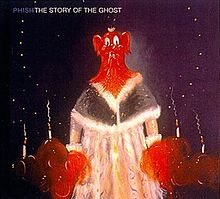
cooksSOUNDTRACK: PHISH-The Story of the Ghost (1998).

storyghostThe Story of the Ghost is one of the first Phish albums that I was aware of when it came out.  I remember buying it and liking it, especially the first few songs.  This is not surprising as the first few songs are much more electric and funky.  By the end of the album there’s a lot of mid tempo songs that feel like they’re somewhat incomplete—good ideas but the songs feel…unfinished?

“Ghost” has a funky guitar and drum section, it’s a song I’ve liked from the day I bought the disc.  But the real hit was “Birds of a Feather,” which has an amazingly catchy chorus.  This version (as opposed to the live one) is weird in that Trey is kind of whispering the vocals, but the guitar is ferocious.

“Meat” is a weird skittery song that sounds cavernous here.  The weird processed vocals are certainly something that keeps this song like more of an oddity.  “Guyute” sounds an awful lot like early Phish—like it has come from Gamehendge, it’s a nice return to old form.  It’s a great song with a really lengthy instrumental section.  This features one of Trey’s great extended pretty solos.

“Fikus” is a strange little song (2 minutes), with lots of percussion and a quiet bass line.  “Shafty” has got  some cool wah wah guitars, and is also only 2 minutes long, but it shows that there is a bunch of funk on the disc.  “Limb by Limb” is a fun if simple song that seems sparse until the chorus kicks in.  “Frankie Says” is a kind of circular song that is interesting but doesn’t really go anywhere.  “Water in the Sky” is a short piece but it is full of ideas—percussion, slide guitar, and nice harmonies.  “Roggae” is a fun little song with some fugue like vocals.

“Wading in the Velvet Sea’ is a very pretty song with very nice harmonies.  “The Moma Dance” is a funky wah wah guitared track which really comes to life live, although I like the way they reprise “Ghost” at the end.  The final track is called “End of Session,” it’s a very mellow little number (also less than 2 minutes) with organ and gentle guitars.  There’s a small verse of harmonies as the albums drifts off.

This album is one of the band’s less popular recordings, but i think it’s quite good.

[READ: October 30, 2013] Lives of Notorious Cooks

Brendan Connell is back with a book which demonstrates that whatever subject he writes about, he delves in deeply and with great relish.

Connell’s new book is, as the title says, a series of brief lives of fictional cooks.  There are 51 biographies in this book.  From Connell’s previous works and from the title, I expected that these cooks might be somewhat less than savory characters.  But Connell makes these chefs genuinely impressive—making delicious meals from both the finest ingredients or the lowest of items.

As with previous stories by Connell, the depth of his knowledge is impressive—he includes not only recipes but complete menus of feasts.  And as usual, his word choices are wonderful—exuberant when necessary, obscure if useful and always spot on.

Although I am normally inclined to make a comment about each “story “ in a  collection, this one really resists that.  There are not enough distinguishing characteristics between cooks for me to write enough about each one (without rewriting the book).  This is not in any way to say that each is not unique, but that they are all cooks, each specializing in a different food or style.  But rather than from saying “Agis cooks fish” it’s better to take this book as a whole rather than in pieces. (more…)

Read Full Post »

curesSOUNDTRACK: PHISH-Billy Breathes (1996).

billyBilly Breathes is a much more mellow, acoustic feeling album from Phish.

Although the opener “Free” is a great song, with wonderful riffs.  It’s another of my favorites live, although the production sounds a little flat here, but the harmonies are great.  “Character Zero” again has a real ZZ Top feel (something many don’t really associate with Phish I’m sure).  But once the song proper kicks in, it rocks in a very Phish way.  “Waste” is a delicate song about insecurities that turns into a nice love song.  “Taste” is a rollicking piano-heavy song that gets played live pretty often and it sounds good here.

“Cars Trucks Buses” is a 2 minute instrumental that has a lot of organ in it, it’s very groovy.  “Talk” is an acoustic guitar/folky song.  You don’t hear it much live.  “Theme from the Bottom” gets us back into often-played territory, with its weird opening riff.  I really enjoy the way the bridge goes into a brief minor key, despite the overall happy vibe.  I like the harmonies towards the end, although the actual end of the song is a bit dull (the live endings are a bit more fun).

From here the album mellows out a lot.  “Train Song” is a pretty acoustic number with nice harmonies.  “Bliss” is an acoustic guitar solo.  “Billy Breathes” has more delicate harmonies and an acoustic feel.  “Sept Away” is another delicate short (90 second) song, with some more great harmonies. “Steep” is a slow, simple song (also 90 seconds) that has a pretty melody but serves more as an introduction to “Prince Caspian.”   “Prince Caspian” is a great epic-seeming song (even though it’s only 5 minutes long).  The build up is long , with the pretty chords repeating and growing fuller.  It’s a great live song and a great ending to this disc.

Although this disc has some great songs on it, it’s definitely not my favorite overall.

[READ: October 4, 2013] The Miracle Cures of Dr. Aira

This was another weird and fun book by César Aira (one of about six books he wrote that year). This one was translated by Kathleen Silver.  Ever since reading that Aira doesn’t edit his books—that he simply begins writing and lets the story keep coming out–I’ve grown suspicious of the beginnings of his stories. And so I am with this one. In the beginning there’s a whole thing about Dr Aira sleepwalking through a town.  He wakes up in various places, unsure where he is, but he’s never lost because he knows the streets so well.  This goes on for a few pages and then the plot kicks in.

Dr Aira is picked up by an ambulance—a man is dying right there in the ambulance and only Dr. Aira can save him.  Won’t Dr Aira help him? The Dr. refuses point blank.  He is convinced that this whole thing is a set up—why else would the ambulance (which he had heard for many blocks going up and down the street) be driving around with a sick man looking just for him instead of going to the hospital?  He will not help this man.  Disgusted, the ambulance driver pulls over and the Dr gets out.

So what is all this about? (more…)

Read Full Post »

ornerSOUNDTRACK: PHISH-Hoist (1994).

hoistI always think of Hoist as a kind of goofy album because of the way they are dressed on it (and the crazy cover).  But it is absolutely not.  Indeed, opener “Julius” sounds like a ZZ Top song.  In fact, every time they’ve played it live I assumed it was a cover.  It is less restrained in the live setting, because this version has more acoustic guitar.  There’s even backing vocalists and horns.  “Down with Disease” has that great watery bass, but the song (which sounds good) here is a little stiffer than the live version.  It also has something of an R&B feel (with backing vocals) even if the guitar is certainly not R&B at all.  It bleeds right into “If I Could” a pretty harmony-voiced mellow song.  The big surprise comes from the Alison Krauss vocals–she gets a solitary line or two and then harmonies.  The song is very pretty but the strings are overkill.

“Riker’s Mailbox” is indeed a reference to the Star Trek character, although the 30 second burst of noise is pretty hard to explain. Nevertheless, the trombone is played Mr Riker himself, Jonathan Frakes.  It jumps into the rocking “Axilla, Pt. 2” which is usually a little faster live (I like the sloppier crazier live version better). There’s some vulgar dialogue in the middle of the song.

“Lifeboy” is a mellow acoustic song that builds from just guitar.  Lyrically it’s interesting: “God never listens to what I say…and you don’t get a refund if you overpray.”  It folds into “Sample in a Jar,” which is just as good here as any live set.  “Wolfman’s Brother” ahs horns thrown on top and some interesting sound effects.  Although overall l don’t like this version nearly as much—I don’t care for the horns or the backing vocals plus in the live version they emphasize the bruh of brother more which is cooler.  (Although I do enjoy the weird “Shirley Temple” line at the end).  “Scent of  Mule” opens so strangely with crazy guitars and a thundering drum.  The singing is very silly (with silly voices) and has a very twangy style (complete with banjo and yeehah).

“Dog Faced Boy” is a sweet (but weird) acoustic guitar number.  “Demand” is a ten minute song which I don’t really know at all.  It has a strange, staccato style riff.  At 2 minutes in, a car starts and after a commercial on the radio the driver pops in “Split Open and Melt” (a nod to “Detroit Rock City,” perhaps?).  This goes on until 9:30 at which time there’s a car crash and choir of angels (sick!).

I don’t car for the horns and R&B flavoring of this album, but the song selection is really quite good.

[READ: September 24, 2013] Last Car Over the Sagamore Bridge

I read about this book in Tom Bissell’s reviews recently.  He really made it sound like an interesting book.  So when I saw that we had just received a copy, I grabbed it and brought it home for the weekend.

There are 52 short stories in the short book (which is less than 200 pages).  Some of the stories are very short (1 page) with a few coming in at 5 or 6.  The 1 page stories are like flash fiction but they seem to be more of snapshots than actual full stories and they seem like they might be diary entries or something. The fact that a number of them are italicized with dates at the end make them seem like a selection from the same person rather than individual stories.

The stories are set all over the world, although they tend to focus on Chicago and Boston.  They are pretty universally dark with themes of death and loss permeating the collection.  And yet despite their overall negative feeling, the stories aren’t really depressing, exactly.  Bissell described the narrators as like someone telling a story about someone telling a story.  And that is true and that distance seems to take some of the edge off the stories.

But what’s impressive is the consistently strong and powerful writing.  The way that Orner is able to convey so much with such few words.  Some stories are just a scene, others are a whole lifetime.  But either way they are all really gripping.

I wasn’t going to write about each story, but it would have nagged at me if I didn’t, so here’s a few words about 52 stories. (more…)

Read Full Post »

underwSOUNDTRACK: OZOKIDZ-“Germs” (2013).

ozokidsThis song is also on the WXPN Kids Corner CD.  Ozokidz is related to the band Ozomatli, who I don’t know all that much about.

The music in this song is very upbeat reggae with the main melody done on kazoos (I suspect this is all one person, but i don’t know for sure).  There’s also some kids’ instruments playing along.  The beat is fast enough that I might consider this ska.

This song is a lesson about germs.  It begins by telling us how to prevent germs from causing us trouble (washing your hands, mostly).  The second half talks about how some germs—some bacteria—are good for us (bacteria is rhymed with healing ya).  But certainly the most memorable part of the song is when he rhymes food with poo (and the song stops so a tiny voice can say “ew, he said poo”).

The message is a good one, and the delivery method is more fun than anything else.  Although it seems a little half-baked of an idea to me.

[READ: August and September 2013] The Underworlds series

I was delighted when I saw that Tony Abbott had a new series and I couldn’t wait to start reading it to the kids.  T. has been asking me to read the Droon series to her like I did for C.  But it is such a long series that I was happy to find something shorter to start with.  It turns out that this Underworlds series is aimed a little older than Droon.  It gets pretty dark, and I was a little worried about some of the concepts in it (the Underworlds are the realm of death after all–and hmm, she has been talking a lot about death lately…).  But in pure Tony Abbott fashion, this was an exciting series where nothing less than the fate of the world is at stake.  And there’s humor as well (although somewhat less than in his other series).  But what really sold me on this series was the way he uses classical mythology (accurately) to generate the basis and conflict of this story.

And even better than using these mythologies, Abbot merges them so that the different cultural underworlds run into each other and even join forces.  It is a great way to learn some mythology if you don’t know it (there are handy maps of the Underworlds) or to gain a more in-depth understanding of the mythologies.  By the end of the series, the kids will have encountered the Greek, Norse, Egyptian and Babylonian gods of the Underworld as well as some of the major scary guys that come out of the Underworld. (more…)

Read Full Post »

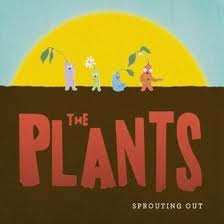
goof 2SOUNDTRACK: THE PLANTS-“Monster Under My Bed” (2013).

plantsI found this song on the WXPN Kids Corner 25th Anniversary CD (WXPN plays it a lot, and it’s a good Halloween song).

The song opens up with a lot of horns—a kind of horn solo section.  When the actual song melody starts it has a vaguely spy theme feel, although the main verse is a little sillier.

Lyrically, the song is all about the real concern that there is a Monster under the singer’s bed.  The song is fast and bouncy—especially the verses, so you know it’s not meant to be too scary.  But then the song slows down and we get the big surprise of what the monster actually is.

The song is pretty funny.  And the final verse—”monsters are nothing but make believe” is a very satisfying one.

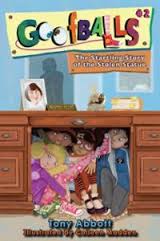
[READ: October 12, 2013] Goofballs #2: The Startling Story of the Stolen Statue

I didn’t love the first Goofballs book, but I really enjoyed this one a lot.  It’s possible I was a sleepy dad while reading the first one or maybe it suffered from first book in a series stiffness.  But this new book hits its stride and doesn’t stop until the end.  What I especially liked about this book was that it knows its audience.  So it is a detective mystery, but the mystery isn’t too complicated, nor are there tons of impossible to figure out clues.  While I don’ think any kids would figure out who did it (I didn’t), the trial and error of figuring out the culprit is what’s fun.

It is Badger Point School’s 100th anniversary and there is going to be a huge party which includes the unveiling of a statue of the first principal.  Everyone is very excited.

Until the principal went to look at the statue and discovered that under the tarp that was covering the statue was not a statue at all—it was a stack of chairs.

Well, the Goofballs are on the case (without even the principal asking them).  They start finding clues—a broken pencil, a scrap of paper that say HEES GRATE (we had fun guessing what that could mean) and even a splash in the school’s pool. (more…)

Read Full Post »

sep2000SOUNDTRACK: PHISH-Rift (1993).

riftRift has a kind of story to it (albeit it’s not a real concept album) and you can tell by the full cover (see the bottom) that the story is complex–thank you gatefold sleeves).  The album starts with “Rift” a fast guitar spiral that opens with a harmony vocals on the opening lyric and then a call and response between I believe, Page and Trey as they each take a line of the verse—it’s a cool and surprising opening.

“Fast Enough for You” is a slow country-tinged song (with slide guitar).  This is the first song of their early records that I really don’t know that well.  So it must not get played very much.  It’s a pretty song.  “Lengthwise” is a cute little a capella song (with snoring and clock ticking) which I think about whenever I am alone in a bed: “When you’re there I sleep lengthwise and when you’re gone I sleep diagonal in my bed.”

“Maze” is one of my favorite Phish songs and it sounds great here.  I love the bomp bomp at the end of the verses and the fugue vocals at the end of the song.  This version is fantastic.  “Sparkle” also features fugue and barbershop type vocals (with Mike’s deep voice added in) in a funny silly roping song.  It’s another highlight.  “Horn” has a great opening guitar line (that reminds me of Pearl Jam for some reason).  I’ve always enjoyed this one.  It sounds great here (because you can actually hear what the harmony voices are saying (something you usually can’t in the live setting).  “The Wedge” is a mid tempo song that sounds different from their live versions.

“My Friend My Friend” is a pretty dark song (“My friend, my friend he;s got a knife”) but the opening is a beautiful instrumental with lovely guitar sequences until at 2:30 when the piano takes over and the song becomes slightly menacing.  “Weigh” is a weird song that I rather like.  It’s very piano heavy and very boppy despite the crazy lyrics:  “I’d like to cut your head off to weight it, whaddya say?  5 pounds, 6 pounds, 7 pounds.”  “All Things Reconsidered” a nice NPR joke.  This is a 2 and a half minute instrumental of guitar and keyboards that sort of plays with the NPR “All Things Considered” music.

“Mound” starts with some wonderful out of time signature riffing—4/4 drums and bass and then super fast guitars that don’t quite match until the drums and bass then catch up.  It’s hard to believe that that unusual opening leads to the big catchy bouncy chorus: “And it’s time, time, time for the last rewind.”  “It’s Ice” is a little slower here than live but I kind of like it in this slightly slower version (you can really hear the riffs).  This is another song with fugue-like vocals (they do all of their vocal tricks very well).  “The Horse’ begins as a beautiful Spanish style guitar piece and morphs into a simple acoustic song (it’s al of 90 seconds) which bleeds into “Silent in the Morning,” another highlight from their live shows and a standout here.

Rift might just be my favorite Phish album.

[READ: October 23, 2013] “Escanaba’s Magic Hour”

Once I found out that Tom Bissell had written a number of articles in Harper’s I decided to read them all, especially since some of them already appeared in his book Magic Hours.  This was his first piece for Harper’s and it is the one I remembered most from the book.  So I enjoyed reading it again.

I’m also glad I read the Harper’s version because although I don’t think it varies from the book version at all (and I’m not willing to check), it had pictures from the movie and from Escanaba, which brought a bit more reality to the article.

So, what’s this about a movie?

Well, this article is about Jeff Daniels making a movie in Escanaba, Michigan called Escanaba in da Moonlight (which I haven’t seen, but as I said after reading this the first time, I now feel invested enough in it to want to watch it–reviews are mixed).  And it sounds kind of interesting.  I also really enjoyed the comment that Daniels’ appeal “has something to do with the fact that many men, if asked to cast their lives without undue conceit, might settle on Jeff Daniels to play themselves.” (more…)

Read Full Post »

« Newer Posts