 SOUNDTRACK: TOM WAITS & KEITH RICHARDS-“Shenandoah” (2013).
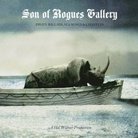 This tune comes from the album Son Of Rogues Gallery. The album is, of all things, a sequel to the album Rogues Gallery. The full title is Son Of Rogues Gallery: Pirate Ballads, Sea Songs & Chanteys. The first album was a kind of novelty–I can’t even say novelty hit as I don;t know if it was. But it must have had some success because here’s a second one (and there’s no Pirates of the Caribbean movie to tie it to).
The album has 36 songs (!) by a delightful collection of artists, including: Shane MacGowan, Nick Cave, Macy Gray, Broken Social Scene, Richard Thompson, Michael Gira and Mary Margaret O’Hara (among many others). I enjoyed the first one, but I think the line up on this one is even better.
“Shenandoah” is not a song that I particulalry like. Because it is traditional, I have a few people doing versions of it, but I don’t gravitate twoards it–it’s a little slow and meandering (like the river I guess) for me. And this version is not much different. What it does have going for it is Waits’ crazed warbling along with even crazier backing viclas from Keith Richards (there;s no guitar on the track).
[READ: January 7, 2012] Every Love Story is a Ghost Story
I had mixed feelings about reading this biography. I’m a huge fan of David Foster Wallace, but I often find it simply disappointing to read about people you like. And yet, DFW was such an interesting mind, that it seemed worthwhile to find out more about him. Plus, I’ve read everything by the guy, and a lot of things about him…realistically it’s not like I wasn’t going to read this. I think I was afraid of being seriously bummed out. So Sarah got me this for Christmas and I really really enjoyed reading it.
Now I didn’t know a ton about DFW going into this book–I knew basics and I had read a ton of interviews, but he never talked a lot about himself, it was predominantly about his work. So if I say that Max is correct and did his research, I say it from the point of someone full of ignorance and because it seems comprehensive. I’m not claiming that he was right just that he was convincing. And Max is very convincing. And he really did his research.
It’s also convenient that DFW wrote a lot of letters–Max has a ton of letters to quote from. And DFW wrote to all kinds of people–friends, fellow authors girlfriends, colleagues…. Aside from old friends, his two main correspondents were Don DeLillo, whom he thought of as a kind of mentor, and Jonathan Franzen, whom he considered one of his best friends and rivals. I guess we can also be thankful that these recipients held on to the letters.
DFW presented himself publicly as one kind of person (or we’ll say maybe two or three kinds of people). He came across as intelligent, kind, self-deprecating and fame-phobic. And that is who he was, but there is another more personal side that this biography reveals. The first surprise is just how much of a womanizer DFW was. It’s unclear if DFW left a trail of sad, used women in his wake, but it is clear that he went home with quite a few of them (discretion leaves what happened to our own imagination. There are many examples of him ditching his friends for a woman he met at a party or doing something less than admirable because of a woman.
It’s also interesting to see the kind of women he had sustained relationships with/obsessions about. He was unfailingly devoted to Mary Karr who was unhappily married but who really didn’t seem to want his attention. His undying love went as far as a tattoo and a murder plot (of her husband which never got past the drawing board, thankfully . He was also taken with Elizabeth Wurtzel (author of Prozac Nation and eventual muse for DFW’s “The Depressed Person” which proves to have been a revenge piece). He was attracted to creative women–but was also upset when their creativity came first. When he married Karen Green late in life, she proved to be the perfect partner–she was creative but in visual arts–it never impinged on his work.
And perhaps the most telling thing about the biography is that DFW wasn’t…well, he wasn’t very nice. It starts with his sister, whom he was mean to a lot as a kid (but that’s normal), but as he moves along in life, he tends to egg people on and or to draw them in and them dismiss them. He seems like he would be hard to be friends with. Of course, the fact that he had friends–many of whom stayed with him through all of his adult years–belies that not-niceness somewhat. Perhaps it’s more of a selfish quality–a person so inside his own head that he tends to not think of others And yet he was also really focused on you–he would pay rapt attention to you and to everything around him, or he would devote countless hours to his students. So, perhaps what it really comes down to is an intense focus–sometimes on others but often on himself. And that’s kind of not what you want to read about someone you admire.
But at the same time, I admire him for what he wrote, not for how he acted (true of so many artists). He also proves to have been a lot more depressed and a lot more insecure than he might have let on. It is now common knowledge that he was on antidepressants for over twenty years. But I didn’t know that he had been an alcoholic and drug abuser. He claimed that he got so much detail about the A.A. scenes in Infinite Jest because people didn’t mind if he sat in on meetings, but indeed, he was there for more than research. His stay in the fictional Ennet House was also real. And, in a lot of his later non-fiction, many of the people he wrote about were actually sponsors and fellow alcoholics not “members of his church” or whatever else he may have claimed.
So DFW wasn’t what he claimed (indeed, a lot of his non-fiction was a lot more fiction than he let on). And yet I came away from this biography liking him more. Not because of the way he acted, but because of how strong he was in the face of crippling troubles. And also because Max wrote an amazingly exciting biography. Not a rip-roaring yarn or anything like that, but a very detailed, lovingly created portrait of somehow who wanted nothing less than to publish amazing fiction. But who was thwarted by his own inner demons at every turn.
Max shows how DFW started as one kind of writer–full of tricks and emphasizing his cleverness who morphed into a writer who believed in honesty and in showing the real (Franzen was evidently a big helper in getting DFW to write about real emotions more). And, as Galchen said, Max writes the story (which is chronological and not in any way tricky–we know how it ends)i n such a way that you worry for Wallace when he is struggling with his writing. And when it seems that he has really hit bottom. You also wonder how some critics, particularly Michiko Kakutani, could so vocally disdain the man. [A brief word about Kakutani–I had no idea who she was until a few years ago when I read a piece in McSweeney’s called “I am Michiko Kakutani” and I didn’t get it because I didn’t know she was real. Even now, I have no idea how big of a critic she is or how influential her opinion is. I really only know of her as the nemesis of DFW. And while everyone is allowed to not like an author, her critics seemed to be far more personal than genuine. Incidentally, the Wikipedia entry shows nasty comments about her by Salman Rushdie (“a weird woman who seems to feel the need to alternately praise and spank”), Norman Mailer (no paragon of virtue himself (and I’m not a fan) calls her a “one-woman kamikaze” who “disdains white male authors”) and Franzen (“the stupidest person in New York” and an “international embarrassment”)–she is clearly a polarizing figure (she has also won a Pulitzer)].
Incidentally, DFW was not beneath a scathing review. And although mostly his reviews were positive, he did trash John Updike (a former hero of his) when his then latest book was released and DFW felt it was really subpar. The criticism was particularly harsh but yet evidently not unfounded.
But the book makes you wonder just what rock bottom actually is. Was teaching a good thing for him or a bad thing? (It took away from his writing time, but sometimes he really enjoyed it). Just how much of his integrity did he sacrifice in his published work? And would he have been less successful if he had been less hard on himself? (and on a more selfish level, would we have more of The Pale King to read if he hadn’t been so critical and thrown away so much material).
Wallace pushed himself very hard. He pushed others hard. He even pushed his readers hard. We are all the better for it, except of course Wallace, since depression pushed back too hard. And I have to admit, since I’ve liked Wallace since Infinite Jest came out, it’s very satisfying reading just how damned smart he was. And yes I get a vicarious thrill from that.
D.T. Max deserves special praise for this book. It was engaging, thoughtful and, for a biography of a suicide, very enjoyable.[1] I appreciated that the end was written as clinically as the rest of the book–there was no gnashing of teeth or beating of breast for his suicide. It was treated as it was–a tragedy, and one that could possibly have been avoided if he had been able to cope with himself a little more. I obviously knew of his suicide, but I did not know just how happy his married life had been before the depression took hold. (I also didn’t know that Green had a son already). It was nice to read that in the end, he had a few years before it became too much.
And he gives a shout out to the Montclair Public Library–you did Jersey proud.
1. The notes in the book are very enjoyable by the way. Max has included Sources which are just bibliographic info but also Notes which are full of more, often amusing, details. Just like in IJ, they are a must read.

 I Just Read About That...
Leave a comment