 SOUNDTRACK: ROCKET 00000-What Women Want (2010).
 This is the second band that I have discovered because of this novel. I was looking for images to paste in last week’s post for Rocket 00000, and I came across this EP.
Rocket 00000 are a trio from Cincinnati and this is their first (and only) release. It’s got a kind of 80s punk vibe–I can’t really make out the words, but I like the feel.
There’s something very raw and almost amateurish about the record–but that seems deliberate, because the album sounds very professional–it’s recorded well and the band is very tight. And since I like the bandcamp site quite alot, I’m going to provide the link with extras here so you can listen to the album, too.
There’s four songs–two are 5 minutes and two are around 3 minutes. The two longer ones have intros and outros that extend the music to those long (for punk songs) times. And I really like these instrumental sections. In fact, when I first listened, I thought maybe the whole first track was an instrumental. Since I liked the tone of the album I was okay with that.
The “Summer City” part of “Summer City/Conspiracy Theory” has a simple but effective guitar solo as an instrumental. After about a minute and a half “Conspiracy Theory” kicks in, the vocals bring a new texture and a punk element into the song. “Lethal Weapon 2 & 4” has a great title, but it doesn’t sound all that different from the other songs (although the lyrics, “We’re not perfect…but neither are you” are pretty clear).
“Signs” has some cool drum breaks and fills, and the end of the song is musically interesting. “Braveheart: Forever Young” probably combines the music and vocals best–I like the upbeat music with the dark words. The song ends with about 2 and a half minutes of instrumental (with interesting feedback) that works really well together.
It’s not the best punk EP, but it’s got some good qualities and the band has a good name. I wonder how they “say” it?
[READ: Week of April 2] Gravity’s Rainbow 3.11-3.15
After last week’s breezy read, I figured that this week’s would be a bit rougher. But for the most part, it wasn’t–aside from the very end which was a little hard to stomach. There was a lot of technical discussion in this section–which was a bit hard to comprehend. There was a also a return of Franz Pökler–where we learned his story and what happened to him. We assumed that he was killed by a police truncheon, but that turns out to be untrue. His story is pretty dark and sad. Sorry, as Marco points out below, it was Peter Sachsa who was killed by truncheon. My conspiracy has been called out!
Section 3.11 opens uncomfortably with Franz Pökler… copulating with Leni in an aggressive and rough manner. He has just come back from showing of Alpdrücken and imagines that it’s Margherita underneath him. He assumes that men all over the country are doing the same thing because of the movie. He calculates that it was that night that Ilse was conceived–they’d barely had sex around that time. This flashback brings us forward to the scene of Franz waiting for Ilse to return to Zwölfkinder—a kind of children’s fantasy playground which would prove to be a very significant location for them.
He thinks back to before he lost Leni and Ilse. He knew Leni did not like him working on the A4; she said that the army was funding his little group: “They’re using you to kill people.” But he said it would eventually help everyone “transcend…. Someday they won’t have to kill”(400). He refused to think of the VfR as anything but a special organization. And by refusing to take sides in the debates, he became Major Weismann’s best ally. As such, Weismann took Franz for granted just like Franz took Leni for granted—until Leni walked out. And when she left, he was devastated, crying every day. Leni used to go out to her “street theater”with Leftists and Jews in the streets. He knows she’s in no danger unless she wants to be. On the last occasion, he decides to go out and look for her, hoping that fate brings them together. But instead, a policeman aims a truncheon at him (and misses—he hit an old man instead).
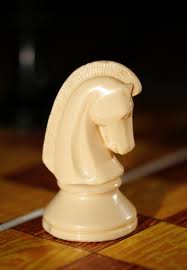 But Leni was incorrect about him; no one was using him–he was an extension of the rocket. In an interesting turn of phrase, Franz saw the rocket as a weapon that could leap like a chess knight over Panzers, infantry, even the Luftwaffe (401). The chess knight is used later to describe Der Springer as well. Is this a lazy metaphor or a connection? [Daryl sets us straight].
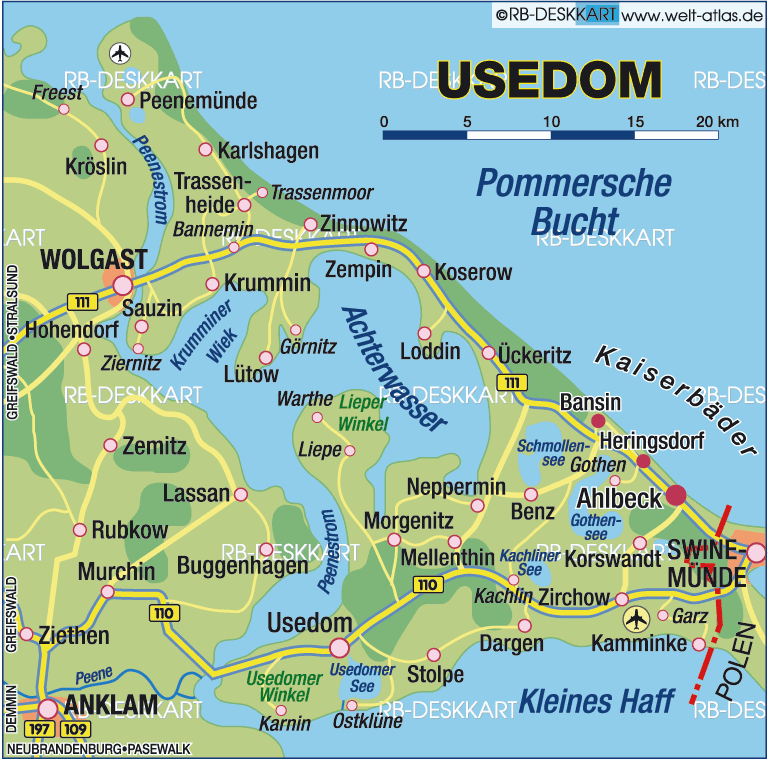
Peenemünde top left, Swinemünde bottom right.
After Leni left, he tried to throw himself into his work—designing instruments for gauge pressure—which would help at Peenemünde (I’m not sure how often Peenemünde and Swinemünde were thrown around before, but they become increasingly relevant to the story in the next few sections). Most funding went to propulsion, which was not his department. And some new scientist characters are introduced: Dr Wahmke who was killed by a poor mixing of flammable materials. Dr Fahringer was in aerodynamics; he practiced shooting a bow and arrow to learn more about trajectory.
We also get some backstory on Mondaugen—he had been in Africa and had lived with the Ovatjimba, the aardvark people, the poorest of the Hereos. When he returned he was an electro-mystic. Franz joked: “In the name of the cathode, the anode and the holy grid?” (404). He believed that only when people were most serene were they able to reduce their waveform and reach a state near zero. And Enzian (Weismann’s protégé) was the closest to zero of anyone that Mondaugen knew. They all called Enzian “Weismann’s monster,” because he towered over Weismann.
Pökler moved to Peenemünde in 1937—invading Gravity itself. They created a workstation and began working in earnest on the Rocket. The first success was the A3, and that’s when they they shifted to guidance. He was so wrapped up in his life that he forgot about all that had happened before until one day a young girl was in his room and he recognized her as Ilse.
When she told him that Weismann had delivered her from the train station, his joy turned to anger—did they know everything about him? He stewed as she told him her story.
She was in a place in the country—a place for girls and women. Yes, Leni was there, too. Occasionally Leni went off with a man and then came back not wanting to be touched.
 During Ilse’s visit, they let her see things on the camp, like a rocket launch—which meant she was not a security risk. She asked if she could ride in one one day. He says if they go to the moon, she can ride on it; she looks at map of the moon to decide where they will all live together. [I’m a little unclear how old she is supposed to be now].
Pökler realized that now that he knew they were alive and were actually somewhere, that maybe he could get them out. But it seems pretty hopeless when Mondaugen informs him that they are in an SS reeducation camp.
As Franz gets lost in a reverie, there’s some history. Friedrich August Kekulé von Stradonitz—who in 1865 had a dream that revolutionized chemistry and made the AG possible. Influenced by Liebig (the street Pökler lives on in Berlin, remember?), Kekulé brought his architectural passion to chemistry. There’s also a brief introduction to Liebig’s protégé, Clerk Maxwell and then a long digression about Kekulé’s dream which I found hard to fathom (even after a second pass) but which blew away Lazlo Jamf. It’s Important and Scientific, but I’m going to leave it there.
Then one evening Ilse was gone. At least she was allowed to write a note.
Pökler freaks out to Mondaugen who calms him down. While Pökler is ranting, Mondaugen realizes that once Leni left, Pökler needed someone to take orders from. He is just a “Victim in a Vacuum.” But he’s on edge most of the time writing himself notes to keep himself calm.
 I enjoyed the little side note about the new planet Pluto and that people were calling it the planet of National Socialism (those who bemoaned the loss of Pluto a a planet never talk about that!)
Mondaugen asked if Pökler wanted to talk to Weismann about Ilse, but he said he couldn’t handle talking to him right then. After some time though, once the rockets were really coming along, they had their meeting. Ostensibly the meeting was about the Rocket—with Weismann asking technical details and Pökler answering very well. But they both knew that the meeting was really about Leni and Ilse, and how Pökler stood up to the questions.
Eventually Ilse returned, but she looked…different. Little things, true, but he really had to wonder…is she the same girl? She said she had been separated from Leni—so they had given Pökler a pawn but taken the queen. The next day, he was given a vacation paycheck and a two week furlough. It was a test–would he come back? He told Ilse they could go anywhere and she chose to go to Zwölfkinder
Here we finally get an explanation of Zwölfkinder—it was a children’s spa, a place to revel in innocence. Adults couldn’t get in unless they were accompanied by a child—child-aged police would reprimand you if you were out without your child. There’s an interesting note that Zwöldkinder (which means 12 children) is exactly 280km away from Peenemünde, the operational range of the A4.
Pökler then gets it in his head that they have sent “Ilse”to seduce him—that if he commits incest it will break him entirely. And the They will have him. There’s even a “fantasy” in which it happens, but really it does not—he commits to being her father. And then They take her away again—and he has to go back to Peenemünde alone. But every year for the next six years another Ilse returns and they head off to to zwölfkinder. And Pökler pretends like things are normal.
 In 1943, Pökler missed the British bombing of Peenemünde because he was at the zwölfkinder. This led him to believe that he was being saved for something (by Weismann—perhaps these vacations had been planned since ’39, as if he knew about the bombing four years in advance—paranoid or prescient?). Many coworkers were dead, others lived through Hell and they knew that Pökler was in Fairyland. He tells Mondaugen that the others act like it is his fault, but Mondaugen tells him not to invent complications (that was Weismann’s job).
Then soon after, Pökler was sent to a job that to me is like catching a javelin—watching the rocket reenter to determine what was going wrong. He was send to Ground Zero—although everyone knows nothing hits it intended target –ground zero is the safest place to be. He sat in a field for something like two days pondering his lot. And then the rocket landed—100 feet away from him. He saw it land, got up and walked away—to the next torture from Weismann.
That spring he was transferred to Nordhausen to work at the Mittelwerk—routine work under what he believed was Weismann’s scrutiny. His only regret is that he didn’t throttle Weismann when he had the chance.
It was only after he received his next furlough with Ilse that he put it together that she was staying at Dora, the prisoner camp. The camp which was just feet away from where he was now working. They have an awkward visit to the playground. Is it because she is a sullen teen or is it worse? She calls him Franz and asks how he likes working underground with elves. He says it is his job and she replies that her job is being a prisoner.
And yet through all of this work he never heard from Weismann. He was irritated by Weismann’s silence and tried to provoke the SS guards into revealing something. But all they said was that he was in Holland now and that he and Eznian had a falling out.
And then one day Weismann shows up and tells Pökler he is on a special project (his special destiny)—full of high security and isolation. He was asked to modify one rocket—its serial number had been removed and five zeroes were painted in. He was to develop a plastic faring with certain insulating properties for the propulsion section of the rocket. It was nicknamed the Schwarzgerät.
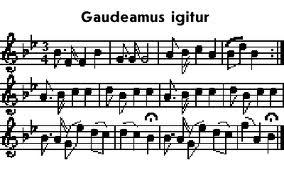 Two weeks later they were done, it was like a graduation. [And for fans of DFW, we get: “It was hard not to whistle Gaudeamus igitur” (432)]. Pökler received the usual envelope with a note that said that Ilse would be waiting for him at zwölfkinder. Before leaving, he goes into the Dora prison camp. He sees death—dead bodies, the stench of shit and death–and he throws up. He finds one woman alive. He gives her his gold wedding ring, knowing it can be sold for food or a ride home. And as he ponders, this that long, dark section ends.
Section 3.12 returns us to Berlin. Margherita (Greta) has brought Slothrop to a rickety house in the Russian sector. They light the stove and she fetchers potatoes, onions and wine (an amazing feast). They eat and fuck and then Slothrop wonders where he is going to go next. Well, to find Säure, of course, to give him the hash. But what of Imipolex and Schwarzgerät? He hasn’t thought about that in so long. How long has it been since he was with Säure? Oh, a day and a half. Jeepers.
He travels the night. He ends up at the Chicago Bar but no one there has heard of Säure (!). The bouncers give him some grief so he takes them down: “Fickt nicht mit dem Raketemensch!” (ha!). He eventually finds Säure’s cellar which has been utterly ransacked, except for a plastic chess piece (!) (and wait till Slothrop finds out what kind of plastic, oboy), with a message inside. The message says that Der Springer asked him to take the chess piece, that that is how he will know Slothrop when they meet. The map shows that Säure is way back in the British section. Ugh. He heads off.
 There’s another reference to Gustav in the piano as Säure (and his crew) are sleeping in his new location. His eyes open to see Slothrop looking down at him. Säure reveals that Der Springer blew the whistle on the counterfeiting operation. Slothrop thought they were buddies? Hardly! This means that Slothrop is out a million marks but, “Rocketman is above all that shit, Emil” (438). But Emil promises he can get the Schwarzgerät for him. For just 10,000 pounds sterling.
After gasping, he asks if Springer had been hiding out in Swinemünde. He wants to ask about the Max Schlepzig passport but before he can, Trudi, who has given up on Gustav in the piano, begins having sex with Slothrop’s nose. Yes.
Gustav, when he comes out of the piano, is a composer who argues with Säure that Beethoven is better than Rossini, Säure picks Rossini and they argue in a way that feels…normal, briefly. Getting high while playing and discussing music. It also turns out that Säure is good at papyrmancy–“the ability to prophesy through contemplating the way people roll reefers” (442). And in this scene there’s a hilarious bunch of wine lovers bullshit thrown around in German:
“How do you like this shit?” sez Säure.
“Hübsch,” allows Gustav. “A trifle stahlig, and perhaps the infinitesimal hint of a Bodengeschmack behind its Körper, which is admittedly süffig.” [Nice, steely, earthy flavor, body, palatable].
“I would have rather said spritzig,” Säure disagrees, if that indeed is what it is. “Generally more bukettreich than last year’s harvests, wouldn’t you say?” [fizzy, rich bouquet]
“Oh, for an Haunt Atlas herbage it does have its Art. Certainly it can be described as kernig, even — as can often be said of that sauber quality prevailing in the Oued Nfis region — authentically pikant.” [pithy, clean, savory]
“Actually, I would tend to suspect an origin of somewhere along the southern slope of Jebel Sarho,” Säure sez — “note the Spiel, rather glatt, and blumig, even the suggestion of a Fülle in its würzig audacity –” [play, clean, flowery, abundance, spicy]
“No no no, Fülle is overstating it, the El Abid Emerald we had last month had Fülle. But this is obviously more zart than that.” [abundance, gentle]
The truth is that they are both so blitzed that neither one knows what he’s talking about, which is just as well, for at this point comes a godawful hammering at the door and a lot of achtungs from the other side (442).

 The police bust in and demand to see papers. Säure holds up his Zig-Zags (ha!). Slothrop sneaks out and goes back to Greta’s place. She is pissed that he left her alone. He tries to make it up to her but she cries all day.
He stays with her for days, going out to forage for food. They fight and screw but only the occasional whipping seems to make her happy. And since we’ve had everything else, in Slothrop’s dream which is a poem, the dog show and stud service has some bestiality(!) and the birth of millions of creatures (and a mention of Squalidozzi).
Section 3.13 introduces the Rücksichtslos, the Toilet Ship, the logical extension of ordinariness. [I love the weak joke: “General or maybe Admiral laughter” (448)]. This ship is for sale and GE is very interested. And now we are introduced to a new character or two. Charles is just afraid that people are out to get him. And Charles’ colleague Steve is worried about the way that Charles is acting. Just who is more paranoid? [Is there more to these tow than this?]
Back to the Toiletship. It has standard toilets for enlisted men but red velvet luxury bathrooms for the generals. There’s a “smart” joke about graffiti on the walls: ∫ 1/cabin d(cabin) = log cabin + c = houseboat (a lot of internet searching gave me why that was “funny”). Which is balanced nicely with cheap gags:
gigantic troughs….big enough to seat 40 or 50 aching assholes side by side, while a constant river of salt flushing water roared by underneath. [And some prankster] lighting wads of toilet paper…and cackling with glee as one by one down the line the sitters leaped off the holes screaming and clutching their blistered asses and inhaling the smell of singed pubic hair (451).
And yes it’s all in the same section but this really made me laugh
Not that the crew of the Toiletship itself were above a practical joke now and then. Who can ever forget the time shipfitters Hopmann and Kreuss, at the height of the Ptomaine Epidemic of 1943, routed those waste lines into the ventilation system of the executive officer’s stateroom? The exec, being an old Toiletship hand, laughed good-naturedly at the clever prank and transferred Hopmann and Kreuss to icebreaker duty, where the two Scatotechnic Snipes went on to erect vaguely turd-shaped monoliths of ice and snow all across the Arctic. Now and then one shows up on an ice floe drifting south in ghostly grandeur, exciting the admiration of all (451).
There’s a brief look at Horst Achtfaden who was picked up by the schwarzkommand. He has rigged the peep show machine to watch Gerda and her Fur Boa 178 times. He is in aerodynamics and he rather hopes to have an equation named after him one day. Then Fahringer comes back–he refuses to kill (and so didn’t receive the pheasant badge). Achtfaden is the first in Peenemünde to be taken away by the SS.
What does the Schwarzkommand want with Achtfaden? Why the Schwarzgerät of course! When Enzian pronounces the word it’s already redundant. But Achtfaden doesn’t know who else was on the job with him, they all had code names: Spörri, Hawasch (Achtfaden was called Wenk). And Achtfaden’s purpose comes clear when we realize that he knows a little about the Schwarzgerät, specifically that they should talk to someone in guidance, a man named Klaus Närrisch.
Section 3.14 sees Slothrop and Greta on a barge to Swinemünde. Slothrop is following Geli’s clue (clew) about the Schwarzgerät, and Greta is here to find Bianca. They sail up the Oder avoiding the wreckage in the river and they eventually pass a city named (seriously) Bad Karma. Greta has been here before and she thinks she sees Bianca’s boat so they stop and check out the city.
Greta is spooked by a lady in black, standing staring. Greta flees the woman. She spooked Slothrop too, but when he approaches her, she is just a lady looking for a cigarette. He turns to talk to Greta about her, but she is gone. Slothrop sits at a cafe and Greta eventually turns up saying that she was in the observatory and spotted Bianca’ boat.
 And sure enough here comes the part yacht, Anubis, where we will spend a lot of time in the next few sections. Greta climbs on board. As Slothrop climbs up, some joker pulls the ladder up and Slothrop falls in the water. He reads the sign that says Anubis Świnoujście (which is Polish for Swinemünde and is located in the extreme north west of Poland). He grabs back onto a line, but as he pulls himself back up some ladies shout “Cut the rope! Let’s watch him fall in a again”. and produces a meat cleaver. But someone grabs his ankle and tells him to come in through the porthole.

Anubis
She is 18 or so, blonde-white hair and “the first cheekbones Slothrop can recall getting a hardon looking at ” (460). Her name is Stefania Procalowska, her husband Antoni is the owner of the Anubis.
Slothrop gets a shower and (somebody’s) clean clothes. Stefania asks about Margherita and says that she and Bianca are in a discussion with Karel. Marherita wants Bianca to have a “real” movie career. When Slothrop asks if Max Schlepzig is Bianca’s father or something, Stefania replies with a very disturbing comment that in Alfdrücken
“Von Göll let the cameras run right on. The footage got cut out for the release prints of course, but found its way into Goebbels’s private collection. I’ve seen it-it’s frightening. Every man in the scene wears a black hood, or an animal mask… back at Bydgoszcz it became an amusing party game to speculate on who the child’s father was. One has to pass the time. They’d run the film and ask Bianca questions, and she had to answer yes or no.” (461).
Ultimately, Stefania believes she doesn’t have a father–she was born of pure parthenogenesis. She says that Bianca is charming if not a bit bitchy once in awhile.
Then she mentions Miklos Thanatz, Margherita’s husband. She and Thanatz get together on and off. They entertain SS troops with an act consisting of a lesbian couple, a dog, a trunk of leather costumes and implements. They also toured rocket sites for the workers. This is the first time since the surrender they’ve been together, so “I wouldn’t actually expect to see too much of her…” (461).
And Slothrop’s thought is “‘Rocket sites?’ The hand of Providence creeps among the stars giving Slothrop the finger”) ( 461) (heh heh ).
She introduces Slothrop to Antoni who is delighted to have an American on board (to almost complete the set). He says that all women–except Stefania–on the ship are fair game. Slothrop walks to the bar to the tune “Welcome Aboard” which sums up the boat pretty well: “Welcome aboard, gee, it’s a fabulous orgy that you dropped in on my friend–” (462).
And here things get creepy. There’s been a few instances where I was uncomfortable at Pynchon’s sexualization of youth, but this goes too far. “Bianca’s a knockout, all right: 11 or 12, dark and lovely, wearing a red chiffon gown”. Wait wait. ELEVEN or TWELVE? Are you kidding me?

Not really relevant, but funny.
Anyway, a story is being told on the boat that revolves around Oneirine and Wimpe, but it’s not told well. Slothrop connects some dots…Oneirine, Jamf, Imipolex, A4. Until Thanatz comes over and says Greta tells the story worse every time. So Slothrop asks him about the Rocket. Thanatz says :”I think of the Rocket as a baby Jesus, with an endless committee of Herods out to destroy it in infancy” (464).
Thanazt grabs the waiters buttocks as he pours him some absinthe and then describes the beauty of the A4: “Cruel, hard, thrusting into the virgin-blue robes of the sky, my friend. Oh, so phallic. Wouldn’t you say?” (465).
Then Thanatz begins talking about…Gottfried? (God’s Peace, which I hope he’s found). Then he begins talking about the battery commander named Blicero (!) who screamed at the sky, voice breaking, or sat in a trance for hours. He gets into the story a bit more but is interrupted by Margherita and Bianca.
 For Bianca is set to perform. First she sings “On Good Ship Lollipop” (and Slothrop is about to vomit), then Greta requests “Animal Crackers in My Soup” (“Super Animals in My Crack” (466)). When Bianca, refuses the crowd gets excited because Greta is going to punish her–a public spanking. This gets the entire room turned on and the section literally devolves into a giant orgy. There is too much decadence to describe, although my favorite item would have to be “an enormous glass dildo inside which baby piranhas are swimming” (468).
Section 3.15 is very brief. It opens with Slothrop dreaming about Llandudno (I love Welsh city names) where he spent a lovely furlough and where Lewis Carroll wrote Alice in Wonderland
And when he wakes up we learn that he has slept with Bianca. And then there’s a lengthy detailed scene of them starting up again. And I’m freaked out that she’s 11 or 12 , although it is mean to be very erotic. And then there’s this little moment that goes beyond navel gazing in which Slothrop is “inside his own cock” (470).
Eventually they talk about hiding out. She says she’s a child and knows how to hide. And Slothrop goes into a reverie. I liked the part about the Harvard crew sox as red ring manacles, like the comic book hero Sundial.
And then the section and this week’s read ends with a section about her putative fathers which suddenly begins addressing “You” [I would love to get to the bottom of this narrator, I wish I had been paying closer attention from the start]. The section ends that “Of all her putative fathers [Bianca] favors you, most of all. You’ll never get to see her. So Somebody has to tell you” (472). What??? Who???
—–
At this point I have to wonder just what Pynchon is doing with all the sex in the book. Is he a horny guy getting off on his imagination, or is he commenting on sexuality in some way? Even though I enjoy Slothrop as a character, I really enjoyed getting the story about Pökler, and I’m looking forward to more contact with our old friends!
For ease of searching, I include: Franz Pokler, Alpdrucken, Zwolfkinder, Peenemund, Swinemund, protege, Friedrich August Kekule von Stradonitz, Schwarzgerat, Saure, Hubsch, Korper, suffig, Fulle, wurzig, Rucksichtslos,Sporri, Swinoujscie, von Goll

 I Just Read About That...
“We assumed that he was killed by a police truncheon, but that turns out to be untrue.”
Do we assume that he was? We do know that Peter Sachsa was killed that way, but I don’t recall reading that Pökler was as well. My take on that scene was that his close brush with a similar death as Sachsa’s is meant to act as the point where his fate diverges from his. (Sachsa gets Leni, but loses his life.)
“Wait wait. ELEVEN or TWELVE? Are you kidding me?”
Weisenburger thinks that this is wrong (maybe it’s just Slothrop’s perception?) and points to http://pmc.iath.virginia.edu/text-only/issue.991/duyfhu-1.991 to claim that she’s actually 16 or 17. But is he just in denial that Slothrop could be such a despicable person?
Thanks Marco, I had my death by truncehon people confused! I should have been making a chracter tree in addition to my notes. I’ll fix it up top.
I wondered at the despicableness of Slothrop (or Pynchon). But I also wondered (as I often do) if there is something else afoot. I know 12 is not young in some cultures, but surely mid 1950s Europe would frown on that.
And yet there is so much infantilization of sexuality in this book. I look forward to other thoughts on this matter,
So I am clearly pretty behind, but have found some time to furiously catch up (or at least finish on my own pace, which is not a chore since I am enjoying it so much). Reading your posts has become necessary to fill in the holes and help me find places to reread.
So, re: your question about Charles and Steve and the Toiletship:
I assumed after a reread that that was all a hallucination of Achtfaden’s after being dosed with Sodium Amytal (for questioning by the Schwarzcommando). It would jibe with the fecal-focus of Slothrop’s episode (1.10) with Sodium Amytal…
Chase