Feeds:
Posts
Comments

Archive for October, 2011

SOUNDTRACK: KISS-Paul Stanley (1978).
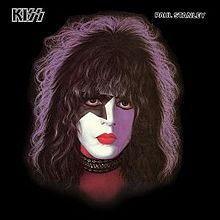
For Christmas in 1978 or so, my parents gave me a guitar which was signed from “Paul Stanley.”  I knew it wasn’t (and was a little disappointed that it wasn’t a drum set), but that’s the guitar I learned how to play on.  And Paul Stanley (while not the god that Ace is) is still a charismatic player.  But I didn’t really like this solo album that much when it came out.  My order of preference at the time was Gene>Ace>Paul>>>>>>>>>>Peter.  But sometime in college I reassessed this album and have regraded it as my favorite of the four and it even ranks higher than many of the Kiss albums.  (Seeing him live on a club tour certainly helped).

Paul is in great voice.  And I guess because Paul sang on so many different types of Kiss songs, he doesn’t seem out of his element here.  The chruses are more of him rather than backing vocalists (like the other guys used, although he does use some).  And the production is not too far away from the sound of Kiss at the time (certainly more polished than it should be but not as weirdly polished as Gene’s). 

 The opening of “Tonight You Belong To Me” is a wonderful acoustic intro and the song itself has a great riff and a wonderful solo.  The chorus is intense and strong.  “Move On” is something of a lesser song (it seems too choppy), but I love the quiet break in the middle.  “Ain’t Quite Right” is a cool minor key ballad.  It’s a bit 70’s-sounding, but there’s some interesting stuff going on.  The solo is again quite cool (Bob Kulick, brother of future Kiss guitarist Bruce Kulick does duties here).

“Wouldn’t You Like to Know Me” is a pretty standard upbeat Kiss song.  It’s followed by “Take Me Away (Together As One)” one of the great slow-building ballads that turn into a rocking chorus that Kiss does so well.  Paul practically whispers the verses but he belts out full strength in the loud part (not so much a chorus as just a loud part).  It’s one of my favorite songs.  “Wouldn’t You like to Know Me” is the kind of song that Kiss would play in the late 80s (full of outrageously cocky lyrics like “Girl you know, I’ll be leaving in the morning; you got to get what you can”), but there’s enough grit in this version to make me like much more than say, “Lick It Up.”

“Hold Me Touch Me (Think of Me, When We’re Apart)” is the flip side of Kiss’ cockiness, the sweet sentimental side.  Paul can croon like the best of ’em on this song.  “Love in Chains” also sounds like a typical Kiss rocker (except for the cool drum fill in the chorus).  I think I don’t like Paul’s singing in these stripped down choruses–I like it when his voice soars.  “Goodbye” has a cool typical Kiss riff in the bridge, which I like quite a bit.  And the chorus soars with a very simple guitar riff.  A perfect mid-tempo Paul song–it even has an unexpected third part that sends the song into a brief minor chord phase before returning to the happiness of saying goodbye to someone.

Still my favorite of the solo albums.

[READ: October 8, 2011] “Stealing Fire”

There were four one-page pieces in this week’s New Yorker under the heading “Sticky Fingers.”  Each one was about theft in some way (this being the money issue, that ‘s a nice connection).

As I said for Patti Smith, I felt like the tone of these articles was all set, but Wolff totally changes the concept behind these stories.  He wasn’t the thief–well he was–but  the theft came from a parent not from a store.  When Wolff was growing up, he coveted his father’s gold lighter.  He even took up smoking just so he could use it (there’s a lesson for you). (more…)

Read Full Post »

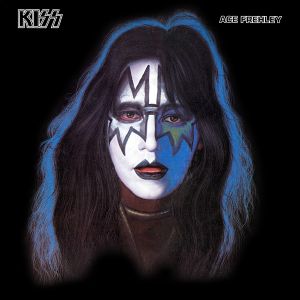
SOUNDTRACK: KISS-Ace Frehley (1978).

Unlike Peter’s album, Ace’s solo album is probably the most Kiss-like of the four, and I think that most of the songs on here are better than Ace’s Kiss songs.  I also liked that his had his cool autograph on the back.

“Rip It Out” opens with some great rough guitars and a supremely catchy chorus.  His voice also sounds much more assured than it had on the Kiss records.  “Speeding Back to My Baby” is a bit too “rock n roll” for me as well (I don’t like all the backing vocals on the choruses) but the guitar is absolutely on fire in this song–the solo is noisy and insane.  In fact, he really highlights his melodic soloing skills on this disc.  This song always bothered me because he clearly says “maybe I should turn around maybe I should stop” and then second later proceeds to sing “speeding back to my baby and I don’t mean maybe.”  Very confusing. 

The guitars on “Snowblind” are jagged and very cool (and the drums are really techno and a little silly but they sound cool and spacey).  And of course, there’s another great solo.  “Ozone” is a wonderful guitar workout, showing off what Ace does best.  Lyrically it’s a bit of a nonentity, but it is fun to say “O-zone” over and over again.  “What’s On Your Mind” is a poppy little number with a super catchy bridge (although again, a lot of “maybes” in this song).

“New York Groove” is such an anomaly.  A top-40 hit, and I’m not sure why exactly.  It’s so simple, with kind of a funky guitar.  But I guess that super catchy simple chorus could win anyone over.  The spoken word part in the middle cracks me up, his accent is so strong: “Here I am.  In the city.”  “In Need of Love” has an odd feel to it, kind of sinister, but that guitar solo–wow.   “Wiped Out” is wonderful from start to finish.  The crazy cackle in the beginning, the wonderful slippery bass, the cool guitar solo that precedes each chorus and the fast, fun-to-sing verses.  It’s just a great song (it’s probably the most successful flirtation with disco of all four solo albums).

The album ends with the magnificent “Fractured Mirror.”  It starts off as a simple enough guitar picking song.  But it keeps building.  And building.  And then a solo comes in.  And it builds more…until it ends like it began.  It’s a masterpiece of guitar overdubbing.

This album is pretty darn awesome.

[READ: October 8, 2011] “Off the Shelf”

There were four one-page pieces in this week’s New Yorker under the heading “Sticky Fingers.”  Each one was about theft in some way (this being the money issue, that ‘s a nice connection).

When the New Yorker groups four essays under the same heading, the first one really sets the tone for the others.  So it came as no surprise to me that Patti Smith was going to write about shoplifting too (frankly, she was punk goddess, how could she not have shoplifted?).  But her story is quite different and it was one that I found incredibly moving.

Her story concerns the time she stole an encyclopedia.  Not the whole thing (she still weighs less than a whole set), but the first volume, from the grocery store. (more…)

Read Full Post »

SOUNDTRACK: KISS-Peter Criss (1978).

After Alive II, Kiss shocked the world by announcing that they would be releasing 4 solo albums at the same time.  The band WAS NOT breaking up; rather, all four members wanted to express themselves in their own way–four Kiss albums on the same day!  Holy cow.  Unheard of!  And as it turns out, this was probably the first step their money-making schemes.  [I assume that Gene is behind all of the money-inhaling schemes, but I feel like he may not have been savvy enough to think of this one back then.  Am I not giving him enough credit?]

So since you never bought four albums on the same day, that meant that you bought your favorite Kiss guy’s record first, right?  Well, my favorite Kiss guy was Peter Criss.  He was a cat after all.  And as the charts reflect, I chose poorly. 

Peter was the least rocking of the group (despite his great vocal turns in some really great Kiss rockers).  Appropriately, his solo album is a mix of old school rock and roll, ballads and a brief excursion into disco.  Because at the time I loved everything Kiss did, I didn’t discern that I hated these songs.  In fact, I listened to them and I still know all of them quite well.  But as an adult I can see what a crazy release this is from Kiss.  True, Kiss’ other records flirted with old school rock n roll (“Tomorrow and Tonight”), and Peter had had a hit with “Beth.”  But wow, who knew he would go this far?  I mean, “Don’t You Let me Down” is a very delicate weepy ball and “Kiss the Girl Goodbye” is a falsetto’d folk ballad.  My heavens.   And for pity’s sake, “You Matter to Me” out-discos even Kiss’ attempt at disco on Dynasty.  (That keyboard, zoinks!).

My friend Matt and I have always liked a few of these songs more for personal in-jokes than for the songs themselves.  “That’s the Kind of Sugar Papa Likes” is one (and actually of all the songs on the disc, this one has the best groove).  And I’ve always like “Hooked on Rock n Roll’s” preposterous lyric “I was/vaccinated by a Victrola needle” because it not only is antiquated and weird, it doesn’t even fit the rhythm of the chorus (who tries to fit the word “vaccinated” into a two-syllable space?). 

The funny thing is that the album is pretty solid rock n roll.  “I’m Gonna Love You” is an old school rock n’ roll song.  “Tossin’ and Turnin'” is standard old rocker, complete with backing vocals and horns.  It could come straight out of Grease.

But I can’t imagine anyone who likes this kind of music buying this album with the Kiss connection or with him in makeup on the cover.  It may have introduced Kiss fans to doo wop, but I think mostly it just collects dust.

My mom liked this album best of all the Kiss albums, but I distinctly remember she did not like “I Can’t Stop the Rain” because despite the pretty melody (and strings) he said “Goddamn” in the song and she didn’t approve of that sort of thing.  Kiss fans didn’t like this album, and moms didn’t like it either.  Poor Peter.

[READ: October 8, 2011] “Free Everything”

There were four one-page pieces in this week’s New Yorker under the heading “Sticky Fingers.”  Each one was about theft in some way (this being the money issue, that ‘s a nice connection).

Miranda July’s piece was all about herself.  She talks about how she first started shoplifting when she was little.  The first time she got caught was for slipping Neosporin in her sock.  But then she got more clever.

She talks about how the shoplifting really became a part of her life.  I’m fascinated that the majority of shoplifters seem to be women and I wonder why (she doesn’t address this issue).  July talks about all the places from which she stole and she speaks of it passively, with little room for regret (even when she stole from the Salvation Army where she worked).  [Let’s hope the statute of limitations is up for her]. (more…)

Read Full Post »

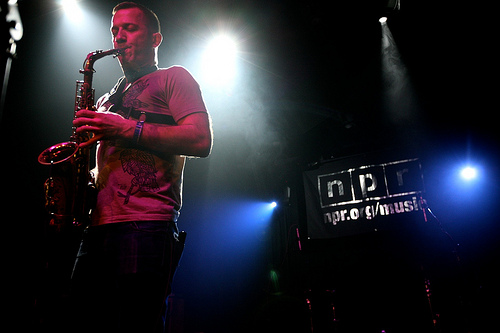
SOUNDTRACK: COLIN STETSON-Live at SXSW (2011).

NPR has made available three songs from Stetson’s SXSW performance.  I’m not sure why there’s only three songs as surely his set was longer than 15 minutes.

He opens with the first two songs of New History Warfare Vol. 2: Judges, “Awake on Foreign Shores” which segues into the masterful, noisy “Judges.”  It’s a wonderful 7-minutes of music. True, it is not as dynamic as the album (how could it be?), but hearing him play this stuff live, unaccompanied, is amazing.

The final track, “The Righteous Wrath of an Honorable Man” is a beautiful short piece that really shows off his ability to keep these riffs going more or less continuously.  Unlike the other songs, this one is more tenor than bass-sounding (although I believe it is all the same instrument) and it sounds equally impressive.

This is just a taste of what Colin can do, and I do wish there was more from this show available online (the sound is pristine, and you can actually hear him talking, which you can’t do at the All Tomorrow’s Parties show).  The NPR page says that there were four songs.  I’m not sure why the fourth isn’t here, but I’m happy to get at least these three.

[READ: October 10, 2011] “Oubliette”

This was a strange story for me because, really, nothing happened.  Well, that’s not true.  Something happened, but it was told in such a straightforward manner, in such a non-inflected way, that it seemed more like a news account than a story.

It is the brief account of a girl whose mother began treating her worse and worse as she got older.  It seems like a fairly natural deterioration of the relationship between mother and daughter, but then her mother’s behavior becomes more erratic and more violent.  Then one incident causes everything to change.  Her mother is diagnosed with Huntington’s. 

Both the girl and her father visit their mother, knowing that there’s very little they can do for her except to try to keep her calm.  So they hold their tongue and try to be nice.  (more…)

Read Full Post »

SOUNDTRACK: COLIN STETSON-New History Warfare, Vol. 2: Judges [CST075] (2011).

When you learn that Stetson played saxophone for Tom Waits, it makes perfect sense.  The middle of the second song, “Judges” sounds like the instrumental break for any of Waits’ newer songs.  Of course, once Stetson starts really wailing you realize that Stetson doesn’t need Waits’ lyrics to tell a story. With just one big-assed bass saxophone, Steston can say quite a lot.  He plays with circular breathing, meaning that he doesn’t have to stop to take a breath, he breathes in through his nose and out through his mouth at the same time (this is of course impossible).  The bass saxophone weighs some 20 pounds and is massive and Stetson makes it sound like everything from an oil tanker to a field of runaway horses.  Oh, and he also has pretty melodies and songs that sound longing.

This disc is part two of a trilogy, but this is the first of his records that I bought (thanks to a release via the folks at Constellation–I wonder if they will redistribute Pt 1).  There is a story that runs through these discs, although honestly, I’m not entirely sure what it is.  But that doesn’t matter to me, what matters is Steston’s amazing skills.

There are evidently a couple of overdubs on this disc, but for the most part it is just him and his saxophone (and 24 microphones).  The microphones were placed all over the room, on the instrument itself (to pick up the clacking of the keys) and even on his throat (when he makes those “voices muffled by a pillow” sound, that’s the throat mike picking up voice–singing while he is playing (which is impossible)).

The album features a couple of spoken word sections by Laurie Anderson, whose clipped, non-inflected voice gives this otherworldy music an even more otherworldy feel.  And there’s two songs sung by Shara Worden.  Other than that, it’s just the man himself.

Prepare to be amazed by this man’s talent.  But also prepare to be a little frightened by what you hear.  This is not timid music by any stretch.  There’s some scary stuff on this record, especially if you listen in the dark.  More especially if you listen loud (which you absolutely must do to hear all the nuances).  On first listen, this may sound like a noisy jazz record, but the more you get into it, the more amazing it becomes.

[READ: October 11, 2011] Moby Dick-in Pictures

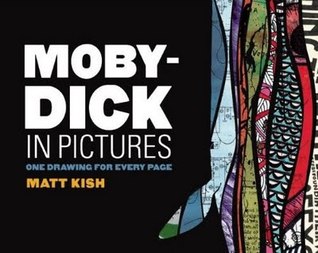
Matt Kish has accomplished an amazing thing.  He has drawn a picture a day (more or less) to accompany every page of the 552 page paperback version of Moby-Dick.  He takes a small passage from each page and renders an image for it.  One thing this book is not is an illustrated version of Moby-Dick.  It doesn’t purport to be.  You won’t get the whole story from this book.  It’s not a cheat sheet for high school students.  If you haven’t readMoby-Dick, this will give you a taste for the story–almost like a preview for a movie.  And hopefully it will compel people to read the original.  If you have read Moby-Dick, this is a wonderful companion.  Not only will the pictures give you fascinating insights into the story (and into Kish, of course), but seeing sentences excised from the book to stand alone makes you aware of the book in ways you just aren’t when you’re reading it as a novel.

Kish admits he is not an artist, which while not false modesty, is certainly selling himself short.  He has an awesome style of illustration.  I am especially excited by his vast pictures with small details (lots of pages where there are small circles with lines in them or, for instance, the details on Queequeg’s face) and when he uses bold lines to create vast, weighty iconic pictures.  Here’s one example of his awesome use of multiple straight lines.  I mean, it’s gorgeous.

But I also love the whole conceit that an artistic shortcoming for him has turned out to be an absolute boon.  Kish says he cannot render the human form and so he made the conscious decision to make the seamen more like avatars than people.  It’s daring and a little odd, but it works wonders.  I admit that I was a little less than excited by the very first page of the book–I was disconcerted by Ishmael and his utter lack of features. (I actually like the way he is rendered later in the book better–call it an artistic growth).  But by the time her gets to Queequeg, or the  gorgeous Tashtego  it’s obvious that his decision was genius.  Just take a look at the marvel that is is Ahab (left).  First off, the colors are amazing.  As are the details of the whale in the corners.  But look at him–he’s a metal machine–shiny and tough–part ship, part whale.  Look at the awesome shading and detailing of the blue “coat” that he’s wearing.  He’s even got the badge of Moby-Dick on his belt!  And then there’s the pegleg–the most beautifully drawn pegleg ever.  It’s really stunning.

Now you’re also noticing that there’s all kinds of diagrams behind Ahab.  Kish used to work at a bookstore and he hated seeing old pages of books thrown away (he has since become a librarian, which makes sense–although as I librarian I learned that librarians are actually quite cavalier about throwing away old books once they are beyond use).  So he brought these pages home.  And, given the density of the layers of meaning in Moby-Dick, he decided to draw his pictures on these old pages.  So on virtually every page you can see something in the background.  Most of the time they are these circuital diagrams, which are wonderful. But there are several drawings where the found pages are pages of text from books.  And I have to say if these were serendipitous findings then he has amazing fortune.  Some of the pages tie in so perfectly it is wonderful.

Like the page that is headed “Cetology” and is from what, a textbook on whales?  Or several other pages that I wish I had taken notes on, because they were really wonderfully chosen.  He even has a drawing on a title page of Moby-Dick. I have to ask, did he really find that or did he buy it for the project? (more…)

Read Full Post »

SOUNDTRACK: COLIN STETSON: “Horn of Plenty” (interview, NPR’s All Things Considered) (2011).

I’ll be mentioning some recordings by Stetson shortly, but as an introduction to this man and his bass saxophone, this ten minute piece from NPR is absolutely essential.  I had listened to his recent album and NPR has two concerts from him that are downloadable.  I enjoyed the music, but after listening to this interview it gave me so much more appreciation for what the man is doing.

For a lot of classical and jazz, knowing what the author “meant” can help.  Knowing that The Moldau is a river makes Bedřich Smetana’s piece all the more interesting and moving.  Similarly, knowing that “Judges” is about horses… well, holy crap yes it is.

More importantly, knowing how he does what he does–circular breathing: taking air in through your nose while breathing out through your mouth (try it…it’s not possible) allows Stetson to essentially never have to stop playing.  (Tenacious D has a very funny version of this called “Inward Singing,” although it lacks the gravitas of Stetson.)

Also, the bass saxophone weighs twenty pounds nad is almost as tall as him.  The picture is preposterous.  Who even thinks of making music with such a thing.  And yet he does.  Unsettling music, sure, but music nonetheless.   Listen to this interview and be amazed.

[READ: 2010-2011 and beyond] Natasha Wimmer

Many readers don’t read anything that was written in a different language.  And those of us who do probably give little thought to the translator.  Until recently I didn’t give much thought about them either.  Often I assumed that if I didn’t like a book, it was the author not the translator.  And that could be true, but it may also not be so easy a judgment.

Natasha Wimmer has translated many of Roberto Bolaño’s English publications (she has not translated them all–see below–and, she has also translated other writers).  But she has famously translated The Savage Detectives which rocketed her to prominence, and then she managed his unwieldy 2666.  She has also recently translated Between Parentheses, the book I am currently reading.

Between Parentheses is a collection of newspaper columns, essays and pseudo-fictions.  It is a far cry from the convoluted masterwork that is 2666 and yet Wimmer has made this collection of essays utterly readable (I’ll review the book proper when I finish it).  Again, obviously the work is Bolaño’s and he deserves the credit.  But as I’m reading these newspaper articles, I am aware that they were written in Spanish.  And yet the word choices that Wimmer uses, from idioms to real seventy-five-cent words make the essays flow, give them real impact and really convey the kind of writer that Bolaño was.  Let’s take just one example picked not at random but because it uses a real seventy-five-cent word and it mentions David Foster Wallace (can I go a week without mentioning him?).  In “All Subjects with Fresán”, Bolaño states that he and Rodrigo Fresán spend much of their time talking about various subjects;  he lists 30.  Number 22 is “David Lynch and the prolixity of David Foster Wallace.”  I have no idea what word Bolaño used in Spanish (he has an amazing vocabulary, so I’m sure it was a Spanish 75 cent word) but how many translations would have used the word prolixity?  [Okay I had to look it up, he uses “palabrerío” which Collins translated as “verbiage, hot air.”  How much more outstanding is “prolixity”!–Oh, and as if Bolaño wasn’t prone to palabrerío himself]. (more…)

Read Full Post »

SOUNDTRACK: MC PAUL BARMAN-It’s Very Stimulating (EP) (2001).

So is this guy a joke? Well, he’s very funny.  Very funny, in fact.  But to my ear, not in a novelty sort of way.  He’s got the kind of rhymes that make you laugh but still work upon multiple hearings.  And, yes, Paul Barman is a squeaky, Jewish boy from Ridgewood, New Jersey (again!) and he really can’t rap on the beat and he really doesn’t have much in the way of rhythm, but got awesome skills in the lyrics department and he has production from Prince Paul (that’s the kind of credentials that anyone would like).

The theme of this EP is Paul’s utter failure to get with women (even in his fantasies).  He’s crass and vulgar and yet he’s also quite smart and rather witty (“I think about all the pube I got while reading the Rubaiyat“) .  The music is more or less inconsequential.  As Prince Paul noted, the craziness comes from the lyrics, so you don’t want to overkill the song.  But there’s some great samples and some solid beat work as well.  Nevertheless, we’re here for the words.  So, sample a few of these rhymes:

“The Joy of Your World”

It was time to copulate but we didn’t want to populate
So my bold groin reached for my gold coin proooophylactic
I unwrapped it, you can’t know how I felt
It wasn’t a gold coin condom, it was chocolate Chanukah gelt
The white part crumbled on her tummy and the rest began to melt
Foiled again…..

“School Anthem” or “Senioritis” (this song was renamed for the reissue of the disc it seems)

Homework is tell major lies or plagiarise encyclopedias, so boring
Fresh-faced teachers want to tickle ’em
but a test-based curriculum excludes exploring

I’ll let a mystery gas out of my blistery ass
Just to disrupt the misery of history class

“Salvation Barmy”

She said, “Go get a haircut”
So I showed her my bare butt
Pulled down my Carhartts put my moon in her star-charts

“I’m Frickin’ Awesome” ( I love this especially for the Lila Acheson bit)

It’s nice to be hypnotized by a man you don’t despise yet
He had a type of flow and I can’t quite label it
All I know it made me want to take off my cableknit
Sweater, Oh he better be hetero
I hope they don’t catch us in the Lila Acheson
Wallace Wing when Paulus brings the mattress in–rudely
He backlashed my booty
like I was Susan Faludi over the Grace Rainey Rogers Room rostrum

“MTV Get Off The Air, Pt 2”  (the first two lines are fantastic, but the whole thing is genius).

Smirkin’ jocks with hackysacks
in Birkenstocks and khaki slacks
I’m the hypest lyricist
while they’re like, “What type of beer is this?”

Just wait until the full length for the utter genius that is “Cock Mobster” (how can be s o smart and so stupid at the same time?)

[READ: October 10, 2011] E Pluribus Venom

Like most people, I learned the name Shepard Fairey because of his iconic prints for Barack Obama.   In addition to supporting Obama, I really liked the design of the prints–simple, bold, an easy iconic style (which has since been lifted, morphed and used everywhere).  I know that many of Fairey’s prints actually come from other people’s original photos.  He has a print of Muhammed Ali in this book, and he clearly didn’t take the original photo (I don’t know where it came from).  But since all art is theft, I’m okay with Fairey taking someone else’s work and making something new from it.  I’ve always felt that attribution should be enough if you modify the original enough to call it different (which I feel this print does).  [The fact that he didn’t acknowledge the source does bug me, of course].  But that’s neither here nor there because this book predates all of that.

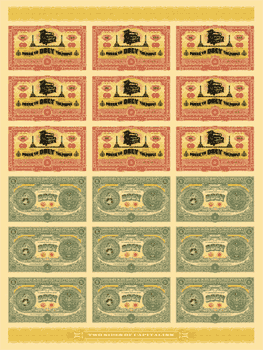
This book documents events that occurred in 2007.  The E Pluribus Venom show was based largely around two images that Fairey designed to reflect the two sides of capitalism.  The image to the right really doesn’t do any justice to the work itself, but you can kind of see that he created two-sided faux dollar bills.  The front showed all the good things that capitalism can do.  The back showed all of the evils that capitalism causes.  The images resemble dollars, but the text is straightforward in its message.  As with a lot of what Fairey does, it’s blunt and obvious but pretty cool.

As far as I’m concerned, though, this is the least interesting image in the book.  Although I love that they made dollar bill sized prints of these faux dollars and left them scattered around in cities to promote the show.  They way they were folded made them look at a glance like actual currency.  Very cool. (more…)

Read Full Post »

SOUNDTRACK: KISS-Alive II (1978).

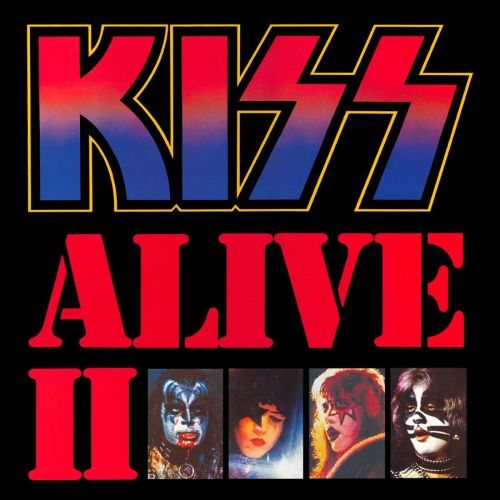
There’s not too many million-selling albums that have a man covered in blood on the cover.  And yet here is one.  (I’ve always been confused why Paul and Ace both look like they are not wearing the white makeup in these photos).  I must have listened to this 4 sided LP a thousand times as a kid (my poor mother–what did she do while I monopolized the only stereo in the house and made her listen to Paul Stanley rambling on and on? 

“Detroit Rock City” and “King of the Night Time World” open the concert just like they open Destroyer.  But unlike on Destroyer, the next songs keep up the fast pace with “Ladies Room” and “Makin’ Love.”  All four of these songs are a bit faster, a bit louder a but more intense than the album versions (especially the Destroyer tracks, which have all of the bombast removed).  This first side ends with an energy-packed “Love Gun.”  I mean, holy cow, what an opening, it’s all nonstop heavy rock.  Even though I like, nay, love the originals, these version have so much energy, so much presence (they would have it even without the crazed fans screaming–which is practically like static it is so continuous) that they blow away the studio versions.

“Calling Dr. Love” is a much faster tempo (with a wonderful intro about “rock and roll pneumonia”) and “Christine Sixteen” loses the piano (which I admit I liked, but it works great without it), and it’s far creepier here.  “Shock Me” picks up some rock from the studio version, but more importantly, it picks up a crazy guitar solo (which is yes, much better seen than heard).  “Hard Luck Woman” to me sounds funny in this setting.  Don’t get me wrong, I love it, but it’s hard to imagine them playing it amidst all the chaos of the rest of the show.  And then “Tomorrow and Tonight” is fine in this context, but you can kind of feel the fans wishing for “Rock and Roll All Nite.” 

Side three opens with “I Stole Your Love” which rocks equally as hard live.  It’s followed by “Beth” perhaps the strangest thing on a live album.  From what I’ve seen, Peter comes down from behind the drums, sits in the front of the stage and sings his mega-hit to piped-in piano music.  I guess it was something of a break for the rest of the band.  It’s followed by a truly intense version of “God of Thunder”–faster and heavier than the original and very cool.  The only surprise is that it contains a drum solo–the solo is not the surprise (it is the 70s after all), the surprise is that “God of Thunder” is so obviously Gene’s song, it seems odd that they would break it up with a drum solo (although if memory serves, he uses the time to clean off all the blood from his face and guitar).  “I Want You” sounds really great in this version (the guitars are wicked) and it gives Paul a chance to show some vocal acrobatics.

The LP version featured this awesome gatefold inner photo which I have to say may have really set the bar high for other bands in terms of concert awesomeness.  My vinyl copy has pencil lines etched into the cardboard from the number of times I traced the picture.  (Thanks to Porcelain Theology, a blog I am enjoying very much, for this picture).  The live portion of the show ends with “Shout It out Loud” which works as a very solid anthem to end the concert.

The fourth side of the LP always confused me.  When I was young and didn’t really understand how to read credits, I assumed that whoever’s name was after the song was the person who sang it (generally true, but not always).  So, when side four featured covers and songs written by people not in the band, it blew my mind.  I also didn’t understand why there were five non-live, indeed, brand new songs on this live album (they didn’t want to release any songs that were also on Alive!–perhaps the last time they didn’t reissue music).  I respect this decision, but at the same time, how much cooler would this concert be with “100,000 Years” or “Deuce” included? 

The five songs actually aren’t bad, but they don’t really have all that much excitement to them.  “All American Man” is a surprisingly gritty song from Paul and “Larger Than Life” is pretty interesting musically (and I just realized that love means penis in this song too and that it’s actually a pretty funny brag song).  “Rocket Ride” is probably the best song on this side.  Ace didn’t contribute to any of the other songs on this side, but he goes out with a blaze!  The chorus is a little cheesy but the verses are really cool, and the solo rocks. 

How I miss the excess of the 70s.

[READ: October 1, 2011] “Flick Chicks”

Mindy Kaling is a writer for and actor on The Office.  She is very funny.  I’m not sure if she has written for the New Yorker before, but I like her and wanted to include her here (just to get some of her magic mojo to appear on my blog).  This piece is labelled an “L.A. Postcard” and it is more or less broken into two parts. 

The introduction shows Mindy sitting down to pitch a new movie.  She claims that all TV writers want to write for movies because “At the Oscars, the most famous person there is, like, Angelina Jolie.  At the Emmys the huge, exciting celebrity is Bethenny Frankel.”  [I actually don’t even know if Bethenny Frankel is a real person, so I guess that proves the point].  Although this year there has been a lot of chatter about the movies stars who are now on TV shows–see the New Yorker event Bravura Television.  William H. Macy and Jeremy Irons  may not be Angelina Jolie, but they’re still pretty awesome.

Anyhow, the joke of her movie pitch is that she wants to write a romantic comedy, but the studio is now focusing solely on making movies based on board games (see the existence of Battleship: The Movie).  Pretty darn funny. (more…)

Read Full Post »

SOUNDTRACK: KISS-Love Gun (1977).

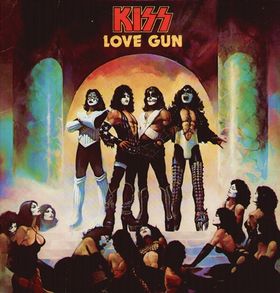
This was the first Kiss album I’d ever heard.  I’ll never forget my cousin bringing it to Long Beach Island in the summer of 1977.  I loved “Christine Sixteen” (of course, I was 8 and had no idea what it was about, I just loved singing it).  And the album has always held a magical mystique for me.

And even now I think the opening guitars of “I Stole you Love” are fantastic–fast and furious.  And the processing (or is that harmonizing) on Paul’s vocals make this song so urgent it’s really amazing.  I also got a kick out of the “guitar!” comment before the solo–certainly not the first band to do it, but surely the first I’d ever heard (they may be the first to say “Listen” at the end of a solo, though).  “Christine Sixteen” is a preposterously poppy song (listen to the bouncy, happy piano!), how could an 8-year-old not love it.  It is, of course, utterly creepy when Gene sings it now, (actually, my calculations show that he was 27 when he wrote the song–still pretty fricking creepy–and in some places, illegal).

The choppiness of “Got Love for Sale” makes the song different from many other Kiss songs, which were all about flow.  The guitars are choppy, the drums are choppy: t’s pretty cool. It’s all hard and heavy (except for the doo wopping “got love for sale” backing vocals).  Ace Frehley finally gets a lead vocal turn on the awesome “Shock Me.”  This has always been one of my favorite Kiss songs although listening to it now it sounds a little weak on this album (really uninspired backing vocals, eh?) but the solo is ripping–and the live versions are much more intense.

My first version of Love Gun had a skip at the beginning of “Tomorrow and Tonight” which made me not like the song very much.  Now I just think of it as a piece of filler–it sounds like it could come from Paul’s solo album (what’s up with the backing singers?).  I assume that they were trying to dip into the anthemic power pop well one too many times with this one.    But all is forgiven with the next song, “Love Gun.”  Yep, sex metaphors abound in Kiss, but this one is pretty awesome.  Beyond that, the sound of the guitars is great: the powerful power chords and the amazingly full chorus are also great.   And the staccato drums (and blistering solo) obviously make the song genius.

The rest of “Side two” is pretty interesting.  “Hooligan” is an odd little number.  It’s Peter’s song and it swings–Peter was always more into older rock than anything else, and this song, if it was stripped of its rougher edges (and cool solo) would fit pretty well on any of Peter’s (not very rocking) solo albums.  Although “dropped out of school when I was 22” is a pretty great line.  “Almost Human” is a weird song with some crazy guitars.  The solo is absolutely insane–I’d love to have seen the recording of it–just noises upon noises, very cool.  And the music itself has an odd eastern feel.  There’s great vocals and effects and all kinds of interesting things going on.  It’s an overlooked gem from this disc. 

Then there’s “Plaster Caster” the song about the woman who makes plaster casts from rock singer’s penises.  I still laugh at the euphemism of “if you want to see my love, just ask her”.   I’ve always loved this song even though listening to it now, it sounds kind of anemic (of course, the guitars were sampled in Tone Loc’s “Funky Cold Medina” so that’s got to mean something, right?) 

The album ends with a cover of “Then She Kissed Me.”  Even though Kiss likes that kind of music, I never did, so this song has always been my least favorite song of all of the first six Kiss albums.  But hey, the album runs 32 minutes in total–without those three minutes, you’re under half an hour.  That’s why I assume it was included.  The solo is nice though.

The album is pretty heavy overall and has some great guitar solos from Ace.  They’re not as anthemic and pretty as on Destroyer but they really show off his guitar skills.  And even though I tend to like Destroyer, Love Gun might be #1 for me on any given day.

[READ: October 4, 2011] “The House on Sand Creek”

This short story was on the surface very funny even though underneath there was exceptional sadness.  The events that set the story in motion are pretty unlikely–a couple rents out a property sight unseen (as if–especially since he is a realtor) and it turns out to hold so much karmic malfeasance that it quickly makes the wife, Monika, flee the god forsaken countryside and fly back to Bosnia. 

The narrator falls into a rhythm with his neighbor Bob (this part of the story reminded me of parts of Wells Towers’ stories–two men, out in the middle of nowhere, bonding despite obvious differences).  But the story quickly moves back out of Tower territory when the narrator gets a call from Monika (about two years after she left).

Her new marriage in Bosnia didn’t work out and she’s moving back in with him and bringing her new son as well.  (Again, it seems unlikely that this could just happen–that she would just call and say she was moving back in with him after two years, but whatever, it moves the plot).  And so, the narrator and his ex-wife move back in together with Monika’s son, Karel.  Karel is the son of an African man and Monika hopes he will grow into a Mandingo (this seems unlikely since the boy’s father is actually a short neurosurgeon from Yoruba–a West African village). (more…)

Read Full Post »

SOUNDTRACK: KISS-Rock and Roll Over (1976).

After Alive!, Kiss released what I think of as the cartoon albums.  These next three discs all had cartoon covers, which also coincides with their huge ascent into fame.  I tend to think of Destroyer and Love Gun more than this one (maybe full-bodied pictures are more memorable than just their faces), even though this one has a huge share of important Kiss songs like “I Want You” (which has an amazingly long version on Alive II). 

I never really liked “Take Me,” there’s something about the chanting backing vocals that irks me (although “Put your hand in my pocket, grab onto my rocket” is one of my favorite Kiss couplets).  But “Calling Dr. Love” is a wonderful twisted song (the falsetto backing vocals are so doo wop, it’s funny to contemplate the band’s musical direction at this point).  I loved this song so much it even features in one of my first short stories

As an eight year old, I could never figure out what Gene would be doing in the “Ladies Room”–since he was a boy and all.  Naiveté is a wonderful thing to have as a young person listening to Kiss–I had no idea what was going on in most of the songs–I wonder if my parents bothered to listen to the lyrics at all.

I also never really liked “Baby Driver” all that much–I don’t know if it’s Peter’s voice, or that I can’t figure out what the hell this song is about but it’s still just okay to me–although I like the guitars at the end.   I love the solo in “Love ‘Em Leave ‘Em”–although the sentiment is not the best.  Of course, the sentiment in “Mr. Speed” cracks me up: “I’m so fast, that’s why the ladies call me Mr. Speed.”  Did that mean something different in 1976?

“See You in Your Dreams” was covered by Gene on his solo album, and I think I like that version better (it’s more theatrical).  Although this one has very interesting use of Beatlesesque harmonies.  “Hard Luck Woman” is wonderful song, and I do like Peter’s voice here, yes.  But who the hell is Rhett?  “Making Love” ends the disc.  I like the break in the middle and the awesome guitar solo.  Also, Paul’s vocals have some cool effects on them. 

This is a fun album.  Even the songs I don’t love are still songs that I like quite a bit.  It’s a nice contrast from the bombast of Destroyer.  The amazing thing is that both this album and Destroyer are barely over 30 minutes long.  Were they making albums so frequently that they didn’t have any more songs, or were they just following the Beatles model: make an album every 7 months to stay in the public’s eye?

[READ: October 2, 2011] Dogwalker

I can’t believe how quickly I read this book.  I wasn’t even planning on reading the whole thing just yet, but I started the first story and it was so quick to read and so enjoyable that I couldn’t stop.  I finished the whole book in a couple of hours (it helps that a number of stories are barely 4 pages and that it’s barely 150 pages).  The title of the book is something of a mystery as there are a lot of dogs in the stories, but walking is about the furthest thing from what happens to them.  I was also somewhat surprised to see how many of these pieces I had already read (Bradford was in five of the first six McSweeney’s issues). 

This collection is certainly not for everyone.  In fact when I recounted the story “Dogs,” Sarah was disgusted and said she would never read the story.  Bradford definitely pushes some boundaries, but they’re mostly in an attempt to find humor, so I think that’s cool. Sarah even admitted that the end of “Dogs” sounded funny (although she was still disgusted).  The two things I found odd about the stories were that two of them featured a three-legged dog, which seems a little lazy to me–although I don’t know what the dog might signify.  And two of them featured someone or something singing unexpectedly and the narrator getting a tape recorder to surreptitiously save this special recording.  Again, it’s a really unusual thing to happen at all, but to have that happen in two stories?

Aside from those little complaints, the stories were fun, funny and certainly weird. (more…)

Read Full Post »

« Newer Posts - Older Posts »