 SOUNDTRACK: MOGWAI-No Education = No Future (Fuck the Curfew) (1998).
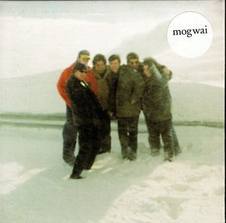 This is a 3 song EP. The opener “Xmas Stripes” is one of my favorite early Mogwai songs. The opening melody is really great, with a cool interesting bass and a nice guitar over the top. At about 3:30 the song grows from a silent track to a menacing, growing beast until the drums start and the song and the main riff begins. By 5 minutes it’s all out rock noise. By 6 minutes the song is scaled back for the violin solo. The remaining 7 (!) minutes are a denouement for the song. Even though I love the track, I mostly love the first 8 or 9 minutes. The ending tends to drag a bit.
But for all of their noise, Mogwai’s early releases were really quieter instrumentals, meditative songs that were really quite pretty. “Rollerball” is a beautiful, sad three-minute track.
The last song “Small Children in the Background” continues in this quieter vein. At nearly 7 minutes, it allows for a noisy middle section. This noisy section is indeed mostly noise. And yet the pretty melody of the rest of the track is just as loud throughout the mix, making for a very cool and very brief explosion mid-song.
Not all EPs are essential, but this one is pretty fantastic. And I have Lar to thank for getting it for me.
[READ: March 10, 2011] Changing My Mind
It’s funny to me when that when I get into an author, I seem to wind up not reading the books that people most talk about until much later. Take Zadie Smith. Her debut, White Teeth, is something of a touchstone for many readers. I missed it when it came out, but I loved On Beauty and figured I’d go back and read it. That was almost a year ago. And in that time I have read lots of little things by her and now this collection of essays.
Regardless, this collection of essays is a wonderful look in to the nonfiction world of a writer whom I admire. And it was quite a treat. Zadie is an intellectual, and that comes across in all of these paces. Whether it’s the subjects she’s writing about, the footnotes she uses or just the acknowledgment that she likes art films and not blockbusters, we know where she’s speaking from. And, of course, I’m right there with her. The funny thing about this book then is how few of the subjects I know.
The book is broken down into five sections: Reading, Being, Seeing, Feeling and Remembering. The Reading section is basically book reviews. The Being section is about her experiences. The Seeing section is about films. The Feeling section is about her father and the Remembering section is about David Foster Wallace.
Zadie is an excellent and thorough reviewer of books. As I learned recently in the Harper’s reviews, she is efficiently analytical but never shies away from really tackling a book or author. And many of the reviews are quite lengthy, so she really look at the subjects fully.
The essays concern Zora Neale Hurston, E.M. Forster, George Eliot, Roland Barthes, Vladimir Nabokov and Franz Kafka. The preposterous oversimplification is to say that she likes all of these authors. Each essay also details some really interesting personal history that she has with reading their books.
Reading
“Their Eyes Were Watching God: What Does Soulful Mean?”
Smith initially resisted Hurston because her mother suggested she read Their Eyes were Watching God. She didn’t want to read a “black woman” writer almost on principle. The essay then leads to a really great discussion about race and gender both in and out of fiction. It was quite thought-provoking, and a great lead off piece.
“E.M Forster, Middle Manager”
Smith really likes Forster–On Beauty is something of an homage to him. This essay is mostly transcripts of his radio shows. He was something of a voice of reason in his literary reviews: he would warn the listener about what he thought they would like. And it is his voice of reason that she really responds to.
“Middlemarch and Everybody”
Looks at the fairly fascinating constriction of Eliot’s novel. Zadie really likes the book, and she explains how it was more or less two stories that she put together. Which explains why some people are disappointed in the ending.
“Rereading Barthes and Nabokov”
Zadie loves Nabokov, possibly to an unhealthy degree (although she really makes me want to get back to the Nabokov canon sooner rather than later). This article ties somewhat to DFW’s article about H.L. Hix’s L’Morte d’Author because it is a kind of argument between Roland Barthes (the birth of the reader must be at the cost of the death of the author) and Nabokov (a good reader, a major reader, and active and creative reader is a re-reader). She sides with Nabokov.
“F. Kafka, Everyman”
In addition to Nabokov, it appears that Kafka is one of Zadie’s favorite authors. And this essay goes a long way to looking at Kafka the man. It’s an interesting look and shows a side of Kafka (the man) to be much funnier than anyone might have anticipated.
“Two Directions for the Novel”
This essay looks at two novels: Netherland by Joseph O’Neill and Remainder by Tom McCarthy. Netherland is the “post 9/11 novel we hoped for” (73) although it is less concerned with 9/11 than with anxiety in general. In Remainder, the protagonist has a huge black spot in his memory. But mostly she lauds his voice, full of “spirals of interiority” (85) (she references’ DFW’s “The Depressed Person” for stylistic reference). It resists its readers but with a smile.
Being
“That Crafty Feeling”
This is a wonderful essay that was published in The Believer. I had intended to write about it but never did. And now here it is again. So this is Zadie’s ten point essay about her “craft.” She explains that there are basically ten stages of writing a novel. They are funny and clever and surprising. Reading it now a second time made me enjoy it even more.
“One Week in Liberia”
Zadie went to Liberia for a week and reports back about the rather dreadful scene there. The big surprise comes from the way there is so much hope in what is really a hopeless situation. She really lets you see individuals in this countrywide disaster. And it is very moving.
Speaking in Tongues”
I really liked this essay as well. She writes about how we all have different voices. She grew up with a different voice than she now uses (her newly educated voice with rounder vowels). But the bulk of the article takes up newly elected president Barack Obama. And the essay looks at his life, his use of language, and that he is biracial (Zadie is also biracial). It is optimistic and a wonderful look at our President from outside of America.
Seeing
“Hepburn and Garbo”
From early in the book, we learn that Zadie loves old movies. She especially loves Katherine Hepburn. This article goes a long way to impressing this reader as to Hepburns’ greatness (I’ve never been a fan). The other half looks at Garbo as a face. That she was more impressive in pictures and in silent films more than in the talkies. But also how Garbo was so good at doing the unexpected and really shining because of it.
“Notes on Visconti’s Bellissima”
This was my least favorite article in the book only because I don’t know the film or any of the principles. It was an interesting look at the process, but it was so alien to me that I just never really absorbed anything.
“At the Multiplex, 2006”
In 2006, Zadie wrote film reviews. But she wasn’t allowed to do artsy films. So here we see an avowed fan of black and white and artsy films going to the multiplex. She reviews 18 films. I hadn’t seen most of them, but it is fun to read a film snob’s opinion of pop movies. And I know I’ll never see Date Movie now (poor Alyson Hannigan). And we learns that Zadie loved Buffty the Vampire Slayer (Zadie gets cooler and cooler).
“Ten Notes on Oscar Weekend”
Zadie gets to go to the Oscars, or at least, she’s in LA for the Oscars. This is a sort i impressionistic piece about what it’s like to be in LA for te Oscars and how it impacts various people, from struggling actors to limo drivers.
Feeling
“Smith Family Christmas”
Zadie wrote the next three pieces about her father. (White Teeth also is apparently about him to a degree as well). Zadie’s father was a white Englishman. Her mother was (is?) Jamaican. This was his second marriage, and it failed very quickly like his first. Nevertheless, Zadie loves her father and it is obvious how much of an impact he had on her. It’s interesting that she barely mentions her mother at all (except for that Hurston article).
“Accidental Hero”
Zadie’s father stormed Normandy with the British army. He was reluctant to talk about it until she made him. And despite his heroism he always felt he never measured up to one particular man whom he felt was the real hero there. It’s a touching family portrait and an interesting look at British stiff-upper-lippedness.
“Dead Man Laughing”
This article was published in The New Yorker. I read it then and really enjoyed it. Rereading it was also enjoyable. It deals with her childhood, growing up listening to great comedy with her father. And it ends with her brother’s attempts at stand up (and the scene at the Edinburgh Fringe Festival). She introduced me to a number of great comedians.
Remembering
“Brief Interviews with Hideous Men: The Difficult Gifts of David Foster Wallace”
Obviously I’m a huge fan of David Foster Wallace. It’s interesting that I also love Zadie Smith and yet I had no idea that she had a 40 page essays about DFW here.
She started this essay while he was still alive (it was written for the tenth anniversary of Brief interviews with Hideous Men). As such, it is more or less a look at all of the pieces in the book (which received pretty universally bad reviews in England).
Specifically, she looks with great loving detail at
- “Death is Not the End” (brief) she looks at the way the story eviscerates a self-important author.
- “Forever Overhead” she really engages with this story and brings out all of the beauty and majesty of it.
- “The Depressed Person” she highlights with the recursive nature of the piece and feels that critics misunderstood it.
- “The Devil is a Busy Man” (very brief) acknowledging the way he overcomes the cliché that you can’t give anything away.
- “Think” (a brief but recurring look at the end of this story) she finds the revelation to be quite profound.
- “Signifying Nothing” (brief) she likes the way the protagonist is able to overcome a traumatic incident.
- “Datum Centurio” (brief) I found this “piece” amusing, but Zadie really wrenches out a lot of joy and humor and makes me want to reread it.
- “Adult World” (brief) this is the only piece she is dismissive of. She felt that it was a wonderful shock when she first read it but upon rereading it finds it to be without substance.
- “Octet” (more than brief) unlike “Adult World,” she finds the deconstruction of this story to be effective, especially because of its honesty. She feels that your reaction to this story will determine your reaction to DFW in general.
- “Church Not Made with Hands” (more than brief) she adores this story, a story that I very much did not. However, she ends her essay with examples of joy that she received from this piece and she makes me want to go back and read this again as well. And so I shall.
- “Tri-Stan: I Sold Sissee Nar to Ecko” (brief) “Has been known to try the patience of even the hardiest howling fantod” (I couldn’t agree more. I’m not even sure if she could make me reread the story).
- “On His Deathbed, Holding Your Hand, the Acclaimed New Young Off-Broadway Playwright’s Father Begs a Boon” (very brief) she looks only briefly at this story about someone who abuses his gifts.
- “Suicide as a Sort of Present” which is obviously too soon to look at reflectively now.
- Also Interviews #2 [serial monogamist, how hard it is for me to break up with you] (brief); #20 [granola cruncher] (very lengthy); #42 [toilet attendant] (very brief); #48 [chicken sexing] (very brief); #59 [Bewitched] (more than brief) looking at the recursive nature of the man’s fantasies.
This was a really wonderful remembrance. In addition to BIWHM, she talks about a few things of IJ; but mostly she talks about DFW himself. His way with words and the gifts that he was given. It’s never maudlin, and the ending does not even focus on DFW’s death, leaving the reader not depressed, but inspired.
—
This is a wonderful collection of non-fiction. Now I MUST get to White Teeth (even if she says she can’t read it anymore).

 I Just Read About That...
[…] “Rollerball” and “Small Children in the Background” come from the other EP as I mentioned. It’s odd to squeeze in songs from a different release, but Mogwai […]