Feeds:
Posts
Comments

Archive for February, 2011

SOUNDTRACK: BIG DIRTY BAND-“I Fought the Law” (2006).

I just found out about this “supergroup” which was created for the Trailer Park Boys Movie.    The group consists of Geddy Lee and Alex Lifeson from Rush, drummer Jeff Burrows from The Tea Party and three people I don’t know: the singer from Three Days Grace, the singer/guitarist from Thornley and on lead vocals Care Failure from Die Mannequin.

I have to say that I’m not that excited by this cover.  The song has been covered so many times (some very good: The Clash, some very clever: The Dead Kennedys, and some terrible: many others).  And frankly there’s not much that you can do with this song.  It’s simple in structure with potential for shouting (which everyone likes), but little else.

For Rush fans, you can’t tell that Geddy or Alex are even on it.  So really it’s just a kind of metal-ish version of this old song.

Oh well, they can’t all be zingers.  You can hear it here.

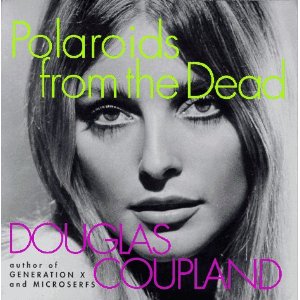
[READ: February 1, 2011] Polaroids from the Dead

After reading Shampoo Planet, I wanted to see if I remembered any of Coupland’s books.  So I read this one.  It’s entirely possible that when I bought this book I was disappointed that it was not a new novel and never read it.  Because I don’t remember a thing about this book.  (This is seriously calling into question my 90’s Coupland-love!).

But I’m glad I read it now.  It’s an interesting time-capsule of the mid-90s.  It’s funny to see how the mid 90s were a time of questioning authority, of trying to unmask fame and corporate mega-ness.  At the time it seemed so rebellious, like everything was changing, that facades were crumbling.  Now, after the 2000s, that attitude seems so quaint.   Reading these essays really makes me long for that time when people were willing to stand up for what they believed in and write books or music about it (sire nothing changed, but the soundtrack was good).

So, this collection is actually not all non-fiction.  Part One is the titular “Postcards from the Dead.”  It comprises ten vignettes about people at a Grateful Dead concert in California in 1991.  As Coupland points out in the intro to the book, this was right around their Shades of Grey album album In the Dark, and huge hit “Touch of Grey”, when they had inexplicable MTV success and it brought in a new generation of future Deadheads.  He also points out that this is before Jerry Garcia died (which is actually helpful at this removed distance).

These stories are what Coupland does best: character studies and brief exposes about people’s lives.  The stories introduce ten very different people, and he is able to create a very complex web of people in the parking lot of the show (we don’t see the concert at all).  As with most Coupland of this era, the characters fret about reality.  But what’s new is that he focuses on older characters more (in the first two novels adults were sort of peripheral, although as we saw in Shampoo, the mother did have millennial crises as well).  But in some of these stories the focus is on older people (Coupland was 30 in 1991, gasp!).  And the older folks fret about aging and status, just like the young kids do. (more…)

Read Full Post »

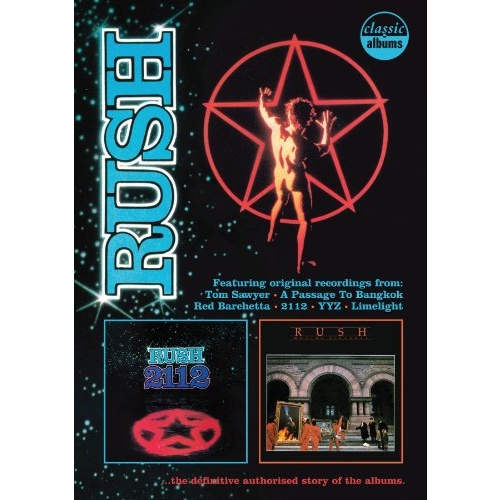
[WATCHED: January 3, 2011] Classic Albums: Rush–2112 • Moving Pictures

Sarah got me this disc for Christmas.  Thank you, Sarah!

This DVD is from the Classic Albums series.  The series is shown on VH1 in the states and BBC (and other places) elsewhere).  There’s been about 35 episodes of the series, with Rush being one of the few bands to have two albums for the show (which is an honor, but which also cuts down on the content for each album by half…boo!).

The show is an hour, and there’s almost an hour of bonus footage on the DVD  (which die-hard fans will enjoy more than the actual show).

The main show itself looks at the creation of these two classic albums.  There are interviews with the band members as well as many people associated with the band (and a couple completely random musicians).  We get their manager Ray Daniels and the producer for these albums Terry Brown (his segments are my favorite because he gets behind the mixing console and plays around with the songs).  We also get Cliff Burnstein (the guy with the crazy hair) who was instrumental in getting Rush publicity. (more…)

Read Full Post »

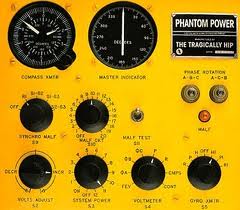
SOUNDTRACKTRAGICALLY HIP-Phantom Power (1998).

The last couple of Hip albums were pretty intense, and it seems like the live album seems to cured them of their need for raucousness. And so Phantom Power follows with a much less intense collection of songs.

The first three songs are somewhat loud and rocking, but they lack any of the twists and turns that the previous records had.  Rather they are pretty straightforward rock tracks.  “Poets” is catchy and fun to sing along to, with a good guitar intro.  And “Something On” is similarly rocking.  But after that the disc changes.

There’s a lot more folk and acoustic guitars here.  It’s an unexpected direction, especially when you figure that their first albums were so raw sounding.  In some ways that makes the album disappointing.

But what they have removed in intensity they have made up in subtler ways.  Take the cool harmonies on “Membership.”  I’ve always found their backing harmonies to be slightly off, usually in an interesting way, but the harmonies are perfected on this song, where they are more of an echo of Downie’s vocals which add a new sound to the song.

There’s a really fun rocking song about hockey (among other things) in “Fireworks,” although for all of its speed, it’s a very poppy track–there’s very little bass evident on the track (or most of the disc).  And it speeds along just as catchy as can be.

I have to wonder if “Vapour Trails” had any influence on Rush’s decision to name their comeback album Vapor Trails.  Probably not, but it’s fun to think about (and it is probably the heaviest song on this disc).

But “Bobcaygeon” is the obvious highlight (although it’s even better live)–the bridge into the chorus is sublime.  It’s one of their more mellow tracks, but there are cool twists and turns throughout.  Second is “Escape is at Hand for the Travellin’ Man” an uptempo but by no means rocking number that propels itself along on a simple riff and engaging lyrics.

I tend to forget about this album because it is not so intense, but listening to it again, I’m reminded not to overlook this album, even if it’s not a hit-worthy as some of their others.

[READ: February 8, 2011] “Samson and Delilah”

This story is a retelling of the Samson and Delilah biblical story.  I knew the original story pretty well, but I didn’t know that Samson was blinded (which he was).

This retelling is more contemporary (in langauge) and it is somewhat funnier (although it’s obviously not a funny story in the end).  Goldstein has added aspects that make it funny: anachronisms and such.  But he also imbues Samson (and Samson’s father) with characteristics that aren’t in the original. (more…)

Read Full Post »

SOUNDTRACK: MONEEN-The World That I Want to Leave Behind (2010).

I’ve liked Moneen’s discs; they played an interesting mix of grungey noisey rock and incredibly poppy emo.  And their song titles were really long and often funny (“The Frightening Reality Of The Fact That We Will All Have To Grow Up And Settle Down One Day,” “There Are A Million Reasons For Why This May Not Work… And Just One Good One For Why It Will”).

The first sign that The World I Want to Leave Behind is different is that their song titles are all really short.  The longest one is the title of the album–which is the shortest song: a 2 minute quiet intro that features some noisy guitars at the end.   The rest are 1-3 words long.  Now, perhaps you can’t judge a band by that; however, their music, like thier song titles, has eschewed complexity and embraced pop.  (“Believe,” “Waterfalls,” “Lighters”).

Okay Moneen always had this component to it.  So it’s not like suddenly the band is all pop.  Take “Are We Really Happy with Who We are Right Now?” from the album of the same name .  The song is all emo vocals (including harmonies) but the music is punky and noisy.  It’s also got a lot of dissonance.  Similarly, “The Start to this May be the End to Another” (from their debut), opens with really blasting noise and then turns into a heavy emo track with loud and quiet sections.  They are certainly poppy, but there’s at least nods to noise.

This album removes all of that noise and chaos and settles into to some tried and true emo.  If you hate emo, you will hate this album.  There’s virtually no dissonance on the disc at all.

Okay, that’s not entirely true.  The second song, “Hold That Sound” opens with some noiy aggressive guitars (and interesting noisy effects) and “The Long Count” has some noisy heavy opening chords which propel through the track.  But unlike earlier records, the noise gets pushed to the background pretty quickly.  “The Monument” also shows some remnants of heaviness–there’s even screaming vocals at one point.

And yet, the aforementioned “Wateralls” and “Lighters” sound like Guster-lite (and I like Guster quit a bit).

The final song, “The Glasshouse” does rock pretty hard (although the harmonies are all still there and the emo certainly seeps in by the end with a piano break and the final 2 minutes being all gang vocals).

Okay so in fairnes to the band, they haven’t smoothed off all the rough edged, but the polished bits are really polished now.  The thing is, I kind of like emo, so despite my tone, I don’t really dislike this record.  I’m always diasppointed when a band moves more commerical, especially if they cut off their more interesting bits, but Moneen make good emo (if you allow that such a thing exists).  I don’t like all emo bands, but there’s still enough interesting stuff here to keep me coming back to it.  In fact, for all of its poppiness, “Believe” is a really fantastically catchy alt rock song which should be in heavy rotation somewhere, if it’s not already.

[READ: February 13, 2011] A Place So Foreign and 8 More

When I saw that Cory Doctorow had a book of short stories out, I was intrigued. I’ve enjoyed two of his books quite a bit, so what could he do with short fiction?

This is some of his earliest work and I found it a mixed bag.

The first story “Craphound” was great (and the origin of his website name).  It concerns going to flea markets and buying all kinds of crap.  When you do it a lot, you become a craphound.  But when you take a fellow craphound’s crap of choice for yourself, you break the unwritten rule.  That’s all well and good.  But in this story one of the craphounds is an alien, like from another planet.  And what he trades for his crap is pretty wild.  But why would he break the unwritten rule?  The story is a fun look at what happens when extra-terrestrials are a part of your life.

“A Place So Foreign” was my absolute favorite story in the book, and one of my favorite short stories in quite some time.  I’m happy to say that I read it last, so it totally ended the book on a high note. Despite the cover picture with an “alien” hand holding a suitcase, the story has nothing to do with that at all. (more…)

Read Full Post »

SOUNDTRACK : BLACK MOUNTAIN-Wilderness Heart (2010).

As the Tea Party showed, it’s never too late to pay tribute to Led Zeppelin.  Of course in 2010, it seems really uncool.  So, why not go whole hog?  The opener, “The Hair Song” sounds uncannily like Led Zeppelin, from chord structure to guitar sound.  And then just wait until after a verse or two and you get the guitar solo which comes straight from a Led Zep song.  And, amusingly enough, the duet vocals of Stephen McBean and Amber Webber combine to sound an awful lot like Robert Plant.

It may not be fair to compare them to their forebears, but they seem so intent upon referencing them.  “Old Fangs” sounds a ton like Buffalo Springfield’s “Mr. Soul” (at least they’re fellow Canadians).  But the wonderfully 70’s-style sound of the keyboards raise the track above any mere copycat.

“Radiant Hearts” is a gorgeous acoustic ballad where you can really appreciate the split vocals of McBean and Webber (and which should make you go back to the first two songs to really listen to how great they sound together.  This is that rare ballad that doesn’t feel like a kind of sell out track.

“Rollercoaster” returns to the 70’s-lovin’ with a monster riff (and a solo) that Tony Iommi would be proud of.  But rather than simply bludgeoning us, the riff stops in its tracks and then slowly builds itself back up.  “Let Spirits Ride” moves out of the 70s and sounds a bit like a Dio riff circa 1983.  But there’s some cool psychedelic vocal processing on the bridge (and a massive organ solo) to really mess with your retro time frame.

“Buried by the Blues” is followed by “The Way to Gone.”  They’re both folkie songs (although “Gone” features a re harder edge).  After the heaviness of the first half of the album , these tracks seem like a bit of surprise but they match the album’s retro feel very nicely.  “The Space of Your Mind” reminds me in many ways of Moxy Fruvous’ “The Drinking Song” (you won’t see that reference too much to this album).  Until the chorus comes in, when it turns into something else entirely.

But it’s not all mellow for the end. The title track has some heavy riffage (and great vocals by Webber–she reminds me of some of the guest vocalists on The Decemberists’ The Hazards of Love, although she really sounds like any number of great 70s rock vocalists).  I love the way the track ends.  The disc ends with “Sadie” another folk song (which makes the album half delicate folk tracks and half heavy rockers). It’s a fine song, but the album is kind of ballad heavy by the end, and the teasing drums and guitars just never bring forth the climax I was looking for.

Despite the obvious homages to classic rock bands, (if you can get past that, the album actually sounds fresh (or maybe preserved is a better word) and strangely original.  Like the preposterous cover, the album is preposterous–over the top and crazy.  Yet unlike the cover, the pieces all work together to form a compelling picture.  Obviously it helps if you like classic rock, but there’s nothing wrong with good classic rock, now is there.

[READ: February 14, 2011] Literary Lapses

Despite the cover picture above, I actually downloaded this book from Google Books (and the cover of that one was boring).

So, obviously, reading the biography of Stephen Leacock made me want to read some of his humorous fiction.  True, I also wanted to read Mordecai Richler, but his books are much longer and I wanted this done by the end of February!

So, according to Margaret MacMillan, it is this book, specifically the first story, “My Financial Career,” that solidified Leacock’s reputation as a humorist.  And I can totally understand what she means (without having read the other books, of course).  “My Financial Career” is indicative of the others stories: not laugh-out-loud funny, but clever, kind of silly and very smile-inducing.  The gist is that the narrator is very nervous about going into a bank with his large amount of cash ($56!).  He asks to speak to the manager who thinks he’s Very Important and then proceeds to embarrass himself further. And further. It’s quite amusing.

“A Christmas Letter” is one of my favorite in the book.  It’s a very snarky look at a friend’s Christmas Party, with a great punchline.  And stories like “How to Make a Million Dollars” or “How to be a Doctor” are wonderfully amusing tales in which the narrator mocks the wealthy and “professionals.”

There are 42 stories in this book, so there’s bound to be a few clunkers.  Some were mildly amusing, some were mere trifles, and some are crazily out of date for a 2011 audience.  This book turned 100 years old last year.  (Neat). (more…)

Read Full Post »

SOUNDTRACK: RHEOSTATICS-Double Live (1997).

After mentioning the two live shows that comprise the majority of this disc, I figured I’d mention the disc itself.  Rheostatics are a great and engaging live band: Dave Bidini has wonderful repartee with the audience and Martin Tielli’s live guitar work is amazing. The band sounds tight but not stiff and there are a number of tracks here that are goofy (but not throwaway) like the acoustic version of “Bread, Meat, Peas & Rice” and the weird and wonderful “People’s Republic of Dave.”

The songs that were taken from the two Bathurst Street concerts have been professionally mixed and mastered (of course) so even if you’ve listened to the bootleg concerts, you’re going to hear a different quality (and mix, as boots tend to be recorded from one side, usually missing some aspect).

My only gripe is something that they’d never really be able to accomplish live anyway.  It’s in “King of the Past” which is one of my favorite Rheos songs.  On the album, after the break, there’s an electric violin (or something) that plays a really cool dramatic melody.  But live they never play it like that, they rely on Tielli’s guitar.  The guitar sounds fine, but that majestic string section provides such a great contrast that the live version lacks just a little.

On the other hand, the live version of “Horses” is stunning.  As are “A Midwinter Night’s Dream,” “Palomar,” and “Christopher.”

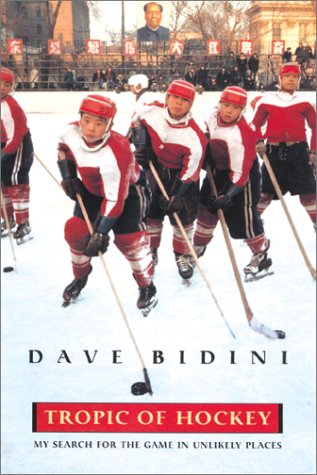
[READ: February 8, 2011] Tropic of Hockey

I bought this book when I was in Toronto sometime in 2001.  I was pretty excited to get another book by Dave Bidini.  And then I proceeded to not read it for a decade.  Hey, these things happen.

But I have to say in many ways I’m glad I waited this long to read it.  The book was written pre 9/11 and as such it has a kind of sweetness about international travel that I miss now.  And I can appreciate it all a lot better with a decade’s distance from everything.  As of 2011, I know that I never want to go to the UAE, but reading Bidini talk about the UAE circa 1999 it sounds like a really fun place to go.

So anyhow, this book, as the subtitle suggests, is Bidini’s attempt to find hockey in weird places around the globe.  Bidini has gotten tired of the NHL: it is bloated, is it full of obnoxious rock anthems during stoppage and the spirit of the game has been overwhelmed by the Almighty dollar (specifically the American dollar).  And so, he wanted to see if he could find people who played hockey the way he and his pickup team play on the weekends: for the love of hockey.  And he was amazed to find hockey fans in these four unexpected places: Hong Kong, China, The United Arab Emirates and Transylvania.

The book is really three things though: it is the story of hockey in different places, it is a chance for Bidini to play hockey in these places and write about the experience and it is a history of Canadian hockey. (more…)

Read Full Post »

SOUNDTRACK: RHEOSTATICS-Live at the Bathurst Street Theatre, Toronto ON, April 5, 1997 (1997).

This is the second of two nights that The Rheostatics played at The Bathurst Theatre.  It is also available for free on their live site.

This concert also features a lot on their Double Live album.  There are seven tracks that come from this show: “Feed Yourself,” “Shaved Head,” “Dead is the Drunkest You Can Get,” “Bees,” “A Midwinter Night’s Dream” “Stolen Car,” and “Good Canadian.”

This recording is a lot better (sound wise) that the previous night’s and the band seems a lot more “on.”  And, the band interacts with the audience a lot.  “Feed Yourself” is great and “Mid-Winter” is stunning (both understandably picked for the live album).  There’s an amusing “drum solo” during “Legal Age Life.”  It’s a great set.

Some interesting notes: this is the first time the band has played “Stolen Car” live (and it hadn’t been released yet). It’s the same version as on Double Live, but here you hear a lengthy pause in which “Martin left the lyrics in his bag” and Dave has to entertain the crowd.  “Good Canadian” also on Double Live, was a spontaneous little ditty that Martin made up.  Also, during the show, they encourage people to listen to Nightlines, because it is danger of losing its funding.  Fans will know that Nightlines went off the air not too long after that and the Rheos played the final show (and released an album of it).

Of the two shows, this one is definitely preferred.  And even if you have Double Live, it’s worth downloading this entire show..

[READ: February 7, 2010] “Axis”

Alice Munro has another great, subtle story here.  This one mixes things up a little bit in the storytelling, which I found intriguing and more than a little fun.

It opens with Grace and Avie, two farmers daughters who are at university.  They are studying intellectual subjects, with the hope (let’s be honest) of finding intellectual boys to marry eventually.  They are obviously not sorority material (just look at their coats), but they don’t really want boys who like sorority girls anyhow.

After we follow them for a bit, we narrow the focus to just Grace.  Her boyfriend Hugo is on his way to visit her at the farm (and to meet her parents).  He does not make a very good impression, and he is not to fond of them either.  And, worse yet, they won’t leave them any time to be alone.  Until Grace hatches a plan for them to be alone, which, if you’ve read any fiction, you know won’t turn out too well (but that’s not the climax of the story, don’t worry). (more…)

Read Full Post »

SOUNDTRACK: RHEOSTATICS-Live at the Bathurst Street Theatre, Toronto ON, April 4, 1997 (1997).

This concert is free as a download on the Rheostatics Live website.  According to the on-stage banter, the band had just finished a string of live dates with the Inbreds that were recorded for their amazing Double Live album.  They even say that this night’s show is also being recorded for the disc.  And the set list is pretty amazing.

Which is why this show is such a disappointment.  Part of the problem is obviously the quality of the recording, and you can’t fault anyone for that…a bootleg is a bootleg after all.  But the band makes some really odd flubs and some of the songs seem really lackluster.  This is all the more surprising because the band seems in really good spirits –making jokes with each other and with the crowd (they make someone take off a Mr. Bean T-shirt!).

The biggest gaff comes in “King of the Past” where (I think Dave) begins the chorus a measure early (yipes!).  “Fan Letter to Michael Jackson” for some reason removes the loud rocking “Michael!” and “Jackson!” sections and replaces them with whispers.  It’s an interesting change, but the intensity is completely lost.  Something is also missing from “Sweet Rich Beautiful Mine,” there’s no oomph to it.  And, my favorite song “Claire” sounds off to me (I think it’s the recording though).

On the plus side, “My First Rock Concert” is great and well-received.  Dave introduces it as if it was the first time they’ve played it, which is very exciting.  The end of the show picks things up and the band sounds better.  In fact the last two songs are really great (and you can really hear Neil Young’s influence on the guitar).  I’m willing to blame some of my disappointment on the sound quality…it’s missing a fullness that you really need to appreciate the band, but this is not an A+ show.  They played another show the following night there (also available online).

Heh, I just learned that they used a number of recordings from this show on Double Live.  They used “Torque, Torque,” “Claire,” “Bread Meat Peas & Rice” and “Feed Yourself.”  Listening back, “Torque” and “Peas” sound great in the set and “Jesus Was Once a Teenager, Too” is a fun, light version.  “Claire” still sounds funny to me (even on Double Live), but it’s definitely worse on this bootleg.  The mixing is so much better on Double Live (of course!), that it really accentuates the guitar solo and backing vocals much more.

[READ: February 1, 2011] Shampoo Planet

On the inside cover of my copy of Shampoo Planet, I scribbled my name and “December 1992.”  I was in a phase of putting my name on all my books (which is kind of cool looking back, but really rather silly).  This is Douglas Coupland’s second book, and I remember being very excited when it came out.

I’m sure I read it then, but upon re-reading it (admittedly almost twenty years later), I didn’t remember anything from it.  Does that mean I didn’t read it, or that the book was just ephemeral?  Well, in some ways it is ephemeral, because it’s such a document of its time.  It also seems to me that either Coupland is (or was) unique in his writing style, or that very few writers dealt with 90’s culture as directly as he did.  Off the top of my head, I can’t think of another writer who approached 90s culture in the same way

In many ways, this book is all about dealing with the wealth of the 90s, when money was everywhere and people felt free to experiment with their lives.  And, yes reading this now the story feels so light and free and I wish that I had the problems that these kids deal with.  I also wondered if anyone could write a story like this now, with youth culture being so very different.

The inside front and back cover are (different) periodic tables that he has personalized with 103 elements of the 90s.  (Lu=Moon, A=Ambition, Dd=The Dead).  This is the only nod to unconventional book tropes here (where Gen X had all of those definitions that he footnoted).  In fact, the novel is fairly straightforward and conventional.

The main character, Tyler, is a twenty year old who cares more for his hair (he has a vast array of products–my favorite observation: “always better to buy well-advertised products–preferably those products endorsed by a celebrity” (133)).  He was raised in a hippie commune off on Vancouver Island (the only real nod to Canada in the book), but when his parents divorced, his mother Jasmine took the kids to Lancaster, a suburb of Seattle.  And, as seems to happen, the children of hippies became proto-yuppies. (more…)

Read Full Post »

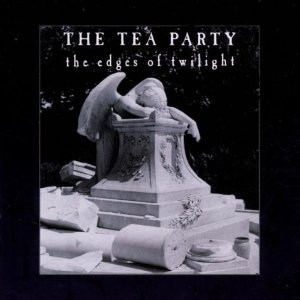
SOUNDTRACK: THE TEA PARTY-The Edge of Twilight (1995).

In the way that Ian Astbury of The Cult reminded everyone of Jim Morrison, so does Jeff Martin, singer of The Tea Party.  He looks a bit like him and he sings in a baritone voice that, while all his own, sounds like perhaps a 1990s Jim Morrison.

This, their third album, is full of what I think of as their trademark sound: all manner of exotic instrumentation laid over heavy Zeppelinesque riffs.  Opener “Fire in the Head’ is not unlike “Kashmir” in its riff, and what’s funny is that the exotic instrumentation makes it sound even more like “Kashmir” than “Kashmir” does.  Zep didn’t use instruments like the sitar and sarod to make their sound more authentic.  Indeed, authenticity seems to be what the band is going for, as later albums describe them spending time in the middle east where they learned to play these instruments more proficiently.

“The Grand Bazaar” takes that concept further with some really Eastern sounding music within a very heavy rocking track.  And “Ianna,” although not my favorite track, really showcases the Middle Eastern instrumentation in this cool, twisty track.  There’s also a more traditional rock number, “Drawing Down the Moon” which features lengthy blues-guitar solos over a fairly conventional track.

It’s not all heaviness though, as “Correspondences” is a seven minute piano based ballad in which Martin’s voice is right in your ears.  It’s on this track that you decide whether you love his voice or think he’s preposterous.  If the latter, well, then there’s the beautiful instrumental “The Badger.”  And “Shadows on the Mountainside” is a quieter acoustic number in which Martin sings in his much more delicate range.

But perhaps the most over-the-top, and consequently, best track on the disc is “Sister Awake” which features 12-string guitar, sitar, sarod, harmonium and goblet drums.  It starts slowly and quietly and builds into multiple climaxes (complete with loudly whispered “Sister!”).

Whether or not this confers any kind of approval on The Tea Party or not, Roy Harper (as in “Hats Off to Roy”) does a spoken word bonus track at the end of the disc.  I don’t know much about Roy Harper or what he was up to in 1995 (perhaps he’d do anything for a buck?) but it give an air of legitimacy, no?

The Tea Party is a band that splits people into love it or hate it groups.  They have sold millions of copies and yet there are those who despise them.  Their next album Transmission found some success in the U.S. because it was a bit more industrial sounding (with samples and loops), but they never really broke through down here.

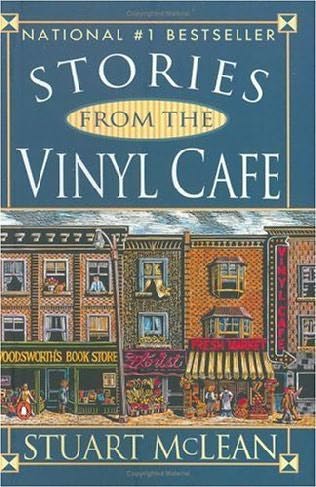
[READ: February 4, 2011] Stories from the Vinyl Cafe

I’m not sure how I found out about this book.  I know I bought it in a Chapters in Toronto.  I wonder if it was on a display and I was intrigued by the title.  Or, more likely, I had heard a bit about him in my preparations for my trip and decided to buy his book.   Whatever the case, I didn’t read it until now.

McLean is described in one of the (practically a dozen) pages of praise and advertisements for his other books as a Canadian Garrison Keillor.  And, as lazy as that seems, it’s fairly accurate.  Especially because although McLean is a humorist (he won the Stephen Leacock Memorial Medal for Humor), like Keillor, who is mostly funny, McLean also deals a lot with serious matters.  Indeed, some of the stories in this collection are utterly unfunny: ending with a dead dog or a dead grandmother.

And here’s the thing.  These stories are slices of people’s lives.  They are incidents that impact them and are worth recollecting, but that don’t cause anyone to change.  They’re like perfect little anecdotes, and I imagine they are excellent to hear aloud. (more…)

Read Full Post »

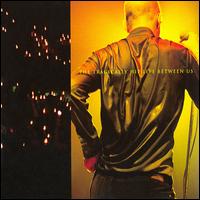
SOUNDTRACK: THE TRAGICALLY HIP-Live Between Us (1996).

This show was recorded live November 23, 1996 in Detroit.  It’s kind of odd that these Canadian favorites would record their live album in the U.S.

In the intro to the album Downie thanks The Rheostatics for opening (you can hear the Rheos’ sets from other days on the tour, but not this night, at their Live site).

This concert is a great, strong set of songs, and an excellent way to experience the Hip live.  Downie is practically a loose cannon with his extemporaneous ramblings…he’s funy, weird and clever and he’s a charismatic front man.  And the band sounds great (no overdubs on the disc, and none are needed).

The set list is a wonderful selection of tracks from all five of their albums (none from the first EP).  Two each from the first two, Three from Fully & Day and the first four tracks from Trouble (which is probably why I like the beginning of Trouble so much more than the end).

True, any fan will complain about the lack of certain songs on here (no “38 Years Old,” no “Little Bones” no “Unplucked Gems” no “Hundred Meridian” or “Fifty Mission Cap” no “Fire in the Hole”–wow, that’s a lot of great songs to leave off, shows just how many great songs the Hip have).  But with only 14 songs to choose from, they made a great set list and you don’t even miss those songs until you realize they’re not there.

The audience is very responsive and the band seems to feed off it.  If you’re new to the Hip, this is a great place to start.  It’s sort of like a greatest hits of the early years, but it will leave you wanting more too.

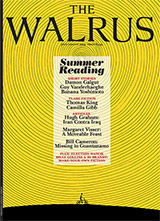
[READ: January 26, 2011] “Summer Plum (Winter Version)”

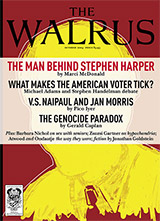
This was the final of seven stories in The Walrus‘ Summer Reading Issue 2004, and it was the final flash fiction.  This story is a bizarre whirlwind from the get go.

It opens with a belief that shredded coconut can make you fly and ends with a paean to a plum.  In between Keds are glued to a driveway and there’s a lot of repetition of “plump plum plump plum.”

I admit I have no idea what this story was supposed to be saying.  It seemed more like a sort of evocative poem, relishing the textures of life.  And yet there’s that whole thing about being glued to the driveway which kind of throws a wrench into that interpretation. (more…)

Read Full Post »

Older Posts »