 SOUNDTRACK: RUSH-“The Trees” (1978).
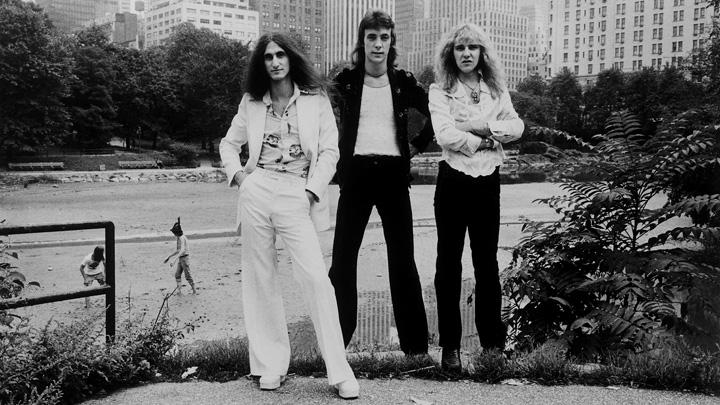 I suppose many people know this kind-of popular song from Rush. But lyrically it seemed relevant to Insurgent Summer.
There is unrest in the forest,
There is trouble with the trees,
For the maples want more sunlight
And the oaks ignore their please.
The trouble with the maples,
(And they’re quite convinced they’re right)
They say the oaks are just too lofty
And they grab up all the light.
But the oaks can’t help their feelings
If they like the way they’re made.
And they wonder why the maples
Can’t be happy in their shade.There is trouble in the forest,
And the creatures all have fled,
As the maples scream “Oppression!”
And the oaks just shake their headsSo the maples formed a union
And demanded equal rights.
“The oaks are just too greedy;
We will make them give us light.”
Now there’s no more oak oppression,
For they passed a noble law,
And the trees are all kept equal
By hatchet, axe, and saw.
I’ve liked this song for some twenty-five years and my interpretation of it changes every once in a while. I’m not sure if the book influences my thoughts on the song, but it seemed relevant.
Oh, and it totally rocks, too.
[READ: Week of July 30, 2010] Letters of Insurgents [Eighth Letters]
Yarostan replies to Sophia’s letter by saying that her victory is complete, that he has been looking through opaque lenses all these years.
But the main focus of this letter is the dance at the factory that Yara and Mirna have coordinated. They decorated the whole room (moving machinery aside) to have the experience of the life that Sabina lived. It even included signs that said “everything is allowed” and “nothing is banned.”
The dance is basically a retelling of Mirna’s story, complete with Mother with Broom, Devil, and all the other characters that we’ve heard about in their bizarre “love games” Although the dancing part with the spinning and circling and all the music sounds like it might have been fun, I feel like the audience must have been very confused and a little bummed that there wasn’t more dancing for all.
After the dance Jasna reveals that she asked Titus to marry her. Twice. And Jasna reveals that Titus has said some awful things about Luisa and Vera (and, yes, Mirna) over the years. Yara still hates him.
Mirna responds that Titus was just like her mother: she gave her life to God and he gave it to a higher calling as well. And it’s that devotion to God, that fear of living, that kills all.
It was that Lord, that morality, that sense of duty or whatever else people want to call it, that killed Vesna. Yes killed her. Because that fearful Vesna wasn’t the real Vesna. I didn’t know it then but Yara knew. The real Vesna, the whole, natural and normal Vesna had passion inside her just as we did (610).
The next day Mirna and Yara took a trip “to see what others are doing so as to explore what can be done” (612). While they were gone, the radio station aired a debate between Vera Krena and Marc Glavni, although it wasn’t an actual debate, but prerecorded speeches played together.
But Vera’s speech seemed to be a complete 180 degree turnaround from her previous attitude: “We condemn the current policy of certain comrades who have retreated incessantly in the face of external pressures” (613).
What upset Yarostan most about this was that at his plant about half sided with Vera but half sided with Marc, and it was split between workers and bosses. (It seemed obvious the bosses would like Marc so it was upsetting that so many workers did).
But despite all the talk at his plant (and the talk from Zdenek) Yarostan has lost enthusiasm for all of the workaday strikes and plans being put into action. He feels that Mirna’s plan was too good to pass up.
As for things with Sophia, he’s worried that Sabina was so interested in the technological toys:
The reduction of human beings to self-propelled capsules, the reduction of the wealth of human qualities to the most quantifiable qualities, direction and speed, strikes me as the final impoverishment of the species, short of complete annihilation…. The condition Sabina’s research is helping create is not a new human condition. In prison it’s known a solitary confinement. It’s one of the worst forms of torture (618).
He feels that this sounds more like Albert’s goal that she’s devoting her life to.
As he signs off he wishes that he was with Mirna and Yara whose guiding axiom on their trip is: “My life, my desires, my capacities” (619).
And for the first time he signs off: I love you, Sophia. Yarostan
Sophia’s response, however, is quite dire: “It’s over! Everything is over!” (621).
They can’t find Tina, Pat or Tissie and Ted is in jail. And everything is back to “normal.” The police attacked the university and they destroyed Ted’s printing plant. And in less extreme places, unions declared victories and went back to work.
And then she talks about something that’s been on her mind for several letters now: did Sabina know that Yarostan and Luisa were lovers?
Of course she did. She explains that when Luisa found Yarostan, she paraded him around calling him a second Nacahlo! And Yarostan was her toy: getting shaped and molded into a politician.
Titus also felt that Yarostan and Jan were hoodlums. In fact, they said such horrible things about Jan that Sabina couldn’t wait to meet him.
Luisa and co’s plan was that the workers’ organization would take over the capitalist class. All Yarostan was supposed to do was pretend that he wanted such a victory. But instead, he daydreamed and didn’t work for them. Then Jan threw a wrench into the works And Yarostan went with him instead!
Oh, and back then, Vera was more interested in Sabina, if you know what I mean, than in any revolution. But before anything could happen, Sabina realized that Vera wanted to own her and Sabina wanted nothing to do with that.
Then Sabina changes what Mirna told everyone about her thing with Jan and Sabina all those years ago. Sabina feels a real kinship with Mirna because… it was Mirna who seduced her! Not the other way around. To Sophia’s surprise, Sabina replies that she wasn’t 32 then, she’s younger than Mirna, in fact.
And Sabina remembers their emigration.
Jan knew right away that all strike activity was staged and had no other aim but to replace one set of rulers with another. Alberts said almost the same thing to me a week before we were arrested. He told me we were going to emigrate as soon as he got all the papers and other arrangements in order: if we didn’t emigrate we’d spend years in jail, maybe even the rest of our lives (632).
And so Sabina says, the pressing question is not why they were released so quickly but why the others were jailed for so long. [Why the heck didn’t Sabina say something about this six letters ago???] Titus saw them off when they emigrated. He had been arrested for only one day. And the police accompanied the celebrated physicist and his family to the house, waited while they packed and escorted them to the train station.
Sophia flashes back a few days: She mailed the letter across the border [where are they? California?] and when she returned to the university the next day, there was security at the door. She pushed past them, but inside everything was different. The people were different. Pat’s group was nowhere to be seen.
She saw a flyer for a militant demonstration. And in her version of things: the union called the police to tell them that subversives had taken over the plant. Then, when the police came, the union said they were very much against the police.
Sophia rode with a group to the demonstration but by the time they got there it was already mostly broken up. So she and the six others hopped the back fence and were on the grounds when they were caught by cops and beaten up. Sophia planned to stay with the others she was arrested with, but she found out that a lawyer was waiting for her–Minnie!
Of course, Sophia resists and calls her a sell out and generally treats her like crap even though Minnie has come to get her out of jail. Sophia remembers that Minnie was the angriest one about the whole Omissions thing, but she also was the first to return to the staff.
Sophia rethinks her own life though and realizes that she has sold out many times. But really what she realizes is that she is simply passive. Everything she has done in her life was done because some one took her to it.
So she went along with Minnie who told Sophia to say that she was a research assistant of Professor Daman’s doing sociological research on strikes. She gets off. As they are celebrating, Minnie says that Sophia was one of her best friends, so of course she would help her. Also, Daman has no residual anger at her. [And frankly Minnie and Daman come across as the nicest people in the world, if not the book].
Minnie also succeeds in getting Luisa released (with Daman’s help of course).
When she got back to Sabina, Sophia asked her what had happened with all the police and everything. They couldn’t explain. So what happened to Tissie? Tissie was nervous and had asked Sabina to abandon her project (the one Yarostan refers to). But they were so close to solving it! So she blew off Tissie. In all of the confusion, Ted was arrested and since Tissie was by herself, she has no doubt gotten back on heroin.
And now Sabina believes what Yarostan said that they should have destroyed the technology. And she gets [unfairly] down on herself for her life’s work. She feels that she is just like George Alberts who embraced technology. And eventually humanity always gets in the way of technology. [But you know what Sabina, expanding your mind is never a bad thing. And you were working very hard on a project that could have made life easier for people. Not to mention you’re too smart to waste your talents as a prostitute, so stop berating yourself for your brain and your dexterity].
Then Sophia asks Sabina to tell her about the time she spent with Ron. Tom and Debbie Matthews were political so they adopted Jose. When Ron was born, they were very busy, so Jose mostly took care of him. He raised him and eventually taught him to be a thief.
When Tom found out about the thievery, he got Jose drafted (so Jose believed). Jose eventually met up with Seth who gave him a job as a contact man. Even though Jose knew about the heroin, he believed that everyone else was above it.
But it was Ted who Sabina objected to. She felt he was too limited, too square, he didn’t believe in anything goes; he felt the heroin was a bad thing [duh!].
Initially, Sabina left Tina with Alberts, (“Tina was four and I couldn’t stand her; she was so dumb” (653)). [You lose all your points with that one, Sabina. You are allowed your selfish fantasies but once you have a kid, they go out the window. And of course Tina’s dumb, she’s four!]. But Sabina took Tina to spite George Alberts. Tissie and Ted loved her immediately, but they fought each other over her: Ted assumed that Tissie would get her hooked on heroin [true], and Tissie felt that he was a jailer.
Sophia wonders why Ted didn’t leave. And it’s because he loved everyone there, he just wanted to get everyone away from Seth. So Sabina told Ted that Seth was going to buy the bar and that would leave the garage for all of them. (She lied). Jose would take care of things with the police.
Sophia asks if Jose was a pimp. And Sabina says no, it wasn’t like that. So Sophia yells, that the garage must have just been a business, then. Sabina doesn’t want to think that, but it must be true. Of course, mostly it was a business for Seth, with the others working for him. And Seth was pissed that Ted did not contribute.
Once Alec and the others came, Seth felt very threatened. He said that he would close the garage and kick out Ted, Alec and Sophia. He thought that Alec and Ted were hatching a plan to get rid of him. And so he reacted and kicked out Tina and Sabina.
As Sabina is thinking out loud she concludes that she is just like Luisa, that she collected men for her project. But the difference was that Alberts and Luisa were able to use the death of their comrades to bend the truth. They could claim that Margarita was on their path, that Nachalo was a forerunner of that struggle because he was dead and couldn’t object.
Luisa also found joy in her mindless drudge work because she knew it was all for something, namely the union. They were on that train together, but what Zedenek gets wrong is that
The content of the struggle, the destination wasn’t defined by the people on the train. It was defined by the trains’ conductors, the “professors devoted to our movement” (661).
And Sophia ends by saying that deep in her heart she always wanted to board that train.
She adds a P.S. that she thinks it’s strange that Titus never mentioned her letter, especially since Mirna felt that the letter was the reason why Yarostan was in prison.
COMMENTS
I’m having a hard time dealing with Mirna and the fact that she is getting set up to be correct. I’m also having a hard time that Sabina is really hard on herself about the few things that I find admirable about her.
I understand tha the book is trying to paint a certain picture. And I understand that these characters are supposed to be like the final frontier of people who fight against unions and bosses. But they seem so pig-headed and ignorant. They all claim to be fighting for humanity and yet they are the least human beings I’ve ever encountered in print. Even their revolutionary dance was barely any fun.
I’m not sure if that means that the book is bad because Perlman made poorly developed characters (focused more on the arguments). Or if he genuinely believed that these people were sympathetic.
I hold out hope for the end of the book.

 I Just Read About That...
Leave a comment