 SOUNDTRACK: SONIC YOUTH-NYC Ghosts & Flowers (2000).
 In the midst of all of the experimentation with the SYR discs. Sonic Youth released this “proper” release.
At the time, it was actually the impetus for me to stop buying Sonic Youth records. Between the experimental discs and the expanding palate of 1,000 Leaves, it felt like Sonic Youth were sort of drifting away from rock altogether. It was certainly a way to alienate fans of Goo and Dirty.
You get two two songs over seven minutes and three over five (there are two short blasts in the middle which add some heaviness to the proceedings). But for the most part, this is a very spare, almost atmospheric affair.
Prior to recording the disc, the bands custom gear was stolen. So they started from scratch for this recording. And that may have something to do with the ambient, almost spatial sound. It is quite mellow, (although still angular and dissonant) with a number of spoken word/beat poetry vocals.
Whether it’s pretentious or artsy depends on your take for recited lyrics (and SY’s lyrics are inscrutable anyhow). Although Lee’s piece “NYC Ghosts and Flowers” seems to fit the style best (he has done a number of spoken vocal pieces in the past). And “Nevermind (What Was It Anyway)” has a sort of commercial appeal. The closing tack “Lightnin'” even features a trumpet, which I assume is played by Kim. It’s the most noisy piece on the disc, with all kinds of fun sound effects showing up.
I’ve been listening to this disc a lot lately. I think because I’ve revisited the experimental discs, this one makes more sense. It’s not what I’d call a typical Sonic Youth album, or even the best Sonic Youth album. It is certainly their most jazzy/mellow experiment (especially compared to the noise of says the SYR discs) and is about as far from their commercial peak as they could get.
The strangest thing to me though is that, despite all of the experimentation and slow-building songs, the whole disc is under 45 minutes. So, they aren’t just making noise to fill space.
[READ: Week of August 31] Infinite Jest (to page 808)
In all of the talk about DFW’s “psychic” abilities with regard to technologies, one thing no one has mentioned–that I’ve seen–is his love of Venus Williams. Her name keeps popping up (I’d say at least a half dozen references so far). And in many ways one doesn’t think too much of it (she is the #3 player right now, bested by her sister Serena who is #2). But the amazing thing about his embrace of Venus is that as  of 1996, when the book was published, she had barely played any pro tournaments.
Look a these tidbits from Sports Illustrated:
October 31, 1994: Venus wins her first pro match, defeating Shaun Stafford at the Bank of the West Classic in Oakland. … Venus faces Arantxa Sanchez Vicario, the No. 2 player in the world, in her next match. Venus races out to a 6-3, 3-1 lead but then folds as Sanchez Vicario wins 11 consecutive games. In an interview after the match, Venus is asked how the loss compares with previous defeats. She answers bemusedly that she has never before lost a match.
May 22, 1995: Reebok announces it has signed Venus to a five-year, $12 million deal. Thus far, Venus has played in one pro tournament.
Although much has been speculated (by me and others) about when he was actually writing this book (and when he was able to send in last minute changes), she would not break into the Top 20 until 1998. He clearly saw something in her.

I write these posts as I go along. So, I read the day’s pages take notes and then type them up. This is why I get moments of speculation in the posts. But mostly it means that when I start writing I don’t know how much there will be in total. This is now the second week in a row where the early reading started off, if not slowly, then certainly without all too much happening. The notes I took were very simple, along the lines of: Marathe in Ennet House or Kate & Marathe talk. I knew I could remember what they were talking about, but there wasn’t a lot of notable moments.
And then, we get the trifecta of Endnotes and Tine’s interview. Holy cow, a torrent of information flooding out at once. It doubled my word count almost immediately. Phew.

As this week’s reading starts out we see Marathe trying to check into Ennet House. Okay, actually he’s there as the final part of his recon looking for the veiled girl who was in the Entertainment and is now in rehab.
His new-eyes-looking-at-the-place is rather enlightening as I hadn’t realized just how dreary and drab the House is (nor just how weird most of the residents would be). The supporting cast is in good form: some of them sleeping, some of them talking loudly, others just staring. And Marathe takes it all in.
He is disguised as a Swiss addict, being sent over from a rehab house in Pennsylvania. He is also wearing a veil to get sympathetic insight about the UHID girl (and of course as a very simple disguise).
 And then we get a lengthy look at Joelle (and by extension the Incandenza family). Joelle used to like to get high and then clean. And now that she’s not getting high she learns that she actually just likes to clean. While meticulously cleaning her room (and studiously avoiding everyone else’s belongings) she reflects back on Orin and the Inc family (something she hasn’t done in a long time).
Orin had really weird attachment issues to both Himself and the Moms (and since Joelle got an A- in Developmental Psych, she felt everything that he said was pretty textbook psychodrama). She was actually a little bored by his angst since it seemed so obvious.
 We also learn that Joelle’s mom called the little bits that come off a Kleenex when you overuse it “Greebles.” (Wikipedia tells us that a greeble is something else).
And as for Joelle’s family: her father called her Pokie (which her mother refused to call her). In fact, Joelle’s mother seemed genuinely put out by the level affection that her dad showed to her (Joelle). Her mother was a rather quiet and religious woman.
It was inevitable that Joelle would be introduced to Himself’s Work. She found it amateurish at first (or rather, technically brilliant but amateurish in storyline and anything emotional). But then she grew appreciative of his techniques. She  also had no intention of being in his films as she wanted to be behind the camera. So it was a relief when James felt she was too conventionally pretty. Orin James and Joelle have dinner together at Legal Sea Foods which turns out to be a shambolic disaster (as one might expect) with Orin babbling on and on trying to fill the air.
An interesting insight: James can’t talk to Orin or Hal because when James comes around Orin babbles like a lunatic and Hal just clams up. It’s only Mario who James can spend any time with because they can both endure the silence without it feeling awkward.
 And then comes a Thanksgiving dinner Incandenza-style (no Turkeys allowed). The scene is practically Lynchian in its intensity. Everyone smiles, a lot (including Joelle whose face hurts by the end). Avril seems to address a question to everyone at the table (except Himself) in sequential order. Himself is the only one not drinking the wine that everyone else is having. Rather, he is up several times refilling his glass (until he simply doesn’t come back).
Hal is there with two E.T.A. friends. They are all shoveling food repulsively, but no one seems to mind. When things settle down Hal starts showing off his encyclopedic knowledge. (This contrasts to the scene in Avril’s office where Hal seems put out to be “on display” with his O.E.D. memorization–so is Joelle wrong or has Hal changed from eager-to-please to sullen and withdrawn?) Joelle really, really doesn’t like Hal.
And then there’s Mario. Joelle is totally freaked by Mario (as it seems anyone would be upon first meeting him). He has to has his food cut up, he’s the size of a fire hydrant, he’s smiling all the time, he even falls out of his chair (which makes everyone laugh). And Orin reveals that he once tried (or at least plotted) to kill Mario when he was a baby, such was his jealousy.
And the Moms. She is obsessively nice. To one and all. And even stated that Joelle was family. And yet Joelle was certain that at any moment Avril could leap across the table and stab her in the heart. Oh, and Joelle thinks that the whole Inc family was full of secrets, from each other and from themselves. But she knows that we can know a lot more about our lovers’ families than our own.
Back to Ennet House. Marathe finally gets in to see Pat. She is empathetic and welcoming. Marathe surveys the situation, including Pat herself, and takes everything in. While Pat reached into a filing cabinet to get some forms for Marathe to sign, he notices that there are TP cartridges, some which appear to have the smiley face and French phrase on them). Johnette knocks on Pat’s door and is informed that new donated cartridges from E.T.A. have come in, and would she preview them (this seemed a little too convenient for Marathe to overhear, but it’s not an unreasonable thing to happen).
Pat also lets him know that there is another UHID member in the building. (He found the Entertainment girl!) Marathe spends the bulk of the rest of his interview wondering if he should call Fourtier and inform him about the Tapes and the Veiled Girl or if he should call Steeply and tell him about the Tapes and the Veiled Girl or one of each. He also wonders when he should jump ship to the U.S side: before or after the Entertainment is disseminated. And then his reverie is broken when Pat offers him a bunk for that very night, something he hadn’t counted on. And he has to wonder whether or not to accept the offer, or just to break Pat’s neck and get the hell out of there. (He opts no to do the latter option).
 Then we get back to sweet Mario. There are many references to Mario’s height in the book. Joelle is told by Orin that he is no bigger than a fire hydrant. Which cannot possibly be true (unless it is a large one). A later scene suggests that he is about as tall as Lamont Chu who isn’t terribly tall himself, and that he wears Himself’s overalls from when he was in grade school (but don’t forget Himself was very very tall). So, Mario’s actual height is still a mystery to me.
 But anyhow, Mario is aprowl on the E.T.A. grounds filming for a documentary. He films some empty courts and then films Schtitt asleep. (Schtitt can only sleep with unreasonably loud Germanic opera music blaring–his office is soundproofed). Then he wanders the dorms. His presence is tolerated (although a girl in a towel is displeased about being on film). And then he has a frustrating conversation with LaMont Chu. Chu hopes that Inc and others don’t get in trouble for Eschaton, and has Mario heard anything w/r/t Hal and the others? Mario interprets all of this as Chu “talking to the camera” so he doesn’t answer. Both parties leave confused.
Finally, Mario gets to the main office where he realizes that The Moms is in. She is on the phone when he walks in and he is never clear if she actually hangs up. But they have a lengthy chat nonetheless. And the scene displays how Avril tries her best to be nice and loving and yet just comes across as utterly dysfunctional.
Mario is asking the Moms how you can tell when someone is sad. Even though she prides herself on complete honesty with no prying, she can’t help but ask if Mario is talking about Hal, or Uncle Charles or even himself. But while the Moms’ lesson reaches home somewhat for Mario, she retains every characteristic of being her grammatically anal retentive self with him (which is her way of trying not to talk down to him–even though he says he gets scared when she uses really big words). My favorite example of this is when he asks:
‘How can you tell is somebody’s sad?’
A quick smile. ‘You mean whether someone’s sad?’
A smile back, but still earnest. ‘That improves it a lot. Whether someone’s sad, how can you tell so you’re sure?’
If Mario could be sarcastic, you’d take his reply as sarcastic. But he can’t be; so he is sincere, and that kind of broke my heart a bit. As did the utter futility of Mario trying to get through to her.
Mario also notes that there are footprints and what look like knuckle or hand prints on the floor (as if someone were hunched over). And as he continues to scan the room we notice Orin’s old football uniform on the bookshelf, which gives an even creepier reality to the Avril/Wayne scene from earlier.
Another thing that says a lot about Mario is that whenever Avril gets on a long tangent, Mario keeps interrupting by saying, “Hey Moms?” which is something my four year old does when he is really trying to get a thought across.
 There’s also a lot of backstory for Avril’s father and grandfather. Her grandfather had a chance to invest in Coca-Cola but chose to invest in Delaware-brand Punch (which Wikipedia says is now owned by Coca Cola, huh). But then his crops failed and he lost most of his money and became an abusive (to her dad) alcoholic. Her dad followed suit (although he wasn’t abusive, just an alcoholic). But she was lucky he died when he did as it enabled her to go to college (which her dad didn’t believe in for women).
And then a quick jump to Hal’s room, and the familiar lump of Mario is back in bed. Hal is quite pleased (he woke up from another teeth-related nightmare) and they have a lengthy chat. The bulk of the chat is about lying, and how Hal has made a list of types of liars. He confesses that he no longer believes in monsters; he thinks the most monstrous thing is someone who lies but you absolutely can’t tell he’s lying.
Mario doesn’t know when people are lying. It never crosses his mind. And yet, he has an excellent memory, especially for things that makes him laugh. (Again, like my 4 year old). He remembers a lot of details about S. Johnson.(and thank you to Journeyman for pointing out that clearly S. Johnson is a reference to Samuel Johnson). When S. Johnson was alive the Moms took him everywhere, to the theater (to one of James’ film premieres) and even had a doggie car carrier specially fitted for him. When she was away, she would tie S. Johnson to the Volvo and let the phone ring for him (he knew the ring(?!)) and once Orin picked up the phone and barked. Ha! (And threatened Indian burns if anyone told Avril the truth about the barking). Hal recalls when Orin killed and lied about S. Johnson, but Mario doesn’t, really.
 Next we see an unlikely couple: Kate Gompert (just after getting robbed by Poor Tony) and Remy Marathe hanging out in Ryle’s Jazz club together (either DFW loved this place or they paid a nice product placement fee). Kate is drinking (!) but she also states that she never drank before. Her parents didn’t allow it so she’s never even had so much as a beer (she’s a drug abuser not an alcohol abuser) and boy does she love the Kahlua and milk! And Marathe had come into this club to not report to the AFR about his findings.
Then we get some weird/touching/sad back story about Marathe. After losing his legs, he was pretty despondent. He simply rolled around “Switzerland” trying to kill himself. (I loved that Marathe is keeping up the charade even for Kate, and that the charade is ever so tenuous. The hilarious “locations” in “Switzerland” are quite amusing, as is the idea that the country to the south is trying to destory them.) And yet he never got up the nerve to go through with it. And then when he was on top of Mont Papineau he saw a woman in the middle of the road (like a Swiss moose in the headlights) with a truck barreling down the road at her. So he let loose his brakes and sailed down the hill, rescuing her and then proceeding down the far hill where he was thrown from his chair and she lost her metal helmet. Said metal helmet was keeping her head intact since she was born without a skull (and this part gets kind of gross, frankly).
Her heads is so formless she has trouble breathing.
So he took her to a hospital and had her taken care of, for she gave him a reason to live. She gave him meaning. She was his savior. And as he rolled away, his sense of depression came back, and he realized that he needed her. For it was she that inspired him not only to go on, but also to fight the Swiss neighbors who are throwing garbage into his beloved country.
And so he stayed with her and got her operations and is now trying to get her an exterior heart (like the one poor Tony stole). And if she gets one, it will prolong her life, which at this state is simply vegetative and in a coma.
Kate is initially charmed by this story but then realizes that he is totally defendant on her. That he is chained to her. He says that the chain is voluntary so it is okay. She is getting more and more angry (and presumably more and more drunk) as the conversation progresses. And when he offers to show her something that will give her more pleasure than she can ever imagine, she practically slaps his face. Although we do end on a question with no outright refusal from Kate, so who knows what that means.
And then back to Hal and Mario. Hal comes clean with Mario and admits that he has been smoking pot in secret. And he knows that it would kill the Moms to find out, mostly because he felt the need to keep it a secret. And he is sorry for lying and hiding it from Mario too, but Mario promises he isn’t mad.
Earlier, Mario had asked Hal what had happened with C.T. and the urine guy, and said that Lamont Chu (who Mario likes despite the misunderstanding earlier) was also asking a lot of questions about Hal and what happened. And so Hal gives all the details here. He says that Pemulis convinced the urine guy to give them 30 extra days for a complete urine scan (something about being downwind of a bagel store). And that there’s a person from Moment magazine on campus and there’s big tourneys coming up and the whole debacle would be devastating for the school. And since O.N.A.N.T.A doesn’t want to bust anyone really (good clean fun and all) the urine guy acquiesces.
But really, Pemulis could pass a drug test if they guy was holding his member, he’s got such a extensive secretive plan at work. So his lie is all for Hal’s benefit. Even though Hal knows he can’t really get kicked out of E.T.A. I mean, come on.
There’s also a lengthy Endnote about how Pemulis is quite functional even when he has Abandoned All Hope. (Hal has been clean for about 3 days and feels a pit inside of him). Pemulis is trying to explain the ease of trigonometry to Hal. Hal demurs and starts talking about detoxing. Pemulis is basically agreeing that Hal should give up the Bob Hope; that it’s no good for the Incblob. He’s just going to turn into a fat guy with the munchies watching TV all day. And that he, Pemulis, cycles through drugs so as not to get addicted to any one. He also convinces Hal that he should totally do the DMZ with them: first, because he needs to switch to something else for a while and second, because it doesn’t show up on any drug tests.
 Then we jump to November 17th. Which I believe is the first instance of Nov 17th in the book. Someone, presumably Hal, shows up at The Ennet House drooling like crazy looking for a list of Substance Abuse meetings. I loved the critique that this young man, clearly well off, and who was smart enough to use whom in a sentence wasn’t smart enough to use the Yellow Pages.
And then, we get an endnote that is a note attached to blank space! Is that even legal? Well, who cares, becaus it is easily my favorite Endnote of the book, and possibly one of my favorite sections of all.
Endnote 324: Pemulis is scheduled to play Freer, and if Pemulis wins he will be eligible for WhataBurger. When he enters the locker room, Freer is there and so is a sobbing Todd Possalthwait. Postal Weight is sobbing because “nothing’s true” and evidently it has something to do with his dad and Disneyland (although we never do find out for sure).
Pemulis is PW’s big brother so he tries to do some soothing chat (all the while with some heavy duty descriptions of the locker room and its surrourndings (and how meticulous Pemulis’ locker is) and the mirrors and just how idyllic it is when the locker room is empty). Freer is mocking young PW since he’s only 13 and has no idea of what angst is (pronounced with a hard G it is noted that Hal would have noticed). But Pemulis is trying to be helpful. And somehow this morphs into a lecture that if PW wants capital T Truth he just has to get involved in math! (There’s some more math, too).
Some 16s, who are in a sort of club of their own bound in and start whipping towels at each other. And one of the 16’s Kornspan, is generally accused of being the one evil shit who burned a couple of cats who died on E.T.A. property (cough, Lenz, cough). As the Endnote follows them, I really enjoyed the concept that the 16s are more cliquish than any other group (and the story about them all simultaneously behaving like apes while in a Customs Line was quite funny).
 I enjoyed even more the class differences about dressing oneself. Upper class college kids put their Tshirts on sleeves first and then pull their heads through…I wish I could confirm this but I have no way to know. And, even better, they also put on one sock and one shoe before switching to the other foot to do the same. This turns out to be useful when we see John Wayne standing in Pemulis’ room with one sock and show on looking for the killer antihistamine that Troeltsch said was on his dresser.
 Among the other fun tidbits in this Endnote are the inexhaustabale fantsties of wrong-doing Pemulis has about Freer, like him getting buggered at midcourt by a bunch of Bedouins. And the absolutely informative piece of information that Pemulis in fact did not lie to get out of the urinalysis, he simply blackmailed Avril with the John-Wayne-in-football-uniform scene. Ouch! And if Avril didn’t like him before (and she didn’t)….
And while Pemulis and Freer and PW are chatting and arguing, Stice bursts in to say that Troeltsch has Wayne on the air (it’s the weekly radio broadcast) and Wayne is losing his mind! And how can you end the Endnote like that??
And, yet, don’t be sad, because up next is Rodney Tine Jr. interviewing Molly Notkin and, wait who is Molly Notkin? Oh right, she’s the host of the party where Joelle tried to kill herself ten days ago. And Molly Notkin has a bright light shining in her face like in noir detective movies and she is spilling her guts (in an exceedingly roundabout and highly loquacious manner with more 50 cent words than you can shake a stick at). And what is so interesting about having her talk is that: She reveals AMAZING FACTS about this story. She’s the lynchpin that everyone has been looking for. She knows more details about more things than anyone else. And yet she is so longwinded and academic that it’s not always entirely clear what the hell she’s saying half the time!
So, Molly Notkin reveals, in a series of near-bullet points:
That in Infinite Jest (V) or (VI) Madame Psychosis plays a maternal Death figure (we knew that). She is naked and pregnant (although she was never pregnant in real-life). Molly notes that you can always tell if a woman’s ever carried anything past the first trimester if you look at her naked. Endnote 329 says: “Which is actually complete horsehit, but goes unchallenged by the O.U.S. operatives, who are pretty savvy at choosing their heuristic battles”. M.P. is leaning over and talking down to the camera. It is all designed to show Death as Mother. And the woman who kills you is your Mother in the next life.
And all of this is filmed with a very special Bolex lens.
She says that Joelle often asked rhetorically why Jim has to use her as Death when he had the living embodiment of Death (ie,. Avril) right in his house. And heck, she’s also really strikingly pretty so she would have made a perfect Death for the film.
 Molly continues, Joelle has never seen the finished product and thinks it can’t be very good. It was also to be her last film with Jim. And, as something of a threat, she wouldn’t do it unless Jim quit the Wild Turkey cold turkey. Which he did. From Christmas until his suicide in April,. J.O.I. was clean (and clearly Hal couldn’t tell, as he assures Pemulis in the above footnote that he had the bottle with him when he killed himself. (Pemulis argues that some people who go straight will ultimateoly kill themselves becauise of the void. Hal argues that Jim wasn’t straight. Pemulis says he was talking baout Allston mates, not Jim). Said bottl, Molly speculates, was a gift from Avril, as a sort of She-got-you-to-give-up-the-booze-but-I-couldn’t-fuck-you-gift, that only a spouse could give.
Oh and speaking of sucides, Molly tells us that Joelle’s mom also killed herself. On Thanksgiving Day. Orin was visiting for Turkey Day dinner and things grew uncomfortable really fast. Molly thinks that Orin is a shit, a thoroughgoing rotter. Not the least reason is becuse of what happens below:
When Joelle (whose real name is Lucille Duquette, by the way) tries to rearrange her childhood bedroom so that Orin and she can bunk together for the holiday, all hell breaks loose. Turns out that Joelle’s own Personal Daddy completely loved her. Like, obsessively. Never physically; he coudln’t do that because his love for Joelle was too pure. And that is why as she grew prettier and prettier he infantilized her more and more, with stuffed animals and stupid nicknames and childrens’ films every day. Even to the point of cutting up her food for her on this very Thanksgiving Day. And it was this obsessive behavior possibly more so than her unfathomable beuaty that kept the boys away.
Joelle’s mom who had been quiet and resevred the whole dinner freaked out when he revealed this. She then blurts out that he own father molested her and her sister, and now she learns that she married a copy of her dad. She runs to the basement where Joelle’s dad (the low Ph chemist) keeps his acids.
 She hurls a beaker of acid at Daddy who ducks. Orin is behind him and he (being athletic) also ducks. The acid hits Joelle right in the face. [So evidently, she had been lying to Gately that the veil was because she was too pretty].
Although it is noted that Molly has never seen Joelle veillless, so who knows for sure.
And then her mom put her extremities down the garbage disposal.
Molly thinks that Orin is a shit for ducking out of the way, although honestly, who wouldn’t? She also claims that it is quite obvious that Orin dumped Joelle because of the acid thing and not because of any filmwork or frequency of attachment to Himself.
Oh, and Molly says that Jim didn’t kill himself because of the film, he killed himself because he knew his wife was sleeping around town. Including possibly with Orin. Wait what? Avril sleping with Orin? (And she makes Wayne wear Orin’s football uniform?)
And a rather minor point, Molly mentions yet a nother film that isn’t in the official filmography: The Unforgettable Case of Me (although it is not described at all).
So, Molly has given us a huge amount of information to digest. But how trustworthy is it?
Holy crap, so much revealed. And it’s all so…. Wait there’s ANOTHER floating Endnote!
Turns out that when Wayne was searching for the antihistamine, he mistakenly happened upon some of Pemulis’ stash that Troeltsch had hidden away. And Wayne, whose system is completely clean, took the drugs and totally flipped out.
And so, broacast over the radio (which evidently staff don’t even think about listening to) is Wayne dishing and mocking just about everyone on campus. And Pemulis is called into C.T.’s office. He is sitting with various and sundry staff as CT reveals the lurid details of Wayne’s on-air meltdown:
- A fantastic impression of C.T. (putting Stice’s to shame!) asking out an adolescent girl. And (creepily) using one of Orin’s own favorite techniques for asking someone out (I’m afraid of getting my feelings hurt, so I’m going to ask you out tomorrow. But this gives you enough time to think of a good excuse that won’t hurt my feelings).
- Corbett Thorp is a palsied twit.
- Disney Leith is the sort of man you sit next to at civic functions. (I’m not sure what that one means).
- Ms Chwaf is chair of the itty bitty titty committee.
- Coach Schtitt had been denied some important fluid since birth.
- Mr Nwangi (who is in the room with Pemulis and C.T. laughing the whole time) is the kind of guy who won’t share at a Chinese restaurant.
- Mary Esther Thode has a face like a pancake.
- J.O.I. was so full of himself he could shit limbs. (My personal favorite).
- Hal was addicted to everything that’s not tied down, cannot outrun him and is insertable in the mouth
- C.T. would not lend his mother a quarter for a rubber tip for her crutch.
- Ms Heath cries at card tricks and is always at the edge of a continent of menstrual hysteria.
- Rik Dunkel could not find his own bottom with both hands and a nautical compass (it must have been so much fun to come up with unusual ways to say cliched insults!)
- Tex Watson (also sitting right there in the room) has a tiny liquid filled nubbin at the top of his spine where his brain should be.
Pemulis tries to argue his way out of things. But then someone holds up his paraphenial-laden hat. Pemulis says he needs to see Avril regarding US Canadian relations. Nwangi says that Avril sends he regards. And C.T. informs Pemulis that he can finish up the term for credit or go elsewhere and see if they’ll take a senior with no positive references. And Pemulis is speechless.
So you’re saying that Pemulis is very likely kicked out of E.T.A., and you tell us in and Endnote! I love this book.
Wayne, by the way is going to be okay.
This next section (there’s more?) drifts over the Spoiler Line by a few pages. I’ll note when we technically go too far.
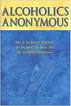 The week’s reading ends with Hal (for it was he) inspecting his A.A. brochure and selecting the furtherst away N.A. meeting, which is in Natick. Hal blows off the evening weight room (and dinner(!)) and drives way out into the boonies to this meeting at a remote, fascinating-in-architecture, and decidedly empty building.
He finally finds the room that he is supposed to be in (and I love that he is walking around this empty building basically holding out the A.A. brochure like a sign of intent). When he enters, he sees several bearded men in chinos and sweaters holding teddy bears. One of the men is weeping. Hal sits, discomfited by the scene, but awaiting the moment when the drug-withdrawal-assistance starts flowing.
The rest of the post comes after the Spoiler Line:
 The man who is weeping is weeping for his Inner Child. His inner child is crying out for his mother and father who were killed in a traffic helicopter crash. This made me laugh as yet another funny coincidence until Hal realizes that this is Marlon Bain’s older brother Kevin who never would have done a drug in his life.
Hal is in the wrong meeting! And he looks at the brochure and realizes it is two years old, and likely out of date and that he is trapped in some kind of  Robert Bly Men’s meeting.
The remainder of the scene plays out for some comic effect as Kevin implores another genntleman to hug his Inner Child. And we leave the room with Kevin crawling on all fours, teddy bear tucked in his arms, face crumpled up beseechingly.
 In Colin Meloy’s fun post on Infinite Summer he jokes ” that I’m well over ¾ of the way through this 1000 page book and I think I’m still getting exposition.” But that now:
all of a sudden, things are changing: it was like witnessing the meeting of two old friends, you know, like one from college and one from high school. When Steeply was watching Hal play tennis. When one of the assassin roulants scoops up the unsuspecting engineer. When – holy shit – Marathe infiltrates the Ennet house! These perilous orbits are crashing closer and closer together, I think. We’re moving out of exposition, dear readers!
And he couldn’t be more right. If you get absorbed in this emotional book and become vested in these characters (with so many different things happening to them) it never really dawns on you that nothing is really happening plotwise. There are obvious plot points, and things are progressing somewhere, but we’re still (at 80% done) learning more and more about the main characters.
And yet, after last week and this exciting week, things are really starting to come to a head. And I’m having an even harder time putting the book down.

 I Just Read About That...
I love these Weeklies, it is so helpful to get an in-depth review. I use your site when I’m trying to remember where in the book something happened, because you’ve just about always covered it!
The mention of the Bolex lens (and remembering the seduction of Mario) reminds me of the moving objects that have plagued E.T.A. recently, although there hasn’t been any additional mention of such things for a while. I’ve been hoping at some point to get a better sense of this (and Lyle’s levitation and sweat-licking), so I’m sad that hasn’t turned up more readily. But on we go!
Seconded! These are hugely useful posts, and I appreciate how much work goes into recording such detail. Thanks! (Thanks also for the shout-out.)
On Molly Notkin, though, I gotta say I think she’s mostly full of crap. Her testimony’s introduced as doubly unreliable (p. 788 plus n. 326 combine to say she told “everything she believed she knew [and then some]”), and she gives Madame Psychosis’s own personal Daddy’s name as “either Earl or Al Duquette” (p. 795). But on p. 295 we see his name as “Joe Lon van Dyne.” It could be that 295 is just reporting what M.P. said to Orin, and maybe she was lying, but Orin visits M.P.’s family (p. 296, outside of Molly Notkin’s testimony), and we don’t hear that any problem arises with regard to people’s names. I don’t think we can trust Molly on this one.
Also, she ascribes to J.O.I. the very same neurotic belief in a circumscribed number of available global erections that we know actually afflicts “the one tormented love of Notkin’s life thus far” (pp. 789 and 220), so there’s some transference going on there.
Doesn’t mean she’s a totally unreliable source, though. Her tale of the scene in the low-pH chem-lab basement may well be true, given what seems to be Joelle’s description of Orin as “dodger of flung acid extraordinaire” (p. 223), so she may also be believable on the content of the Entertainment.
Except that she (or the hapless Rodney Tine Jr.) seems to refer to it as Infinite Jest (V or VI), while we have no reason to think the series ever went beyond (V?) as a possible completion of (IV).
To make a long story short (too late!), I am deeply suspicious of the accuracy of Molly Notkin’s testimony.
Good stuff, Jeff! I didn’t feel persuaded by her “testimony” either, though the acid-throwing scene has a ring of plausibility even though Molly herself offers us clues not to believe, as you point out. (I can’t seem to figure out how to rewrite that sentence without two uses of “though” – this being an effect of the tortuous logic we are forced to wend through.) Good digging for the name and the erection conflicts.
Interestingly, what I was forced to do for the first time in the book was actually imagine Joelle as hideously deformed, which I realized that I have never believed she was anything other than improbably beautiful. Whatever this says about me, I’m not entirely sure, but I’m even now still imagining her as flawless.
Thanks, both of you for the compliments and comments. I originally started taking notes just to keep the book straight for myself, and then it became a labor of love.
Jeff, great assessments (and research) about Molly. I suspected something was up (what with her never seeing JvD without a veil) but the extent of her possible fabrications seems pretty extensive. Thanks especially for digging up that bit about their real name.
So we’re in agreement that she is at best unreliable, at worst an utter liar. The question is, is she lying? (and why?) or are these things that Joelle told her that she is choosing to believe? (or embellish on?) So, I guess that’s 4 questions. That note about the lesser light bulb (she said it would make her be more honest, but the note says it wouldn’t) [sorry don’t have my copy handy for exact citation] leads me to think that she at least beieves she’s telling the truth.
Orin has never mentioned anything about the acid incident. But again, is that deliberately left out? Orin doesn’t seem like the kind of guy who would leave something like that out of a story, and he is a terrible liar.
You know, I didn’t expect DFW to simple give us answers (although he does lay out a few things pretty straightforwardly (the years, for instance are eventually laid out) I didn’t think that this section would raise so many new questions.
And Jeffrey [it is a coincidence about the name, right?], I can’t believe that the moving objects (does it really have anything to do with Stice’s bed?) has not been mentioned lately either (although there is a comment about the brooms being glued to the wall somewhere recently [again, sorry for the lack of citation].
I had mentioned in a really early post that I wish I had kept track of the various weird little unresolved issues to see if they do get resolved. I guess another read is in order….
Oh, and in general I offer an apology for not page citing my quotes. The grad student in me cringed every time I didn’t actually do it, and yet it seemed so formal in a blog. Well, in future I shall endeavor to do better.
Oh, please don’t apologize to me about the citations. The main reason I bother with them is that I spend so much time hunting down the specific bits of text that I want to save myself (and anyone else) the same trouble later on. And these posts have actually been a big help in narrowing down the passages I need to look through.
And Jeffrey, whatever it says about you that you never believed Joelle might be disfigured, it says the very same about me. This is my fourth time through the book (first time writing anything about it, though), and it’s only this time that I’ve noticed that bit where Joelle mentions the acid. I don’t think I’ve ever even doubted that she was telling Gately the truth, much less spent any time thinking about what she might look like after a beaker of acid to the face. I don’t know why it’s so difficult to accept that she’s disfigured, rather than actaeonizing.