 SOUNDTRACK: THE REPLACEMENTS-Hootenanny (1983).
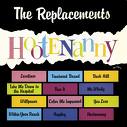 This is the second full length from The Replacements. For a band that just released two punk albums (one’s an EP), naming your new one Hootenanny is pretty ballsy. As is the fact that the first track sounds like, well, a hootenanny (even if it is making fun of hootenannies.)
However, the rest of the album doesn’t sound like hootenannies at all. In fact, the rest of the album is all over the place. I don’t want to read into album covers too much, but the design has all 16 titles in separate boxes in different colors. It suggests a little bit of stylistic diversity inside.
Just see for yourself: “Run It” is a one minute blast of some of the punkiest stuff they’ve done. (It’s about running a red light). Meanwhile, “Color Me Impressed” marks the second great alt-rock anthem (after “Go”) that Westerberg has put on record. “Willpower” is a sort of spooky ambient meandering piece that, at over 4 minutes is their longest piece yet. “Take Me to The Hospital” is a punky/sloppy guitar song. “Mr Whirly” is sort of an update of the Beatles’ “Oh Darlin.'” “Within Your Reach” is technically the longest Replacements song to date. It starts with a cool flangy guitar sound that swirls around a fairly mellow vocal track (this song was featured in the end of Say Anything. John Cusack cranks the song up past the red line). “Buck Hill” is an (almost) instrumental. “Lovelines” is a spoken word reading of personals ads over a bluesy backing track. “You Lose” is the first song that sounds like another one…a sort of hardcore song. “Hayday” is a fast rocker like their first album. And it ends with “Treatment Bound” a sloppy acoustic number that sounds like it was recorded in a tin can.
As you can see, this album is all over the place, and almost every song sounds like they may not make it through to the end. Yet, despite all of the genres represented, the band sounds cohesive. The disc just sounds like a band playing all the kinds of music that they like, and the fact that there are a couple of really lasting songs on the disc makes it sound like more than just a bar band.
I feel as though not too many people even know of this disc (it was the last one I bought by them, as I couldn’t find it for the longest time). But in reading reviews, I see that people seem to really love this disc. I enjoyed it, and, like other ‘Mats discs, it’s certainly fun, but I don’t listen to it all that often.
[READ: June 9, 2009] McSweeney’s #31
The latest issue of McSweeney’s has a totally new concept (for this journal, anyhow): They resurrect old, defunct writing styles and ask contemporary writers to try their hands at them. I had heard of only two of these defunct styles, so it was interesting to see how many forms of writing there were that had, more or less, disappeared.
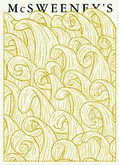
Physically, the issue looks like a high school yearbook. It’s that same shape, with the gilded cover and the name of the (school) on the spine.
Attached to the inside back cover is McSweeney’s Summertime Sampler. As far as I know this is the first time they have included a sampler of multiple upcoming works. There are three books sampled in the booklet: Bill Cotter’s Fever Chart; Jessica Anthony’s The Convalescent & James Hannaham’s God Says No. I enjoyed all three of the pieces. Fever Chart has stayed with me the most so far. I can still feel how cold that apartment was. The Convalescent begin a little slow, but I was hooked by the end of the excerpt. And God Says No has me very uncomfortable; I’m looking forward to finishing that one.
As for #31 itself:
The Fugitive Genres Recaptured (or Old Forms Unearthed) include: pantoums, biji, whore dialogues, Graustarkian romances, nivolas, senryū, Socratic dialogues, consuetudinaries, and legendary sagas. Each genre has an excerpt of an original writing in that style. Following the sample is the modern take on it. And, in the margins are notes in red giving context for what the author is doing. I assume these notes are written by the author of the piece, but it doesn’t say.
I’m going to give a brief synopsis of the genre, but I’m not going to critique either the old piece or whether the new piece fits into the genre exactly (suffice it to say that they all do their job very well).
PANTOUM
A poem composed in quatrains. They key is that the second and fourth line of the first stanza reappear as the first and third line of the second stanza and so on. At the end, the first and third lines of the first stanza then reappear as the second and fourth line of the final stanza. Manipulation of the repeated lines is encouraged. Hard to explain but easy to see once you start reading.
ORIGINAL PANTOUMS: The example is from an anonymous author (circa 1440 AD) from Malaysia.
I am not a fair critic of poetry. So I’m just going to say what I thought of them. As you can imagine, it’s challenging to make these interesting with all that repetition. And I have to say that the repetition sometimes makes it hard to keep everything straight.
JENNIFER MICHAEL HECHT-“Circus”
I was confused by this one.
BEN JAHN-“Milltown Auspice”
I rather enjoyed this one.
TONY TRIGILIO-“Jack Davis”
This is about Jack Ruby, Oswald and JFK. It is fascinating to see this historical information (along with, I assume, made up details) done in this style. Pretty cool.
BILL TARLIN-“Panteentoum”
I was able to follow this one quite easily. Maybe the simplistic threats and violence promised at senior prom were easy to relate to.
TROY JOLLIMORE-“Gate”
Lyrical and pretty, but I got lost in the meaning.
JOEL BROUWER-“Direct”
A weird poem that kept reasserting ice cream and feces.
NICKY BEER-“Crackpot Arctic Octopus”
A surreal portrait of an underwater carousel.
WALKER PFOST-“The Most Natural Thing in the World”
Again, the violent ones are so easy to follow. This one is about how the joy of killing people, about 70 in total, is infectious; soon everyone is doing it.
WHORE DIALOGUE
An early type of erotic writing, combining bawdy tales of sexuality with an educational veneer. The dialogue is usually between a young virgin (often just before her wedding night) and an experienced older, married friend. There’s usually a section for before and after the wedding, as well.
ORIGINAL WHORE DIALOGUE by NICOLAS CHORIER-“A Dialogue Between a Married Lady and a Maid” (1660 AD). [excerpt]
I was surprised at just how explicit this was! For even though he typed C–t and P—k, he left in clitoris. And when Octavia says she can almost thrust her whole hand in, well, imagine my surprise!
MARY MILLER-“A Dialogue Between Two Maids in the Twenty-First Century, One of Whom is Skeezy”
This was really funny and very enjoyable. It was funny to think of a 21st Century version of this story since the original is written in such an archaic style. But indeed, they mention Sarah Jessica right away, so you’re pretty assured of the time period.
Ashley has signed a pledge not to have sex till she and Brian are married, but she needs to know from Marci what the dealio is. The original story’s dialogue seemed stiff (heh heh) and formal, while this one seemed like it could be an actual dialogue between friends. The middle part discusses Ashley’s new rabbit vibrator. In the end: The sex is okay, and will no doubt get better. Despite the discussion of anal sex, the 17th century story was actually more explicit!
LEGENDARY SAGA
Written several hundred years after the events, these sagas chronicled famous Scandinavian adventurers of the tenth century. They included mythology and cosmic hyperbole. The lust for fame and glory often comes at the loss of their own life, but that’s a small price to pay, right?
ORIGINAL LEGENDARY SAGA: This excerpt is from an anonymous Icelandic author circa 1310 AD. It is based on historical figures.
Although I have never read a historical saga before, I knew what to expect: honor, bloodshed and familial pride.
WILL SHEFF-“Black Metal Circle Saga”
The inspiration for this Saga is the Norwegian black metal scene. In real life, Euronymous of the band Mayhem was stabbed twenty-three times allegedly by Count Grishnackh from the band Barzum. There were also several church burning around Norway.
The tale is told in several sections, with many of the section having heavy metal titles: War Pigs, Raining Blood etc.
This relates the story of several generations of men who reigned over Vingulmork. The saga is one of death and revenge. It would be far too long to recount, but it felt very authentic. It doesn’t make me want to read more Sagas, but I did enjoy this one. The supernatural elements were all pretty cool.
BIJI
Biji is sort of a notebook, which contains legends, anecdotes, scientific notes and local wisdom. Accounts of everyday life mix with travel narratives as well as lists. It is meant to represent a picture of the culture at the time of writing.
ORIGINAL BIJI (written in China from 220-1912 AD): by DUAN CHENGSHI-“Youyang Zazu” [excerpt].
Its hard to imagine that this is a “style,” it’s such a mishmash of item. But at the same time, it’s hard to imagine that ever went out of favor. The various elements meld together to tell a good story.
DOUGLAS COUPLAND-“Survivor”
Coupland is the ideal writer for this format as, frankly, I think of his work as already very Biji-like. He throws in excerpts from various things in all of his books: snippets of online code or pictures or other factual elements that place his work at a particular moment in time.
“Survivor” is the story of a man who is part of the film crew for Survivor that’s set on the Kerguelen Islands. The story was hilarious. It skewers reality TV, especially as seen from the camera crew (a viewpoint you don’t get too often). Some of the factual things thrown in include Traveler’s Alerts for diseases, Menus on the CBS Yacht and actual urls for Survivor-type YouTube videos (which are funny to see written out in a story).
http://www.youtube.com/watch?v=SWIBp0IrXEE
http://www.youtube.com/watch?v=1AzYmJiVDqU (no longer available)
http://www.youtube.com/watch?v=__srsDMKo9k
And when you think that the story is just going to be about the contestants on survivor things take a turn for the worse: A serious disaster hits the outside world, closing airports and rendering everyone helpless. Will the Survivors survive? What about our camera crew? The story turns dark very quickly.
NIVOLA
These seem to have been written exclusively by Miguel de Unamuno. According to him, a nivola has no plot (or an existential one, anyway) and that it makes itself up as it goes along. And, really it’s the characters who are doing the work themselves: rebelling against their creator.
ORIGINAL NIVOLA: by MIGUEL DE UNAMUNO-“Mist” (1914 AD) [excerpt].
Surrealness in writing. I wonder if anyone bought his books.
JOY WILLIAMS-“Saved”
This was a weird (no kidding) piece that I enjoyed quite a lot even if it had no plot to speak of. Cinnabar’s mother, Snow, [I’m not calling you that name, mother] is an intellectual in town for a conference about Chester Owens. It’s at the Chester Owens estate although he won’t be in attendance as he is sick. Lots of platitudinal nonsense is spewn about by intellectuals. This is, in turn mocked both by Snow and several other characters.
Example: Snow said to no one in particular, “Darwin initially though fish designed their own eyes.”
“Gosh,” someone said, “that fits right in with the talk I’ll be giving after lunch.”
I’m not sure how popular existential novels will ever be. But as for this one, if you don’t care where it goes, this is an interesting story.
SENRYŪ
These are short unrhymed poems similar to haiku. They are three lines long and no more than seventeen syllables. They address human nature rather than the physical world (which is the domain of haiku).
ORIGINAL SENRYŪ: circa 1700s, all anonymous.
Why should haiku
get all the fame?
Senryū are fun too!
NICKY BEER, DAN LIEBERT, DOUGLAS W. MILLIKEN, BYRON LU and CHRIS SPURR all write enjoyable Senryū. I won’t bother reviewing them, though.
SOCRATIC DIALOGUE
These are discussions between students and a learned elder. They covered many topics and were set in a place where small talk would be common.
ORIGINAL SOCRATIC DIALOGUE: by Plato “Republic” (380 BC) [excerpt].
I was a philosophy major, and I studied Plato very thoroughly. I always enjoyed the Socratic dialogue.
DAVID THOMPSON-“After Citizen Kane”
This is a very funny dialogue set in an urban square in the world to come. In it, Susan Sontag, Franz Kafka, Charlie Chaplin, Virginia Woolf and Ernest Hemingway discuss that in 2012, Sight & Sound magazine will ask critics and filmmakers to vote for the ten best films ever. The debate centers around Citizen Kane (and there’s a cameo near the end from Orson Welles). The discussion is fast and furious, with gentle ribbing and cleverness all over the place. Thompson a has a great sense of the voices of each of these people. Charlie Chaplin feels under-represented in the contest; Virigina Woolf always votes on American Idol. Hemingway thinks Fed Astaire lacks substance. It’s very enjoyable.
GRAUSTARKIAN ROMANCE
This was a brand of adventure writing set in an around invented countries. Ruritania was the first but Graustark was the most popular, with many different authors setting books there. Despite being written in the early 20th century, they featured Victoria nostalgia with monarchies, princes and damsels in distress.
ORIGINAL GRAUSTARKIAN ROMANCE: by GEORGE BARR McCUTCHEON–“Beverly of Graustark” (1904 AD) [excerpt]
I am fascinated that this fictional world would be used by multiple people. It would be like setting your new novel in Hobbiton but not getting sued by the estate of Tolkien.
JOHN BRANDON-“Feasts and Villains”
There were two story lines in this piece, and I fear that I got lost with one of them (in fact it seems like that one story line drops of entirely, unless they merge and I missed it). But regardless, I enjoyed this surreal tale. One of the qualities of Graustark (or in this story Graustork) is that only certain people are allowed to go there. Meaning that nature will keep people away who do not belong. Dunne is en route there for a very special financial deal. On the plane he meets Beverly, a young man with no fixed destination who takes a shine to Dunne (much to Dunne’s dismay) and decides to tag along. Dunne is constantly prevented from completing his travels: the plane is grounded, the bus breaks down, they try on horseback. He even gets into a duel!
A surprise twist throws a new light onto everything that’s been happening, making this story not only weird but also wonderful. I don’t imagine this style ever getting fully resurrected but it would be interesting to see what other authors might do with it.
CONSUETUDINARY
These were kept by monasteries in the Middle Ages. They are detailed instructions for day-to-day life. They listed everyone’s specific duties; they also kept a record of everything that was to go on in the monastery.
ORIGINAL CONSUETUDINARY: From The House of St. Swithin in Winchester, England (1349 AD)
There’s a reason this style went out of fashion, and why no one would every write one of these today, unless they were in a cloistered monastery. This was my least favorite genre, and it took me ages to finish.
SHELLEY JACKSON-“Consuetudinary of the Word Church, or the Church of the Dead Letter”
I just could not get into this piece. Jackson states that she had started the Shelley Jackson Vocational School for Ghost Speakers and Hearing-Mouth Children. The purpose of this school is to talk to the dead. The consuetudinary covers all of the specific details of this School/Church and all of the various things one must do while in attendance. It includes a calendar of activities as well as ritual and exercises. The exercises mostly consist of eating paper and creating spitballs. If this was meant to be a parody, it wasn’t terribly funny. If it was meant to be deep, I missed the point. It was kind of a shame to end with this one, since so many of the other ones were more enjoyable. But at the same time, it was a thankless challenge to take on this task and try to make it interesting.
Overall, this issue was a lot of fun. I always like getting introduced to new things (even if they are old things). I doubt there will be a resurgence of any of these genres anytime soon, but I just flew through the entire book. This was a cool change of pace from the usual collection of stories.
For searching purposes I include: senryu

 I Just Read About That...
[…] get as far as Dave Eggers’ The Wild Things (with the fur cover) and McSweeney’s issue #31, which I always thought looked like a yearbook and which they say looks like a yearbook although […]
[…] culture. The introduction to the book says that it was based on a short story that he wrote for McSweeney’s #31 called “Survivior.” That story was written in the style known a biji which they […]