 SOUNDTRACK: PEARL JAM-Live on Two Legs (1998).
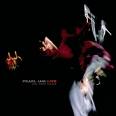 This is the first official Pearl Jam live release. It is compiled from a number of different concerts, yet it flows pretty seamlessly. It highlights how much faster many of the songs became during their live shows. This increased their power almost uniformly.
This disc also works as, not really a greatest hits, because there are plenty of hits left off the set list [most of Ten, notably] but maybe a greatest hits of all the non-Ten songs.
A track listing would be the most sensible way to cover what’s on here, since it is uniformly solid and enjoyable. And I don’t have too much to say about each track.
Corduroy-Vitalogy
Given to Fly-Yield
Hail Hail-No Code
Daughter-Vs
Elderly Woman-Vs
MFC-Yield
Go-Vs
Red Mosquito-No Code
Even Flow-Ten
Off He Goes-No Code
Nothingman-Vitalogy
Do the Evolution-Yield
Betterman-Vitalogy
Black-Ten
Fuckin’ Up–This song bears a mention as it is a cover. This is their first recorded cover of a Neil Young song. Later, this song and “Rockin’ in the Free World” became staples of their live shows. On here, they play a gorgeously sloppy rendition of this track. It perfectly encapsulates the record: raw energetic and more than a little vulgar. Perfect.
The set list also belies the fact that No Code isn’t as popular of a disc as the others. There are three tracks from each of their records (except Ten which has two). And the No Code tracks sound as good as the rest.
This is a good representation of Pearl Jam around this time, and it’s a good place to investigate their live sound (until you’re willing to take the plunge into the 72 self released live discs).
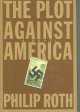
[READ: 2004 or 2005] The Plot Against America
DIGRESSION: I read this book a few years ago, and I didn’t remember the details all that well. However, the overall story had a pretty big impact on me–especially in that it made me want to read more Philip Roth. So, I’m going to include it here. Some of my summary comes from other sources, but I do include my own recollections too.
I’ve never read Philip Roth before reading this novel. Despite all of his famous works, he’s always slipped under my radar. But the urgency and political nature of this book made me want to read it right away.
What was so interesting to me about the novel was that, even though it is a fictionalized account of things that didn’t actually happen, I didn’t know a lot of the history behind the story. And so I actually wound up learning a bit of American history from this novel.
The basic thrust of the story is taken from actual history.
Charles Lindbergh flew a non-stop flight from Long Island to Paris in single engine plane the Spirit of St. Louis. Lindbergh received the Medal of Honor and instantly became a hero. Shortly thereafter his baby son was kidnapped and killed. He also became an important military figure.
At the dawn of World War II, Lindbergh resigned his Army commission and became the public spokesman for the antiwar America First Committee. The committee, following the Monroe Doctrine, believed that the United States had no business intervening in the escalating war in Europe. They sought a neutrality pact with Adolf Hitler. Lindbergh gave speeches declaring that the Roosevelt administration, the British, and American Jews were the only ones interested in pursuing American intervention in the European conflict.
This is all true and actually happened.
Whether or not Lindbergh was a Nazi sympathizer, Antisemitic or simply naive is still up for debate.
Lindbergh’s was very popular and several Republican leaders suggested that he run for President against Roosevelt on an anti-war platform.
This last thing, running for President, he never did.
This part does not figure into the novel, but it does impact one’s opinion of Lindbergh: After Pearl Harbor was bombed, he changed his opinion and not only wanted to engage in the war, he tried to get reinstated in the military to assist in the war efforts.
However, the novel supposes that he did run for President and that, given his enormous popularity, he defeated Roosevelt handily. President Lindbergh signed the treaty with Germany, and agreed not to get involved in the war. The President also established congenial relations with Hitler. As such, the U.S. becomes slowly but exceedingly Antisemitic.
With all this in mind, the story is actually about the life of young Philip Roth, growing up in Newark, New Jersey, in a working-class Jewish community. Philip and his younger brother agree with their dad’s position that Roosevelt was a great President and that, of course, they should intervene in Europe. As Lindbergh rises politically, the streets of Newark, and Philip’s father specifically, grow nervous as the specter of a Nazi sympathizer may be elected President.
During the Presidential campaign, it is the Democratic party that is trying engage in war, while the Republicans are the doves. Indeed, the Republican campaign slogan of 1940 is: ”Vote for Lindbergh or vote for war.” And this slogan convinces the American people. Lindbergh wins in a landslide. And Antisemitism slowly creeps across the country. A trip to Washington D.C. which is meant to enhance the Roth children’s appreciation for their country causes incredible stress for the Roths as they are called Antisemitic names and refused admittance to hotels because they are “full.”
Tensions run high in the Roth household, especially when Philip’s cousin Alvin joins the Canadian army to fight Hitler. He is wounded in battle and sent home with his leg amputated. Much of the book is spent looking at Philip’s ability (or lack thereof) to cope with his cousin’s presence. He feels like a crutch for his cousin, both physically and mentally, and he is unprepared to deal with it.
Meanwhile, Philip’s brother is sent to Kentucky as part of a “Just Folks” program which is promoted as a way to get urban kids (read: Jews) into the heartland (read: Christian heartland). The underlying idea is to break up Jewish families, although in reality the program is very attractive to young Jewish boys who get to work outdoors in a rural setting. When Philip’s brother returns home with an accent an an affinity for Lindbergh his family is not happy.
As Lindbergh’s presidency continues, the anti-war movement helps to spread Antisemitism even further into the country. Since the US is not an active participant, there are grumblings that the Jews are responsible for the war. It’s not necessarily an agreement with Hitler, but since Jews are Hitler’s enemies, and Hitler is our ally, any enemy of our friend is an enemy too.
As part of Lindbergh’s presidency, he makes a point of flying places on his own, often spontaneously. Then, one day, mysteriously in flight, he disappears. For several days, the country is without a leader. Vice President Wheeler uses this as an opportunity to push his more aggressive Antisemitic platform. During the few days that Wheeler is acting President, Martial Law is declared as riots break out across the country.
The story of the Roth family follows this trajectory as well. The Roth’s former neighbors, the Wishnows, had moved from New Jersey to Kentucky. During the riots, the Wishnow’s son Seldon places an emergency call to the Roths. The end of the book deals with the tensions in the South as the Roths try to assist Seldon during this crisis.
I’ve given away a lot of details of the book, so I won’t spoil the ending. But I will say that many people criticize the ending as being too convenient. I can honestly say I don’t recall how I felt when I read it, but I don’t recall feeling gypped by it either. In fact I found the book to be one of the most enjoyable stories I’ve read in a long time.
About the book generally: the narrator was a very strong one. The details of the kids’ lives were just wonderfully told. We get to see all of Philip’s neuroses, irrespective of Lindbergh. And we see the family’s difficulties grow as the political troubles escalate.
The book’s epilogue includes a lot of historical information to “back up” the assertions of what could have happened. Roth is not trying to promote conspiracies or anything like that, he just wants to show the basis for this fantastic story.
I’m often disappointed in myself that I haven’t read more Philip Roth. I definitely want to read more of his books. And I’ll get to them someday.


Leave a comment