The new Fall TV season is pretty much underway. It brings back a lot of old favorites, as well as a few new series that we’re going to check out. Continue Reading »

Posted in 30 Rock, Adventure, Arrested Development, Better with You, Chuck, Community, Corporate skewering, David Cross, Entertainment Weekly, Gilmore Girls, Glee, How I Met Your Mother, John Krasinski, Lauren Graham, Life Unexpected, Mad Men, Mike and Molly, Modern Family, New Adventures of Old Christine, Outsourced, Parenthood, Project Runway, Running Wilde, That 70's Show, The Big Bang Theory, The Increasingly Poor Decisions of Todd Margaret, The Office, Tosh.0, TV 2010 | Leave a Comment »
 SOUNDTRACK: R.E.M.- Fables of the Reconstruction of the Fables of the (1985).
 I’m willing to go on record saying that I like the title of this disc to be elliptical, even if the band has a definitive answer for what it should be called.
So, I’ve learned that I’m a bit of a fair-weather R.E.M. fan. I’ve always felt that they were the bedrock of any alt music collection. But recently (with the re-release of this album, which I did not buy) I decided to go back and listen to the full albums (I listen to Eponymous a lot, but I wanted to hear some deeper cuts, as they say).
This album has a lot of quintessential R.E.M.-sounding songs, and yet it’s also not a very poppy album, so it doesn’t feature too much of that jangly guitar–the other trademarked R.E.M. sound. Rather, we get a lot of picked guitar bits, some great bass (a very underappreciated aspect of the band) and a lot of one of my favorite things: Peter Buck’s backing vocals.
There are a few “hits” on this disc, songs that I love very much, but this disc also features a bunch of songs that don’t really excite me. In fact, the back end of the disc is kind of ho hum. “Green Grow the Rushes” is a nice enough song. “Kohoutek” just never really grabs me. “Auctioneer (Another Engine)” is a pretty interesting experiment: the minor chord vocals section in the middle are rather creepy (and the guitar sounds a bit like an early-80s Cure song). It’s my favorite track in the back of the disc. The last two songs are gentle folk songs that are, again, nice, but not mind blowing.
Of course the front half of the disc is full of weird gems. “Feeling Gravity’s Pull” is a bizarre, off kilter delight. And that weird string section at the end is only part of the oddity of it. “Maps and Legends” is a fascinating song that just seems chock full of noises (like an acoustic Public Enemy track) that keeps you guessing what will happen next.
“Driver 8” begins my favorite section of the disc. “8” is one of the major highlights of this disc. It’s dark and mysterious without being swamped under by murk. And while I have no idea what it’s about it never stops me from singing along. “Life and How t o Live It” features some great bass work (and an interesting guitar riff). “Old Man Kensey” starts out really promising with a cool bass and peculiar guitar line, but it kind of drifts a little after that. But the final track of this section, “Can’t Get There From Here” is an ebullient song, that feels really out of place here. It’s one of my all time favorite R.E.M. tracks, and it adds some much needed adrenaline here.
I admit that I am more of a fan of R.E.M.’s louder songs (Document is a highlight). So this disc is a little too tame for me. I’m lead to believe that the new edition of the disc features some live tracks that really bring these songs to life, but I think I may just stick with Eponymous.
[READ: September 19, 2010] “Mr. Difficult”
I am planning on reading The Corrections soon (and one of these days Freedom, too). Somehow I missed all of the controversy surrounding Franzen (I am blissfully ignorant of Oprah) when it was all over the place, but I recently learned that he and David Foster Wallace were friends and respected each other, so I thought I’d give him a read. But before I get to the big book I decided to read some of his nonfiction (I had read about this Franzen article in which he talks about William Gaddis and wanted to read this right away).
So this article is a lengthy discussion about William Gaddis. It is inspired by a letter writer (whom he calls “Mrs. M—-“) who accused Franzen of being an elitist–for using big words like “diurnality” and “antipodes”–and for not writing for the “average person who just enjoys a good read.” So Franzen talks about two types of writers. First is the Status Writer (like Flaubert) where the best novels “are great works of art…and if the average reader rejects the work it’s because the average reader is a philistine.” And then there is the Contract Writer where a novel represents a compact between the reader and the writer “with the writer providing words out of which the reader creates a pleasurable experience.”
Franzen never says what camp he himself falls into, but rather, he explains that when he was in school, he wanted to be a Status Writer, he wanted to love difficult books. However, when his screenplay was described as, basically, a knock off, he was despondent. So, he decided to sit down and read Gaddis’ The Recognitions, a 900 page Difficult Book.
And he loved it. He was engrossed and couldn’t stop. Continue Reading »
Share this:

Posted in Big Books, Books about writers, Essays, Huh?, Jonathan Franzen, New Yorker, Public Enemy, R.E.M., The Cure, William Gaddis | 2 Comments »
 SOUNDTRACK: BARENAKED LADIES-Buck Naked (1989).
 Although The Yellow Tape was the major catapult, their previous cassette (known as Buck Naked) was their first demo tape. Wikipedia explains that it came in many versions with several covers.
The initial release had 5 songs. The final release bumped it up to 15.
I wasn’t even aware of this cassette until I was browsing around for The Yellow Tape. And, thanks YouTube for supplying all of the tracks.
The recording is just Steven Page and Ed Robertson and a couple of acoustic guitars. And it’s totally a home recording. But for all of that, it’s delightful to see how fully released some of their songs were. It includes these songs which appeared on later releases” “King of Bedside Manor,” “Great Provider” “Be My Yoko Ono” and “If I Had $1,000,000.”
The rest of the tape is a mix of a few silly things and a lot of not at all silly songs.
“Road Runner” is a cover. But not THAT cover. Rather, it’s a cover of the Saturday morning Road Runner cartoon theme song: “Road Runner, the coyotes after you….” They also cover “Psycho Killer” which is pretty hard to mess up (their version is a good campfire version, although it devolves into nonsense). “Rudi, a Message to You” one of the great, mellow ska songs also get something of an acoustic cover here. Although it’s more lackluster than the original (no horns). Finally “Wishing Well” is a cover of the Terence Trent D’arby song and is full of amusing cheap casio sounds.
“Really Don’t Know” also has a delightful excerpt from the Geddy Lee/Bob and Doug MacKenzie song “Take Off”
The other songs are decent folkie songs. Primarily they seem to be about relationships (but it’s not always easy to tell). Although “Careless” is a fun pop-culture mocking song (that would probably still work well live).
Sadly, the last track, the 5 second “How’s the Level,” does not seem to have made it to YouTube. It’s obviously a goof of some sort, but I would have liked to have heard it.
I can’t imagine how many times this cassette was played before it was sent to YouTube, some of the songs sound very faded which is certainly a problem of the tape, not the original recording, but even those song (where the lyrics are hard to decipher) still sound good (and their harmonies were solid back then too).
[READ: September 13, 2010] The Maze of Bones
For two years now, this series has been red hot. All of the kids want to read these books (probably second only to the Percy Jackson series). What fascinated me about this series is that it is written by several different authors (which is a nightmare for libraries who shelve their books bu authors). There are ten books in all. The authors are: Rick Riordan [Book 1], Gordon Korman [Books 2 and 8], Peter Lerangis [Books 3 and 7], Jude Watson [Books 4 and 6], Patrick Carman [Books 5], Linda Sue Park [Book 9] and, and Margaret Peterson Haddix [Books 10].
I’ve not read any of Riordan’s other books, so I don’t know how this compares. I felt the story opened a little slowly (there’s quite a lot of information to impart) but once it took off I couldn’t put the book down.
Amy and Dan are orphans living with their mean and controlling aunt. They learn that their grandmother (whom Amy loved and Dan thought was weird but had cool stuff) has just died. When they go to the funeral, their grandmother Grace has set up a fascinating contest for the surviving families. They can either take their allotment ($1 million) or they can give it back in exchange for the first of 39 clues. Solving the clues will give them the secrets they need to become, literally, the most powerful people in the world (although at the stage we don’t even really know what that means). Continue Reading »
Share this:

Posted in Adventure, Barenaked Ladies, Bob & Doug McKenzie, Bob and Doug McKenzie, Children's Books, Fantasy, Geddy Lee, Mystery, Rick Riordan, Talking Heads, The Specials, Travel | 2 Comments »
 SOUNDTRACK: RAPEMAN-Two Nuns an a Pack Mule (1989).
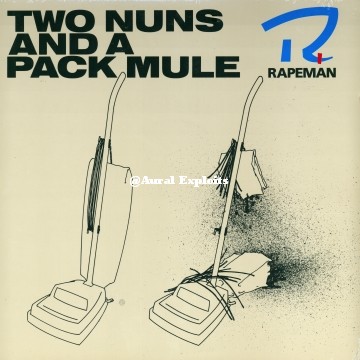 One of Steve Albini’s many groups, Rapeman made one album and an EP (both are included on the CD). Probably the most striking thing about this CD is Albini’s guitar which is so sharp it practically hurts (and when your guitar is more notable than the lyrics from a band named Rapeman, you know that sound is pretty striking). [You can hear hints of this sound on Nirvana’s In Utero (which Albini produced), particularly the screamy parts of “Scentless Apprentice”. The template is the same, although Nirvana’s drums are much much bigger. And, of course, Albini leaves the sonic edge really sharp for himself].
Although the guitar is what really stands out on this disc, the album would be far less interesting if the rhythm section wasn’t so strong. The bass is mixed really well, running lines that are never in concert with the guitar lines but which blend nicely and provide some needed low end. And the drums are sharp and punctuate the noise perfectly.
The opening of “Monobrow” is squeaks and feedback (I wonder if you could even write the music for it). When the rhythm kick in, it gives a herky jerky momentum. There’s an interesting twist on a song like “Trouser Minnow” which is written from a woman’s perspective (and yet she’s not an exemplary woman either) so you can read it a couple of ways. Of course, the opener, “Steak and Black Onions” is unequivocal: “Why don’t you snuff it man, you plant-eating pussy.”
But there’s definitely a sense of humor to all of this. In “Up beat” Albini gets angry and suggests that he’d beat a guy up. It ends, “I suppose I’m not too threatening presently. But wait till I start Nautilus.” There’s also something funny (I think) about them covering ZZ Top’s “Just Got Paid.” Funny or not, this version rocks like no one’s business, and it shows that Albini can actually play the guitar, not just make noise.
The Budd EP was recorded live. I love the description of the review here. It sounds less screechy (and more bass heavy), but no less menacing.
[READ: September, 16, 2010] The Wasp Factory
I bought this book many many years ago (I found a card in the pages from when I used to live in Brighton, MA (circa 1992) as a “bookmark.” But I think that the bookmark must have been not a real placeholder as nothing in the book was familiar, I just knew that it was supposed to be a dark, disturbing book.
And so it is.
The story concerns Frank, a 16-year-old who lives on an island outside of Scotland (my knowledge of Scottish geography is awful, so I don’t know exactly what he meant by an island, but suffice it to say that Frank’s family is isolated where they live). Frank is a disturbed individual. As the story opens, we learn that death and carnage follow Frank everywhere. In fact, Frank admits responsibility for three of these deaths. Continue Reading »
Share this:

Posted in Bret Easton Ellis, Death, Drinking, Iain Banks, Rapeman, Threats, Unlikable main character, Violence, Yuck! | 1 Comment »
 SOUNDTRACK: BARENAKED LADIES-The Yellow Tape (1991).
 The Yellow Tape is legendary in terms of demos. It was an indie cassette-only release and it went platinum in Canada.
Before the internet, it was really hard to come across this cassette (again, even though it went platinum in Canada, I don’t know that it ever even made it south of the border). Of course, now with the web, you can hear all 5 tracks on the cassette (thanks YouTube).
Four of the 5 songs appeared on their first album anyhow, and they don’t sound dramatically different from the “Yellow” versions (“Brian Wilson” still has that awesome bass from Jim Creeggan for instance). It basically sounds like an early live recording. (The harmonies are spot on, the only difference is Steven Page’s vamping, which is a bit more than on the release). Although I think “Blame It on Me” sounds a little less exciting than the Gordon version.
And of course, the final track is their original cover of “Fight the Power.”
It’s interesting that the band chose these 5 songs, two of which talk about famous people and are sort of funny. (And then a cover of a Public Enemy song!) It really sets them up as a goofy band (which they are, although they are much more than that), but it kind of put them in a novelty niche right off the bat. A niche which they never really outgrew, even if their later discs were much more serious.
[READ: August 17, 2010] “Second Lives”
Daniel Alarcón is another New Yorker 20 Under 40.
I love the way this story begins. It informs us that the narrator’s parents had the foresight to have their first child in the United States. His parents were in Baltimore on a visa. His father enrolled in school and his mother worked in the health care profession. They were comfortable enough in their lives to have their son Francisco there. But then a coup broke out back home, their visas are not renewed and they were forced to return home. Their second son, the narrator, with whom his mother was pregnant at the time wound up being born not in America.
And so, when your brother has American citizenship and can freely roam the American countryside, what exactly are you supposed to think when you are denied this freedom? Continue Reading »
Share this:

Posted in 20 Under 40, Barenaked Ladies, Daniel Alarcón, Marriage Trouble, New Yorker, Public Enemy, Travel | Leave a Comment »
 SOUNDTRACK: ODDS-Neopolitan (1991).
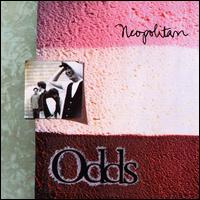 This was the first Odds album. For such a quirky name, Odds played some pretty standard music. I’m not even sure if the first song qualifies as “alternative” as it sounds not unlike an early Phish song, only less quirky (and much shorter).
The disc offers a pretty nice range of poppy tracks, from acoustic based songs like “Are You Listening?” to louder guitar rockers liked “Evolution Time” (probably the most interesting track here).
Another notable song is “Wendy Under the Stars” a surprisingly explicit song about the day Elvis died. The other track that stands out is “Love is the Subject” which has a harder more abrupt sound that is actually a bit premature for that style and sounds quite funky for this album.
Lyrically, the cleverest song (and one that seems to foreshadow their future songs is “Domesticated Blind” “Making babies, buying houses. A French guy’s name is on our trousers. We used to be such rabble rousers. Before the world revolved around us; I’ve been domesticated blind”
I like this album, but I admit that it’s not the kind of disc that makes people go, “Ooh, who is this? I want to get it!”
[READ: September 12, 2010] “Vogalooooonga”
This is the last of the Outside pieces that Tower wrote (not chronologically, just for my reading schedule). And I’m really pleased that I saved it for last.
It does what Tower does best: tell a story while relating an event. In fact, if he just changed a few details, this would make a great short story.
Wells and his brother have apparently been on many “assignments” together, and it transpires that when they travel together they often end up at each others throats. So the piece opens with them agreeing to never do another story together again. Then they get a call to go to Venice together to ride in the Vogalonga, “a 19-mile noncompetitive rowing regatta, held in late May, that promises a breathtaking tour of the old republic’s lagoon and outer islands” and that is traversed only in vehicles that can be paddled. Wells’ brother says that they can’t pass up a trip to Venice, so he agrees to go along.
Based on the other stories that Wells has written, he is an athletic guy (and his brother is evidently bigger and stronger than he is). Nevertheless, a 19 mile canoe trip in the canals of Venice can only lead to trouble.
And so this piece reads a bit like a David Sedaris story of familial in-fighting (although it’s a lot more manly than any of Sedaris’ pieces). They fight from the get go (including his brother’s suggestion that they assemble their 17-foot canoe in their 10-foot hotel room. And aggressive hilarity ensues. Continue Reading »
Share this:

Posted in Adventure, Canoeing, David Sedaris, Drinking, Essays, Funny (ha ha), Odds, Outside, Phish, Travel, Wells Tower | Leave a Comment »
[LISTENED TO: Week of September 20, 2010] Ulysses 17-18

The final two Episodes of the Ulysses audio book were a mix of nothing new and massive revelations.
Episode 17, the catechism, doesn’t reveal all that much in the reading. It’s a fairly straightforward Episode, so there’s not very much in the actual reading that would impact it. One or two things do become somewhat clearer with the audible emphases but questions like this one are still a beast to unpack:
What counterproposals were alternately advanced, accepted, modified, declined, restated in other terms, reaccepted, ratified, reconfirmed?
Although in Episode 18, Molly says:
he says hes an author and going to be a university professor of Italian and Im to take lessons what is he driving at now
So I guess the Italian lessons plan is settled? Which gives us some account of Stephen’s future.
But back in 17, this time through I became more aware of the
interment of Mrs Mary Dedalus, born Goulding, 26 June 1903.
So Stephen has been “in mourning” for almost a year. Is that standard for Ireland at the time? And how interesting it is that
Rudolph Bloom (Rudolf Virag) died on the evening of the 27 June 1886.
Their parents died on almost the exact same date (different years, obviously). This is another interesting similarity that is not directly mentioned in the Q&A. Continue Reading »
Share this:

Posted in Dublin, Ireland, Irish Writer, James Joyce, Language, Marriage Trouble, Prostitution, Sex, Toilets, Word usage | Leave a Comment »
 Beloved Canadians The Kids in the Hall who were hilarious for five years on their skit show (and who ended their reign while still being very funny) have returned to TV after a sixteen year hiatus (not including their underrated movie Brain Candy and their awesome live tours, naturally).
I was beside myself with excitement when I found out about this show (and I’m rather vexed that I didn’t hear about it until it showed up on IFC recently. Although I suppose if I had known about it sooner, there’s no way I could have watched it anyhow). I was also kind of surprised at how little I knew about the show before it started. How many episodes were there for instance?
So, the details (now that the show has finished its run on IFC, with repeats to come, no doubt): It is an 8 episode mini-series. All of the Kids are in the show, and they each play multiple roles (although the opening credits and promo stuff suggest that they each play one character). They play:
Bruce: Mayor Bowman, “Big City” Lawyer (one of my favorites on the show), and Ricky (an obese man).
Dave: Mrs Bowman, Levon Blanchard (news producer), Dr Porterhouse (The town abortionist), and a wonderfully ambiguously accented, where-the-hell-is-she-from? nurse (my favorite minor character by far).
Kevin: Marnie (a forgetful, middle aged woman), Shaye (the news teams’ sound guy and hipster) and Sam Murray (depressed cat loving DA).
Scott: Crim Hollingsworth (1/16th Native and a great performance by Scott), Heather Weather (the TV weather woman), and Dusty Diamond (town coroner).
Mark: Corrinda Gablechuck (anchorwoman), The Judge, and the titular Death.
Bruce & Mark also play cops, like in the old series.
There are also other actors in the series, and (according to post show interviews) a lot of the locals from Shuckton, Ontario (which is really North Bay) were used as extras.
I admit that I was a little disappointed in the first episode. After the non-stop hilarity of the skit show, this one took some time to get going. Exposition is a bitch. But there’s enough humor (the opening with Bruce’s CGI bid for the 2028 Olympics, Death’s arrival on a kids’ bicycle (with a motor), and Dave as the drunken mayor’s wife) to keep the show interesting.
Once the exposition is out of the way though, the story is just fantastic and very funny. Continue Reading »
Share this:

Posted in Canadian Content, Craig Northey, Death, Funny (ha ha), Funny (strange), Oddities, Odds, Prison, The Kids in the Hall, The Kids in the Hall: Death Comes to Town | Leave a Comment »
 SOUNDTRACK: BARENAKED LADIES-“Fight the Power” (1993).
 Public Enemy’s “Fight the Power” is one of the greatest anthems of the late 80s and 90s. It’s got everything: noise, strength, rebellion great lyrics and Chuck D. So, what can five white Canadians do with it?
Well, they keep the intensity of the song very strong–even in an acoustic setting–by overloading their version with a whole mess of music. Between the noisy piano, the occasional sound effects and the fantastic noisy drumming, they manage to really capture what a great “song” this is (as opposed to being a powerful anthem and protest). Divorced from the awesome cacophony of the original, you realize that it’s really catchy, too.
BNL are usually goofy, and they do put a bit of nonsense in the song (during the Elvis was a hero to most section). And they clean up one of the words, with a great twist (changing “motherfuck” to David Duke” in “David Duke him and John Wayne).
BNL has been performing this song for years. Their first version appeared on The Yellow Tape [1991] (a much simpler version with drums, bass and two vocals). But this version (which as far as I can tell only appears on the Coneheads soundtrack, ugh) is really solid and (aside from the fact that nobody’s voice could ever compare to Chuck D’s) sounds like an good Unplugged version of the track.
[READ: September 14, 2010] “An Arranged Marriage”
Freudenberger is one of the New Yorker‘s 20 Under 40. I have to say I was (unfairly) surprised that a story written by a woman named Freudenberger was about a woman named Amina who lived in Bangladesh.
Nevertheless, the story was a good one and was an interesting twist on the concept of the titular arranged marriage. Amina meets George online at AsianEuro.com (after having met several men who were not what they said they were). Amina (and her parents) had always planned for her to move to America. Somehow. She had considered applying for a college degree, but found that even that was prohibitively expensive. So why not, as the Voice of America radio suggested, find a mate? Continue Reading »
Share this:

Posted in 20 Under 40, Barenaked Ladies, Marriage (Happy), Nell Freudenberger, New Yorker, Public Enemy, Religion, Short Story, Travel, Virginity (Loss of) | Leave a Comment »
 SOUNDTRACK: CITY AND COLOUR-Live @ The Orange Lounge EP (2010).
 City and Colour is Dallas Green from Alexisonfire (he’s the one with the good singing voice as opposed to the screamy guy).
This EP contains 6 songs, 4 from his last album Bring me Your Love and the 2 hits from his first album Sometimes.
As with his previous live release [Live CD/DVD], he sings these songs solo. Each song is done on acoustic guitar. But unlike that Live album, this disc does not appear to have been recorded in front of an audience. There is no cheering, no banter, just him and his guitar.
If you’re a fan of Green (and you really like his voice) this is a great release. There are several spots where he sings in if not acapella, then with very quiet musical accompaniment so his voice is pretty naked. This is a limited edition EP (apparently) but it’s a really good introduction to the man and his music.
I must say though that I never noticed just how obsessed with death he is! This recording style really highlights all the times he says death or dead. Huh.
[READ: September 12, 2010] “Love in the Ruins”
This was the darkest of all of Wells Tower’s Outside magazine pieces. And although it has some humor, for the most part it was a sad lost-love letter to a city that he once knew.
One year after Hurricane Katrina, Tower went back to New Orlenas to ride his bike. He had lived in New Orleans for a short time before Katrina hit and he used to ride his bike for long stretches across the Mississippi River levee. He decided to revisit it to see what it was like after the disaster. Continue Reading »
Share this:

Posted in Alexisonfire, Biking, Canadian Music, City and Colour, Corporate skewering, Death, Natural Disasters, Nazis, Outside, Wells Tower | Leave a Comment »
-
Join 1,279 other subscribers
Blog Stats
- 1,765,880 hits
So many choices
Tags
rheosliveBlogroll--The Others
Archives
- June 2026 (6)
- May 2026 (13)
- April 2026 (32)
- March 2026 (37)
- February 2026 (24)
- January 2026 (13)
- December 2025 (24)
- November 2025 (34)
- October 2025 (59)
- September 2025 (70)
- August 2025 (25)
- July 2025 (26)
- June 2025 (20)
- May 2025 (48)
- April 2025 (37)
- March 2025 (19)
- February 2025 (25)
- January 2025 (21)
- December 2024 (46)
- November 2024 (35)
- October 2024 (43)
- September 2024 (41)
- August 2024 (15)
- July 2024 (27)
- June 2024 (41)
- May 2024 (42)
- April 2024 (39)
- March 2024 (41)
- February 2024 (38)
- January 2024 (32)
- December 2023 (46)
- November 2023 (36)
- October 2023 (60)
- September 2023 (56)
- August 2023 (32)
- July 2023 (39)
- June 2023 (45)
- May 2023 (36)
- April 2023 (37)
- March 2023 (29)
- February 2023 (10)
- January 2023 (10)
- December 2022 (41)
- November 2022 (28)
- October 2022 (47)
- September 2022 (49)
- August 2022 (24)
- July 2022 (30)
- June 2022 (38)
- May 2022 (62)
- April 2022 (51)
- March 2022 (47)
- February 2022 (31)
- January 2022 (31)
- December 2021 (50)
- November 2021 (45)
- October 2021 (51)
- September 2021 (35)
- August 2021 (32)
- July 2021 (36)
- June 2021 (36)
- May 2021 (34)
- April 2021 (40)
- March 2021 (35)
- February 2021 (32)
- January 2021 (33)
- December 2020 (37)
- November 2020 (36)
- October 2020 (43)
- September 2020 (43)
- August 2020 (48)
- July 2020 (48)
- June 2020 (45)
- May 2020 (67)
- April 2020 (59)
- March 2020 (53)
- February 2020 (40)
- January 2020 (41)
- December 2019 (42)
- November 2019 (45)
- October 2019 (59)
- September 2019 (55)
- August 2019 (45)
- July 2019 (38)
- June 2019 (45)
- May 2019 (45)
- April 2019 (52)
- March 2019 (44)
- February 2019 (38)
- January 2019 (33)
- December 2018 (70)
- November 2018 (42)
- October 2018 (58)
- September 2018 (47)
- August 2018 (36)
- July 2018 (48)
- June 2018 (46)
- May 2018 (48)
- April 2018 (56)
- March 2018 (50)
- February 2018 (35)
- January 2018 (39)
- December 2017 (66)
- November 2017 (37)
- October 2017 (58)
- September 2017 (40)
- August 2017 (45)
- July 2017 (44)
- June 2017 (44)
- May 2017 (38)
- April 2017 (38)
- March 2017 (42)
- February 2017 (36)
- January 2017 (35)
- December 2016 (60)
- November 2016 (36)
- October 2016 (36)
- September 2016 (32)
- August 2016 (33)
- July 2016 (33)
- June 2016 (30)
- May 2016 (31)
- April 2016 (30)
- March 2016 (31)
- February 2016 (29)
- January 2016 (31)
- December 2015 (31)
- November 2015 (30)
- October 2015 (31)
- September 2015 (30)
- August 2015 (31)
- July 2015 (32)
- June 2015 (31)
- May 2015 (32)
- April 2015 (30)
- March 2015 (31)
- February 2015 (28)
- January 2015 (31)
- December 2014 (32)
- November 2014 (30)
- October 2014 (31)
- September 2014 (30)
- August 2014 (31)
- July 2014 (31)
- June 2014 (30)
- May 2014 (31)
- April 2014 (30)
- March 2014 (31)
- February 2014 (29)
- January 2014 (32)
- December 2013 (32)
- November 2013 (30)
- October 2013 (32)
- September 2013 (30)
- August 2013 (31)
- July 2013 (31)
- June 2013 (30)
- May 2013 (31)
- April 2013 (30)
- March 2013 (33)
- February 2013 (28)
- January 2013 (31)
- December 2012 (32)
- November 2012 (32)
- October 2012 (31)
- September 2012 (30)
- August 2012 (31)
- July 2012 (31)
- June 2012 (30)
- May 2012 (31)
- April 2012 (31)
- March 2012 (32)
- February 2012 (29)
- January 2012 (31)
- December 2011 (31)
- November 2011 (30)
- October 2011 (31)
- September 2011 (30)
- August 2011 (31)
- July 2011 (31)
- June 2011 (30)
- May 2011 (31)
- April 2011 (30)
- March 2011 (31)
- February 2011 (28)
- January 2011 (32)
- December 2010 (31)
- November 2010 (31)
- October 2010 (31)
- September 2010 (31)
- August 2010 (31)
- July 2010 (32)
- June 2010 (30)
- May 2010 (31)
- April 2010 (30)
- March 2010 (31)
- February 2010 (29)
- January 2010 (27)
- December 2009 (26)
- November 2009 (30)
- October 2009 (29)
- September 2009 (25)
- August 2009 (24)
- July 2009 (27)
- June 2009 (23)
- May 2009 (16)
- April 2009 (17)
- March 2009 (28)
- February 2009 (11)
- January 2009 (16)
- December 2008 (13)
- November 2008 (17)
- October 2008 (8)
- September 2008 (15)
- August 2008 (14)
- July 2008 (14)
- June 2008 (12)
- May 2008 (9)
- April 2008 (8)
- March 2008 (7)
- February 2008 (4)
- January 2008 (4)
- December 2007 (8)
- November 2007 (14)
- October 2007 (4)
- September 2007 (11)
- August 2007 (17)
- July 2007 (16)
- June 2007 (21)
- May 2007 (17)
Pages
Top Clicks
Top Posts in the last 2 days
- Hari Kunzru--"A Transparent Woman" (New Yorker, July 6 & 13, 2020)
- Ann Patchett--"My Three Fathers" (New Yorker, September 28, 2020)
- William Gaddis--[Week 5] JR [#OccupyGaddis pages 301-382] (1975)
- Chuck Palahniuk--"Guts" [from the novel 'Haunted'] (2005)
- Bloodywood (Theatre of Living Arts [TLA], Philadelphia, PA, May 5, 2026)
- St. Vincent (Electric Factory, Philadelphia, PA, November 28, 2017)
- Natalie Beach--"I Was Caroline Calloway" (The Cut, September 10, 2019)
- Ann Patchett--"How to Practice" (New Yorker, March 1, 2021)
- David Foster Wallace--Consider the Lobster (2005) [audiobook 2017--David Foster Wallace]
- 2666 final (?) thoughts
 I Just Read About That...