I didn’t realize that we attended a Momix show almost exactly one year ago. But that’s when it was. That show was called Remix, and it was a collection of great bits from Momix shows. This year’s show, Botanica, is an older show and there were bits of it in Remix. This gave me the most unique (for me) experience of seeing a dance troupe perform things that I had already seen! What was fun was that the dancers were (I believe) different and, it felt like perhaps the pieces were performed a little bit differently too.
One of the fun things about the show was how the pieces segued into one another–most routines didn’t end so much as meld into the next one (and you can see how picking pieces out for a Greatest Hits might require some restructuring).
We saw this show at the McCarter Theatre, where, once again we had the $20 seats (knocked down to $18 with a AAA discount!). For this show the seats were a bit of a hindrance because Momix is definitely about spectacle, and there were a few pieces where the spectacle was lost from our angle (which was a little below the stage and off to the right). On the plus side, being able to see the dancers up close (we were literally three rows from the stage) brought a new level of experience to the show that you don’t get when the performers are interchangeable (hey, that’s the sweaty guy, that’s the blonde lady, that’s the guy with the amazing muscles).
The show opened with a waving sheet which looked like snow. As the sheet began rippling dancers revealed themselves underneath and starting popping up, like flowers or dolphins or gravity defying skiers. It was very cool. Then a giant flower-like item came out on stage and women danced around it. There followed a wonderful sequence with black light paint as three performers with neon arms and legs made wonderful shapes–animals, faces, bodies–using their limbs. Our cheap seats hindered this piece somewhat. Continue Reading »
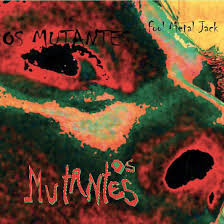
SOUNDTRACK: OS MUTANTES-” Picadilly Willie” (2013).
I enjoyed this album so much (thanks NPR for the stream) that I had to talk about this song and how radically different it was from yesterday’s track. “Picadilly Willie” is this wonderful old-sounding rock song. It’s got a very classic rock riff, but there’s something slightly off-kilter which makes it sounds more like Frank Zappa classic than radio classic. And when the vocals come in (with a sinister laugh) it sounds more like Mr Bungle than anything else (I wouldn’t be surprised if Mike Patton was a fan of Os Mutantes).
The song ends with what sounds to me like Middle Eastern sitar music and echoed chants of “Bra-zil!”
And these are just two of the styles of music on this wonderfully wild and diverse CD. I can’t wait for its release.
[READ: April 22, 2013] Bartelby & Co.
I read about this book in the Bolaño interview book. Vila-Matas was one of many authors that Bolaño highly recommended–this book in particular. And, it was one of the few books on that extensive list that has been translated into English.
This book follows in the rich tradition of books that are more or less lists about people and not really novels at all. (This seems like a peculiarly Latin American pastime, at least in my experience, as there are nearly a half dozen books that seem to do this, including several by Bolaño).
The key to this book is in the title: Bartelby. The narrator is a hunchbacked loner, and he decides to catalog all of the instances of writers who have in the grand tradition of Herman Melville’s Bartelby the Scrivener said “no, I would prefer not to” write anymore. And so this book becomes a series of notes without a text. The glorious list includes many famous and not so famous writers (the most famous being Salinger) who whether famous or not, decided to write no more. And thus we have 86 “sections” in which the narrator writes about writers who stopped writing. For most of the he gives their reason for no longer writing, for others he simply likes talking about how they stopped writing or what their circumstances were before they stopped. Continue Reading »
I have known about Os Mutantes for years. I never knew anything about them (and never really understood their name–although now that I have been working with Brazilian books at work I realize that their name is Portuguese for The Mutants (it was the Os that always threw me off). I had no idea that a) they’d been around since the 60s and were part of the psychedelic scene or b) that they were still around (after some breakups and with a largely new lineup) or c) that they sang in English (which they do on several songs on this album) or d) that their new album kicked so much ass.
The album is called Fool Metal Jack and it is a fantastic mixture of fast heavy rock, Brazilian traditional sounds, what I assume are Native Brazilian chants and a heavy dose of weirdness. All wrapped up in an anti-war stance, like on this track “Fool Metal Jack.”
A creepy, distorted bassline introduces this song which sounds like the guy from Gogol Bordello singing a Tom Waits march. It’s about a soldier in the middle of a war. The bridge means more voices come in, bringing in an even more disorienting sound. And the chorus chanted “Yes. No More War” completes the song. By the time the wailing guitar solo comes in the chants of “This is the war of hell” have even more impact.
This stomping song was a great introduction to this band who I now need to explore further.
[READ: April 18. 2013] The Last Interview
I enjoyed Kurt Vonnegut’s “Last Interview” and since I had always intended to read Bolaño’s I was delighted to see that our library had it. Bolaño is a fascinating interview subject because you never really know what he is going to say. There are even serious questions about the veracity of his life story which many people believe he fabricated for more dramatic effect.
But the one thing that is absolutely consistent about Bolaño is that he always praises writers whom he respects (and will trash those he doesn’t, although that seems to come more from the interviewer’s instigation (not that he needs a lot). So the last interview that he did is the one from Mexican Playboy which has been collected in Between Parentheses. But the other three are earlier and, it seems, a little more “truthful” or at least less naughty-seeming.
What’s fascinating about this book is that the introduction by Marcela Valdes (“Alone Among the Ghosts”) is over 30 pages long! The article originally appeared in The Nation on Dec 8, 2008 (read it here). As such it’s not an introduction to this book, it’s introduction for English readers to Bolaño circa 2666. And it’s a great read. It is primarily about 2666, which Valdes has read many times. She goes into interesting depth about the story but mostly she relates it to Bolaño’s own experiences while writing the book. It focuses especially on his research about the real murders. His interest was genuine and he sought help from a reporter who was doing genuinely decent work (ie. not accepting the word of the state about what was going on).
Bolaño has said he wished he was a detective rather than a writer, which explains The Savage Detectives and Woes of the True Policeman. But Valdes also points out how almost all of his shorter novels have some kind of detective work involved–seeking someone who is lost or hiding. The article was really great and is worth a read for anyone interested in Bolaño, whether you have read him or not. Continue Reading »
SOUNDTRACK: DEAD CAN DANCE-“Children of the Sun” (Live at KCRW, April 24, 2013).
Dead Can Dance are timeless. Their music sounds ancient and modern at the same time. And Brendan Perry’s voice has an unearthly majesty to it that never seems to age.
I’ve known the band for decades (during which time they have broken up and reunited and broken up and reunited). And in all that time, while their sound has changed in subtle ways, the band is instantly recognizable. I’ve never really thought of them as a live entity–they just seem like such a creation of the studio that it would be impossible to do justice to their wash of music live. Of course that was truer three decades ago before it was easy to fit an entire orchestra on an iPod.
You can watch this song on NPR. It’s fun to watch a band with two keyboardists (and Lisa Gerrard on…autoharp?) and see all of them making very different sounds. The only disappointing thing about watching this is that they have so many cool instruments strewn about which do not get used on this song (you can see the whole show here and watch him bust out that bouzouki).
This song is a new one and it doesn’t have quite the ponderous nature as their older material. Which is a bit of a shame, as they were so over the top it was fabulous, but maybe they’re just settling into New Old Age.
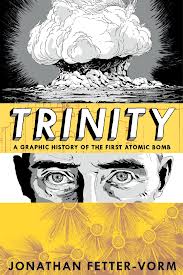
[READ: April 20, 2013] Trinity
Sarah brought this book home because it was on YALSA Hub Reading Challenge for 2013. I’m unlikely to do the challenge as I have so many other books to read, but I have already read 5 of the required 25. Not too bad, although since the challenge is from Feb to June and I read a couple last year, I don’t even qualify for some of the ones I DID read. Anyhow, she told me I’d like this and she was right (as usual).
Trinity is the story of the development of the atomic bomb done as a graphic novel.
It outlines how we came to develop and test the bomb and of course, the aftermath of its use. What I liked about the story is that leading up to the detonation of the bomb, the quest for its discovery is presented in a fairly neutral way. Essentially, once it was discovered that we could split the atom, it was deemed inevitable that someone would make a bomb out of it. It stood to reason that if Hitler or the Japanese figured it out before us they would use it on us (since we were at war with them). The intention was that America would be decent and not use it with impunity (which is not to say we wouldn’t use it at all). The book presents that American can do spirit that the forties seem to be all about–a sort of gee whiz, let’s figure this out mentality.
I knew some of the history of the bomb, but there was a lot here that I didn’t know: that thousands of people moved to New Mexico to work on the bomb—housing was put up and families moved in, some 80,000 people in all. And most of the people had no idea what they were working on. It’s hard to fathom that there were thousands of people whose work helped to create a nuclear bomb and yet they can feel neither pride nor shame because they had no idea that’s what they were doing. Weird. Continue Reading »
SOUNDTRACK: PETER GABRIEL-“The Book of Love” (2010).
This is a cover of the Magnetic Fields’ song (not the fifties song). I have this strange relationship with the Magnetic Fields. I love the songs that Stephin Merritt writes. His melodies are simple but timeless. And his lyrics are usually wonderful. Like from this song:
The book of love has music in it
In fact that’s where music comes from
Some of it is just transcendental
Some of it is just really dumb
And then there’s Merritt’s voice. It is deep. Almost comically deep, especially when he sings slowly, it brings on a strange profundity to these words. And it works pretty well. Although sometimes I want the songs to be…more. And that’s where the covers seem to come in.
Gabriel’s cover doesn’t change the song really at all. But it has Gabriel’s voice, which soars and it has Gabriel’s sense of instrumentation, which also soars. Perhaps it’s that Merritt’s songs deserve bigger and lusher treatments–they practically scream for Broadway. And while Gabriel’s version is nowhere near Broadway over-the-topness, it fleshes things out nicely.
Of course, it may very well be that Merritt’s understatement (and oftentimes, just one instrument) provide a successful counterpoint to the spectacle that the song could be. And maybe that’s why they are so successful.
But Gabriel’s version is really great, too.
[READ: April 20, 2013] X
One more book of poetry for April, this one by Dan Chelotti. It is Chelotti’s debut, and Chelotti’s poetry is wild and weird and often quite funny. It is also unapologetically modern. As you can see from the first poem “Ball Lightning”
I am looking out over
one of the first real gray
days of autumn listening
to a podcast in which
these two men are talking about
the phenomenon of ball lightning.
Or, more sadly in “ Grieving in the Modern World” in which he compares the way people’s grief in the old days was so public, but now it seems so small and insignificant, oh and besides:
…the microwave is
almost finished heating
my dinner , and the newshour
is about to begin. Continue Reading »
SOUNDTRACK: FOO FIGHTERS “Overture” (Rock and Roll Hall of Fame, 2013).
On April 19th, Rush was inducted into the Rock and Roll Hall of Fame. I don’t particularly care about the Hall of Fame, but I love to see Rush celebrated.
And I love to see Dave Grohl celebrate with people. So, as only Dave and co. can do, they donned white kimonos and wigs and set out to rock the HoF with a great cover of 2112’s “Overture.” They didn’t get into “Temples of Syrinx” (I was curious to see if Dave would try that falsetto), but they were joined by the original trio for the end of the song with Geddy stating that the meek shall inherit the earth.
FF do a great job, they sound heavy and they got all of those odd time signatures down right. Dave does an admirable job with Alex’s challenging solos. All in all, it was a pleasure to see. Evidently this will be broadcast officially on May 18, but for now there’s a shaky cam version floating around the web. I found it on Stereogum. You can also see Dave Grohl’s very cool induction speech there too (although the picture no longer seems to be on cameltoe.org).
And check out the commitment (even with Tyler’s moustache) and the real set behind him.
[READ: April 21, 2013] “The Tandoor”
An unexpected title for this story in which the tandoor plays a very small role. The story felt like there could have been a lot more to it, for while there was a lot of backstory and the story did feel complete, I could have read a lot more (which I think is a great complement). It starts out in a rather mundane fashion with a girl in the backseat of a car being belligerent because her mother took away the iPad (so she could do Sudoku). The family is driving to Texas to see the Hole. Before we learn what the Hole is, we learn more about the family.
The husband and wife are fighting (as usual). The daughter has taken the father’s side because he’s the underdog.
It turns out that the father has opened another restaurant (this is the fifth one, the other four have failed). It is also not doing very well and the wife resents not only the failing business but also the fact that he has been given money to try five businesses. She also resents the woman that he husband admitted he lusts after (at least he admitted it in his sleep). And she seems to have taken that as an invitation to sleep with someone else as well. (There’s a lot more to it and the details are wonderful). Continue Reading »
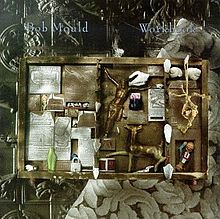
I actually wrote this while reading Bob Mould’s book, I assumed I attached it to something and then wrote about Mould’s second disc Black Sheets of Rain. And now I see that I never attached this to anything.
This is Mould’s solo debut, an album that I think of as being a mellow acoustic album. And it is, kind of, at least if you go by the opening song, “Sunspots” a beautiful little acoustic guitar instrumental. And the rest of the instrumentation on the record includes strings, which are prominent on “Wishing Well.” Although the song rocks a lot harder than I remember–especially the rollicking solo which has some real screaming guitars and angst in it. It sticks out a bit in the album because most of the album is more along the lines of “Heartbreak a Stranger”–opening with a gentle pretty acoustic guitar and Bob’s emotional voice (and really nice harmonies).
And then comes “See a Little Light” Mould’s first solo hit (and a big one at that). It’s bright and has great harmonies. There’s strings which really accentuate the song and a few moments which even now all these years later give me chills. “Poison Years” has more of that acoustic vibe but it brings in a big chorus (oh his harmonies!) and a harsh guitar solo (and a chilling final note)–a great song all around.
“Sinners and Their Repentances” is a minor key masterpiece in which Mould’s voice seems like the main instrument. “Brasilia Crossed with Trenton” is a six and a half-minute song. (This album is full of long songs actually–which comes as something of a surprise given Mould’s past success with three-minute pop songs–three of these are over 5 minutes and two are over 6!). “Compositions for the Young and Old” is a great song all around. “Lonely Afternoon” has some Hüsker Dü elements. “Dreaming I Am” has a great mid-song riff (which sounds like a mandolin) and there’s something so great about the chorus.
“Whichever Way the Wind Blows’ ends the disc with a loud abrasive guitar sound. And his singing is practically inaudible shouting. It sounds angry and has a rough riff and loud guitars. At nearly 7 minutes it’s quite the cathartic ending. It’s a strange ending to such a gentle disc, but maybe Mould wanted to show that he hadn’t gone entirely soft. It’s an amazing debut and an auspicious start to his solo career.
[READ: April 21, 2013] “Last Supper”
As I mentioned, this issue of Lucky Peach is about the apocalypse. So it’s only fitting that one of the two stories be about a Last Supper. The story is a series of letters from Adrian to Crowley.
Adrian invites Crowley over for a special meal that his mother is making in honor of the Pope and his Last Tweets of the Apocalypse. Adrian explains that her mother is a huge fan of Crowley’s work and would love it if he could come to this meal. There is an enclosed (grotesque) picture of a pig which Adrian says they will be serving and, although it looks like pig, it is not made of pig at all.
Crowley demurs this invitation–he is extremely reticent to eat anything that is not what it purports to be (he had a bad experience once). But he wishes them well. Continue Reading »
SOUNDTRACK: THE DICKIES-“Eve of Destruction” (1979).
I didn’t know the original of this song until I listened to it just now (man it is depressing). I have known this Dickies cover since the 90s, which speeds up the original almost twice as fast and makes the lyrics pretty much inaudible (which makes it less depressing).
The Dickies have done a lot of great covers, and while this one was never one of my favorites (I’m a “Town without Pity” and “Hair” man, myself), I always enjoyed the “over and over and over again my friend” part (and the squeaky guitars). And now after listening to the original, I really prefer the cover.
[READ: April 2013] Lucky Peach Issue 6
I haven’t been reviewing Lucky Peach issues in their entirety because they are mostly about food and cooking and recipes and I don’t really have anything to say about that (I enjoy the articles a lot, but I don’t need to comment on them).
But I wanted to bring special attention to this issue, which is all about the Apocalypse. And there’s a couple reasons for that. Zombies are huge, that Mayan end of the world business was all fun, and of course everyone seems to think that Obama will cause the end of the world. But on a more serous level, global warming is unchecked and no one seems to care about the environment at all, and with the weather being as crazy as it is, all bets are off as to what our world will look like even ten years from now. So why not read a magazine that has recipes for all kinds of things that might still be around in a decade.
The first half of the magazine is all about preparing for the apocalypse. There’s a degree of tongue in cheekedness in it but it is entirely sincere: there’s plenty of recipes for canning, there’s information about seed savers and a fascinating article about Seafarming, which I seriously hope takes off, as it sounds like it could be a real solution. There’s some fascinating information about Shelf Life and even a recipe entitled “pollution” which looks like a polluted sea but seems very expensive to make. I also really enjoyed the brief story about the couple who won a honeymoon in a bomb shelter for two weeks (compete with all of the canned food they could eat–oh, the Fifties). Continue Reading »
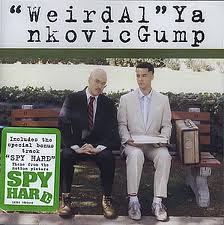
This was the second single I purchased from “Weird Al”‘s Bad Hair Day album, this time it was “Gump” with six, yes six, B-sides. The first one was “Spy Hard” the theme from the movie (starring Leslie Nielsen). It’s a funny theme song, very Bond, but also with great spoofy lyrics. It wasn’t available anywhere else, although it has since been released as its own single (with no B-Sides).
The rest of the B-Sides include “Since You’ve Been Gone” from the album and a karaoke version of the same song. This karaoke version is quite funny and is probably the best B-side he’s released. The band provides the backing vocals to keep you in place. Which means that in the middle of a quiet bit you suddenly hear “red hot cactus up my nose!.”
Then the B-sides get even weirder–an instrumental version of “Callin’ in Sick”
which really nobody wants. And then two more versions of “Spy Hard,” and instrumental and an orchestral mix. I can’t really tell them apart, and frankly they’re rather useless anyhow. So all in all, not a great single, but that karaoke song is pretty great.
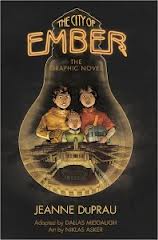
[READ: April 20, 2013] The City of Ember: The Graphic Novel
I have had the City of Ember t trilogy on my to-read list for a long time, but I’ve never gotten round to it. So I was pleased to see this graphic novel version. I know that the novel is pretty long, so I was surprised that this graphic version could be polished off in less than an hour. (It’s also written at a level that is more appropriate for younger kids—the dark darknesses of the novel are condensed to just one or two pages in the beginning. Of course, how young you want your kids reading books about corruption and dystopian societies is something else entirely. The focus is on the kids’ attempts to escape and their working together (again, I haven’t read the novel so I don’t really know how that breaks down in the book).
So the story as presented here is a simple one. The city of Ember is the only place where there is light in an otherwise dark world. As the story opens we see a classroom where children are set to pick their future occupation. Lina, our heroine, picks Pipeworks laborer, which she is utterly distressed at—she wanted to be above ground. Later, Doon, our hero, chooses Messenger, but he is disdainful of the whole process— courting the wrath of the mayor who says he’s going to keep an eye on Doon.
When class ends, Doon offers to switch jobs with Lida (which I assumed would get them in trouble, but didn’t). Lida is thrilled to work as a messenger and agrees eagerly. Doon believes that he can cause trouble from the inside by working in the Pipeworks. Although when he finally gets down there he sees that it is a much bigger and more daunting project than he ever imagined. Continue Reading »
SOUNDTRACK: WRECK AND REFERENCE-“Absurdities & Echoes” (2013).
I followed Lars’ blog on NPR and after listening to yesterday’s Altar of Plague and I wound up here with Wreck and Reference. Lars describes this song as the band’s “most melodic and mysterious.” If this is the band being melodic, I can’t imagine what the rest of it is like.
The song opens somewhat conventionally but quickly shows something unexpected with some rapid fire drums. And then the vocals come in. The guy sounds like he is drowning–both in his angst and in the recording technique–he’s either under a ton of reverb or just buried in the mix. The lyrics are incomprehensible, although they seem quite impassioned. After the verse there’s a lot of noise and snare drums–martial without exactly being military-like.
I guess there is a melody in there, but it’s not an obvious one. The song has an accompanying video which you can watch at the link above. It’s as peculiar as the song. Incidentally, this song comes from their 7″ called Content, which is pronounced “No Content.”
[READ: April 18, 2013] “Supreme Cloud Ear”
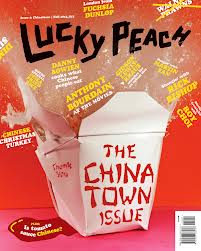
This issue of Lucky Peach was the China Town Issue. So all of the contents were about Chinatowns across the country. I really enjoyed it, as there were so many interesting things to read about. This short story was set in a Chinatown. A young couple is planning to meet Beverly. Well, actually Andrew has met Beverly but the narrator is meeting her for the first time. There’s an air of power around this meeting, Beverly is practically a mythical figure as far as the narrator is concerned. We enter the room where she is preparing something and there is stilted and awkward dialogue. And indeed, for the longest time, we don’t really know why everyone is so secretive (it’s very well done).
Beverly maintains a detached aura no matter how much the narrator tries to talk to her. After a few minutes, Beverly says she has to go on a delivery. The narrator says that she has forgotten to get wine for their dinner, so she’ll tag along. Beverly is clearly not happy about the company, although again, we don’t know why, exactly.
Beverly says that there’s a wine store down the street but the narrator won’t leave her side. Resigned to the company and making sure that the narrator is prepared for whatever might lie ahead, Beverly invites her along. Continue Reading »