Feeds:
Posts
Comments

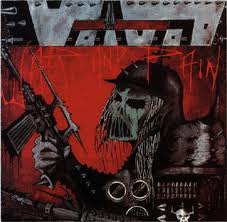
laraSOUNDTRACK: VOIVOD-War and Pain (1984).

warandIt was easy to know that Voivod were going to be an unusual band.  Their name is crazy.  All the members had nicknames like Piggy, Blacky, Snake, and, confusingly, Away.  And they were French Canadian, which meant that their singer’s first language wasn’t English–I love the way he stresses things in his vocals especially on later albums, and he had the guttural French that sounds like a cookie monster vocalist even when he is just speaking.

Later on, their prog and psychedelic leanings would come out more, but on their debut, they were just a noisy, screamy pounding metal band.  And this debut has typically bad mid 80s metal production to top it off.

In 2004 the album was remastered with bonus tracks, a full live concert and a CD ROM with all kinds of goodies.  I originally thought the remaster didn’t sound that good, but there is definitely some clarity that the remaster brings.  It allows you to hear a lot of the subtleties (and there are some) that were lost in the original.

There are hints at the kind of weird sounding noises the band would make on future albums, but this is mostly just fast, pounding music.  I’d have liked them to re-record this stuff before Piggy died, just to see what a proper recording studio could do with these earlier songs.

Of course, now that I have listenedto it again with better equipment, I’m changing my assessment somewhat.  Despite the very heavy nature of the songs there are some very cool sequences in here.  They are nothing compared to the complexities that the band would undertake in just a few short years, but there are some really interesting things underway and the remaster definitely highlights them a little better. It still sounds pretty bad 9especially compared to their later records), but hey, they only spent $2,000 and recorded it in a studio where the engineer had never heard a metal band before.

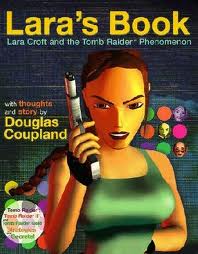
[READ: August 23, 2013] Lara’s Book

I have known of this book since it came out in 1998.  I was a huge fan of Douglas Coupland and yet I had zero interest in Lara Croft or Tomb Raider. So I simply ignored this book.  But because I’m being all completist with this blog, it was time to bite the bullet and see what this piece of nonsense was all about.

And it is just as weird and creepy as I feared.

There are several sections to the book, most of which are written by Coupland.  I will admit right up front that I did not read the strategies and secrets from Kip Ward–sorry Kip, it seemed like fun but between the crazy fonts and layout and the fact that I will never play the game it just seemed like too much. Continue Reading »

[ATTENDED: August 25, 2013] The Smithereens

smither

Photo credit: Maryanne Mistretta (see below for link to her blog)

I’ve liked a number of Smithereens songs for many years.  I even bought their greatest hits.  But I never really think about them.  And yet, the opening bass line to “Blood and Roses” is one of the best opening bass lines in rock music.  It’s so deep and groovy.

But so imagine my surprise to see that The Smithereens were playing a free concert at Duke Island Park, about ten minutes from my house.  What was especially weird is that most of the free concerts are oldies singers (The Duprees) and cover bands (Tusk, THE B STREET BAND).  But here was the honest to God Smithereens.  Now, I realize they’re not remotely as popular as they were, but it was really them.  They’re from Carteret and Scotch Plains, NJ, so they were playing to a happy local crowd.  They also told some very funny stories about growing up in Somerset County (and going to the Blue Star).

They sounded amazing and Pat DiNizio’s voice hasn’t changed a bit in thirty some years.  Continue Reading »

[WATCHED: August 19, 2013] New Boy

new boyWikipedia leads me to find things about authors that I don’t know.  Some things lead you to unfindable items (see yesterday’s Douglas Coupland post).  But this time, the post about Roddy Doyle has led me to a number of things I wouldn’t have otherwise known about,

Like this short film.

New Boy is based on his short story “New Boy.”  I read the story a while ago.  I remembered the basic premise, but not the details.  And I was delighted by this short film.  It is about 11 minutes long and it really captures the story very well.

The story is about Joseph, an African refugee, who is starting school in Ireland.  He is not the only black student, but he really does stand out.  And when the mean boy behind his calls him “Live Aid” you know that things aren’t going to go all that well.

But then we flash back to the boy’s past (in an unnamed African country).  We see him in school there and then we see why he is a refugee (there’s nothing explicit either visually or narratively, but a lot is hinted at). Continue Reading »

[Given up: August 24, 2013]

dcWikipedia is a wondrous tool, especially for fans.  For instance, many times the inside cover a book will tell you what other books an author has written.  But sometimes if different publishers are involved, that list can be lacking in a thing or two.  Heck, sometimes even an author’s website is incomplete.  Take a look at Coupland’s website. Continue Reading »

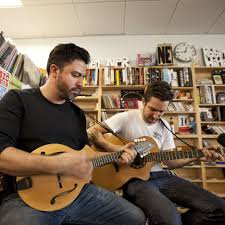
vanSOUNDTRACK: FRANK TURNER-Tiny Desk Concert #287 (July 13, 2013).

turnertinydeskNPR introduced me to Frank Turner and I’m pretty delighted that they did.  I really enjoyed his set at the Newport Folk Festival.  And here’s another live recording (a Tiny Desk Concert).

In this brief set, Frank and mandolin player Matt Nasir (he’s only been playing it for 6 months) blast through 3 of his rockingest folk songs.  “Recovery,” “The Way I Tend to Be,” (with a very funny lead story) and a rousing mandolin solo-filled and a (reluctant) NPR audience singalong. of the great “Photosynthesis.”  I imagine it was quite loud in their offices that day.

Turner is fantastic live—he’s personable and funny and even more so in this intimate setting.  It’s a wonderful set.

Check it out.

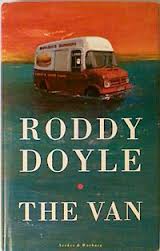
[READ: August 23, 2013] The Van

This is the final book in the “Barrytown Trilogy” (except for the new one coming out next year).  Whereas The Snapper was tied to The Commitments by virtue of it being the same family, The Van is tied to The Snapper because it follows the same guy—Jimmy Rabbitte Sr.

It’s 1990 (a few years after The Snapper because the baby from that book is now talking and mobile) and like many older people in Ireland, Jimmy Sr. has been laid off.  The first third of the book looks at life on the dole in Ireland—skimpy Christmas presents and getting handouts from your son.  And yet there’s always money for a pint or two—so Jimmy still gets to hang out with his mates at the pub a few nights a week.  He also goes out with the baby from time to time and occupies himself in various ways (pitch n putt).  There’s a lot of humor and silliness in this section–especially within the family when the twin girls start getting older and even cheekier.  And the focal point is the World Cup—because Ireland is actually going to be in it this year—Italia ’90!

And the Jimmy’s mate Bimbo gets laid off.  And that’s where the titular van comes in (over 100 pages into the story).  Bimbo is crushed to be laid off, but Jimmy is a little pleased.  He’s not happy that Bimbo is laid off, but he is happy that he has someone to waste the day with.  They go golfing together (and win a prize or two) and they do their best trying to stay happy.  But they’ve noticed that the fish and chips van that used to be parked outside of the bar is no longer there.  It’s a sad state of affairs when you’re drunk and hungry at midnight and can’t get a fish n chips.

And that’s when their friend Bertie (who can get anything for anyone) comes through on Bimbo’s half serious question–could Bertie get him a chipper van?  Bertie finds one—an unholy filthy mess of a thing with no engine.  And Bimbo uses his redundancy money, £800, to buy the mess.  Jimmy is appalled until Bimbo starts talking about the two of them being partners—working together to makes some money and sell chips to their drunken mates and—even better—to the punters who are enjoying the World Cup!  And suddenly it seems like a real idea. Continue Reading »

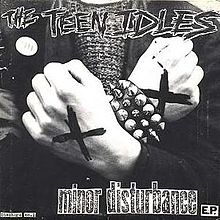
hardartSOUNDTRACK: THE TEEN IDLES-Minor Disturbance (1981).

minorThe Teen Idles were the first band released on Ian MacKaye’s Dischord Records.  And this EP was record 001 (MacKaye was in the band and he made his own label to release the record).

There are eight songs, done in a total of 9 minutes and 20 seconds.  The final song is a live track and it reaches 2 minutes mostly because of the introduction and crowd noise.  Three songs almost reach 90 seconds long.  The rest are under 1 minute.

Interestingly, there are earlier demos of these songs that are a little slower and a little less fastinyourfacescreamedlyricswhat???  Perhaps because I’m old I like the slower ones a little better, but I know that this represents the core of DC Hardcore and I respect that.  And you can actually make out the lyrics if you try.

Some themes include being too young to go to shows, people trying to grow old too fast, punk music (“you say we need practice, maybe in a couple of years”), and apparently dissing British punk for selling out. (“There goes your fury out the door, don’t expect our respect anymore”).

The acerbic “Deadhead” even has a slow section (but is still overall less than 90 seconds) in which they parody the Grateful Dead—the song is anti-Dead primarily because of the drugs they espoused (The Teen Idles, like Minor Threat were straight edge).  I had to look up Fiorucci to see what “Fiorucci Nightmare” was about (it’s a fashion house).

For an early taste of the DC Hardcore scene, it pretty much starts here.

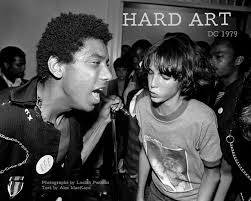
[READ: August 22, 2013] Hard Art DC 1979

Do you like punk rock?  Punk rock from the late 70s? Specifically bands from Washington DC? In particular bands that played at three venues?  On four specific dates?  That’s the focus of this book.

This is a collection of photographs by Pulitzer Prize winning photographer Lucien Perkins.  Perkins has been taking pictures for decades, primarily for The Washington Post—covering major events in Russia, Yugoslavia, Iraq, Afghanistan and, in the late 70s, a few DC punk shows.

The book doesn’t say anything about his motive for doing these shows—other than that he was new to the scene and thought it looked interesting.  And since Bad Brains are the focus of most of the pictures, I’m certain that race and racism had something to do with his showing up at these events.  Especially because the first event was called Rock Against Racism and was held in a public housing area of Washington D.C. Continue Reading »

bossSOUNDTRACK: THE OCTOPUS PROJECT-“Sharpteeth” (2013).

octopusThe Octopus Project play largely instrumentals, but this track has vocals.  It begins with a very synthy keyboard sound–very retro.  But it soon grows huge with big swirling sounds and a ton of other instruments.

I’m not sure why they do so many instrumentals because their vocals–male and female playing at odds with each other–work wonderfully together.  They’re kind of a talkie singing which works well in this song.

Bob Boilen says one of the musicians is a great theremin player.  I assume that that’s what the solo is although it doesn’t have the eerieness of a theremin–perhaps that’s just the production?

By the middle of the solo, the whole band kicks in and it is a noisy cacophony but with a pretty melody still going on.  It’s a very cool song, and I’m bummed that I’ve never heard of them before (they’ve been around over a decade).

[READ: August 20, 2013] The Boss

This is the fifth book in the McSweeney’s poetry series.

I don’t know Chang’s poetry (although I have apparently read it in The Believer) and two things struck me.  She really sticks to her theme and she likes playing with words.

What I found initially very exciting but then a little exhausting (perhaps her poetry is better taken in small doses) was the play on words.

Like the vibrancy of “I Once was a Child” Continue Reading »

misswyomingSOUNDTRACK: THE TALLEST MAN ON EARTH-Live at KEXP (September 8, 2012).

tmoeThe Tallest Man on Earth is Kristian Matsson a Swedish singer songwriter.  His albums have a very full sound, but when he plays live, it’s just him and his guitar.  And man, is he a compelling performer.  His guitar playing (primarily classical-sounding but often heavy and mostly rocking) is gorgeous–fast and pretty.  And his voice is gravelly and powerful.  I’ve enjoyed the studio songs I’ve heard, but he is transcendent live.

This set opens with a buzzy guitar that sounds like the show is not recorded well.  But that quickly goes away and the songs shine.  Matsson is a charming and self depreciating performer and when he has a malfunction as in “Love is All”and at the end he says “that was kind of embarrassing.”  But he not bothered by it and plays on with a great, short set.

The set includes some (then) new songs and a few older ones as well: “A Field of Birds,” “King of Spain”, “Tangle in This Trampled Wheat,” “Thrown Right at Me,” “The Gardener” and “Like a Wheel.”  It’s a great introduction to the guy and his amazing voice. which you can enjoy at KEXP.

 [READ: August 20, 2013] Miss Wyoming

I first read the book during my trip to Vancouver on the eve of Y2K (the best flight I’ve ever had—mostly empty and we were given champagne).  I started reading it on the plane and then in the second chapter the heroine is in a plane crash.  So I stopped reading.  I’m sure I finished it later, although I didn’t remember much of anything about it.

I read it again now and I was a little disappointed when I started reading it.  The first few chapters are so full of similes it is insane.  The word “like” is tossed around at an incredulous pace.  Like:

  • John’s teeth were big and white, like pearls of baby corn
  • …his skin like brown leather.
  • His eyes looked like those of somebody who’s lost big.
  • They crossed San Vicente Blvd, passing buildings and roads that once held stories for each of them, but which now seemed transient and disconnected from their lives, like window displays.
  • Susan was wrapped in a pale light fabric, cool and comfortable, like a pageant winner’s sash.
  • John was sweating like a lemonade pitcher,
  • …his jeans, gingham shirt and black hair soaking up heat like desert stones.
  • John felt as close to Susan as paint is to a wall.
  • Staring at the pavement, like Prince William behind his mother’s coffin.
  • This man with sad pale yes, like snowy TV sets

That’s all in the first chapter!

Now, I have come to see that the story is cyclical and it’s about people looking for their real selves.  So it’s possible that the simile heavy beginning is meant to reflect the fact that the protagonists are looking for themselves—they have no substance so they can only be compared to other things.  But man, it is hard going with that many comparisons.

The other major problem I had with the story was the really aggressive use of coincidence.  Susan and John both end up eating out of fast food dumpsters; just as Susan’s mother wants to sell their house, a pile of garbage from an airplane falls on it.  Right after we learn of a guy hoarding gasoline, the house explodes.  Again there are arguments for why these things might happen in this story (numerology is an important aspect of the book), but it seems too…easy.

But once the story starts moving the actual plot is really interesting and compelling. Continue Reading »

snapperSOUNDTRACK: KISHI BASHI-“Philosophize In It! Chemicalize With It!” (2013).

kishiI’m still really enjoying Kishi Bashi’s debut album 151a, so it’s a treat to get a new track from him.  This one is a 7″ (and apparent digital download).

It doesn’t depart radically from Kishi Bashi’s formula (high vocals, violins and bouncy, exuberant melodies).  Although this song just has…more.  More instruments, more layers, more everything.

The biggest surprise comes around two minutes in when some of the layers drop out and we get this really cool bass (which reminds me of Paul Simon) that propels the song along.  But that’s a fleeting moment amidst the swirling and swelling violins.

Kishi Bashi is one of those artists who seems to release a lot of singles and digital releases and unless they get compiled somewhere, NPR podcasts are the only place I’ll ever hear them.  Nonetheless, I’m delighted to get to jam to this one.

[READ: August 19, 2013] The Snapper

When I first got into Roddy Doyle (around 1993), I read all three of the books that are considered the “Barrytown Trilogy” (which I have just learned, thanks Louise, that there’s going to be a fourth) very quickly.  Doyle’s writing in these books is very fast and very funny–tons of dialogue that flow easily and wittily.

The Snapper was also made into a film (not as popular as The Commitments, but much funnier–check it out just to see Colm Meaney down a pint).  And Doyle’s writing is just as sharp and screenplay-friendly as The Commitments was–which makes it a real joy to read.

Although this is considered part of a “trilogy” there’s very little connection to The Commitments.  The family is the same but Jimmy Rabbitte, the protagonist of The Commitments, is a minor character in The Snapper (I’m actually not sure if it is set before or after The Commitments).  [Oh and in the movie, the family name had to be changed from Rabbitte to Curley because the company that made The Commitments owns the rights to Rabbitte (Jaysus!)].  This book is about Jimmy’s sister Sharon and, for the most part, their da, Jimmy Sr.  [There’s a slew more members of that family–Veronica their mammy, Darren, the twins Tracy and Linda, Les, and of course, Larrygogan, the new pup.

So, what the hell is The Snapper about?  Well, “Snapper” is a slang for baby (apparently).  And it seems that young Sharon (19) has gotten herself “up the pole” (pregnant).  The surprising thing about the story is the family’s reaction.  It is largely positive.  She won’t say who the father is, and after the family accepts that, things seem largely fine.

Sharon is afraid to tell her friends, but even they, including her best friend Jackie, take it well (especially after a few drinks).  So where is the conflict? Continue Reading »

questionableshapeSOUNDTRACK: PHISH-Live Bait Vol 09 (2013).
live bait 9I just recently realized that Live Bait 9 has been released.  So I grabbed it just in time.  Vol 9 is full of long jams.  The shortest track here is 10 and a half minutes and there are three over 30 minutes (true, some of them are actually multiple songs melding into one track, but they still retain that long jam feel).

What I especially liked about this set was that it included a few songs that I feel like aren’t represented all that well in the Live Bait catalog.  Like “Foam” from 1994—a solid rocking jam (at 10:47).  And “A Song I Heard the Ocean Sing” (from 2004—I like how they splice the cuts together, so in this case they jump a decade but it doesn’t sound it).  I feel like this song is not played as much, so it’s nice to hear.  And then there’s a lively “The Moma Dance” from 2000.

There are a number of quirky moments in many of the songs.  Like “Split Open and Melt” which comes in at 31 minutes.  Around 11 minutes, they morph into “Kung,” and what’s weird about this version (aside from the fact that the song itself is bizarre) is that instead of it just being them making noise and shouting, there’s actually music behind it—mostly drums—I’ve not heard it done like that before.  During the jam, at around 15 minutes, Mike plays Collective Soul’s “Shine” riff on the bass, but the rest of the guys don’t join in.

“Mike’s Song” (from 1999) begins a 40 minute jam.  The song seems slower than usual, which I find odd.  But it works well for the very mellow jam that constitute the big instrumental section—they even use the echoey guitar the runs for a few minutes keeping the beat and setting a pace.  At 17 minutes the song morphs into a rousing version of “Twist”.  Then at 31 minutes they morph into “Weekapaug Groove” (with Gordon’s great bass opening.  At 36 minutes Trey starts playing the Macarena, although not exactly right, which is pretty funny in and of itself.

“David Bowie” (from 1995) is a 25 minute jam that gets pretty dark in the middle.  Then comes the most interesting juxtaposition of songs jam.  From “AC/DC Bag” one of their earliest songs to “Ghost” one of their then newest ones.  “Tube” a, to my mind, underplayed song is next.  It has a funky jam and is appreciated.

This free set ends with “Undermind,” one of my favorite new songs (this one recorded n 2012). It opens with a staccato riff which gives it a kind of reggae feel.  But it soon returns to its normal sound and proves to be a great ender to this “set.”

I can’t say enough good things about the Live Bait series.  I’m not one to buy many concert sets, but having free samples is really cool.

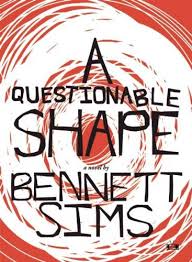
[READ: July 28, 2013] A Questionable Shape

Karen read this book and not only raved about it, she personally recommended it to me. So imagine my surprise to find out that it’s a zombie novel!  But it is a zombie novel like no other.  If Colson Whitehead (in Zone One) made a zombie novel that was literary, Sims has gone one step further, making a zombie novel that is philosophical.

The story is set in Baton Rouge and takes place some time after a zombie epidemic has broken out. In the time since the zombies started appearing (worldwide, it is suggested), the police and emergency teams have managed to contain the worst of it (already that’s something new).  Panic has subsided somewhat and the government has even released a pamphlet on how to deal with everything that’s been going on (called Fight the Bite–I never checked to see if there was a version online, it would make a great “online extra” (having now read Karen’s review, I’m glad to see she agrees)).

The book focuses on two primary characters: the narrator (Michael Vermaelen–referred to mostly as Vermaelen whose name is not given until very long into the story) and Matt Mazoch.  There is a third important character–the narrator’s live-in girlfriend, Rachel, who plays as something of a foil.

The simple plot takes place over a week.  Mazoch is searching for his father.  Mr Mazoch died just before the epidemic and Matt believes that he is among the walking dead.  And so Matt has asked Michael to go with him to try to find him.  There’s a couple things to note right off the bat (the pun was not intended, although Matt carries a bat with him as his line of defense and who knows what else).  Matt and Mr. Mazoch had a weird relationship, one which fell apart considerably over the last few years. Mr Mazoch let himself go completely and seems opposed to everything that Matt believed in–physical fitness and intellectual pursuits (or, as Michael points out, perhaps Matt pursued them to be the exact opposite of his father). The second is that while Michael is happy to go along with Matt, he has no idea and is even afraid to ask what Matt plans to do should he find his father.  And this issue comes to a head later with Rachel.

Matt has given them exactly one week to find his father, with the explicit instructions that after a week thy give up pursuit so that it doesn’t drag on indefinitely.

Okay so far so good–they are going zombie hunting.  But the thing is, the zombies have become a part of the landscape, but they have been tamed.  It is illegal to kill them (what an interesting twist).  Despite their zombie-ness (it’s actually considered an insult to call them zombies), and their desire for human flesh, rather than eradicating them, they are being rounded up and put in camps.  Naturally there are still a number of stragglers (zombies get everywhere), but there is a hotline to call if you see one and within minutes the police come and quarantine them.

So, what’s one to do on a day long adventure hunting zombies–or more specifically, one zombie–if you aren’t actually hunting them?  Well, mostly, you talk.  Michael is a philosophy student (he intended to read all of the important philosophical works although the outbreak has taken him off his goal somewhat), Matt is a literature student (Rachel is an art history major), so the discussions get very philosophical.  In addition to quoting Heidegger, Kant, Nietzsche and many other big names, they also talk video games and seek for metaphors for the zombie invasion.  The video game discussion was quite fascinating–Matt imagines the grid of zombie takeovers to be like a video game–going into blank nothingness. But Michael imagines it more like a filmy haze.

Indeed, since this is all told from Michael’s first person point of view, we learn a lot about what is in his head.  And it turns out that Michael is obsessed with the zombies (which is understandable, really).  But his obsession is different.  When the outbreak first happened he, like everyone else, refused to go outside.  But soon, when the government gave the all clear, Rachel not only went outside, she volunteered at the facilities. But Michael refused–seeing potential contamination everywhere. Indeed, even though he goes out with Matt every day, he still imagines and worries what would happen if and when someone he knows is infected. When they go to a diner, Michael won’t even eat the food, imagining some kind of contamination.

He even tries demilitarization exercises with Rachel (which she is understandably freaked out by).  But as the story moves on Michael’ footnotes (did I say there were footnotes? There are–almost one per page) spend more and more time wondering what the zombies are experiencing–he seems to be trying to pick the best one.  And he goes over and over these ideas in great detail.

After a few days (each chapter is a day) Rachel needs to know what Matt is intending to do if (when) he finds Mr Mazoch, especially since Matt suddenly believes he has some “evidence.”  Michael doesn’t want to know, which enrages Rachel.  She assumes the worst (that he wants to kill his father).  She assumes he would kill him out of malice towards zombies, but Michael suggests it would be to put him out of his misery).

Rachel has a personal stake in this issue.  Her father died before the epidemic, but she was convinced that he would be turned (before they proved that the longer-dead weren’t rising, it was only the recently dead).  So she waited at his graveyard, with the intent of digging him up if need be.  She proves to be a real bleeding heart on the issue.  To make her case, she gives the recent example of a scientist training a  zombie to speak.  She discusses the emotions of the woman whose father was the zombie.  She says this shows that these creatures still have humanity in them and to kill them all would be genocide.

By the end of the book, Matt has taken a polar opposite position–hurricane season is coming and these things are a security risk for all the living.   They should all just be killed.  For the safety of everyone.   Michael–always the intellectual–has a somewhat more nuanced position–he feels that perhaps they should be spared because we have so much to learn from them. And each case is made rather convincingly.

There are some wonderful passages–the discussion about leaves and greenery and the amazing description of Michael’s first encounter with a zombie (not at all frightening, just chilling) show what a great writer Sims is.

The strange thing about this book (aside from the whole “it’s about zombies, but not” premise) is that for such a short book (just over 200 pages), it’s a pretty slow read.  Between the footnotes and the philosophy, the book doesn’t exactly flow quickly.  It’s not light reading by any stretch.  And at times it’s a little…dull?  too in its own head?  Something?  But those moments seem few and far between, because ultimately the language is so interesting and fulfilling.

The end is one of those endings that’s not a real ending–it’s more of a “what would you, the reader, do?” kind of ending.  That’s always unsatisfying.  And yet at the same time, I have not stopped thinking about what I would do in his case.  And so it almost becomes the perfect ending.

Bennett Sims was a student of David Foster Wallace and although this book does have footnotes, the author he resembles most is Nicholson Baker–where not much happens in the body of the work and all of the “action” (which is really thought) is in the notes.

Karen put Bennett Sims along  with Seth Fried and Manuel Gonzales on her “magnificently weird” list, a list that I am intrigued enough by to hunt down these other two authors (and Sims’ story “House-Sitting” which i don’t seem to be able to find online.  So thanks Karen, i wouldn’t have found this one on my own.