SOUNDTRACK: STEVE EARLE-Tiny Desk Concert #123 (April 25, 2011).
Steve Earle is pretty cool. He’s a country outlaw who is a socialist and an outspoken Bernie Sanders supporter. He is a vocal opponent of capital punishment. He’s also written a song “directed towards the state of Mississippi and their refusal to abandon the Confederate Flag and remove it from their state flag.”
For this Tiny Desk it’s just him and his guitar as he sings songs from his then new album.
He opens with “Waitin’ On The Sky” and says it’s the first time he’s played it in front of people. He has to restart the song because “debris from a Cobb salad shifted in his throat.” He also forgets some of the words, but it still sounds great.
He is very chatty with lots of stories about the recording of the record and how a song that he mentions isn’t on the record, but it is on a download or vinyl. “We used to make records for girls and now we make them for nerds.”
“Every Part Of Me” is a slow ballad, it’s quite pretty. His voice sounds good and hard-worn as he sings. He says it is “the song you’re most likely to hear on the handful of radio stations that actually play me.”
While tuning before his third song he says that he is involved with a show called Treme “that’s ‘treme,’ just like it sounds… if you’re French.” In the show he’s a street performer in New Orleans. He says that there are non-traditional buskers–professional musicians who sing on the streets for tips (hundreds of dollars a day). And he tells about the turf wars that began in the 80s. Eventually an agreement was reached between the players. That’s all a lead in to a song that is on the Treme soundtrack called “This City.” It’s a touching song about New Orleans.
I’d always thought that he was much more “country” sounding, and maybe he is on record, but at least here, he is simply singing well writing and well-though out songs.
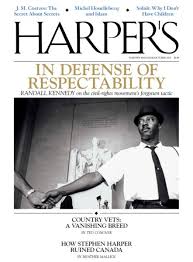
[READ: February 23, 2016] “To Laugh That We May Not Weep”
This is a brief essay about cartoonist Art Young. Young would be 150 years old this year and Spiegelman says that Bernie Sanders would have been the best birthday present we could have given him. Because Art Young was a radical! Political !! Cartoonist!!! (the oblivion trifecta). The only concept less inviting is a political radical.
Spiegelman says that once upon a time political cartoonists were very powerful (although in some respect they still are, as you can see by the the murdered Charlie Hebdo artists).
Young was a talented cartoonist who drew for all kinds of publications. He was never convicted for his drawings, but he was put on trial for libel. He was found not guilty; he drew a picture of himself sleeping with a caption “Art Young on trial for his life.”
Spiegelman contends that political cartoons are usually short-lived and timely but that Young’ are more timeless–and perhaps sadly still relevant. And that he was never shrill or humorless. Continue Reading »
SOUNDTRACK: CHRIS THILE & MICHAEL DAVES-Tiny Desk Concert #133 (June 13, 2011).
After seeing Avi Avital play an amazing show last week, it seemed only fitting to mention a show with an other amazing mandolin player. Chris Thile does some incredible work on that tiny instrument. I’d love to see a duel between the two of them—it would be mind blowing.
Thile has played with many many different musicians, both in bands (Punch Brothers, Nickel Creek) and as duos and trios. And this duet with guitarist Michael Daves is fantastic.
Daves plays a folkie electric guitar and sings. They share lead and harmony vocal duties (with Thile usually going higher). And while Thile’s mandolin solos are incredible, Daves is no slouch on the guitar either–his fingering may be just as fast as Thile’s.
The two have a great rapport (and play a super long set!). The duo met and were going to record one song, but it turned into more than a dozen. And they play 6 of them during this show.
“Sleep With One Eye Open” feature Daves on lead vocal. It’s upbeat and bouncy folk with a country twang attached. (I love that Thile’s mandolin is just as loud as Dave’s guitar). And I love watching Thile bounce around while playing.
They duet on vocals for “Rabbit in the Log” which is about the inherent cuteness and tastiness of rabbits. Thile’s fingerwork is mind blowing until you hear the solo that Daves does. And how does a song that’s so fast end so sweetly?
“Bury Me Beneath The Willow” is slower song with Thile on lead vocals. it shows that their whole act isn’t about speed.
“Billy In The Lowground” Thile says that Billy, “through no fault of his own ended up in the lowground.” It’s an instrumental so we just have to imagine what Billy did. It’s another place for them to show off their skills.
“It Takes One to Know One” is a more bluesy than bluegrass song with Daves on lead vocals. It’s alike a slow blues song with Daves’ country twang vocals. Thile’s slide solo is amazing—never seen anything quite like that on the mandolin (well, until Avi did something similar).
When their set should be over, Thile says they’ll do “one more for good measure.” “Roll In My Sweet Baby’s Arms” is an incredibly fast song. They duet on vocals but Daves really shines on the super fast guitar solos.
The more I see Chris Thile the more I’m impressed by him. I can’t wait to see who he teams up with next.
[READ: February 23, 2016] “There are Other Forces at Work”
John Darnielle, singer and guitarist for the Mountain Goats is also a fiction writer. And here is a great essay about John Cage.
Darnielle opens the essay by saying that on the day that Nixon resigned, Darnielle was 7, but he cheered anyone since he was taught that Nixon was the bad guy. And on that day, John Cage gave the first public reading of “Empty Word” a piece of unaccompanied voice in which he read from Thoreau’s journals and reduced the journals first to single words then to syllables and eventually to letters–drawing them out slower and slower.
This piece caused riots.
Then Darnielle gets to the meat of the matter. He has gone to Halberstadt because The John Cage Project has been performing Cages’ “ORGAN2/ASLSP” there since 2000. And it plans to run until 2640. Perhaps you have heard of this piece and its preposterous length.
There is a piano version of ASLSP (which stands for As Slow as Possible). Darnielle tries to imagine playing each note on a piano until it rang its length out (about 30 seconds). But an organ can play for as long a performer can hold the note. The only instruction Cage gave for the piece: “all eight pieces are to be played. However, any one of them may be repeated, though not necessarily, and as in ASLSP, the repetition may be placed anywhere in the series.” In other words you can play it for as long as you like
Here’s a 4 minute version
It is being performed in Halberstadt because the modern twelve note keyboard was in vented in Halberstadt in 1361. That was 639 years before 2000 and thus the entire piece will last until 2640 which is 639 years from 2000 (there’s nice symmetry for an asymmetrical piece). As such, since they were mathematical about it, they determined that one of the 8 parts would last 71 years. That’s 71 years of an organ playing a single note.
When Darnielle arrives it is for one of the changing of the chords. This discordant chord had been playing since 2012. Before he arrived, he tried to imagine what it would be like, and he is both underwhelmed but also moved by the simplicity of it. He says its not pretty or unpretty, it’s just sort of there–a kind of background drone. It’s also much quieter than he imagined. The chord is being played by sandbags–there is no keyboard.
The note change (and Darnielle’s visit) was on October 5, 2013. The next change is in 7 years. Here’s a list of planned chord changes (note they do not go until 2640)
The piece started with a 17-month rest on September 5, 2001, Cage’s 89th birthday. The first sound appeared on February 5, 2003. Subsequent dates for note changes include:
July 5, 2004
July 5, 2005
January 5, 2006
May 5, 2006
July 5, 2008
November 5, 2008
February 5, 2009
July 5, 2010
February 5, 2011
August 5, 2011
July 5, 2012
October 5, 2013
September 5, 2020
Beyond the sound of the chord there are things to see. An engraved metal panel attached to an iron rail at eye level–these were paid for by people as a funding for this project and they were allowed to write what they liked.
Darnielle was quite moved by the thing although he is concerned because they play the notes of the new chord one at a time–one note builds on the others. He says the piece is supposed to be just the one chord and that’s it. (Realistically it allowed the three people who were invited to begin the chord to each have a moment in the spotlight). Then he realizes that in the course of 639 years (if you were to compress it to a reasonable length) that will seem like a blip or a grave note.
Darnielle notes that Cage can still cause people’s ire to rise, just if you look at all of the YouTube comments on his piece “4’33′”(the silence piece). People are outraged by it, still.
I really enjoyed Darnielle’s look at this fascinating event. I really like Cage for his daring.
SOUNDTRACK: BEN SOLLEE-Tiny Desk Concert #141 (July 11, 2011).
I’d never heard of Ben Sollee before this Tiny Desk and I’m a little surprised by that–he seems like the kind of musician I’d have run into somewhere. For this set (I have no idea what his sets are usually like), they are a trio.
Sollee plays cello and sings (!), Phoebe Hunt plays violin and sings backing vocals and Jordan Ellis plays drums (in this case one of cool those snare drum boxes).
But despite the strings-dominated sound, the songs feel very rock-oriented. Although as the blurb says, they are kind of genre defying. Each song has a very different feel.
On “Hurting” Sollee opens with some great big plucked bass notes from the cello. Then Sollee switches between plucking and bowing the cello. And that transition really impacts the overall sound, making it sound like more than a trio. The violin plays some accented notes and then some big long notes (like the cello). But it’s the drums (brushes on the box) that add a lot of character to this song. Sollee has a good strong voice and it fits the song well.
“Captivity” is about being in prison (he wrote it after watching a documentary about a maximum security prison) both physical and metaphorical. For this song he strums (in an interesting, folky way) the cello. He plays some bass notes while strumming the rest of the instrument–it’s a great sound. And I love how different this sounds from the first song. Once again the percussive sounds add so much.
“The Globe” about the Globe Theatre and how it was burnt down twice. So he wrote a story about a frustrated loverboy burning it down. The song names checks some of Shakespeare’s characters and while not comical is kind of funny too. Musically the song is great with builds and sudden stops. It’s also quite funky at times, with all kinds of different rhythms from the cello and violin as well as the percussion (which in this case is hand claps). He says that they’ve been having fun playing it live and that really comes through. I really like the sounds that Sollee makes from the cello at the end of the song.
“Inclusions” is an a capella song. He says they’d been working on it in the van on the way down. I expected a simple song, but they have wonderful harmonies as well. For percussion, Phoebe is rattling a can of cacao nibs. (There was recently a very funny cacao nibs joke on Brooklyn Nine-Nine, otherwise I’d never have heard of them–I like that Sollee beat Brooklyn by five years though).
This was a wonderful find and I definitely want to hear more from Sollee–I’m curious to see what he gets up to in the studio.
[READ: January 10, 2016] “The Hanged Man”
November was a dark month for stories in Harper’s. This story along with the one I posted a while back from John Edgar Wideman both deal with suicide. This is an excerpt from War, So Much, War, and it opens with a man cutting down a sack which was hanging in a tree.
The sack contains a body–“his face was white, his tongue black, his lips purple.” When he cuts down the sack, the body’s head hits a rock and the protagonist is worried because the body is actually alive and he’s afraid it is now damaged.
The body doesn’t speak for a long time. But when it does it is angry that the man has cut him down. Continue Reading »
SOUNDTRACK: DAVID WAX MUSEUM-Tiny Desk Concert #103 (January 9, 2011).
I know of David Wax Museum from NPR’s coverage of The Newport Folk Festival back in 2010 (audio from their show is no longer online, sadly). They played a wonderful set of interesting, somewhat Mexican sounding music.
David Wax plays a tiny Mexican jarocha guitar and Sue Slezak plays percussion on a donkey jawbone–which sounds great and is quite unusual to see. The band is rounded out with Sam D’Agostino on saxophone and percussion and Mike Roberts on guitar and upright bass.
“Yes, Maria, Yes” opens the set with a lot of fun (how does that little guitar sound so buoyant?) Wax and Slezak sing wonderfully together, and that jawbone introduces such an unusual sound. About 1:20 into the song, the bass comes in and adds a whole new low end. But then there’s a crash as the bridge from the bass collapsed! Thus ends the bass in the song, although it’s not really missed.
For “Let Me Rest,” a far more mellow song, Wax switches to a full-sized guitar, Roberts switches to electric guitar (and they bemoan the loss of his bass) and Slezak plays fiddle.
Wax says that they have been in Washington DC playing house concerts every night, perhaps they have graduated to office concerts.
“Unfruitful” is one of my favorite of theirs. The opening is interesting with the band kind of warming up (and Wax bouncing all out of frame). It’s a raucous fun song with the fun chorus of “Tunnels in the sand.” With Slezak wailing on the fiddle and Wax singing his heart out, it’s a great conclusion
I really enjoy David Wax Museum and I’ll get to see them at a Festival this summer.
[READ: January 6, 2015] “One Day Less”
I have been aware of Clarice Lispector for years, although I have never read her work (I recently got a free copy of her gigantic collected stories, so I hope to read that some day).
This story was the last one she wrote (it was found on her desk after her death–creepy)
It is an unusual story in which a woman, Margarida Flores, wonders how to fill the time in her day.
As the story opens, she wonders if death will come, if her endless days will ever end. Perhaps death is a bluff?
She had a long day ahead with no plans. She doesn’t even have the will to read or watch TV. Then the story is filled with a section where the text reads: Continue Reading »
SOUNDTRACK: ENORMODOME-“The Way We Burn” (Tiny Desk Contest Fan Favorite 2016).
Last week, a Tiny Desk Contest winner was announced. This week, All Songs Considered posted ten runners up that they especially liked. Last year, Enormodome made it to the top ten runner ups, but sadly, they did not this year.
However they did make a fan favorite vote and I like the song, so there. Last year their concept was awesome—they played in the office of the mayor of Flagstaff (where they are based). This year, they took their desk outside and set it on fire.
Enormodome is just two guys, a guitarist and drummer and they get a big rocking sound out of their tiny set up. They’ve got a fuzzy guitar and lots of high hats to keep the song from ever sounding spare. And both guys sing–often in harmony–so the songs stay interesting.
The song is a kind of heavy classic rock—a big catchy riff, and a wonderful chorus.
Beyond the flaming desk, the video is fun to watch–there’s circus performers everywhere and lots and lot so fire! Which makes sense given the title of the song.
Check it out:
[READ: February 21, 2016] “Late”
I really enjoyed this story. I thought I’d read a lot more by Millhauser, but I see that I’ve only ever read a few short pieces by him. Well, after this I’ll have to read more.
Because Valeria is always later, the narrator tells her to arrive at a restaurant an hour earlier than he wants to eat. He figures, if she’s 35 minutes late for a 6 o’clock dinner, she will actually be 25 minutes early for a 7PM dinner, which is when he wants to eat anyhow.
However, he doesn’t want her to arrive on time and wonder where he is, so he arrives at the restaurant a little before 6 to secure a window table with a view of the front door.
He orders a coffee and tells the waiter that he is awaiting somebody. Continue Reading »
Last week, a Tiny Desk Contest winner was announced. This week, All Songs Considered posted ten runners up that they especially liked. I want to draw attention to a couple of them.
Cactus Tractor also have a lot of fun with the desk part of the tiny desk. There’s a small purple desk and from behind it comes the lead singer and guitarist. He is dressed crazily–this song and band are definitely a little goofy. He pulls out a cactus and a tractor and then starts whistling. It doesn’t seem like he’s whistling the song but he is. He starts playing along to the song a kind of old jazzy sound. And it reminds me of “Mister Sandman” at times.
There’s some fairly complicated lyrics, “like reading Chinese, like choosing wine based on the cheese.”
And then a ukulele player comes out from behind the desk. She is followed by a fisherman (it has to do with the lyrics). Then an accordionist sneaks out and she’s followed by an acoustic guitarist and an upright bassist. The drummer comes out (they wheel his drums over) And then finally a saxophonist and 2 trumpeters.
The song is funny and bouncy and catchy with several parts.
Eventually, the song switches to German (Berliner-jelly donut) and they sing many verses in Deutsch. There’s no explanation for the fisherman by the end of the song (expect that he holds the jelly donut). But that’s irrelevant because then some acrobats appear at the side of the stage and the camera pulls back as jugglers, stilt walkers and the like fill the screen. It’s pretty extraordinary and it was done in one take (I expect the music was prerecorded, although I’d love to be wrong).
The song has novelty written all over it (they do lots of visual jokes about the lyrics) and yet it is really catchy and…unexpectedly, it is nearly six minutes long!
[READ: February 20, 2016] “The Cornucopia”
This is a short story that is set in Australia (the author is Australian, so that makes sense).
It is about a woman, Julia Holt, who is never impressed. No matter what exciting things her friends tell her, she never shows appropriate excitement. She is happy for her friends’ successes, but nothing seems to make her excited.
Perhaps it is because she is powerful and rich and has everything she needs. Indeed, she even has her friends do a lot of her work for her–she is quite busy, after all. But her friends (carefully cultivated by Julia, it must be said) do benefit from her friendship. And honestly she was a little afraid of their successes because she didn’t want to lose any of them.
She and her husband are wealthy. They are one of Australia’s millionaire couples. Ralph, despite this wealth was never arrogant or showoffy. He also had no time for games or hobbies. He just did financial work all the time And Ralph will always acknowledge that Julia is the more powerful one of the two oft hem.
So far so good as stories go. But there has to be a crisis of some kind, right? Continue Reading »
SOUNDTRACK: HAZARD TO YA BOOTY-“Movers and Shakers” (Tiny Desk Contest Runner-Up 2016).
Last week, a Tiny Desk Contest winner was announced. This week, All Songs Considered posted ten runners up that they especially liked. I want to draw attention to a couple of them.
Hazard to Your Booty, in addition to having a great name, have the most fun with the Tiny Desk setup. They begin with two members, singer Dr Music and bassist Professor Funk chatting as if it were a talk show. They have a fun intro and once the song starts, the scene behind them lights up and the full band appears-two sax, a trombone, a funky guitarist and a drummer.
Professor Funk plays an awesome bass and it’s clear why he is up front—he really holds the song together. He’s got a great, clear sound (with some amazing low notes) and the whole band plays a cool riff at the end of each section—fast and complicated.
I love how committed they are to the Tiny Desk with Dr Music even using note cards and drinking from a coffee mug.
And what about the song? It rocks, it’s funky, it’s a lot of fun. And I’ve listened to it a bunch of time, risking my booty each time.
[READ: January 4, 2013] “Tremendous Machine”
Scibona continues to surprise me as a writer. His last story was set in Iceland and this one is set in Poland. And just to make things different, the main character is a Danish model name Fjóla Neergaard.
We learn a bit about Fjóla. Her modelling career has more or less abated, although she continues to starve herself. And she has more or less fled to Poland to get away from it all. Why Poland? Because her wealthy parents bought a plot of land there (the house was something of liability) once they saw how cheaply land could be gotten in the once communist country.
The house is basically a box, but Fjóla decides to buy a couch so she has something to lounge on in front of the fire. She drove into town to a warehouse that might sell her a couch.
Her Polish is poor and after talking with a man for several minutes she winds up buying a piano instead. She can’t play the piano–she knows nothing about the instrument in fact. The warehouse man sells her a piano and then gives her the name of an instructor–Mrs Kloc. Continue Reading »
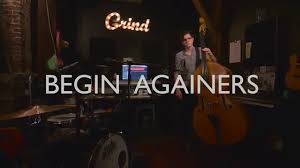
SOUNDTRACK: SCOTT MULVAHILL-“Begin Againers” (Tiny Desk Contest Runner-Up 2016).
Last week, a Tiny Desk Contest winner was announced. This week, All Songs Considered posted ten runners up that they especially liked. I want to draw attention to a couple of them.
Mulvahill is a double bassist, and his double bass sounds outstanding. He slides notes, he plays chords, and he keeps up a really fun, jazzy riff.
He also slaps the strings which provides some percussive sounds. One of the nice features of this song is that he keeps playing a low open note so the song never sounds empty. And that’s all there is to the song–just his voice and his bass (and a proper verse/chorus structure of course).
The song s(and his voice) reminds me of a kind of stripped down Paul Simon song. It’s not really my thing, though and I wouldn’t choose to listen to it a lot, but I love his bass sound and I think the song itself is really good.
[READ: February 16, 2016] “Measure for Measure”
This is an excerpt from Moshfegh’s novel Eileen.
This excerpt (and presumably the whole book) is about a woman who I assume is anorexic She doesn’t eat and seems to relish in her boniness.
I took such poor care of myself. I knew I should drink water, eat healthful foods, but I didn’t like to drink water or eat healthful foods. I found fruits and vegetables detestable, like eating a bar of soap or a candle.
She is reflecting back on her younger days when at 24 she was considered a spinster and had indeed had only one kiss from a boy when she was 16. It was a prom date that had gone rather awry–she wound up biting him on the neck (and can’t recall is she drew blood).
She concludes the memory by saying “He’s probably dead..Most people I know are dead.” Continue Reading »
Every year, the fifth grade in our town puts on a play. C. volunteered to be in the stage crew, so of course we went to see the production.
It’s funny going to see a play to watch your son who is meant to be invisible in the play. Fortunately, there was enough light between scenes so I could see him moving furniture and carrying bongos. He even got to held the rope to make the pirate ship at the end.
A few weeks ago, T. and I went to see a high school production. I was curious to see how good the quality would be in fifth grade. And I was delighted by how good the show was and how well the creators used their lack of production values to their advantage.
The high school show had been amazing–they had an orchestra pit, the had kids on wires–I was really amazed. This production was much more bare bones. The play was performed in the combination gym, cafeteria, auditorium–so there was no wire work, no orchestra pit, no orchestra, in fact. Just kids who worked hard.
Last week, a Tiny Desk Contest winner was announced. This week, All Songs Considered posted ten runners up that they especially liked. I want to draw attention to a couple of them.
I started out liking this song so much. It opens with a singer singing beautiful notes. And as the camera passes we see a harp (!) then keyboards, drums, bass, trumpet and glockenspiel.
There are many different parts to the song and lots of interesting harmonies. And its starts beautifully. I was surprised by the shift in tone (and the trippy end of the chorus). And their harmonies are truly wonderful.
I also liked that they were all filmed under a staircase.
But the song was a little too drifting and slow for me. It reminds me a lot of a slower song that might appear on a 70s prog rock album. The song that I would tolerate while I waited for the faster heavier song to come along. Of course, after many listens I would grow to appreciate it. And I’m sure I would grow to appreciate this song too.
[READ: February 10, 2016] “Untitled (Triptych)”
The August 2015 Harper’s had a “forum” called How to Be a Parent. Sometimes these forums are dialogues between unlikely participants and sometimes, like in this case, each author contributes an essay on the topic. There are ten contributors to this Forum: A. Balkan, Emma Donoghue, Pamela Druckerman, Rivka Galchen, Karl Taro Greenfeld, Ben Lerner, Sarah Manguso, Claire Messud, Ellen Rosenbush and Michelle Tea. Since I have read pieces from most of these authors I’ll write about each person’s contribution.
I am pretty sure I have read stuff by Ben Lerner but I didn’t expect a poem from him. Especially such a long one. And what can a poem teach us about parenting?
I was daunted by this piece, and the poem even helps address why. It talks about how “poems are great places to make information disappear, dissolve.”
And it also covers pretty much everything that has to do with art. Continue Reading »
 SOUNDTRACK: STEVE EARLE-Tiny Desk Concert #123 (April 25, 2011).
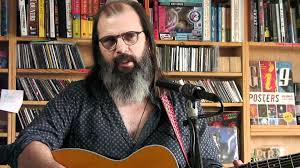 Steve Earle is pretty cool. He’s a country outlaw who is a socialist and an outspoken Bernie Sanders supporter. He is a vocal opponent of capital punishment. He’s also written a song “directed towards the state of Mississippi and their refusal to abandon the Confederate Flag and remove it from their state flag.”