Feeds:
Posts
Comments

CoverStory-2-22-16-879x1200-1455509711 SOUNDTRACK: JULIEN BAKER-Tiny Desk Concert #513 (March 7, 2016).

julienI had never heard of Julien Baker before this Tiny Desk Concert.  Indeed, she looks young enough that perhaps this is her first concert (it isn’t).
Baker plays a lovely, slightly echoey, but otherwise very clear electric guitar.  Her tone is so clear and quiet.  And her voice is also incredibly delicate.  Watching her play and sing it’s amazing you can hear anything at all, and yet she does not wilt in any way–her music is delicate but not whispered.

As with many players these days, she uses a looping pedal to great effect.  For the first song, “Sprained Ankle” she loops the lovely harmonics at the beginning of the song and then allows for the multiple layers to play.  Her vocals are as gentle as the harmonics, and yet, again, not whispery.  At barely 2 minutes, the song leaves you wanting more.

She talks about doing a new song for them called “Sad Song #11” since “I already have ten sad songs.”  She thanks everyone for their “courteous laughter.”  And then plays another beautiful song now officially titled, “Funeral Pyre.”  She has a very nice way with words: “Ash for a decorative urn you keep on your mantelpiece like a trophy for everything.”  There’s a beautiful layered guitar solo at the end too.

The introductory guitar lines from “Something” are really lovely–her sound is just so clear–and once again, the song is beautiful and haunting with her repeated lyrics sounding more powerful with each go around.

The blurb about the show references Torres, and I totally see the deference.  They don’t sound anything alike in that Torres is brash and loud, but they have that same up-close and intimate vibe.  For Baker, it makes you want to lean is as she sings.

[READ: February 17, 2016] “sine cosine tangent”

I have always meant to read more from DeLillo, I just never do.

And while I have enjoyed all of the things I have read by him, I didn’t love this story so much.  Okay, I’ve since found out that this is an excerpt, which changes things.  I’ll keep my review the same but with bracketed realizations pertaining to the novel.

This is the story of a young man (his age in the story is unclear to me, and I’m not sure how much distance separates the present from the past [presumably this is covered in the novel]) and his relationship with his father.  His father is a successful businessman but the son says that he “shaved a strip of hair along the middle of my head, front to back, I was his personal Antichrist.”

His father left when he was 13, although he never found out why.  Years later, he sees his father, Mr Ross Lockhart on the TV, discussing the ecology of unemployment in Geneva. Continue Reading »

282016SOUNDTRACK: MONSIEUR PERINÉ-Tiny Desk Concert #512 (March 4, 2016).

perimne I feel like it’s been a while since NPR’s Felix Contreras has had a Tiny Desk for a band playing Latin American music.  And Monsieur Periné (French name and all) plays some really fun Latin American music.  They are from Colombia, which is evidently known for its Afro-Colombian cumbia.

But they don’t play strictly cumbia.  Their long set plays around with tempos and styles.  It is fun, fun, fun with a lot of swing and big horns.  There’s some great electric guitar and electric upright bass and two fantastic drummers. There’s even a 1920s jazz feel to some of their music (the guitars especially)

This is all set behind the lead singer’s beautiful voice (and the guys’ harmonies).  And the great riffs from the saxophone nad trombone.

The first song “Nuestra Canción” (Our Song) opens slowly with several different tempos.  I love that once the singing starts,  the two guitars play very different things that works so well together.  I like watching the drummer and percussionist playing the same rhythms.  And it’s especially interesting when this six-minute, very jazzy-feeling song (albeit it sung in Spanish) takes a turn in the middle of the song to sound very cumbia.

“Sabor A Mi” (Taste of Me) is a bolero–very dancey.  The guitarist has switched to a twelve string instrument with a very small body.  I assume it’s a guitar but who knows. The lead guitar is actually played on an acoustic guitar outfitted with a pick up.  The sax player has switched to clarinet and the clarinet and trombone y play a great melody together.

“La Muerte” is 7 minutes long with a spoken introduction.  This made me very curious because the introduction is in Spanish for a song that she sings in part in French (and in Spanish).  The horns sound great on this song.  And the guitar solo comes in it a has very surf guitar sound while still saying very Latin American.  There’s a long instrumental section that slows things down and then they come blasting out with their great riffs.

This band is a lot of fun and would be great at a party.

[READ: February 4, 2016] “Mother’s Day”

I have really been enjoying the work of Saunders lately.  I particularly enjoy his darker comic pieces, but there’s something about his non funny pieces that is also pretty grand.

It’s never clear if you’re going to get funny Saunders or not when you start a story.

This one even seems like it might be funny as we slowly learn more and more about one of the Mothers featured this Mother’s Day.

The story is told in that strangely detached way that Saunders has where it seems like what seems like a third person may actually be the inner monologue of the narrator.  But told at a distance?  “Paulie had flown in and Pammy had taken her to Mother’s Day lunch and now was holding her hand.  Holding her hand!  Right on Pine.  The girl who once slapped her own mother for attempting to adjust her collar.” Continue Reading »

216SOUNDTRACK: LAKE STREET DIVE-Tiny Desk Concert #511 (February 29, 2016).

lsdLake Street Dive are a trendy band all of a sudden (they’ve been around for ten years, evidently).  And what’s not to like about them?  Lead singer Rachael Price has a powerful soulful voice and she’s really pretty.  Their harmonies are really excellent.  And their songs are fairly simple and easy to follow.

And I can’t stand them.

They push all of my button.  I don’t like Price’s soulful voice (even though it is really powerful and sounds great–I just don’t like it).  I don’t like the way their backing vocals are vaguely do-wop, a sound I don’t like in general.  And I don’t like the way they veer towards country.

I should like them–this set is fun and the crowd is really into it.  Price sounds rather like Carole King, I love that the drummer uses brushes and that he wrote the first song.  I love that the bassist plays an upright bass and that she wrote the second song and sings lovely harmonies.  And I like that the guitarist plays a trumpet solo on the final song.

I even like the lyrics to the final song, “thank the good lord for those godawful things that brought you right back to me.”  Except that they sing that line about 50 times in the song.

I’m already tired of them and I expect that I’ll be even more sick of them before the year is out.

[READ: January 27, 2016] “The Philosophers” 

I don’t know Adam Ehrlich Sachs at all, and I have to say I was pretty surprised by this story.

It seemed like it would be pretty serious, what with that title and all.  It also seemed to have three “sections.” So I was expecting something pretty intense.

But instead, it was three humorous short stories called “Our System,” “Two Hats” and “The Madman’s Time Machine.”

“Our System” plays off the story that a person who loses the ability to use his muscles is still able to communicate through a blink or a tap or something.  And it follows the life story a of a philosopher who is so afflicted.  The man tries to communicate his life’s philosophy to his son.  But since the disease is hereditary, his son gets it too.  Then he has to learn a way to communicate with his own son.

It seems rather ponderous at first but then it quickly grows absurd as we see multiple generations trying to transcribe those initial thoughts.

“Two Hats” explores the idea of a person who wears two hats and how maybe the hats themselves are essential for him to be able to keep his jobs separated.  Again, it starts out somewhat reasonable but grows more and more absurd, with bigger and bigger hats.

The final story is “The Madman’s Time Machine” which was my favorite.  It is indeed about a time machine and whether the man who made it is crazy or not.  I really enjoyed the way it was written and the way it did so much in such a little space.  The conclusion was really well done.

I can see enjoying short pieces from him from time to time.

1252016SOUNDTRACK: BRUSHY ONE STRING-Tiny Desk Concert #510 (February 27, 2016).

brushyAlthough I don’t know where the “Brushy” part comes from, the “One String” part of Brushy One String’s name comes from the fact that he plays a guitar with one string.  A low E string.

Obviously, then, the songs are pretty simple.  Most of them are just one or two notes.  They are more or less bluesy and the main selling point of his music is his voice.

“Destiny” is the first song. I really like the middle of it where he scats in a cool accented…something.  The song begins as a fairly simple blues riff with Brushy’s vocals.  But when he gets to the chorus, he does some great things with his voice to make it really powerful.

“Chicken in the Corn” is a YouTube sensation with nearly 9 million views.  It’s fast and wild.  This song has a bit more of percussive quality as he keeps a beat on the guitar while playing his one string.  This song also has a cool scat section and multiple single styles.  It’s pretty fun.

“No Man Stop Me” is a slow song.  It’s a spiritual song and it’s way too long.  There’s a lengthy recitation and a lot of repetition, and or a song this much, it’s just too much.

[READ: January 19, 2016] “Aspice”

This is a very short story (one page translated by Anya Migdal) that is all about making Aspic.

The narrator is a woman who dreads making the annual aspic for the holiday dinner. “It’s a special kind of religion, making the aspic.  It’s a yearly sacrifice though we don’t know to whom or for what.  For some reason it must be done.”

And then in first person present she talks about the steps involved. Continue Reading »

mermaid[ATTENDED: February 27, 2016] The Little Mermaid

I pass by the Montgomery High School every day on my way to work.  And for years I have seen them put signs out about upcoming plays.  I’ve always been impressed by their selection of works, but I’ve never considered stopping in to see one.  I guess it seemed weird to go to a high school performance at a school where my kids don’t go (and won’t go).

And yet, why should that be?  It’s a fun way to spend some time watching talented actors doing a good show, right?  With Clark doing stage crew for his upcoming fifth grade play and Tabby really enjoying performing in the house, I thought that perhaps it would be fun for everyone.

Well, it turned out that neither Clark nor Sarah could go, so I took Tabby.  And we had a wonderful time!

Tabby was thrilled by the show and I enjoyed it very much (and was shocked to realize how much I did not know the music for this story–I guess we’ve watched other Disney movies a lot more than this one). Continue Reading »

photoSOUNDTRACK: WILCO-Tiny Desk Concert #509 (February 23, 2016).

wilcoAs far as I can tell, Wilco is the first band to be invited back for a Tiny Desk Concert (there was a stated rule that no one would come back twice, with some people skirting that by coming with another band).  Laura Gibson was invited back since she was the very first attendee, but since Wilco’s newest album has been so successful, it seems somehow fitting that they get invited back.

And perhaps in honor of that, while their last performance was noisy and raucous, this one is decidedly more mellow—with all acoustic instruments.  But that doesn’t mean it’s quiet and calm either.

For the first song “The Joke Explained” from Star Wars, they used banjo, acoustic bass, hollow bodies electric guitar (w/ slide), the ever-present melodica and muted drums (w/shakers).  And it sounded great.

For the second song, the older “Misunderstood” everybody seemed to switch instruments.  Tweedy switched guitars, the acoustic bass became an acoustic guitar, the hollow body became a slide guitar.  Nels Cline’s slide guitar brings so much to the song by doing seemingly so little.  I love how this simple, sweet song has a wild middle section–a crazy breakdown with noisy cymbals and drums–drummer Glenn Kotche is fantastic–and everyone else playing some crazy high-pitched notes until it all settles back down again.

Tweedy has another guitar for the third song “I’m Always In Love” and the melodica is back.  There’s xylophone keeping the melody.  And as with all of these songs, Tweedy sounds great and the backing vocals add wonderful harmonies.  Cline plays a wonderful slide solo, too.

Before the final song and there’s another guitar change for Tweedy, and he says that after this song, “you guys need to get back to work solving this Trump problem. Figure it out! Its weird!”  They play “Shot in the Arm,” another great old song.

The band sounds excellent—a wonderfully full sound even without amplification. I am really excited to see them his summer.

There’s also a nifty video showing “Misunderstood” with two 360 degree cameras so you can see what goes on in the audience during a Tiny Desk Concert.  Check it out.

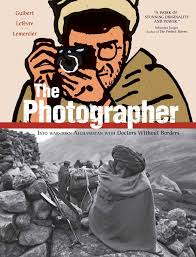
[READ: February 7, 2016] The Photographer

I loved Guibert’s book Alan’s War, in which he took the words of Alan Cope and put them to an amazing graphic novel.  Well, he is back again doing the same thing with the words of famed photograph Didier Lefèvre.

Didier Lefèvre died in 2008, but before he died he left a legacy of amazing photojournalism.  That includes this trip to Afghanistan which he took with the team from Doctors without Borders.

Alexis Siegel translated this book again, and he offers an excellent introduction which not only explains Lefèvre’s life, it also gives context for everything tat these men and women were up against in that war-torn region.

As mentioned Guibert draws out the story that Lefèvre told him.  But this book is different from Alan’s War in that it also uses the photos that Lefèvre took.  Guibert fills in the gaps where Lefèvre, didn’t or couldn’t, shoot.  And there was a lot he couldn’t shoot. Continue Reading »

SlewisOUNDTRACK: BEN FOLDS-Tiny Desk Concert #508 (February 16, 2016).

benfolds I’ve liked Ben Folds for many many years.  He’s funny, he’s amazing live and he plays a mighty good song or two.  He’s the kind of artist you say, Has he really not done a Tiny Desk Concert before? (He did an episode of Live from Daryl’s House after all).  But he’s finally here to bang the hell out of their piano and curse up a storm.

He plays several songs from his new album So There, which is  a collaboration with the sextet yMusic.  I haven’t actually listened to the record much because I gave it to Sarah and haven’t grabbed it from her pile yet.  Since there’s no strings for this Tiny Desk, these songs sound just like normal Ben Folds songs–clever lyrics, fun piano and unexpected twists.

The first song is “Phone in a Pool,” one of his rollicking stompers.  It’s catchy and fun to sing a long to and after one listen, you’re right there with him in New Orleans throwing a phone in a pool.  Midway through the song, he forgets the words and just starts laughing: “In a world where you get applause for fucking up.”  And then he makes up a verse about forgetting the words.

“Not a Fan” is a slower song with a beautiful piano melody and biting, funny lyrics (get your T-shirt signed, fangirl).

“Capable of Anything” is a fast, romping song.  He says on the record the vocals are very quiet, so he’ll see what he can do.  After a run through a verse he stops and realizes that he has knocked the piano out of tune.   And when he bangs on the keys at the end, its easy to see how.  There’s some really fast piano work (and you can hear him stomping along).

he says he’ll play some old songs.  He asks for a song and someone shouts “Emeline,” which he immediately starts playing.  And then about a verse in, he gives some story behind the song.  He says that when he was a kid 8 or 9, he wrote earnest songs, but when he was a teenager he wrote “cool”s songs like “Having Two Dicks is Cool.”

And then he started using songwriter vernacular, words you only use in pop songs, “why’d you make me cry, girl?”  Why do people do that? When he was 18 or 19 he started to write songs that were more natural, like Emeline, the first song he was proud of–using the word “stupid” or a money analogy–and which he still loves playing.

He’s willing to do more songs and asks for requests saying which ones he can or can’t do.  And then Bob points out that he’s going to miss his plane if he does more than one song.  So he chooses for everyone and plays an amazing version of “One Angry Dwarf And 200 Solemn Faces.”  he says it can probably be done and will put the rest of the piano out of tune.  And he’s not kidding.  He really pounds the heck out of that thing–how does his own piano manage?

The song is bouncy and fun and he even jokes with the lyrics near the end.

It’s an amazing, invigorating set and has me really excited to see him this summer.

[READ: February 28, 2016] Lewis and Clark

In 2014, Bertozzi made the excellent Shackleton graphic novel.  But three years earlier he had created another historical graphic novel, this one about Lewis and Clark.

Like Shackleton, it aims to be truthful but not comprehensive.  Bertozzi himself explains that it is not meant to be a replacement for the scholarly recounting of the journey.  Rather, he hopes to show the “experience” of the journey.

The book doesn’t really include any historical context, so in a brief summary:

Shortly after the Louisiana Purchase in 1803, President Jefferson commissioned a group of U.S. Army volunteers under the command of Captain Meriwether Lewis and his close friend, Second Lieutenant William Clark to explore the territory.  Their journey lasted from May 1804 to September 1806. The primary objective was to explore and map the newly acquired territory, find a practical route across the Western half of the continent, and establish an American presence in this territory before Britain and other European powers tried to claim it.The campaign’s secondary objectives were scientific and economic: to study the area’s plants, animal life, and geography, and establish trade with local Native American tribes.

Continue Reading »

SOUNDTRACK: mohawk CHELSEA WOLFE-Tiny Desk Concert #507(February 12, 2016).

chelseaI know Chelsea Wolfe from my fiends Liz and Eleanor who are fans of her. I have her album Pain is Beauty, which is atmospheric and gothic and reminds me of Siouxsie and the Banshees.

For this Tiny Desk, she strips away all of the band and noise and plays just her electric guitar (with some major fuzz) and sings (with some looping as necessary). I’m especially intrigued that one of her strings seems to be ever so slightly out of tune, which brings a really interesting tone to her echoed guitar playing.

Her voice is really pretty.  On the record I’d been trying to think who she reminded me of.  I hears Some Siouxsie Sioux, but in this set it’s someone else and I just can’t quite place it.

“Maw” really showcases her voice as she sings a lot of lines that soar, ever so briefly, and her voice sounds really powerful.  There’s a whole goth kind of tone going on with her low guitar and her echoed voice.  I especially like the end of the song where she wordlessly sings as her guitar echoes to a close.

She doesn’t talk between songs.  And immediately she begins “Crazy Love.”  This song has a beautiful melody and great singing but with a  very dark overarching feel.  I saw that her music was described as “doom folk” which certainly makes sense.

I like “Iron Moon” best.  The slow riff in the beginning and the way her voice seems to want to crack but never does, it’s really powerful.  And the way she always sounds great while she hits those big notes.  It’s a great set and a rather unique sound for her.

It’s also nice to hear her talk at the end, just to know that she actually spoke to the people there.

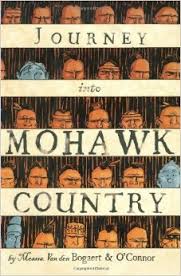
[READ: February 27, 2016] Journey into Mohawk Country

Harmen Meyndertsz van den Bogaert was only twenty-three in 1634 when he ventured into Mohawk territory in search of the answers to a pressing question: where were all the beaver skins that the Indians should have been shipping down the river?  And he wrote a journal of his experience of traveling into the future-New York State in the dead of winter accompanied by the delegates from the Mohawk tribe.

George O’Connor has taken van den Bogaert‘s diary and used it word for word (after being translated by Charles T. Gehring and William A. Starna in 1988) to create a visual representation of this journey.  I know O’Connor mostly because he is the editor of First Second’s Fables and Fairy Tales collections.  I gather he is also an illustrator, although this is my first exposure to him. Continue Reading »

kokoSOUNDTRACK: CAR SEAT HEADREST-Tiny Desk Concert #506 (February 8, 2016).

carseatI only know of Car Seat Headrest from NPR.  They have really liked some of his previous songs and both Bob and Robin raved about his new song “Vincent” (which is really good).

For this Tiny Desk Concert, Will Toledo (who is kind of the only guy in the band, although not currently if you know what I mean) plays acoustic guitar on a tall stool.  Accompanying him are two friends from Leesburg, Va, who don’t actually do anything, and his two band mates who also don’t do anything (well, the drummer plays a toy “desktop” drum set for the song “The Drum”).  And yes, they all sing along during the sing along at the end of song three.

It’s worth mentioning that Toledo has released some 12 albums under the name Car Seat Headrest since 2010 (and Toledo is only 23).  Find them at bandcamp.  Unlike someone like Robert Pollard who has written hundreds of songs that are about 30 seconds long.  Most of Toledo’s songs are really quite long, with multiple parts.  And amazingly, all the parts are pretty catchy,

He plays three songs in this set.  His voice is a little creaky and high-pitched, but it is really-spot on for the kind of songs he writes.  By contrast,. it’s funny to hear how deep his speaking voice is.

“The Drum” opens with a riff that is almost out of tune seeming (like his voice).  The melody lines in the verses are simple but often unexpected.  And lyrically, the song is quite interesting (“the drum reads James Joyce,” “the drum’s in debt”).  And just when it seems like the song could end, it switches to a slower middle section, after which it all comes back to that catchy chorus.  By the end of the song it’s totally grabbed you.

For “Drunk Drivers/Killer Whales,” he pushes his falsetto pretty high.  The  song starts out rather slow but once the verses start properly it picks up.  I love the way in the drunk drivers part he adds vocal melodies that are not in the music to make the song even fuller.   And then unexpectedly, the song shifts gears from the melancholy drunk driver section to the powerfully sung (and I’m not exactly sure how it’s related) “Killer Whales” part. It runs to 6 minutes and is constantly shifting and always stays interesting.

“Sober To Death” is also about 6 minutes long. There’s some great lyrics in here as well “every conversation ends with you screaming.  Not even words just ah ah ahhhhh” (with his voice breaking during the ahhs).   The sing along part at the end has a neat intro where the first guitar line is plucked slowly and the second line picks up speed.  And when everyone sings along it really elevates the song.

After just two listens to this show I was totally hooked and I’m really looking forward to hearing his last album, which is reworking of his earlier songs for Matador Records, and his soon to be released new album with “Vincent” on it.

[READ: February 25, 2016] Koko Be Good

I absolutely adored the art in this book.  I really thought it was outstanding and it has made me search out more of Wang’s stuff (she has a number of online comics at her website).  I also didn’t realize that she drew In Real Life–with Cory Doctorow–her style is similar there but a but less wild as it is here.  And the story is pretty great too.

So this is the story of two main protagonists and a third character who plays a smaller but pivotal role.  Koko is a wild Chinese girl who is carefree and careless.  Jon Wilgur is a tightly wound young man who is planning to change his life pretty drastically.

koko2The story opens with Jon–he is drawn so perfectly, I can’t get over it–a great combination of realism and cartoon style.  He is listening to an audiotape sent by his girlfriend (I love that he is listening to an audio cassette).  He and his girlfriend are planning to move to Peru together very soon. She is currently there and he is about to pack up and head down there himself. Continue Reading »

redSOUNDTRACK: LE FLY PAN AM-fpamCeux qui inventent n’ont jamais vécu (?) [CST019] (2002).

After their previous EP, Le Fly Pan am (note the addition of the Le) come back with an album that can be described as funky.  True, it’s weird funky that gets dismantled while its going along, but it’s still pretty funky.

They wouldn’t be them if there weren’t some crazy noises.  And so the first song (parenthetical translations are from Wikipedia), “Jeunesse sonique, tu dors (en cage)” (“Sonic Youth, You Sleep (In a Cage)”) is just noise and static for 90 seconds before leading to the first song proper:

“Rompre l’indifférence de l’inexitable avant que l’on vienne rompre le sommeil de l’inanimé” (“Break the Indifference of the Inevitable Before We Come to Break the Sleep of the Inanimate”) which kicks in with a really funky bass guitar and drum section. It’s really catchy and almost danceable. But throughout the song’s ten minutes there are elements of destruction going on. There’s screeches that sound like a dentist’s drill. About a minute in, the guitars just seems to stop playing riffs and just tart going crazy–playing loosened strings and just random notes like a beginner (even though the original rhythm is still there).  That funkiness stays for about 5 minutes until the songs shifts gear into a loping melody with a big bass and simple repetitive guitar lines. And then it kind of falls apart all together with some sounds like broken strings and lots of chatter (in French).  At 7 and a half minute it resumes at breakneck speed with the drums and bass pounding away and all kinds of effects splashing on top. The song ends with low rumbling noise before jumping into….

“Partially sabotaged distraction partiellement sabotée” (“Partially Sabotaged Distraction Partially Sabotaged”) This song opens with a four-note, slightly off-key guitar and then loping bass riff that reminds me of SST Records bass guitar of the 80s. It switches between this and a slightly funkier sounding section. But the destruction is apparent from the get go as early in the song, the sound just completely drops out on a couple occasions, making you think the disc is broken (it isn’t).  The song starts to get more intense as the notes seem to get faster and more insistent (those repetitive notes and ringing guitars just seem to scream tension).

“Univoque/Équivoque” (“Univocal / Equivocal”) opens with static and then a very funky bass line.  There a music box playing over the top and some quiet guitars. About half way through the bass ends but the music box (tiny and distorted) continues.  At 3:30 a new bass line, similar to the previous but with a new section added pops up.  It’s a simple song showcasing their groove and their noise.

“Arcades-Pamelor” starts with low distorted noises.  Like the first “song” this is mostly sound effects and things slowed down. Until a screaming noisy static takes over about half way through.  It’s really quite unpleasant.

“Sound-support surface noises reaching out to you” opens with another funky bass and drums and some simple guitar notes. About a minute in a sound emerges that sounds like a skipping CD (but it’s not your CD).   And then a new, different bass pattern emerges with lots of noisy percussion(sounds like people banging things). The skipping sounds seems to work as a segue between section, with some great funky parts and and then the final section which opens with what sounds like a mildly out of tune guitar ran and more great bass. This really enjoyable section winds up glitching to a halt with the  sound of a skipping record player.

“Erreur, errance: interdits de par leurs nouvelles possibilités” (“Wandering Error: Prohibited by Their Opportunities”) has the sounds of sticks clacking together and silverware dropping and mechanical sounds.  And they all seem to somehow settle into a rhythm of piano notes. Unlike the other tracks this one is pretty consistent—strange noises and a simple piano motif.  It’s also probably the least interesting of the bunch.

The disc ends with “La vie se doit d’être vécue ou commençons a vivre” (“Life Must Be Lived or Begun to Be Lived”) another great, funky bass and piano line, with some interesting guitar sounds round the corners. This song is so catchy, it’s wonderful.  After about 2 minutes there’s another breakdown. The music all stops except for the guitars which sound like they are getting strangled.   The second half of the song has the same funky bass but very different guitars and lots of squeals and feedback. After a couple more glitches at 6 minutes in, the bass takes off playing fast rocking riff as the guitar tries to keep up. It’s such a satisfying ending that it’s hugely disappointing that it only last 45 seconds before the album ends.

While it was always obvious that Fly Pan Am were going to play weird experimental stuff, it wasn’t clear before just how funky and dancey they could be too.  If you can handle some noise in your dance, this is a great album.

[READ:January 10, 2016] Red Handed

I absolutely loved this graphic novel.

I had never heard of Kindt before and I didn’t really know what to expect from the book, but I certainly didn’t expect the complicated and super clever plot and structure that this book had.

It opens with a newspaper story that tells us about Detective Gould’s ten years on the force.  Since his arrival there have been no unsolved murders.  He credits the rise in technology for his success.  (continued on A12) and then it moves into the graphic format.  It is headed Detective Gould (in black and white).  Then it shows some mug shots of suspects in color.  And it turns out that these people’s stories will comprise the bulk of the book.

The next chapter opens with a woman fleeing a diner with a stool.  She worked there and is told the stool is coming out of her paycheck,.   We learn that stealing chairs is kind of her thing.  And then we see what her next acquisition after this stool is.

The next chapter is called the Jigsaw and it involves a man who is an art dealer.  As the story opens he steals a giant painting form a woman he has picked up at a bar. And then we learn what he did with it and how he made his reputation.

After he is caught, the story shifts to a series of dialogue boxes on a black background in which Sgt Gould is speaking to a woman who Sgt Gould assumes is connected to all of the cases in the book.  She is playing innocent and has explanations for everything.

After this there is another black and white section designed to look like newspaper stories of The Detective’s Wife  (in which the two are sweet together) and then Tess’s True Heart in which we learn that Tess (whoever that is) is a very smart girl.

The next chapter is The Ant in which an artist wants to tell a story told from the point of view of an ant.  But since the ant cannot write, it must collect letters from the newspaper.  This turns into an art installation in which the author’s editor begins finding the words all over town and using them to tell the story (it’s much more convoluted than that and really clever).  Then we learn that Tess is the author’s editor–the first connection is built.

And after that short piece, we see more black and white stories from Detective Gould and Tess’ True Heart.

The next chapter is The Forgotten about a sleight of hand magician who has stopped doing magic and has become a pickpocket.

The Repair Man is about an elevator repair man who takes pictures up women’s skirts when they are stuck between floors.  And then he begins selling them to a smut dealer.  The way these pictures connect to the rest of the story is amazing.

The next section is The Performance Artist in which a woman is set up to look like she is cheating on her husband (elaborate ruse once again).

The Escape Artist tells the story of a car thief and how so many thieves think they are going to stop but they are afraid of losing the rush.  Well, this guy retired for real.  Until he ran into Tess.  He knows from long ago.  And she brings him back to the city.

Finally, The Fire Starter is about a guy who gets paid to start fights with the intention of a payout coming somewhere down the line.

The last fifty or so pages show how all these crimes, all these cases solved by Detective Gould, are tied together.  And the way it is told just gets more and more interesting.

This was an outstanding book.  I loved the art and design–the various ways that the medium was used to tell the story.  I loved that it was confusing but not too confusing and that it unraveled in the way it did.   I really can’t say enough about this book.  This was another big win for First Second in their #10yearsof01 celebration.