Feeds:
Posts
Comments

SOUNDTRACK: JOYCE DIDONATO-“When I am Laid in Earth’ (Dido’s Lament)” (Field Recordings, February 4, 2015).

Joyce DiDonato is an opera singer with a wonderful voice.  She is also an outspoken LGBT+ advocate.

DiDonato, 45, straight and a native Kansan, is outspoken on LGBT issues and one of today’s most sought-after opera stars. At London’s popular Proms concerts she capped off the 2013 festival with “Over the Rainbow,” saying it was devoted to LGBT voices silenced by Russia’s anti-gay laws. At the Santa Fe Opera, she dedicated a performance to a gay New Mexican teen who took his life after being bullied.

For this particular performance, she was drawing attention to Mark Carson, a gay man fatally shot almost two years prior. The city’s police commissioner stated Carson’s death was clearly a hate crime.

The murder happened just blocks away from the famous Stonewall Inn, a historic gay bar.  And that is where she chose to perform this piece [Joyce DiDonato Takes A Stand At Stonewall].

“The idea of a murder happening blocks away from the Stonewall Inn is incomprehensible to me,” DiDonato says. “It shouldn’t happen anywhere. It tells me that we’re not done talking, and we are not done working for people to comprehend what equality is about and why it is important.”

On June 28, 1969, police raided the Stonewall Inn, a gay bar in New York’s Greenwich Village. A riot broke out, sparking successive nights of protest and, many say, the emergence of the modern gay rights movement.

LGBT rights have come a long way since that summer night 46 years ago, when there were still laws criminalizing homosexuality. But mezzo-soprano Joyce DiDonato believes there’s still work to be done, so she chose the Stonewall to gather a few friends, talk about equality and sing a centuries-old song that still resonates.

For this memorial she chose to perform a piece from Henry Purcell’s 17th-century opera Dido and Aeneas. The piece is called “When I am Laid in Earth” also known as “Dido’s Lament.”  She explains the piece: “‘Dido’s Lament’ is about a woman who is dying and she asks for absolution.  When I am in the earth, I hope that I haven’t created any trouble.  Remember me but don’t remember my fate.”

The aria unfolds slowly yet purposefully, with a refrain that seems to predict the mournful strains of an African-American spiritual.

The piece is beautiful and mournful.  And the musical accompaniment (students from Juilliard415) is understated and lovely.  The inclusion of the viola de gamba and the therobo is inspired.  Musicians:  Francis Liu and Tatiana Daubek, violins; Bryony Gibson-Cornish, viola; Arnie Tanimoto, viola da gamba; Paul Morton, theorbo.

[READ: April 15, 2016] “The Lower River”

This story looks at a man from Medford.  As the story opens its says the man, whose names is Altman, always imagined he’d one day return to Africa, to the Lower River.  He had loved it there when he volunteered in a village called Malabo.  He stayed for four years (longer than anybody else had).  He helped to build a school and taught at it.  He felt a real connection with the people there.

And now, some forty years later, as he was getting tired of Medford, as his clothing store was failing, as his marriage was failing, as he had very little left for himself in Medford, he decided, why not.  Why not go back to Africa and see if people remembered him at all.

The Lower River is the southernmost region of the southern province of Malawi, the poorest part of a poor country.  It is also the home of the Sen people.  They were a neglected tribe and rather despised by those who didn’t know them.  They were associated with squalor, credulity and incompetence.  And indeed, when he went there the first time people, were afraid to take him as far as the Lower River.

Now, Malawai is something of a vacation destination where rich people are pampered by the poor locals.  But when Altman arrives and asks for transport to the Lower River, people are hesitant to take him, there, making sure he knows where he is going.    Even after his driver drops him off he speeds away without any concern for formalities. Continue Reading »

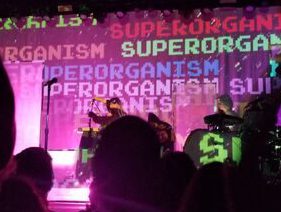
[ATTENDED: September 13, 2018] Superorganism

When I first heard Superorganism, I found “Something for your M.I.N.D.” to be kind of annoying.  Then it grew on me a bit. But I was intrigued by this band whose origin story was really fascinating.

The band began as a casual recording project in 2017 (last year) with members based in multiple countries, across the United Kingdom, the United States, and Australia.  Most of the band had met online in music forums or via mutual friends over a number of years.  By he time of Superorganism’s formation, the majority of the members had been living in London since 2015 and they decided to embark on a musical project together based on their mutual interest in internet memes.

So that’s interesting, as is this musical breakdown: Continue Reading »

[ATTENDED: September 13, 2018] Yuno

I had heard of Yuno, but hadn’t realized it.  All Songs Considered played his song “No Going Back” back in February.  I liked it but had forgotten about it come September.

When I saw the poster for the Superorganism show and saw that Yuno was opening I assumed it was a dance band (possibly Japanese, probably female).  But I didn’t investigate.

So I was surprised when Yuno came out and he was an African-American dude from Florida.  As soon as he said his name (like “you know”) I remembered joking about the pronunciation of his name on the podcast and it all came flooding back.

Yuno is a 27-year-old from Jacksonville.  He recorded a lot of his work in his bedroom and posted it on Soundcloud.  In what sounds like a made up story Ishmael Butler of Shabazz Palaces started tracking him on Souncloud and eventually reached out to him to record an EP with SubPop.  (Yuno didn’t tell us this, I looked it up). Continue Reading »

SOUNDTRACK: FEDE GRAÑA Y LOS PROLIJOS-“”El Gigante” (Field Recordings, May 5, 2015).

Fede Graña Y Los Prolijos are from Uruguay and play a stomping bluegrass (which is why this is called A Bluegrass Ditty By Way Of Uruguay).

Every year SXSW hosts a night of music from Uruguay.

Nestled between Argentina and Brazil way down on the southern tip of the Americas, Uruguay spends way too much time in the shadows of its better-known neighbors.

But a closer listen reveals something for just about everyone: rockeros, sure, but also fans of hip-hop, folk-influenced downtempo music and singer-songwriters with distinct voices and stories to tell.

With an electric bass and a small hand drum laying down the thumping rhythm and an accordion adding to the flair, the fascination comes from the very American-sounding guitar solo that introduces the song.  But once you comfortably know that this is bluegrass, it’s even more surprising when they all sing in Spanish.

After a couple of verses, there’s an accordion solo followed by an acoustic guitar solo (from the other guitarist).  There’s a slow down that seems like an ending but it’s a fake out as the song takes off once more,.

There’s some great guitar fingerwork by he singer as the song races to an end

What a fun song, although I never heard the word “Gigante” once..

[READ: January 5, 2017] “Chicken Hill”

Joy Williams’ stories never do what I expect them to do–for better and worse.

This is the story of Ruth.

It begins with Ruth going to a memorial fundrasier at the Barbed Wire, a biker bar “in a somewhat alarming part of town.”  She had donated $30 to the memorial of a boy, Hector, who has been run over by a sheriff’s deputy.

Ruth was pleased that the father was suing the sheriff–then she found out it was the boy’s fault–he had run in to traffic against the light.

The transition is a strange one: “It was probably just a coincidence that a child appeared not long after that.”  This was a girl who lived in a house nearby.  She was the daughter of a doctor and rather than introducing herself she said to Ruth “I would like to draw you in plein air.” Continue Reading »

SOUNDTRACK: APANHADOR SÓ-“Prédio” (Field Recordings, May 13, 2015).

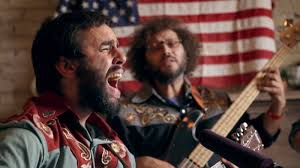
Apanhador Só  is from Brazil.  At the beginning of the video you see the guys in the band gathering…junk.   Childen’s toys boxes of refuse and homemade instruments.

The video starts and the singer explains that Prédio means building.  He says the song is about a different vision of life, a different perspective.  As it pans back we see that the only conventional instruments are a floor tom and a guitar.  And all kinds of weird other things.

In this video, shot during SXSW in Austin (2015), its members coax rhythms and beats from a trunkload of found items, including a children’s bicycle and other playthings. The resulting performance of “Prédio” is the stuff of hip-swaying joy.

The song starts with one of them tapping a bicycle bell.  Soon he starts keeping time by spinning the wheel and clacking the spokes.  Then he switches to a jug of some kind that changes the sound as he uncovers the opening.

There’s even a kazoo solo.

Near the end of the song, there’s wonderful breakdown where you can see then hitting and kicking everything at their feet-all kinds of junk that makes a cool cacophony.  The song is really catchy and lovely, although I admit I was more focused on what they were playing more than what they were playing.  (The items rather than the melody).

[READ: January 4, 2017] “Invasion of the Martians”

This was the funniest , most enjoyable thing I’ve ever read by Robert Coover.  Probably because it is so base and straightforward, it transcended some of his usual stylistic things.

A Senator from Texas is in bed with two women–the Secretary of the Interior (whom he calls the Secretary of the Posterior) and his intern–when he gets the news that Martians have landed in his home state.

He greets them warmly with Southern hospitality, but they don’t seem to speak any civilized languages.  They also don’t have any papers.  As the Senator was explaining this to them, they shot him. Continue Reading »

 SOUNDTRACK: DANIEL BACHMAN-“Song for the Setting Sun II” (Field Recordings, May 21, 2015).

Daniel Bachman plays a gorgeous six string acoustic guitar.  He plays wonderful instrumentals full of melody and feeling which tell a story in their own way.

Bachman grew up around the Rappahannock River in Fredericksburg. It’s a quiet town in Northern Virginia that still has a pharmacy with cheap sandwiches and milkshakes.

The 25-year-old has been at the solo-guitar game since he was a teenager.  That’s why it felt right to bring Bachman back to the area that inspired River, a record surrounded by history, but guided by hands and a heart that know its bends and bumps.

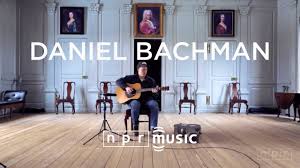
In early March, we met Bachman in Fredericksburg to drive an hour east to Stratford Hall, home to four generations of the Lee family, which includes two signers of the Declaration of Independence; it’s also the birthplace of Robert E. Lee. Bachman knows it well, not only because his dad works there, but also because he can’t help but bury himself in history books about the region.   Bachman plays a version of “Song For The Setting Sun II” in what was the performance space at Stratford Hall. The song leaps boldly around the sunlit, symmetrical room, bouncing off walls decorated with paintings of buxom women and men in powdered wigs.

It’s a gorgeous piece with ringing strings that sounds massive in this Great Hall.  In the second half, he strikes a low E and it sounds like a cannon.  And when you hear that melody amid all of the ringing notes, it’s just sublime.

[READ: January 29, 2015] “F.A.Q.s”

Phoebe is in her mid 20s.  She returns from college withdrawn and single. Her parents are delighted that she is single, but not happy that she is so withdrawn.

Phoebe is also pretty unhappy with the changes that have occurred since she was at school.

A new coffeemaker was where the compost bucket had been.  The chicken coop lay empty (they had reverted so quickly to supermarket eggs).  An exercise machine was in her old room–however after several minutes of exercise Melanie usually ended up lying on Phoebe’s bed.  Her mom tells her that she bought rice milk and oat cakes   Later on she even tries to make her parents granola (her father was supposed to watch his cholesterol but didn’t and her mother nibbled Icelandic chocolate),

One of the few things that remained was Grandma Jeanne’s violin on the top shelf of her closet.  It was unmentioned. Continue Reading »

july 28SOUNDTRACKJazz Lives At Duke Ellington’s Resting Place (Field Recordings July 2, 2015).

Playing jazz at a cemetery during the day seems like an odd decision.  But it’s all part of the one-day Make Music New York festival (MMNY) which celebrates music and community.  It happens every June 21 with more than 1200 outdoor concerts across the five boroughs running from morning till night.

For the 2015 edition, the festival’s organizers invited musicians to six different burial grounds across the city to riff on the idea of “exquisite corpse,” a surrealist parlor game popularized by artists and poets in the 1920s. In the game, someone writes a phrase (or draws part of a figure or scene), folds that part of the page over, and then passes it to the next player, who then does the same. The game ends when everyone has had a turn. That game is a natural bridge to the art of improvisation, and to jazz.

Woodlawn Cemetery is a mecca for the jazz world — it’s the final resting ground of royalty like Duke Ellington, Miles Davis and many others, including Ornette Coleman now as well. So as a tribute to their musical forerunners, the group — singers Michael Mwenso and Vuyo Sotashe, trumpeters Alphonso Horne and Bruce Harris, saxophonist Tivon Pennicott, pianist Chris Pattishall, bassist Russell Hall, drummer Evan Sherman and tap dancer Michela Marino Lerman — took as their point of departure W.C. Handy’s 1914 tune “St. Louis Blues,” a tune essential to jazz’s DNA. But they made it their own via surprising and turns that saunter through many textures, colors and rhythms.

The song begins with vocals from “St. Louise Blues” from Vuyo Sotashe and accordion from Chris Pattishall.  After a verse, Michael Mwenso (whose voice sounds very different) takes over.  The accordion drops out and it’s just voice and bass.

They pass the baton along to the horns, two trumpets, one with a mute in, the other using the mute  and a saxophone play a lively instrumental break.  This is followed by the percussion.  Evan Sherman and Michaela Marino have a percussive call and response.  I could have watched that part for a lot longer.

When that’s over the whole group joins together to end the song.

[READ: September 10, 2018] “Audition”

The first line of this story reads, “The first time I smoked crack cocaine was the spring I worked construction for my father on his new subdivision in Moonlight Heights.”

A first implies a second (especially with crack).

The story is about a 19-year-old college dropout. He went to school to study theater but “unmatriculated” and has been working for his father’s construction firm.  His father came from nothing and build up this firm which is presently creating a development.  His father is not too happy about him wanting to be an actor and as such is paying him the same as everyone else (which isn’t much).

He still acts–in community theater, but usually to 15 people at a time.

No one knew that he was the owners son and he liked it that way–he was using this time to study the laborers to learns their mannerisms–he was acting in his job, too,   New workers came through all the time (the pay was lousy after all).

The crack came from a coworker Duncan Dioguardi who was not acting.  He was a laborer living in his mother’s basement and longing to party.

The narrator knew “party” meant get high. When Duncan’s car died and the narrator drove Duncan home (an hour out of his way), Duncan invited him to party. The narrator was intimidated, then intrigued so he did.  And that was the first time he smoked crack.

He marveled how the lump of crack looked like some drywall that could easily be swept away.  Duncan showed him how to smoke it.  It tasted like nothing.  It smelled like nothing.  It was ant climatic except for his new-found fondness for Duncan whom he now considers a good friend.

That following spring he received a call from his old acting teacher to audition for a role  It was a stage show. The character would be on stage for all three acts but would not speak a word.  The narrator didn’t know if this was a step forward or backward.  The audition went well and he was sure he would get the gig.

Duncan’s car broke down again and the narrator told him all about the potential role.  But the narrator was more excited about the option of partying some more.

The story ends soon after this, which is a little disappointing as it is told from many years later and we never learn how he turned out.  But i did like the details of the past like “wiring th ehouse for internet, whatever that was.”

For ease of searching, I include: Said Sayrafiezadeh


SOUNDTRACK: THE DJANGO FESTIVAL ALL-STARS-“Them There Eyes” (Field Recordings, October 23, 2014).

This Field Recording was done under what looks like an old bridge outside of the Newport Jazz Festival.

Every year for the last decade and a half, select groups of hot swing musicians have come from Europe to tour the U.S. The exact lineups change, but they all feature masters of the “gypsy jazz” — or jazz manouche — style pioneered by guitarist Django Reinhardt. In fact, they’re billed under the banner of New York’s Django Reinhardt Festival.

After the last set of the Festival, done by the All-Stars, they asked the band, who had little time to spare, to play one last song.  Soon fingers were flying [The Fastest Fingers At The Festival, For Django Reinhardt]  The video there doesn’t work, but you can watch it on YouTube.

They chose the standard “Them There Eyes,” and to paraphrase its lyrics: They sparkled, they bubbled, and they got up to a whole lot of trouble.

Samson Schmitt, plays an amazing lead guitar–his soloing is blinding. The rhythm guitar from DouDou Cuillerier keeps up a great shuffle and Brian Torff on bass keeps the pace as everyone else gets a chance to solo wildly.

First up is Ludovic Beier, accordion and as a bystander observed: “He has the fastest fingers I’ve ever seen.”  And he does, it’s amazing.  His solo is followed by Pierre Blanchard, violin.  And Peter hits notes that seem like they might not actually exist on the violin.

There’s no vocals in the version which is just as well. No one would be able to keep up.

[READ: January 28, 2018] “Little Deaths”

Félix Fénéon was born in 1861.  In 1906 he wrote 1,220 brief items under the rubric “News in Three Lives” for the Paris newspaper Le Matin.  They were collected in a book and translated by Luc Sante

Seeing that these were written over time makes a lot more sense than having them all printed in a book–I mean, 1,220 deaths would be a lot to do all at once.  It’s still hard to believe that these would be printed in a newspaper at all.

Some examples in their entirety: Continue Reading »

[ATTENDED: September 8, 2018] First Aid Kit

Seven month ago Sarah and I saw First Aid Kit (sold out) at Union Transfer.  Now here they were back in Philly seven months later playing at the larger Fillmore.

We both enjoyed that earlier show a lot (obviously).  I wasn’t sure if it was smart seeing the band again on the same tour (as with Sloan, there was a lot of duplication).  But there was something quite different about this show compared to the first one.

The (very beautiful) poster was different and this leg of the tour was called the Rebel Hearts Tour (whereas the first one was called the Ruins tour).  So what this meant was that they were still playing mostly songs from their new album Ruins, although not all of them, and, indeed, not the title song.  But they’d added a new song (woohoo!) and one from Ruins that they didn’t play last time.

In a nutshell, it felt like a very different show even though it was more or less the same show. Continue Reading »

[ATTENDED: September 8, 2018] Julia Jacklin

I had heard about Julia Jacklin from NPR, so I was intrigued to see her live.  Jacklin is Australian, but you can’t really tell from her singing voice (or her speaking voice, really).  Although the way she enunciates “buh sket ball” makes her sound conspicuously non-American.  I had heard a song called “Don’t Let the Kids Win” which contains that basketball.  The title is amusing and I knew she was lyrically dense, so Iassumed there’d be amusing lines throughout the show.  But indeed, no.

Jacklin is not a partier, but nor is she a downer either.  She is thoughtful and inquisitive.  Her music, even live, is fairly spare–except when it’s not–and she sings pretty quietly–except when she doesn’t.

She was charming and funny–delightful in an opening act.  She played a quick six songs and that was that.

“Lead Light” has a kind of old school swing to it, almost 50s rock and roll.  I enjoyed the way the song built and stopped several times.

Her band, three Canadian guys, Harry (lead guitar) Eddie (bass) and Ian (drums) kept perfect accompaniment and backing vocals. Continue Reading »