I bought these tickets back in November thinking “Dido is playing Union Transfer?” and then, “What happened to Dido?” I didn’t realize that she had released some albums in the intervening years. I was vaguely aware of her 2008 release but missed the 2013 release entirely. I also see that she hasn’t toured the states in FIFTEEN years. In 2004 she played the Tower Theatre but in 2001 she headlined the Tweeter Center. Remember Tweeter?
So that explains the small venue. It also explains why it sold out.
Almost all of my familiarity with Dido comes from S. When we first started dating she played No Angel a lot and I found I rather enjoyed it–a relaxing soundtrack on a summer day. When I received the tickets for this show, it came wit a copy of her new CD. We listened to it and I found it pleasant but somewhat unremarkable. I assumed the show would be the same–an enjoyable, chill evening.
Boy howdy was I wrong. It’s as if everything on the CD was made for chilling out, but the show was made for dancing. She had a five piece band behind her and they were fantastic. With much appreciation to the percussionist Jody Linscott who was freaking amazing and Adam Falkner on drums who played really loud and hard and kept the songs really moving.
The other amazing thing was Dido’s herself. She has a lovely voice–always has. On record it’s quite subdued. But live, she belted out notes, sang passionately and was totally engaging as a performer. She walked around the stage. She sat down right in front of us for a song (shame we were behind the two tallest people there), she smiled all the time–a genuine smile that showed how much she appreciated us coming out to see her. And she was quite funny, too. Continue Reading »
I bought these tickets for Dido back in November! There was no mention of an opening act until recently.
I had not heard of Jack Savoretti. I looked him up and saw that he was English solo acoustic singer of Italian descent. His song “Candlelight” peaked at #70 in the UK Charts in 2019.
I assumed he’d be a solo folk singer. But he had a full band with him.
Jack has a gruff voice–but not too gruff, S. informed me. I rather liked him. His songs were catchy and thoughtful. Although honestly it was all kind of forgettable.
But my first thought was that he must certainly appeal to the hypothetical “woman of a certain age.” He is in his 30s, handsome, rugged-sounding. And he’s a family man. I just imagined women throwing their knickers at him in Vegas someday. Actually I suppose women don’t do that anymore, so whatever the 21st century equivalent is. There were actually two drunk British women of a certain age behind us and when he came out they started yelling, “hey there, Jackie boy!” They apparently also almost got into fight with some one. Continue Reading »
SOUNDTRACK: AIMEE MANN-Bachelor No. 2 or, the Last Remains of the Dodo (2000).
Aimee Mann writes really pretty (often sad) songs. From seeing her play live (in person and on video), she is very upright when she plays. And I feel like this uprightness comes forth in her music. She is very serious–not that she isn’t funny, because she can be–but that she is serious about songcraft. Her songs, even when they are catchy, are very proper songs. I don’t know if that makes sense exactly.
It also means to me that most of her music sounds similar. She has a style of songwriting and she is very good at it. For me, it means that a full album can start to sound the same, but a few songs are fantastic.
“How Am I Different” opens up with a super catchy melody and a guitar hook that repeats throughout. “Nothing is Good Enough” is a bit slower and less bouncy. But “Red Vines” brings that bounce back with a super catchy chorus (and backing vocalists to punch it up). The piano coda is a nice touch.
“The Fall of the World’s Own Optimist” starts slow but adds a cool guitar riff as the bridge leads to a catchy, full chorus. “Satellite” slows things down as if to cleanse the palette for “Deathly.”
Now that I’ve met you
Would you object to
Never seeing each other again
The chorus is low key but the verses have a great melody. It stretches out to nearly six minutes, growing bigger as it goes with a soaring guitar solo and better and better rhymes.
“Ghost World” has some wonderful soaring choruses while “Calling It Quits” changes the tone of the album a bit with a slightly more jazzy feel. It also adds a bunch of sounds that are unexpected from Mann–horns, snapping drums and in the middle of the song, the sound of a record slowing down before the song resumes again. It’s probably the most fun song on the record–unexpected for a song with this title.
“Driving Sideways” seems like it will be a slower downer of a song but once again, she pulls out a super catchy intro to the chorus (with harmonies) as the rest of the chorus trails on in Mann’s solo voice as we hang on every word. It ends with a tidy, pretty guitar solo.
“Just Like Anyone” is a quiet guitar song, just over a minute long. It’s a surprisingly complete song and shows that not only can she pack a lot into less than 90 seconds, she should do it more often.
“Susan” is a surprisingly boppy little number that bounces along nicely on the two-syllable rhythm of the title character. “It Takes All Kinds” slows things down with piano and gentle guitars and “You Do” ends the album with Mann showing off a bit of her falsetto.
This is in no way a party album, it’s more of a quiet autumn day album. And it’s quite lovely. Thanks, Nick, for reminding me of it.
[READ: May 20, 2019] “It’s a Mann’s World”
Nick Hornby wrote High Fidelity and became something of a musical expert because of it. As such, he wrote a half a dozen or so musical review sections for the New Yorker.
This was his first and, as one might guess from the title, it is about Aimee Mann.
He begins by talking about the British magazine Mojo and how every month they ask a musician what he or she is listening to. He says that many musicians of a Certain Age seem to have abandoned rock and roll and are listening more to jazz or classical. They are doing this “for reasons I can only guess as: Prokofiev! Ellington! Take that Hanson and Wu-Tang Clans fans! ”
These performers seem to suggest that pop music is dead. Much in the way that people say fiction is dead. Meanwhile good, talented musicians continue to make albums that people continue to listen to and good talented authors continue to write novels that people continue to read. Continue Reading »
SOUNDTRACK: SELFISH CUNT-“Britain Is Shit” / “Fuck the Poor” (2003).
I had not heard of this band until reading about them in yesterday’s Nick Hornby essay. He didn’t name them, but he mentioned a review in which the band were described as combining ‘the hammering drum machine and guitar of controversial 80’s trio Big Black and the murky noise of early Throbbing Gristle.”
The band was formed in early 2003 by Martin Tomlinson and Patrick Constable, and was noted for provocative lyrics, aggressive stage shows, and electronic-influenced rock. In 2004, The Guardian placed Selfish Cunt at #40 on its list of “top 40 bands in Britain today.” They broke up in 2008.
This was their first single. It surprises me that both of these songs are over three minutes long as they seems like they would be about 45 seconds.
“Britain is Shit” opens with a fast electronic drum beat with jagged guitar stabs and shouted vocals. Big Black is an excellent touchstone. After a few verses, all the music drops out except for the drum machine–it’s quite a bold musical statement (not to mention the lyrics). A ringing guitar chord keeps the semblance of melody going. The lyrics resume:
Are you having fun / when war is on
put your kettle on / cause the war is on.
Britain is shit / it’s full of lies
white men start their shit / in their shirts and ties.
“Fuck the Poor” is quite similar. A simple drum machine beat with loud distorted guitars as the only musical element. The lryics:
Fuck the poor / make war
sung in a heavy British accent, After the first verse a second guitar chimes in with a guitar riff on top. and more distorted guitar. The melody doesn’t change. The song ends in a cacophony of noise.
These songs aren’t original (although combining the sharp electric drum with punk guitars is pretty novel) but they are provocative. Evidently their live show was quite something.
I saw them last night, not sure if they could live up to the hype. I went with an open mind but thinking they might not pull it off.
But fuck me. They pulled it off. They fucking rocked. The singer was incredible, hypnotic, acrobatic, snarling, wearing a ripped up catsuit and eye makeup, prowling round the crowd and singing in people’s faces, coming on to all the straight boys, singing in the girls’ ears… like some kind of crossover between iggy, rotten and … grace jones or something. he threw himself around, doing these balletic poses, completely confident and… fucking ace.
Songs? yeah, there were some, they were loud and good. Britain Is Shit is the best anti war song I’ve heard. Fuck The Poor is an anthem. And, one more time, for the record, when he says those vile things like “bang bang another nigger dead” it’s not his own opinion, it’s the voice of someone else – soldier, politician, whoever. It’s a PROTEST not an advocation. come on, haters, get with the fuckin programme.
I think racist types are not really going to latch onto Selfish Cunt because Tompkinson is one of the most obviously gay frontmen i’ve ever seen, and i doubt many racist bigots are particularly accepting of gay people… and i honestly think that the disdain with which he spits out the lyrics make it pretty obvious that there’s something more going on than just the straight lyric.
Of course, you’ll never get a song on the radio with a name like that.
[READ: June 3, 2019] “The Male Gaze”
I enjoyed the tone of this story although the main character was a bit of a puzzle. She is sophisticated and aware of the male gaze, but seems willing to succumb to it anyway.
Phoebe is a young, sexually active New Yorker: “sometimes she felt like hot shit, sometimes just like shit.”
The first section of the story is called The Most Important Artist of the Post-Second World War Period.
At a party, Phoebe meets Pablo Miles who approached her and says “you’re very fuckable.”
Of all the affronts! But Phoebe knew the game and made big eyes at him and said “Do you really mean it?” Continue Reading »
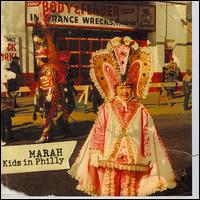
After reading about Marah in Hornby’s post I decided to listen to their Kids in Philly CD.
I totally get why Hornby likes them and I can absolutely imagine what their live show would be like.
They’ve absolutely got the whole Springsteen vibe–good time rock and roll with close harmony backing vocals.
There’s a harmonica instead of a saxophone (I prefer the harmonica) on “Faraway You: and there’s even xylophones like on Springsteen’s Christmas song on “Point Breeze.” The horns (and the chanted “come ons”) do appear, this time on “Christian Street.”
“It’s Only Money Tyrone” slows things down with slinky groove and a sound that’s less bar-band. “My Heart is the Bums on the Street” feels like a quieter Springsteen song–classic rock with gentle vibes and a clap-along feel. Although I suppose like he sounds more like Craig Finn than Bruce Springsteen.
“The Catfisherman” is a stomping honky-tonking song with an Aerosmith vibe. “Round Eye Blues” slows things down with a simple melody (in the vein of U2s “With or Without You”). It also recycles all kinds of early rock n roll lyrics into its own melody, which is fun.
“From the Skyline” has a great guitar riff/solo running through it with a bit more distortion thrown on top. “Barstool Boys” sounds a bit like The Replacements’ “Here Comes A Regular” only with banjo. “The History of Where Someone Has Been Killed” adds some acoustic guitar while “This Town” keeps the mood with a quiet album ender.
I am genuinely surprised that this band wasn’t more popular. They would seem to push a lot of classic classic-rock buttons.
I only wish I had some idea why they chose that name.
[READ: June 15, 2019] “Rock of Ages”
After reading Hornby’s 2000 review of Marah I found this 2004 review of Marah. Since I had seen that they later did a tour together, I was curious what this lengthy review would be about. It’s about seeing Marah live and lamenting that a band this good should have to resort to “passing the hat” for tips.
He says
Philadelphia rock ‘n’ roll band Marah is halfway through a typically ferocious, chaotic and inspirational set. My friends and I have the best seats in the house, a couple of feet away from Marah’s frontmen, Serge and Dave Bielanko. The show ends triumphantly, as Marah shows tend to do, with Serge lying on the floor amid the feet of his public, wailing away on his harmonica.
What I love about them is that I can hear everything I ever loved about rock music in their recordings and in their live shows … because they are unafraid of showing where their music comes from, and unafraid of the comparisons that will ensue
This show was at a small pub in England. Which seems a shame since a few months earlier Continue Reading »
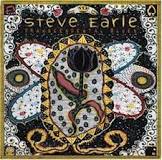
SOUNDTRACK: STEVE EARLE-Transcendental Blues (2000).
I’ve never really liked Steve Earle’s music. For some reason I always thought of him as a kind of outlaw country. But the review of this album from Hornby made me want to check it out. And while there are certainly country music trappings, this is a solid fun rock record.
Earle’s voice isn’t what I thought it was (or wasn’t was it is now)–it’s much softer and much higher than I imagined. So what’s going on on this record?
“Transcendental Blues” has a great distorted guitar riff running opposite the throbbing bassline. Earle’s voice sounds like a cross between Dylan, Petty and (anachronistically) Kevin Devine. “Everyone’s in Love with You” sounds like a rocking R.E.M. song with a very 90s vocal style and even a reverse guitar solo.
“Another Town” sounds like a song that I’ve heard a million times (but I haven’t). It’s a simple pop song with a crazy catchy melody and it’s barely 2 minutes long. “I Can’t Wait” slows things down a bit with a real poppy Matthew Sweet-vibe.
“The Boy Who Never Cried” is a dirgey song, slow and story telling. It has strings with a slightly Middle Eastern feel.
“Steve’s Last Ramble” is a stompin’ song with full on harmonica introduction (which makes it seem even more Dylan). “The Galway Girl” is a mandolin-based stomper while “Lonelier Than This” is a quiet, sad song.
“Wherever I Go” is only two minutes ling and has a country feel, even though it’s not that different from the other songs. The guitar solo is totally early Beatles, but the lyrics are pure country:
I could drink corn whisky ’til my brain goes soft
I could run this highway ’til my wheels come off
The harmonica returns on “When I Fall” the start of a trifecta of country songs. His drawl really comes out here, possibly because of his duet partner (Steve Earle’s sister, Stacey Earle, a country singer in her own right). It’s a shame this song is so long as it’s my least favorite.
“I Don’t Want to Lose You Yet” is a simple country pop song (the twang remains). Although “Halo ‘Round the Moon” is a softer song with a gentle shuffle beat. “Until the Day I Die” continues with the old school country/bluegrass style with a big ol’ banjo intro, close harmonies, and a fiddle solo. You can imagine a jug solo, hand clappin’ and a hoedown in a live version.
“All of My Life” rocks out again, with some loud bass and distorted guitar, which I desperately needed after those last few songs.
The disc ends with “Over Yonder (Jonathan’ Song).” From songfacts:
This song is about the execution-by injection of Jonathan Nobles, which Steve Earle witnessed. The alt-country star told Mojo magazine May 2008 about it: “I don’t recommend it. I befriended Jonathan for several months beforehand. Then I saw the execution and later brought his remains to England for burial according to his wishes. But the execution was incredibly toxic to me. It’s hard. You can’t believe it’s really happening. I remember afterwards I thought, ‘did I black out and miss it? I let Jonathan down.’ Then the blank filled in… it was the shock… I realized exactly what I’d seen. I can’t see myself doing it again. I’ve absorbed enough death. And I still work hard against the death penalty.”
So I’m still on the fence about Earle, but I did enjoy this record much more than I thought I would. Thanks, Nick.
[READ: June 15, 2019] “Alternative Earle”
I am aware of Steve Earle and I really like his lyrics. I don’t love his music though–too much country in the alt-country. Although Hornby describes it as Nashville folk and rock n roll hybrid. But man, his lyrics are great. I wish I liked him a bit more especially after reading this review.
Hornby is a passionate music lover and anything he likes sounds great when he describes it.
The album in question is Transcendental Blues (and in the photo Earle’s beard is much shorter than it is now). As of 2000, Earle has been married and divorced six times (to five women–4 and 6 were the same person). In 1994 he was imprisoned for possessing narcotics. This sentence ending years of heroin addiction. Continue Reading »
I saw Foxing live and they were quite different from their recorded output–louder, more intense, a very physical band. I was curious if they would sound more like their records or more like their live selves.
They have chosen the album sound–quieter, more subtle with gorgeous orchestration.
But I wasn’t the only one to wonder this.
When we invited Foxing to NPR HQ, we wondered how the band’s big sound would translate to such a (forgive us) tiny space. Would Foxing bring a bagpiper to recreate the shrill accent it snuck onto its latest album, 2018’s Nearer My God, or try to replicate the cathartic energy of its live shows over the hum of computers and fluorescent lights?
I didn’t realize that Foxing was
at the forefront of what’s referred to as “emo revival,” a term for today’s crop of bands heavily influenced by late-’90s and early 2000s groups… But with each new LP, Foxing’s ambitions reach beyond the genre’s boundaries, incorporating broader inspiration.
When I saw them, the show was dominated by singer Conor Murphy and guitarist Eric Hudson. Interestingly, Hudson is on keys for this set. Caeleigh Featherstone was on keys for my show. She is on keys here, but her backing vocals are far more prominent here.
For this performance, Foxing expanded its numbers, bringing a saxophonist (Jordan Pettay) and a couple of string players (Gabriel Valle: violin; Nathan Sander: viola) to accompany the band’s touring lineup — and somehow, we managed to fit everyone behind Bob Boilen’s desk.
The first song, “Slapstick” features Conor’s falsetto and Caeleigh’s backing vocals. Hudson plays the single wobbly notes that float behind the vocals. The strings are quiet but fill in the silences really nicely. I love the gentle repeating guitar solo that Ricky Sampson plays through the middle. Sampson plays bass throughout the rest of the show and Brett Torrence plays it on this song. That sax solo at the end adds a nice touch to the emotional ending.
For its Tiny Desk, Foxing spotlighted three standout tracks from Nearer My God. The quieter instrumentation pushed singer Conor Murphy’s starkly confessional lyrics and shattering delivery to the forefront, especially on the set’s opening song, “Slapstick.”
And even with minimal amplification, the swelling chorus of the title cut “Nearer My God” is just as impressive as performed during the band’s explosive concerts.
“Nearer My God” accentuates Murphy’s falsetto even further and the harmonies sound truly wonderful. The opening is quiet but it builds really nicely to the middle section which features great drums from the almost never on camera Jon Hellwig.
The set ends with “Grand Paradise” the song that I think makes them sound most like TV on the Radio. It’s terrific the way the music counterpoints the vocals. The end section of the song just overwhelms with impassioned vocals. The ending sax solo is pretty cool too although there’ s a nice bass riff around 11 minutes and we don’t get to see Ricky do it.
This is a great set, although I have a little question over the filming–too much attention to the strings and not enough to the rest of the band.
[READ: June 5, 2019] “Conduction”
This is an incredibly powerful story of slavery and freedom.
The story opens with Hiram Walker departing Virginia. He is a slave with fake papers and a route to freedom. The writing is excellent. You can feel the tension, the fear and the sense that anything could go wrong at any second. Slave catchers, known as Ryland’s Hounds, were at every turn.
He saw the men who were supposed to help him but he couldn’t make eye contact. The conductor looked at his false ticket which stated that he had recently purchased his freedom. The conductor didn’t care and he was allowed on.
After two days, he met a contact whom he also did not know. After one more silent ride, he was in a house in Philadelphia with members of the Underground.
He explains how he knew the white man who helped him as well as the black man named Raymond White who also helped him. Raymond’s brother Otha was also there–he was more charming, more jovial than Raymond.
For the next few days he wandered the city of Philadelphia, a free man. Unused to and somewhat unhappy with this new burden. It was an unsettling feeling, one that carried great deal of responsibility. Continue Reading »
Yes, Sesame Street. Not the OTHER puppet band Fragile Rock, the actual Sesame Street characters.
It’s a convergence of NPR and PBS!
And there they are at the Tiny Desk: Big Bird, Bert and Ernie, Rosita, Abby Cadabby and Cookie Monster, all singing about a sunny day and how everything is A-OK. The Sesame Street crew — including Elmo, Grover and other surprise guests — visited NPR’s headquarters in Washington, D.C., to celebrate Sesame Street’s 50 years of teaching the world its A-B-Cs, its 1-2-3s, how to be kind and how to be proud, all while spreading love and joy.
Everyone knows Sesame Street, but it’s also worth talking about how awesome it is.
Sesame Street has won more major awards than any other group to play the Tiny Desk, including 11 Grammys and 192 Emmys. There was a lot of love as the cast of Sesame Street got to meet NPR hosts and newscasters, who in turn got to geek out meeting their favorite Muppets and the creators behind the felt and fur. These folks include Matt Vogel, Sesame Street’s puppet captain and performer, and music director Bill Sherman.
The Muppets get through six songs in 15 minutes (no soloing here).
Count von Count and the NPR kids count us down: 5 … 4 … 3 … 2 … 1!
Andwhat Sesame Street show could begin without “The Sesame Street Theme (Sunny Days)” (Rosita & Elmo, Ernie & Bert, Abby Cadabby, and Big Bird and Cookie Monster).
Then it’s on to Grover singing “People In Your Neighborhood” with Rosita. Grover oberves a person making sounds with a soundy-making thingy. Rosita is there to help learn about musicians. Then a Reporter comes out to talk about what she does. Finally Bob Boilen himself comes out (Grover: “who might you be sir, you do not appear to be doing anything.” Bob: “I’m the producer, Grover.” Grover: “Oh well that explains it”).
I even got to sing with Grover. And I’ll also say, on a personal note, that this may well have been the hardest-working, most dedicated group of performers I’ve ever worked with. I’m so proud of these Muppets and so happy to celebrate all that they’ve meant to the world for these 50 years.
Then they sang two new songs (imagine them having new sings in the last fifty years).
“What I Am” sung by Abby, Ernie and Elmo, a sweet song if ever there was one.
There’s even some full-sized Muppets in the audience (although the kids don’t seem that excited to be near them).
And then it’s Bert’s turn. But Bert’s kinda shy and is nervous. Thankfully Big Bird is there to sing a song together (and then confuse the proceedings): I
Its simple. We’re gonna sing a song and we’re gonna sing it all together and i’ll start singing the song and then they’ll sing then song when I sing what I sing in the song and the you come in singing the song after i sing what i gonna sing when the song starts and we’ll sing the song.
There’s even more fun when Big Bird sings a long high note and Bert says: really?
Cookie monster wants a cookie, but it’s time for the medley” “Whats the name of that song?” (Elmo) then “Rubber Ducky (Ernie) and “C is fr Cookie” (Cookie Monster). Then Big Bird sing a line before a funky piano and bass riff for “12345, 678910, 11 12… TWELVE!” (my personal favorite).
It segues into perennial happy song “Sing.”
Then Oscar comes on and tells everyone to scram.
[READ: June 4, 2019] “The Children”
This story reads like a fairy tale. It has a slow inevitability in the pacing and real lack of urgency.
It is called an adventure of lost heirs. It runs concurrently with a series of beheadings that were happening on Anjavavy island. The story is quick to point out that the beheadings do not impact the story, they are just mentioned for context.
It begins in the early 2000’s on the island. Giustinia was visiting Shay in Anjavavy for two weeks before heading off to Madagascar. They are staying at Shay’s house which is mostly empty. Shay lives on the island for part of the year and in Italy for the rest of the year. Shay’s husband will be returning soon.
Giustinia is a poet and a critic She and Shay became friends when Shay translated some of her essays for an American magazine. Her family has ancient roots in Tuscany and has an unconscious regal air.
Shay hopes news of the beheadings doesn’t reach them during the fortnight. Continue Reading »
I rather like when we see a glimpse at the workings of things. Like how a Tiny Desk Concert typically happens:
Before I bring an artist to the Tiny Desk, I try to see them perform live. It helps me get a handle on what they’ll be capable of doing at my desk, minus all the artful tinkering of a studio. But I never saw Tomberlin before she came to my desk. My desire to see Mitski and Overcoats when Tomberlin was last in town had me at another venue and another opportunity failed to happen. But I was simply in love with Tomberlin’s ethereal debut album At Weddings and took a chance.
I didn’t know how her fragile songs would translate; all I knew was that Tomberlin was coming to the Tiny Desk to play acoustic guitar and sing, along with her musical partner Andrew Boylan. The eerie production that felt like the backbone to the fragile songs on At Weddings would be gone.
I haven’t heard this album, so I don’t know about the eerie production. I wonder if that would set her apart from other similar women-with-acoustic-guitars. This is not dismissive of Tomberlin–it is genuinely hard to distinguish yourself when all you have is a guitar and your voice.
On the first song, “Any Other Way” she sounds like a couple of other recent quiet(er) female singers. The addition of Boylan helps a bit because he able to add some delightful harmonies and some simple guitar riffs to accompany her strums.
I think her perspective also sets her apart a bit
Tomberlin is the daughter of a Baptist pastor, grew up singing in the church and, since her teens, has questioned her own beliefs in God and faith. And as you listen to her sing these delicate, vulnerable songs, you may find your way to a new songwriter, capable of distilling doubt and isolation while forming a community around her music and expressing assurance.
So lyrics like this are quite unusual
Feeling bad for saying
Oh my god
No I’m not kidding
They say that even the most seasoned performers get nervous at the Tiny Desk. Those nerves are apparent a bit between songs as she asks, “How’s work going today? Anything happening? I don’t keep up with the things when I’m doing this thing.” She continues, “I tried to mute trump’s name on Twitter but it doesn’t work.” After trying to banter some more she says, “I’m going to stop talking and we’ll play another song.”
The combined guitars and harmony vocals on “Self-Help” are really wonderful. And this verse is terrific
I used the self-help book
To kill a fly
I think it worked mom
I think I’m fine
The final song, “Untitled-1” plays nicely with the harmony guitars.
When Tomberlin began to sing at her Tiny Desk Concert, wearing a bit of Tiny Desk nervousness on her sleeve while singing “I know I’m not eternal, I’m just a young girl,” these songs questioning her religious beliefs, felt deep and personal.
This song was the most interesting of the three for the guitars and for the way she really puts some power in her voice as the song progresses.
[READ: June 4, 2019] “Poorly Mapped”
The June 10th issue of the New Yorker features five essays by authors whom I have enjoyed. They were gathered under the headline “Another Country.”
Dinaw Mengestu was born in Ethiopia but had not been back for many years. His family left when he was two years old, in 1978. When he returned, twenty-five years later (the only one in his immediate family to do so during that time) his aunt Aster asked him not to leave the house while she was out.
She had told him that nothing had changed in those years” even your mother’s shoes are still there.” Further, everything he would need was available in their house–satellite television, internet and American food. So he should stay put.
He assumed her concern as because of the protests and mass arrests dating back to 2005, but she shrugged all of that off saying that Western news made it seem worse than it was, “We’re fine, we go to work we live our lives.” Continue Reading »
I am fairly stunned that I never posted about Jambinai at the Olympics in Korea in 2018. Their performance of “Time of Extinction” blew me away and before the song was even over I was looking them up to find out more about them.
Jambinai blend traditional Korean instruments with rock instruments. But not in a “we rock and want to bring in a flute” way. The three main members met at Korea’s National University of Arts while studying traditioanl Korean music. They wanted to play traditional music in an innovative way but in a way that was very different from K-pop. So their band consists of
Kim Bo-mi– haegeum;
Lee Il-woo – electric guitar, piri, taepyeongso, vocals
Sim Eun-yong – geomungo.
I had to look up what some of these instruments were, and here’s what I’ve got:
Geomungo (also spelled komungo or kŏmun’go) or hyeongeum (literally “black zither”) is a traditional Korean stringed musical instrument of the zither family of instruments with both bridges and frets. It is generally played while seated on the floor. The strings are plucked with a short bamboo stick called suldae, which is held between the index and middle fingers of the right hand, while the left-hand presses on the strings. The most typical tuning of the open strings for the traditional Korean music is D#/Eb, G#/Ab, C, A#/Bb, A#/Bb, and A#/Bb an octave lower than the central tone.
In the video from the Olympics, the band is surrounded by dozens of geomungo players.
Haegeum (Hangul: 해금) is a traditional Korean string instrument, resembling a fiddle. It has a rodlike neck, a hollow wooden soundbox, and two silk strings, and is held vertically on the knee of the performer and played with a bow. It is one of the most widely used instruments in Korean music. Its range of expression is various despite having only two strings, with sounds ranging from sorrowful and sad to humorous.
Taepyeongso (lit. “big peace wind instrument”; also called hojok, hojeok 호적 號笛/胡笛, nallari, or saenap, 嗩吶) is a Korean double reed wind instrument in the shawm or oboe family, probably descended from the Persian zurna and closely related to the Chinese suona. It has a conical wooden body with a metal mouthpiece and cup-shaped metal bell. It originated during the Goryeo period (918 – 1392). The loud and piercing sound it produces has kept it confined mostly to Korean folk music (especially “farmer’s band music”) and to marching bands, the latter performed for royalty in the genre known as daechwita. It is, however, also used sparingly in other genres, including Confucian, Buddhist and Shamanist ritual musics and neo-traditional/fusion music.
Piri is a Korean double reed instrument, used in both the folk and classical (court) music of Korea. It is made of bamboo. Its large reed and cylindrical bore gives it a sound mellower than that of many other types of oboe.
Jambinai released this album in 2012 but reissued it in 2016 when they released their second album a Hermitage.
This nine-song (mostly) instrumental post-rock album is just astounding with the sounds they produce.
1. Time Of Extinction (2:56) opens with some quick riffage on the Geomungo. After 20 second the roaring guitars and drums crash in. Before a minute is up, the guitar falls back and a wondrous haegeum solo takes over amid the background rumbling. It’s followed by some staccato thumps and full-on blasts of noise. The taepyeongso mixes with feedback to create a wall of discord before it all crashes to a close.
2. Grace Kelly (3:20) opens with some fast acoustic sounding guitars before the whole song barrels forth with crashing noises and a taepyeongso solo. That’s all in the first minute. After which a quiet guitar and a vocal melody takes over. I love that the vocal is buried under some effects so you can’t even really tell what language she’s singing in. After a minute or so of this “rest,” the song just takes off again–forcing its way to the end with vocals moans that sound a bit like Robert Plant. The ending crashing chords are pretty spectacular.
3. Glow Upon Closed Eyes (6:26) A quieter song, it starts with fading in and out noises and what may be reversed guitar sounds. After a minute or so the geomungo comes in with some big notes that give the noises some context. It stays relatively quiet for 5 minutes and then the end of the song bursts firth with martial drums and big guitars.
4. Paramita Pt. 1 (4:15) The first part opens with rumbling noises and a slow riff on the geomungo. Nearly the whole song works at this sort of tension building exercise with a brief moment of splashing cymbals and faster notes that slow once again.
5. Paramita Pt. 2 (4:21) Part 2 slows things down a lot–just a geomungo thump and some sporadic notes on the haegeum. It feels menacing and suspenseful–punctuated by deep bass notes that resound and linger. The song unexpectedly explodes about two minutes in with a wall of noise punctuated by cymbals.
6. Hand Of Redemption (4:34) is a sonic blast of hardcore. Screamed vocals are buried amid a wall of fast thumping drums and guitars. After two minutes the taepyeongso and piri start adding noise and the thumping grows more mechanical. The final minute takes away the industriaial sound but leaves all the high squealing notes punctuated by walls of bass and drums. The end of the song thumps and feedback in to the next track.
7. Empty Pupil Pt. 1 (5:10) Continues with that feedback. The feedback goes through several iterations as quiet chords are played and then allowed to feedback some more. The rest of the song is full of other mechanical sounds–who even knows what–that fill in to a kind of noise drone. The song ends with quiet guitar lines (I wonder if the song endings deliberate segue or if they were just stopped at the wrong time)
8. Empty Pupil Pt. 2 (4:39) Part 2 further explores the quiet guitar with some cool creaking sounds from the geomungo before it starts playing a riff that ends with a big crash each time. It picks up the tempo as the haegeum is introduced along with some acoustic guitar strumming but there is no climax to this song it just ends and fades.
9. Connection (9:37) The final song is the one epic track on the disc. It opens with a haegeum playing a quiet two note melody before some deep slow bass notes accompany it. There’s also I think a vocal line (it’s hard to tell). About four minutes in the haegeum starts playing a riff that is reminiscent of Sigur Rós. It builds in beauty an intensity until the final notes fade out.
The June 10th issue of the New Yorker features five essays by authors whom I have enjoyed. They were gathered under the headline “Another Country.”
I enjoyed Min jin Lee’s Free Food for Millionaires quite a lot. I had no idea that she was not born in America. She came to New York from Seoul when she was seven, and her essay is fascinating for a couple of reasons.
First, she says that every day in the 1970s and 1980s it took her two hours to get from her home in Queens to the Bronx High School of Science. She spent most of that commuter time reading Sinclair Lewis novels about America: Main Street, Babbitt, Dodsworth, Arrowsmith.
On weekends she worked with her family in their father’s store in Manhattan’ Koreatown. The store was burgled several times and everyone in their family had been mugged at some point.
She notes that Sinclair Lewis wrote about white Midwesterners who struggled against materialism, corporate greed, fascism and narrow thinking. She found it calming to read about these big ideas since her family life was so hectic. The books also made her feel like she’d traveled even though she never did. Continue Reading »
 I bought these tickets back in November thinking “Dido is playing Union Transfer?” and then, “What happened to Dido?” I didn’t realize that she had released some albums in the intervening years. I was vaguely aware of her 2008 release but missed the 2013 release entirely. I also see that she hasn’t toured the states in FIFTEEN years. In 2004 she played the Tower Theatre but in 2001 she headlined the Tweeter Center. Remember Tweeter?








 I Just Read About That...