Feeds:
Posts
Comments

Archive for the ‘Trilogy’ Category

commitSOUNDTRACK: KANYE WEST-Late Registration (2005).

I lateregcan’t get over how much I’ve been enjoying Kanye West’s music as of late.  So much so that I went back and bought Late Registration.  I wanted to check out his early stuff, so naturally I started with…his second album.  And it’s a really enjoyable, soulful, gospel-filled rap album. Complete with Kayne’s bizarre, humorous and often offensive lyrics.

Musically the samples are wonderful—they create a very specific feel of pop soul that both works with and sometime against the lyrics.  The album suffers from two things that I’ve found I do not like in rap, and in articular in Kayne’s albums.  It bugs me when rappers intro their songs with several “uh, yeah”s.  I don’t know why but it does and that’s how Kanye opens the disc.

And, I wish there weren’t so many guests on the record.  While I understand the guest singers who provide backing vocals, I don’t get all the guest rappers (and there are a lot: Paul Wall, GLC, Lupe Fiasco, Common, Game, Jay Z, Really Doe, Nas, Cam’ron Consequence).  I mean, I’m not here for them, so why devote so much time to others, it makes you seem like you couldn’t thin of enough to say (and we know that’s not true about Kanye).  After a few listens, I have grown to appreciate the guests, but I like Kayne’s style so much that the other guys are just distractions.

Late Registration is largely produced by Jon Brion, who has made some amazing music with Fiona Apple and Aimee Mann—and while it is certainly stripped down Brion, the flourishes that Brion often employs are apparent here.  Like the tinkly pianos and farty bass that opens “Heard ‘Em Say.”  There’s some falsetto R&B-esque vocals from the singer from Maroon 5 here—I had no idea he sang like that.  It fits very well with the song.  And the instrumental section at the end is very Brion.

“Touch the Sky” uses a long sample (slowed down quite a bit) of Curtis Mayfield’s “Move on Up.”  But the sample is so much of that original song that it almost seems like cheating.  Except that he has slowed it down and modified it somewhat, and…his raps work perfectly with it.  The other really crazy sample is from Gil Scot-Heron which samples “Home is Where the Hatred Is.”  The strange thing is that the song is 1:44 and the last 45 seconds of the song are just Scot-Heron’s song playing along by itself.  It’s weird to have given up that much to another song…but it sounds great.

“Gold Digger” is a very funny song about, well, gold diggers.  The topic isn’t new (the fact that it samples an ancient Ray Charles song attests to it), but the chorus of “I ain’t saying she’s a gold digger, but she ain’t messin’ with no broke niggers” is great.  There’s also an intro section with Jamie Foxx doing his now patented Ray Charles.  It’s a pointed song but done with a very funny twinkle in his voice (the Kayne twinkle).  “Drive Slow” is a cool slow-tempoed number with a great sample from Hank Crawford and an interesting slowing effect at the end of the song.  “Crack Music” is a great political song equating making records to selling crack.  The metaphor works well.  And this is one of Kayne’s strong pro-black songs.  It’s really powerful.

The surprising thing is the two really sensitive songs: “Hey Mama” which is a sweet song to his mother in which he promises to go back to school and get his doctorate and “Roses,” which is an angry but beautiful song about his grandmother being in the hospital.  There’s a great verse about her being poor and therefore not getting the best care: “you telling me if my grandmother was in the NBA right now she’d be okay”   As well as a line about a nurse asking for his autograph while they are worried about his grandmother—although, realistically, how often is a nurse going to meet a star like Kayne?  The end of the song has some great soulful crooning by (as far as I can read) an uncredited singer.  And I feel like Brandy, who opens up the next song really falls flat in comparison to this unnamed singer (I don’t care for the way newer black singers wail their scales).  But the Etta James sample of “My Funny Valentine” that floats through “Addiction” is gorgeous.

“Diamonds from Sierra Leone: is a surprisingly political song that samples “Diamonds are Forever.”  There’s two version on the album.  I like the remix featuring Jay-Z a lot less, in part because I’ve never been a huge Jay-Z fan, but also because his verses completely interrupt the flow of the song.  “We Major” has  a very retro, almost easy listening vibe. There’s a lot of backing vocals going on and they remind me somewhat of Ben Folds Five’s backing vocals (which is pretty weird, I suspect). This song is interesting for its talk of worrying about daughters—as with many rappers, women are bitches and hos unless they are your grandma, your mama or you daughter—which is kind of awkward, really.

“Celebration” is perhaps the weirdest juxtaposition of contents.  It’s a celebration, bitches.  A celebration apparently about the fact that he and a woman (who had a fatty) accidentally had a baby (“You my favorite accident”).   That line makes it sound like the child is at the party, which makes the chorus “Grab a drink, grab a glass, after that I grab your ass” hard to fathom.

 “Gone” has a nifty piano melody (and some cool interstitials very Brion-infused melodies) that plays under Cam’ron and Consequence’s raps.  The song is kind of a muddle (although a funny muddle) until Kanye comes in at around 4 and a half minutes.  I really like the way the album ends: with Kayne rapping “Sorry Mr West is gone” and the music completely cutting off.

The bonus tracks include the original of “Diamonds from Sierra Leone” and “We Can Make It Better” (which features Q-Tip, Talib Kweli, Common and Rhymefest). It’s an interesting track (especially the sped up backing vocals) but it seems like a bit of a throwaway (which is surprising given the number of guests).  “Late” is a unlisted bonus track which is very strange.  There’s lots of “ah ha ha has” in a posh sounding falsetto).  But there’s some witty lines in here, especially this verse:

They said the best classes go to the fastest
Sorry Mr. West there’s no good classes, and that’s what yo’ ass get
Not even electives? Not even prerequits?
You mean I missed my major by a couple of seconds?
Now I’m in the shop class or the basket weavin
With all the rest of the muh’fuckers underachievin

So Kayne is clever and stupid.  A great rapper and a not so great singer.  And amazing producer and a good song writer.  And this is as good an album as I’ve heard it was.

[READ: August 8, 2013] The Commitments

I have been reading a number of big, heavy books lately (which I have yet to post about…later in the week), so I decided to take a break with a light, fun book. And one that I’ve read before (and seen the movie of many times).  I looked on the inside cover where I wrote the date of acquisition (a thing I did for a while until I realized it was kind of silly, and yet I’m glad i did it here) October 1993, almost twenty years ago.

But aside from Jimmy playing songs on vinyl, there’s very little that’s dated about the album–which may even be the point of the book.

This is the story of a bunch of misfits in Ireland who join together to form a soul band.  The nucleus of the band is Jimmy Rabbitte, a local kid who lives and breathes music.  He had Frankie Goes to Hollywood before anyone else and he knew they were shit before anyone else.

Some of his mates have started a band (called hilariously And And! And) which plays new wave.  Jimmy tells them they should play soul instead.  He plays them some James Brown and they love it.  Which leads to the talk of music and sex.  And they are really into it.  And then there’s  the oft quoted line from the movie: “The Irish are the blacks of Europe. And Dubliners are the blacks of Ireland. And the Northside Dubliners are the blacks of Dublin. So say it once and say it loud, I’m black and I’m proud.”

And so they begin a quest to find the rest of the band.  Jimmy puts an ad in Hot Press (the Irish music magazine) and interviews everyone (some very funny jokes in there).  And the recruits form a crazy quilt of characters.  (more…)

Read Full Post »

mermaSOUNDTRACK: HEY MARSEILLES-Live at the Newport Folk Festival (2013). 

heymar For reasons I’m unclear about, the first two songs (at least the first two listed on the NPR web page, (“To Travels & Trunks” and”Gasworks”) ) are not included in the download.  But we do get the band’s introduction of themselves.  So maybe the NPR list is wrong?  Weirder things have happened.

The band drove all the way from Seattle and are pleased to announce that they are the first band to play the Festival (a nice, if insignificant piece of trivia).

Regardless, we get a solid 35 minute set.  The band opens with “Heart Beats,” a folky song.  Indeed, Hey Marseilles continues the tradition of large bands (6 members at last counting) who play folk music with lots of unexpected(ish) instruments.  But the singer sounds quite a bit like Ben Gibbard.  Indeed that first song sounds like a less commercial Death Cab for Cutie—you keep expecting a big commercial chorus to come but it doesn’t, and there’s something very satisfying about them not giving it to us.

Although the band does sounds quite a bit like DCFC (both in the voice and the arrangements), their instrumentation brings an unfamiliarity to the songs that makes them so intriguing—like when the accordion pops up put of nowhere in “From a terrace.”  Or other songs where strings fill out a song–not in a “look we’re unplugged” sort of way but as  natural part of the song.  I really enjoyed their songs and may track down their CDs (and their cool scarf).

[READ: July 3, 2013] Mermaid in Chelsea Creek

This was the second YA book that McSweeney’s has released.  It is (say it with me) the first book in a trilogy.   And I have to say that I really didn’t like the first 100 pages.

There were a number of small things that kept me interested, but for the most part I found the story pretty dreadful.  On a personal note I really didn’t like that the Chelsea Creek was not revealed to be in the Boston area until very far into the story.  I hated that it was so specific (Chelsea) and yet so generic (which of the dozens of Chelseas was it?).  But more importantly I hated that Sophie (the protagonist) and her friend Ella, play the ‘pass-out” game.  In the game, one of the girls chokes herself until she passes out.  The other girl watches and wakes the first up after about 30 seconds.  This is what they do for fun  This is their cheap high.  And it constitutes a large part of the beginning of the story.  So much so that when her mother finds out about it, she tells her doctor.  And what made it all the crazier was that her doctor reveals that not only did she play the pass out game as  a girl but she is sure her mother did too.  And her mother says yes.  What the fuck?  Oh and her mother is mean and overworked and exhausted and generally always ready to fight with Sophie.

I imagine that if I had another book with me on vacation I would have put this down and read that one instead.  But I pressed on, mostly because when Sophie passed out she saw a mermaid in Chelsea Creek, a filthy sewage filled river.  (The fact that Ella is a germophobe is quite funny, especially when Sophie falls into the creek when she passes out).  That kept me interested as did Dr Chen (the above doctor).  Because the Doctor keeps pigeons on her roof and she has tied flutes to some of their tails so that they make beautiful music when they fly.  This scene was so good–so briefly magical–that I forgave the rest of the book and gave it a blank slate.  I was bummed when the pigeons went away, but was delighted when they came back a little later, once the magic began for real.

And there is magic aplenty.  Especially as Sophie learns more and more about her family and neighborhood. (more…)

Read Full Post »

apprenticesSOUNDTRACK: EBONY BONES-“I See I Say” (2013).

ebonyI don’t really know what to imagine about this album from this one song.

The song opens with a skittery sampled vocal chant of “I See I Say” bouncing around.  It has a vaguely Indian sound to it (and reminds me of Ofra Haza).

After a bout a minute the voices slow to a halt which made me think something new was afoot.  But no, the voices start again, with more layers of keyboards and what is more or less a lead vocal keening away.

Then there are some actual sung words (and people chanting I See I Say), making the song sound fuller and fuller.

At first it didn’t really sound like a song so much as an introduction to something, but after a few listens, I can hear that there’s a lot more going on than I realized.   I just can’t imagine what the rest of the album will sound like.

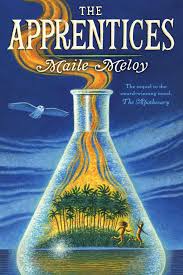
[READ: June 30, 2013] The Apprentices

This is the second book in a trilogy (what is it about trilogies?) that began with The Apothecary.

This book is set two years after the action of the first book.  The kids are 16 now and have not seen each other since. (The book helpfully fills in the things that we have all forgotten since we read the first book, like that Benjamin’s father gave Janie and everyone a forgetting potion so that they would stay out of danger).

Now Janie is back in America, attending a private school (on a scholarship) while her parents are back making movies.  I would have loved to see more of Janie’s school, believe it or not, but the little we do see if enough to set the action in motion.  Janie, a very smart girl and a whiz at math, is accused of cheating by her roommate and (sort of) friend.  The friend is jealous of Janie because her dad keeps talking about how smart Janie is (and consequently how un-smart his own daughter is).

Obviously Janie is upset, but she is more upset because she has been working on an experiment in the chemistry lab.  She has been trying to remove the salt from salt water.  She has been getting memories of her time with Benjamin and one of the things she remembered was the desalinator.  She has been piecing together the formula and has just had a breakthrough.  But what will happen to her stuff (which is actually the school’s stuff?)

Benjamin has also been sending Janie cryptic messages.  She finally realizes that there is a code in which he is letting her know where he is.  It turns out Benjamin and his father are in the jungle saving people. Benjamin’s father has been using his apothecary skills to create some healing potions that are saving lives in the war-torn jungle.  But their mission is secret and Benjamin’s father doesn’t know that Benjamin is communicating with her. (more…)

Read Full Post »

ember

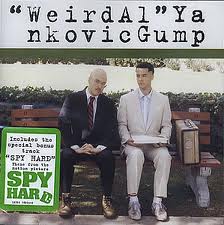
SOUNDTRACK: “WEIRD AL” YANKOVIC-“Gump” [single] (1996).

gump

This was the second single I purchased from “Weird Al”‘s Bad Hair Day album, this time it was “Gump” with six, yes six, B-sides.  The first one was “Spy Hard” the theme from the movie (starring Leslie Nielsen).  It’s a funny theme song, very Bond, but also with great spoofy lyrics.  It wasn’t available anywhere else, although it has since been released as its own single (with no B-Sides).

The rest of the B-Sides include “Since You’ve Been Gone” from the album and a karaoke version of the same song.  This karaoke version is quite funny and is probably the best B-side he’s released.  The band provides the backing vocals to keep you in place.  Which means that in the middle of a quiet bit you suddenly hear “red hot cactus up my nose!.”

Then the B-sides get even weirder–an instrumental version of “Callin’ in Sick”
which really nobody wants.  And then two more versions of “Spy Hard,” and instrumental and an orchestral mix.  I can’t really tell them apart, and frankly they’re rather useless anyhow.  So all in all, not a great single, but that karaoke song is pretty great.

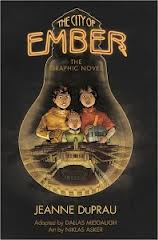
[READ: April 20, 2013] The City of Ember: The Graphic Novel

I have had the City of Ember t trilogy on my to-read list for a long time, but I’ve never gotten round to it.  So I was pleased to see this graphic novel version.  I know that the novel is pretty long, so I was surprised that this graphic version could be polished off in less than an hour.  (It’s also written at a level that is more appropriate for younger kids—the dark darknesses of the novel are condensed to just one or two pages in the beginning.  Of course, how young you want your kids reading books about corruption and dystopian societies is something else entirely.  The focus is on the kids’ attempts to escape and their working together (again, I haven’t read the novel so I don’t really know how that breaks down in the book).

So the story as presented here is a simple one.  The city of Ember is the only place where there is light in an otherwise dark world.   As the story opens we see a classroom where children are set to pick their future occupation.  Lina, our heroine, picks Pipeworks laborer, which she is utterly distressed at—she wanted to be above ground. Later, Doon, our hero, chooses Messenger, but he is disdainful of the whole process— courting the wrath of the mayor who says he’s going to keep an eye on Doon.

When class ends, Doon offers to switch jobs with Lida (which I assumed would get them in trouble, but didn’t).  Lida is thrilled to work as a messenger and agrees eagerly.  Doon believes that he can cause trouble from the inside by working in the Pipeworks.  Although when he finally gets down there he sees that it is a much bigger and more daunting project than he ever imagined. (more…)

Read Full Post »

roverSOUNDTRACK:  DUSTIN THE TURKEY-“Irelande Douze Pointe” (2008).

irelandeIn 2008, Ireland nominated this song to the Eurovision contest.  Dustin, for those not in Europe, is a turkey puppet from a kids show (with a number of hit singles, apparently).

The title is a misspelling of the French for Ireland and Douze Pointe translates as 12 Points (because 12 is the highest result you can get in the contest).  The song begins as a wobbly sorta traditional-sounding Irish ballad about how he comes from a nation of great songwriters (Ireland has won Eurovision 7 times, although interestingly had not been doing so well in the years leading up to 2008).

Then it turns into a more suitably Eurovision song–a rollicking high energy dance, with flashing lights, sparkly costumes and a chorus that goes G-O-double B-L-E.

The reaction is pretty funny with lots of boos in the audience.  Shockingly, it did not come last that year, although it failed to make it into the finals.

Check it out in all of its absurd glory:

[READ: February 3, 2013] Rover Saves Christmas

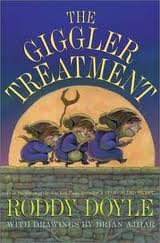
The Giggler Treatment proved to be Part One of a trilogy (Doyle really has a thing for trilogies).  Rover Saves Christmas is the second in the series.  It doesn’t really follow as a part two or anything although the characters are all the same.

The title pretty much gives away the action here.  Rover, the dog from Giggler who sells his poo, is called upon by a Christmas elf to help save Christmas because Rudolph is under the weather (he’s taking his day off on the one day of the year when he works).  And so, they strap Rover into the sleigh and off they go.

And really that’s pretty much all of the book.  But the humor (and there’s a lot of humor) comes in the details.

Like that the book opens with a description of Dublin at Christmastime: “the lizards were wearing flip-flops and the cacti that line the streets of the city were gasping.”  Irish kids will find this hilarious.  American kids may not know that that’s not what Dublin is like, but that’s their own fault.  There’s also the funny repeated joke of the two toddlers knowing how to say only one thing “Who are you?” and “bum bum,” but those who know them well know what they mean each time they say it.  Which leads to very funny results.  And also leads the reader to be confused until he or she remembers that the baby saying “Who are you” means something else. (more…)

Read Full Post »

gigglerSOUNDTRACK: SCRUBS-“Everything Comes Down to Poo” (2007).

Iscrubsn season 7 of Scrubs, they created a musical episode (trendy yes, but pretty much always funny) called “My Musical.”  One of the highlights was the song “Everything Comes Down to Poo” in which Turk and JD sing to a patient that they need a stool sample.  The song is full of a ton of different terms for poo and where it comes out (and it’s all rated PG).

It’s very funny and quite clever, given the subject.  Who doesn’t love seeing a chorus of doctors and nurses high kicking down a hospital corridor singing “Everything comes down to poo.”

Enjoy:

[READ: January 30, 2013] The Giggler Treatment

Who knew that Roddy Doyle, humorist of Barrytown and very serious chronicler of women’s pain would write an outrageously silly children’s book about dog poo?  I don’t know what prompted him to write this book (he has written several children’s books since), but he manages the chapter book format with aplomb and a slight (hilarious) disrespect for the genre.

So The Giggler Treatment is structured in a manner not unlike Nicholson Baker’s early novels in that pretty much all of the action takes place over the span of about a minute.  Mister Mack is about to step in a huge pile of dog poo.  And  the story flashes around to different pieces of information as we watch with bated breath for his shoe to inch its way closer to fate.

Mister Mack is a decent bloke, a good father, a hardworking biscuit taster (a different biscuit every day from the factory where he works).  [Incidentally, I assume that these details are extra for the American edition, but Doyle includes a warning that explains that biscuits are what they call cookies in Ireland. There’s also a hilarious glossary which translate rudies, bums, knickers and other things for young U.S readers.]  Mister Mack is on his way to work, but is distracted by a talking seagull (who hates fish) and while his head is turned his foot is headed right Rover’s poo. (more…)

Read Full Post »

SOUNDTRACKQUASI Live at SXSW, March 8, 2010

I really enjoyed a few Quasi albums back around the turn of the century, and then I kind of forgot about them.  But this set is really great.  The always excellent Janet Weiss on drums and harmonies and the wonderful Sam Coombs on guitar and vocals. Around the time of this album, American Gong, they added Joanna Bolme on bass which really fills out their sound.  The first song, “Repulsion,” rocks harder than any of their older stuff (which was more keyboard based).  Indeed this album was apparently much rockinger than any of their earlier releases–I must check it out.

This set was recorded during SXSW  from the Gibson Showroom in Austin.  They play five songs in about 20 minutes.  “Never Coming Back Again” has a far more country feel (especially the backing vocals which have a real twang.  The lengthy instrumental section of “Black Dogs and Bubbles” is great–especially check out Weiss’ drumming.  “Little White Horse” is a shambolic rave of a song–fun and noisy.

The set ends with the inspiring Rise Up, a short stomper that encourages you to, yes rise up.  Weiss and Coombs both have other bands that they play in, so Quasi never seems like a full-time project.  But that seems to make their music all the better.  Listen here.

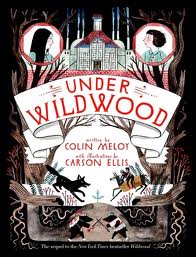
[READ: November 1, 2011] Under Wildwood

I enjoyed Wildwood, but I wasn’t blown away by it.  So I admit I wasn’t totally excited to read this one (especially since I had some other books lined up).  But Sarah managed to get it from the library (I guess it was not as a big a deal as I assumed it would be?) and I decided to give it a go.

I found it a little slow at first, but after about 40 pages, the book totally took off and I was fully engrossed.  Whether it was because there was less exposition since this was a sequel or because the story itself was more exciting, I couldn’t put the book down.  And, more importantly, the book did not feel like its 550 pages were excessive.  He really filled up every page with story.

But I was a little concerned because part of the story is set in an orphanage–a setting rife for cliché.  But Meloy has some great ideas and although he does use the orphanage as a scary setting (and employs some clichés from all orphanages) he transcends the conceit with some great characters and some evil owners who use demerits to completely move the story along outside of the orphanage–a great plot idea.

But let’s back up. (more…)

Read Full Post »

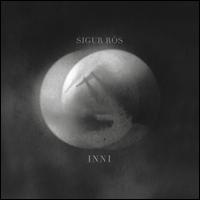
SOUNDTRACK: SIGUR RÓS-Inni (2011).

I’ve said before that Sigur Rós was one of my favorite live shows ever.  They created an amazing atmosphere that went beyond the music and the visuals.  It set the bar very very high.

So here is their first official live album and it does not disappoint.  It clearly cannot live up to the live experience (there is so much to see after all), but it really conveys just how amazing these guys can sound live.

Sigur Rós feels like they should only be a studio band–they are so atmospheric, so ethereal, that it doesn’t seem like it should translate live.  But they do, in fact , it brings a new energy to the music.  And the fact that Jonsi can easily hit those unearthly notes just blows my mind.

I’m not sure whether to say that Sigur Rós have hits or not, but this is like a best of playlist from all of their albums.  From their “debut” Ágætis Byrjun, we get the ten minute opener “Svefn-G-Englar.”  Although the songs all feel long, they run the gamut from two to three minutes through eight and nine up to fifteen.  They also play the awesome “Ný batterí” a few songs later.

There’s a number of songs from Takk… “Glósóli,” “Hoppípolla,” “Með Blóðnasir,” and “Sæglópur.”  There’s a couple of songs from () as well (of course, since they were untitled it takes a bit of work to know that . “E-bow” ends disc one and the concert ends with the glorious 15 minute “Popplagið”

From Með suð í eyrum við spilum endalaust, we don’t get “Gobbeldygook,” their sort of hit, but we do get “Inní Mér Syngur Vitleysingur,” “Fljótavík,” “Festival,” “Við spilum endalaust” and “All Alright”

The set also includes “Hafsól,” a B-side of “Hoppípolla” (which was a remake of a song of their real debut Von).  The best example of how Sigur Rós is not just wispy music comes in “Hafsól.”  After a few minutes of their atmospheric stuff, the drums kick in and the song becomes incredibly loud and chaotic with crashing cymbals and grinding guitars and feedback.  It’s amazing.  That it ends with a tin whistle solo just highlights the what the band is willing to put into just one song.

“Popplagið” closes out the concert with more of that dynamic.  At 15 minutes, it takes a while to get there, but somehow the drums feel more grounded.  And at the 6 and a half-minute mark when the drums really kick in and guitars get noisy and raw, it’s an unbelievable moment.  The song turns tense and intense and doesn’t let up for the rest of the track.

The encore is an unreleased track called “Lúppulagid.”  It is a slow, relaxing kind of track (it plays over the credits of the DVD).  Yes, there’s a DVD that comes with the two disc set.  I have not yet watched the DVD, but I’m pretty psyched to check it out.

This disc can’t convey the magic that is Sigur Rós live, but it really shows what they are capable of.

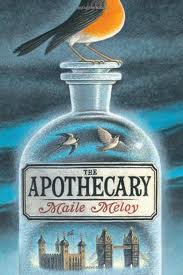
[READ: February 2, 2102] The Apothecary

Maile Meloy has written some of my favorite books (novels and short stories).  She is an excellent writer with a wonderful sense of reality–I’ve described her as unsentimental: her characters are typically downtrodden and not likely to follow flights of fancy.

And that’s just one reason why this book is so surprising–it is about magic!  It’s also surprising because its written as a YA book (the protagonists are fourteen).  And finally, it’s surprising because it is set in England, and previously, Meloy had been a small town America kind of writer (as far as I remember, anyhow).

Although I found the opening a little slow going (more on that in a minute), by about the third or fourth chapter I was totally hooked on this fantastic story.

The book is set just after WWII.  The main character (and narrator) Janie and her family live in Hollywood.  Her mom and dad are both television writers who are being hunted as Communists.  They tell her that they must flee for London.  (This was told briskly, and I wonder if teens know about the Communist trials in the 50s).

They move to London (where they have jobs set up as BBC writers) and learn to cope with the move from warm, sunny, prosperous Hollywood to cold, gray and still-under-rationing London.

One problem I had with the beginning (in addition to the Communist part) was that Janie talks a lot about Katherine Hepburn–walking like her, being strong like her.  Both of these things seemed like they maybe weren’t explained enough for the intended audience.  Perhaps I’m not giving young readers enough credit, but I was very distracted thinking, would a teenager want to read this?  I mean I barely know Katherine Hepburn as a young beauty.  The other problem I had was that the kids felt too modern to me.  Or maybe not modern so much as out of time.  It doesn’t really feel like the 50s.  It’s not really a problem, but every once in a while I had to remind myself that it was set in the 50 at the height of the nuclear scare.

Of course, once Janie gets to school, those concerns evaporate.  Janie goes to a fancy London school–they wear uniforms and learn Latin)–I guess it is timeless.  She is immediately introduced to Sarah Pennington, a very very rich girl (she has a butler).  What I liked is that even though Janie is different and from California and Meloy shows that they are different, she doesn’t exploit these differences.  She doesn’t make it a clique story between Janie and Sarah.

Things are dire in post-war London.  It is cold all the time and you need to put pennies in the wall to get the heat to come on–this is why people from England like hot water bottles so much!  So Janie and her dad go down to the apothecary to get hot water bottles and pennies.  When the apothecary hears that they are American, he offers Janie some homesickness medicine.  Janie and her dad don’t believe it will work but she takes some anyhow.  And she seems to feel a bit better.

Soon after this, Janie learns that the apothecary’s son is a boy in her class named Benjamin.  In school, Benjamin stood up to the lunch lady when she insisted that everyone “duck and cover” when the air raid siren went off.  He’s nobody’s fool, he knows how dangerous the Bomb can be.

Janie is surprised that Benjamin and the apothecary are related.  The apothecary is nice and mild-mannered whereas Benjamin is strong-willed.  And, it turns out that Benjamin wants nothing to do with his father’s business–even though the Society of Apothecaries has paid for his education.  He wants to be a spy. (more…)

Read Full Post »

SOUNDTRACK: THE DECEMBERISTS-Tiny Desk Concert #135 (June 20, 2011).

NPR has loved the Decemberists for years, so it’s no surprise that they made it to Bob Boilen’s office for a Tiny Desk concert.  And yet they are probably one of the biggest bands to appear at the Tiny Desk, so I was quite excited to hear this show.  They play 3 songs, all from The King is Dead: “Down by the Water” (naturally), “Rox in the Box” and “The June Hymn.”

Colin is in good chatty form (after almost getting hit in the face by a violin bow) and makes a very funny comment about thinking that everyone would be working while they played.  He also—I think a first in Tiny Desk history—screws up a song (“The June Hymn”) and has to restart the whole thing—it’s a very minor flub, only noticeable if you listen a few times, but he noticed and clearly felt bad (and didn’t curse either).

The songs sound great even if they’re not radically different from the recorded version (the harmonica solos are the big “improv” moments).  And this set confirms what a solid bunch of songs The King is Dead is.

[READ: July 7, 2011] Wildwood

I had this book signed by Colin and Carson at BEA.  I was so psyched to see that they were signing there, that I got up super early, took the bus into Manhattan and got to the convention center before it opened (I thought they were signing at 7:30, but it was actually 8:30). Of course, I didn’t see the fine print that said I needed a ticket to meet the author and illustrator.  In fact, I didn’t even realize that people were holding tickets until I was next on line. I asked the nice BEA worker if I could still go.   She said they wouldn’t sign a book, but that I could say hello.

I told Colin and Carson that I loved their stuff and I gushed over them like a little fanboy (even mentioned having a Tarkus album) and they gave me a copy of the book anyway (signed by them both).  How cool!

So this book is an older children’s book (I would say on a level of The Mysterious Benedict Society–which the book reminded me of because Carson did the illustrations for that series as well, although the books are nothing alike in content).

I have always loved Colin’s lyrics (yeah, he signed my book, we’re on a first name basis now). They are fantastical and fantastic, and he has a great vocabulary, pulling out obscure words for rhymes.  There’s a generally accepted tenet in writing that poetry is more powerful than prose because poems are typically honed with perfect word choices, whereas prose tends to be a bit lazier because there’s so many more words to play with (ideally, prose should also be finely honed, but it’s much more noticable in poetry).  And so given this, I guess it’s no surprise that Wildwood is not as impactful as Colin’s songs.  There are couplets from Decemberists songs that run through my head all the time, but there weren’t any great phrases in the book that really stuck with me.  Of course, at 540 pages you wouldn’t expect too many phrases to jump out at you (images and scenes and chracters yes, but phrases, no).

All of this is a long way of saying that I really enjoyed the story, but I wasn’t blown away by the language of the book.

The story follows Prue McKeel, a young girl who is pretty ordinary.  She lives in Portland (the Wildwood of the title is in Oregon, not New Jersey, which isn’t surprising since they’re from Oregon, but a Jersey kid can hope), goes to school and has a pretty happy home life.  Her mom and dad are nice (I love that her parents are suffused with all the trappings of hippie Oregon–it’s like Portlandia in print!) and her baby brother, Mac, is pretty okay too.  The image that will stick with me is of Prue taking her brother for a bike ride: she transports him through the most peculiar (and reckless and dangerous) way I can imagine–she attaches a Radio Flyer wagon to her bike and plops him in the wagon.  I just have to ask–how did he not fall out??

The story immediately announces itself as fantastical when a murder of crows swoops down out of the sky and grabs Mac from the ground and flies away with him.  Now, Prue was supposed to be watching Mac, so although it’s not her fault a bunch of birds grabbed Mac and flew away with him, it is her fault, you know?  So Prue hops on her bike and follows the birds through the city (a very exciting scene of reckless bike riding).  She skids to a halt when she sees them fly into The Impassable Wilderness. (more…)

Read Full Post »

SOUNDTRACK: RUSH-A Farewell to Kings (1977).
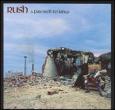
Although I recently said that Caress of Steel is one of my favorite Rush albums, I’m really torn between a number of their albums from the 1970s.  I’ve loved A Farewell to Kings since the time I got it: it’s over the top, and it showcases all of the band’s strengths.

The opener “A Farewell to Kings” features a wonderful classical guitar intro that morphs into a heavy rocking masterpiece.  There’s time changes galore and it’s all over in just about 5 minutes.

It’s followed by “Xanadu,” one of Rush’s all time great epics.  Tubular bells, cool guitar effects, Rush’s first great use of keyboards-as-effects, even a cowbell solo all open this song with sufficient grandeur for what’s to come.  A slow vocal intro leads to a super fast exploration of Coleridge’s “Kubla Khan.”  Whenever people wondered why Neil’s drumset was so big or why Alex (and Geddy) had doublenecked guitars, they needed only listen to this to be amazed that three men could play it all.  11 minutes long and not a wasted second.

One of Rush’s biggest hits and perennial favorite “Closer to the Heart” comes next and it still sounds pretty fresh all these years later.  “Cinderella Man” is an overlooked track on this disc, but it showcases Rush’s drift away from the individualism vs state of 2112, and move toward the individualism of doing what’s right for all: “he held up his riches to challenge the hungry.”  It also features a blistering solo from Alex.  “Madrigal” is a very short acoustic song, quite a departure for the time but a nice delicate track before….

“Cygnus X-1.”  The other epic on this disc.  And right from the start you know you’re in new territory here.  A fully distorted voice, bells echoing like they are floating at sea (or in outer space), all kinds of build-up lead to a noisy bass line coming from far away in the depths of space.  And after 2 and a half minutes of build up, the whole band kicks in with this off kilter heavy rocker.  It’s basically the story of a space ship flying into a black hole. It also features some of Geddy’s most screechy vocals.  I wish I could remember the exact quote, but my friend Joe’s bandmate had a wonderfully derogatory description of the end of this song.

But aside from the end, the main body is great.  From the 5 minute mark, the song is a catchy, driving song as the Rocinante flies through the galaxy.  From the 7 minute mark, the song is seemingly caught in the black hole, as the song drifts about, compressing the song into a manic session of fast fast fast riffs and Geddy’s tortured screams.  It’s pretty intense, and guaranteed to alienate as many people as it wins.

The album features so much experimentation, and it’s wonderful to see a band with so much creative energy release a disc with so many fantastic moments.  Very few records take risks like this anymore.

[READ: March 21, 2010] The Color of Heaven

This final book of the Kim Dog Hwa’s trilogy is a wonderful conclusion to this sweet story.  If you’ve read my previous two posts about these books, you know that this is the story of, Ehwa, a young woman as she matures in rural Korea several generations ago.  By this third book, she has turned 17 and has met the love of her life.  Sadly for her, Duksam has had to leave suddenly.  At the end of book two, he set sail in part because he was fleeing an angry mob, but also in an attempt to make money as a fisherman so that he can save up for his beloved Ehwa. (more…)

Read Full Post »

« Newer Posts - Older Posts »