Feeds:
Posts
Comments

Archive for the ‘Translators’ Category

manualSOUNDTRACK: LUCY DACUS-Tiny Desk Concert #553 (July 29, 2016).

lucyI didn’t realize that I knew Dacus, but I’ve heard and loved her song “I Don’t Wanna Be Funny Anymore” for months (I just never knew she sang it).

In this Tiny Desk Concert, the songs have a really gentle feel (she plays electric guitar without a pick, using her fingers to gently pick out the melodies.  Although on record, the songs are a bit sharper.  But it’s her that is so intriguing.  A lazy comparison is Sharon Van Etten, but she has that kind of tone and delivery.

“I Don’t Wanna Be Funny Anymore” has a super catchy vocal melody and simple steady rhythm.  But it’s the way the electric guitar swirls around and her voice sounds dry and disinterested (and yet it clearly isn’t).  She’s not posing as a cynical youth, she is full of regret.  The last line is “That funny girl doesn’t want to smile anymore.”  When the song is done she says, “I always tend to smile after that line.”

Before the second song she asks if anyone else’s biggest fear is having a runny nose on Tiny Desk?  She says she woke up with a runny nose, but its fine now.

I like the way “Direct Address” opens with her gentle strumming which gets really fast as she ramps up to a quick vocal delivery on each verse.   But even when she sings fast, her voice is almost like a deep intense whisper.  Once again, the last line is great: “I don’t believe in love at first sight / maybe I would if you looked at me right.”  The song ends with some cool swirling guitars.

Before the final song she tells everyone there that the NPR workers kind of have the coolest job ever and she envies them all–a little bit.

“Green Eyes, Red Face” is a slower song with an interesting, subtle melody.  Another great lyric: “I see the seat next to yours is unoccupied and I was wondering if you’d let me come and sit by your side.”  I love the way the guitar kind of bursts forth for the solo by Jacob Blizard.  This song is the most like SVE here, although you’d never mistake one for the other.  The middle of the song has some really great riffs juxtaposed with the bass.

I like how this lyric quite a bit: “With your green eyes on my red face” and I get a kick out of how she plays her last chord.  And as it rings out she rests her hands on top of her guitar patiently waiting for the song to fade out.

I’m really entranced by her voice.  But one of the most telling things is at the end of the show just as it fades out.  When talking about their show that night, she says “we’ll be a lot louder.”

I’d be interested to hear that.

[READ: November 21, 2016] A Manual for Sons

Back in 2014, I ordered all 16 books from Madras Press. Unfortunately, after publishing the 16 books they seem to have gone out of business (actually they are switching to non-fiction, it seems). They still have a web presence where you can buy remaining copies of books.  But what a great business idea this is/was

Madras Press publishes limited-edition short stories and novella-length booklets and distributes the proceeds to a growing list of non-profit organizations chosen by our authors.  The format of our books provides readers with the opportunity to experience stories on their own, with no advertisements or miscellaneous stuff surrounding them.

The format is a 5″ x 5″ square books that easily fit into a pocket.

Proceeds from Barthelme’s book go to the The University of Texas MD Anderson Cancer Center.

Okay I’ll say it.

I don’t really get Donald Barthelme.  I know that’s sort of the point of his writing–it is all anti-writing, a reaction against the novel.  But I also don’t get things like this “story.”  (It turns out it is an excerpt from a larger novel, but that still doesn’t really help).

So this “manual” is designed for sons to learn all about the different kinds of fathers there are and how to deal with them.  It states that it was translated from the English by Peter Scatterpatter.

The manual lists the different kinds of fathers: Mad fathers, fathers as teachers, falling fathers, etc.

And it’s not really helpful and it’s not really funny, and I have to wonder what keeps things like this from just ending.  How does Barthelme know when his bizarre list of things is actually done?

Some examples:

Mad fathers stalk up and down the boulevard, shouting.  Avoid then or embrace them or tell them your deepest thought–it makes no difference.

Fine, that’s good.  But then he says to notice if their dress is  covered in sewn-in tin cans or if they are simply barking (no tin cans).  If they are barking

Go up to them and, stilling their wooden clappers by putting your left hand between the hinged parts, say you’re sorry.  If the barking ceases, this does not mean that they have heard you, it only means they are experiencing erotic thoughts of abominable lustre.

What the hell?

And what to make of this “some fathers are goats, some are milk, some teach Spanish in cloisters.”

Or this: “The best way to approach a father is from behind, thus is he chooses to hurl his javelin at you he will probably miss.”

There’s an alphabetical list of fathers names which all start with  A and end with Albert.  (And the list is pretty unexpected with names like: Aariel, Aban, Abiou, Aeon and Af.

The most successful section to me was the “Sample Voice” part.  It gave three examples of a crappy dad–abusive and unsympathetic and very masculine.

The “colors of fathers” was presumably modified from a book about horses as each color is a horse color.

There’s a disturbing section about incest and then about the penises of fathers.  And finally a discouragement to patricide.

I just don’t get it.

Rick Moody provides some answers in his Afterword.  He gives some context for this story and some of his favorite bit of this manual (which was originally published in a dark book called The Dead Father.  He says he really related to this story because one of the sections opens “If your father is named Hiram or Saul” (and his father had one of those names).

He puts Barthelme in context with Gaddis and describes this manual as hilarious.

Guess you had to be there.

Read Full Post »

6916SOUNDTRACK: MARGARET GLASPY-Tiny Desk Concert #560 (August 22, 2016).

margaretI really love Glaspy’s 2016 album Emotions & Math.  Her lyrics are sharp, her voice is unusual and mesmerizing and her guitar licks are simple but just chock full of hooks.  What’s not to like?

This Tiny Desk sees her playing songs from that album. Her band is just a bassist, a drummer and her on guitar and voice.

“Emotions & Math” starts off quietly with just bass and drums while she sings in that unique way of hers.  Then the guitar comes in–it’s nothing fancy, but it plays off the bass notes in a very cool way.  And it’s super catchy too.

“Love Like This” opens with a cool bass and drums rhythm–bouncy and tribal.  And when her guitar comes in, it’s with a ripping couple of chords before disappearing again.  Once again, the bass is rumbling along with her chords accenting in a neat way.

“You and I” bounces along with some low chords and bass and Glaspy’s most growly vocals. This song features the first “solo” which is really just the notes of the chords played, but it really stands out among the deep notes.  And once again, the whole business is really catchy.

“Somebody to Anybody” is just her singing and playing guitar.  Although it feels a little quiet without the rhythm section, she fills in more guitar parts on this song and it feels quite full.  And the chorus is, that word again, very catchy.

It was this Tiny Desk that sold me on getting her album, and I’m glad I did.

[READ: March 17, 2016] “The Running Novelist”

This essay appeared in the Summer Fiction issue of the New Yorker.  Since I really like Murakami, and hope to read more of him one of the days, I’m going to include this essay because it is as surprising as some of his fiction.

This is the story of how he became a runner and how he became a novelist.

He had been the owner of a small jazz club (which I feel he has written about in one of his stories).  It stayed open late and was a novelty in Tokyo at the time.  He had a niche audience and while many people didn’t like the place, he had a steady clientele.

His friends said it would never work, but he didn’t listen and he became quietly successful.  He was there in the morning and worked late at night.  And once he made a profit he hired people to help him out. (more…)

Read Full Post »

slowreadSOUNDTRACK: DIRTY THREE-Tiny Desk Concert #245 (October 15, 2012).

dirty-3For a Murakami collection I should really have picked a jazz Tiny Desk Concert.  But none jumped out at my on my list.  So I decided to do something that might be jazzy in spirit, even if it is nothing like jazz at all.

Dirty Three are a three-piece band which consists of violinist Warren Ellis (who works closely with Nick Cave), drummer Jim White (who I had the pleasure of seeing live with Xylouris White), and guitarist Mick Turner (who has released a string of gorgeous instrumental solo albums and worked a lot with Will Oldham).

I’ve liked Dirty Three for years, although I kind of lost touch with them back around 2000.  So it was fun to see that they are still working.  (They’ve released all of 3 albums since 2000).

Jim White plays an eccentric but very cool style of drum–it always feels improvised and random, and maybe it is, but it’s never “wrong.”  Turner is the only one who is keeping the song, shall we say, “stable.”  He’s got the rhythm and melody both with his strumming.  And Ellis is all over the place with melody lines and bowing.

For this Tiny Desk, they play three songs.  Their music is ostensibly instrumental although Warren Ellis is not above shouting and yelling and keening when appropriate.

The first two songs are from their 2012 album and the last one is from Ocean Songs.

“Rain Song” opens with Ellis strumming the violin while Turner plays slightly different chords.  Then Ellis takes off on a series of spiralling violin rolls.  As always, White is back there waving his arms around with the loosest grip on drumsticks I’ve ever seen.  He plays brushes on this song but the drums are far from quiet.  Meanwhile Ellis is soloing away, yelling where appropriate and doing high kicks when White hits the cymbals.   As the song comes to an end, White is going nuts on the drums and Ellis takes off his jacket (revealing a wonderful purple shirt) .  He starts screaming wildly as he physically gets into his violin playing.

“The Pier” is about realizing that it’s the rest of the world that is driving you crazy.  It’s about “trying to undermine Facebook and realize a new way of communicating with people beyond the internet.”  It’ about… are you ready Mick?  Okay.  “The Pier” is a slower song with some plucked violin.  Ellis climbs up on the desk and dances around as he plays.  This one feels a but more controlled but in no way staid.

For “Last Horse in the Sand,” white switches to mallets and adds a tambourine to his cymbal.  It’s really interesting to watch White play around with things–moving his gear around as he plays.  He switches sticks and seems to be not even paying attention, but without ever really losing momentum or timing.  For this song, Ellis and Turner are the mellow ones while White is just all over the place with his amazing drumming.

I haven’t said anything about Turner because he is really the grounding of the band, while the other two are taking flights of fancy.

This is a wild and untamed set and it’s a lot of fun.  It’s also amusing to watch the audience witnessing this seeming chaos.

[READ: December 16, 2016] Slow Reader Vol. 1

Madras Press had released 16 small books, which I enjoyed reading quite a lot.  I have posted about some and will post about more in the new year.  But word is that they have given up on the small books and have switched their attention to a new magazine/journal called Slow Reader.  The first issue came out this month and it collects stories, essays, poems, illustrations, and other things that center around novelist Haruki Murakami.

Support this small press!  You can order this issue directly (and name your price, although I think the asking price is $6).

From an article elsewhere I’ve learned that future issues will cluster around M.F.K. Fisher, Kazuo Ishiguro, and Patricia Highsmith.

This issue contains essays, fiction and illustrations, some dating back as far as 2000.

CHIP KIDD-cover illustration (wind-up bird)
Chip Kidd is awesome

GRANT SNIDER-Murakami Bingo Board
This bingo is hilariously apt–covering most of the bases of Murakami’s writing: cats, jazz, running, and even a Chip Kidd cover.

JESSE BALL-Sheep Man
A line drawing of a sheep standing upright with the caption “The sheep man’s peculiar tail was never visible to me.”

HARRIET LEE-MERRION-Diner illustration
A nice line drawing of a corner diner

KAREN MURPHY-Sputnik and two moon illustrations
Two simple drawings of Sputnik and two moons.

BEIDI GUO-Hard Boiled Wonderland and the End of the World map
A cool map of the locations of the novel.

DINA AVILA–Murakami Tasting Menu at Nodoguro in Portland, OR
I don’t really get if the menu items are related to the stories but it’s a neat idea that there are foods named after his works. But why are so many called IQ84?

EUGENIA BURCHI–IQ84 menus
A drawing of foods with what I think are character names (I haven’t read the novel yet).

FABIO VALESINI-train illustrations taken from the book trailer for Colorless Tsukuru Tazaki and His Years of Pilgrimage
No idea what the original context is, but it’s a neat, clean drawing of a train station.

JEFFREY BROWN-“In Conversation” What Jeffrey Brown Thinks About
The first piece is an amusing cartoon in which Brown scores a job at an indie bookstore by mentioning Murakami.  The little blurb says that it is an only slightly exaggerated account. There’s also a later picture by Brown of Murakami’s face posted on a bulletin board (with a lost cat flier), that’s really great.

DANIEL HANDLER-“I Love Murakami”
Handler begins his piece by apologizing to dozens of authors before saying that Murakami is our greatest living practitioner of fiction.  He mentions a few books but heaps a ton of praise on Wind Up Bird Chronicles and mentions his excitement at  finally getting Norwegian Wood in English (it had been untranslated for many years).  He wrote this essay in 2000.

YOKO OGAWA-“On Murakami’s “The Last Lawn of the Afternoon” [Translated from the Japanese by Stephen Snyder]
Ogawa writes about a house in her neighborhood which has a lawn that she finds unsettling–it’s perfectly manicured and a pale, cool shade of green.  She is reminded of the Murakami story in which a boy mows a woman’s lawn and she asks him an unexpected question.  Ogawa imagines a woman in that home asking the same kinds of questions.

ETGAR KERET-“What Do We Have in Our Pockets?”
This was inspired by Murakami’s story “On Seeing the 100% Perfect Girl One Beautiful April Morning.”  This story is about a man whose pockets are always bulging with unusual items.  People often say to him, “What the fuck do you have in your pockets?”  And his answer is that he carries things that he imagines the perfect woman needing–a stamp or a toothpick.  It is a wonderfully charming story.

RIVKA GALCHEN-“The Monkey Did It”
Of all of the items in this collection, this is  the only piece I’d read before.  I remembered parts of it (particularly the excerpts from “A Shinagawa Monkey,” and her talking about Colorless Tsukuru Tazaki.  I also recalled her saying that she liked his short stories better than his novels, but that she was perhaps wrong in thinking that.  The one thing I didn’t pick up on last time was that in the beginning of the essay she writes about Toricelli’s Trumpet or Gabriel’s Horn–an item with finite volume but infinite surface area.  She says this perfect describes Murakami’s work.  And I love that she ties it to translator Philip Gabriel who is a gentle and modest translator–perfect for the watery novel.

TESS GALLAGHER-“Murakami and Carver Meet at Sky House”
Before he had written any substantial works, Murakami translated Raymond Carver’s works into Japanese.  Ray was excited and bemused that Haruki and his wife Yoko would travel from Japan to meet with him.  This essay tells us that the following poem came about as Ray tried to imagine how his poems could possibly be appreciated in Japan.  Murakami told him how both the Japanese and American people of the 1980s were experiencing humiliation at being unable to make a decent living.  Gallagher says that if they were to meet today Ray would be awkward about Haruki’s stature.  But he would have loved knowing that Murakami had translated everything he had written.

RAYMOND CARVER-“The Projectile”
This poem is wonderful. It begins with Carver speaking about his meeting with Murakami and then flashing back to when he was 16 and was hit with an ice ball.  It was thrown from someone in the street through a small crack in the window of the car he was riding in–a chance in a million.

RICHARD POWERS-“The Global Distributed Self-Mirroring Subterranean Neurological Soul-Sharing Picture Show”
This is the most abstract and “intellectual” of the essays here.  It speaks of a team of neuroscientists discovering a lucky accident–that neurons in the brain fire when someone else makes a motion that we recognize.  Similarly, in Murakami–representation is the beginning of reality.  He speaks of the parallel narratives in Hard Boiled Wonderland.  He wonders at the universality of dreams and ideas in Murakami.  “But if his own stories are steeped in the endless weirdness hiding just inside everyday life, how then to account for Murakami’s astonishing popularity throughout the world?”

MARY MORRIS-“The Interpreter”
I loved this story.  An American business woman is giving a series of lectures in Japan.  She is assigned a translator who goes with her nearly everywhere.  She is a little annoyed that he is always there, but he is very respectful of her and only speaks when spoken to.  She assumes he is translating her speeches correctly, but during one, the audience laughs where there was nothing funny.  She doesn’t want to disrespect him, but she can’t imagine what he said to them.  In the next one, they are practically doubled over with laughter at what he says.  Finally she has to confront him about it.  He reveals astonishing insights into her personal life.  And the next day he is called away–just as she has begun to feel close to him.

In the author’s note, she says that the she was at an writer’s meeting in Princeton (where she teaches) and Murakami was there eating with them. He was by himself, and she talked to him because she was a fan of his work.  She relates a story of holding up a sign for him when he ran the New York City Marathon.  She says that the part about the translator and his family (which I didn’t mention) is from an actual translator she met in Japan.

AIMEE BENDER-“Spelunking with Murakami”
Bender speaks of trusting Murakami.  She says when the cat started speaking in one of his books, she began to mistrust him.  Nevertheless, she says, she loves a lot of writers but only trusts a few of them.  She’s not trusting Murakami’s honesty or his ability to make her smarter.  Rather, she trusts him like a man with a torch in a cave–someone who is willing to explore–and to be in front leading the way.

SUMANTH PRABHAKER-Editor’s Note
Prabhaker would like to ask the world’s philosophers why some things seem to happen to us in a random fashion.

Read Full Post »

2016-12-05-21-06-09SOUNDTRACK: YVA LAS VEGASS-Tiny Desk Concert #241 (September 24, 2012).

I’d published these posts without Soundtracks while I was reading the calendars.  But I decided to add Tiny Desk Concerts to them when I realized that I’d love to post about all of the remaining 100 or shows and this was a good way to knock out 25 of them.

yvaYva Las Vegass is a fascinating performer.  With just her voice and a small stringed instrument she sounds like no one else I’ve heard.

The blurb says:

she infuses Venezuelan folk traditions with a punk aesthetic. I heard songs as allegories, songs that told stories and songs that felt like deep primal screams, all accompanied by a traditional Venezuelan cuatro — a small stringed instrument similar to a ukulele.

She does not use a pick and her strumming varies from delicate and soft to aggressive and loud   And her voice is really powerful.

“Mariposas” starts off slowly with some delicate strumming and her singing.  When she gets to the fast chorus, her playing is so hard and percussive that the song changes tempo incredibly.

Introducing “Tonadas Y Cantos” she says that people in Venezuela sing this song to milk their cows.  It’s a traditional song but she plays it a little harder and a little punk “because that’s who I am.”  She sings fast and aggressive (some lyrics so fast it’s impossible to even know what the words are).   And while most of the song is in Spanish, there are some English lyrics too: “What do you do when you can’t pretend anymore. What do you when being dead sounds good.  Be brave be strong.”

This song ends very abruptly and the next one starts just as fast—there was clearly an edit–I wonder what they edited out.

“Polo Margaritenoio” is a traditional Venezuelan song “with no author because someone stole it.”  The writer “was a woman who was very vulgar like me.”

Yva is a fascinating performer and while she’s not very flashy, she commands attention with her voice and her playing.  I only wish I knew what she was singing.

The blurb continues:

You can’t quite see her cut-off jeans and Chuck Taylor high-top sneakers behind Bob Boilen’s desk, but in attitude and style, Yva Las Vegass is punk-rock through and through.

As the show ends, she says “I worked my ass off, you can tell by how much I sweated in my wool hat.”

[READ: December 22, 2016] “At Christmas Time”

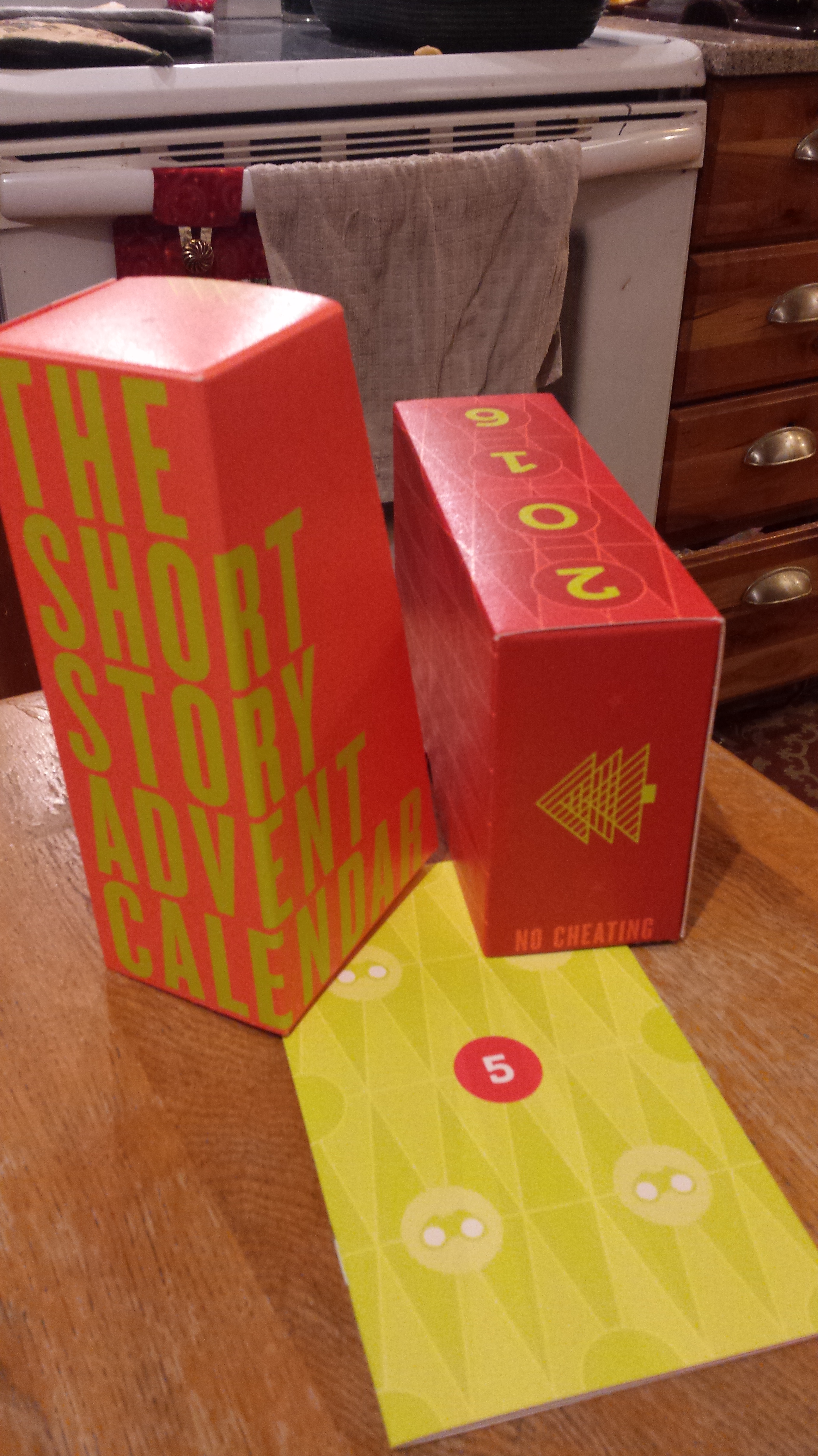
Near the end of November, I found out about The Short Story Advent Calendar.  Which is what exactly?  Well…

The Short Story Advent Calendar returns, not a moment too soon, to spice up your holidays with another collection of 24 stories that readers open one by one on the mornings leading up to Christmas.  This year’s stories once again come from some of your favourite writers across the continent—plus a couple of new crushes you haven’t met yet. Most of the stories have never appeared in a book before. Some have never been published, period.

I already had plans for what to post about in December, but since this arrived I’ve decided to post about every story on each day.

This is the first story on this collection that I have read before!  That’s not bad out of 22 stories.  (Or it’s very bad t hat I haven’t been reading enough stories).

I haven’t read that much Chekov, but I have read this one.  When I read it last time, I liked it but was more than a little confused by the ending.

I feel like I got a little bit more out of it this time, but the ending is still a puzzle.

This very short story is set up in two parts.

In the first part, an old couple from the country wish to send a letter to their daughter in the city whom they have not seen in four years.  She had gotten married and had sent two letters to them.  But they have not heard from her since that second letter several years ago.  Her mother, Vasilissa , wanted to send a letter sooner, but there was no one to write it for her.

At long last, and with so much to say, Vasilissa finally she asks Yegor, the innkeeper’s wife’s brother, “who had done nothing but sit idly at home in the tavern since he had come back from military service, but of whom people said that he wrote the most beautiful letters, if only one paid him enough.” She pays him 15 kopecks.

Vasilissa had spent so much time imagining what to say to her daughter.  But now that she is under pressure, she has drawn a blank.  Yegor asks what their son-in-law does.  He used to a be a soldier but now he is a door-keeper at a hospital.

Yegor begins writing some very formal sounding military instructions, “Fate has ordained you for the military profession.”  Of course the mother wants to tell her daughter about the famine and their poor crops.  And she wonders if she is a grandmother yet.

Vasilissa is revolted by this man (although I’m unclear if she knows what he is writing or not).  But she looks at him: “He was the very essence of coarse, arrogant, stiff-necked vulgarity, proud to have been born and bred in a pot-house, and Vasilissa well knew how vulgar he was, but could not find words to express it.”

The next morning, Vasilissa walked 11 miles to the post office and mailed the letter.

Part Two opens on New year’s Day, with the daughter’s husband working as a porter at a doctor’s office.  He receives the letter and delivers it to his wife.  The daughter is very excited to receive the letter. She reads the letter to her children.  And she is excited–laughing or crying, it’s hard to tell.  She reads of the snow and the warm fire and the doggie.  She huddles close with her children until he leaves the room.

The husband remembers back to three or four letters that she had asked him to send but which are still lying around somewhere.

And it’s super poignant.  And the more I think about it and reread it, the more powerful it is.

But then there’s a final line which I simply didn’t get.  I even translated the French “Charcot douche,” but it didn’t really help.  I can’t decide if those final words are meant to be significant or just suggesting that life goes on.

Incidentally, there are several different translations of this story available.  This one was by Constance Garnett.  Although I found the version online at Eldritch Press, translated by Marian Fell to be a bit easier to read–despite the fact that it was translated in 1915.

Read Full Post »

compassSOUNDTRACK: CAROLINE ROSE-Tiny Desk Concert #465 (August 24, 2015).

carolineCaroline Rose is a rocking country gal.  Rose’s music is inspired by rockabilly, fast country and traveling from town to town in a van.  She plays electric guitar and the rest of her band includes a bass drum and slide guitar.  The slide guitar kind of dominates the songs though, so they all sound kind of samey to me.

“Yip Yip Yow” is a fast rockabilly type of song with some silly lyrics.  It’s a fun song.  “I’ve Got Soul” This song is bouncy and rocking although I can’t help thinking of the old adage that if you have to say it you probably don’t have it

“I Will Not Be Afraid” is a more inspirational song with a real honky-tonk feel.  The guys ware wearing T-shirts that say “fuck fear” but they had to cover them up for broadcast (which is why they are wearing jackets).

Of all of the recent rocking country gals I’ve been hearing, I like her best.

[READ: March 15, 2016] The Golden Compass Graphic Novel

I loved The Golden Compass when I read it about a decade ago.  I thought it was really smart, really subversive and really engaging.

What you might notice about this graphic novel is that it was translated.  The Golden Compass was written in English.  This graphic novel was written in French (as Les Royaumes du Nord #1) by Stephanie Melchoir and then translated back in to English by Annie Eaton, which is a weird process.  The art was done by Clément Oubrerie.

The original book was quite large (about 400 pages).  This graphic novel is about 8o pages.  And, as you might guess, quite a large chunk of it is pictures.  So it has been reduced pretty drastically.

One of the great things about the book was the subtlety and evocative descriptions.  You can see where I’m going next–this condensed version is…lacking. (more…)

Read Full Post »

klezmerSOUNDTRACK: COLIN STETSON [CST073] “The Righteous Wrath of an Honorable Man” (2010).

stet7This is a 7″ release from Constellation, a kind of single from New History Warfare 2.  It has two tracks, “The righteous wrath of an honorable man” is such a good song that it deserved to be singled out like this.  It’s also amazing how short it is.

Side 2 is called “Judges (Damian Taylor Concretification Mix).”  This is a fascinating track because Taylor has “grabbed samples from throughout the album to create a musique concrète roundup of the entire record!”

It’s a strange listen as he picks certain things and repeats them–sometimes very quickly (like a skip) other times in slow modulations.  And then it just jumps somewhere else–again, like a skip.  There’s some menace and some sirens like sound juxtaposed with thudding bass moments.  And the middle samples all the clicking and banging from the keys on his sax.

I did like how he throws in a few notable riffs into the song but more as a repeated refrain than as part of the overall song.

This track is more interesting than enjoyable.  It’s unlikely to convince anyone of the genius of Stetson, but it’s an interesting listen.

[READ: June 10, 2016] Klezmer

I have read a bunch of books by Sfar because of First Second publishes a lot of his books (although apparently only a small fraction of the hundreds that he has written).  The frustrating thing about this book is that thee are apparently five volumes of this original series but it appears that there is no intention of publishing the rest (it has been ten years since this one came out, after all).

This story is meant to be very loosely based on something, although I’m not exactly clear what.  As with so many other stories, it was translated by Alexis Siegel. (more…)

Read Full Post »

coin2 hiddenSOUNDTRACK: MATANA ROBERTS-Coin Coin: Chapter 2 Mississippi Moonchile [CST098] (2013).

The first chapter of this series was a sprawling disc of free-form jazz and spoken word.  It was interesting and strange with a powerful message (not always elegantly delivered).  It felt too long, but I think it was done live which would make it more understandable as a long presentation.

Chapter 2 is quite different.  It is much shorter, but it has 18 tracks that flow seamlessly (and often without apparent logic) into each other.  Most of the songs are quite short as well.

“invocation” is a sultry jazz number (Matana Roberts plays saxophone).  There’s also piano, trumpet, double bass and drums.  One thing that I didn’t like about the first chapter was Robert’s “poetry slam” deliver of her spoken words.  This album more or less erases that all together with the inclusion of Jeremiah Abiah on “operatic tenor vocals.”  I don’t know what he’s saying (if anything) most of the time, but his voice soars above the jazzy din.

“humility draws down blue” starts in the middle of a trumpet solo and lasts for a minute and a half.  “all nations” is only 8 seconds long and seems to coincide with a vocal line from Abiah.  “twelve sighed” settles things down some.

The first real change comes with “river ruby dues,” which opens with a gentle piano motif, and Abiah’s vocals.  Roberts’ sax solo plays throughout.  There are somewhat recognizable motifs played throughout the album.  I was sure I heard parts of “Pop Goes the Weasel.”

“amma jerusalem school” also opens with a new melody–a four note sax line–without a doubt the prettiest melody of the disc.  About mid-way through the song, Roberts begins speaking/reciting.  There’s a lot going on in her saga.  When that ends, more instrumentals continue and “responsory” has a lovely falsetto singing section.

This half of the album has been fairly conventional jazz: rather pretty with some nice melodies—far more conventional than Chapter 1.

Although by “the labor of their lips,” things have become a bit more avant-garde.  But even that doesn’t last too long and by “was the sacred day,” a pretty melody has resumed and more spoken word comes in, this time in stream of consciousness.  It’s a story of childhood with some happy and some sad details including: “they didn’t like black people at the hospital. you could use a room but no nurses would attend to you.” and the story of a woman getting whipped for not saying ‘sir.’   Interspersed through this tale is a sung line “I sing because I’m happy I sing because I’m free.”

‘woman red racked’ features Robert’s singing voice—pretty and pained—with some nice, deep backing voices accompanying.  Interestingly, this vocal part ends with them singing “Amen,” but the song is not over… a sax solo emerges from this and plays a kind of wild section with Abiah’s vocals until the end.

“thanks be you” is a spoken piece, a story told to a child about the past “there are some things I just can’t tell you about” which references a lot of childhood songs.  It ends with the repeated refrain “Mississippi is a beautiful place.”

This disc is only 48 minutes and it feels just about the right length,  “benediction” ends the disc with a quietly sung song with another singer accompanying her: their voices sound great together.

As with the first one, the narrative is a little unclear.  The main thrust of the story is obvious and effective, but it would be hard to diagram the story.  Nonetheless, her use of jazz and traditional sources (“red ruby dues,” “woman red racked” and “benediction” are based on traditional American folk songs), make for an evocative look into slavery from the point of view of one family.

[READ: March 20. 2016] Hidden

Having recently read the Resistance trilogy I am much more aware of France’s role in WWII.  But that could never have prepared me for this children’s book about the Holocaust.  (written by Loïc Dauvillier, translated from the French by Alexis Siegel with illustrations by Marc Lizano and Greg Salsedo).

The book opens on a little girl.  She wakes up in bed and hears her grandmother crying.  When she asks what’s wrong her grandmother tells her about the “nightmare she was having.”

And that nightmare is her story as a young Jewish girl in occupied France and how her life was brutally upended.  This is all told with fairly cute little characters with oversized heads.

I’ve never heard this story from the point of view of a child before.  Her grandmother was a little girl going to school.  She and her friends did everything that you’d expect little kids to do and the story starts out very sweetly.  Then one day she comes home and her father says that they must all be sheriffs–wear the yellow star on their lapel.  Once they stray doing that, she is effectively shunned.  But she has no idea why–why does everyone hate the sheriff? (more…)

Read Full Post »

class3 SOUNDTRACK: OUGHT-Sun Coming Down [CST115] (2015).

oughtsunSun Coming Down changes but also enhances the sound that Ought worked with on their debut. This album is faster overall–with fewer slow and mellow sections.  It is jittery and sometimes hostile but very much alive.

And yet as with the debut you can hear inspirations from The Fall and trippier Sonic Youth throughout the album.  And there’s more than a hint of No Wave sprinkled throughout.

Notice that Tim Beeler is now known as Tim Darcy.  But the band is the same and Matt May’s fuzzed-out keys often sound like a second guitar.  And drummer Tim Keen and bassist Ben Stidworthy keep the pace perfectly.


“Men for Miles” has a very Mark E. Smith feel–especially in the chorus–a kind of spoken/shouted style.  But that’s not the only way that Ben “sings.” There are actual sung parts like the “tear to your eye” section.   The music is kind of like Protomarytr–aggressively, slightly angular but mostly fast and propulsive.  I love the guitar riff which is surprising and yet catchy at the same time.  And amid a quieter moment, he asks, “Excuse me, did you say there’s a chance of bringing this whole fucker down?”

“Passionate Turn” is a but less intense, but it has a nicely sung verse and a cool, unusual chanted chorus.  There’s also a nifty guitar riff right after the chorus.  The steady rhythm of the bass really keeps the song moving along.

“The Combo” has aggressive guitars and a lumbering bass and drum line combined with some noisy guitars and more of that Mark E Smith chanting vocal.    The middle section grows almost pummeling with the noisy guitars and jackhammer drums as he chants “it’s a little bit strange” in a voice that sounds like he’s almost mocking punk singers.  It’s a surprise about 2/3 of the way in when the vocals grow almost positive: “Jubilation coming.”  It’s one of two songs on the disc that are just over 3 minutes but which still pack a lot of music in.

“Sun’s Coming Down” opens with a ringing feedbacking guitar and some noisy soloing.  “I am talking out of my ass because my heart is not open.”  About half way through, he starts saying “just like that, it changes” and the music follows suit–it changes to a slower thumping drum with some vocals “oooh oohhoohhoooh.”  The song reaches its end with a guitar that sounds like a police siren before returning to that calming “oooooh.”

I love the way “Beautiful Blue Sky” opens.  The guitar riff sounds very familiar in tone, and when the other guitars and noises come in it has  very Sonic Youth feel, with a pretty guitar riff. And then some spoken words enter over some abrasive scratchy guitar “warplanes, condo” that morph into a series of clichéd phrases: “beautiful weather today, how’s the family, how’s your health been, fancy seeing you here.”  The middle section slows things down with “I am now longer afraid to die because that is all I have left.  Yes.  I am now longer afraid to dance tonight because that is all I have left.”  And the ecstatic way he says “Yes” is surprisingly powerful as it sounds so different–almost ecstatic– from the rest of his delivery

“Celebration” is a much shorter piece with a sort of angrily chanted “Celebration.”  There’s buzzy guitars and a feedback-seeming drone behind the music.  It all leads up to a slow down where he chants, “All right, I’ll take it!” in a rather louche voice.

“On the Line” begins with the vocals sung quietly over a buzzing drone.  Slowly a synth line comes in.  The song sounds like nothing else on the disc until  the drums and guitars come bursting forth and the song blisters along.  And then it settles back to the quieter section with spoken word recitation.   The changes are abrupt and switch between a mellow poetry and garage rock.

“Never Better” opens with an aggressive riff and keening vocals.   It has a quieter chorus but the song never flags in intensity.

Even though it is obviously the same band, their three discs really explore many different facets of their sound.  I’m really looking forward to what the come out with next.

PERSONNEL
Matt May: Keys, Vocals
Ben Stidworthy: Bass
Tim Keen: Drums, Violin
Tim Darcy: Vocals, Guitar

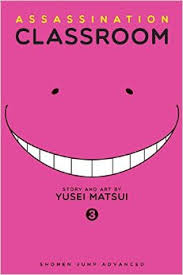
[READ: September 24, 2016] Assassination Classroom 3

I looked up this series online and saw that there are currently 21 volumes in it!  (11 are translated into English so far).  I can’t imagine how he can keep this story going (and at a pretty fast pace until the Earth will be destroyed) for so many more books!

This book begins with the students still on vacation in Kyoto.  Two of the girls have been captured by other students.  It’s a disturbing chapter with the implication that these boys have done things to girls before.  But Koro Sensei’s book about field trips actually covers the event of a kidnapping!  So the rest of the class is on it.  It even suggest where they might find the culprits (how did he know?).  It’s also a really big book and can be used as a weapon.  And our class comes out unharmed.

In the next chapter a new assassin named Red Eye is sent to take out Koro Sensei.  Red Eye is a sniper but he is baffled by Koro Sensei–who is able to stop a bullet with a dumpling.  Koro Sensei proves to be such a good teacher that even the Red Eye can learn something from him.

After a light episode in which the kids try to learn about Koro Sensei (and Irina’s) past girlfriends/boyfriends, a new student is added to the class.  But this student is a computer named Autonomous Intelligence Fixed Artillery.   It is a fast learning computer (with a pretty girl as its avatar).  And it is designed to learn from its mistakes.  It estimates that bu the end of the day it will have a .03% chance of killing Koro Sensei but by the end of the month it will be 90%.  So it begins class by opening fire on Koro Sensei (despite the fact that it breaks the class rules and disrupts class).  And then the kids have to clean up the mess of BBs.  In fact the kids are so annoyed that they tape the machine up so it’s guns can’t come out.  Eventually Koro Sensei teaches it that it needs to respect the fellow students or it will never blend in.  Koro upgrades the machine who actually seems to enjoy learning.  This is pretty fun sequence of chapters.

In the next section, Koro Sensei is affected by humidity–his head swells to a crazy size.  But that proves to be a diversion compared to the real plot that follows–revenge on a cheating girlfriend and her jerky boyfriend.  It’s very funny and quite elaborate.

The final chapter of the book is all about Irina.  She is trying to teach them to speak without an accent but the kids can’t seem to get their Ls and Rs correct.  She says that if they can’t get them straight, she will have to French kiss them (totes inappropes–although the previous chapter revealed that she was 20, which is much better than the mid 30s I assumed she was).  But we soon see that Irina’s “handler,” the guy who sent gave her the assignment, determines that she is no longer the right assassin for the job.  She is pissed but her services are no longer useful.

The book end with Koro Sensei proposing a test between Irina and her handler to see which one is the better assassin!

This manga is written in the traditional style of right to left, which is fun.  It is translated by Tetsuichiro Miyaki with an English adaptation (whatever that means) by Bryant Turnage.

Read Full Post »

assclass2 ought-once-moreSOUNDTRACK: OUGHT-Once More With Feeling… [CST108] (2014).

This EP came hot on the heels of their debut record.  It reworks a couple of older songs and has a largely improvised jam as well. It sounds pretty different from the previous record.

From the Constellation website: Discussion of a tour-only release that would grab a couple of the band’s self-recorded early tunes and commit them to vinyl shifted by the end of spring towards a realization that Ought might update this material to reflect how the songs have evolved on stage and in concert. … This yielded new recordings of two early pieces, “Pill” and “New Calm Pt. 2” (the self-recorded 2012 versions of which remain available on Ought’s Bandcamp) along with the brand new, more experimental and largely instrumental “New Calm Pt. 3.”. The non-album track “Waiting” from the More Than Any Other Day sessions (and the first tune to be given out via Constellation when we announced the Ought signing) rounds out this 24-minute EP….  In light of this new/freshly recorded material, it seemed unfair to restrict the Once More With Feeling… EP to tour-only status.

“Pill” sounds unlike anything else they’ve done.  It is mellow with Beeler Darcy’s (note the name change) singing as opposed to chanting/speaking voice.  I like that it is a fairly conventional sounding song and the way it builds slowly.  There’s a great bass line that enters after a bout 2 minutes.  The song feels meandering but it never wanders much from its mellow path (with some louder chords in between verses).  By around 4 minutes the song begins to build with a noisy solo and smashing drums that bring out the punkiness of the band. (That solo!).  But they never lose the basic momentum of the song—and the bass keeps things constant with that riff at the end of each segment.  This song also appears on their New Calm EP from 2012 which you can hear here).

“New Calm Pt 2” is a super catchy rocking song.   It starts with him saying “Oh I love this one.”  This is basically a song that encourages the audience to participate.  He tells us, “Hear  me now I am dead inside.  That’s the refrain.”  It’s a fun catchy bouncy riff repeated through pretty much the whole song.  The lyrics are pretty strange and seem arbitrary but are a lot of fun.  “Who invited Paul Simon?  I didn’t invite him.”  “I think everybody’s here now.  Everybody put your arms in the air.  That’s the generally accepted sign for not having a care.”  The song “ends” for about two minutes of him encouraging everyone to sing along to the “Da da da dah da da” section.  “It’s the part where we all sing together.”  “I have the microphone but you can sing it as well….”  And about ten times he says, “last time” then sings it again.

Interestingly, the original version of this song (on their bandcamp site) is much slower but has all of the same words

“New Calm Pt 3,” is the exact opposite of Pt2.  The lyrics are spoken slowly (“That is some good clear water an ocean of air rushes over your head”) while he guitar is a wall of noise and chaos.  The drums are loud in the mix with a lot of crashing cymbals and high hats.  The last three minutes are just some noisy guitar sounds.  And the notes say: “New Calm Pt. 3” ‘was recorded during this EP session, taken from an 20 or so minute long (maybe longer, can’t remember lol) improvised piece.’  And it seems like it.

“Waiting” is a faster, more propulsive song—with a cool bass line and alt 90s guitars.  The song grows in intensity with a wild screeching solo.  This EP is not as compelling overall as the album, but it has some fantastic moments, especially “Part 2.”

PERSONNEL
Matt May: Keys
Ben Stidworthy: Bass
Tim Keen: Drums
Tim Beeler Darcy: Vocals, Guitar

[READ: September 22, 2016] Assassination Classroom 2

Book 2 opens with a handy “the story thus far” which nicely sums up some important details from Book 1:

A mysterious creature showed up in our junior high classroom claiming that he had attacked the moon and promising to destroy the earth next March.  And then…he took over as our teacher.  The leaders of the world had no choice but to rely on the students of Class 3-E to do the job.  For a reward of ten million dollars.  Will the students of the so called End class, filled with loser sand rejects be able to kill their target by graduation?

Tabby was interested in this series–the cover of the big smiling Koro Sensei is pretty appealing.  But it is rated for teens and is all about killing your teacher.  I didn’t think I should let her.  Well, book 2 gets a bit more intense. In part, this is because there is a new professional assassin hired.  Irina Jelavich is a sexy lady with intense cleavage (which the junior high boys are well aware of).  She has killed many many people.  And Koro Sensei–despite not being human–seems to be not immune to her charms.  Shiota notes that his 5th weakness is boobs.

Despite her aggressive flirting (or maybe because of it) the kids don’t much like her.  Also because they want to win the $10 million themselves–not for her.  And she’s not very nice.  She tells them not to call her Miss Irina–she’s not a teacher after all (even though she is pretending to be one to blend).  So they call her Ms Hella-bitch (wonder how that worked in Japanese?) which gets her super angry.  But Ms Jelavich has it all figured out.  She plans to lure Koro Sensei to the shed where pleasure and pain awaits him. Of course he’s not so easily fooled. And she is made to appear ridiculous (I won’t speculate on what actually happened to her).

But her failure emboldens the students who are no longer impressed by her.  And soon she is made to actually agree to be a languages teacher–being an assassin she has learned how to say key phrases in multiple languages.

A new wrinkle appears in the book, though.  Koro Sensei has been working very hard helping each student succeed in his or her own way–he has even cloned himself (the students are concerned since he seems exhausted).  And when the school gathers for an assembly–rather than 3-E being put in its place and mocked, the students seem to be feeling pretty good about themselves.

And that’s when the principal steps in.  He lets Koro Sensei know in no uncertain terms that 3-E must fail their tests–that’s how the other students succeed–through fear of being like 3-E.  Koro Sensei has other ideas though.  He tells the class that if the 3-E students don’t score to a certain percentage he will flatten the school.  But he doesn’t know how serious the principal is about the status quo.  As Koro is preparing his students, the principal is trying to modify things.  This is upsetting Koro (and don’t forget that the students are still trying to kill him as well).

The last two chapters of the book see the students of a field trip to Kyoto.  And things change mightily when the students are away from school. For one thing, they aren’t under the protection of the school–against strangers or, worse yet, aggressive fellow students who want them in their place.

And as the book ends a new character is introduced, a psychic, Saiki, and he is here for a sweet bun–the very one that Koro Sensei wants to buy as well. The book end with the two of them having a very strange bonding moment.  I don’t know how this story can be stretched out into a number of volumes but clearly he has a lot of twists and turns planned ahead for us.

This book is rated T for teen.  Despite the cute grinning covers, it’s not for kids..

This manga is written in the traditional style of right to left, which is fun.  It is translated by Tetsuichiro Miyaki with an English adaptation (whatever that means) by Bryant Turnage.

Read Full Post »

assclassSOUNDTRACK: OUGHT-More Than Any Other Day [CST103] (2014).

oughtmoreOught might just be the most straightforward band every released by Constellation Records. They are a rock/punk band with some spoken word singing that sound at times like Mark E. Smith.  However, the music is a bit catchier than The Fall’s with fast moments and really slow almost ambient stretches.

“Pleasant Heart” opens with a raw echoing guitar riff and chords that sound like nothing else on the album.   The song lurches through some great sounds and Beeler’s unusual chanting style of singing.  There’s also a cool bass line rumbling throughout the song built with lots of drum fills and chaos.

About half way through this six-minute song the bass and drums drop out leaving just a squeaky violin and harmonic guitar (this squeaky violin is possibly the only thing that makes this record sound like a Constellation release).  The bass comes back in slowly.  But it’s not until almost two minutes of this instrumental that the song resumes with a crunch and the lurching melody and verses continue until the end.

“Today More Than Any Other Day” was the first Ought song that really grabbed me.  It starts out slowly with some spare drums and meandering bass.  It doesn’t really feel like its going to resolve into anything.  By a minute and a half it’s finally starting to sound like something–a slow meandering song perhaps.  Around 2 minutes Beeler starts whispering “we’re sinking deeper, and sinking deeper.”  And then the song starts building and turning into something else .  We’re now half way through this 5 minutes song when the guitar starts chiming and he states “The name of this song is ‘Today more than any other day Parts 4-43.  So open up your textbooks … or any kind of reading material.”  And as the guitar plays the verses he recites various things that have happened today more than any other day (making a “decision between 2% and whole milk.”  A cool bass line starts playing as else drops away and he starts chanting a rather laconic “dah dah dah dah dah” following the bass.  It reminds me, strangely enough of the Dead Milkmen as its kind of not exactly out of tune but almost as if  not really caring.  But when the song resumes, it’s all right on again.  It’s a weird and wonderful, strangely catchy song.

“Habit” opens with a nice slow bass riff and chiming guitars.  It brings the intensity of the previous song down some.  And the vocals sound a little different, especially in the chorus, where the whole song take on a kind of Talking Heads vibe (the falsetto singing in particular).  It slows down toward the end with some scraping violins. The song is quite pretty in an alt-sorta way.

I love “The Weather Song” from the opening harmonics and intriguing bass line to the way the song suddenly ramps up for the chorus.  In addition to the catchy spoken opening there’s a great chorus of “I …. just wanna revel in your lies.”

“Forgiveness” is a relatively short 4 and a half minutes and opens with almost an organ sound.  A scraping violin sound joins the drones. After 2 minutes he sings in a very slow drawl “forgiveness is a drug that you take with a shrug.”  It has echoes of the Velvet Underground’s “Heroin” although it never changes tempo or intensity.

“Around Again” has a very 1980s guitar riff and whispered vocals until the whole band kicks in and it grows in intensity.  And then the whispered “go slow” returns the song to the beginning.  After 3 minutes, the song builds and then drops out with a spoken: “It’s coming. Why is it you can’t stand under the sun but you can stick your head into a bucket of water and breathe in deep” and then a whole new sound of dissonant guitar and thudded bass and drums “we have reached the intermission.”  But it’s not an intermission it goes through to the end of the song like this.

“Clarity!” opens with what sound to me like “Love Will Tear Us Apart” but with guitar chunks played over the top.  Slow harmonics and whispered vocals move the song forward.  After 2 minutes it rocks out, with a returning ringing high note and interesting sound effects.  And by the end the song comes to a plunging conclusion

“Gemini” opens with some low rumbling notes and then a sprinkling of keyboards.  There’s some scratchy guitars and a rumbling bass.  After 2 and a half minutes, the song’s punky parts take over with jagged guitars and screamed vocals.  The end of the song is mostly just two-note thumping while he screams “you wanted … wanted … wanted … wanted.”

I really like this album a lot.

I noticed that the lead singer changes his name on each release.  So, to help keep it straight:

PERSONNEL
Matt May: Keys
Ben Stidworthy: Bass
Tim Keen: Drums, Violin
Tim Beeler: Vocals, Guitar

[READ: September 20, 2016] Assassination Classroom 1

Assassination Classroom has a very strange and unsettling premise–the students of this classroom are being taught to assassinate their teacher.  Given the current climate of guns in the US, that’s probably not a comfortable position to take.  However, Matsui alters the premise to make it more palatable, and frankly more fun. The students’ teacher is actually an alien (or maybe not, but it is certainly not human).  He (I guess) is a multi-tentacled creature who can move at Mach 20, is exceptionally perceptive and can’t be harmed by most conventional weapons.  But wait, there’s more.  The students are sent to assassinate this particular creature because he blew a huge chunk out of the moon (it’s now a permanent crescent) and is planning to do the same to the earth in a year’s time.  But wait, there’s more.  One of his conditions for not blowing up the Earth sooner is that he be allowed to teach this particular classroom.  Although no one is sure why yet.

The class is 3-E, the lowest of the low, the worst students in the very prestigious Kunugigaoka Junior High.  The 3-E class are misfits–they were smart enough to get into the school, but they have done something wrong and they are treated very poorly because of it.  In fact, 3-E is used as a kind of cautionary tale for the other students–act up and you could wind up like them.  (Why they don’t just leave the school is not addressed).

The kids call the creature Koro Sensi (which is a pun on the Japanese “Koro senai” which means “can’t kill”), and it turns out he is actually a pretty great teacher.  He really seems to care about the kids.  So why would they want to kill him?  Well, aside from the destruction of the planet, there is also a ten billion yen reward (the amount seems to change some in the book, but it’s roughly 100 million dollars).  Of course, as the name implies, this guy is really hard to kill.  And when they try to kill him in a way he finds beneath them (they are training to be great assassins after all), his own revenge will be swift.  At the same time, he heartily encourages them to try their best to kill him–and he applauds their most creative efforts. (more…)

Read Full Post »

« Newer Posts - Older Posts »