Feeds:
Posts
Comments

Archive for the ‘Translation’ Category

murakamiSOUNDTRACKRHEOSTATICS–The Media Club, Vancouver, BC, (October 23, 2004).

media clubEvery year, the Rheostatics would perform what they called Green Sprouts Week in Toronto.  In 2004 they did a West Coast version. Five nights in a row at The Media Club (with each show being crazier than the last).  There aren’t always recording available for these shows, but on this leg there are recordings from the third, fourth and fifth nights.

This recording is the best of the 3 available shows.  Although in the notes, Tyson reveals that he had technical difficulties and was only able to record about an hour of the show.  In addition to the songs he missed for technical difficulties, there were also some quieter acoustic songs “Don’t Say Goodnight and “Joey” which he couldn’t get.

And yet, this is an amazing set of music–outstanding by any barometer, with great sound quality (aside from a few drop outs) and an amazing collection of songs. The final night of a run is usually really long, so it’s fun to imagine how much more they would have thrown into this set.

The 7 songs included are “Shaved Head” which is slow and amazing.  A raw and raging “Feed Yourself” with a dash of The Jam’s “Eton Rifles” and The Tragically Hip’s “Bobcaygeon” thown in.  “Saskatchewan” is broody but also great.  “Horses” is intense and goofy at the same time, with someone on the voice modulator doing a computerized “Play that funky music, white boy” recitation.

Torben Wilson from the Buttless Chaps plays drums on “Claire.”  “A Midwinter Night’s Dream” is one of those rare songs that the band throws out once in a while, and it sounds great here.  They invited the crowd on stage to sit around campfire style.

And “Fan Letter to Michael Jackson” is great here too.

It’s a fantastic collection of songs, leading me to think the entire show must have been amazing.

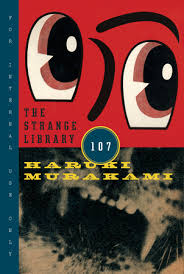
[READ: May 11, 2015] The Strange Library

I saw this book when we were in a bookstore in Denver.  I mentioned it to Sarah and she clearly bought it then and gave it to me for my birthday.

It wasn’t exactly risky because it is by Murakami with art direction and design by Chip Kidd (how could you go wrong?) but the book was shrink wrapped in the store, so you couldn’t flip through it.

Imagine my surprise when the slipcase proved to be not a slipcase at all, but a double flip cover that does not get removed but opens up like a secret document.  And every (or every other) page is chock full of art from Kidd.  My guess is that all of the art is found (rather than created) by Kidd as it appears to be old Japanese pictures and designs.  And they reflect (more or less) the action of the story.

The story itself is one of Murakami’s more surreal ones. (more…)

Read Full Post »

nymay156SOUNDTRACK: RHEOSTATICS-Evolve Festival Antigonish, NS (August 28, 2004).

evolveBestThe Rheostatics do a lot of festivals, and they always seem to have a good time.  But it also means a shorter set.  Unlike yesterday’s Nova Scotia show, this one doesn’t focus on new music too much (although they mention that 2067 is coming out Oct 5).

The sound quality isn’t great in this show either–there’s a lot of rumbling which sounds like winds, but who knows.

But they are even more charming in this setting.  Dave compliments someone one on their excellent sign and says that the sign demographic has let everyone down for this show–so her request will be honored.

The show starts with a cool jam from the Whale Music soundtrack (mostly “Song of Flight”).  When they play “Four Little Songs” one of the verses is a verse from Gordon Lightfoot’s “Early Morning Rain.”

Later they play a great version of “Saskatchewan” and perennial festival mates Chris Brown and Kate Fenner are there to help.  During “Stolen Car” they sing a few lines from “Another Brick in the Wall Pt 2.”

There’s great versions of “California Dreamline” and “Claire.”  The show ends with the new song “Power Ballad for Ozzy Osbourne” and there’s a breakdown during the song (no way to know what happened, but they have a laugh about it).

You can see photos from the day here (although none of the Rheostatics).

[READ: July 21, 2015] “The Freezer Chest”

I found Nors’ previous story to be a little odd.  And so I find this one.  There’s something about the way it was written (or translated) that I found it very stiff to read.  It is also told in a flashback which is later revealed to be a very-long-ago flashback.

What is particularly strange about the story is that the “action” of the freezer chest is all of about three paragraphs.  And while the story isn’t long overall, it takes a circuitous route to get to that part.

The narrator is a young girl, Mette.  She is on a boat with her classmates and their English teacher. Mark is also part of the group and he has made it clear that he does not like the narrator (that happened in a previous instance).  The crux is that Mark claimed to be an amazing guitarist.  And he is trying to get the narrator to respond to this information.  She genuinely does not care although she says she believes him. (more…)

Read Full Post »

reunionSOUNDTRACK: KATE TEMPEST-Tiny Desk Concert #456 (July 21, 2015).

kateKate Tempest is a British poet/rapper (and darling of NPR).  She raps with a really heavy South London accent and raps about the “everyday.”  But because she is a poet, her lyrics are really incisive.  And, when she sings, she throws in some really catchy choruses as well.  Her song “Lonely Daze” surprises when the big catchy chorus come in.

Although she doesn’t do that for this Tiny Desk.

Rather, she opens with an incredibly moving poem called “Ballad of a Hero.”  It is an anti-war poem that takes an amazingly personal look at soldiers and the sons of soldiers.  The NPR blurb says “Kate Tempest will connect you with your emotions and the cold, callous world around you. You may cry.”  When I first started listening to her Tiny Desk, I wasn’t really paying attention to the words of this poem, but by the end, I was totally hooked, and yes, I did cry.

The final lines:

I don’t support the war my son.
I don’t believe it’s right,
but I do support the soldiers
that go off to war to fight.

Troops just like your daddy, son;
soldiers through and through.
Who wear their uniform with pride
and do what they’re told to do

When you’re grown my sweet, my love
Please don’t go fighting wars.
But fight the men that start them
or fight a cause that’s yours.

It seems so full of honour, yes,
So valiant, so bold,
But the men that send the armies in.
Send them in for gold.

Or they send them in for oil,
And they tell us it’s for Britain
but the men come home like Daddy
and spend their days just drinking.

Despite the intensity of the poem (and her other lyrics), it’s fun to watch her rap because she always seems to be smiling.  And on the two songs she does “The Beigeness” and “Truth” she is so into it.  Her hand gestures and emphasis really complete the song.  And there’s also the matter of her accent–so noticeable and strangely musical.

I don’t know what the original music of these songs is like.  I gather from the official titles (“The Beigeness (KwAkE BASS remix)” and “The Truth (KwAkE BASS remix)”) that they must sound different on the record.  And KwAkE BASS plays around with her voice, adding echoes and interesting effects that add to the music).

I’ve enjoyed everything I’ve heard from Tempest, I’m just not entirely sure I would listen to a whole album of hers.

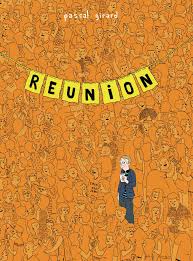
[READ: July 23, 2015] Reunion

When I saw this book by Girard in the library I immediately flashed back to reading his other book.   I recognized his style (the self-portrait of the main character Pascal made him look much older and more frumpy than he actually was.  But what I’d forgotten was just how much of a dick everyone in the book was.

And it’s even more so in the this book.

It’s clear that Girard has a style and that his humor comes from everyone in the book (including the protagonist) being jut awful.  Last time I wasn’t sure if it was just the way Helge Dascher translated the book (and again, it may be her since she does this one too) but I now think that Girard may just have a very poor opinion of people.

This book culminates in a ten-year reunion. And all of Pascal’s actions leads up to it. (more…)

Read Full Post »

profxSOUNDTRACK: YES-Big Generator (1987).

big genAfter the huge success of 90125, Yes released that solos EP and then buckled down to make the follow up.  It took a few years and sounded an awful lot like 90125, although not as good. I remember enjoying the singles, but when I listened to it recently I felt that it didn’t hold up at all.

Wikipedia tells me that there was lots of trouble while making the album (really??).

Big Generator’s sessions dragged on for two years, largely because of creative differences. Guitarist Trevor Rabin was aiming to progress beyond 90125, while founding lead vocalist Jon Anderson was beginning to yearn for more traditional Yes music. Trevor Horn, who was a major factor in the success of Yes’ previous disc 90125, was part of the early recording sessions. However, he dropped out after a few months due in major part to his inability to get along with keyboardist Tony Kaye. Anderson stated that Horn had told Anderson to stay away from the rehearsal and recording sessions for three months, presumably so that Horn could develop material with the other band members.

Given all that, is it any surprise that the album isn’t all that good.  90125 inspired a lot of music, including this album.  So this album sounds more like a retread rather than a moving forward.

“Rhythm of Love” opens with lovely Beach Boys harmonies (although at this point I’m imagining more “Kokomo” than “California Dreaming” even if “Kokomo” came out 2 years later).  That opening guitar section sounds so much like a pop 80s song (in a not so good way).  The chorus is quite good although it takes that group harmony one level further into uncomfortably sterile pop land.

“Big Generator” sounds like the b-side follow up to 90125.  The guitars are meaner and there are more orchestral hits.  There’s some interesting sections that Yes of old might have played–but they are recorded very differently here.

“Shoot High, Aim Low” is fairly uninspired (even if it was popular on the radio) and at 7 minute it’s way too long.  “Almost Like Love” is another song that sounds so much like 80s pop, it’s kind of icky.  “Love Will Find a Way” is credited solely to Trevor Rabin who really did sort of take over the band in the 80s (what does Chris Squire do at band meetings anyway?).  It is also very poppy but it has some interesting guitars and textures.

“Final Eyes” would be good if it was 2 minutes, but once the second part of the song starts, it drifts into less interesting territory (especially at over 6 minutes).  “I’m Running” is quite polarizing for me.  I like the interesting bass line that opens the song (occasionally Squire does something cool on this disc), but the overall Caribbean Feel is just so wrong.  If the song ended at 3 minutes after that interesting guitar riff it would be much better.

“Holy Lamb (Song for Harmonic Convergence)” ends the disc.  It is written (surprise) entirely by Anderson.  It’s pretty good and a surprisingly decent ending to the album, although there’s an awful 80s synth sound on it.

This was the last Yes album I bought.  I think I heard about Union when it came out in 1991 and featured nearly every person who ever recorded a Yes song, but I wasn’t interested in it.  Since that album they have released 8 studio albums and countless live albums, but I’m content with what the past has given.

Incidentally, this whole travel through Yes started when Chris Squire died recently.  Squire is the only person to have played on every Yes album.  But as I said earlier, I often wonder what he was like to work with.  It seems like when new players come in they kind of take over the sound and Squire is often shunted to the background.  I don’t know a thing about him personally or professionally for that matter. I just know that he could play an amazing bass and wish he’d shown it off more.

[READ: May 20, 2015] Who Killed Professor X?

This graphic novel intrigued me, in part because it was originally written in Greek (can’t think of too many modern Greek books I’ve read–translated by Phil Holland) and in part because it is a comic about mathematics.

The Foreword explains that the book is intended for two kinds of readers: those who have some knowledge of mathematics and those who have no knowledge of mathematics…. The first category of readers can try to solve the problems and determine whether or not each suspect has a valid alibi, whereas the second can simply skip this step.

So the (fairly thin, I must admit) premise of this book is that Professor X was killed while at a conference for mathematicians.  The room was empty for 20 seconds, so the killer must have been more than x meters away from the Professor in order to be considered innocent.

The suspects (we learn later) are all of history’s greatest mathematicians.  They go only by first name in the story, but the end of the book gives biographies of all of the real people they were based on (from throughout history).

Each of their alibis is a mathematical explanation of why they could not be the killer.  And as the Foreword mentioned, if you know math (high school level or so) you could figure out where each suspect was based on the clues given. (more…)

Read Full Post »

kampung SOUNDTRACK: CAMANÉ-Tiny Desk Concert #441 (May 15, 2015).

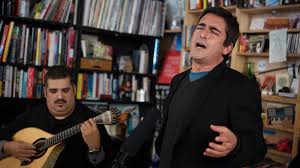
camaneCamané is a Portuguese Fado singer. The NPR blurb says that fado, “which means “fate” in Portuguese, emerged from the gritty barrios and docks of Lisbon in the early 19th century and has evolved in fascinating ways. Think of it as the Portuguese blues.”

The songs are sung in Portuguese and I don’t know a word of what’s he’s saying, but as the blurb continues: “[The songs] flow with an ineffable mix of longing, loss and melancholy, framed in resignation. It’s a kind of glad-to-be-unhappy feeling the Portuguese and Brazilians call saudade.”

The most interesting part of this to me was what I thought was a bouzouki but which I see is actually a Portuguese guitar–12 steel strings, played in very fast runs.  While Camané’s voice is clearly the focus (and it is amazing), José Manuel Neto’s Portuguese Guitar is pretty darn awesome.  And the accompaniment by Carlos Manuel Proença on guitar is lovely too.

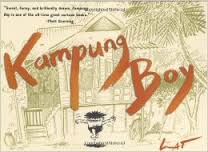
[READ: January 7, 2015] Kampung Boy

This book was written (and drawn) in 1979.  First Second books had it translated and published in 2006.

This is the story of a boy growing up Muslim in rural Malaysia in the 1950s.  Evidently it was serialized in Malaysia back in 1979 (it does feel kind of episodic, but it holds together very well).

It is a charming story of a simple life in the village that is slowly being changed by progress.

It starts with Kampung Boy’s birth and the simple way he was born (midwifed by his grandmother for which she was paid $15) and how he slowly grew from a baby into a naked toddler running around the village.  His aunt worked at the local rubber factory (his parents owned the rubber plantation) where they removed latex rubber from the rubber trees. (more…)

Read Full Post »

harp janSOUNDTRACK: PHISH-Live Bait 10 (2014).

bait 10The last time I checked, there hadn’t been a new Live Bait release for quite some time.  I wasn’t even sure if there were going to be any more.  And then, when I was browsing the Phish site I saw that this had come out a few months ago.  It’s so hard to keep up.

This is yet another great selection of live songs.  There’s eleven songs in over three hours with most of them clocking in around 20 minutes.

“What’s the Use” opens this set.  It’s an amazing instrumental and one I haven’t heard them play very often.  It comes from The Siket Disc and is really stellar in this live setting (from 1999).  One of the great things about the Bait discs is they way the songs jump around from different years  So, the “Stash” from 1994 with its wild raging solos butts up nicely to the 30 minute “Tweezer” from 1995.  The band seems to have been really fun back then with the jam section of the song being really wild.  Right after the “Uncle Ebeneezer” line, they go nuts banging on their instruments.  The jam proceeds along until it comes to an almost staggered halt which morphs into The Breeder’s “Last Splash” (sort of).  The jump to 2010’s “The Connection” is only jarring because I haven’t heard too many live shows with this new song on it.  But it sounds great.

Disc Two (if you burn this to disc) starts with a great 24 minute version of “Down with Disease” from 2011, and then jumps back to 1998’s “Bathtub Gin” which is also kind of wild and zany.  I gather that their shows may have mellowed some over the years.  I like the way the jam section of this song returns to the melody of “Gin” since most of the time the jams just kind of fade out.  1992’s “My Sweet One” is a lot of fun.  There’s a really long intro before the lyrics (almost 3 and a half minutes) during which they play the Simpsons theme and Fish shouts “oh fuck” but who knows why.  There’s also thirty seconds of silence as they try to find the “pitch, pitch, pitch” before the final “name.”  “The Mango Song” is 18 minutes long.  The jam section starts around 5 minutes in and the first five minutes still sound like the Mango Song (because of the piano) then the last 8 are really trippy with lots of echoes.

Disc 3 opens with “Fee” which I always love to hear and assume they don’t play much anymore (based on nothing, really).  There’s a 5 minute jam before the start of “The MOMA Dance” which you can kind of tell is “The Moma Dance” but not really.  The song merges into “Runaway Jim.”  And the final song is a great version of “Chalk Dust Torture” from 2012 (as the liner notes state: Fans of recent performances will also find the “Chalk Dust Torture” played during the iconic “Fuck Your Face” set at Denver’s Dick’s Sporting Goods Park.)

Glad to have the Bait back.

[READ: March 21, 2015] “In a Waxworks”

This piece was translated from the Romanian by Michael Henry Heim and comes from Blecher’s Adventures in Immediate Irreality.  I don’t know what the full book is about and I found this excerpt to be more than a little puzzling.  Perhaps most fascinating though is that Blecher was born in 1909 and died in 1938 from tuberculosis of the spine.

It is a series of thoughts about the infinite and how thinking about things in reality would impact his thoughts about the infinite shadow–of birds in flight, the shadow of our planet, or even the vertiginous mountain chasms of caves and grottoes.

As he was a youngish man, thoughts turn to sex, and there’s some connection to a wax model of the inner ear.

But primarily the story concerns the world as a stage–as if life was some kind of artificial performance. He felt that the only person who could possibly understand the world the way he did was the town idiot. (more…)

Read Full Post »

may4SOUNDTRACK: THE ANTLERS- Tiny Desk Concert #51 (March 15, 2010).

antlersThe Antlers is one of those bands that is critically lauded and whom many people really like but whom I just can’t get into.  (I always think I do, but I believe it’s because I’m thinking of other similarly named bands, because when I listen to a Antlers song, I immediately think, oh it’s that band.)

The band, to be blunt, sings really depressing songs.  (Their then new album was called Hospice, for god’s sake).  And that’s just not my thing.  The music is beautiful, it’s just not for me.

The songs (elegies to a dying friend full of grief and longing) are quite lovely and singer Peter Silberman has a pretty amazing falsetto and the songs feel so fragile that they may fall apart at any minute (and they nearly do a few times at the Tiny Desk).

They play three songs: “Bear,” “Atrophy,” and “Sylvia.”  It’s just three of them.  Silberman on super quiet atmospheric guitar and Michael Lerner and Darby Cicci on drums and keys (not sure who is who).   The drums are simply a snare and a shaker.  And the keyboard is one of those hilariously tiny Korg two octave jobs that is basically like a laptop (I love that he can make so many different sounds with that).

This Tiny Desk is very nice.  The songs are really pretty (I like “Bear” especially with the lyric: “All the while I’ll know we’re fucked and not getting unfucked soon”).   “Atrophy” is similarly fragile with keening falsettos and lyrics like “I’d happily take all those bullets inside you and put them inside of myself.”  When Silberman starts actually playing the guitar at the end the sound is nearly broken.  The final song “Sylvia” is also delicate.  Although the drum is played with mallets (and is rather martial) the song is not any louder.  Indeed, with lyrics like, “Sylvia, get your head out of the oven. Go back to screaming, and cursing, remind me again how everyone betrayed you,” it’s not going to get too crazy.

The band doesn’t talk to the audience.  They play their three songs, seemingly wrapped in a cocoon of their own making.  It’s really quite lovely, just something I wouldn’t want to get involved in too often.

In the notes, it says that the band can really rock out live.  These songs are pretty mellow, so I can’t exactly imagine them rocking out, but I’d be curious to hear what they do as a rocking band.  And, I will admit that after listening to the show twice, I did start to like it a lot more. I’m just not sure I need more music that’s going to make me cry.

[READ: May 10, 2015] “The Apologizer”

I’m not sure why I surprised to see Kundera in the New Yorker.  I guess I don’t think of him as writing much anymore (based on utterly nothing, although I see that his last novel was in 1999) or maybe of not writing short stories (he has but one collection).  So it was a surprise for me  to see his name here.

Regardless, I really enjoyed the way this story was set up.  There were many different small sections that seemed unrelated but then united in a rather unusual way.

The first section: “Alain Meditates on the Navel” was wonderful itself.  Alain notices how all the young girls walk around with their navels showing and he wonders about the seductiveness of the navel.  He compares the navel to the thighs as a center of desire (long thighs indicate the long road towards pleasure) or the buttocks (signifying brutality, the shortest road to the goal) or breasts (the center of female seductive power).  But what of the navel?

Then he reflects back on the last time he saw his mother.  He was ten years old, she touched his navel, maybe gave him a kiss and was gone. (more…)

Read Full Post »

secretevilSOUNDTRACK: ABAJI-Tiny Desk Concert #47 (February 15, 2010).

abajiThis is the only time I have heard of Abaji. He is an unimposing man with roots in Greece, Turkey, Armenia and France.  He sings gently (often in Arabic with some English) and he plays while he sings.

The impressive thing about Abaji is his skill and love of musical instruments.  The notes say “when recording his latest album, Origine Orients, he played 10 different instruments, many of them simultaneously, with no second takes or overdubs. It took him just two days.”

“Min Jouwwa” (which means “From Inside”) is played on  what looks like a normal guitar but which sounds so very different. The notes say it’s “a tricked-out Western-style guitar with extra strings, giving it the sound of an Egyptian oud.”

“Steppes”  is a brief haunting instrumental.  It’s played by bowing a soft-toned kamancheh (a three-stringed instrument that you hold upright on your lap for a scratch, middle eastern sound).  He often times rocks the instrument instead of the bow back and forth.

The final song is played on the Greek bouzouki (with whistling as accompaniment).  “Summertime” is the Gershwin song (which is only recognizable from the words–the first verse anyhow, which he sings in English–the second verse he sings in Arabic).  It sounds nothing like the original with the serpentine riffs and that unique bouzouki sound.

I only wish the cameras were still rolling after the set because “he demonstrated a large duduk (an Armenian cousin of the oboe), an Indonesian suling (flute) and a Colombian saxophone (of sorts) made from bamboo that looked more like a snake.”

This is what I love about the Tiny Desk–seeing very different instruments and unconventional performers up close.  Abaji is fun to watch.

[READ: May 7, 2015] The Secret of Evil

This has got to be the final posthumous collection of writings from Bolaño.  The Preliminary note from Ignacio Echevarria explains that this book is a collection of the final fragments that were found on Bolaño’s computer.  As such, the book consists primarily of works that are unfinished (some barely even started).

This isn’t as disappointing as it sounds because Bolaño seemed to write very thoroughly right form the beginning with his stories.  So even though they are incomplete, the section that is written feels fully fleshed out–and you can imagine that more will be coming. Echevarria says that “Bolaño rarely began to write a story without giving it a title and immediately establishing a definitive tone and atmosphere.”  This of course made it difficult for Echevarria to know what to compile here.

Not everything in this collection if unfinished.  And indeed, with Bolaño sometimes it’s unclear if the unfinished things were actually unfinished. (more…)

Read Full Post »

1968_12_28-200SOUNDTRACK: RHEOSTATICS-The Horseshoe Tavern, Toronto, ON (November 08, 2001).

horsetavThis is the final show for 2001 at the Rheostatics Live website.  This show is the second of eleven (11!) straight shows at The Horseshoe.  Since it was part of their Green Sprouts “week,” it is chock full of guests.

Kevin Hearn is playing this night (and a few others), but there’s also guest vocals from Sean Cullen and Gord Downie!

The recording is not quite two hours which I assume means that parts were cut off.  I mean, a Rheos show that’s under two hours during Green Sprouts week?  Unheard of.  Earlier that evening Bob Dylan was playing in town, so it seems like the early parts of the show were a bit quieter than usual.

The show stars with “Fat” which sounds like it may have been coming in from something else or that’s the intro music–hard to say exactly.  Then they play two new songs–“The Fire” (with a funny joke about someone’s folk apparatus (a harmonica)) and “We Went West.”  Then comes their first guest, Canadian comedian and songwriter Sean Cullen.  They play his Stompin’ Tom tribute/parody “I’ve Been Beaten All Over This Land.”

I love the version of “Junction Foil Ball” with th every amusing comment that a Globe and Mail reviewer described one part of the song as “a hippo jumping into a giant puddle of mud.”

There’s a very cool section that’s a Kevin special.  Songs from Group of 7 and Harmelodia: Boxcar Song, Landscape And Sky, The Blue Hysteria, Yellow Days Under A Lemon Sun, Easy To Be With You, Loving Arms and I Am Drumstein.

Then Gord Downie comes out–sadly his introduction is cut off, so we don’t get to hear what they say about him (or the fan reaction).  They start in the middle of his song “Chancellor” from Coke Machine Glow.  Then they play “Canada Geese.” And then Dave asks if they can sing one of the Rheos’ songs (“sure thing, Tim, uh, Dave”).  Ha.  And Gord sings “Take Me in Your Hand.”

There’s a great version of “Stolen Car” and they end the show with three songs from the then new album: “P.I.N.,” “Mumbletypeg” and “Satan is the Whistler.” It’s the best live version of “Satan” that I’ve heard so far–perfect whistling, and they don’t mess up the fast part at the end.

I’m sure the other ten nights were equally great.  But this is all we have to close out 2001.

[READ: May 12, 2015] “The Cafeteria”

I read this story because it was alluded to in David Albahari’s “Hitler in Chicago.”  In Albahari’s story, a character on a plane is reading Singer’s book and the person next to him asks if he knows Singer’s story about a woman seeing Hitler in New York.

Indeed, in this story, there is a woman who sees Hitler in New York, so it was a nice full circle, and I applaud Albahari for playing around with an extant story like that.

This story, translated from the Yiddish by Singer and Dorothy Straus, is set in Manhattan.  The narrator, Aaron, has lived there for nearly 30 years–about as long as he lived in Poland.  He has many friends who he meets up with in the cafeteria.  They speak Yiddish and talk about the Holocaust or the state of Israel.  He looks forward to talking with them but he is a busy many (writing novels or articles) so he can’t stay too long.

Most of the people he meets with are men, but one day a woman, who looked younger than the rest of them, appeared.  She spoke Polish, Russian and some Yiddish.  She had been in a prison camp in Russia.  The men hovered around her, listening to her every word–she was surprisingly upbeat. (more…)

Read Full Post »

august SOUNDTRACK: DAVE RAWLINGS MACHINE & GILLIAN WELCH-Tiny Desk Concert #45 (February 1, 2010).

daveI had never heard of Dave Rawlings (although I have heard of Gillian Welch). He is evidently a producer and session musician.  And the recording of this Tiny Desk Concert is timed with the release of his first album.

Rawlings and Welch (who sang on a number of tracks on the album) play a mix of country and alt-country/folk.  And while their voices work great together, I think it’s Rawlings’ guitar playing that really sets this Concert apart.

They play four songs, and if the blurb is correct, the first was a warm up that sounded great so they kept it.  That first song is Bill Monroe’s “I’m on My Way Back to the Old Home” a rollicking whirlwind of guitar fun with heavy country flavors.  The second song they play is the lead track on the album.  “Ruby” is a mellow ballad which reminds me of two other songs (see if you think the same).

The third song they introduce as “a depressing song.”  It is minor key and slow.  The melody is surprisingly catchy.  Although when it shifts to Neil Young’s “Cortez the Killer,” it’s not because the songs sound alike but because they have the same spirit.  Rawlings’ voice doesn’t sound like Young’s at all, but he sounds great with this great song (and Welch’s harmonies are perfect).

The final song “Sweet Tooth” is a very country (sill country) song.  What I like about it is that Rawlings puts his capo on the 10th fret!  It’s no a song I’d listen to, but it’s cool to know they can play it.

Check it out here.

[READ: April 4, 2015] “The Basement”

Ocampo was an Argentinian poet and short story writer.  This is a short story from Ocampo’s Thus Were Their Faces. which was translated by Daniel Balderston.

I didn’t really get this story.  It is essentially about a woman living in a basement apartment.  She says it is very cold in winter but an Eden in the hot summer months. She has very few things with her and no electricity or running water, but she is very clean.  And she doesn’t have to pay rent.  The lady upstairs feeds her (and she has candy, as well).

This entire excerpt is one very long paragraph and as the paragraph moves along she beings talking about the mice who share her place with her (they are preferable to the flies that are so prevalent in Buenos Aires). (more…)

Read Full Post »

« Newer Posts - Older Posts »