Feeds:
Posts
Comments

Archive for the ‘Translation’ Category

compassSOUNDTRACK: CAROLINE ROSE-Tiny Desk Concert #465 (August 24, 2015).

carolineCaroline Rose is a rocking country gal.  Rose’s music is inspired by rockabilly, fast country and traveling from town to town in a van.  She plays electric guitar and the rest of her band includes a bass drum and slide guitar.  The slide guitar kind of dominates the songs though, so they all sound kind of samey to me.

“Yip Yip Yow” is a fast rockabilly type of song with some silly lyrics.  It’s a fun song.  “I’ve Got Soul” This song is bouncy and rocking although I can’t help thinking of the old adage that if you have to say it you probably don’t have it

“I Will Not Be Afraid” is a more inspirational song with a real honky-tonk feel.  The guys ware wearing T-shirts that say “fuck fear” but they had to cover them up for broadcast (which is why they are wearing jackets).

Of all of the recent rocking country gals I’ve been hearing, I like her best.

[READ: March 15, 2016] The Golden Compass Graphic Novel

I loved The Golden Compass when I read it about a decade ago.  I thought it was really smart, really subversive and really engaging.

What you might notice about this graphic novel is that it was translated.  The Golden Compass was written in English.  This graphic novel was written in French (as Les Royaumes du Nord #1) by Stephanie Melchoir and then translated back in to English by Annie Eaton, which is a weird process.  The art was done by Clément Oubrerie.

The original book was quite large (about 400 pages).  This graphic novel is about 8o pages.  And, as you might guess, quite a large chunk of it is pictures.  So it has been reduced pretty drastically.

One of the great things about the book was the subtlety and evocative descriptions.  You can see where I’m going next–this condensed version is…lacking. (more…)

Read Full Post »

sardine6SOUNDTRACK0 Tonne Seize [CST bonus] (2016).

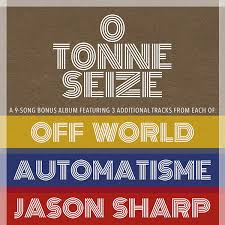
tonne0 Tonne Seize is a bonus compilation of three tracks each from Off World, Automatiste and Jason Sharp.  The collection is 41 minutes of music (not too shabby) and came with a pre-order of the three records (and is available on Soundcloud as well).

The first three songs are by Off World and the first two of those are remixes.  The original “Wonder Farm” is dominated by popping drum sounds.  There are some other sounds that go through the track but the base is mostly a kind of slow Asian melody.  The “Wonder Farm (Summer Crop)” mix removes those snaps and percussion entirely.  It focuses just on the music, which I have to say is far more enjoyable without the bangs.  “Primitive Streak” is a slow droning piece, while this compilation’s “Primitive Streak (Silver Mix)” doesn’t sound all that different.  It also removes the drums, and highlights the squeaky synth sounds and the overall drone tone.  It seems to emphasize and de-emphasize different instruments but otherwise sounds pretty similar. The final track  “Lost Meadow” is a pretty, delicate piano based piece with some twinkling of spacey synth notes.  It’s easily the prettiest piece.

The three Automatiste tracks do not quite follow the same naming convention as the actual disc, although the first track is called “Simultanéité 5.” It has slow beats and is basically two-note washes building on top of each other.  “Fragments continus” is a noisy piece with layered thudding drums (like heartbeats especially around the 1 minute mark) and drone noises that wash in and out.   About half way through what sounds like a melody appears amid the din, but it feels like it formed organically around the synths and drums which is pretty cool.   “Le Silence 3” opens with some jackhammer sounding drums and then almost easy listening synths.  The juxtaposition is interesting and by the end the song feels nicely dancey.

The final three songs are from Jason Sharp.  These three are quite different from his album because they really feature the saxophone to a larger degree.  “Plummeting Veins” opens with a heartbeat and some rumbling sax (that sounds like the opening of the Speed Racer TV show).   This track is under 2 minutes, the shortest he’s done by far, and the way the heartbeat speeds up as the sax plays some low rumbling notes is pretty cool. “Hear a Fading Cry” is a much longer number.  The heartbeat is quieter but the sax is much louder.  It sounds a lot like Colin Stetson in the low rumbling and noisy barking that the bass sax can produce.  It ends with some rather high-pitched squeaky sounds that I assume come from the sax, but which I can’t imagine coming from such a bass instrument.  It’s 7 minutes long although it takes almost 2 minutes to really get going.  And it swerves between loud and rumbling and then sort of menacing by the end,  “Ride On Into the Sweetening Dark” is perhaps the most conventional of Sharp’s songs.  It is a series of sax solo lines over a gentle tinkling backing drone.  Some of the solos lead to noisy wailing, but for the most part the line are pretty and jazzy.

It’s interesting how different these bonus tracks tend to be from the actual releases.  I enjoyed listening to these variants to see what else these artists are capable of.

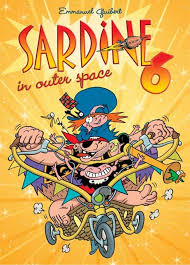
[READ: April 9, 2016] Sardine in Outer Space 6

Sardine is a children’s book published by First Second.  It was originally published in France (and in French) and was translated by Sasha Watson.  There are six Sardine books out.

The inner flap says “No Grownups Allowed (Unless they’re pirates or space adventurers).”  This is the final Sardine book.  And while I didn’t enjoy the first book much, by now I’m sorry to see the series end.

This book also has the fewest stories in it (only 9). (more…)

Read Full Post »

sardine5SOUNDTRACK: JASON SHARP-A Boat Upon Its Blood [CST119] (2016).

Layout 1Constellation records had been rather quiet this year in terms of new releases.  And then back in August they announced three new discs with this intriguing blurb:

Constellation’s three new fall releases by Off World, Automatisme and Jason Sharp are dropping on September 30th…  These new releases are wildly different yet satisfyingly leftfield albums that share an electric thread of sorts.  Electronic music strategies, technologies, histories and sensibilities come into play, in very diverse ways, with each of these debut records – making them stand out a little differently in the context of the Constellation catalogue perhaps, but also informing one another and making a lot of sense to our ears as an album trio (somewhat in the spirit of our Musique Fragile series).

This is the third of those three.

Jason Sharp has written this disc as “music written for amplified heart & breath,” and Sharp is credited with “playing” amplified heart, feedback, synthesizers and bass saxophone.  Other instruments listed are Pedal Steel Guitar, Violin and various percussive instruments.

From the Constellation site: “Using custom-built equipment to translate breath and heart rate into variegated sonic triggers, along with other modes of signal processing and in tandem with traditional instrumentation…[the album] deploys the human metronome of amplified pulse as a recurring undercurrent, with compositions that incorporate electro-acoustic and musique concrète strategies, drone, noise, electronics, methodical dissonance, tone poem, layered rhythmic and melodic figures, and improvisation.”

The disc opens with a trio of songs: “A Boat Upon Its Blood Pt.s 1, 2 & 3”  Part 1 begins with some quiet drones and pulses and what sounds (if you think about it) like water running through pipes or blood through veins.  It also like plectrum hitting strings or a musical rain stick.  The songs build in intensity until a pulse that sounds a lot like a heart beat (which it should) ends the track. This heart beat segues into Part 2 which is dominated by violins.  The violins seem to alternate between drones and dissonance with the pulses seeming to beat a bit faster in parts.  As this track ends, a martial beat takes over the drums, and that segues into Part 3 which has more drone sounds.   About midway through, new percussive sounds come in, changing the tone of the piece entirely.

Track 4 is “In the construction of the chest, there is a heart” is the most interesting of the bunch.  It has what I assume are several different heart beat sounds modified to create different percussion under various droning sounds. It really exemplifies the “heartbeat” aspect of the piece, which I thought would be more prominent in the disc overall.  The second half of the song is full of swishes and scratchy sounds which I certainly hope are the sounds of his blood pulsing through his veins.

“A blast at best” is a noise piece which sounds almost like the heart beats have been put through an autotune.  Midway through the song comes the bass sax playing some farting and pulsing sounds that add an interesting  melody to the sloshy noises.

Tracks 6 and 7 are another multi-part song “Still I sit
with you inside me Parts 1 and 2.”  Part 1 opens with a much more pleasant, albeit somber violin.  Slowly the heartbeats grow louder and more prominent.  The pulses increase and decrease although not necessarily with the intensity of the music.  The violins swirl and ebb, growing louder and more intense and then fading and seguing into the last track which opens with pretty guitars and accompanying violin.  About halfway through the song, the heartbeat resumes.  It come pulsing into the song louder and louder, dominating the whole thing.  And then with a few seconds left it builds a wall of feedback and noise that gives way to a cathartic echo.

This would be another string candidate for NPR’s Echoes.  Have you heard this, John Diliberto?

The disc notes that the piece was inspired by the Robert Creeley poem, “The Heart,” which I have included at the end of the post.

[READ: April 9, 2016] Sardine in Outer Space 5

Sardine is a children’s book published by First Second.  It was originally published in France (and in French) and was translated by Sasha Watson.  There are six Sardine books out.

The inner flap says “No Grownups Allowed (Unless they’re pirates or space adventurers).”  For the first time, Sardine was created without the help of Joann Sfar.  And I found this one to be my favorite one yet!

It seems like Sardine has really hits its stride with Book 5.  The author is having a ton of fun playing around with pop culture and with the idea that the characters know that there are books about them. It’s still a little weird that Supermuscleman is really the only bad guy and that he is always coincidentally where they show up, but that’s clearly not the point of the comic, right? (more…)

Read Full Post »

sardine4 SOUNDTRACK: AUTOMATISME-Momentform Accumulations [CST118] (2016).

Layout 1Constellation records had been rather quiet this year in terms of new releases.  And then back in August they announced three new discs with this intriguing blurb:

Constellation’s three new fall releases by Off World, Automatisme and Jason Sharp are dropping on September 30th…  These new releases are wildly different yet satisfyingly leftfield albums that share an electric thread of sorts.  Electronic music strategies, technologies, histories and sensibilities come into play, in very diverse ways, with each of these debut records – making them stand out a little differently in the context of the Constellation catalogue perhaps, but also informing one another and making a lot of sense to our ears as an album trio (somewhat in the spirit of our Musique Fragile series).

This is the second of those three.

From the Constellation site: “Automatisme is the electronic music project of Quebec-based producer William Jourdain, who has been self-releasing a brilliant series of albums and tracks under this moniker since 2013, exploring various intersections of drone, dub techno, electronica, ambient, electro-acoustic, and noise.”

This album is, indeed, very drone, dub techno, electronica, ambient, electro-acoustic, and noise.  There are six tracks: Transport 1, 2, and 3 and Simultanéité 3, 1, and 4.  The Transport tracks are all about 5 minutes and the Simultanéité tracks are all about 9 and they are interfiled on the record.

“Transport 1” seems to be all about the thumping drums. The synth lines are fairly simple and serve to propel the song along as almost an ambient dance track.  “Simultanéité 3” opens with some mechanical drone sounds and a beeping almost like a heart monitor.  The beeps change and then a new drum beat is added while fiddling synths tickle along the top of the song.  Things slow down and speed up and the track reminds me a lot of something you’d heard on NPRs awesome Echoes program.

“Transport 2” is more about drums. There are several different percussion themes going on–fat repeated drums, the main steady beat and then some low synth that runs through pretty much the whole thing.  “Simultanéité 1” is a drone song with a drum sound that is like a heart beat.  About a minute in the note changes and 30 second later the song takes on a different texture and pulse.  It remains largely ambient for most of the song.

“Transport 3” has more percussive sounds that make this track much faster than the others. The final track “Simultanéité 4” has what sounds like voices (although I assume they are not) echoing underneath the slow pulsing rhythms.

While the track listing alternates between drum heavy tracks and more mellow tracks, the whole disc has a very chill vibe.

[READ: December 5, 2014] Sardine in Outer Space 4

Sardine is a children’s book published by First Second.  It was originally published in France (and in French) and was translated by Sasha Watson.  There are six Sardine books out.

This time the inner flap says “No Grownups Allowed (Unless they’re pirates or space adventurers),” and this book had some of my favorite cartoons yet.

“Under the Bed” has the kids getting lost under Little Louie’s bed and finding all the monsters that hide there.  But Sardine’s adventures are so scary that the monsters don’t stand a chance trying to frighten him–they’re even a little afraid of Sardine, too.  Of course the kids have someone who they can go frighten. (more…)

Read Full Post »

sardine3SOUNDTRACK: OFF WORLD-1 [CST117] (2016).

Layout 1Constellation records had been rather quiet this year in terms of new releases.  And then back in August they announced three new discs with this intriguing blurb:

Constellation’s three new fall releases by Off World, Automatisme and Jason Sharp are dropping on September 30th…  These new releases are wildly different yet satisfyingly leftfield albums that share an electric thread of sorts.  Electronic music strategies, technologies, histories and sensibilities come into play, in very diverse ways, with each of these debut records – making them stand out a little differently in the context of the Constellation catalogue perhaps, but also informing one another and making a lot of sense to our ears as an album trio (somewhat in the spirit of our Musique Fragile series).

This is the first of those three.

Off World is a collaborative project featuring Sandro Perri. As the Constellation site reminds us:

Over the past couple of years, Perri has been letting us in on a fascinating treasure chest of strange and enchanting collaborative sound recordings – rich in deconstructed melody, interplay between acoustic and electronic instrumentation, and pointillist and aleatory composition techniques. … Off World 1 is alien electronics played humanly, with real-world accents throughout. 1 was conceived almost entirely during a 2-day session in London: a meeting orchestrated by producer Drew Brown between himself, Perri, Susumu Mukai and M J Silver after learning that Perri was a huge fan of both Mukai and Silver’s work. A bounty of raw material featuring mostly vintage synthesizers – EMS Synthi, Syntorchestra, Prophet 5 – was later abetted by violin, banjo, harpsichord, guitar and piano. The result is genuinely exploratory and peculiar sui generis instrumental electronic music that sounds like it could have issued from any time in the past 40-50 years. Off World resists easy categorization: not ambient “easy listening”, not strictly “improvised”, not “retro” – but eccentrically absorbing and soothingly mischievous as it charts its own sonic trails.

There are 7 songs on the disc and they are all variants on a kind of electronic/alien sound.  “Primitive Streak” has trippy synth lines and a slightly quavery “solo” over a simple drum beat.  “Old Brain” has a kind of staccato guitar part that plays through quickly.  It is later matched by “New Brain” which explores the same rhythms in a different way.

“No Host” is 80 seconds long  full of simple almost otherworldly synths (it reminds me of Close Encounters). “Extraction” has some loud ominous chords that surge and the recede.  “Choral Hatch” sounds both underwater and other worldly.

The final song, “Wonder Farm” sounds unlike the other songs because it is full of these snapping drum sounds–seemingly at odd intervals and not playing any rhythm (it sounds like fireworks going off).  The music also has hints of Japanese music but it seems overshadowed by the crashes.

Of the three I like this one best because of its varied sounds.

[READ: March 31, 2016] Sardine in Outer Space 3

Sardine is a children’s book published by First Second.  It was originally published in France (and in French) and was translated by Sasha Watson.  There are six Sardine books out.

This time the inner flap says “No Grownups Allowed (Unless they’re pirates or space adventurers),” and I found that I enjoyed book 3 quite a bit more than the first two books. Perhaps it is because I have read a few more First Second books by Sfar and have grown used to his style and humor.  Or perhaps the stories have just gotten better. (more…)

Read Full Post »

coin2 hiddenSOUNDTRACK: MATANA ROBERTS-Coin Coin: Chapter 2 Mississippi Moonchile [CST098] (2013).

The first chapter of this series was a sprawling disc of free-form jazz and spoken word.  It was interesting and strange with a powerful message (not always elegantly delivered).  It felt too long, but I think it was done live which would make it more understandable as a long presentation.

Chapter 2 is quite different.  It is much shorter, but it has 18 tracks that flow seamlessly (and often without apparent logic) into each other.  Most of the songs are quite short as well.

“invocation” is a sultry jazz number (Matana Roberts plays saxophone).  There’s also piano, trumpet, double bass and drums.  One thing that I didn’t like about the first chapter was Robert’s “poetry slam” deliver of her spoken words.  This album more or less erases that all together with the inclusion of Jeremiah Abiah on “operatic tenor vocals.”  I don’t know what he’s saying (if anything) most of the time, but his voice soars above the jazzy din.

“humility draws down blue” starts in the middle of a trumpet solo and lasts for a minute and a half.  “all nations” is only 8 seconds long and seems to coincide with a vocal line from Abiah.  “twelve sighed” settles things down some.

The first real change comes with “river ruby dues,” which opens with a gentle piano motif, and Abiah’s vocals.  Roberts’ sax solo plays throughout.  There are somewhat recognizable motifs played throughout the album.  I was sure I heard parts of “Pop Goes the Weasel.”

“amma jerusalem school” also opens with a new melody–a four note sax line–without a doubt the prettiest melody of the disc.  About mid-way through the song, Roberts begins speaking/reciting.  There’s a lot going on in her saga.  When that ends, more instrumentals continue and “responsory” has a lovely falsetto singing section.

This half of the album has been fairly conventional jazz: rather pretty with some nice melodies—far more conventional than Chapter 1.

Although by “the labor of their lips,” things have become a bit more avant-garde.  But even that doesn’t last too long and by “was the sacred day,” a pretty melody has resumed and more spoken word comes in, this time in stream of consciousness.  It’s a story of childhood with some happy and some sad details including: “they didn’t like black people at the hospital. you could use a room but no nurses would attend to you.” and the story of a woman getting whipped for not saying ‘sir.’   Interspersed through this tale is a sung line “I sing because I’m happy I sing because I’m free.”

‘woman red racked’ features Robert’s singing voice—pretty and pained—with some nice, deep backing voices accompanying.  Interestingly, this vocal part ends with them singing “Amen,” but the song is not over… a sax solo emerges from this and plays a kind of wild section with Abiah’s vocals until the end.

“thanks be you” is a spoken piece, a story told to a child about the past “there are some things I just can’t tell you about” which references a lot of childhood songs.  It ends with the repeated refrain “Mississippi is a beautiful place.”

This disc is only 48 minutes and it feels just about the right length,  “benediction” ends the disc with a quietly sung song with another singer accompanying her: their voices sound great together.

As with the first one, the narrative is a little unclear.  The main thrust of the story is obvious and effective, but it would be hard to diagram the story.  Nonetheless, her use of jazz and traditional sources (“red ruby dues,” “woman red racked” and “benediction” are based on traditional American folk songs), make for an evocative look into slavery from the point of view of one family.

[READ: March 20. 2016] Hidden

Having recently read the Resistance trilogy I am much more aware of France’s role in WWII.  But that could never have prepared me for this children’s book about the Holocaust.  (written by Loïc Dauvillier, translated from the French by Alexis Siegel with illustrations by Marc Lizano and Greg Salsedo).

The book opens on a little girl.  She wakes up in bed and hears her grandmother crying.  When she asks what’s wrong her grandmother tells her about the “nightmare she was having.”

And that nightmare is her story as a young Jewish girl in occupied France and how her life was brutally upended.  This is all told with fairly cute little characters with oversized heads.

I’ve never heard this story from the point of view of a child before.  Her grandmother was a little girl going to school.  She and her friends did everything that you’d expect little kids to do and the story starts out very sweetly.  Then one day she comes home and her father says that they must all be sheriffs–wear the yellow star on their lapel.  Once they stray doing that, she is effectively shunned.  But she has no idea why–why does everyone hate the sheriff? (more…)

Read Full Post »

zabimeSOUNDTRACK: ST. PAUL AND THE BROKEN BONES-Tiny Desk Concert #410 (December 6, 2014).

stpaulPaul Janeway stands on Bob Boilen’s desk wearing gold shoes  and singing his heart out.  Janeway is the lead singer of St. Paul and the Broken Bones, a seven-piece soul band based out of Alabama.

Janway has a powerful voice and sings in a very old-school soul style.  The Broken Bones consist of two guitarist, a keyboardist, a trombone, a trumpet and drums.

They play three songs, “Half the City,” and “Call Me” (in which he does some great shuffle dances on the desktop and seems to almost fall off the desk) are full throttle dancing soul music.  The final song is kind of a sad song, a story about how the band got together called “Broken Bones and Pocket Change.”

There’s a funny moment when Bob asks if he’s hot way up there and he Janeway replies, “Is it hot?  Naw man, we’re from Alabama.”

The band was fairly new back in 2014, but I see that as of this week, they have a  new album coming out. So good for them.

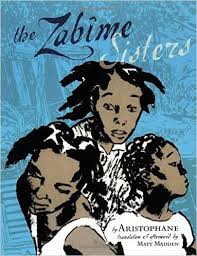
[READ: March 1, 2016] The Zabîme Sisters

When I read this book, back in March, I had been reading a lot of First Second graphic novels (I’m very close to having read them all!).  And reading this publishers entire catalog has led me to read amazingly detailed and interesting stories about real events.  And that’s pretty awesome.

This story is set in Guadeloupe, but unlike some of the other real-life stories of horror and degradation that I’ve read, this one is a simple story of childhood in a Caribbean island.

Not a lot happens, and yet the story is charming and enjoyable.

The story is told in 3 parts.  It is about three sisters, I’m not sure if they are triplets or just close on age.  I like how they have similar features but distinctive hair. (more…)

Read Full Post »

town-boy SOUNDTRACK: DUBLIN GUITAR QUARTET-Tiny Desk Concert #409 (May 15, 2015).

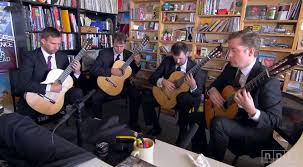
dgqWhen I first listened to this brief concert for some reason I didn’t realize that the quartet were playing Philip Glass.  Of course, once he stated that that’s who they were playing, it became quite obvious–but having Glass played on acoustic guitars instead of synths or violins, is quite an unusual experience.

The music is still rigidly repetitive, but there is a great deal of warmth added with the guitars (and the human element as well).

The Dublin Guitar Quarter has been around since 2002 and they play pretty much only contemporary and new pieces (despite being dressed in suits and playing on “classical” guitars).

They play two pieces, with two and three movements of each piece respectively.  They were originally recorded for strings, so these guitar transcriptions change things quite a lot (especially in Mishima).

The first piece is called “Company.”  They play Movements 2 and 3. What’s most impressive about the first piece is that you can hear all of the musical lines.  Glass often interweaves line up line of music ad you can see each guitarist playing these lines on high guitar notes and low notes while the other play accompaniment–transcribing these must have been a real challenge.

The loud chords are practically heavy metal chords on the guitar as opposed to what the strings might sound like.  And for all of the repetition, these two movements of clock in at less than four-minutes total.

It’s interesting to listen to the original after this and hear how it’s clearly the same piece but it sounds so very different.  From tone to drama, everything is changed.

The final pieces are three movements from Mishima.  In Mvt 3 there is some fast picking while the other three play chords.  It’s also fun to watch them all doing similar but distinct things through the middle of the movement.  This doesn’t have the fast lines that Glass is known for but it has a lot of loud repetitive notes.

What’s so interesting is that original is full of drums–and parts of only drums.  Obviously these aren’t present here, but the music resonates in a similar (but again, distinct) way.

Mt 2 is a slow meditative piece, and is far shorter than the original (which is also full of drums).

The final piece opens with some chords and then grows very beautiful as the Glass riff takes on an almost prog rock feel because of the guitar and the way the bass notes contrast so wonderfully with it.  It is short in this and the original and is great excerpt to listen to.

  • Glass: String Quartet No. 2, “Company,” Mvts. II & III
  • Glass: String Quartet No. 3, “Mishima,” Mvt. III, “1934: Grandmother & Kimitake”
  • Glass: String Quartet No. 3, “Mishima,” Mvt. II, “November 25: Ichigaya”
  • Glass: String Quartet No. 3, “Mishima,” Mvt. XI, “1962: Body Building”

[READ: March 24, 2015] Town Boy

This book was written (and drawn) in 1980.  First Second books had it translated and published in 2007.

I found Lat’s first book, Kampung Boy to be quite charming.  It was about a boy growing up in a small village in Malaysia in the 1950s.  This is the sequel and it is about moving from the village into the town and being a teenager.

This book is a little less episodic than the first.  Most of the story is laid out as text on one page and a drawing on the next.  But the drawings also have speech bubbles, so there’s a lot of different things going on. (more…)

Read Full Post »

bourbonSOUNDTRACK: RAQUEL SOFIA-Tiny Desk Concert #395 (October 11, 2014).

raquelRaquel Sofia has been a backup singer for Juanes and Shakira and has no come out front to make really catchy songs about breaking up with people.

She sings in Spanish (although her English is excellent) about love and loss and the blurb correctly notes “it’s hard to believe that feeling bad can sound this good. ”  Her songs are all acoustic, but with a fiery punk flair (to match her partially shaved head).

Of the first song, “No Me Importas,” she says she wrote this song about a guy who didn’t call me.   It is a rollicking fun song which starts out with a big HEY! before rocking out.  Her voice is awesome–loud and powerful and for this blow off song, she’s got a great sense of bite in her voice.  And again, for a break up song it’s really fun and even has a with a clap along section

“Agridulce” (which means Bittersweet) is a more mellow ballad.  She says she was in a relationship and was about to get dumped.  Too much damage had been done to say she was sorry so she had to write a song.  She says it’s her next single.  It’s a pretty song and at he end, she says that the look on his face when she told him she wrote the song made the trouble worth it.

She says she wrote “Te Amo Idiota” which means “I love you, Idiot” in the darkest, darkest hour of her life.  It’s an impassioned song.  Not quite as fun as the others, but really good.  The end is really great.

She wasn’t expecting to do a fourth song, but they ask her to and she plays “Hombre Como Tú.”  She says she was mad at a guy and was sure she was never going to see him again.  So she wanted to make sure he knew exactly what she thought about him.  We never find out what he thought of that one.  She says it’s her next single (even though the other song was also her next single).  It’s incredibly catchy and even if you don’t know what she’s saying.

Hearing how great her songs are, it make me want to have a bad break up with her so she can write some more great songs (especially since I wouldn’t know what she’s saying).

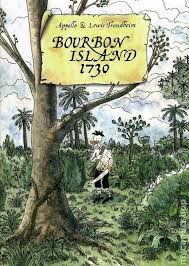
[READ: June 11, 2016] Bourbon Island 1730

I joked with Sarah about the disclaimer at the beginning oft his book which says that “Bourbon Island 1730 is not intended to be a historical account.  It is a fictional narrative, freely inspired by historical events.”  And I joked because one of the main characters is a bird and the other looks like a dog or something.  So clearly not historically accurate.

But I soon learned that this is a more or less accurate account of piracy  and slave trading around Bourbon Island in the 1730s.

Although as with a lot of Trondheim’s books I found this one to be lacking focus somewhat.

I wasn’t always sure exactly what was happening.  And one of the problems to me especially was that the book deals with racism and slavery, but it wasn’t always clear who was who because the characters were animals–how do you depict racism with animals if the animals don’t seem to conform to a race? (more…)

Read Full Post »

chocolateannaSOUNDTRACK: CHICK COREA & GARY BURTON-Tiny Desk Concert #540 (June 13, 2016).

chickI have known of Chick Corea for decades, although I never really knew anything about him.  I’m sure I’ve heard him play at some point (he’s been around since the 1960s), but never so specifically.  And Gary Burton is an unknown quantity to me (although apparently he has played with Corea for years–they recorded their first album together 44 years ago!).

Corea plays a beautiful, fluid jazz piano.  And while his work is really special, it’s actually Burton who I focused on more (at least at the beginning).  Burton plays the vibraphones–with four mallets!  I don’t think I’ve ever seen vibraphones so up close in action before  Apparently the bar can be lifted (which must account for the vibe).

They play two songs, “Love Castle” which is from 1976 and “Crystal Silence” which is from their debut album (1973).

“Love Castle” begins with some great piano and fun soloing on the vibes.  It’s mesmerizing watching Burton hit these bars.  After 5 minutes of intense vibe playing, Corea takes over for solo section for almost 2 minutes before Burton returns (this time providing more background where as the earlier section was more soloing from Burton).  The song is just the two of them for about ten minutes and it’s really something.

“Crystal Silence” is the first song they ever played together.  It opens with some great vibes and then soars and swirls for another t en minutes.  It’s a really cool piece and the crowd is appropriately jazzily appreciative.

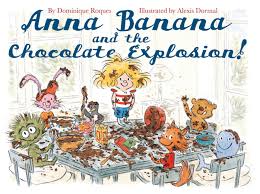
[READ: March 1, 2016] Anna Banana and the Chocolate Explosion

This is another First Second picture book (as opposed to graphic novel).  It’s the second in the Anna Banana series.  Once again, I thought the cover illustration was a little sloppy compared to the inside of the book–for many graphic novels I like cover illustrations better than the interior. But this is a picture book so maybe the rules are different.  Nevertheless, both parts are drawn by Alexis Dormal.

Anna is a little girl with a lot of friends: Pingpong the penguin, Grizzler the bear, Zigzag the bunny, Foxface the fox, Whaley the whale and Fuzzball the, well, fuzzball.

Anna’s friends want her to make them a chocolate cake.  But she says she will teach them how to make their own instead. That sounds like a great idea. (more…)

Read Full Post »

« Newer Posts - Older Posts »